
In this answer
Short answer
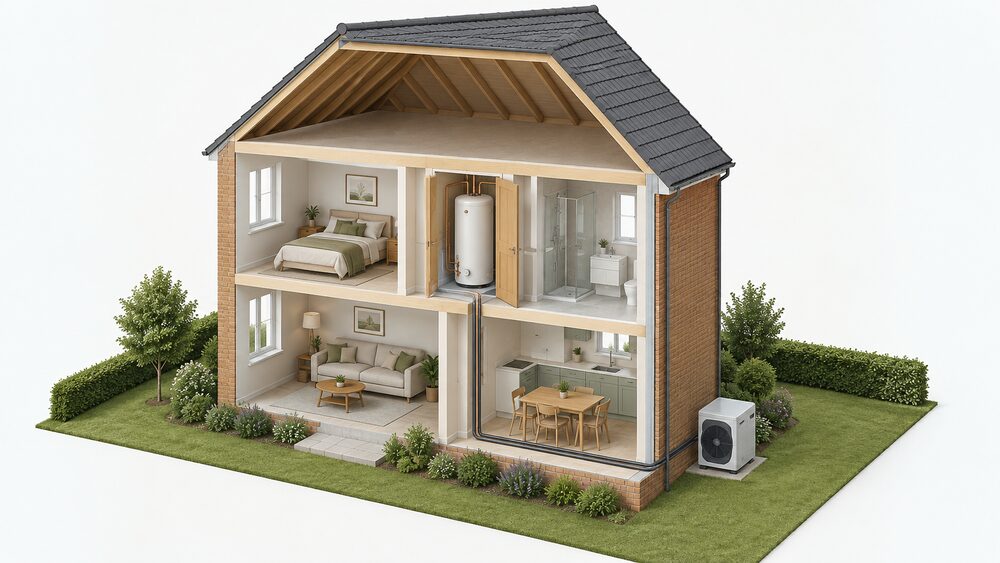
Yes, a heat pump can deliver hot water at mains pressure, but the heat pump is not what does it. The pressure comes from the cylinder. An unvented cylinder connects directly to the mains water supply and delivers hot water at mains pressure, with no separate cold water storage tank and no loft tank feeding a gravity circuit1. Pair a heat pump with an unvented cylinder and every hot tap, shower and bath runs at the pressure the mains already supplies to the property.
The reason a heat pump needs a cylinder at all is that it heats water slowly and stores it. To provide hot water, heat pumps require a water storage cylinder, similar to older generations of gas boiler systems3. Most heat pump manufacturers require the use of a cylinder, as it enables the heat pump to run more efficiently by heating the water over a longer period4. That is the opposite of a combi boiler, which heats water instantaneously as it passes through, and it is why replacing a combi with a heat pump will probably mean installing a hot-water tank or cylinder5.
So the practical answer is yes, with one condition attached: the cylinder must be unvented. A vented cylinder fed from a cold water tank in the loft delivers hot water at whatever head the tank provides, not at mains pressure. The rest of this page covers which cylinder suits which home, how to size it, the temperature rules, standing heat loss, and the installer qualification that unvented work legally requires.
Why a heat pump needs a cylinder to give mains pressure hot water
A heat pump delivers heat at lower flow temperatures than a gas boiler, and it does so most efficiently when it runs steadily rather than in short bursts. Domestic hot water drawn instantly, as a combi does, does not suit that pattern. CIBSE's guidance is explicit that low-temperature, low-carbon solutions such as heat pumps generally require a hot water cylinder, while many homes with gas combination boilers do not4. The cylinder is the buffer that lets the heat pump heat water over a longer period at a temperature it can reach efficiently.
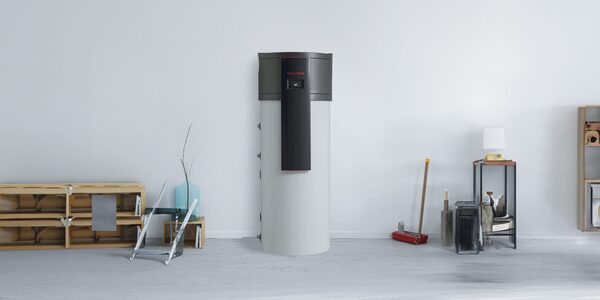
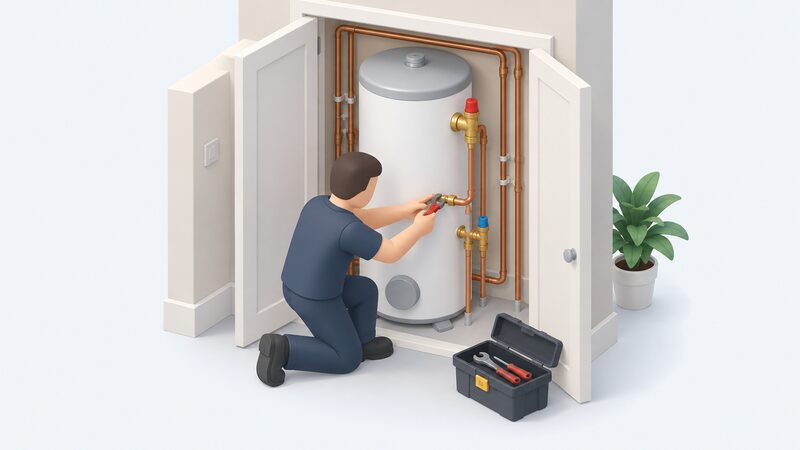
Space is the practical consequence. For all heat pumps you need space to put a hot water cylinder, ideally inside the house10. That is usually the way of storing hot water for a standard heat pump11. Airing cupboards, utility rooms and garages are the common locations, and because an unvented cylinder does not require a cold water storage tank, siting is more flexible than a vented arrangement, which is ideal if space is tight12.
There is an energy independence angle here that a combi cannot offer. For homes with a hot water cylinder, there is the potential to use off-peak electricity for heating and storing hot water to balance the energy supply14. A cylinder turns hot water into something that can be made when electricity is cheap or when a solar array is generating, then drawn later. That is a genuine gain in household control over when energy is bought. What remains is the grid connection itself: the heat pump runs on electricity, so the household still depends on a supplier and on the network, and the cylinder only shifts when that electricity is consumed, not whether it is needed.
Unvented, vented or thermal store: which cylinder suits which home
Three cylinder arrangements come up when a heat pump is installed, and they behave differently at the tap.
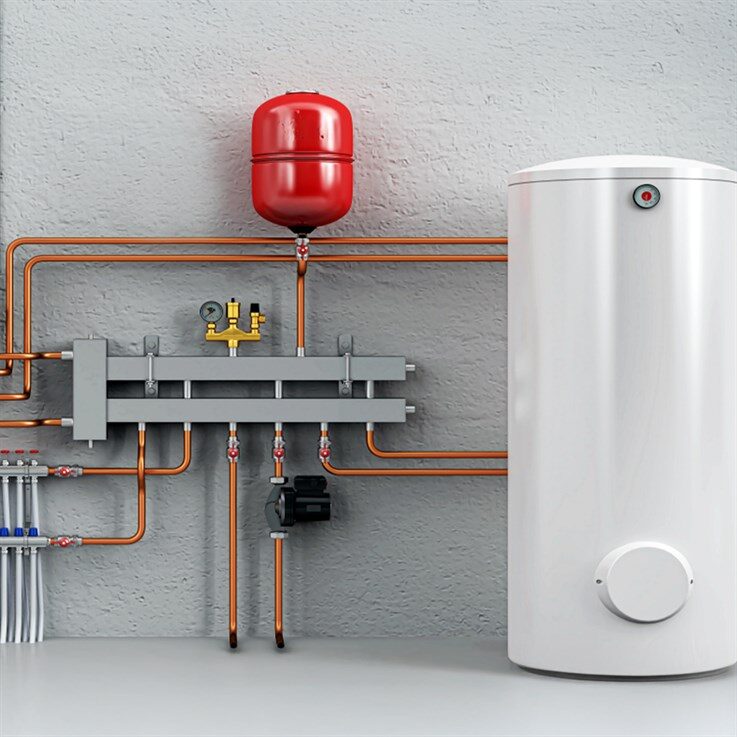
An unvented cylinder is the arrangement that gives mains pressure hot water. It stores hot water and delivers it directly from the mains water supply, operating at mains pressure and holding a set volume that must meet peak demand between recharges2. Unvented indirect cylinders are generally considered the better match for heat pumps in particular, as they deliver mains pressure hot water and work efficiently at lower flow temperatures1. They suit modern homes, renovations, or properties wanting mains pressure hot water throughout, and are generally more suitable for modern homes with multiple bathrooms, while vented cylinders suit older properties1.
A vented cylinder works from a cold water tank, usually in the loft, and delivers hot water under gravity head. Depending on the home's plumbing, a traditional cylinder can be connected directly to the mains as an unvented unit or use a cold water tank in the loft as a vented one17. Vented systems remain common in older properties where the plumbing and roof space already exist.
A thermal store is the third option. Bespoke thermal stores and thermal store cylinders provide mains pressure hot water without pumps18. They hold heat in a body of water and draw domestic hot water through a heat exchanger, which separates the stored volume from the water that comes out of the tap. One important distinction: UK building regulations advise that water cylinders, but not thermal stores, need to regularly reach temperatures of more than 60°C19.
| Cylinder type | Hot water pressure | Cold water tank | Typical fit |
|---|---|---|---|
| Unvented | Mains pressure throughout the property1 | Not required13 | Modern homes, multiple bathrooms, renovations1 |
| Vented | Gravity head from a loft tank17 | Required17 | Older properties with existing tank and plumbing16 |
| Thermal store | Mains pressure without pumps18 | Varies by design | Homes wanting stored heat separate from drawn water18 |
For a household's independence, the unvented cylinder is the arrangement that removes the loft tank from the chain. Water arrives under the pressure the mains already provides, and the stored volume can be heated when electricity is cheapest. The dependence that remains is on the mains supply itself: pressure and flow at the property set the ceiling, and no cylinder can exceed what the incoming main delivers.
Sizing: litres per occupant, bathrooms and cupboard space
Sizing a heat pump cylinder is a balance between peak demand and recovery. Too small and the cylinder runs cold during a busy morning; too large and standing losses rise and the heat pump spends longer recharging a volume nobody draws.
The published allowances differ, and it is worth seeing why. BS 6700 gives a rudimentary allowance of between 35 and 45 litres of hot water at 60°C per person per day6. One cylinder maker suggests ballparking around 50 litres per person as a starting rule, then adjusting for lifestyle, such as big baths versus quick showers20. Measured data sits at the household level rather than the person: summer consumption in the Living Lab homes, representing primarily domestic hot water load, indicates approximately 75 litres of hot water usage per household per day, assuming 45°C water temperature and a coefficient of performance of 2.821. The three figures are not in conflict so much as measuring different things: a design allowance per person, a rule of thumb per person, and a metered household total at a lower store temperature.
Maker sizing bands translate the allowances into cylinder volumes:
| Household | Suggested cylinder volume |
|---|---|
| 1 to 3 people, small to average households | 180 to 200 litres20 |
| 3 to 4 people, common family home | 210 to 250 litres20 |
| Larger homes or high hot-water demand | 250 to 300+ litres20 |
Cupboard space follows from the volume. A 250 litre cylinder is a substantial object, and it needs to sit somewhere it can be serviced, ideally inside the house10. Where a combi previously served the home, that space has to be found rather than reused. For households weighing up whether a larger store is needed at all, the trade-off between volume and recovery is set out in hot water cylinders for heat pumps, and the wider question of whether a heat pump needs a bigger tank than a boiler is covered in do heat pumps need a larger hot water tank or coil.
Temperature settings: the 60°C legionella rule versus running cooler
Heat pumps and cylinders want different temperatures, and the gap between them is the central design tension in heat pump hot water.
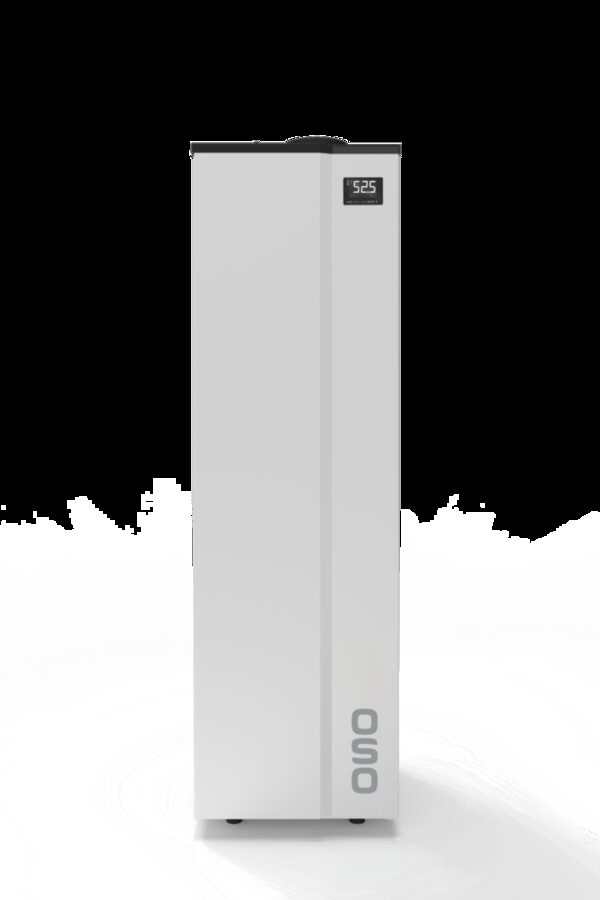
Most heat pumps will heat hot water to 50 to 55°C very efficiently, and then the sterilisation cycle raises the temperature9. One maker notes that the maximum temperature most heat pumps can achieve is 55°C, and its heat pump cylinders provide hot water at temperatures ranging from 35 to 55°C22. The SAP low-temperature heating guidance gives a default flow temperature of 55°C23.
Against that, the sterilisation requirement is firm. UK building regulations advise that water cylinders, but not thermal stores, need to regularly reach temperatures of more than 60°C19. The reason is bacterial: by ensuring the temperature of the water is 60°C or over, bacteria such as Legionella are killed off8. Independent guidance for boilers with a hot water cylinder is that a minimum water temperature of 60°C applies to any boiler with a hot water cylinder that stores water for later use24. Which magazine's boiler guidance goes further for stored hot water, stating that it is vital not to adjust the flow temperature beneath 65°C without consulting an engineer first due to the risk of Legionella25.
In practice this means a heat pump cylinder spends most of its time in the efficient band and periodically runs hotter to satisfy the sterilisation requirement. That periodic lift costs more per unit of heat than the base heating, and it is one reason hot water is a larger share of a heat pump's running cost than of a gas boiler's. The household gain is that the stored volume can be scheduled, including into off-peak windows, rather than produced on demand14.
Heat loss, insulation and what a cylinder costs you in standby energy
A cylinder is a store, and stores lose heat. The Welsh Government's Part L consultation sets maximum daily heat loss figures for hot water cylinders by nominal volume, and the pattern is straightforward: bigger cylinders lose more.
| Nominal volume | Maximum daily heat loss |
|---|---|
| 50 litres | 1.03 kWh/24h26 |
| 200 litres | 2.06 kWh/24h26 |
| 400 litres | 2.59 kWh/24h26 |
| 700 litres | 3.14 kWh/24h26 |
| 800 litres | 3.29 kWh/24h26 |
These are maxima, not typical measured losses, and they are the figures a compliant cylinder must not exceed. A well-insulated cylinder in a warm cupboard will lose less than one in a cold garage. The standing behaviour is what the figures describe: in a maker's standing test, cylinders were allowed to stand for a period of 24 hours with no additional heat supply27.
The practical consequence is that oversizing carries a running cost. Moving from a 200 litre to a 400 litre cylinder raises the maximum daily heat loss from 2.06 to 2.59 kWh per 24 hours26. Over a heating season that is a real quantity of heat the heat pump has to replace, and it is why sizing to actual demand matters more than sizing for comfort. Insulation quality, cylinder location and pipe insulation all bear on how close a real installation sits to the maximum.
For independence, the cylinder is a small store of energy the household controls. It can be charged when electricity is cheap or when a solar array is producing, and it holds that heat for hours. It is not a battery and does not make the home self-sufficient: the heat still comes from a heat pump running on grid electricity, and the standing loss is paid for continuously.
Materials, guarantees and the G3 installer requirement
Two separate sets of rules apply to a heat pump hot water installation: one to the heat pump, one to the cylinder.
For the heat pump, the air source unit must comply with MCS planning standards or equivalent standards under the Northern Ireland permitted development legislation28. Ground source work carries its own standards: a pressure test in accordance with BS EN 805, section 11.3.3.4 applies to all closed-loop ground source heat pump installations30, and all equipment installed in relation to the system must comply with the relevant design and manufacturing standards set down in the British Standard in force and with the standards issued by the Ground Source Heat Pump Association31.
For the cylinder, the requirement is a person, not a product. UK Building Regulations Part G3 require that unvented cylinders must be installed by a competent person who holds the G3 qualification, also known as the Unvented Hot Water Storage Systems certificate2. This is a legal condition of installing an unvented cylinder, and it applies whether the cylinder serves a heat pump or any other heat source.
On materials, unvented cylinders do not require a cold water storage tank, which is ideal where space is tight and offers flexibility in siting12. Copper and stainless steel are the two common cylinder materials, and a comparative research report on the two is the reference point for how they behave in service6. On lifespan, one maker states that a well-maintained hot water cylinder can typically last between 10 and 20 years, depending on factors such as water quality and maintenance, and that some cylinders, under optimal conditions, can even last 40 to 50 years, though this is rare7.
Heat pump cylinders can also be combined with solar heating, which one maker describes as achieving a very environmentally friendly and highly efficient result22. That combination is where the independence case is strongest: the cylinder stores heat the household has generated itself, and the grid supplies only what the store cannot cover.
Sources31 cited
- Vented vs unvented hot water cylinders, Newark Cylinders, 2026
- What is an unvented cylinder, Newark Cylinders, 2026
- Heat pumps for domestic heating, GOV.UK, 2023
- Heating and heat pump factsheets, CIBSE, 2026
- An introduction to heat pumps, Which?, 2025
- Copper vs stainless steel research report, McDonald Water Storage, 2026
- How long do hot water cylinders last, Newark Cylinders, 2026
- Burns and scalds, CIPHE, 2026
- Heat pump myths, Energy Saving Trust, 2025
- In-depth guide to heat pumps, Energy Saving Trust, 2026
- Is now a good time to get a heat pump, Energy Saving Trust, 2025
- Vented vs unvented hot water cylinder, McDonald Water Storage, 2024
- Unvented cylinders, McDonald Water Storage, 2024
- Hybrid heat pumps, HHIC, 2026
- What size cylinder, OSO Hotwater, 2026
- Vented cylinders guide, Newark Cylinders, 2024
- How to heat your water when switching from a combi boiler, Tepeo, 2026
- Thermal stores, Newark Cylinders, 2026
- How to ensure a heat pump runs efficiently, Energy Saving Trust, 2026
- Do you need a hot water cylinder with a heat pump, Mastertherm, 2026
- Grid impacts of heat pumps, EVs and solar, Energy Systems Catapult, 2025
- Solar and heat pump cylinders, Newark Cylinders, 2026
- Low temperature heating, NCM PCDB, 2026
- One simple way to adjust your boiler, Which?, 2025
- Boiler energy efficiency, Which?, 2025
- Building Regulations Part L and F review, Welsh Government, 2020
- Alternative energy cylinders, McDonald Water Storage, 2026
- Permitted development schedules, legislation.gov.uk, 2026
- Permitted development schedule part 2, legislation.gov.uk, 2026
- Approved Document L, Volume 1, DLUHC, 2023
- Exemption conditions for closed-loop ground source heat pump activities, Defra, 2026
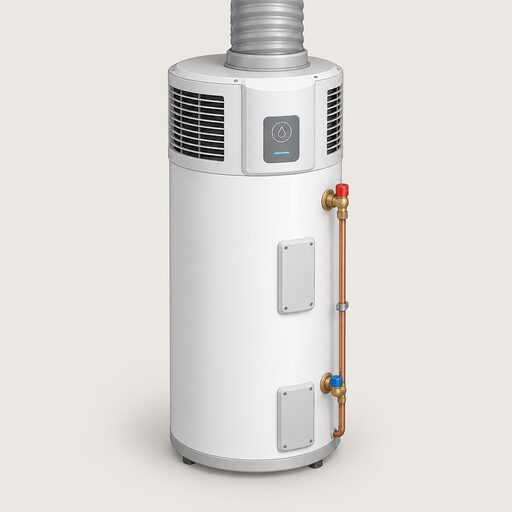 Hot Water Heat PumpsA hot water heat pump heats only the water in your cylinder, using air instead of a boiler flame.
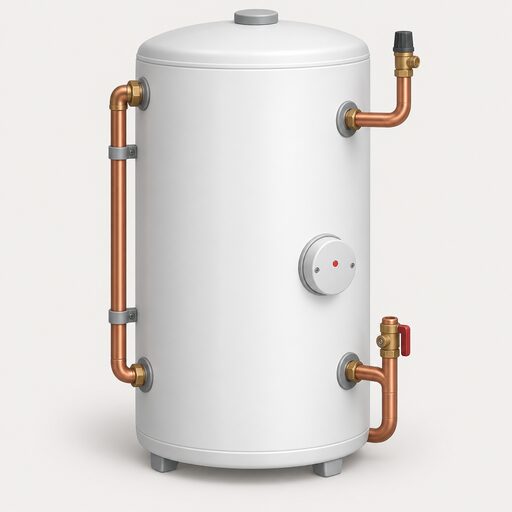 Air-to-Water Wet SystemsAir-to-water heat pumps feed radiators, underfloor heating and a hot water cylinder, and are the most common domestic heat pump in the UK.
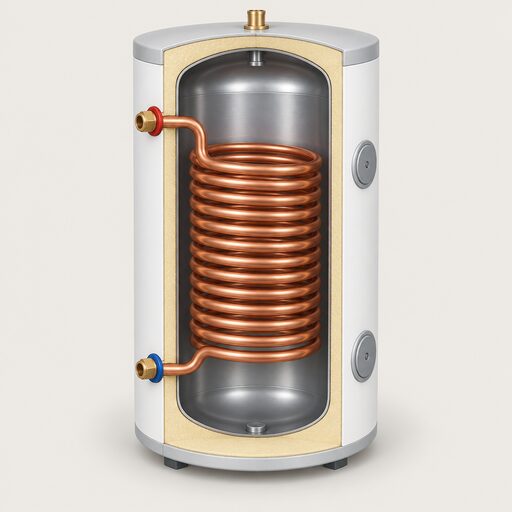 Hot Water CylindersA heat pump needs a cylinder to store hot water, so swapping a combi means getting one.
 Using a Heat Pump for CoolingCan a heat pump cool your home in summer as well as heat it in winter?
 Which Homes Suit a Heat PumpMost UK homes can have a heat pump fitted, so the real question is whether yours makes it easy or expensive.
 Air-to-Air Heating and CoolingAir-to-air heat pumps deliver warm air through indoor fan units rather than hot water to radiators.