
In this answer
Short answer
Mine water heat systems do not deliver heat at the temperature a gas boiler does. The water in flooded coal workings is a low-grade source, and the temperature that reaches a household's radiators is set by the heat pump that sits between the mine and the home, not by the mine itself. A mine water scheme is therefore a heat source feeding a heat pump, and the flow temperature a household sees is the same 55°C that Approved Document L expects of new and fully replaced wet heating systems1.
That distinction matters because the question "what temperature can mine water heat systems provide?" has two answers. The mine water itself is cool, and the delivered heat is warm enough for a well-designed radiator system once a heat pump has raised it. A household on a mine water network is not receiving steam or high-temperature water; it is receiving the output of a water-source heat pump, and the system's performance depends on how that heat pump is sized and how the property's heat emitters are chosen.
Mine water is a source, not a supply
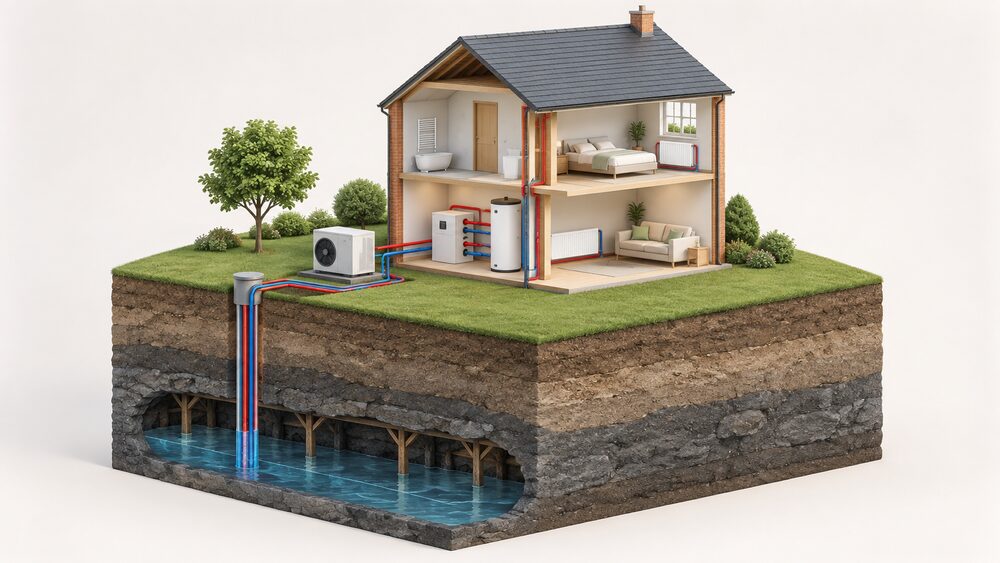
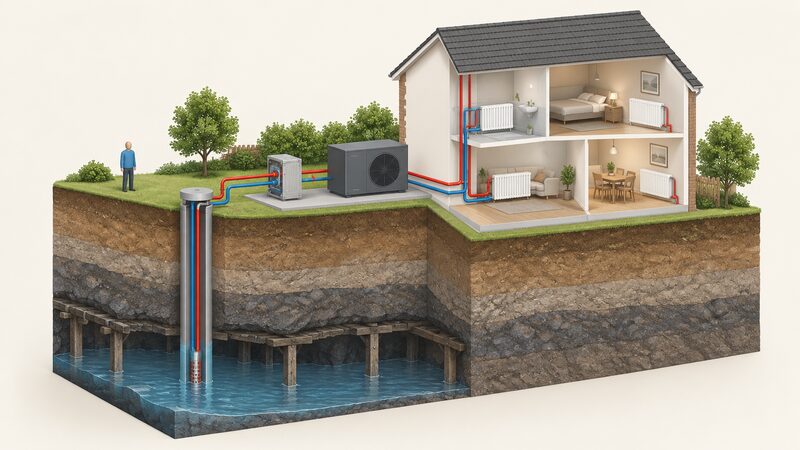
The temperature of water in a flooded mine is the starting point, and it is low. Mine water is warmed by geothermal heat and by the rock surrounding the workings, and it is extracted through boreholes drilled into the flooded voids. That water is then passed through a heat exchanger, where its heat is transferred to a closed loop serving a heat pump. The mine water itself is returned to the workings.
The consequence is that a mine water scheme cannot heat a radiator directly. The water is a source of low-grade heat, and the heat pump is the device that raises it to a usable temperature. This is the same principle as an air-source or ground-source heat pump: the source is cool, the delivery is warm, and the compressor does the work. The difference is that mine water holds its temperature more steadily than air, which can improve performance in cold weather.
For a household, the practical point is that the mine water temperature is not the number that determines whether radiators work. The delivered flow temperature is. That figure is set by the heat pump and the system design, and it is the one to ask a scheme operator about.
Flow temperature: 55°C, and why that is the benchmark
Approved Document L, the building regulation that governs energy performance in dwellings, sets a maximum flow temperature of 55°C for newly installed or fully replaced wet heating systems1. The same 55°C figure appears in the 2026 version of the approved document for England1 and in the Welsh consultation version6. This is the design target that a mine water heat pump system would be expected to meet.
That 55°C is lower than the flow temperature of a traditional gas boiler. A combi boiler running at 80°C flow will have a return temperature of around 60°C7, and the radiators in a gas-heated home are often sized for that higher figure. A heat pump running at 55°C needs larger radiators or underfloor heating to deliver the same heat output. Underfloor heating, which runs at around 45°C, is well matched to this lower flow temperature4.
High temperature heat pumps can go further. Which? describes them as designed to run at a higher temperature, usually 65 to 80°C3. A Samsung EHS Mono HT unit is listed as achieving hot water temperatures of up to 70°C8. These units can serve older radiator systems with less alteration, but they are a different product from the standard mine water heat pump arrangement.
"at a maximum flow temperature of 55°C"
What the heat pump has to do to hot water
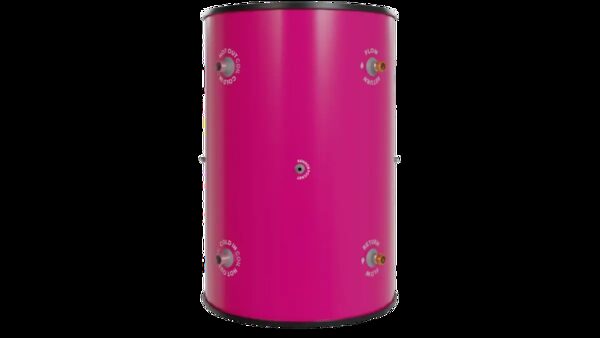
Space heating is only half the demand. A mine water heat pump also has to serve taps, and hot water needs a higher temperature than radiators for most of the year. The Energy Saving Trust's heat pump guidance notes that most heat pumps will heat hot water to 50 to 55°C very efficiently, and then a sterilisation cycle raises the temperature further2. That cycle exists to kill harmful bacteria, and the Centre for Sustainable Energy is explicit that an immersion heater should not go below 60°C for that reason5.
This is where the delivered temperature of a mine water system becomes a design question rather than a fixed number. A heat pump that can reach 55°C for radiators may need to run hotter, or use an immersion element, to bring a cylinder up to the sterilisation temperature. The cylinder then stores that water until it is drawn off. A well-insulated cylinder reduces the loss: a cylinder jacket can cut heat loss by up to 75%9.
For a household, the implication is that a mine water system is not a drop-in replacement for a gas boiler in every property. It works best where the heat emitters are sized for a lower flow temperature and where the hot water cylinder is insulated and correctly set. The temperature the system provides is therefore a range, not a single figure: 55°C for space heating, and a sterilisation cycle above that for hot water.
Where mine water heat fits, and where it does not
Mine water heat is delivered through district heating networks, which means a household must be on or near a network to connect. That is the central limit. A property in a former mining area without a scheme running past it cannot access mine water heat, and individual homes cannot drill their own borehole into flooded workings in most circumstances. The technology is a network technology, not a standalone one.
Where a scheme does reach a property, the household gains a heat source that is independent of gas. That is the energy independence benefit: no gas boiler, no gas connection, no exposure to gas prices. The dependence that remains is on electricity for the heat pump, and on the scheme operator for the heat supply itself. A household on a mine water network is still buying heat or electricity from someone, and the network's standing charge and tariff are set by the operator.
The temperature the system provides also shapes which homes suit it. A property with underfloor heating, which runs at around 45°C4, is well matched to a 55°C flow. A property with small radiators sized for a gas boiler may need them replaced. The Climate Change Committee's work on challenging dwelling types notes that heat batteries can be up to four times smaller than equivalent hot water cylinders10, which matters where a cylinder cupboard is tight, but that is a storage question rather than a temperature one.
For a householder in a former mining area, the practical questions are whether a scheme is planned, what flow temperature it will deliver, and whether the property's radiators and cylinder are suited to it. The temperature itself is not the barrier; the network's reach is.
Sources10 cited
- Approved Document L Volume 1: Dwellings, HM Government, 2026
- Heat pump myths, Energy Saving Trust, 2025
- An introduction to heat pumps, Which?, 2025
- Energy saving upgrades for home renovation, Energy Saving Trust, 2026
- Energy saving advice for renters, Centre for Sustainable Energy, 2026
- Approved Document L Volume 1 consultation version, Welsh Government, 2025
- One simple way to adjust your boiler, Which?, 2025
- Samsung EHS Mono HT AE120BXYDEG, Quiet Mark, 2026
- Energy savings tips, British Gas Energy Trust, 2026
- The suitability of clean heating options for challenging dwelling types, ClimateXChange, 2024
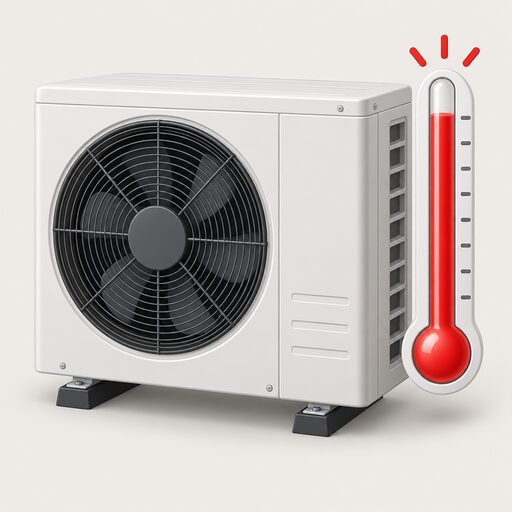 High Temperature Heat PumpsHigh-temperature heat pumps deliver flow temperatures of roughly 65 to 80°C, close to boiler levels, so existing radiators can often stay in place.
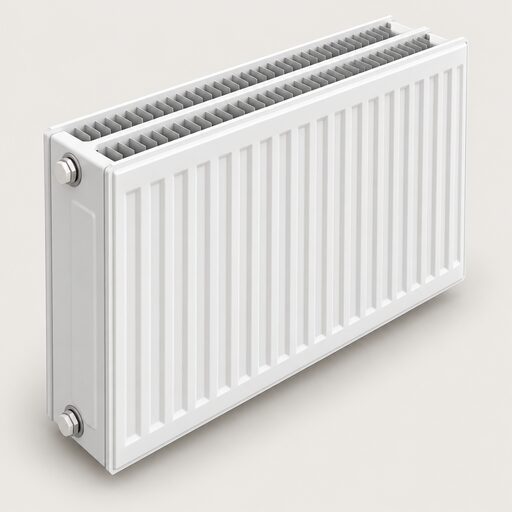 Radiators and Heat EmittersA radiator's real heat output depends on how hot the water inside it is compared with the room, so the figure in a catalogue often overstates what you will actually get.
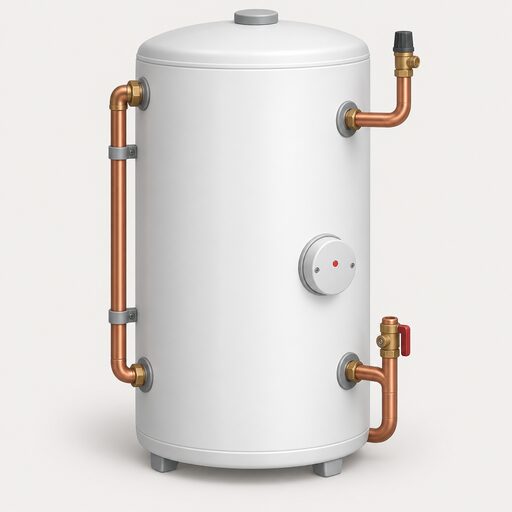 Air-to-Water Wet SystemsAir-to-water heat pumps feed radiators, underfloor heating and a hot water cylinder, and are the most common domestic heat pump in the UK.
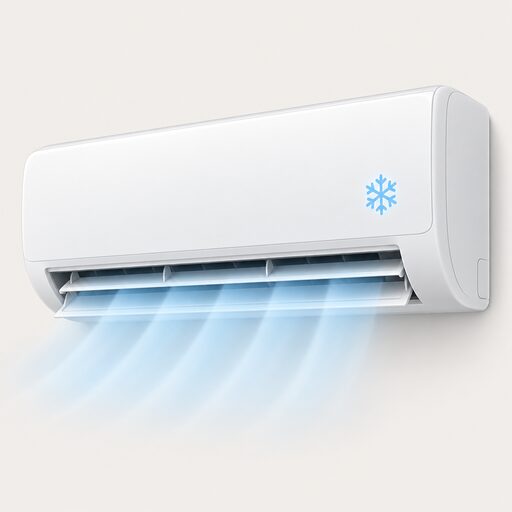 Using a Heat Pump for CoolingCan a heat pump cool your home in summer as well as heat it in winter?
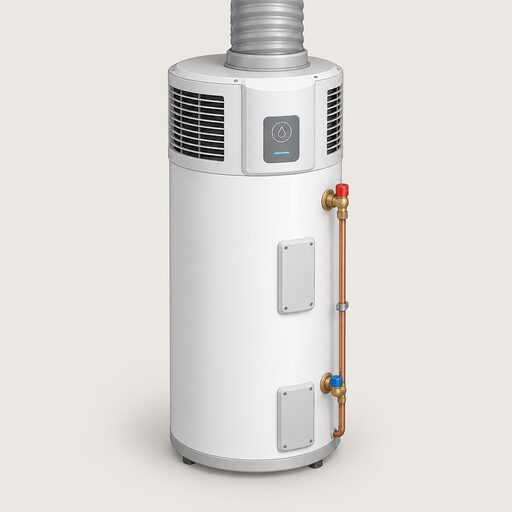 Hot Water Heat PumpsA hot water heat pump heats only the water in your cylinder, using air instead of a boiler flame.
 Radiators and EmittersWill your radiators still heat the house properly with a heat pump?