In this guide
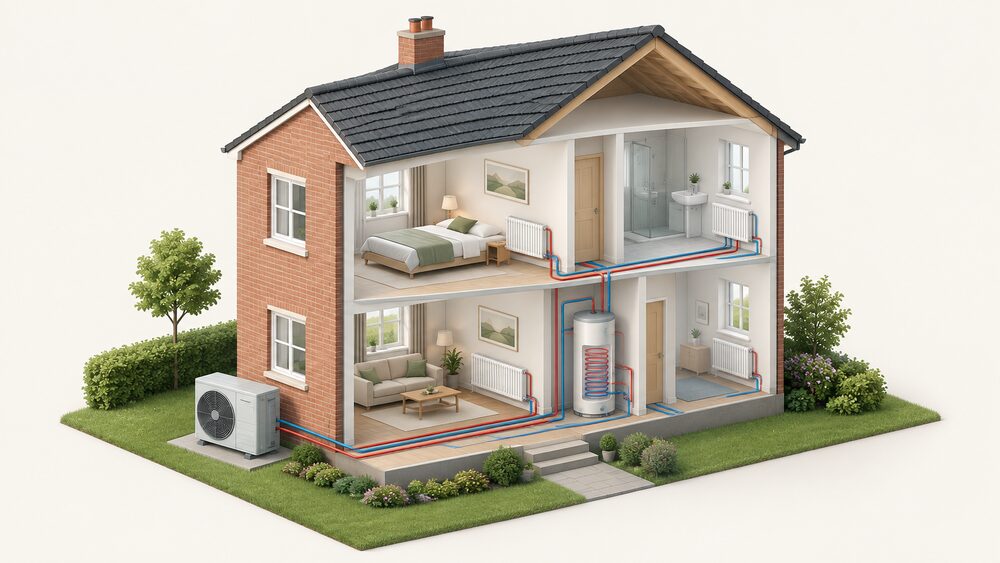
A high-temperature heat pump is an air-to-water or ground-to-water unit designed to run at a higher flow temperature than a standard model, usually 65 to 80 degrees, against the 35 to 45 degrees at which a standard or low-temperature heat pump is at its most efficient1. The point of that difference is retrofit: at a flow temperature close to a boiler's, the radiators already on the wall give out close to the heat output they gave before, so a household replacing a gas or oil boiler in an older, harder-to-insulate home may not need to rip out and resize its emitters.
The temperature is written into the rules as well as the marketing. The UK's SAP calculation applies a default flow temperature of 65°C to high-temperature heat pumps, where a standard model is assessed at a lower figure2. A government options assessment on minimum standards defines the class by capability: a high-temperature model "delivers its declared capacity for heating at an indoor heat exchanger outlet temperature of 65 °C"3. In plain terms, it is not a machine that can briefly reach 65°C, it is one that still produces its rated kilowatts while doing so.
The trade-off is efficiency and it is unavoidable. Heat pumps in general are quoted at three to four units of heat per unit of electricity1, and every degree of extra flow temperature costs some of that. A high-temperature machine buys convenience and a cheaper installation with a lower seasonal efficiency, and that shows up on the electricity bill for as long as the system runs.
What "high temperature" means on a data sheet
The heat pump's flow temperature is the temperature of the water it sends to the radiators or the cylinder coil. A household guide from the Electrification of Heat demonstration project describes this class of machine as one that "absorbs heat from the outside air and supplies it to your home at a similar temperature to your current boiler"6. That is the household-facing definition, and it is a fair one.
Manufacturers get there by different means, commonly a cascade or two-stage compressor arrangement, or a refrigerant chosen to work at higher condensing temperatures. The result is a machine rated at the top of the range rather than one pushed there. A Welsh case study of a Daikin Altherma High Temperature air-to-water unit describes a system "enabling the system to deliver up to 65°C to satisfy peak demands for heating and domestic hot water"7. Flow temperatures of up to 80 degrees are established in commercial projects and district heating schemes8, and the domestic high-temperature class sits at the lower end of that territory.
Refrigerant choice matters here, and it is covered separately on heat pump refrigerants and on monobloc and split heat pumps, because the arrangement that achieves the temperature also determines where the unit can go and how it is serviced.
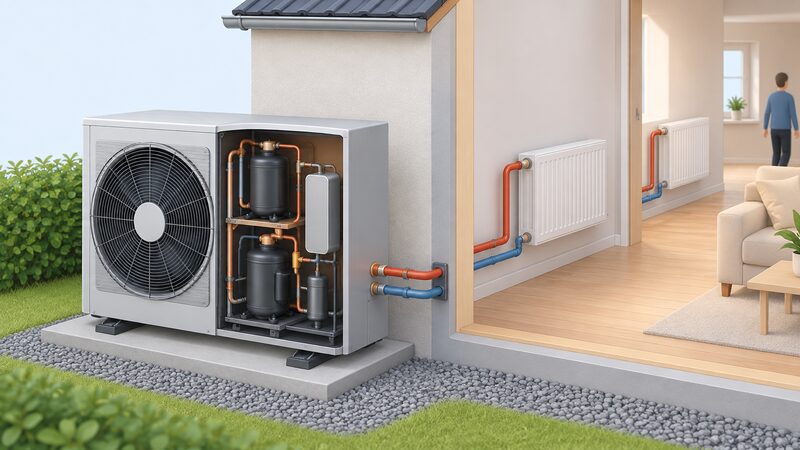
High temperature versus low temperature: 65 to 80 degrees against 35 to 45
Standard heat pumps are most efficient at 35 to 45 degrees; high-temperature models are designed to run at a higher temperature, usually 65 to 80 degrees1. The gap is the whole story of the retrofit question.
Published figures for the standard class cluster tightly but not identically, and the differences are worth reading. Energy Saving Trust puts typical radiator flow at 35 to 45°C9. Nesta cites a 45°C design temperature for heat pump systems against a markedly higher design temperature for gas systems10. Energy UK gives 55°C as a typical operating figure, in line with Building Regulations11. The Chartered Institute of Plumbing and Heating Engineering describes heat pumps running "at around 50 o C (55 o C max)"12. The SAP low-temperature heating definition works to thresholds of 45°C or 35°C design flow water temperature as stated on the commissioning certificate13. The spread reflects what is being measured: a design condition, a typical year-round operating point, or a regulatory ceiling.
| Class | Typical flow temperature | Source type |
|---|---|---|
| Standard or low temperature | 35 to 45 degrees at most efficient1 | independent |
| Low-temperature threshold in SAP | 45°C or 35°C design flow13 | official |
| Typical operation, Building Regulations context | 55°C11 | independent |
| High temperature, SAP default | 65°C2 | independent |
| High temperature, general range | 65 to 80 degrees1 | independent |
For comparison, a boiler typically runs at 75°C, while 45°C is usual in heat pumps14. That single sentence explains why a radiator that heated a room adequately on a boiler may not do so on a standard heat pump, and why the high-temperature class exists. More detail sits on heat pump flow temperature.
Why existing radiators often stay in place
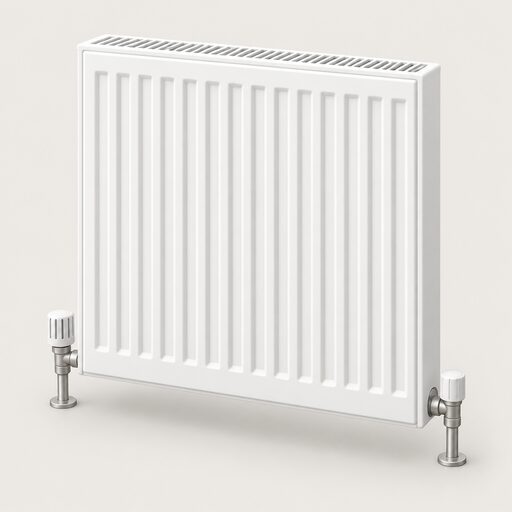
At low flow temperatures the physics is unforgiving: radiators that were fine when connected to a boiler running at 75°C will not be hot enough if the water drops to 45°C14. Nesta's modelling of the low-temperature retrofit found that about 7 out of 10 properties would need larger radiators to operate at lower flow temperatures, replacing 6 radiators on average where they did15. Off-grid heating bodies make the same point from the other direction: when a heat pump replaces gas or liquid fuel heating, more or larger emitters, or substantially improved insulation, are usually needed, adding to the installation cost16.
A high-temperature model changes that calculation. Guidance for off-grid households notes that radiators will probably have to be changed for larger ones to give equivalent heat output "unless a high temperature output heat pump is installed"18. That is the retrofit case in one line: the household keeps its emitters, its pipework and its decoration, and pays instead in running cost.
Nesta's policy work reaches the same conclusion about mandates. It argues against blanket requirements for low-temperature systems on enforcement and fraud grounds19, and notes that regulation requiring low-temperature radiators and pipework at boiler replacement "risks adding unnecessary cost, especially if high-temperature heat pumps become the norm"20.
Where emitters are upgraded, bigger means more surface area, which can mean a double or triple panel radiator rather than more wall space21. Radiators are currently zero-rated for VAT if installed alongside a heat pump15. Heat pumps can work with radiators or underfloor heating, and some types work with neither22. See radiators and emitters for a heat pump and do I need to upgrade my radiators for a heat pump?.
Efficiency: three to four units of heat per unit of electricity
Across independent and official UK guidance, the headline figure for a well-designed heat pump is three to four units of heat for every unit of electricity1. Energy Saving Trust frames it as three to four times as much heat, or 300 to 400 per cent24. Which? gives a wider band of 2.5 to 4.5 units25. A local authority factsheet is more conservative at 2 to 3 units per unit of electricity26. The Development Bank of Wales and Energy UK both cite the three to four figure27. A coefficient of performance of 3.0 means three times more heat energy than the electrical energy consumed1.
The spread across those numbers is not disagreement about the technology, it is the difference between a laboratory rating at a mild condition and a seasonal average across a British winter. Flow temperature is the largest single lever within the installer's control, and it is exactly the lever a high-temperature installation gives up. A machine held at 65°C through the heating season will sit at the lower end of the published bands rather than the upper end, and in some conditions below them. That difference compounds: a system averaging three units against one averaging four uses roughly a third more electricity for the same heat.
This is why high-temperature specification is a considered decision rather than a default. Where a fabric upgrade or an emitter upgrade is genuinely impractical, a high-temperature machine is the route to a heat pump at all. Where it is practical, the lower flow temperature pays back over the twenty-year life of the equipment. The measurement conventions are set out on heat pump efficiency: COP, SCOP and SPF, and real UK results on how heat pumps actually perform in UK homes.
Costs and the £7,500 Boiler Upgrade Scheme grant
Official statistics for England and Wales give a nominal median installation cost for an air-to-water heat pump of £12,908 in 2026 Q2 (April to June), including the grant value, with a lower quartile of £11,128 and an upper quartile of £15,627, and a median installed capacity of 8.0 kW4. Those figures cover all air-to-water installations claiming the grant, not high-temperature models specifically, so they are the best available anchor rather than a quote.
| Boiler Upgrade Scheme, air-to-water heat pump | Figure |
|---|---|
| Grant value | £7,5005 |
| Voucher validity | 3 months30 |
| Voucher applications received (cumulative to July 2026) | 140,474, 98% of applications4 |
| Vouchers issued (May 2022 to July 2026) | 116,8324 |
| Redemptions paid (May 2022 to July 2026) | 88,0924 |
The grant is £7,500 off the cost and installation of an air source heat pump, and applies to homeowners in England and Wales29. The gap between vouchers issued and redemptions paid reflects the three-month validity window and installations not completed. Scotland and Northern Ireland run separate arrangements; the position across the four nations is covered on heat pump grants and funding across the UK, and installed prices on how much does a heat pump cost in the UK?.
Prices for high-temperature models specifically are installer-quoted, and no published range is available. What can be said is where the cost sits differently: the equipment tends to be more expensive than a standard unit of the same output, while the emitter and pipework work that a low-temperature design would trigger is reduced or avoided.
Hot water: a cylinder, not a combi
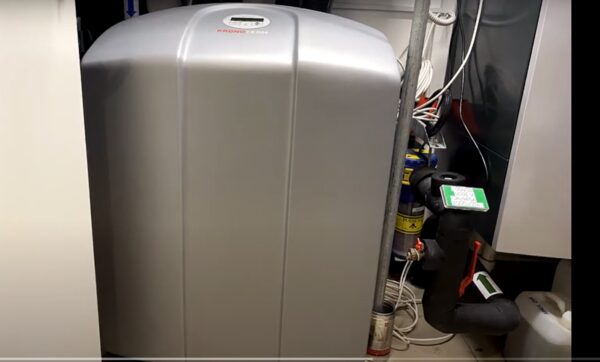
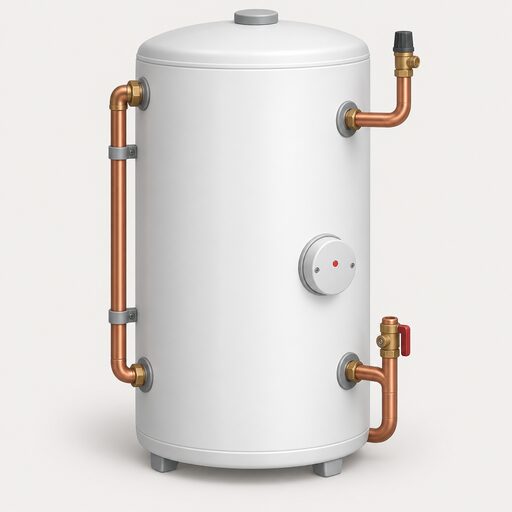
A heat pump does not provide hot water on demand like a combi boiler, so another means of providing it is needed9. Official guidance is explicit: "To provide hot water, heat pumps require a water storage cylinder, similar to older generations of gas boiler systems"32. That is true of high-temperature models too. The higher flow temperature does not turn the machine into an instantaneous water heater; it changes how quickly and at what efficiency the cylinder is reheated.
Cylinder temperature is where high-temperature capability earns its keep. Many heat pumps can provide hot water over 60°C consistently, described as the minimum temperature the hot water cylinder will need to reach33. A machine rated to deliver its capacity at 65°C reaches that point on the compressor alone, rather than leaning on an immersion heater to finish the job. Where an immersion is used for the final lift, the electricity it consumes is used at roughly one unit in, one unit out, which drags down the whole system's seasonal figure.
The practical consequences for a household are storage volume, recovery time and space. A cylinder means a fixed store of hot water and a period of reheating after it is drawn down, rather than an endless supply at the tap. It also means a physical cupboard, which a combi-heated home may no longer have. Those questions are covered on hot water cylinders for heat pumps and do heat pumps need a larger hot water tank or coil?.
Sizing, siting and getting it installed
Approved Document L is direct about capacity: "Heat pumps should be selected to meet the full space heating requirement at the design condition chosen for heat loss calculations"34. That rules out treating a high-temperature machine as a way to undersize and make up the difference with hot water. The heat loss calculation comes first, and the MCS Heat Load Calculator exists to generate calculations compliant with the MCS standard for designing heat pump systems, estimating the heating requirements of homes35. More on the method sits on heat pump sizing and heat loss calculations.
The installer should be MCS-certified36. Citizens Advice notes that MCS is a quality scheme recognised by government, that all MCS members are registered with a competent person scheme, and that building regulations approval is not needed where a competent person scheme installer is used37. Where the installation claims the grant, metering information has to be added to the MCS Certificate38. Independent guidance consistently suggests quotes from at least three MCS-certified installers21.
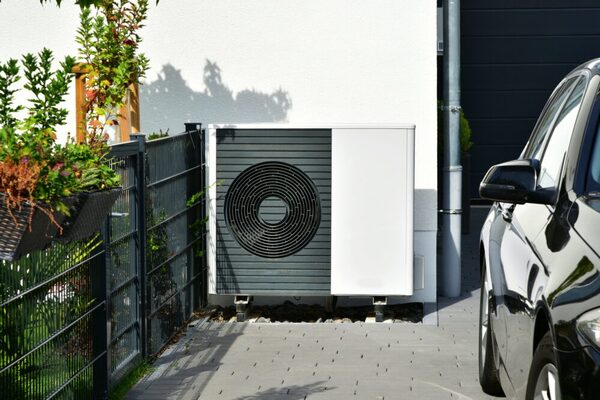
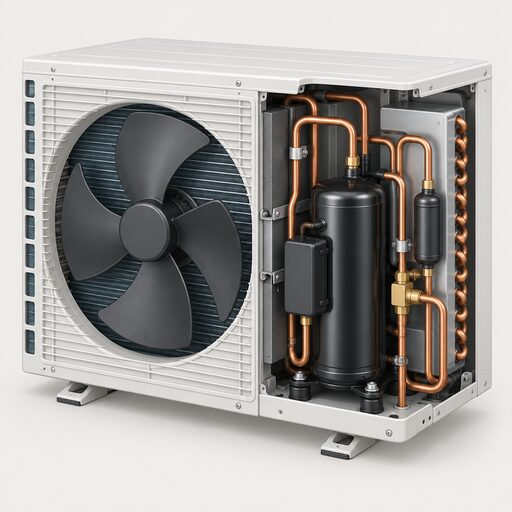
The outdoor unit is a physical object with a footprint: external units vary in size but may be as much as 1 metre by 1.5 metres9. Clearances, boundary distances and noise all bear on where it can sit, covered on where a heat pump outdoor unit can go and MCS 020, the heat pump noise assessment.
On electrical supply, most homes stay single phase. Electricity North West sets out that an upgrade route applies where a single-phase supply is rated between 60 and 100 amps and more than 100 amps is required after maximum demand and diversity calculations40. See electricity supply, fuses and wiring for a heat pump.
Permissions: permitted development, listed buildings and park homes
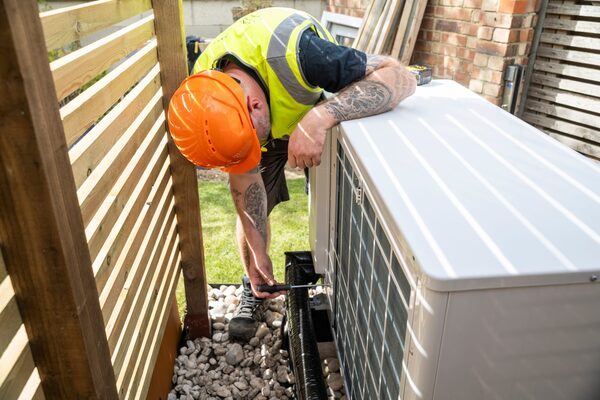
Most heat pump installations are considered permitted developments, meaning planning permission is not needed39, though rules on size and placement apply37. Noise is the common trigger: a heat pump running typically produces between 40 and 60 decibels, and anything louder than the permitted limit requires planning permission21.
- Listed buildings: listed building consent is usually needed for an air source heat pump even where planning permission is not required41, and planning permission may also be needed42.
- Ground source: installation within the curtilage, meaning the garden or grounds, of a house or block of flats does not require planning permission, though listed building consent may be required if the property is listed43.
- Park homes: planning permission is required42.
- Location-specific rules: in some locations planning permissions may also need to be granted18.
Rules differ by nation and the detail is set out on heat pump planning permission in England, Scotland, Wales and Northern Ireland.
Running and maintaining the system
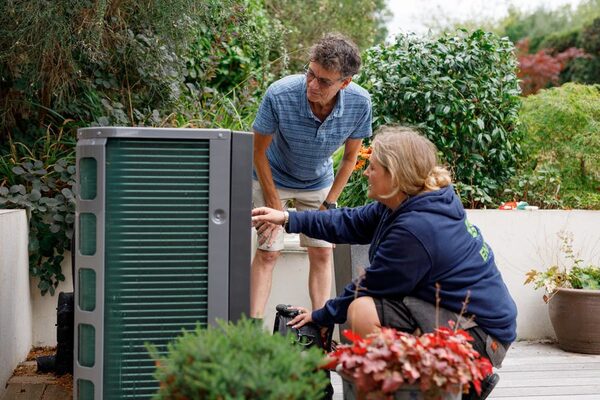
A heat pump should be serviced by an engineer according to the manufacturer's advice, usually once a year44. A service covers cleaning coils, cleaning fan blades, inspecting filters, checking refrigerant level and pressure, and checking that all electrical connections are safe45. The heat pump itself is likely to last 20 years or more, longer than the average gas or oil boiler44.
On the wet side, radiators should be checked at least once a year to see whether they need bleeding, and preferably every few months46. The method is to open the small valve at the top and to the side of the radiator slightly with a radiator key until water begins to draw out48. Needing to bleed a radiator one or more times a month, or bleeding having no effect at all, is the point at which the system should be looked at properly46. A radiator that is hot at the top and cold at the bottom indicates a need for a power flush47. Keeping radiators unblocked by furniture, turning them off in unused rooms and fitting thermostatic valves in the rooms used most all help the emitters do their work48.
Tariffs matter more on a high-temperature system than a low-temperature one, because the electricity consumption is higher. A smart meter is needed to get a heat pump or electric vehicle tariff37, and to access the full benefits of flexible schemes and smart tariffs49. The installer's role includes helping with heating controls and performance and setting the system up to run on a preferred schedule49. See heat pump controls, weather compensation and smart operation and heat pump servicing and maintenance.
Cold weather and the limits of the class
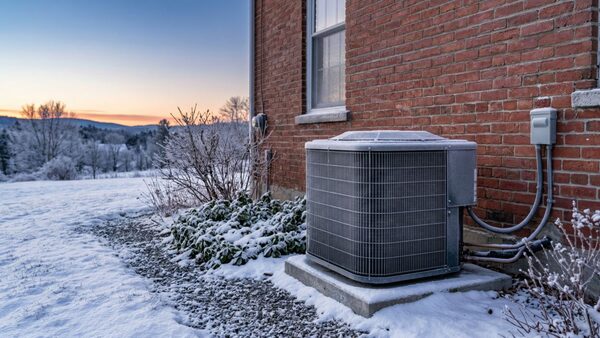
Heat pumps can perform down to minus 15°C or lower, though there comes a point at which output is not enough14. Which? gives effective operation at minus 15 degrees with efficiency dropping in very cold weather1. Energy Saving Trust states that most current models work fine down to about minus 25°C, with some advanced cold-climate models working as low as minus 35°C21. Official Welsh guidance cites efficient operation down to minus 20°C50. These figures describe the ability to run, not the efficiency of running: a high-temperature machine at minus 5 degrees is simultaneously facing its largest temperature lift and its lowest source temperature, which is when the coefficient of performance is at its worst and when the house needs the most heat. More on this sits on heat pumps in cold weather.
What it means for household energy independence
A high-temperature heat pump removes a gas, oil or LPG connection from the home's heating and replaces it with electricity, which can be generated on site, stored, or bought on a time-of-use tariff. For a household off the gas grid, that removes a delivered fuel and its price and supply risk entirely. For a household on it, it ends a monthly standing charge for a gas connection that is only supporting heat and hot water.
What it does not remove is dependence, only relocates it. The home remains connected to the electricity grid and to a supplier, and the efficiency trade-off means it draws more electricity for the same warmth than a well-designed low-temperature system would. Access to the cheapest running costs requires a smart meter and a supplier's tariff49. The machine depends on a manufacturer for parts, refrigerant and warranty support over a twenty-year life44. And the annual service that keeps it working, including refrigerant checks45, requires a qualified engineer.
The honest summary is that the high-temperature class is a compromise deliberately struck: it makes the switch possible in homes where the emitter and fabric work is not, at the cost of a permanently higher electricity demand than a low-temperature design in the same house. Whether that trade is worth making is a question about a specific building, its heat loss and what can realistically be done to it, which is what the heat loss calculation is for. Wider context sits on heat pumps and household energy independence and the heat pumps pillar guide.
Sources50 cited
- An introduction to heat pumps, Which?, 2025-09-22
- SAP 10.3 full specification, BRE Group, 2026-01-13
- Raising minimum standards for heat pumps: options assessment, GOV.UK, 2024-11-27
- Boiler Upgrade Scheme statistics, July 2026, GOV.UK, 2026-08-27
- Notice of approved grant categories and values for the Boiler Upgrade Scheme, GOV.UK, 2026-07-21
- Electrification of Heat: heat pump user guides, Energy Systems Catapult, 2024-02-22
- Daikin at Hafod y Caves, Wales, Heat Pump Association UK, 2026-01-17
- My property and heat pumps, Renewables First, 2026-03-23
- Heat pump installation: a step-by-step guide, Energy Saving Trust, 2026-07-15
- Future subsidies for heat pumps, Nesta, 2024-03-14
- Home heating, Energy UK, 2025-04-04
- Heat pump systems, CIPHE, 2026-09-17
- Low temperature heating definition, NCM Product Characteristics Database, 2026-09-17
- How to ensure a heat pump runs efficiently, Energy Saving Trust, 2026-05-19
- How to get homes more ready for heat pumps, Nesta, 2026-02-12
- Future liquid fuels, UKIFDA, 2026-01-27
- Options available off the gas grid, OFTEC, 2026-09-17
- Your home guide to heat pumps, OFTEC, 2026-09-17
- Should we be making homes heat pump ready: conclusions, Nesta, 2026-02-12
- Should we be making homes heat pump ready, Nesta, 2026-02-12
- Heat pump fact check, Energy Saving Trust, 2026-07-01
- Heating your home, Energy Saving Trust, 2026-05-19
- Electric heating advice, Centre for Sustainable Energy, 2026-06
- In-depth guide to heat pumps, Energy Saving Trust, 2026-07-16
- Heat pumps vs boilers, Which?, 2025-09-22
- Fact sheet 5: air source heat pumps, Pendle Borough Council, 2026-09-17
- Heat pumps: expert guide for homeowners, Development Bank of Wales, 2024-11-07
- Energy UK explains the Clean Heat Market Mechanism, Energy UK, 2025-04-01
- Boiler Upgrade Scheme, Find Government Grants, 2026-09-18
- Boiler Upgrade Scheme guidance for installers v5.1, Ofgem, 2026-07-02
- What the Warm Homes Plan means for you, Energy Saving Trust, 2026-01-23
- Heat pumps for domestic heating, GOV.UK, 2023-11-21
- Heat pump myths, Energy Saving Trust, 2025-09-02
- Approved Document L, Volume 1: Dwellings, GOV.UK, 2023
- MCS Heat Load Calculator documentation, MCS, 2026-09-17
- Heat pump guide: air source vs ground source, The IAA, 2026-09-20
- Deciding if a heat pump is right for you, Citizens Advice, 2025-12-08
- Eligible heating systems, Domestic RHI, Ofgem, 2026-09-17
- Air source heat pumps, Energy Saving Trust, 2026-07-16
- Heat pump connections, Electricity North West, 2026-09-19
- Air source heat pumps: planning, Westmorland and Furness Council, 2026-09-17
- Deciding if a heat pump is right for you (Wales), Citizens Advice, 2025-12-08
- Heat pumps and planning, New Forest District Council, 2026-09-17
- Heat pump questions answered, Energy Saving Trust, 2026-05-27
- Is now a good time to get a heat pump?, Energy Saving Trust, 2025-12-12
- How to bleed a radiator, Uswitch, 2026-09-04
- Boiler maintenance, Uswitch, 2026-09-03
- Winter advice: staying safe, warm and connected, Cadent Gas, 2026-09-20
- How smart meters work with heat pumps, Smart Energy GB, 2026-04-24
- Your essential guide to heat pumps, Welsh Government, 2025-02-20
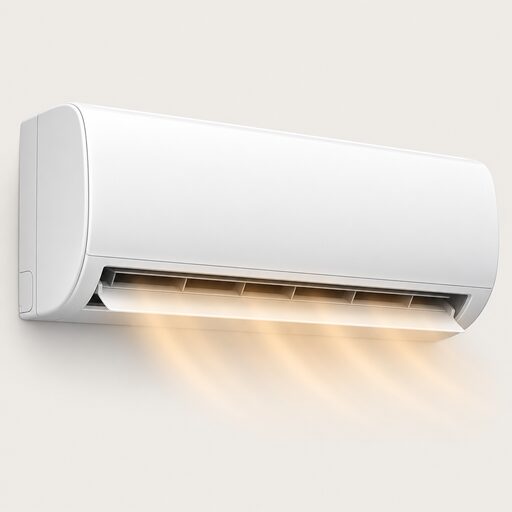 Air-to-Air Heating and CoolingAir-to-air heat pumps deliver warm air through indoor fan units rather than hot water to radiators.
 Air-to-Water Wet SystemsAir-to-water heat pumps feed radiators, underfloor heating and a hot water cylinder, and are the most common domestic heat pump in the UK.
 How Much Does a Heat Pump CostA heat pump usually costs around eleven thousand pounds installed, though quotes vary a lot depending on your home.
 Air Source Heat PumpsHow an air source heat pump takes heat from outdoor air, the difference between air-to-air and air-to-water systems, typical efficiency, the £7,500 Boiler Upgrade Scheme grant, noise and planning limits, and what ownership means for a household's energy independence.
 Heat Pump Electricity TariffsA heat pump tariff gives you cheaper electricity for part of the day, so running your heating costs less than on a standard rate.
 Hot Water Heat PumpsA hot water heat pump heats only the water in your cylinder, using air instead of a boiler flame.