

In this answer
Short answer
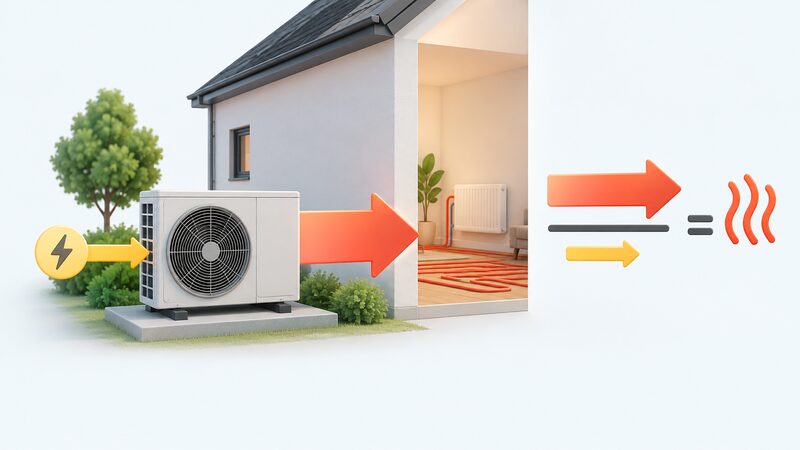
A heat pump's coefficient of performance (COP) is the ratio of heat delivered to electricity consumed. A COP of 3.0 means three units of heat for every unit of electricity, and that is a reasonable working figure for a well-insulated UK home. The Energy Saving Trust notes that in a well-insulated home a heat pump can usually reach a COP of 3 to 4, but in a poorly insulated home it can drop to around 2 or even lower1.
There is no single mandatory COP for a domestic heat pump in the way there is a minimum boiler efficiency. What exists instead is a patchwork: a scheme threshold for the Boiler Upgrade Scheme, a consultation proposal under Part L, and reference figures published by manufacturers for their own products. The seasonal figure, SCOP, matters more than any single COP reading because it averages performance across the year.
What COP means: units of heat per unit of electricity
COP is calculated as heat output divided by power input, a formula set out in Approved Document L, the building regulations guidance for England5. A heat pump with a COP of 3.0 delivers three units of heat for every unit of electricity it uses6. The measure indicates how much heat you get from one unit of electricity, and it is the standard way the industry expresses heat pump efficiency7.
The critical qualification is that COP is published under specific test conditions. In Europe, COP performance testing is typically done using EN 14511, which defines rating terms and test conditions for heat pumps and similar equipment8. That means a quoted COP is tied to a stated outdoor temperature and flow temperature. A figure quoted at one set of conditions is not directly comparable with a figure quoted at another, which is why manufacturer reference figures always carry a label such as A2W35 (air at 2°C, water flow at 35°C).
There is no set limit for COP ratings, but the higher the score, the greater the efficiency of the heat pump9. In practice, the COP a household sees depends on the heat source temperature, the flow temperature the system runs at, and how well the building retains heat. A well-insulated home allows a lower flow temperature and therefore a higher COP; a poorly insulated one forces the system to work harder.
What COP should a heat pump have?
There is no single answer, because the benchmark depends on the purpose. For building regulations compliance, the current Part L 2021 standard for other types of heat pump sets a minimum space heating COP of 3.0 and a domestic hot water heating COP of 2.0, according to the 2023 Future Homes and Buildings Standards consultation10. That is a regulatory floor, not a performance target.
For the Boiler Upgrade Scheme, the requirement is expressed as SCOP rather than COP: an in situ seasonal coefficient of performance of at least 2.8 for air-to-water heat pumps2. Ofgem guidance confirms the threshold, alongside a capacity limit of no more than 45 kWth11. A later Ofgem update clarifies that the SCOP 2.8 requirement applies only to air-to-water systems, not all heat pumps12.
Manufacturers publish their own reference figures. WOLF states that A2W35 air-to-water heat pumps should have a COP of at least 4, B0W35 brine-to-water heat pumps at least 4.5, and W10W35 water-to-water heat pumps at least 5.513. These are maker benchmarks for its own product categories, not regulatory requirements.
| Benchmark | Figure | Applies to | Source |
|---|---|---|---|
| Part L 2021 space heating COP | 3.0 | Other types of heat pump | 10 |
| Part L 2021 hot water COP | 2.0 | Other types of heat pump | 10 |
| BUS minimum SCOP | 2.8 | Air-to-water heat pumps | 2 |
| Maker reference, air-to-water | 4 at A2W35 | WOLF air-to-water | 13 |
| Maker reference, brine-to-water | 4.5 at B0W35 | WOLF brine-to-water | 13 |
| Maker reference, water-to-water | 5.5 at W10W35 | WOLF water-to-water | 13 |
COP by heat pump type: air, ground and water source compared
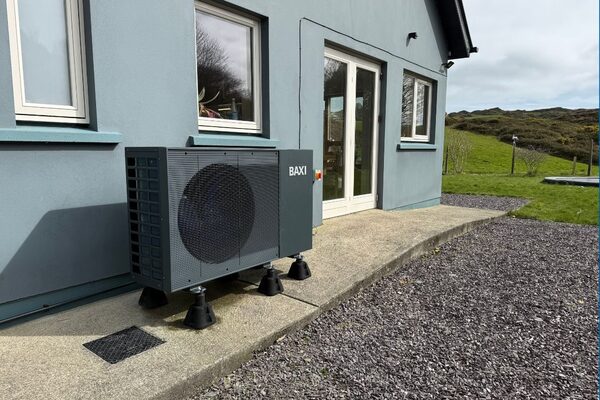
Heat pump types include air source, ground source, and air-to-air14. Air source heat pumps draw heat from the outside air, while ground source heat pumps extract it from the ground15. Water source heat pumps take heat from a body of water. The type of source determines the typical COP, because a warmer, more stable source requires less work to raise to a usable temperature.
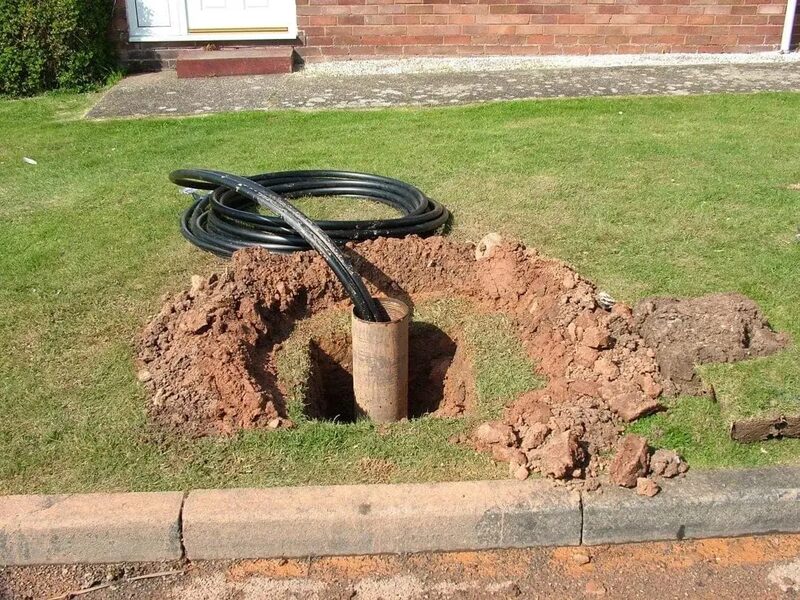
Ground source heat pumps achieve the highest typical figures. A typical ground source heat pump can generate 3.5 to 4.5 units of heat for each unit of electricity it uses3. Approved Document L modelling references ground-to-water heat pumps with a COP of up to 4.55. Ground source systems cost a lot more to install than air source heat pumps16, and the heat they produce is at a lower temperature than other forms of heating, working best with underfloor heating, which requires lower flow temperatures than radiators3.
Air source heat pumps are the most common type in UK homes. In the UK, SCOP is generally around 3.0, or 300% efficient, but can be higher or lower depending on the set-up7. Air or ground source heat pumps are particularly effective when used with wet underfloor heating, because heat pumps are designed to be left on for longer periods and operate at lower temperatures17.
Water source heat pumps sit between the two in principle, drawing from a more stable source than air but requiring access to a suitable water body. The available types across the market include open and closed source heat pumps underground, air source and water source18.
SCOP: the seasonal figure that matters more than a single COP
SCOP, or Seasonal Coefficient of Performance, is the average COP across the whole year6. You will also see Seasonal Coefficient of Performance or Seasonal Performance Factor, which shows the heat pump's efficiency averaged across the whole year1. It is a way to rate a heat pump's performance in a given climate19.
The distinction matters because a single COP is measured at one set of conditions, while a home experiences a range of outdoor temperatures across a heating season. SCOP integrates that range into one figure, which is why scheme rules and installer calculations use it. Installers need to calculate SCOP separately, because the predicted energy label does not consider the SCOP of heat pumps20.
For the Boiler Upgrade Scheme, heat pumps must have a seasonal coefficient of performance of at least 2.811. That threshold is the practical benchmark for a UK installation seeking grant support. It is a minimum, not a target: a system installed and controlled well will typically exceed it.
"Heat pumps must have a seasonal coefficient of performance (SCOP) of at least 2.8."
What affects COP in practice: outdoor temperature and flow temperature
Two variables dominate real-world COP: the temperature of the heat source and the flow temperature the system delivers. A warmer heat source and a lower required flow temperature give a higher COP; colder outdoor air with a higher flow temperature gives a lower COP8. This is the single most useful principle for understanding why two identical heat pumps in two homes can perform very differently.
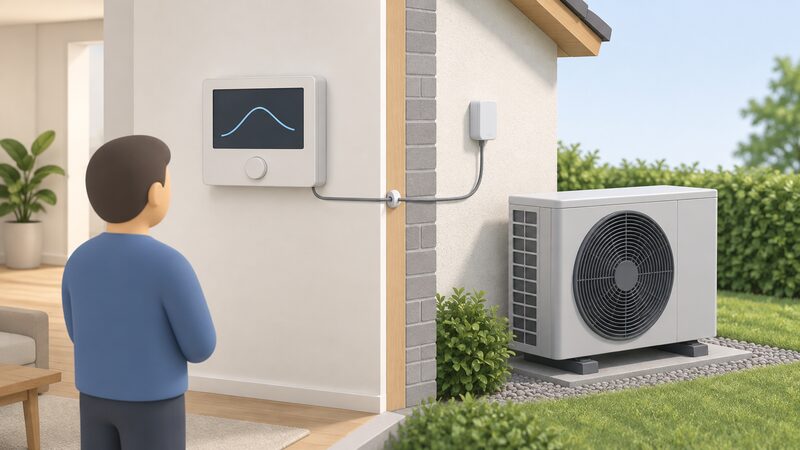
Flow temperature is the variable a household has most influence over, through emitter sizing and controls. Heat pumps run at considerably lower distribution temperatures than traditional boilers4, and a maximum flow temperature of 55°C is typically recommended21. The drivers are straightforward: a warmer heat source and a lower required flow temperature give a higher COP, while colder outdoor air combined with a higher flow temperature gives a lower one22. One maker reports that running at 35°C instead of 55°C on a mild day can give a 30 to 50% COP increase, depending on system and heat pump type, and that a unit held at a fixed 55°C flow temperature on a 10°C day performs well below what the weather would allow23.
Outdoor temperature is the variable a household cannot control. Air source heat pumps are less efficient in winter when the air temperature is colder15. During winter, the air temperature can drop by 5°C or more overnight, which reduces the heat pump's efficiency because it is heating water to a high temperature14. Ground source systems are less exposed to this because ground temperature is stable year-round, which is part of why their typical COP range is higher.
COP and running costs: what a higher COP saves you
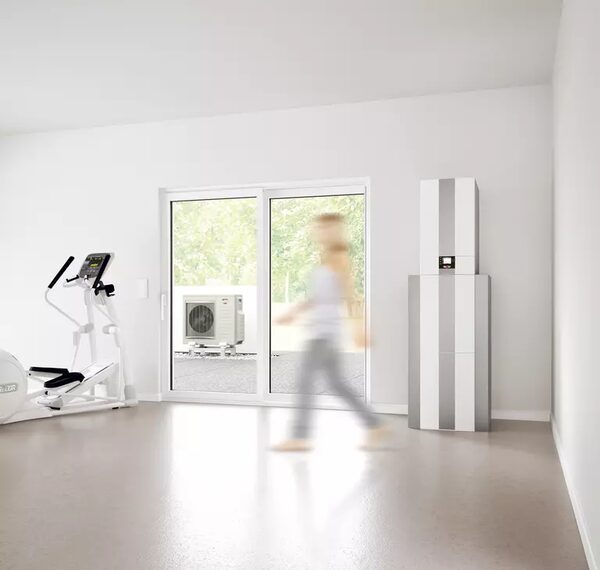
A higher COP reduces the electricity needed per unit of heat, but it does not automatically produce lower bills. A heat pump operating at a low COP can end up costing more to run than a gas boiler, particularly in poorly insulated homes without pricing reform22. That is the risk case, and it is why installation quality and emitter sizing matter as much as the headline COP figure.
The saving case is real but conditional. Dr Jan Rosenow notes that a household could save more than 50% on running costs with a heat pump compared to a gas boiler, but this requires high quality installation, high efficiency and a heat pump tariff7. Which? reports the same figure with the same conditions17. The conditions are doing a lot of work in that sentence: a high COP alone does not deliver the saving.
Topping up wall, floor and loft insulation before installing a heat pump will help reduce its running costs18. The official Check if a heat pump could be suitable for you service compares the cost and carbon emission savings available and what is needed to install a heat pump19. For a household weighing independence, the COP determines how much electricity the home must buy or generate, but the tariff and the building fabric determine what that electricity costs.
Sources23 cited
- In-depth guide to heat pumps, Energy Saving Trust
- Boiler Upgrade Scheme guidance for installers V5.1, Ofgem, 2026-07
- Ground source heat pump costs and savings, Which?
- Heat pump systems, CIBSE
- Approved Document L, Conservation of fuel and power, Volume 1: Dwellings, HM Government
- An introduction to heat pumps, Which?
- Air source heat pump costs and savings, Which?
- Heat pump efficiency: COP, iDM Energie
- Air source heat pump coefficient of performance, Baxi
- The Future Homes and Buildings Standards 2023 consultation, HM Government
- What is the Boiler Upgrade Scheme, Which?
- Summary of updates for BUS guidance for property owners V5.1, Ofgem, 2026-07
- COP heat pumps, WOLF
- How to ensure a heat pump runs efficiently, Energy Saving Trust
- Air source heat pumps fact sheet, Pendle Borough Council
- Ground source heat pumps, Uswitch
- Heat pumps vs boilers, Which?
- Is now a good time to get a heat pump, Energy Saving Trust
- Check if a heat pump could be suitable for you, HM Government
- Boiler Upgrade Scheme property owner guidance V2.3, Ofgem, 2023-09
- My property and heat pumps, Renewables First
- The role of insulation in the Warm Homes Plan, National Insulation Association, 2026-03-02
- Witterungsführung, iDM Energie
 Efficiency COP SCOP and SPFA heat pump can give out three or four times more heat than the electricity it uses, so what do the efficiency numbers on a quote actually mean?
 Heat Pump Electricity TariffsA heat pump tariff gives you cheaper electricity for part of the day, so running your heating costs less than on a standard rate.
 High Temperature Heat PumpsHigh-temperature heat pumps deliver flow temperatures of roughly 65 to 80°C, close to boiler levels, so existing radiators can often stay in place.
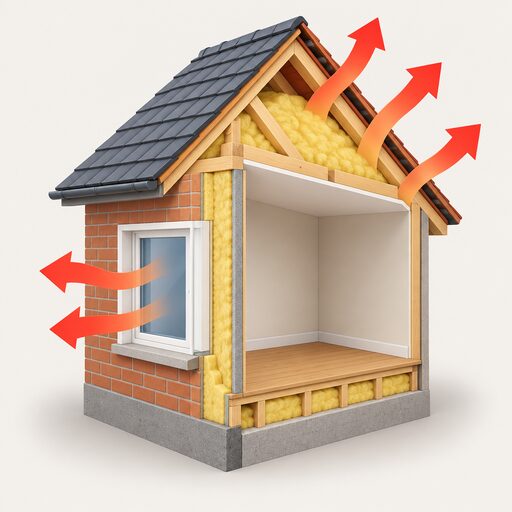 Sizing and Heat LossHow do installers work out what size heat pump your home needs, and why can a unit that is too big cost more to run than one that is slightly small?
 The Full Heat Pumps GuideWill a heat pump keep my house warm in winter, and what does one cost to buy and run?
 How They Perform in UK HomesHow well do heat pumps really work in UK homes, and why do some run far better than others?