

In this guide
A quote for a solar array or a heat pump is not a price. It is a set of promises about equipment, performance, workmanship and paperwork, and the differences between two quotes usually sit in the items one of them leaves out. The Renewable Energy Consumer Code, formed in 2006 and run by Renewable Energy Assurance Ltd, sets standards for the selling or leasing of small-scale heat and power generators to domestic consumers, and its scope expressly covers marketing, pre-contractual information, quotations, deposits, contracts, guarantees and after-sales service1.
That scope tells a householder what to look for. A quote that names the equipment, states a property-specific performance estimate, sets out the deposit and payment stages, and names the guarantee provider is doing what the Code expects. A quote that gives a single "from" price and an "average" saving is not.
Independent guidance recommends getting quotes from at least three MCS-certified heat pump installers to find the best value, and notes that installers will calculate the home's heat demand and other information to inform their recommendations2. The comparison only works if each quote answers the same questions.

What a quote must show under the Renewable Energy Consumer Code
The Code is the reference point for what a written quotation should contain. It sets out the standards applicable to the selling or leasing of small-scale heat and power generators, whether from renewable or other low carbon sources, to domestic consumers, and it dovetails with the MCS scheme1. Its coverage of quotations, deposits, contracts and guarantees means those items are not optional extras in a well-run sale.
In practice, a quote that meets the Code's expectations will identify the equipment by make and model, state the system size and design assumptions, give a performance estimate for the specific property, set out the deposit and the payment stages, name the guarantee provider and its duration, and state the cancellation terms. Where a quote omits any of these, the gap is the thing to ask about before signing.
For heat supply contracts the written requirement is explicit and stricter than for one-off installations. A Heat Supply Contract must be in writing, drafted in plain and intelligible language, set out in a single pack and not incorporate any terms or conditions by reference to any website or analogous resource, and include all terms and conditions for the supply of heating, cooling or hot water7. That is the standard for a contract that runs for years; a one-off installation quote should be at least as clear about what is being bought.
The Code's administrator matters for complaints. The RECC was developed and is sponsored and run by Renewable Energy Assurance Ltd, which means a complaint about a member's conduct has a route beyond the installer1. The Renewable Energy Consumer Code page sets out how that route works, and Getting Quotes for a Home Energy Installation covers the process of gathering them.
Performance estimates: property-specific or 'average'
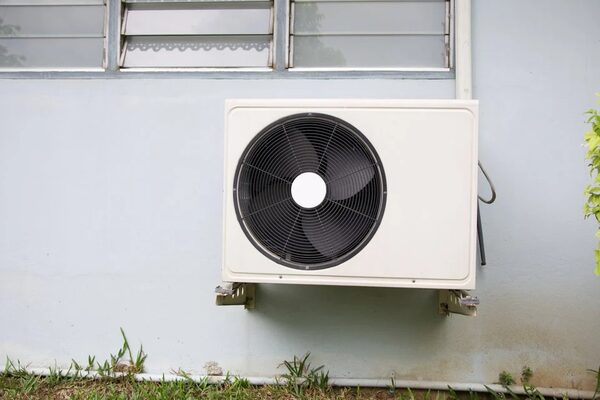
The single biggest difference between two quotes is often the performance figure, and whether it was calculated for the property or lifted from a table.
Heat pump efficiency is expressed as a Seasonal Coefficient of Performance or Seasonal Performance Factor, showing efficiency averaged across the whole year4. The Seasonal Performance Factor is the ratio of heat delivered to total electrical energy supplied over a year: a heat pump with an SPF of 2.5 will on average deliver 2.5kWh of heat for every 1kWh of electricity it uses8. That definition comes from the Domestic Renewable Heat Incentive guidance, and it is the figure a householder should expect to see stated.
The inputs behind it are property-specific. The calculation uses the average temperatures at the location and the size of the radiators4. Heat pump installers must calculate the SPF based on the system design for the home and share the calculation before starting any work4. A quote that gives a performance figure without those inputs has not done the calculation.
"Heat pump installers must calculate the SPF based on the system design for your home."
For solar, the equivalent discipline is a shading and orientation assessment, and the quote should state the assumed generation rather than a generic percentage. The Performance Estimates and Savings Claims page covers how those claims are regulated, and What an MCS performance estimate must show sets out the certificate side.
Where a quote offers a figure described as typical or average, it is not a performance estimate for that property. The distinction matters because the whole economics of a heat pump rest on the SPF: a system designed for a lower flow temperature and larger radiators will run at a better seasonal figure than one bolted onto existing emitters.
Deposits and advance payments: how your money is protected
Deposits are the point at which a quote becomes a financial commitment, and the protection around them varies by which code the installer belongs to.
The Code's scope includes deposits alongside quotations and contracts, so a member's deposit terms are within the standards it must meet1. Beyond the code itself, deposit protection and insurance-backed guarantee schemes are offered by several bodies, and the technologies each covers differ.
| Provider | Product | Technologies covered |
|---|---|---|
| Qualitymark Protection | Domestic property insurance backed guarantee | Battery storage, biomass, air source heat pumps, ground source heat pumps, solar heating, solar PV, water source heat pumps, solar assisted heat pumps9 |
| Consumer Protection Association | Small-scale renewable energy system warranty insurance | Battery storage, biomass, air source heat pumps, ground source heat pumps, micro CHP, small wind turbine, solar assisted heat pump, solar heating, solar PV, water source heat pumps9 |
| Independent Warranty | Workmanship insurance backed guarantee | Battery storage, biomass, air source heat pumps, ground and water source heat pumps, other heat pump types, solar heating, solar PV9 |
The practical question for a householder is which of these, if any, sits behind the quote in front of them. A deposit paid to an installer with no scheme membership and no insurance-backed guarantee is an unsecured advance. The Deposits and Staged Payments page covers the mechanics, and Deposit protection for advance payments over 25% deals with the larger-advance case.
Workmanship guarantees that survive the installer

A heat pump installation typically carries two layers of guarantee: a manufacturer's warranty covering the equipment itself, and an installer's guarantee covering the quality of the workmanship and the installation as a whole5. The two have different durations, different providers and different failure modes, and a quote should name both.
The manufacturer's warranty is only as good as the manufacturer. If the maker exits the market, the equipment warranty goes with it, though the installer's workmanship guarantee may survive if it is backed by a third party. An insurance-backed guarantee protects the homeowner if the installer goes out of business after completing the work, so repairs and workmanship issues can still be addressed5. That is the layer that matters most in a market where small firms come and go.
Installers should also hold insurance before work begins. This means public liability insurance, which covers damage to property during the installation process, and employer's liability insurance if the company has staff working on site5. A quote that does not mention insurance is not necessarily uninsured, but the cover is worth confirming in writing.
The Insurance-Backed Guarantees page explains how these products work, Workmanship Warranties and Aftercare covers service plans, and When Your Installer Goes Bust deals with the failure case.
Cancellation rights: the 14-day cooling-off period and starting work early
Most domestic installation contracts carry a statutory cancellation right, and the quote should state it.
Under the Consumer Contracts (Information, Cancellation and Additional Charges) Regulations 2013, you have the right to cancel most off-premises and distance contracts and the cancellation period is 14 days3. That covers contracts agreed in the home or at a distance, which is how most renewable installations are sold. The same 14-day principle applies in the energy supply market: if you change your mind, you can cancel your switch within 14 days10.
The complication is starting work early. If a householder asks for work to begin inside the cancellation window, the right to cancel does not disappear, but the position on payment for work already done changes. A quote that proposes an early start should say so explicitly and record the request in writing.
The Installation Contracts and Your Cancellation Rights page covers the full position, and How to complain about a cancellation charge deals with disputes over charges after cancelling.
MCS certification and RECC membership: what to check before signing

Certification is the first filter on any quote, and for grant-funded work it is a condition rather than a preference.
For the Boiler Upgrade Scheme, installers must be MCS certified and be certified to install heat pumps and or biomass boilers6. For installations of 50 kilowatts or less generating from combined heat and power, solar photovoltaic or wind, the installation must be certified under MCS or an equivalent scheme and installed by an MCS or equivalent installer11. Those are the thresholds that determine whether a grant or a smart export arrangement is available at all.
MCS certification also carries paperwork obligations that affect the householder. For heat pump installations, metering information must be added to the MCS Certificate12. That certificate is the document that supports grant claims and, historically, incentive payments, so a quote should state who produces it and when.
The Code sits alongside certification rather than replacing it. The Code dovetails with the MCS, and membership is a separate commitment covering selling conduct rather than technical competence1. A householder checking a quote is therefore checking two things: that the firm can do the work to standard, and that it will sell and contract it fairly.
The MCS Certified Installers page covers what certification involves, The MCS Installation Standards covers the technical standards behind it, and Your MCS Certificate and Installation Handover Pack covers the documents that follow.
High-pressure selling: what the Code prohibits
The Code's coverage of marketing and pre-contractual information is what stands between a householder and a pressured sale, and it is worth knowing what a compliant sales process looks like.
A compliant quote is a document, not a conversation. It states the equipment, the performance estimate, the price, the deposit, the guarantee and the cancellation terms, and it does not depend on a signature obtained during the visit. The Code's inclusion of marketing and pre-contractual information in its scope means those stages are within its standards1.
Pressure tactics typically show up as a discount that expires the same evening, a claim that a grant is about to close, or a refusal to leave written terms behind. None of those are consistent with a quote that meets the Code's expectations. The Mis-Selling, Doorstep Sales and Pressure Selling page covers the conduct rules in detail, and How much refund you can get after aggressive selling deals with the remedy.
Scaffolding and installation logistics to compare between quotes
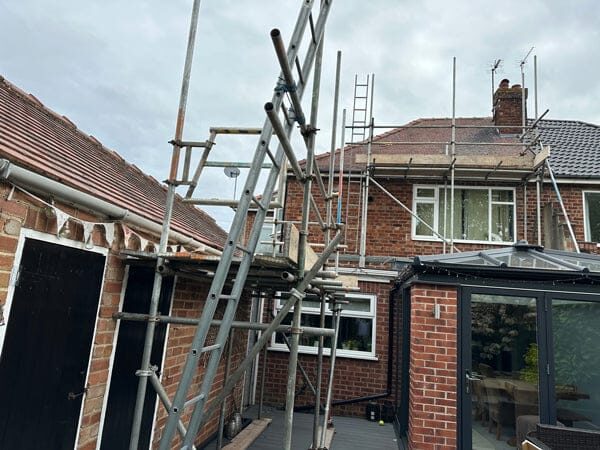
Two quotes for the same system can differ by hundreds of pounds on access alone, and the difference is usually invisible until the work starts.
Scaffolding, roof access, cable routes, and the position of the outdoor unit all affect the price, and quotes handle them differently. Some include access in the headline figure, some list it separately, and some exclude it. A comparison that ignores these items is comparing two different scopes.
The outdoor unit position is not purely a matter of preference. Under Class G permitted development rights, the air source heat pump must not be installed on a pitched roof13. On land other than a conservation area or World Heritage Site, the heat pump must not be installed on a highway-fronting wall of a dwellinghouse or block of flats above the level of the ground floor storey13. In a conservation area, on a listed building or on a scheduled monument, installations on a wall fronting a highway are not permitted14. Local guidance confirms that permitted development for air source heat pumps is subject to a number of limits and conditions15, and that planning permission is required where the installation does not meet permitted development rules, on a listed building, in a conservation area with restrictions, in a prominent position such as the front of a property, or where there is an unacceptable impact on neighbours such as noise or visual impact16.
Noise is part of the logistics. Under the MCS noise assessment method, two units in operation together must not exceed the 40db limit14. The assessment records the heat pump make and model, the installation address, the heat pump installation location and the date the calculation was undertaken17. A quote that places the outdoor unit without that assessment has skipped a step.
Electrical capacity is the other hidden item. For heat pump connections, an application to connect applies to premises with a new Maximum Demand between 60A and 100A inclusive, and must be made prior to installation using the heat pump connection form18. Where a property needs a supply upgrade, that work sits outside the installation quote unless it is stated.
If something goes wrong: complaints, dispute resolution and arbitration
The complaint route depends on what the complaint is about, and the quote should make the first step clear.
For heat networks, the party responsible for handling complaints is the Energy Ombudsman, but before contacting the Energy Ombudsman consumers should first notify their heat supplier and try to resolve the issue19. The supplier has eight weeks to resolve the complaint before the ombudsman route opens7. Heat Trust provides an independent process for settling complaints between customers and their heat supplier through the Energy Ombudsman20.
For energy supply complaints, the position is similar. Consumers can complain to the Energy Ombudsman if the issue is not resolved to their satisfaction21, and the same escalation applies to complaints about prepayment meter installation22. The Facilitated Complaints Resolution service notifies the participating energy supplier, energy broker or heat network through its case management system23.
For installation work itself, the first step is the installer, then the consumer code or registration body the firm belongs to. The Complaining About an Installer page sets out the escalation route, How to complain to the Renewable Energy Consumer Code covers the Code's own process, and How long before you can take a complaint to the Energy Ombudsman covers the timing.
What the quote means for a household's energy independence

A quote is where independence is either built in or quietly designed out, and the line items reveal which.
A heat pump quote that includes a full heat demand calculation, a stated SPF and a radiator schedule is describing a system that will run efficiently on electricity the household can increasingly generate itself. A quote that specifies a like-for-like replacement without those items is describing a system that will run, but not necessarily well. The difference is not marketing: it is the Seasonal Performance Factor, and it determines how much of the household's heating cost is exposed to electricity prices.
The dependence that remains is worth stating plainly. A heat pump runs on electricity from the grid, supplied by a supplier, and its running cost is exposed to the relationship between electricity and gas prices. Reducing the price of electricity relative to gas would make heat pumps more competitive24. That is a policy lever, not something a quote can fix.
Solar changes the picture but does not remove the grid. A solar array generates when the sun shines, and the household remains connected for evenings, winter and backup. Battery storage shifts the balance further. What a quote can do is make the system's expected output explicit, so the household knows what it is buying and what it is still buying from a supplier.
The Installers and Energy Independence page covers the wider picture, and the Home Energy Installers and Retailers guide covers the full process from first quote to final certificate.
Sources24 cited
- Renewable Energy Consumer Code, Chartered Trading Standards Institute, 2026
- Heat pump installation: a step by step guide, Energy Saving Trust, 2026
- Problems with services, Isle of Anglesey County Council, 2025
- In-depth guide to heat pumps, Energy Saving Trust, 2026
- Heat pump certifications, Consumer Protection Association, 2026
- Boiler Upgrade Scheme guidance for installers, Ofgem, 2026
- Heat networks regulation: consumer protection guidance decision, Ofgem, 2026
- Domestic RHI: Essential guide, Ofgem, 2022
- MCS approved financial protection products, MCS, 2026
- Switch your home energy supplier, Ofgem, 2026
- Draft licence conditions, Department for Business, Energy and Industrial Strategy, 2026
- Eligible heating systems, Ofgem, 2026
- Class G: installation of air source heat pumps, legislation.gov.uk, 2026
- Changes to permitted development rights: summary of responses, Welsh Government, 2025
- Planning guidance: heat pumps, London Borough of Richmond upon Thames, 2026
- Common planning projects: air source heat pumps, Westmorland and Furness Council, 2026
- MCS 020(a) calculator, MCS, 2025
- Building regulations renewables guidance, Bedford Borough Council, 2026
- Heat networks consumer protections: draft guidance, Ofgem, 2025
- Heat networks delivery plan, Scottish Government, 2022
- Smart meters: your rights and expectations, GOV.UK, 2025
- Installing a prepayment meter without your permission, Ofgem, 2026
- Facilitated Complaints Resolution, Energy Ombudsman, 2026
- Research briefing: heat pumps, Parliamentary Office of Science and Technology, 2026
 Getting Installation QuotesHow householders obtain quotes for boilers, heat pumps and solar PV, how many quotes are usually recommended, what a survey should involve, and the difference between an estimate, a quotation and a fixed price.
 Comparing Specs Like for LikeTwo solar panels or heat pumps can look different on paper even when they do the same job.
 Deposits and Staged PaymentsHow much deposit should you pay for solar panels or a heat pump, and what happens to your money if the installer goes bust?
 The Full Brands GuideWhich boiler, heat pump or solar brand can you trust, and who actually owns it?
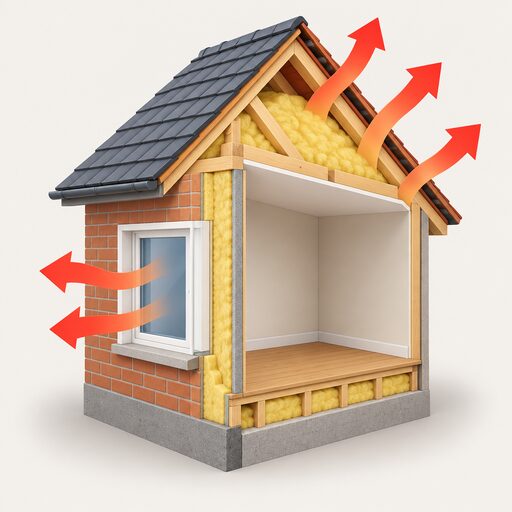 Sizing and Heat LossHow do installers work out what size heat pump your home needs, and why can a unit that is too big cost more to run than one that is slightly small?
 Installation Cost TrendsTracks the published median and average installed costs of domestic solar, heat pumps and batteries and how they have moved.