

In this answer
Short answer
The Energy Ombudsman waiting time is eight weeks. A householder who has complained to an energy supplier, a heat network operator or a FIT licensee must normally allow that company eight weeks to put things right before the dispute can be escalated to the Energy Ombudsman1. The only way to escalate sooner is a deadlock letter, the supplier's written confirmation that no agreement can be reached2.
Once a deadlock letter has been issued, the clock changes. The dispute must be escalated within 12 months of receiving the letter, and supplier letters themselves state that the householder has up to 12 months from the date of the letter to contact the Ombudsman2. The service is free for consumers, and the Ombudsman describes the review as free and independent4.
The rule matters for household energy independence because it sets the boundary between what a supplier must resolve itself and what an outside body can order. A household that generates its own electricity, runs a heat pump or buys through a heat network still depends on a supplier or operator for billing, metering and export payments, and the eight-week period is the point at which that dependence can be tested by someone else.
The waiting time: eight weeks from your first complaint to the supplier
The eight-week period runs from the date the complaint was first raised with the supplier, not from the date of the problem. The Ombudsman's own eligibility wording is consistent across supplier pages: "It's been at least 8 weeks since I first raised the issue with the supplier (or I have received a Deadlock Letter)"7. The same condition appears on the pages for Utility Warehouse, British Gas Trading and Cynon Taf Community Housing, and on the heat network pages for Theodore Stevenage, Sanctuary Housing Association, Vivid Housing and Westminster Council9.
The supplier's obligation is stated plainly: "Your supplier has eight weeks to resolve the complaint"4. The Ombudsman's own guidance to householders repeats the point, asking them to allow the supplier 8 weeks to put things right unless a deadlock letter arrives sooner1. Ofgem's consumer guidance sets out the same escalation conditions: a problem not fixed within 8 weeks, a failure to agree on a fix, a deadlock letter, or dissatisfaction with the decision received6.
The period is expressed in weeks throughout the scheme's documents rather than in days. Eight weeks and 56 days describe the same length of time, and no source in the scheme's guidance uses the day count, so the practical deadline is identical whichever wording a householder meets.
In practice, the eight weeks is not a passive wait. The complaint needs to be logged with the supplier on a known date, because that date is what the Ombudsman checks. A household that raises an issue by phone and keeps no record can find the start of the period disputed later. The evidence checklist used across the Ombudsman's supplier pages asks for sufficient evidence to support the case, including the date the complaint was raised, and confirmation that the supplier name matches the bill10.

Eight weeks, or a deadlock letter: when you can escalate
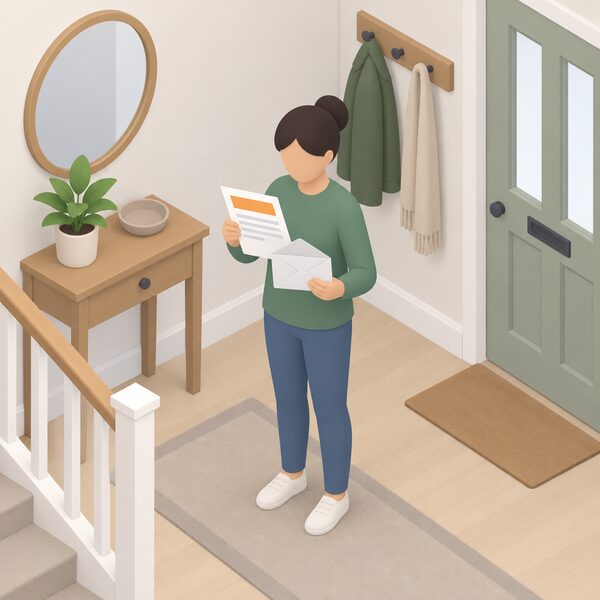
There are two routes to the Ombudsman and either one satisfies the waiting requirement. The first is the passage of eight weeks without resolution. The second is a deadlock letter, which the supplier may issue at any point before the eight weeks are up. The Ombudsman's guidance is explicit that a deadlock letter allows a householder to come to the service sooner than eight weeks16.
The escalation trigger is described in the same terms across the scheme's consumer pages: "If eight weeks pass without a resolution, or your supplier sends you a deadlock letter sooner, you can bring the dispute to Energy Ombudsman"4. The case-creation guidance asks householders to confirm they have allowed the supplier 8 weeks to resolve the dispute or have received a Deadlock Letter permitting earlier escalation18.
A deadlock letter is not a rejection of the complaint. It is a statement that the supplier and the householder cannot reach agreement, and it transfers the dispute to the Ombudsman's process. Ofgem's guidance on the eight-week period and deadlock letters sets out the framework suppliers work to, and supplier letters themselves carry the 12-month escalation window3.
"You have up to 12 months from the date of this letter to do so"
The two routes produce different clocks. A householder who waits the full eight weeks has no separate deadline running from the end of that period in the scheme's published rules; the 12-month limit attaches specifically to the deadlock letter. A householder who receives a deadlock letter in week two therefore has 12 months from that letter, which may expire before a householder who simply waited eight weeks would need to act.
The 12-month deadline after a deadlock letter
The 12-month rule is the one deadline in the scheme that a householder can miss without realising it. The Ombudsman states that a dispute must be escalated within 12 months of receiving the deadlock letter2. The same wording appears in the Ombudsman's FAQ material2, and the network operator guidance repeats that a deadlock letter allows a householder to come to the service sooner17.
The deadline is set by the supplier's letter as well as by the scheme. Ofgem's guidance records the standard wording: "You have up to 12 months from the date of this letter to do so"3. That means the date on the letter, not the date the householder reads it or acts on it, starts the clock.
The practical consequence is that a deadlock letter should be treated as the start of the escalation, not as a pause. Where a supplier issues one early, the householder has less time overall than someone who simply waits out the eight weeks, because the 12-month window begins at the letter rather than at the end of the waiting period.
Does the eight-week rule apply to heat network complaints?
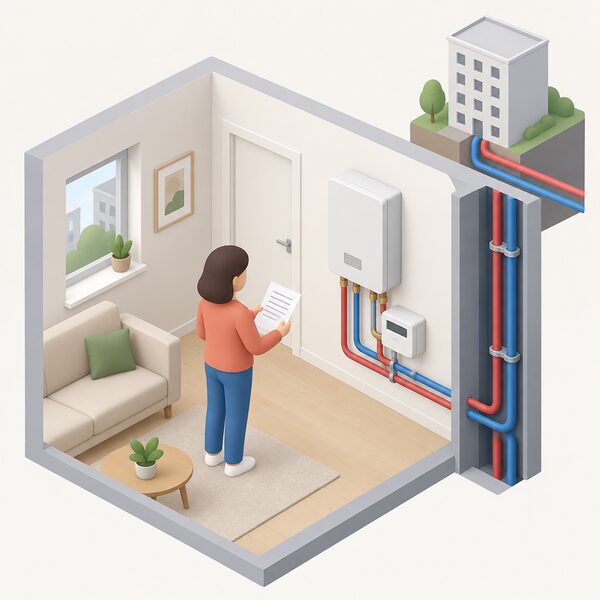
Yes. Heat networks sit inside the same waiting period as conventional suppliers. Ofgem's heat network consumer protection guidance confirms that "the period after which a complaint can be escalated to the Energy Ombudsman remains eight weeks for heat networks"19. The draft guidance behind it states that the heat supplier has 8 weeks to resolve the complaint, and that consumers should notify their heat supplier and work with it before contacting the Ombudsman20.
The Ombudsman's heat network pages carry the same eligibility condition as its supplier pages. Metropolitan Infrastructure, Essential Living, Theodore Stevenage, Sanctuary Housing Association and Vivid Housing all require that the complainant has received a deadlock letter or waited 8 weeks without resolution21. Westminster Council's page uses the fuller wording: at least 8 weeks since first raising the issue with the supplier, or receipt of a Deadlock Letter15.
Heat networks are a distinct case for household energy independence because the household often cannot switch supplier. A resident on a communal or district heating scheme buys heat from the operator serving the building, and there is no competitive market to move to. The eight-week rule and the Ombudsman route are therefore the main external check on billing and service quality for those households, which is why Ofgem's guidance treats the escalation period as something that must remain clear to residents19.
What happens once you refer the complaint
Escalation opens a defined process rather than an open-ended negotiation. The Ombudsman will ask for information and evidence relating to the complaint, review the evidence provided by the householder and the energy company, inform the householder of the decision within 6 weeks, and give the energy company a set of actions to resolve the problem6. If no offers are accepted, both parties must provide evidence within 14 days1.
The evidence stage is where cases are won or lost. The eligibility checklist used across the Ombudsman's pages requires that the complainant has already complained to the supplier, has received a deadlock letter or waited 8 weeks, has sufficient evidence including the date the complaint was raised, and can confirm the supplier name matches the bill10. Once a complaint is escalated, the Ombudsman asks for information and evidence, reviews the evidence from both sides, informs the complainant of its decision within 6 weeks, and gives the energy company a set of actions to resolve the problem15. A case study on estimated meter readings records the complaint being brought to a close within a few days of the Ombudsman receiving it, which shows how quickly a well-documented case can move once it is accepted24.
The service is free. The Ombudsman states that it is free for consumers to use the service, and describes the review as free and independent4. The scheme is funded by suppliers rather than householders, so there is no charge for referring a dispute, for the investigation or for the decision.
For a household, the Ombudsman is an external check on a relationship it cannot exit on its own terms. A home with solar panels and a battery still depends on a supplier for export payments and billing; a home on a heat network depends on an operator it cannot change. The eight-week rule and the 12-month deadlock deadline are the two dates that determine whether that dependence can be tested by anyone outside the company.
Where the waiting time may change
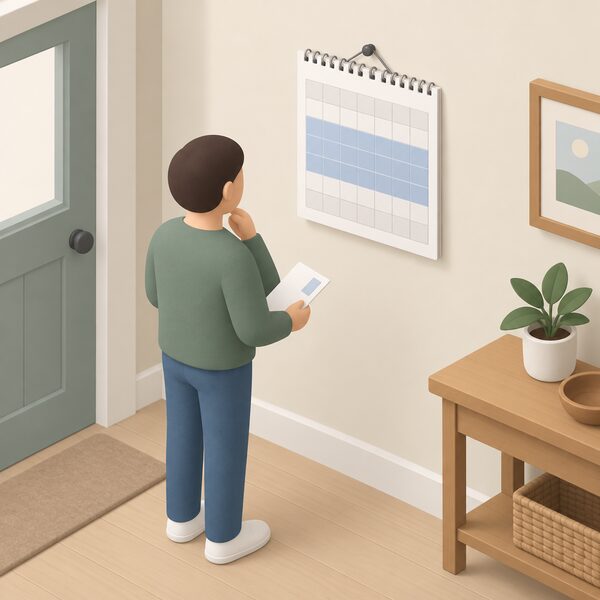
The eight-week period is current policy, not a fixed feature of the market. The Energy Ombudsman has reported work on "reducing the complaint escalation timeframe from the current eight weeks to six weeks"25. That change would shorten the householder's wait before escalation, and it is described as a reduction from the current eight weeks, which confirms eight weeks as the present rule.
A separate government consultation, Fairer, faster redress in the energy market, proposed "reducing the time that the Ombudsman has to consider complaints to 4 weeks"27. That proposal concerns the Ombudsman's own handling time after a case is accepted, not the householder's waiting period before escalation. The two figures should not be confused: one would shorten the wait to escalate, the other would shorten the wait for a decision.
The eight-week rule also applies outside the domestic supplier market. Ofgem's guidance for FIT generators states that if a complaint is still unresolved after 8 weeks, it can be escalated to the Energy Ombudsman, and the dispute resolution guidance for the Feed-in Tariff scheme uses the same period for domestic and micro business generators where no mutually agreeable outcome has been reached28. A parliamentary briefing on the Smart Export Guarantee records the same eight-week referral period for complaints under that scheme30.
Sources30 cited
- We may be able to help resolve your energy dispute, Energy Ombudsman, 2026-09-20
- FAQs, Energy Ombudsman, 2026-09-19
- Eight week and deadlock letter guidance, Ofgem, 2020-02
- EV tariffs and home charging: what consumers need to know, Energy Ombudsman, 2026-09-11
- Understanding your rights, Energy Ombudsman, 2026-09-20
- Complain about your energy supplier or network operator, Ofgem, 2026
- Theodore Bracknell Limited, Energy Ombudsman, 2026-09-19
- Gateway Housing Association, Energy Ombudsman, 2026-09-19
- Utility Warehouse Energy, Energy Ombudsman, 2026-09-19
- British Gas Trading, Energy Ombudsman, 2026-09-19
- Cynon Taf Community Housing 2007 Ltd, Energy Ombudsman, 2026-09-19
- Theodore Stevenage Limited, Energy Ombudsman, 2026-09-19
- Sanctuary Housing Association, Energy Ombudsman, 2026-09-19
- Vivid Housing Limited, Energy Ombudsman, 2026-09-19
- Westminster Council, Energy Ombudsman, 2026-09-19
- Energy suppliers, Energy Ombudsman, 2026-09-20
- Network operators, Energy Ombudsman, 2026-09-20
- Creating a case with the Energy Ombudsman, Energy Ombudsman, 2026-09-20
- Heat networks regulation: consumer protection guidance decision, Ofgem, 2026-01-13
- Heat networks consumer protections draft guidance, Ofgem, 2025-09-05
- Metropolitan Infrastructure Limited, Energy Ombudsman, 2026-09-19
- Essential Living, Energy Ombudsman, 2026-09-19
- Complain about your energy supplier or network operator, Ofgem, 2026
- Estimated meter readings lead to £2,200 electricity bill dispute, Energy Ombudsman, 2026-07-29
- Energy Ombudsman H1 data 2026, Energy Ombudsman, 2026-08-24
- One million consumers helped by Energy Ombudsman as service marks 20 years, Energy Ombudsman, 2026-07-07
- Fairer, faster redress in the energy market, Department for Energy Security and Net Zero, 2025-10-23
- Dispute resolution, Ofgem, 2026-09-17
- Guidance for FIT Generators V18, Ofgem, 2026-04-01
- Smart Export Guarantee, House of Commons Library, 2026-05-13
 Complaining About a SupplierHow do you complain about your energy supplier, and how long should it take?
 Complain About Energy SupplierThe order of a complaint: the supplier's own procedure, the eight-week point or deadlock, and referral to the Energy Ombudsman in Great Britain or the Consumer Council in Northern Ireland.
 Report a Faulty MeterWhat to do when a meter over-records, stops recording or produces impossible readings: the evidence to gather, how to raise it with the supplier, the 5 working day and 8 week deadlines, and how the Energy Ombudsman handles meter disputes.
 Switching SupplierHow long does switching energy supplier actually take, and what happens if you owe money?
 Energy Complaints and RedressMaps the routes a householder has when an energy supplier, network operator, broker or heat network gets something wrong, which body handles which dispute, and what the Energy Ombudsman can and cannot do.
 Scams and Mis-SellingHow energy supplier scams present, what the doorstep and phone selling rules require, the redress available when a contract was mis-sold, and how the Energy Ombudsman handles a dispute.