
In this guide
A complaint about a gas or electricity supplier starts with the supplier itself. The first step is to log a dispute with the company, and the Energy Ombudsman will not investigate until that has happened1. The supplier then has 8 weeks to investigate and resolve the problem3. If the 8 weeks pass without a resolution, or the supplier issues a deadlock letter sooner saying the problem cannot be fixed or that there is nothing more it can do, the dispute can be taken to the Energy Ombudsman4.
The Energy Ombudsman is an independent service, separate from Ofgem, approved by Ofgem to handle service disputes in the energy sector5. It is free to consumers7. It covers disputes with energy suppliers, energy brokers, network operators, Green Deal providers and heat network suppliers6. Most disputes are resolved within 6 weeks of the Ombudsman receiving evidence from both parties, and Ofgem states the Ombudsman will inform you of its decision within 6 weeks8.
Remedies are practical rather than punitive. The Ombudsman can require a supplier to take practical action such as crediting or cancelling an account or changing a tariff, to make an apology, or to offer a financial award, or a combination of these8. For energy supplier disputes the financial award ceiling is up to £10,000 for domestic cases and up to £20,000 for small business cases, although the average award is around £508. The Ombudsman cannot punish companies, dictate how companies operate, or issue fines8.
Complaining to your supplier first: the step the Ombudsman requires
Every route into the Ombudsman begins the same way. Ofgem's guidance and the Ombudsman's own are aligned: notify the supplier and work with them to try to resolve the issue before contacting the Ombudsman2. The Ombudsman's eligibility checklists for individual companies put it as a tick box, that the complainant has already complained to the named supplier, before a case can be created9.
Where a household has its own contract with a supplier, the supplier's complaints procedure applies, and details should be on the bill or on the company's website10. Suppliers are required to provide certain information about the eight week point and about deadlock under the Gas and Electricity (Consumer Complaints Handling Standards) Regulations 200811. Those regulations have applied to complaints made by domestic customers and micro business consumers12.
Typical grounds for a complaint to a supplier, as Ofgem lists them, are:
- late, incorrect, or missing bills
- back billing
- being overcharged
- a faulty meter
- poor customer service
- refusing to refund credit from your account13
The date the complaint is first raised matters more than most people expect, because it starts the eight week clock and because the Ombudsman asks for it as part of the evidence14. A complaint logged by phone with no note of the date is harder to escalate than one logged in writing.
Smart meter guidance takes the same shape: raise the problem with the supplier, which has 8 weeks to investigate and resolve it, and complain to the Energy Ombudsman if the issue is not resolved to your satisfaction15. Complaints about a prepayment meter installed without permission follow the same escalation route3.
The 8-week rule and the deadlock letter

The supplier must be allowed 8 weeks to put things right, unless a deadlock letter arrives sooner16. The Ombudsman's case checklists phrase the test as at least 8 weeks since the issue was first raised with the supplier, or receipt of a deadlock letter17.
A deadlock letter is the supplier's own statement that the problem cannot be fixed or that it believes there is no more it can do3. It is not something the Ombudsman issues and it is not something a consumer can compel. Its only practical effect is to open the door early. Ofgem also treats a straightforward inability to agree how to fix the problem, or dissatisfaction with the decision received, as grounds to escalate3.
For a household, the practical reading is that the eight weeks is a floor, not a target. A supplier that resolves the matter in week three has resolved it. The clock exists so that the Ombudsman is not asked to investigate a complaint the supplier has not yet had a fair chance to answer.
What the Energy Ombudsman is and who it covers
The Energy Ombudsman is an independent service, separate to Ofgem5. Ofgem approves it to independently resolve disputes between consumers and energy suppliers20. Ofgem describes the role as investigating disputes between consumers and energy suppliers when consumers remain dissatisfied with the way their energy company has handled their dispute22. It is one of over 20 Ombudsman schemes in the UK, with others covering travel, retail, insurance, employment, financial products and banking17.
It is not a regulator and it does not police the market. Its decisions bind the energy company but not the consumer23. That asymmetry is deliberate: a consumer who rejects a decision keeps whatever other rights they had, while a supplier that has a decision accepted against it must act.
In July 2026 the Ombudsman reported that it had helped resolve over one million consumers' energy complaints19.
Its scope has widened. From 1 April 2025 the Ombudsman has been able to help consumers and small businesses resolve heat network disputes, and from 8 January 2026 it has been able to handle disputes for a number of flexibility service providers24. Legislation had anticipated this: the Energy Ombudsman was expected to be appointed as the Alternative Dispute Resolution body to investigate complaints raised by consumers against their heat networks25.
What you can complain about: suppliers, brokers, networks, Green Deal and heat networks
The scheme covers issues with an energy supplier, an energy broker, a network operator, a Green Deal provider or a heat network supplier6. Each has its own boundary.
| Body complained about | What the Ombudsman can consider |
|---|---|
| Energy supplier | Billing, charging, metering, service and account disputes after the supplier stage13 |
| Network operator | Loss of service, or a problem with a connection or repair26 |
| Green Deal provider | Where the provider is unable or unwilling to help if something goes wrong with a Green Deal plan24 |
| Heat network supplier | Disputes with any heat network where the supplier has not done what the Energy Bill Relief Scheme and Energy Bill Discount Scheme legislation required27 |
| Flexibility service providers | Members of the scheme from 8 January 202624 |
Deemed contracts are within scope: the Ombudsman accepts complaints about deemed contracts for investigation, which matters for anyone paying the default rate before choosing a tariff28. Home electric vehicle charging is partly in scope: the Ombudsman can consider complaints relating to EV charging at a consumer's home, but is unable to consider complaints about charging away from the home29.
For households on communal heating, the first step is the same. Contact the heat network supplier and ask them to fix the situation27. Customers who believe they have been unfairly treated by their heat network provider should complain to their provider in the first instance30, and the heat supplier has 8 weeks to resolve the complaint31. Under the Energy Bill Relief Scheme a complaint may be made where a heat network supplier has not notified the customer that it has benefited, has not notified how it will pass through the benefit, has not passed on the benefit within the timeframe required by the Regulations, or has not otherwise complied with pass-through requirements27.
Who can use the service: domestic, microbusiness and small business thresholds

Only domestic consumers, micro-businesses and small businesses may apply to the Energy Ombudsman32. The thresholds are set out below and matter because a business above them has no route in: a case from a larger business would not be accepted unless the supplier explicitly requested the Ombudsman to do so11.
| Category | Test |
|---|---|
| Micro business | Annual electricity consumption of not more than 100,000 kWh, or gas consumption of not more than 293,000 kWh; or fewer than ten employees (or full-time equivalent) with annual turnover or balance sheet total not exceeding £2 million6 |
| Small business | Fewer than 50 employees or full-time equivalent AND annual turnover of at most £6.5 million or a balance sheet total of £5.0 million; or annual electricity consumption of not more than 200,000 kWh, or annual gas consumption of not more than 500,000 kWh6 |
| Domestic | Household consumers, no threshold6 |
The usage thresholds apply to the fuel complained about6. Heat network disputes are open to consumers and small businesses24. Feed-in Tariff generators are covered too: a domestic or micro business FIT generator that has not reached a mutually agreeable outcome after 8 weeks from the complaint being lodged can refer the matter32.
How to escalate: channels, evidence and what happens next
Cases are created by searching for the name of the energy supplier on the Ombudsman's dispute pages17. Email and postal cases are also accepted, and the Ombudsman publishes a phone line for energy complaints.
| Channel | Detail |
|---|---|
| Online | Search for the name of the supplier to get started17 |
| enquiry@energyombudsman.org16 | |
| Post | Energy Ombudsman, P.O. Box 966, Warrington, WA4 9DF14 |
| Phone | 0330 440 1624, option 3 for heat networks7 |
The details the Ombudsman describes as useful are the energy supplier's name, the name of the account holder, the account number and the date the complaint was first raised with the supplier14. The eligibility checks add two more: that the supplier named is the correct one to raise the dispute against, and that the supplier name matches the account holder's bill9. Complainants are asked to confirm they have sufficient evidence to support the case, including the date the complaint was raised9.
The steps the Ombudsman then follows, as Ofgem sets them out, are:
- Ask you to send information and evidence relating to the complaint.
- Review the evidence from you and from your energy company.
- Inform you of its decision within 6 weeks.
- Give the energy company a set of actions to resolve the problem3.
More detail on the evidence an Ombudsman case needs and on the waiting period before escalating is set out separately.
Outcomes and awards: what the Ombudsman can and cannot do
The Ombudsman can tell suppliers to take practical action, such as crediting or cancelling an account or changing a tariff, to make an apology, or to offer a financial award, or a combination of these, and it may make recommendations to prevent issues happening again8. Older Ofgem guidance describes the same powers: require the company to correct the problem, apologise, explain what happened, and make a financial award23.
Financial awards are based on the cost of putting things right, such as ensuring you have been charged accurately, clearing unfair charges or fixing faults8. The maximum varies by the type of energy company and the Terms of Reference covering that scheme8. For energy suppliers it is up to £10,000 for domestic disputes and up to £20,000 for small business disputes; for flexibility service providers it is up to £10,000 for domestic disputes and up to £20,000 for micro business consumers only8. The average award is around £50, which is the figure a household should hold in mind6.
Where a supplier has failed to make a standard compensation payment under the guaranteed standards of performance, the Ombudsman will make an award that ensures the consumer is compensated in line with the regulations34.
In a published back billing case, the Ombudsman decided that it was unreasonable for the supplier to have blamed the consumer for the problem35. In the case it identified as its one millionth, the Ombudsman required the supplier to reimburse £240 for emergency call-out fees paid by the consumer, apply a £350 goodwill credit to her account and provide a formal written apology19. That combination, money back plus a goodwill credit plus an apology, is representative of the shape of remedies rather than their size.
Timescales: from escalation to decision to remedy
Ofgem states the Ombudsman will inform you of its decision within 6 weeks3. The Ombudsman's own framing is that on average most disputes are resolved within 6 weeks of it receiving evidence from both parties8, which is a different starting point: the clock effectively runs from complete evidence, not from the day the case is opened. A case where a supplier is slow to submit its file will take longer than six weeks from the consumer's point of view.
If the consumer accepts the decision, the supplier has 28 days to implement the remedy6. The Ombudsman puts the obligation plainly:
"When you accept the resolution we have decided, your supplier is obliged to implement it within 28 days."
Added to the eight week supplier stage, a complaint that runs its full course takes months rather than weeks. That is the background to the reform proposals: a maximum of 10 weeks for escalation, described as cutting overall waiting times by a month21.
Where to get help before escalating
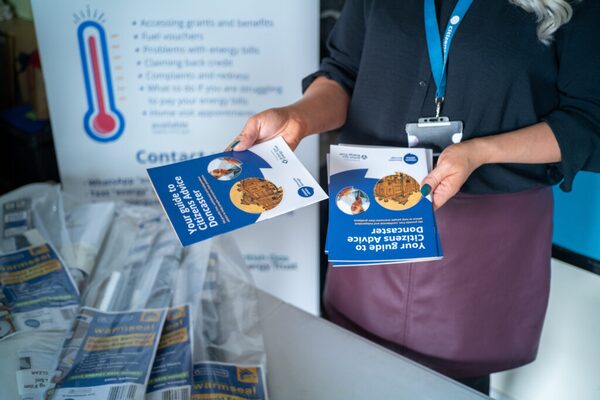
Help exists during the eight week wait. Citizens Advice offers information and support on struggling to pay bills, problems with your energy supplier or supply, saving energy at home and getting a better energy deal36. The Extra Help Unit supports vulnerable consumers by raising complaints with energy suppliers on their behalf, particularly where there is a risk of disconnection or complex personal circumstances37. For heat networks, the Energy Ombudsman and Citizens Advice were designated as the frontline organisations to handle escalated consumer complaints38. The consumer bodies across the four nations differ, with Consumer Scotland and the Consumer Council for Northern Ireland taking the advocacy role in their territories.
Data from these bodies also serves a market purpose: there have been instances where data provided by Citizens Advice and the Energy Ombudsman has indicated that a supplier is in distress29.
The Ombudsman itself acknowledges an access problem: too many consumers who could use the service either cannot or choose not to, for reasons including being unaware of who the Ombudsman is, or being daunted by the process29.
Where the Ombudsman cannot help
Several limits are worth stating plainly.
- It cannot fine, punish or direct how a company operates8.
- It cannot consider EV charging away from the home, though home charging is in scope29.
- It will not accept a case from a business above the small business thresholds unless the supplier explicitly asks it to11.
- It cannot act before the supplier has had its eight weeks, absent a deadlock letter16.
- Complaints about certain government schemes go elsewhere. A Domestic Renewable Heat Incentive matter can be escalated to the Parliamentary and Health Service Ombudsman via your MP39.
When a supplier ceases trading, Ofgem appoints another supplier to provide the energy supply so that service does not drop7. That protects the supply but not the complaint: there is no trading company left to be directed to put things right. The route then depends on what the supplier of last resort takes on, and on the administration process covered under energy supplier failures.
What the complaints system means for household independence
A complaints process is a dependency, not an escape from one. Every step described here assumes a relationship with a licensed supplier, a network operator or a heat network operator, and the remedy on offer is money or a corrected account rather than an alternative source of energy. The Ombudsman's average award of around £50 is compensation for a service failure, not a change in a household's exposure to the market6.
Where the system genuinely shifts the balance is in leverage: an accepted decision binds the company and must be implemented within 28 days23, which is more than a household would achieve unaided. That is worth knowing, and it is free7. But it depends on evidence a household keeps itself, on the date a complaint was raised being recorded, and on the supplier still trading. Households on heat networks have the least room for manoeuvre of all, because they cannot switch supplier, which is why the extension of the Ombudsman's remit to heat networks from 1 April 2025 matters more there than elsewhere24. The rest of the supplier relationship is covered across this section.
Sources39 cited
- Facilitated complaints resolution, Energy Ombudsman, 2026-09-20
- How we can help: energy suppliers, Energy Ombudsman, 2026-09-20
- Complain about your energy supplier, Ofgem, 2026
- Understanding your rights, Energy Ombudsman, 2026-09-20
- Complain about your energy supplier or network operator, Ofgem, 2026
- We may be able to help resolve your energy dispute, Energy Ombudsman, 2026-09-20
- Energy Ombudsman FAQs, Energy Ombudsman, 2026-09-19
- What to expect from the Energy Ombudsman, Energy Ombudsman, 2026-09-19
- Raise a dispute: Theodore Stevenage Limited, Energy Ombudsman, 2026-09-19
- Alternative homes energy guidance, Ofgem, 2026
- Eight week and deadlock letters supplier guidance, Ofgem, 2020-02
- Guidance on Complaints Handling Standards 2024, Ofgem, 2024-09-19
- Complain about your energy supplier or network operator, Ofgem, 2026
- Creating a case with the Energy Ombudsman, Energy Ombudsman, 2026-09-20
- Smart meters: your rights and expectations, GOV.UK, 2025-08-08
- Raise a dispute, Ofgem, 2026
- Raise a dispute: Theodore Bracknell Limited, Energy Ombudsman, 2026-09-19
- Fairer, faster redress in the energy market, GOV.UK, 2025-10-23
- One million consumers helped by Energy Ombudsman, Energy Ombudsman, 2026-07-07
- Energy Ombudsman H1 2026 data, Energy Ombudsman, 2026-08-24
- Greater protections to restore families' trust in home upgrades, GOV.UK, 2026-06-17
- Biennial assessment of Ombudsman Services under the ADR Regulations, Ofgem, 2024-07-26
- How to complain leaflet, Ofgem, 2014-08
- How we can help, Energy Ombudsman, 2026-09-19
- Energy Prices Bill, Clause 19 explanatory material, UK Parliament, 2022-10-18
- How we can help: network operators, Energy Ombudsman, 2026-09-20
- Heat networks affected by the Energy Prices Act 2022, Energy Ombudsman, 2026-09-20
- Deemed contracts and rates, Energy Ombudsman, 2026-09-20
- Review of Ofgem call for evidence response, Energy Ombudsman, 2025-02-28
- Heat networks research briefing CBP-9528, House of Commons Library, 2026-09-17
- Heat networks consumer protections draft guidance, Ofgem, 2026-01-13
- Feed-in Tariff dispute resolution, Ofgem, 2026-09-17
- Information for disputes with flexibility service providers, Energy Ombudsman, 2026-09-20
- New guaranteed standards from 1 May 2020, Energy Ombudsman, 2026-09-20
- Back billing case study, Energy Ombudsman, 2026-09-20
- Getting help if you cannot afford your energy bills, Ofgem, 2026-09-17
- Worried about your energy bills, Energy Ombudsman, 2026-03-24
- Heat networks committee publication, UK Parliament, 2022-05-17
- Domestic RHI review request form, Ofgem, 2021-09-02
 Complain About Energy SupplierThe order of a complaint: the supplier's own procedure, the eight-week point or deadlock, and referral to the Energy Ombudsman in Great Britain or the Consumer Council in Northern Ireland.
 Energy Complaints and RedressMaps the routes a householder has when an energy supplier, network operator, broker or heat network gets something wrong, which body handles which dispute, and what the Energy Ombudsman can and cannot do.
 Scams and Mis-SellingHow energy supplier scams present, what the doorstep and phone selling rules require, the redress available when a contract was mis-sold, and how the Energy Ombudsman handles a dispute.
 Report a Faulty MeterWhat to do when a meter over-records, stops recording or produces impossible readings: the evidence to gather, how to raise it with the supplier, the 5 working day and 8 week deadlines, and how the Energy Ombudsman handles meter disputes.
 The Full Installers GuideHow do you find an installer you can trust, and what should you check before signing anything?
 Customer Service RatingsWhich energy suppliers answer the phone quickly and deal with complaints properly?