In this guide
Energy supply in Scotland runs on the same licensed market as the rest of Great Britain, but the consumer landscape around it is different. Six large companies dominate the domestic market with 91% market share, and Octopus is now the largest electricity supplier and second largest gas supplier in Great Britain, which covers England, Scotland and Wales1. The big six are Centrica plc, the parent company of British Gas, E.ON UK, Scottish and Southern Energy (SSE), RWE npower, EDF Energy and ScottishPower2. In Scotland the system operator role sits with Scottish Power and SSE3.
What a Scottish household gets on top of that is a separate set of advice, advocacy and escalation routes, plus a metering problem that is more acute here than elsewhere. More than 200,000 households in Scotland with electric heating are potentially affected by the radio teleswitch switch-off4. That single figure explains why restricted and multi-rate meters dominate so much of the Scottish consumer conversation.

Who supplies energy in Scotland: the big six and beyond
The supply market in Scotland is not a separate licensing regime. The same suppliers hold domestic supply licences across Great Britain, and the big six remain the reference point: Centrica plc, the parent company of British Gas, E.ON UK, Scottish and Southern Energy (SSE), RWE npower, EDF Energy and ScottishPower2. Ofgem's retail market reporting puts six large companies at 91% of the domestic market, with Octopus now the largest electricity supplier and second largest gas supplier in Great Britain1.
Scotland's distinctiveness sits in networks and system operation rather than in who sends the bill. In Scotland the system operator is Scottish Power and SSE3. That matters to households because network and system functions are the part of the industry that is not competitive: a household can change supplier, but not the wires or the gas pipes serving the property.
| Supplier group | Position in the GB domestic market |
|---|---|
| Six large companies (Centrica/British Gas, E.ON UK, SSE, RWE npower, EDF Energy, ScottishPower) | 91% market share1 |
| Octopus | Largest electricity supplier and second largest gas supplier in Great Britain1 |
| Scottish Power and SSE | System operator role in Scotland3 |
The practical consequence is that switching behaviour in Scotland looks much like switching in England and Wales, while the support and complaint routes diverge. A Scottish household with a complaint about a bill, a mis-sold tariff, a supply problem or a switching problem has a Scottish first stop before it reaches the Energy Ombudsman, and that first stop is not Citizens Advice in the way it is south of the border.
For the wider picture of who owns which brand and how the market has consolidated, the UK energy suppliers pillar sets out the structure, and who owns which UK energy supplier traces parent companies and groups. Energy supplier market share covers the concentration figures in more detail.
Advice Direct Scotland: the first stop for energy problems

Advice Direct Scotland runs energyadvice.scot, a free service for Scottish citizens who have questions about their energy supplier, want to understand their supplier's complaints process, or have problems with their energy bills8. It is the entry point that replaces the Citizens Advice consumer service role in Scotland for energy matters.
The contact number is 0808 196 8660, available by phone or through the online webchat5. Some official pages list 0808 164 6000 as the general Advice Direct Scotland number9, and the two figures appear across different documents. The energyadvice.scot number, 0808 196 8660, is the one repeated most consistently for energy queries specifically8.
Advice Direct Scotland's remit is wider than energy. It provides assistance in various areas related to the cost-of-living, including energy, debt, and support with benefits applications11. That breadth matters in practice, because energy debt rarely arrives alone: a household behind on electricity is often also dealing with benefit entitlement, arrears on other bills, or both.
The service also delivers the Scottish Emergency Heating Oil Scheme, which is the devolved support route for households off the gas grid12. That delivery role makes Advice Direct Scotland not just an advice line but an administrator of public money, which is a meaningful distinction when a household is trying to work out who actually holds the decision on a payment.
Consumer Scotland: the statutory advocate, and what it does not do
Consumer Scotland is a non-ministerial body established by the Consumer Scotland Act 2020, with a general function to advocate for Scottish consumers13. It is the statutory advocate, which is a different role from an advice line and a different role again from an ombudsman.
The distinction that matters most to a household is what Consumer Scotland does not do. It does not take up individual complaints. Its function is to advocate for Scottish consumers and escalate key issues14, and it is named alongside Advice Direct Scotland and the Citizens Advice Extra Help Unit as one of the bodies that will advocate for Scottish consumers14. A household with a specific dispute about a specific bill needs a different route.
The constitutional position explains why the landscape is split. Consumer protection enforcement powers are reserved to the UK Government, although the Scottish Government has new powers to provide consumer advocacy and advice, and is able to stipulate quality requirements for installers on incentives that are made available through Energy Efficient Scotland and other Scottish Government schemes15. Advocacy and advice are devolved; enforcement is not.
That split has a longer history. Consumer Futures was the statutory representative for energy consumers across Great Britain, postal services across the United Kingdom, and water consumers in Scotland16. The current arrangement is a successor to that model, with the Scottish-specific advocacy function now sitting in a body created by Scottish legislation.
For a household, the practical reading is straightforward: Consumer Scotland shapes how the market treats Scottish consumers collectively, and it does not resolve your account. Energy consumer bodies compares the Scottish, English and Northern Irish arrangements side by side.
The Extra Help Unit: second-tier help for vulnerable consumers

The Extra Help Unit supports vulnerable consumers by raising complaints with energy suppliers on their behalf, particularly where there is a risk of disconnection or complex personal circumstances17. It is the escalation route for households that cannot manage the complaint themselves.
Referral is the gate. The Citizens Advice consumer service may refer a household to the Extra Help Unit if it needs support with a difficult or urgent complaint, cannot deal with its energy supplier alone due to personal circumstances, is considered vulnerable, or is at risk of being disconnected from an energy supply18. All four conditions point the same way: this is not a general complaints service, it is a service for households where the ordinary process has broken down.
Suppliers carry a parallel duty. Ofgem's smart meter guidance states that vulnerable needs should be proactively identified by energy suppliers, and additional support provided wherever appropriate19. That obligation sits on the supplier, not on the consumer, and it applies before a complaint escalates.
The Scottish dimension is that the Extra Help Unit is named as one of the bodies advocating for Scottish consumers, alongside Consumer Scotland and Advice Direct Scotland14. A Scottish household therefore has two Scottish-facing routes into the same national escalation mechanism: energyadvice.scot at the front end, and the Extra Help Unit where vulnerability or disconnection risk is present.
Supplier support for vulnerable customers sets out what suppliers must do, and complaining about an energy supplier covers the full escalation path.
Radio Teleswitch meters: the phase-out and what it means for your heating
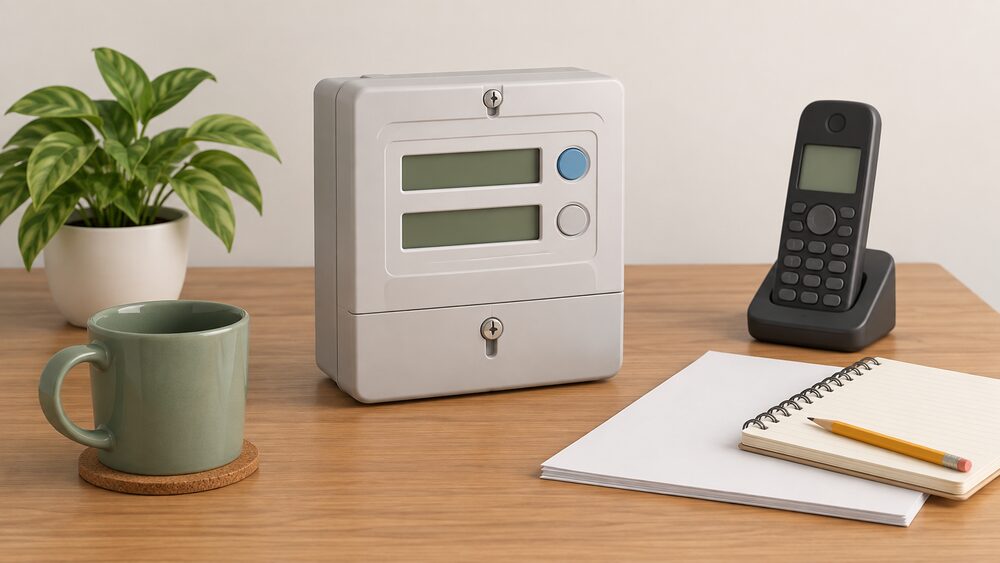
The Radio Teleswitch Service is ending because the equipment that produces the radio signal can no longer be adequately maintained, meaning that the service had to end4. RTS meters use that signal to switch between peak and off-peak rates, and they are heavily associated with electric storage heating and multi-rate tariffs.
The scale in Scotland is the headline. The imminent radio teleswitch remains a significant issue affecting more than 200,000 households in Scotland with electric heating4. That is a large share of the Scottish off-gas-grid and electrically heated housing stock, and it is why the phase-out is treated as a Scottish consumer issue rather than a technical footnote.
The consequences of not upgrading are concrete. A household may find that heating and hot water is continually left on or off, that charging-up happens at the wrong time of day, and that the supplier cannot confirm peak or off-peak usage, which could mean higher electricity bills4. The failure mode is not a loss of supply; it is a loss of the timing signal that makes an off-peak tariff work.
Ofgem's guidance to households is direct: contact your supplier to arrange to have a new smart meter installed20. The replacement is a smart meter, which restores time-of-use switching through a different mechanism.
Suppliers and smart meter installation covers the appointment and obligations side, and RTS meters: what your supplier must do deals with the supplier's duties before the switch-off.
Restricted and multi-rate meters: how the RTS shutdown affects switching and off-peak rates
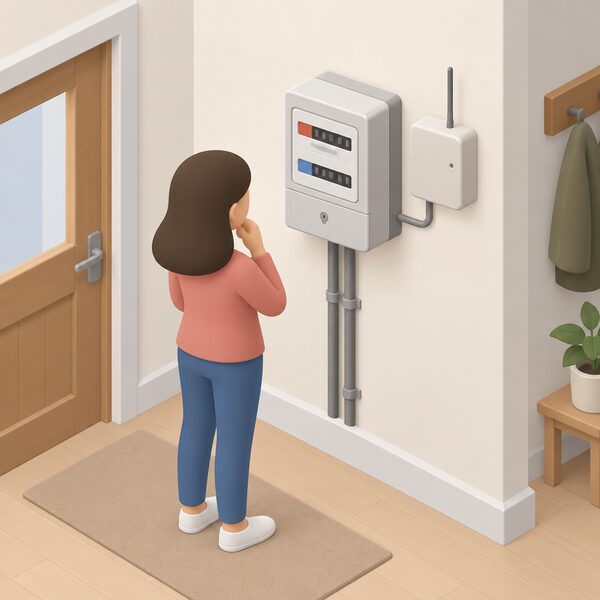
Restricted and multi-rate meters are the metering arrangements that make off-peak electric heating economical. They depend on a switching signal, historically the radio teleswitch, to move the meter between rate registers at set times. When that signal goes, the tariff structure it supports becomes unreliable.
The effects run in three directions. First, billing accuracy: if the supplier cannot confirm peak or off-peak usage, the household may be charged on a basis that does not reflect when energy was actually used, which could mean higher electricity bills4. Second, heating control: heating and hot water can be continually left on or off, because the switching that normally governs them has stopped4. Third, switching supplier: a household on a restricted meter has fewer options, because not every tariff is available to every metering configuration.
| What the signal does | What happens without it |
|---|---|
| Moves the meter between peak and off-peak registers | Supplier cannot confirm peak or off-peak usage, which could mean higher electricity bills4 |
| Switches storage heating and hot water on and off | Heating and hot water can be continually left on or off4 |
| Supports an off-peak tariff structure | Charging-up can happen at the wrong time of day4 |
The replacement path is a smart meter, arranged through the supplier20. A smart meter restores time-of-use functionality without the radio signal, and it also removes the metering barrier that limits tariff choice. That is the independence argument in miniature: the household's ability to choose a supplier and a tariff is bounded by the meter on the wall.
Scotland's exposure here is structural rather than incidental. With more than 200,000 households in Scotland with electric heating potentially affected4, the phase-out is a mass metering event, and the pace of installation determines how many households spend a winter on a tariff their meter can no longer properly support.
Bills, complaints and escalation: where each body fits
The escalation ladder in Scotland has a clear order, and each rung has a defined job.
- The supplier, first. Every complaint starts with the company that bills the household.
- Advice Direct Scotland, through energyadvice.scot, for questions about the supplier, the complaints process, or bill problems8.
- The Citizens Advice consumer service, which may refer a case to the Extra Help Unit where vulnerability, urgency or disconnection risk applies18.
- The Extra Help Unit, which raises complaints with suppliers on the consumer's behalf17.
- The Energy Ombudsman, which is approved by Ofgem to deal with consumer complaints about energy bills, mis-selling, problems with energy supply and problems with switching supplier9.
The Ombudsman has eligibility rules that catch people out. The supplier must be the correct one to raise the dispute against, the complainant must have already complained to the supplier, and there must be sufficient evidence including the date the complaint was raised21. The company name on the dispute must also match the name written on the account holder's bill21. That name-matching rule matters in a market with white label brands and trading names, because the name on the bill is not always the name a household would search for.
Consumer Scotland sits outside this ladder. It advocates for Scottish consumers and escalates key issues14, but it does not adjudicate individual disputes. Consumer protection enforcement powers remain reserved to the UK Government15, so the statutory enforcement route runs through UK rather than Scottish institutions.
The Energy Ombudsman covers what it can decide, and complaint to ombudsman wait deals with timing.
Heat networks in Scotland: a separate regime with its own advocate
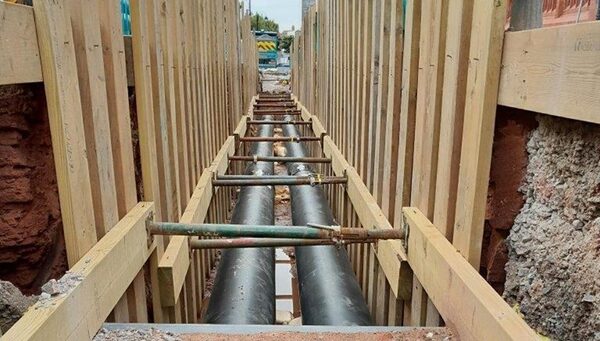
Heat networks are a distinct supply arrangement, and in Scotland they are regulated separately. The regulation of heat networks is devolved to the Scottish Parliament14. A household on a heat network is not buying gas or electricity from a licensed supplier in the ordinary sense; it is buying thermal energy from the operator of the network serving its building.
The sector is fragmented. Scotland has over 1,000 individual heat networks, and these are typically very small6. Scale is the policy problem: a licensing regime has to work for a large number of small operators.
The regime being built has several parts. A single licence will be required per company operating in Scotland7. The Scottish Government has proposed an opt-in licensing regime enabling heat network developers in Scotland to access the rights and powers for things like road works, survey and compulsory purchase14. Local councils need to identify, consult on, and designate potential heat network zones in their areas, and the Scottish Government can also designate some zones14.
There are statutory targets behind this. The combined supply of thermal energy by heat networks is required to reach 2.6 TWh of output by 2027, and 6 TWh of output by 20307. The 2027 figure is equivalent to circa 120,000 additional homes23. Heat Network Zones would provide local authorities and the Scottish Ministers with powers to require buildings within a zone to end their use of polluting heating systems, by a certain date and with a minimum notice period6. A separate consultation is planned on a potential new duty on public sector organisations to connect buildings they own to a local heat network where available24.
For consumers, the advice route is the same as for other energy problems: the webchat function at energyadvice.scot, or 0808 196 866014. Consumer Scotland is named for consumers in Scotland in Ofgem's heat network consumer protection guidance25. Heat network suppliers and households covers the supply relationship itself.
Financial support and funds administered in Scotland
Support for Scottish households is delivered through a mix of devolved schemes and UK-wide obligations, and the delivery bodies are not always the ones a household would expect.
The Home Energy Efficiency Programmes for Scotland blend Energy Company Obligation funding, owners contributions and funding from registered social landlords with Scottish Government funding26. The area-based schemes are designed and delivered by councils with local delivery partners26. That blended model means a single installation can draw on both UK obligation money and Scottish Government money, which is why eligibility rules can look inconsistent between schemes.
| Scheme | Delivered by | What it covers |
|---|---|---|
| Scottish Emergency Heating Oil Scheme | Advice Direct Scotland12 | Off-gas-grid heating oil support; payments made to your supplier12 |
| Home Energy Scotland Grant and Loan Scheme | Home Energy Scotland27 | Energy efficiency improvements and clean heating systems27 |
| Home Energy Efficiency Programmes for Scotland | Councils with local delivery partners26 | Area-based schemes blending ECO, owner and Scottish Government funding26 |
The Home Energy Scotland Grant and Loan Scheme helps eligible homeowners pay for energy efficiency improvements and clean heating systems27. Home Energy Scotland also provides free impartial advice on energy efficiency and renewable energy in Scotland28, and its advisers can give advice on using energy more efficiently, information on switching energy supplier, referrals for benefit checks, and HES Energycarers can make home visits and assess eligibility29. Home Energy Scotland can also provide an onward referral to CITRUS Energy for advice on switching energy supplier or tariff30.
For households off the gas grid, the Scottish Emergency Heating Oil Scheme is delivered by Advice Direct Scotland12. The fund will pay your fuel supplier directly31, and payments are made to your supplier12. In most cases you will need to contact your supplier and arrange payment of the balance32. That last condition is the one households most often miss: the scheme covers a shortfall, not the whole bill.
General help with home energy bills in Scotland is routed through mygov.scot and the Scottish Government5. Supplier hardship funds and trusts covers the supplier-side funds, and Warm Home Discount and suppliers covers the UK-wide discount.
Sources32 cited
- State of the energy market report: retail, Ofgem, 2025-04-15
- Energy terms explained, Ofgem, 2026
- Energy and Climate Change Committee evidence, UK Parliament, 2013-14
- Tackling fuel poverty: periodic report 2021-2024 engagement responses, Scottish Government, 2025-04-22
- Get help with your energy bills, Ofgem, 2026-09-17
- Delivering net zero for Scotland's buildings consultation, Scottish Government, 2023-11
- Heat networks delivery plan, Scottish Government, 2022-03
- Complain about your energy supplier or network operator, Ofgem, 2026
- Problems with services: consumer advice, Anglesey Council, 2025-10
- Get help with your home or business energy bills, Ofgem, 2026
- Consumer protection rights, UK Government, 2026-09-17
- Home Heating Advice Scotland, Advice Direct Scotland, 2026-09-17
- Tackling fuel poverty in Scotland: strategic approach, Scottish Government, 2021-12-23
- Heat networks, Scottish Government, 2026-09-17
- Quality assurance short life working group report, Scottish Government, 2019-03-26
- Consumer Futures evidence, UK Parliament, 2014-02
- Worried about your energy bills, Energy Ombudsman, 2026-03-24
- Complain about your energy supplier or network operator, Ofgem, 2026
- Smart meters: your rights and expectations, UK Government, 2025-08-08
- Get help with your smart meter, Ofgem, 2026
- Dolphin Energy Scotland Limited dispute, Energy Ombudsman, 2026-09-19
- British Gas New Heating dispute, Energy Ombudsman, 2026-09-19
- Heat in buildings progress report 2024, Scottish Government, 2024
- Draft Buildings (Heating and Energy Performance) and Heat Networks (Scotland) Bill explanatory notes, Scottish Government, 2025-11
- Heat networks consumer protections draft guidance, Ofgem, 2025-09-05
- Energy saving home improvements, Scottish Government, 2026-09-17
- Home Energy Scotland Grant and Loan Scheme processing times, Scottish Government, 2026-03-12
- Who to contact, Ofgem, 2026-09-17
- Tackling fuel poverty in Scotland: strategic approach, Scottish Government, 2021-12-23
- Energy Efficient Scotland user guide for private tenants, Scottish Government, 2018-05-02
- Home Heating Advice Scotland FAQs, Advice Direct Scotland, 2026-09-17
- Boosting fuel insecurity fund, Scottish Government, 2026-09-17
 Energy Consumer BodiesWho do you call about an energy problem where you live?
 Smart Meters in ScotlandWhen will you get a smart meter in Scotland, and what happens if yours still runs on the old radio signal that switches heating and hot water?
 Energy Policy in ScotlandWho decides how your home in Scotland is heated and improved?
 The Full Energy Suppliers GuideWho the UK's domestic gas and electricity suppliers are, how the market is structured across Great Britain and Northern Ireland, what a supplier is licensed and obliged to do, how the price cap limits bills, what happens when a supplier fails, and who regulates it all.
 Power Cuts in ScotlandWho do you call when the power goes out in Scotland, and how long should it take to come back on?
 The Full Rules and Regulation GuideConfused about who actually decides what you pay for gas and electricity, or why rules differ in Scotland and Wales?