
In this guide
Scotland has its own layer of help with energy bills, sitting on top of the reserved UK-wide schemes that apply across Great Britain. The starting point for most households is Home Energy Scotland, which gives free, independent and impartial advice on energy efficiency and renewable energy, and which acts as the gateway to the Warmer Homes Scotland scheme1. For debt, benefits and consumer problems, Advice Direct Scotland runs Scotland's national advice service, covering energy, debt and support with benefits applications3.
The scale of need is large. Scottish Government modelling estimates around 800,000 fuel poor households in Scotland for January to March 2026, 31% of all households, of which around 400,000 are in extreme fuel poverty, 16% of all households4. A separate scenario for October to December 2026 puts the figure at around 820,000 households, 32% of all households5.
Two schemes carry most of the direct money. The Home Energy Scotland Grant and Loan Scheme offers grant funding of up to £7,500 for clean heating systems such as heat pumps, plus an additional £7,500 as an optional interest free loan for energy efficiency measures such as insulation6. The Scottish Government's Emergency Heating Oil Scheme pays £300 to the fuel supplier of eligible households using heating oil or LPG7.
Where to start: Home Energy Scotland and Advice Direct Scotland
Home Energy Scotland is the first call for most households. It provides free, independent and impartial energy advice to householders, community groups and businesses throughout Scotland, and is funded by the Scottish Government10. Its remit covers improving the energy efficiency of a home, and it is the referral partner for area based scheme eligibility enquiries11. It also runs a Funding Finder tool for searching funding and support on improving a home's energy efficiency, reducing energy bills and making a home warmer12.
The service is free to call on 0808 808 2282, with phone lines open Monday to Friday 8am to 8pm and 9am to 5pm on Saturdays9. It is described in Scottish Government publications as a free independent advice and referral scheme13.
Advice Direct Scotland occupies a different position. It is Scotland's national advice service, offering free, practical and impartial advice on a wide range of issues including energy, debt and consumer rights3. It administers Home Heating Support Fund grants for those struggling with the rapid increase in gas, electricity and oil prices, and it delivers the Scottish Emergency Heating Oil Scheme14. Its services extend to assistance with benefits applications as well as energy and debt14.
The practical division is straightforward. Home Energy Scotland handles the fabric of the home: insulation, heating systems, grants and loans for improvement. Advice Direct Scotland handles money problems, benefit claims and the emergency fuel funds. A household with an unpayable bill and a cold house may need both.
| Service | Remit | Contact |
|---|---|---|
| Home Energy Scotland | Energy efficiency, renewable energy, gateway to Warmer Homes Scotland1 | 0808 808 2282, free call9 |
| Advice Direct Scotland | Energy, debt, benefits applications; Home Heating Support Fund and Emergency Heating Oil Scheme3 | 0808 164 600016 |
| Energyadvice.scot | Supplier questions, complaints process, bill problems17 | 0808 196 866017 |
| Business Energy Scotland | Free and impartial advice for SMEs on energy use and costs19 | Separate service for premises19 |
Fuel poverty in Scotland: how many households are affected
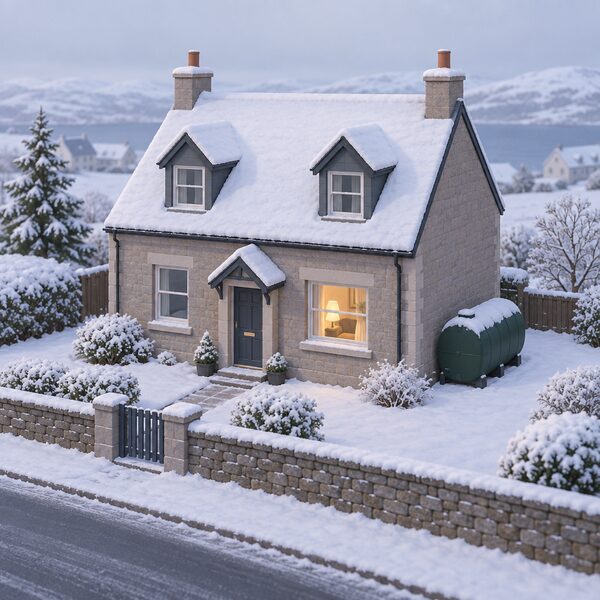
The numbers matter because they determine how the schemes are targeted and how far the money stretches. Scottish Government scenario modelling based on Ofgem price caps estimates around 800,000 fuel poor households in Scotland for January to March 2026, 31% of all households, with around 400,000 in extreme fuel poverty, 16% of all households4. That is a reduction of around 60,000 households, 2.5 percentage points, in the number of fuel poor households, and 50,000 households, 1.9 percentage points, in extreme fuel poverty4.
The same modelling estimates that 50% of all fuel poor households will be in extreme fuel poverty in that period4. For households using electric heating as the primary fuel, the number in fuel poverty falls from 140,000 to 130,0004.
A later scenario, for October to December 2026, estimates around 820,000 fuel poor households, 32% of all households, an increase of around 20,000 households from estimates for July to September 20265. A separate scenario for April to June 2026 estimates around 680,000 fuel poor households, 27% of all households, with around 320,000 in extreme fuel poverty, 12% of all households4. The periods give different figures because they model different price cap levels.
The Scottish House Condition Survey 2024 records 732 thousand households in fuel poverty, against 859 thousand in the preceding comparison20. A Scottish Government engagement response from April 2025 states that fuel poverty now affects between 800 and 900,000 households21.
Oil-heated homes are disproportionately affected. UK Parliament research briefing figures for 2024 record 23% of households using heating oil in fuel poverty, compared with 13% of those using oil in extreme fuel poverty22. That concentration explains why a dedicated oil and LPG scheme exists in Scotland.
| Period modelled | Fuel poor households | Share of all households | Source |
|---|---|---|---|
| April to June 2026 | around 680,000 | 27% | 4 |
| January to March 2026 | around 800,000 | 31% | 4 |
| October to December 2026 | around 820,000 | 32% | 5 |
Free advice services: what each one offers and who runs it
Scotland has a denser advice landscape than the rest of Great Britain, and the services are not interchangeable.
Home Energy Scotland provides free, independent and impartial energy advice to householders, community groups and businesses throughout Scotland10. It is funded by the Scottish Government and provides free and impartial advice and support to help households stay warm11. Its Funding Finder searches funding and support for improving home energy efficiency, reducing energy bills and making a home warmer12. It is also the gateway to Warmer Homes Scotland1.
Energyadvice.scot is a free service for Scottish citizens with questions about their energy supplier, wanting to understand their supplier's complaints process, or with problems with their energy bills17. It can be reached on 0808 196 866017.
Advice Direct Scotland is Scotland's national advice service, offering free, practical and impartial advice on a wide range of issues including energy, debt and consumer rights3. It administers Home Heating Support Fund grants and delivers the Scottish Emergency Heating Oil Scheme14. Its telephone number is 0808 164 600016.
Business Energy Scotland offers free and impartial advice and support to SMEs to reduce their energy use and costs19. That is a separate service aimed at premises rather than households.
Warmer Homes Scotland is funded by the Scottish Government and offers funding and support to eligible households struggling to stay warm and keep on top of energy bills11. It helps households in, or at risk of, fuel poverty improve their heating and energy efficiency, and supports climate goals by installing more clean heating systems and reducing emissions through improved energy efficiency23.
Local authority area based schemes add another route. Home Energy Scotland provides free, independent and impartial energy advice to householders, community groups and businesses throughout Scotland, and acts as a referral partner for area based scheme eligibility enquiries10. Councils publish their own versions of these schemes10.
Home Energy Scotland Grant and Loan: grants up to £7,500 plus interest-free loans
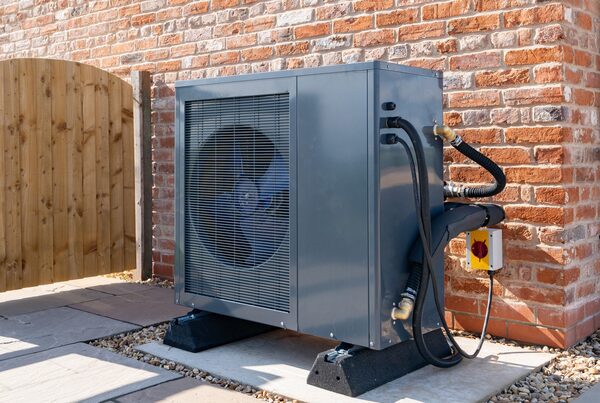
The Home Energy Scotland Grant and Loan Scheme helps eligible homeowners pay for energy efficiency improvements and clean heating systems25. It provides homeowners in Scotland a grant, interest free loan or a combination of both26.
The headline figures are substantial. For clean heating systems such as heat pumps, grant funding of up to £7,500 is available6. An additional £7,500 of funding is available as an optional interest free loan, for energy efficiency measures such as insulation6. A household taking both the grant and the loan is therefore looking at up to £15,000 of support, though the two elements fund different things and the loan must be repaid.
Eligibility is limited to homeowners in Scotland26. The scheme is not open to private tenants or social tenants, who must look to their landlord or to Warmer Homes Scotland instead.
Processing has a published target. Energy Saving Trust aims to process all applications and claims within 10 working days of receiving all required documents25. That is a target rather than a guarantee, and it runs from the point at which the paperwork is complete, not from first enquiry. The published statistics cover monthly data from April 2025 to January 202625.
In practice, the sequence runs from advice to application to installation to claim. A householder would typically contact Home Energy Scotland for advice on what the home needs, use the Funding Finder to identify what is available, then apply. The 10 working day target applies to the application and claim stages once documents are in.
Emergency Heating Oil Scheme: help for oil and LPG households
The Scottish Government's Emergency Heating Oil Scheme is a new fund which helps people on lower incomes pay for heating oil or LPG8. It aims to support vulnerable households with the increased cost of oil or LPG for heating15. The Scottish Government made available an additional £5.4 million to support lower income households dependent on oil27.
The scheme is tightly targeted. This fund is only for homes that use heating oil or LPG8. If you use mains gas, electricity, biomass, coal, or other fuels, you will not qualify for this specific scheme8. Only domestic and residential applicants can apply; commercial applicants are excluded8.
The eligibility conditions are cumulative:
- The home must be heated by oil or LPG8.
- The applicant must pay the fuel bill for the home8.
- The home must be the main or only home8.
- The applicant must have placed an order for fuel after 1 April but not paid for it, or be planning to place an order shortly8.
- No one at the address may have had an award in the last 3 months8.
Automatic qualifying benefits include Universal Credit, Scottish Child Payment as part of UC, Housing Benefit, Income Support, Income-based Jobseeker's Allowance, Income-based Employment and Support Allowance, and Pension Credit8.
Required evidence covers eligible benefits, proof of income such as recent bank statements or payslips, a current utility bill in the applicant's name, and documentation confirming any relevant health conditions8.
The payment mechanics are unusual and worth stating plainly. The fund will pay your fuel supplier directly8. If you qualify, £300 will be sent to your supplier8. In most cases you will need to contact your supplier and arrange payment of the balance8. The scheme rules repeat the point: payments are made to your supplier15.
Applications can be made via the website, telephone and post, and can be submitted on behalf of someone else via the application form8. The scheme is delivered by Advice Direct Scotland15.
Warm Home Discount, Winter Fuel Payment and other bill support
The Warm Home Discount is a reserved scheme that operates differently in Scotland. It was established by the Warm Home Discount Regulations 2011 and continued in Scotland by the Warm Home Discount (Scotland) Regulations 202228. The Scottish scheme has effect until 31 March 2031, with certain duties continuing afterwards28.
Compliance duties run past the scheme year. A compulsory scheme electricity supplier must notify the Authority of undelivered rebates within the period of five months beginning with 1st April immediately following the end of the scheme year28. That gives a route for identifying households who should have received a rebate but did not.
Warmer Homes Scotland is the Scottish Government's own fuel poverty scheme. It is funded by the Scottish Government and offers funding and support to eligible households struggling to stay warm and keep on top of energy bills11. It helps households in, or at risk of, fuel poverty improve their heating and energy efficiency23. It also supports climate goals by installing more clean heating systems and reducing emissions through improved energy efficiency23.
Home Energy Scotland's Funding Finder is the practical tool for finding what else is available, searching funding and support on improving a home's energy efficiency, reducing energy bills and making a home warmer12.
For households in Scotland, the Scottish Government directs people to help with home energy bills through mygov.scot as well as through the advice services1. Ofgem's own guidance points Scottish households to Energyadvice.scot, reachable on 0808 196 866017.
Debt and money advice: where to turn when bills are unpayable
When a bill cannot be paid, the route in Scotland runs through the advice services rather than the supplier alone. Energyadvice.scot offers a free service for Scottish citizens with questions about their energy supplier, wanting to understand their supplier's complaints process, or with problems with their energy bills17. It can be reached on 0808 196 866017.
Advice Direct Scotland is Scotland's national advice service, offering free, practical and impartial advice on a wide range of issues including energy, debt and consumer rights3. It also provides assistance in various areas related to the cost-of-living, including energy, debt, and support with benefits applications14. Its telephone number is 0808 164 600016.
Home Energy Scotland's remit is energy efficiency rather than debt, but its Funding Finder covers support for reducing energy bills as well as improving efficiency12. A household in arrears may therefore use both services: one to reduce the bill through efficiency, the other to manage the debt.
For small businesses and microbusinesses, there is a separate route. Ofgem directs small business or microbusiness energy bill problems to a dedicated government business support helpline1.
The wider consumer protection framework applies in Scotland as elsewhere in the UK16. Where a supplier has failed to resolve a complaint, the escalation route runs through the supplier's own complaints process first, then to the energy ombudsman.
Consumer Scotland and escalating a complaint

Consumer Scotland is a statutory consumer body rather than a frontline advice line. For consumers in Scotland, the relevant consumer advice bodies are Citizens Advice Scotland and Consumer Scotland, and any related, qualifying consumer advice bodies24. The same designation applies to heat network consumers in Scotland29.
That distinction matters when a household is trying to work out who to contact. Citizens Advice Scotland provides direct consumer advice. Consumer Scotland operates at the level of consumer advocacy and representation, and does not run an advice line for individual bill problems.
The escalation route for an energy complaint starts with the supplier. Ofgem sets out the process for complaining about an energy supplier or network operator, and the steps that follow if the complaint is not resolved17. A household that has exhausted the supplier's process can escalate to the energy ombudsman.
For heat network consumers, the consumer protection guidance names Citizens Advice Scotland and Consumer Scotland as the relevant consumer advice bodies29. Heat networks are a distinct regulatory area, and households on a heat network have a different set of protections from those on mains gas or electricity.
Deadlines and key dates to watch
Several dates affect Scottish households directly.
The Energy Performance of Buildings (Scotland) Regulations 2025 were laid in the Scottish Parliament on 10 October 202530. They come fully into force on 31 October 2026 and are partially in force on 1 January 2026 so as to enable the approval of certain matters31. For the display of energy performance certificates under regulation 13, there is a transitional period beginning on 31 October 2026 and ending on and including 31 October 203131. The regulations are described as the principal vehicle to deliver the reforms to Energy Performance Certificates30.
The Warm Home Discount (Scotland) Scheme has effect until 31 March 2031, with certain duties continuing afterwards28. Suppliers must notify the Authority of undelivered rebates within five months of the scheme year ending28.
Scotland's statutory fuel poverty targets are to be achieved by the end of 204032. That is the long horizon against which the current schemes are measured.
The Home Energy Scotland Grant and Loan Scheme publishes monthly processing data covering April 2025 to January 2026, with a stated target of 10 working days to process applications and claims once all required documents are received25.
| Date | What happens |
|---|---|
| 10 October 2025 | Energy Performance of Buildings (Scotland) Regulations 2025 laid in Parliament30 |
| 1 January 2026 | Regulations partially in force31 |
| 31 October 2026 | Regulations come fully into force31 |
| 31 March 2031 | Warm Home Discount (Scotland) Scheme period ends28 |
| 31 October 2031 | End of the EPC display transitional period31 |
| End of 2040 | Scotland's statutory fuel poverty targets due32 |
Sources32 cited
- Get help with your energy bills, Ofgem, 2026-09-17
- Getting help if you can't afford your energy bills, Ofgem, 2026-09-17
- Get help with your home or business energy bills, Ofgem, 2026
- Fuel poverty scenario modelling based on Ofgem energy price caps up to April to June 2026, Scottish Government, 2026
- Fuel poverty scenario modelling based on Ofgem energy price caps up to October to December 2026, Scottish Government, 2026
- Energy saving home improvements, Scottish Government, 2026-09-17
- Support for households using heating oil and LPG, Scottish Government, 2026-09-17
- Emergency Heating Oil Scheme FAQs, Home Heating Advice Scotland, 2026-09-17
- Energy Efficient Scotland Area Based Schemes, West Lothian Council, 2026-09-17
- Area Based Schemes, Glasgow City Council, 2026-06-08
- Home energy efficiency, Argyll and Bute Council, 2026-09-17
- Financial help for energy efficiency and low carbon heating improvements, City of Edinburgh Council, 2026-09-20
- Heat in Buildings progress report 2025, Scottish Government, 2025-10-02
- Boosting fuel insecurity fund, Scottish Government, 2026-09-17
- Scottish Emergency Heating Oil Scheme, Home Heating Advice Scotland, 2026-09-17
- Consumer protection rights, GOV.UK, 2026-09-17
- Complain about your energy supplier or network operator, Ofgem, 2026
- Complain about your energy supplier or network operator, Ofgem, 2026
- Heat in Buildings quality assurance statement, Scottish Government, 2022-06-07
- Scottish House Condition Survey 2024 key findings, Scottish Government, 2026-02
- Tackling fuel poverty in Scotland: engagement responses, Scottish Government, 2025-04-22
- Fuel poverty in Scotland, UK Parliament, 2024
- Warmer Homes Scotland scheme headline data, Scottish Government, 2025-10-29
- Heat networks regulation consumer protection guidance decision, Ofgem, 2026-01-13
- Home Energy Scotland Grant and Loan Scheme application and claim processing times, Scottish Government, 2026-03-12
- Local and small scale renewables, Scottish Government, 2026-09-17
- Help for households using heating oil, Scottish Government, 2026-03-17
- The Warm Home Discount (Scotland) Regulations 2026, legislation.gov.uk, 2026-04-30
- Heat networks consumer protections draft guidance, Ofgem, 2025-09-05
- Energy Performance of Buildings (Scotland) Regulations 2025 update, Scottish Government, 2025-10
- The Energy Performance of Buildings (Scotland) Regulations 2025, legislation.gov.uk, 2025
- Tackling fuel poverty in Scotland: strategic approach, Scottish Government, 2021-12-23
 Community Energy in ScotlandCommunity energy in Scotland lets you join a local scheme for cheaper, greener heat and power, or get advice and funding to make your own home warmer and cheaper to run.
 Tariffs in ScotlandWhy do Scottish electricity bills differ from the rest of Great Britain, and why do standing charges cost more in the north?
 Power Cuts in ScotlandWho do you call when the power goes out in Scotland, and how long should it take to come back on?
 The Full Grants and Schemes GuideWhich grants can you actually get right now, and how do you apply for them?
 Energy Consumer BodiesWho do you call about an energy problem where you live?
 Energy Policy in ScotlandWho decides how your home in Scotland is heated and improved?