
In this guide
An energy bill is not one cost. It is a standing charge plus a unit rate applied to however many kilowatt hours a household uses, and the split between those two parts decides what any saving measure is actually worth. Ofgem sets out the structure plainly: a bill carries a standing charge and a unit rate, and VAT is added at 5%1. That means the only lever a household holds over the unit price is switching tariff or supplier, while everything else changes the number of units.
The ranking of household uses is stable across sources. Heating and hot water dominate gas consumption; within electricity, the wet appliances and cold appliances take the largest share, with lighting now a small line because of the shift to LEDs. Tumble dryers consume more energy than most washing machines8. Condenser tumble dryers and American-style fridge freezers each add an average of over £125 a year to running costs3. Against those figures, the measures that change the total most are the ones that reduce heat loss and the ones that change how long a high-draw appliance runs.
This page sets out where the money goes, what each measure changes, and what remains outside a household's control. The arithmetic uses capped unit rates and published running costs; where a figure is an average across households rather than a per-use price, that is stated.
Where the money actually goes: the appliances that cost the most per hour
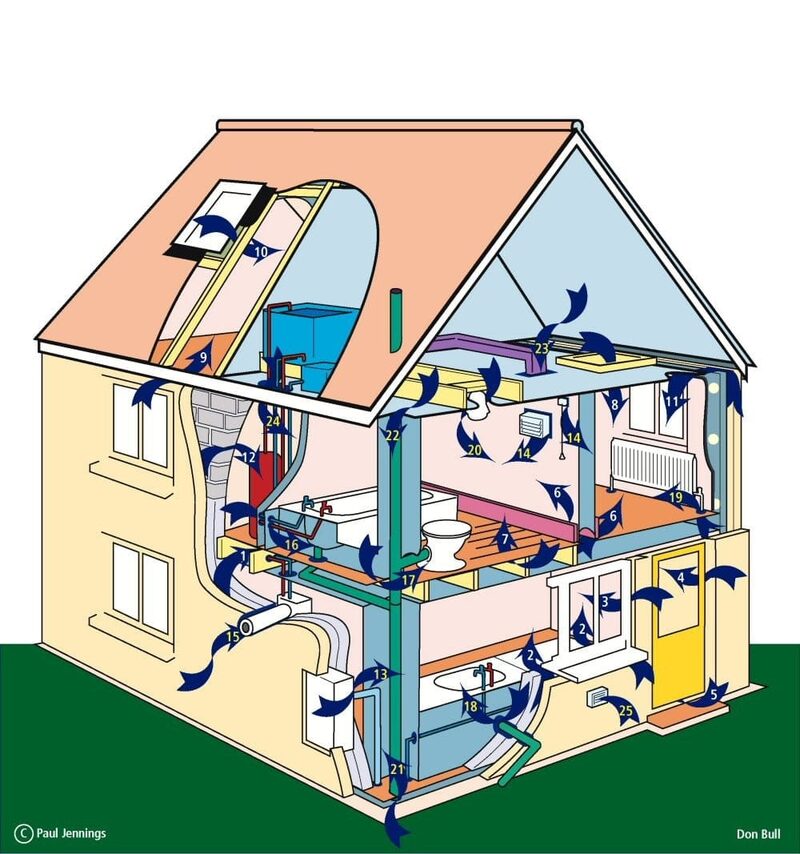
The largest single block on a dual-fuel bill is heating, and it is the block most exposed to outdoor temperature, building fabric and thermostat setting. Insulation, energy efficient windows and doors, and draught reduction all reduce energy bills, which is why they sit at the top of official advice9. The Great British Insulation Scheme exists precisely because the least energy-efficient homes in Great Britain carry the highest bills for the same comfort level10.
Within electricity, the pattern is different. Lighting has fallen sharply in importance: energy-saving lightbulbs use around 80% less energy than regular bulbs and last up to 10 times longer8. LEDs use a quarter of the energy of incandescents and can last up to 25 times longer12. A household that has already switched its lighting has largely exhausted that saving.
What remains is the wet and cold appliance group. Tumble dryers consume more energy than most washing machines8, and condenser dryers add over £125 a year on average3. American-style fridge freezers sit in the same bracket3. Electric showers are a separate case because they heat water at the point of use at a high kilowatt rating, so a ten-minute shower draws a large block of power in a short window.
The practical consequence is that the ranking of measures follows the ranking of uses. Anything that reduces heat loss beats anything that reduces lighting. Anything that shortens a tumble dryer cycle beats almost any other appliance change. And a change to the thermostat setting beats both, because it reduces demand across the whole heating season rather than at a single point.
Insulation: the measure with the biggest effect on the bill
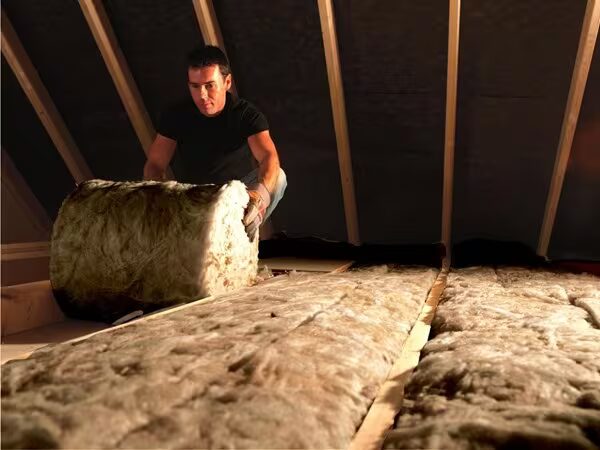
Insulation is the measure that changes the bill most, because it attacks the largest use. Installing loft and cavity wall insulation lowers the amount of heat escaping and could cut fuel bills14. Self-build guidance is equally direct: insulate walls, roof and floors to reduce heat loss15. The mechanism is simple, less heat leaves the building, so the heating system runs for fewer hours to hold the same temperature.
The scale of the national effect is modelled rather than measured per household. Improved home insulation could reduce home electricity demand for heat by 11% by 20307. That is a system-level projection from the National Energy System Operator, not a promise about any individual home, and it should be read as an indication of direction rather than a household forecast.
The Great British Insulation Scheme is the main official route to funded work in Great Britain. It is designed to deliver improvements to the least energy-efficient homes in Great Britain by installing measures such as insulation, to help tackle fuel poverty and reduce carbon emissions11. It works by placing an obligation on medium and large energy companies to deliver measures that result in reduced energy usage16. That delivery model matters to a household: the work is arranged through obligated suppliers and their installers, not through a central application queue.
In Northern Ireland the position differs. Loft and cavity wall insulation is covered by separate guidance, and the grant landscape is administered differently from the Great British scheme5. Households there should treat insulation advice as coming from the Northern Ireland guidance rather than from the GB scheme rules.
For a household's independence, insulation is the one measure that reduces the amount of energy that must be bought at all. It does not remove the connection to the grid or to a supplier, but it lowers the quantity of gas or electricity drawn through that connection, which is the closest thing to self-sufficiency available to most homes without generating their own power.
Insulation payback: around 2 to 5 years, with grants available
Payback is the point at which accumulated savings equal the upfront cost. For insulation, the published comparison point in the same family of measures is plug-in solar, where the payback period is five to ten years, described as the time taken to recover the initial cost of buying the panels19. Insulation sits at the shorter end of that spectrum because the installed cost is lower and the saving applies to the largest use in the home.
The grant position changes the arithmetic entirely. Where the Great British Insulation Scheme funds the work, there is no upfront cost to recover, so the payback is immediate and the saving is the full reduction in units used10. The scheme is targeted at the least energy-efficient homes, so eligibility is not universal, and the measures delivered are determined by the obligated supplier's programme rather than chosen freely by the household16.
Where a household pays for the work itself, the payback depends on three variables: the installed cost, the pre-insulation efficiency of the home, and the price of the fuel being saved. A poorly insulated home with high consumption recovers the cost faster than a well-insulated one, because the absolute saving is larger. That is why the scheme targets the worst-performing properties first.
The independence argument for paying for insulation outright is that it converts a recurring cost into a one-off one. A grant-funded installation does the same at no cost to the household, but the decision about which measures are installed sits with the scheme rather than the occupant.
Smart thermostats: what they do and the savings reported
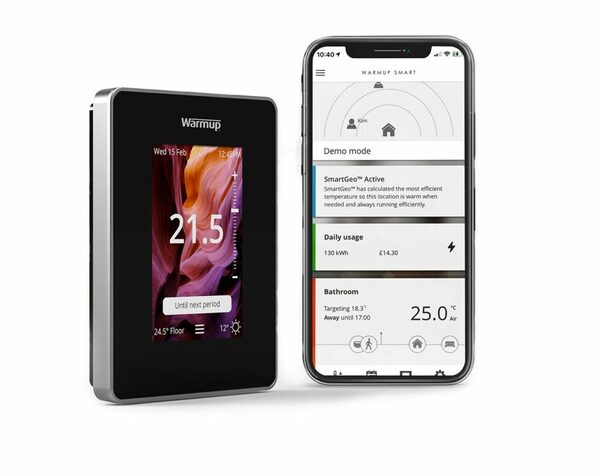
A smart thermostat connects to your Wi-Fi so you can control your heating and hot water through your smart phone, tablet and/or desktop1. Most cost between £100 and £200, though add-ons such as installation push the total higher2. The savings claims vary widely by source. Some studies suggest smart thermostats can potentially reduce heating bills by 8-18% for heating3, while other figures put the reduction at approximately 10-12% on heating bills4, up to 15% in energy costs5, or 10% to 25% of energy consumption in some homes6. One estimate puts the annual saving at up to £110 a year7. Turning the thermostat down by one degree is a separate measure: one source says it could save up to 25% of heating bills and associated carbon8, another says as much as 10 per cent9. A limitation worth knowing is that these devices only allow you to track your heating, so you can't keep an eye on your electricity and gas usage1.
A smart thermostat allows heating to be monitored from a smartphone and helps to reduce temperature swings, saving money and using less energy8. That is the function. The saving comes from the control it gives over when the heating runs, not from the device itself. Any cost benefit comes from reducing wasted heating rather than from the thermostat itself, so results vary from home to home20.
The headline figures for turning heating down are larger than the figures for the thermostat. Reducing the thermostat by 1°C could save up to 25% of heating bills and associated carbon, according to one official source4. Another official source puts the same action at as much as 10% on heating bills5. The two figures are not reconciled in the documents, and the gap is wide enough that a household should treat the lower figure as the more conservative planning assumption.
"try turning the thermostat down by just one degree Celsius - you could save as much as 10 per cent on heating bills"
Compatibility is the practical constraint. Before buying a smart thermostat, check that it is compatible with the boiler and heating system, usually in the product description or on the thermostat manufacturer's website20. Older systems, unusual wiring and some zone configurations may need additional components or may not be supported.
The distinction between a smart thermostat and switching supplier is important and often blurred. Except by switching, a household does not control the tariff the supplier sets, but it can change how much energy it uses21. A smart thermostat operates entirely on the consumption side of that equation. It cannot change the unit rate, the standing charge or the policy costs embedded in the bill.
For independence, a smart thermostat is a control measure rather than a supply measure. It reduces the volume drawn through the connection and gives the household better information about when that draw happens, which matters more on time-of-use tariffs than on a flat rate.
LED bulbs: up to ten times more efficient than incandescent
Lighting is the clearest example of a saving that has already been largely captured. Energy-saving lightbulbs last up to 10 times longer than regular bulbs and use around 80% less energy8. LEDs use a quarter of the energy of incandescents and can last up to 25 times longer12. The average household saving from LED lighting is put at £100 a year4.
The range across sources reflects different baselines. A household replacing incandescent bulbs captures the full saving; one that has already switched from halogen to LED captures much less, because halogen was already more efficient than incandescent. The £100 figure is an average across households at different starting points, not a guaranteed saving for any one home4.
The carbon claim attached to the same source is a 75% lower carbon footprint for LEDs4. That follows from the energy reduction rather than being a separate benefit, and it scales with how much of the household's lighting has been converted.
Lighting is now a small share of most electricity bills, which is why the measure ranks below insulation and appliance changes in effect. It remains worth completing because the cost is low and the bulbs last for years, but a household should not expect a further £100 saving once the conversion is done.
The tumble dryer: the most energy-hungry appliance in the home, at up to £1.56 a cycle
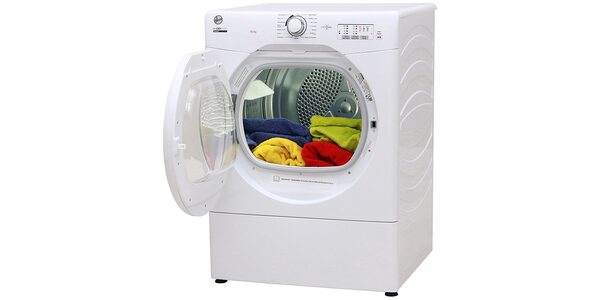
Tumble dryers consume more energy than most washing machines8. Condenser tumble dryers add an average of over £125 a year to running costs3. The per-cycle cost depends on the machine's rating, the load, and the spin speed of the preceding wash, because a faster spin leaves less water to evaporate.
The comparison that matters is between drying methods. Line-drying removes the drying energy entirely. Washing at cold water saves around £27 a year12, which is a separate saving from the drying step and applies whether or not a dryer is used.
For independence, the dryer is the appliance where behaviour changes the bill most directly. It draws a large block of power at a time the household chooses, so shifting or removing those cycles is one of the few ways to cut consumption without any capital cost at all.
Electric showers: 39p for ten minutes and why the kW rating matters
An electric shower heats water at the point of use, drawing a high kilowatt load for the duration of the shower. The cost of a ten-minute shower follows from the unit rate applied to that load. The kilowatt rating is the variable a household can actually choose: a lower-rated unit draws less power but delivers a lower flow rate at a given temperature rise.
The published comparison point is the bath. Swapping one bath per week for a four-minute shower could save £10 on energy bills12. That figure is small because it covers one substitution per week, and it scales with how many baths are replaced.
Electric showers matter for independence in a specific way. They remove the need for a hot water cylinder and a gas supply to heat water, which is why they are common in homes without a gas connection. The trade-off is that all the heating energy is drawn as electricity at the moment of use, at a unit rate that is typically higher than gas.
VAT on energy-saving materials: the 5% rate and what is scheduled to change
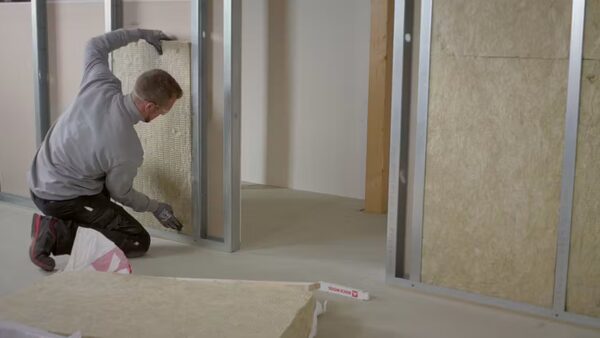
The reduced rate of VAT for the installation of energy-saving materials is 5%6. A reduced rate of 5% VAT applies to the installation of certain energy-saving materials in residential accommodation22. Insulation on walls, floors, ceilings and lofts qualifies for a lower rate of VAT23. Insulation means materials that are designed and installed because of their insulating qualities18.
The worked example in official guidance shows how the rate applies to a whole installation. An installer charges £1,000 excluding VAT, made up of £400 for materials and £600 for labour; because the materials are 40% of the total supply, the installer can charge the reduced 5% rate on the total installation cost24. That is 5% of £1,000, which is £506.
The scheduled change concerns the temporary zero rate. Installation of qualifying energy-saving materials is scheduled to move from the temporary zero rate to the reduced VAT rate of 5% from 1 April 202726. The relief was extended, after which qualifying supplies revert to the reduced rate of VAT at 5%7. Households should treat the current position as time-limited and the 5% rate as the rate that applies afterwards.
For independence, VAT treatment does not change how much energy a household uses, but it changes the cost of the equipment that reduces that use. A lower rate on installation lowers the effective payback period on insulation and similar measures.
What insulation means for energy independence
Insulation is the measure that most directly reduces a household's dependence on bought energy. It does not disconnect the home from the grid or from a supplier, and it does not remove the standing charge, which is payable regardless of consumption. What it does is reduce the number of units that must be purchased to hold a given temperature, and that reduction persists for the life of the installation.
The national modelling puts the aggregate effect at an 11% reduction in home electricity demand for heat by 20307. That is a projection about the housing stock as a whole, and it indicates the direction of travel rather than a figure any single household should expect.
The limits are worth stating as firmly as the benefits. Insulation reduces demand but does not eliminate it, so a household remains exposed to unit rates, standing charges and policy costs set outside its control. The Great British Insulation Scheme is funded through an obligation on energy companies, which means the measures available and the eligibility rules are set by the scheme rather than chosen by the occupant16. In Northern Ireland, the scheme does not apply and separate guidance governs both insulation and heating technologies5.
Where a household wants to go further, the remaining options are generation and storage, which move the home from buying less to buying differently. Those sit outside the scope of a bill-reduction page, but they are the point at which energy independence stops being a matter of consumption and becomes a matter of supply.
Sources26 cited
- Understand your electricity and gas bills, Ofgem, 2026
- How your electricity or gas bill is calculated, Ofgem, 2026
- Five top tips from Which? to cut your energy bills, Welsh Government, 2026-03-18
- Home and business grants, schemes and advice, East Herts Council, 2026-09-17
- Insulation, Northern Ireland Direct, 2026-09-02
- Tax on shopping: energy-saving products, GOV.UK, 2026-09-17
- National Energy System Operator: home insulation and electricity demand, UK Parliament, 2030
- 10 ways to go green with electricity, Electrical Safety First, 2026-09-19
- Solar photovoltaic (PV) panels, Bromley Council, 2026-09-17
- Apply for the Great British Insulation Scheme, GOV.UK, 2026-09-17
- Great British Insulation Scheme, Ofgem, 2026-09-17
- Free energy saving tips, Uswitch, 2025-10-14
- Advice if you're struggling to pay your energy bills, Northern Ireland Direct, 2026-09-17
- Heating technologies to suit your home, Northern Ireland Direct, 2026-09-17
- Self-build homes: sustainability, Planning Portal, 2026
- Great British Insulation Scheme: local authorities, Ofgem, 2026-09-17
- Great British Insulation Scheme (Welsh), Ofgem, 2026-09-17
- VAT energy-saving materials and grant-funded heating supplies, HM Revenue and Customs, 2026-09-17
- Plug-in solar, Centre for Sustainable Energy, 2026-09
- What is a smart thermostat?, Smart Energy GB, 2026-08-19
- How do smart meters save energy?, Smart DCC, 2026
- Draft VAT guidance on changes to energy-saving materials, HM Revenue and Customs, 2026-09-17
- Making alterations to a listed building, Bristol City Council, 2026-09-17
- VAT on energy-saving products, HM Revenue and Customs, 2026-09-20
- Draft explanatory memorandum: VAT (reduced rate) energy-saving materials order 2019, HM Revenue and Customs, 2026-09-17
- Extension of VAT energy-saving materials relief, GOV.UK, 2024-01-11
 Regional Energy ConsumptionHow much gas and electricity does your area use compared with the rest of the country?
 Reading an Energy BillA line-by-line walk through a domestic gas and electricity bill: unit rate, standing charge, kWh consumption, meter readings, tariff name and balance, plus the 12-month back billing limit and the guaranteed standards payments that apply when a supplier or network operator gets it wrong.
 Typical Consumption ValuesOfgem's typical usage figures are what the price cap and most bill comparisons are based on.
 What Makes Up a BillBreaks a domestic energy bill into wholesale costs, network charges, policy levies, operating costs, supplier margin and VAT, with the share each takes and how those shares have moved since the energy crisis.
 Baseline Your Energy UseBefore spending money on a heat pump, solar panels or a battery, you need to know what your home actually uses now.
 Unit Rates by RegionWhy do electricity and gas prices differ depending on where you live?