
In this answer
Short answer
The installation of qualifying energy-saving materials in residential accommodation is subject to VAT relief at 0% until 31 March 20271. The rate applies to both the products supplied by the installer and the cost of all work to install them in the home, so a household paying for solar panels, a heat pump or loft insulation through a contractor sees no VAT on the qualifying part of the invoice1.
The relief is not automatic and it is not open to every purchase. It attaches to the installation, not to the goods: energy-saving materials supplied without installation are standard-rated2. It applies to supplies of services of installing energy-saving materials in residential accommodation where the supply is made to a qualifying person, a relevant housing association, or where the accommodation is a building or part of a building used solely for a relevant residential purpose3. Where the value of the materials exceeds 60% of the total value of the supply, only the labour element qualifies for the reduced rate and the materials are standard rated4.
The zero rate is temporary. It runs from 1 April 2022 until 31 March 2027 in Great Britain and from 1 May 2023 to 31 March 2027 in Northern Ireland, after which the reduced rate applies5. For a household weighing up a heat pump, solar array or battery, the timing of the installation therefore matters as much as the specification.
What qualifies: the energy-saving materials covered by the zero rate
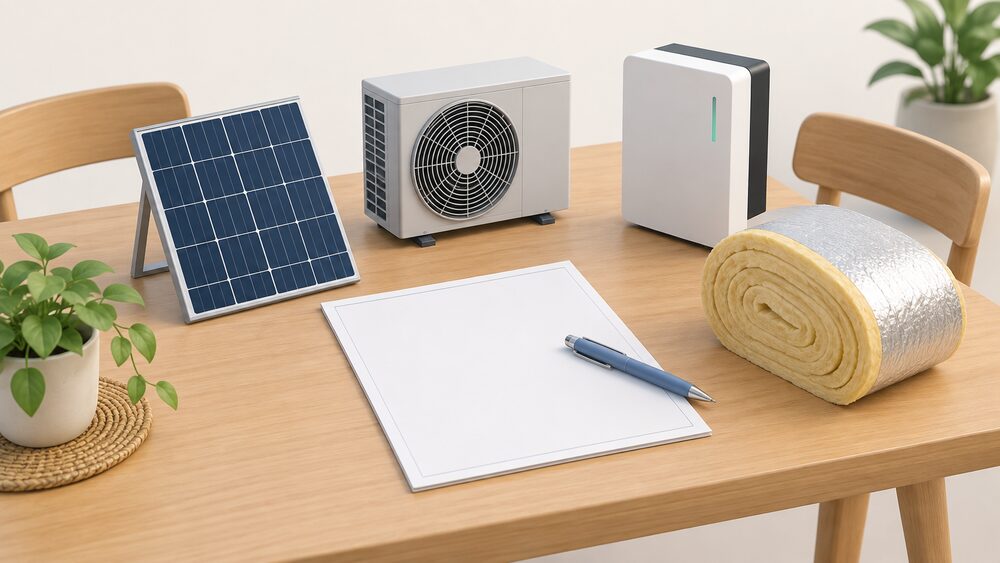
The list of technologies that benefit from the relief is set out in legislation and has been widened over time. It included insulation, central heating system controls, hot water system controls, solar panels, wind turbines, water turbines, ground source heat pumps, air source heat pumps, micro combined heat and power units and wood-fuelled boilers7. The current guidance lists air source heat pumps, wood-fuelled boilers, central heating and hot water controls, draught stripping, ground source heat pumps, insulation, micro combined heat and power units, solar panels, water and wind turbines, water source heat pumps, electrical storage batteries and smart diverters as subject to VAT relief at 0% until 31 March 20278.
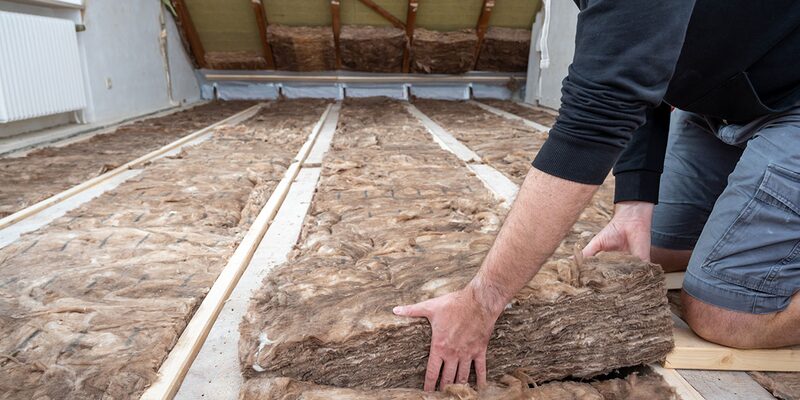
Insulation is defined by function rather than by product name: it means materials that are designed and installed because of their insulating qualities9. The guidance gives the qualifying locations as insulation on walls, floors, ceilings and lofts1. Damp proofing products do not qualify as energy-saving materials9.
Two exclusions matter in practice. The reduced rate does not apply if the energy-saving materials are installed exclusively to serve an indoor or outdoor swimming pool10. And a set of energy products sits outside the relief altogether: heating equipment that is not funded through an energy efficiency grant, energy efficient boilers, secondary or double glazing, low emission glass, energy efficient fridge freezers, and, in Northern Ireland only, wind turbines and water turbines, all carry 20% VAT1.
| Material | VAT treatment on installation | Source |
|---|---|---|
| Insulation (walls, floors, ceilings, lofts) | 0% until 31 March 2027 | 1 |
| Solar panels | 0% until 31 March 2027 | 8 |
| Electrical storage batteries | 0% until 31 March 2027 | 8 |
| Air, ground and water source heat pumps | 0% until 31 March 2027 | 8 |
| Wood-fuelled boilers | 0% until 31 March 2027 | 8 |
| Central heating and hot water controls | 0% until 31 March 2027 | 8 |
| Draught stripping | 0% until 31 March 2027 | 8 |
| Smart diverters | 0% until 31 March 2027 | 8 |
| Energy efficient boilers | 20% | 1 |
| Secondary or double glazing | 20% | 1 |
| Damp proofing products | Do not qualify | 9 |
The relief in brief: 0% VAT on installation in residential accommodation
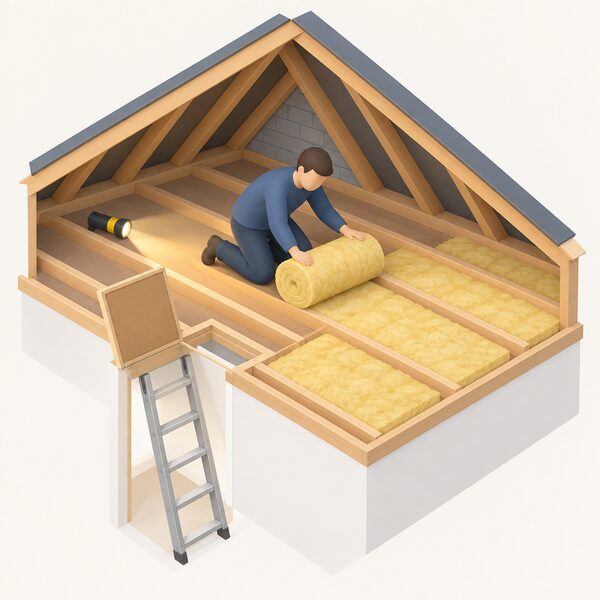
The reduced rate applies to the supply and installation of energy-saving materials in residential accommodation10. The zero rate is the current form of that relief, and it covers both the products supplied by the installer and the cost of all work to install those products in the home1. A household does not pay 0% on the panels and 20% on the labour, or the reverse: the whole qualifying supply is zero-rated.
The relief is also retained for buildings used solely for a relevant residential purpose, and for supplies to a relevant housing association as defined in legislation4. The installation of qualifying energy-saving materials in buildings used solely for a relevant charitable purpose is covered on the same basis12.
The 60% test is the condition most likely to change what a household pays. Where the value of the energy-saving materials does not exceed 60% of the total value of the supply of installing them, the relief applies in full3. Where it exceeds that share, only the labour cost element qualifies for the reduced rate, with the supply of the materials standard rated4. A large battery alongside a modest amount of labour can push a quote over the threshold, and the invoice then splits into a zero-rated or reduced-rated labour element and a standard-rated materials element.
"The reduced rate applies to the supply and installation of energy-saving materials in residential accommodation."
Great Britain and Northern Ireland: where the relief applies and how it differs
The relief now operates across the United Kingdom, but the two jurisdictions reached the zero rate by different routes and on different dates. In Great Britain, England, Scotland and Wales, installations of energy-saving materials are zero-rated during the period 1 April 2022 to 31 March 20275. The Value Added Tax (Installation of Energy-Saving Materials) Order 2022 introduced a temporary relief from VAT in the form of a zero rate applied to the supply of installation of energy-saving materials in England and Wales and Scotland13.
In Northern Ireland the position is newer. Under the Windsor Framework, the VAT relief for energy-saving materials, previously available only in Britain, has been extended to Northern Ireland14. The Windsor Framework enabled these changes to be extended to Northern Ireland with effect from 1 May 20237. Installations of energy-saving materials in Northern Ireland are zero-rated during the period 1 May 2023 to 31 March 20275. The practical effect is that installations of energy-saving materials, including solar panels and heat pumps, now benefit from a zero rate in Northern Ireland14.
Before the zero rate, the reduced rate of 5% applied to Great Britain supplies made between 1 October 2019 and 31 March 2022, and to supplies made in Northern Ireland from 1 October 2019, subject to the 60% test for Great Britain supplies in that window15. The installation of energy-saving materials in residential accommodation was reduced rated in Great Britain between 1 October 2019 and 31 March 2022, and in Northern Ireland from 1 October 2019 and 30 April 202316. The relief as it now stands applies from 1 April 2022 until 31 March 2027 in Great Britain and from 1 May 2023 to 31 March 2027 in Northern Ireland5.
For a household in Northern Ireland, the zero rate window is therefore shorter than in Great Britain, and the reduced rate returns on 1 April 202717. The territorial extent of the relief is the United Kingdom, covering residential accommodation and certain charity buildings6.
Professional installation only: why DIY work does not qualify
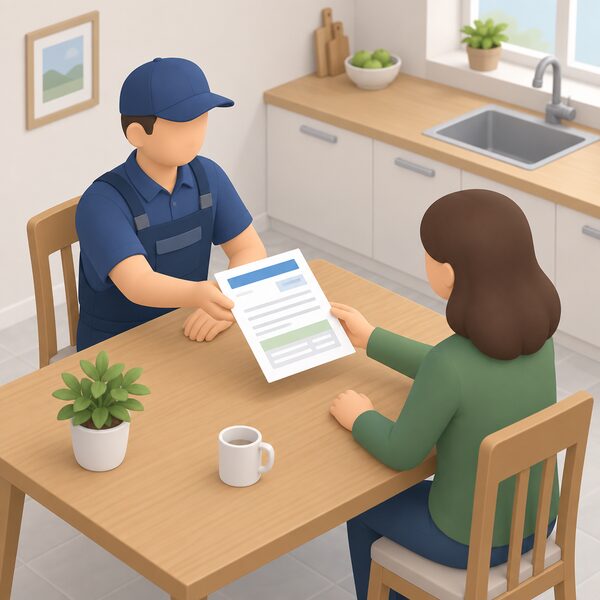
The relief is a relief on installation. Not all products or installations qualify for the lower rate, and you cannot buy or install them yourself1. Energy-saving materials supplied without installation are standard-rated2. That single rule explains most of the questions householders raise about buying panels, batteries or insulation directly and fitting them.
The guidance works through the point with examples. For loft insulation, there is a single supply of the installation of energy-saving materials which qualifies for the reduced rate15. For solar panels, there is a single supply of the installation of energy-saving materials which qualifies for relief either at the reduced rate or at the zero rate15. In both cases the qualifying supply is the installation, not the materials on their own.
The same logic runs through the wider grant landscape. The Boiler Upgrade Scheme's grant offer letter requires, for a low carbon heating system, the relevant MCS certificate together with the manufacturer's instructions; for a biomass fuelled system, information about the Biomass Suppliers List; for certain energy efficiency measures, an appropriate claim of conformity and handover pack per PAS certification standards; a copy of the installer guarantee; and a dated copy or image of the installer invoice18. The invoice is the document that shows the rate applied.
Electrical work around a home energy installation is not a householder task. Guidance on wiring an outbuilding states plainly that it is absolutely not a DIY job19. Where a grant scheme requires an approved installer, the same pattern holds: the Electric Vehicle Homecharge Scheme requires the wall charging unit to be installed by a supplier approved by the Office for Zero Emission Vehicles, who claims the grant on the householder's behalf20.
How long the zero rate lasts and what happens when it ends
The zero rate is temporary and its end date is fixed. These changes qualify for the temporary zero rate until 31 March 202712. The term "zero rated" refers to the temporary zero rate applying until 31 March 2027, after which the reduced rate applies11. The relief is currently set to a temporary zero rate of VAT which applies until 31 March 20277.
After that date the reduced rate returns. A reduced rate of 5% VAT applies to the installation of certain energy-saving materials in residential accommodation6. The reduced rate will remain fully available, except on wind and water turbines, for supplies of services of installing energy-saving materials in residential accommodation where the supply is made to a qualifying person, a relevant housing association, or where the accommodation is a building or part of a building used solely for a relevant residential purpose3. The difference between the two periods is 5 percentage points on the qualifying supply.
There is pressure to extend the zero rate. Energy UK has recommended extending zero-rated VAT on energy saving materials beyond the current end date of April 2027, to at least the end of 203021. That is a recommendation, not a change in the law, and the end date in the legislation stands at 31 March 202712.
The government has consulted on the scope of the relief, including by updating the list of materials that qualify for relief22. Any widening of the list would take effect through legislation, and the current list and end date are the ones a household can rely on when a quote is prepared.
Why the relief matters for household energy independence
A zero rate on installation changes the economics of the measures that reduce a household's reliance on bought energy. Insulation cuts the heat a home needs to buy; solar panels and a battery cut the electricity drawn from the grid; a heat pump changes the fuel a home depends on. The VAT treatment applies across that set of measures rather than to one technology, which means the relief supports the fabric of the home and the generating equipment on the same terms8.
What the relief does not do is remove dependence. A grid connection remains, and a supplier remains, for any household that imports electricity or gas at any point in the year. A battery installed under the relief stores energy but does not make the home independent of the network, and the 60% materials test means a large battery relative to labour can reduce the share of the invoice that is zero-rated4. The relief also depends on a contractor being engaged, so the household's saving is tied to the installer's supply, not to its own labour1.
The relief sits alongside the grant schemes rather than replacing them. The Boiler Upgrade Scheme funds heat pump and biomass installations through a grant paid to the installer, and the VAT treatment of the same installation is a separate question governed by the rules above18. Households comparing routes can read the Boiler Upgrade Scheme and ECO4 pages for the funding side, and the VAT relief on energy-saving materials page for the tax side.
The end date is the practical point. An installation completed before 31 March 2027 falls under the zero rate; one completed after it falls under the reduced rate, with the 5 percentage point difference applying to the qualifying supply12. For a household planning work, the date on the invoice is what determines which rate applies.
Sources22 cited
- Tax on shopping: energy-saving products, GOV.UK, 2026-09-17
- VAT on energy-saving materials and heating equipment (Notice 7086), HMRC, 2014-07-17
- Explanatory memorandum: VAT (Reduced Rate) Energy-Saving Materials Order 2019, legislation.gov.uk, 2026-09-17
- VENSav3020: reduced rate for energy-saving materials, HMRC, 2026-09-17
- VENSav3110: zero rate periods for Great Britain and Northern Ireland, HMRC, 2026-09-17
- VENSav2083: reduced rate after the zero rate, HMRC, 2026-09-17
- Explanatory memorandum: VAT energy-saving materials, Northern Ireland, legislation.gov.uk, 2026-09-17
- VAT rates on different goods and services, GOV.UK, 2026-07-10
- VENSav3040: insulation and damp proofing, HMRC, 2026-09-17
- VENSav3310: reduced rate scope and exclusions, HMRC, 2026-09-17
- VENSav2082: definition of zero rated, HMRC, 2026-09-17
- VENSav1100: temporary zero rate, HMRC, 2026-09-17
- Extension of VAT energy-saving materials relief, GOV.UK, 2024-01-11
- Support to generate your own electricity, nidirect, 2025-09-22
- VENSav3210: examples of single supplies, HMRC, 2026-09-17
- VENSav3037: installation in residential accommodation, HMRC, 2026-09-17
- The Value Added Tax (Installation of Energy-Saving Materials) Order 2023, legislation.gov.uk, 2027-04-01
- Connect Direct: domestic low-carbon technology applications, Energy Networks, 2026-09-17
- Wiring a shed: a guide for homeowners, NICEIC, 2026-09-17
- Electric car charging at home, Which?, 2026-02-25
- Clean heat: financing the transition, Energy UK, 2025-08
- VAT energy-saving materials relief: improving energy efficiency, GOV.UK, 2023-12
 VAT on Energy InstallationsExplains the VAT treatment of energy-saving materials installed in homes, which products and jobs qualify and which are charged at the standard rate.
 Heating and Energy IndependenceCan you heat your home without relying on gas or oil, and what would that take?
 The Full Where to Start GuideWhich home improvements actually cut your bills, and which should you do first?
 Grants and Energy IndependenceCan you get a grant for solar panels or a battery?
 Improve an EPC RatingWhich home improvements actually raise your EPC score, and by how much?
 Insulation Savings and PaybackHow much can you really save by adding insulation, and does it depend on your home, your heating and how you use it?