
In this guide
VAT on energy-saving materials is not a grant and not a rebate. It is a rate of tax applied to the supply and installation of qualifying equipment in residential accommodation, and in Great Britain that rate has been 0% for qualifying installations since 1 April 2022. Households pay 0% VAT on both certain products supplied by the installer and the cost of all work to install those products in the home1. The relief is temporary: it runs until 31 March 2027, after which the reduced rate of 5% applies unless further legislation extends the end date2.
The practical effect is that the tax line on an installer's quote for a qualifying measure is either nothing or 5%, rather than the standard 20%. The list of technologies that benefited from the relief includes insulation, central heating system controls, hot water system controls, solar panels, wind turbines, water turbines, ground source heat pumps, air source heat pumps, micro combined heat and power units and wood-fuelled boilers4. Water source heat pumps, certain electrical batteries and certain smart diverters were added to the list of energy-saving materials that can qualify, with effect from 1 February 20245.
Two things decide whether a household actually gets the relief. The first is where in the UK the property sits, because Northern Ireland is treated differently from Great Britain. The second is the balance between materials and labour in the quote, because a 60% materials limit governs the reduced rate. Your installer is responsible for charging the correct rate of VAT1.
The rates, and what the relief is worth
The headline rate is 0% in Great Britain for qualifying installations, and the fallback rate is 5%. The reduced rate of 5% VAT applies to the installation of certain energy-saving materials in residential accommodation, and that is the rate the legislation reverts to when the temporary zero rate ends7. The zero rate itself was introduced as a time-limited measure, described in the Spring Statement 2022 as ensuring that households having energy saving materials installed pay 0% VAT8.
The scale of the relief is set out in the government's own consultation material. The relief provides tax incentives worth approximately £280 million to improve the energy efficiency of homes over the 5 years to 31 March 20279. An earlier version of the same consultation describes the same figure as approximately £280 million over a five-year period10. That is the cost to the Exchequer of not collecting the tax, and it is the clearest official statement of how much the relief is worth in aggregate.
For an individual household, the arithmetic is simple and worth setting out because it explains why the materials limit matters. Under the reduced rate, a £1,000 supply attracts 5% of £1,000 = £50 of VAT7. Where the materials in that supply are worth £400 excluding VAT and represent only 40% of the cost of the total supply, the reduced rate applies to the whole thing7. Where the materials take a larger share, the treatment splits.
The 2019 order that narrowed the relief had its own published impact. The tax information and impact note explains changes to the reduced rate for energy-saving materials and details the impacts11. The 2019 instrument amended the scope of the reduced rate of 5% VAT for energy-saving materials to ensure that UK legislation complied with EU law2. The 2022 order reversed that narrowing in Great Britain2.
| Figure | Value | Applies to |
|---|---|---|
| Zero rate | 0% | Qualifying installations in Great Britain1 |
| Reduced rate | 5% | Installation of certain energy-saving materials7 |
| Standard rate | 20% | Products above the materials limit; excluded goods1 |
| Materials limit | 60% of total supply value | Reduced rate eligibility7 |
| Relief period | 1 April 2022 to 31 March 2027 | Great Britain2 |
| Aggregate incentive | approximately £280 million | Five years to 31 March 20279 |
What drives the relief, and what it was meant to fix

The relief exists because of a legal problem, not only an environmental one. The Value Added Tax (Installation of Energy-Saving Materials) Order 2022 was made to reverse legislation introduced in 2019 that narrowed the scope of the previous VAT relief for energy-saving materials, and to introduce a temporary zero rate of VAT for the installation of energy-saving materials from 1 April 2022 to 31 March 2027 in Great Britain2. The 2019 changes had been forced by a Court of Justice of the European Union ruling, and the 2022 order permanently reverses, in Great Britain, the legislative changes the United Kingdom was required to make in 2019 following that ruling2.
What the 2019 rules did was restrict the reduced rate to supplies that met certain social conditions or where the cost of the materials did not exceed 60% of the total value of the supply2. Where those conditions did not apply, businesses were required to apportion their supplies and account for VAT at the reduced rate on the service element and the standard rate on the goods element2. That apportionment is the administrative burden the 2022 order removed for qualifying installations.
The 2022 order also widened what counts. The government stated that it would expand the scope of VAT relief available for energy saving materials, and that additional technologies would be included8. Wind and water turbines were added to the list of energy-saving materials8. The 2024 instrument went further: its intention is to expand the VAT relief for energy-saving materials, and it added water source heat pumps, certain electrical batteries and certain smart diverters to the list of energy-saving materials that can qualify for the reduced rate of VAT4.
The mechanism matters to a household because it explains the incentive on the installer. Businesses installing energy-saving materials in Great Britain will, for a period of five years, no longer be required to charge and account for VAT on their supplies but will still be able to recover input tax in relation to those supplies2. The relief therefore does not leave the installer out of pocket on the VAT they paid for materials, which is why the zero rate can be passed through in full rather than absorbed into the price.
"The intention of the statutory instrument is to reverse legislation that was introduced in 2019, and which narrowed the scope of the previous VAT relief for energy-saving materials (ESMs), and to introduce a temporary zero rate of VAT for the installation of ESMs from 1 April 2022 to 31 March 2027 in Great Britain."
How the relief differs across the UK nations
This is the point on which the relief is most often misunderstood, and the difference is structural rather than a matter of detail.
In Great Britain, which for this purpose means England, Wales and Scotland, households pay 0% VAT on both certain products supplied by the installer and the cost of all work to install those products in the home1. The temporary zero rate was introduced in Great Britain on 1 April 2022, and a separate instrument extended the temporary VAT zero rate for energy-saving materials to Northern Ireland12. The territorial extent of the 2022 order is the United Kingdom, and its territorial application is the United Kingdom, but the zero rate it introduces applies to qualifying installations in residential accommodation in Great Britain2.
Northern Ireland operates on the reduced rate with a threshold. Households there pay 5% VAT on everything if the cost of the products, excluding VAT, is 60% or less of the total installation cost, excluding VAT13. Where the products are more than 60% of the installation cost, households pay the standard rate of 20% VAT for the products1. The Northern Ireland relief is therefore a 5% rate with a cliff edge, not a zero rate.
There is a further distinction that applies across the UK and catches households who assume all heating work is covered. In Great Britain or Northern Ireland, households pay 5% VAT on heating equipment work funded through an energy efficiency grant if eligible1. That is a different relief from the energy-saving materials zero rate, and it applies to grant-funded heating work rather than to the installation of qualifying materials bought directly.
Scotland's position on the underlying equipment is separate from the tax treatment. The Scottish Government has published work on the identification and assessment of improvements to the energy standard of new domestic buildings within the Scottish building regulations14. That bears on what is installed and how it is assessed, not on the rate of VAT, which remains a reserved matter applied uniformly across Great Britain.
| Nation | Rate on qualifying installation | Condition |
|---|---|---|
| England, Wales, Scotland | 0% | Qualifying energy-saving materials, until 31 March 20271 |
| Northern Ireland | 5% | Products 60% or less of installation cost13 |
| Northern Ireland | 20% on products | Products more than 60% of installation cost1 |
| UK, grant-funded heating | 5% | Heating equipment work funded through an energy efficiency grant1 |
The rules: what qualifies and what does not
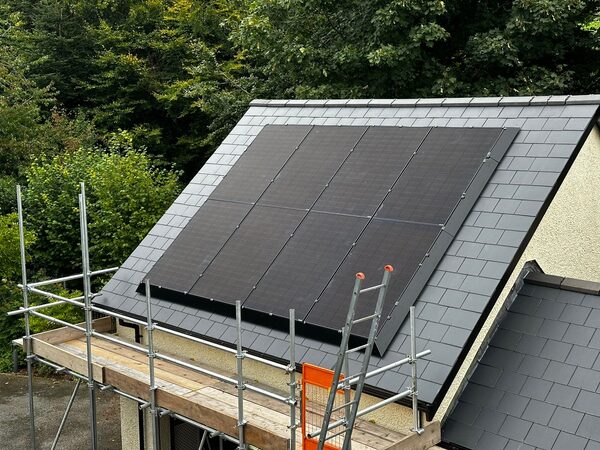
The rules turn on three things: what is installed, where it is installed, and how the quote is built.
The materials limit is the one that most often changes a quote. The reduced rate applies provided that the open market value of the supply of the energy-saving materials does not exceed 60% of the cost, excluding VAT, of the total supply of installing them7. Where the value of the energy-saving materials exceeds 60%, only the labour cost element will qualify for the reduced rate, with the supply of the materials standard rated15. A labour-heavy installation, such as insulation blown into a loft, sits comfortably inside the limit. A materials-heavy installation, such as a battery system where the hardware dominates the invoice, may not.
Supply only is excluded. Energy-saving materials supplied on their own, without installation, are standard-rated16. The relief attaches to the installation, which is why the legislation is framed around the supply of installation in residential accommodation rather than around the goods3. A household buying equipment to fit itself does not receive the same treatment as one buying an installed system.
The list of qualifying technologies is set by legislation and has been widened twice. The technologies that benefited from the relief included insulation, central heating system controls, hot water system controls, solar panels, wind turbines, water turbines, ground source heat pumps, air source heat pumps, micro combined heat and power units and wood-fuelled boilers4. With effect from 1 February 2024 the relief was expanded to include water source heat pumps, certain electrical batteries and certain smart diverters6. These changes qualify for the temporary zero rate until 31 March 20276.
Some goods are outside the relief entirely and stay at 20%. Households pay 20% VAT for heating equipment not funded through an energy efficiency grant, energy efficient boilers, secondary or double glazing, low emission glass, energy efficient fridge freezers, and, in Northern Ireland only, wind turbines and water turbines1. The exclusion of energy efficient boilers is worth noting because it is a common assumption that a new boiler attracts the same treatment as a heat pump. It does not.
How an installer applies the relief on a quote
The relief is not claimed by the household and does not appear as a separate line item in the way a grant does. It is applied by the installer when the supply is invoiced, which means the practical question for a household is what the quote shows and what the invoice says.
The starting point is that the installer must decide whether the supply qualifies. That decision rests on the nature of the materials, the fact that they are being installed in residential accommodation, and the proportion of the total supply value taken by the materials7. Where the supply qualifies in full, the invoice carries 0% VAT on both the products and the installation work1. Where the materials exceed the 60% limit, the installer must apportion the supply, applying the reduced rate to the labour element and the standard rate to the materials15.
Businesses that install energy-saving materials in Great Britain are not required to charge and account for VAT on their supplies for the five-year period, but can still recover input tax in relation to those supplies2. That is what makes the zero rate workable for the trade: the installer is not absorbing VAT they cannot reclaim. HMRC will monitor the effectiveness and application of this relief through normal audit activity and regular communication with affected taxpayer groups2.
The instrument has a narrow reach by design. It will only impact residential installations of qualifying energy-saving materials, and there is no, or no significant, impact on the public sector2. Commercial and public sector installations are outside it.
For a household, the practical checks are these:
- Confirm the measure is on the qualifying list, including the 2024 additions6.
- Confirm the property is residential accommodation, which is the scope the legislation uses3.
- Ask how the quote splits materials from labour, because the 60% limit decides the rate on the whole supply7.
- Check the invoice shows the rate applied, since the installer is responsible for it1.
- Note the end date, because the rate changes after 31 March 20272.
What the relief means for energy independence
The relief lowers the entry cost of equipment that lets a household generate or manage its own energy, and that is its main contribution to independence. Solar photovoltaic panels capture energy from the sun and turn it into electricity for the home to use17. A typical solar panel installation costs around £6,100 and saves between £530 and £650 a year on electricity bills, which means solar panels usually pay for themselves in 10 to 12 years17. Removing 20% VAT from the qualifying part of that installation shortens the period before the system has paid for itself.
The dependence that remains is worth stating as plainly as the benefit. A solar installation still connects to the grid, and rates for selling electricity to the grid are much lower than tariffs for using electricity from the grid, so using solar electricity yourself is much more cost-effective than exporting it17. A heat pump still draws electricity from a supplier. A battery system still depends on the manufacturer for replacement parts, and inverters usually need replacing after around 12 years while the panels themselves last 25 years or more17. The relief reduces the cost of the equipment, not the running relationship with the grid or the supplier.
There is also a planning dimension that the tax relief does not touch. Solar panels often do not need permission because they are considered permitted development, though there are exceptions for listed buildings and homes in conservation areas17. Air source heat pump installations are permitted development only if they comply with the Microgeneration Certification Scheme Planning Standards, and permitted development rights do not apply within the curtilage of a listed building or within a site designated as a scheduled monument19. The volume of the outdoor compressor unit must not exceed 1.5 cubic metres on a house or 0.6 cubic metres for a block of flats19. None of this changes the VAT position, but it changes whether the installation can proceed at all.
The wider direction of travel is towards electrified heating. Air source heat pumps were shown to consistently result in the lowest delivered energy demand across the archetypes modelled in Scottish Government work on new domestic buildings14. In the government's own energy innovation modelling, air source heat pumps represent the most promising export opportunity, contributing 35% of export driven GVA by 205014. The VAT relief is a small lever on a large transition, and it is time-limited.
For a household weighing an installation, the relief is best understood as a discount with an expiry date and a set of conditions, not as a permanent feature of the tax system. It sits alongside the grant landscape rather than replacing it: the Boiler Upgrade Scheme funds heat pump installations directly, and the Energy Company Obligation funds measures for eligible households. The VAT treatment applies on top of whichever of those routes a household uses, and the full guide to home energy grants sets out how the schemes fit together.

Sources20 cited
- Tax on shopping: energy-saving products, GOV.UK, 2026-09-17
- Explanatory memorandum: The Value Added Tax (Installation of Energy-Saving Materials) Order 2022, legislation.gov.uk, 2026-09-17
- The Value Added Tax (Installation of Energy-Saving Materials) Order 2022: explanatory note, legislation.gov.uk, 2026-09-17
- The Value Added Tax (Installation of Energy-Saving Materials) Order 2024: explanatory memorandum, legislation.gov.uk, 2026-09-17
- The Value Added Tax (Installation of Energy-Saving Materials) Order 2024: explanatory note, legislation.gov.uk, 2026-09-17
- Extension of VAT energy saving materials relief, GOV.UK, 2024-01-11
- Draft VAT guidance on changes to energy-saving materials, GOV.UK, 2026-09-17
- Spring Statement 2022, GOV.UK, 2022-03
- VAT energy saving materials relief: improving energy efficiency and reducing carbon emissions, GOV.UK, 2023-12-11
- Call for evidence: VAT energy saving materials relief, GOV.UK, 2023-03-15
- VAT: changes to the reduced rate for energy-saving materials (2019), GOV.UK, 2019-07-10
- VAT relief for energy-saving materials to Northern Ireland, GOV.UK, 2023-03-29
- VAT energy saving materials and grant funded heating supplies: VENSAV2082, GOV.UK, 2026-09-20
- Energy innovation needs assessment: heat and buildings, GOV.UK, 2050
- Draft VAT guidance on changes to energy-saving materials (2019), GOV.UK, 2026-09-17
- VAT changes to the reduced rate for energy-saving materials, GOV.UK, 2026-07-10
- Solar panels: energy improvement options, London Borough of Hammersmith and Fulham, 2025-10
- ECO4 new measures and products guidance v3.0, Ofgem, 2026-03-26
- Building regulations and renewables guidance, Bedford Borough Council, 2026-09-17
- Retrofit and energy efficiency: permitted development, Cotswold District Council, 2026-09-17
 VAT on Energy InstallationsExplains the VAT treatment of energy-saving materials installed in homes, which products and jobs qualify and which are charged at the standard rate.
 Listed Buildings and AreasYour home is listed or sits in a conservation area, so do you need permission before adding solar panels, insulation or a heat pump?
 Insulation a Heat Pump NeedsWill a heat pump still work if your home is not well insulated, and would you need to add loft, wall or floor insulation first?
 Building Regulations EnglandAdding a heat pump, solar panels or an extension usually needs building regulations approval, and it is separate from planning permission.
 Home Energy Planning ScotlandDo you need planning permission for solar panels or a heat pump in Scotland?
 Cost of Energy IndependenceA heat pump and better insulation are the usual starting point, but what does the whole job really cost, and what help is there with the bill?