
In this comparison
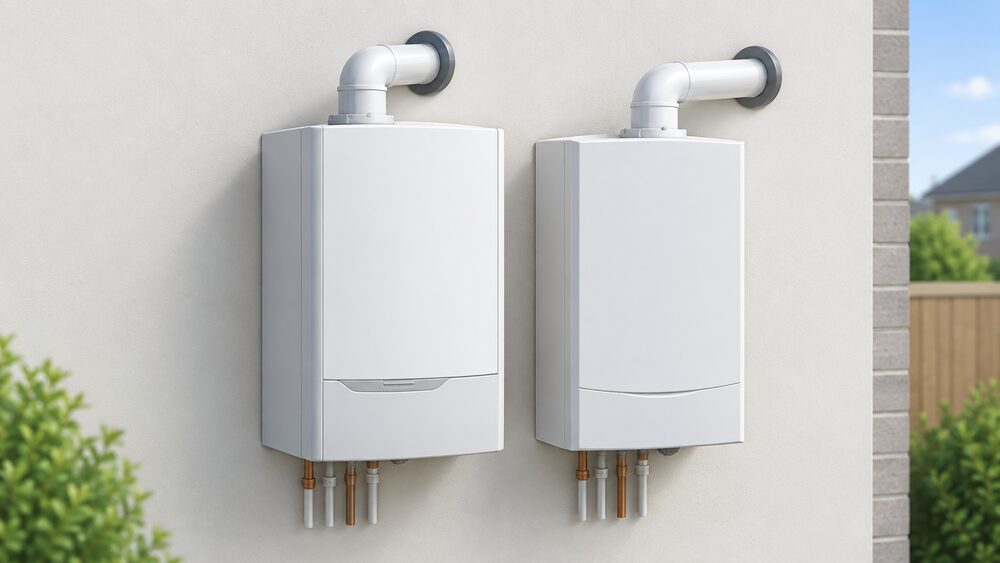
A micro-CHP unit is a gas-fired boiler that also makes electricity. It runs the central heating for the home, produces heat and hot water, and generates about 1kW of electricity while it is running, at a typical heat-to-electricity ratio of about 6:1 for domestic appliances1. A condensing gas boiler does the first of those jobs and none of the second. That single difference is the whole comparison: the micro-CHP unit buys a small, heat-driven trickle of on-site generation in exchange for a higher purchase price, a narrower servicing base and a fuel that is still fossil gas.
The choice is therefore not between a good appliance and a bad one. It is between two ways of using the same fuel. A condensing boiler converts gas to heat and takes its electricity from the grid. A micro-CHP unit converts gas to heat and a little electricity, and takes the rest of its electricity from the grid. Neither removes the gas connection, and neither removes the grid connection.
What micro-CHP is and how it differs from a condensing boiler
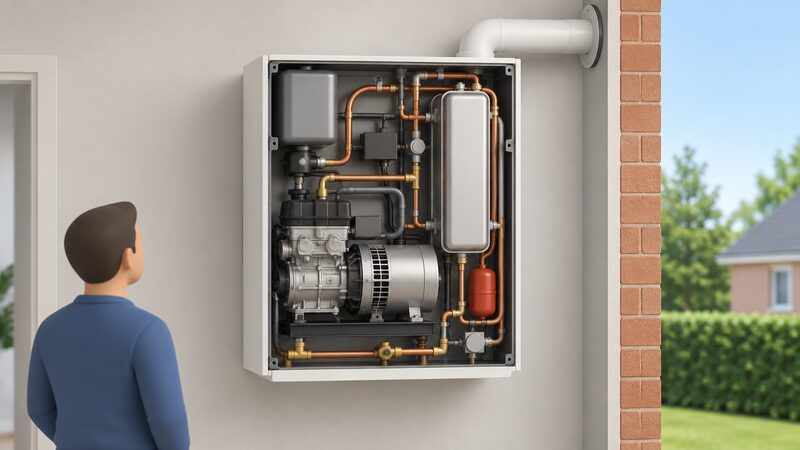
A micro-CHP unit resembles a gas-fired boiler and produces electricity from mains gas or LPG5. Its primary function is to run central heating for the home, and it also produces heat and hot water1. The generating equipment inside the unit comprises the prime mover, whether a gas engine, small gas turbine or fuel cell, plus the generator, heat recovery equipment and associated pipework, valves and controls6. In other words, the electricity is a by-product of a heating appliance, not the other way round.
The technology is classed as microgeneration when it is small scale, and the certification body for microgeneration covers technologies of 50kW or smaller7. For micro-CHP specifically, the accreditation threshold is an electrical capacity of 2kW or less3. That ceiling is what separates a domestic unit from a commercial CHP plant.
Micro-CHP is described as a low-carbon option because it uses fuel more efficiently than separate heating and grid electricity, even though it uses fossil fuels3. Building regulations set a limit on how much worse it may be than the alternative: the maximum heating plant emission rate for micro-CHP is no greater than the emission rate of a regular boiler using the same fuel8. The planning system treats it as a microgeneration technology alongside small wind and hydro9.
The practical difference from a condensing boiler is therefore threefold. The unit generates electricity on site. It costs more to buy than a traditional boiler2. And it needs a specialist when it is serviced2. Everything else, the fuel, the flue, the heat output and the hot water, is familiar territory.
Efficiency and running cost: where each unit wins
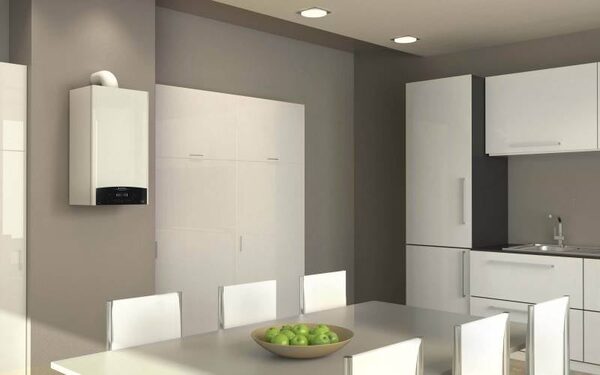
The efficiency argument for micro-CHP rests on total fuel use, not on boiler efficiency alone. A condensing boiler turns gas into heat and discards the opportunity to make electricity from that gas. A micro-CHP unit captures some of that opportunity, which is why it is described as using fuel more efficiently than separate heating and grid electricity3. The gain is real but modest in scale, because the electrical output is small.
On running cost, the evidence is more complicated than the efficiency case. Official guidance notes that running costs for heat pumps are typically lower when compared to those of traditional gas boilers, though it adds the caveat that this depends on the system being designed and operated well10. That comparison is about heat pumps, not micro-CHP, but it sets the benchmark against which any gas-fired appliance now sits.
The Scottish Government's expert advisory group found that in areas on the gas grid, fuel costs for gas boilers are cheaper than for heat pumps, despite the latter's much greater thermal efficiency11. That finding cuts both ways for micro-CHP. It confirms that gas remains a cheap fuel per unit of heat in connected areas, which favours any gas appliance. It also confirms that thermal efficiency alone does not determine running cost, because the price of the fuel matters as much as the efficiency of the appliance.
A consultation example used a gas boiler at a very low 80% efficiency for illustrative running cost purposes12. That is a modelling assumption rather than a measured field figure, and it should be read as such. The honest position is that a micro-CHP unit's running cost depends on how much electricity it displaces, which depends on run hours, which depends on the home's heat demand and the weather. A household with high, steady heat demand gives the unit more hours in which to generate. A household with low demand gives it few.
What micro-CHP does for independence is partial. It reduces the electricity drawn from the grid while the heating runs, and it keeps the household on gas. It does not insulate the household from gas prices, from the grid, or from a supplier. For a wider view of where this technology sits, see microgeneration and the comparison with an air source heat pump.
Electricity output: the difference a condensing boiler cannot offer
This is the section where micro-CHP wins outright, and it is worth being precise about how much it wins by. The published figure is about 1kW of electricity while the unit is running1. The unit must be on for it to generate any electricity2. There is no storage, no standby generation and no output when the heating is off.
The ratio matters as much as the headline. The main output of a micro-CHP system is heat, with some electricity generation, at a typical ratio of about 6:1 for domestic appliances2. For every six units of heat, roughly one unit of electricity. A household that uses a great deal of heat will therefore generate a meaningful amount of electricity as a by-product. A household that uses little heat will not.
The capacity ceiling reinforces the scale. Micro-CHP for accreditation purposes is 2kW or less electrical capacity3. A unit running at about 1kW is therefore operating at the upper end of a deliberately small band. This is not a power station in a cupboard.
For context on what a condensing boiler offers by comparison: nothing. The Great British Insulation Scheme's list of heating sources for scoring purposes includes condensing and non-condensing gas boilers, LPG boilers, oil boilers, electric boilers, solid fossil boilers, air to water heat pumps, ground source heat pumps and district heating systems, with CHP listed separately from non-CHP district heating13. A boiler is a heat source. A micro-CHP unit is a heat source and a generator.
The independence this buys is real but bounded. While the heating runs, part of the home's electricity demand is met on site rather than imported. The rest still comes from the grid, and the gas still comes through the meter. For the metering and connection rules that apply to a generating appliance, see G98 and G99 and, in Northern Ireland, connecting a generator.
Heat output and hot water: what each can supply
On the heating side, the two technologies are close relatives. Micro-CHP units produce heat and hot water6, and the primary function of the unit is to run central heating for the home1. Domestic sized models are available1. Units are compact and come in similar sizes and styles to standard boilers, with options for wall-mounted or floor-standing installation3.
That similarity is the point. Independent guidance states that if a conventional boiler is already installed, a micro-CHP unit should be able to replace it, as it is roughly the same size2. The unit is not a plant room installation. It is a boiler-shaped appliance that happens to generate.
Fuel choice follows the boiler pattern. Domestic micro-CHP systems are usually powered by mains gas or liquefied petroleum gas, though some models run on oil or bio-liquids, including biodiesel2. Micro CHP systems for homes typically use mains gas or LPG as fuel3. A micro-CHP unit resembles a gas-fired boiler and produces electricity from mains gas or LPG5. For most homes on the gas grid, the fuel question is settled before the technology question is asked.
Hot water supply is the same as a boiler's, because the unit is a boiler. There is no cylinder requirement specific to micro-CHP in the way there is for some heat pump installations, and no separate heat store implied by the technology itself. The heat and hot water come from the same appliance that makes the electricity.
Where the comparison with other microgeneration gets interesting is in what the unit cannot do. A micro hydro plant can supply space and water heating when available power exceeds demand14, but that is a different technology with a different fuel. Micro-CHP cannot run on water flow or wind, and it cannot generate when the heating is off. Its heat output is conventional; only its electrical by-product is unusual.
Installation, servicing and maintenance compared
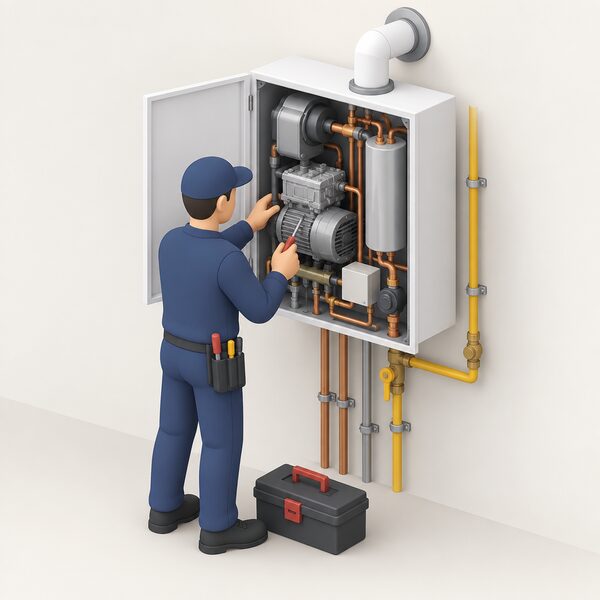
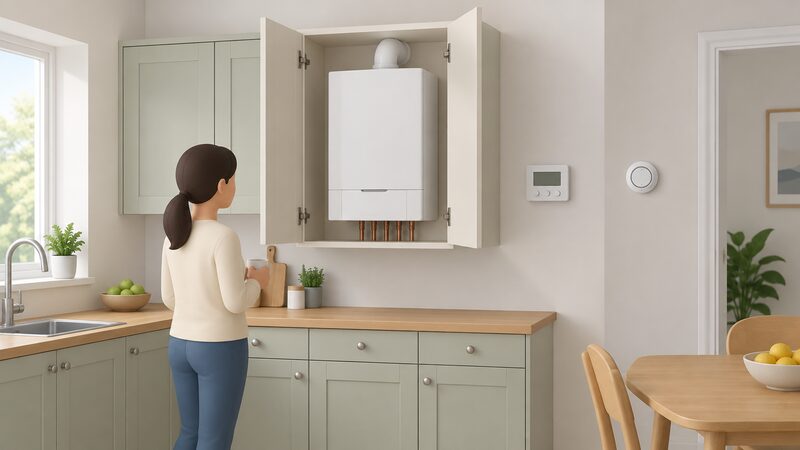
Installation is where the two technologies diverge least in physical terms and most in skills terms. A micro-CHP unit is roughly boiler-sized and can replace a conventional boiler without a change of footprint2. It is compact and available in wall-mounted or floor-standing styles3. The pipework and flue arrangements are those of a gas appliance.
Servicing is where the divergence shows. Servicing costs and maintenance are estimated to be similar to a standard boiler, although a specialist will be required3. Independent guidance repeats the point: servicing costs and maintenance should be similar to a standard boiler, although a specialist will be required2. The cost is familiar; the engineer may not be.
That specialist requirement is the practical constraint a household should weigh. The generating components, the prime mover, generator, heat recovery equipment and associated pipework, valves and controls6, sit inside the casing alongside the familiar boiler parts. An engineer who services gas boilers but not generating equipment may not be the right person for the job. The pool of qualified specialists is smaller than the pool of gas engineers.
For any installation that is to be certified, the installer requirement is the same as for other microgeneration. Installers and the low-carbon heating products supported under the Boiler Upgrade Scheme must be certified by the Microgeneration Certification Scheme and be members of an approved consumer code15. Official guidance tells households to choose an MCS certified installer if they plan to apply for government funding such as through the Boiler Upgrade Scheme16. MCS is also a requirement for heat pump installations made under the Domestic Renewable Heat Incentive, the Green Homes Grant and the Clean Heat Grant17.
Costs to buy and install
A micro-CHP system will cost more than a traditional boiler2. That is the only direct price statement the evidence supports for micro-CHP itself, and it is a comparison rather than a figure. No published installed price for a domestic micro-CHP unit appears in the material behind this page, so prices for the unit and its installation are installer-quoted.
What can be given are the boiler benchmarks against which a household would judge the premium. Independent guidance published in September 2026 gives a gas combi boiler installation at £1,650 to £6,000, a gas heat-only or conventional boiler at £2,500 to £4,100, and a biomass boiler at £19,000 to £31,00018. The same guidance describes the heat-only boiler as the cheapest type of boiler to buy18. Written evidence to a parliamentary committee put a typical gas boiler at £2,000 to £4,0004.
| Appliance | Installed cost | Source date |
|---|---|---|
| Gas combi boiler | £1,650 to £6,000 | September 202618 |
| Gas heat-only or conventional boiler | £2,500 to £4,100 | September 202618 |
| Typical gas boiler | £2,000 to £4,000 | 20234 |
| Biomass boiler | £19,000 to £31,000 | September 202618 |
| Micro-CHP | More than a traditional boiler; installer-quoted | 20222 |
The ranges are wide because installation cost depends on the property, the flue route, the controls and the labour market. The biomass figure is included because it shows how far a non-gas renewable heating installation can run, which is the context in which any micro-CHP premium should be read. Micro-CHP sits between the boiler benchmarks and the renewable end of the market, closer to the former.
VAT treatment is a separate matter that depends on the nature of the supply and any grant funding involved, and HMRC publishes detailed guidance on energy saving materials and grant funded heating supplies19. A household comparing quotes should expect the installer to state the VAT position on the quotation.
Suitability by home type: which households benefit from micro-CHP
The suitability question turns on run hours, not on floor area. Because the unit generates only while it is heating2, the household that benefits most is the one that heats most: a larger, less well insulated property with high and steady demand across the heating season, on mains gas or LPG2. Every hour of heating is an hour of generation.
The household that benefits least is the one with low heat demand. A small, well-insulated flat gives the unit few hours in which to work, so the electrical by-product is correspondingly small. Independent guidance on electric boilers notes that they are best suited to smaller homes that do not have a very high demand for heating and hot water20, which illustrates the general principle that appliance choice follows demand profile. For micro-CHP the logic runs the other way: it rewards high demand.
Fuel availability is the first filter. Domestic micro-CHP systems are usually powered by mains gas or LPG2, and micro CHP systems for homes typically use mains gas or LPG as fuel3. A home off the gas grid would need one of the models that run on oil or bio-liquids, including biodiesel2, and those are a minority of the market.
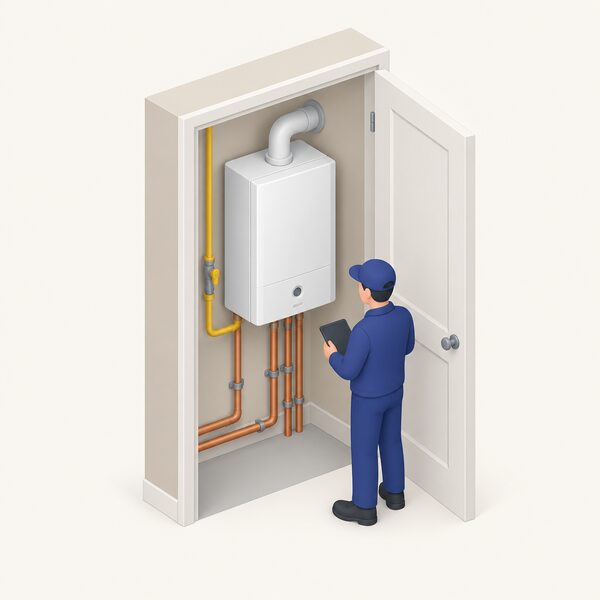
Physical fit is rarely the obstacle. Units are compact and come in similar sizes and styles to standard boilers, with wall-mounted or floor-standing options3, and a micro-CHP unit should be able to replace a conventional boiler as it is roughly the same size2. A flat with a gas supply and a boiler cupboard is not excluded by dimensions.
The honest summary is that micro-CHP suits a gas-connected home with high, prolonged heat demand and access to a specialist engineer. It suits poorly a low-demand home, a home off the gas grid without a suitable alternative fuel, and any household unwilling to accept a narrower servicing base. For a broader view of matching technology to property, see which microgeneration suits your home.
Government support and export payments for micro-CHP
Micro-CHP is an eligible technology type for the Smart Export Guarantee21. That is the main route by which a household with a micro-CHP unit can be paid for electricity it exports, and it is the successor arrangement to the Feed-in Tariff, which is closed to new applicants. Suppliers have their own guidance under the old scheme22.
The Boiler Upgrade Scheme is a different matter. It helps to cover the additional costs associated with switching from a gas boiler to a heat pump23, and it funds heat pumps and, in limited circumstances, biomass boilers24. Installers and products supported under the scheme must be MCS certified and members of an approved consumer code15, and the installer applies for the grant on the household's behalf through Ofgem16. Micro-CHP is not the technology that scheme exists to fund.
Where micro-CHP does appear in scheme rules is in the measure tables. Renewable heating measures do not have separate measure types: the installation of hydronic heat pumps, biomass boilers and fuel cell micro-CHP are included in the boiler measure type25. That is an administrative classification, not a grant offer, and it should not be read as one.
Hybrid arrangements have their own rules. Retrofit and packaged hybrids, where the heat pump and gas boiler components are in separate units, are eligible for homes currently heated by mains gas only, and only the heat pump component can receive funding where a new gas boiler is fitted7. That is the closest the current support landscape comes to funding a gas appliance alongside a low-carbon one, and it is explicitly limited.
For the wider funding picture, including schemes that have closed and the treatment of replacement equipment, see grants and funding for micro-CHP and the Feed-in Tariff for micro-CHP.
The units available in the UK
Domestic sized models are available, and Northern Ireland's official guidance states this directly1. The clearest named example in the scheme documentation is the Viessmann Vitovalor 300PT2, described as a domestic sized micro combined heat and power unit that contains a low temperature fuel cell, listed as an approved innovation measure26. Fuel cell units of this kind are one of the three broad design routes, alongside Stirling engine and internal combustion designs.
The market has narrowed over time. Earlier Stirling engine products were withdrawn, and the history of those products is worth understanding before assuming that any given model will remain supported for its service life. The pages on Baxi Ecogen and the Flow Energy micro-CHP boiler set out what happened to two of them, and the Viessmann Vitovalor covers the fuel cell route in detail. For the design differences between the three approaches, see micro-CHP types.
This matters for the independence calculation. A micro-CHP unit ties a household to a manufacturer for specialist servicing and parts, and to a fuel that arrives through a meter. If the maker withdraws from the market, the household's ability to maintain the generating side of the appliance depends on the remaining specialist base. That is a different kind of dependence from the grid, but it is a dependence nonetheless.
Sources26 cited
- Micro-combined heat and power, nidirect, 2026
- Micro combined heat and power, Energy Saving Trust, 2022
- Micro CHP, MCS Certified, 2026
- Written evidence, UK Parliament, 2023
- Microgeneration planning advice, Scottish Government, 2013
- Feed-in Tariffs consultation on replacement generating equipment, Ofgem, 2021
- WHSHF wave 3 scheme guidance addendum, Department for Energy Security and Net Zero, 2026
- Approved Document L Volume 1: Dwellings, HM Government, 2026
- Sustainable home energy solutions, Planning Portal, 2024
- What impact can heat pumps have in domestic heating, Department for Energy Security and Net Zero, 2023
- Heat pump sector deal final report, Scottish Government, 2021
- Building regulations discussion document, Northern Ireland Department of Finance, 2023
- Great British Insulation Scheme delivery guidance, Ofgem, 2023
- Hydro electricity, Planning Portal, 2026
- Boiler Upgrade Scheme annual report 2024 to 2025, Ofgem, 2025
- Find a heat pump installer, GOV.UK, 2022
- Public Accounts Committee report, UK Parliament, 2026
- Different boiler types, Uswitch, 2026
- VAT energy saving materials, HMRC, 2026
- The best heating for your home, Which?, 2025
- Smart Export Guarantee: generators, Ofgem, 2026
- FIT guidance for licensed electricity suppliers, Ofgem, 2024
- Energy generation in Wales 2021, Welsh Government, 2022
- Energy terms explained, Ofgem, 2026
- ECO4 measures table, Ofgem, 2025
- ECO4 innovation approved measures, Ofgem, 2023
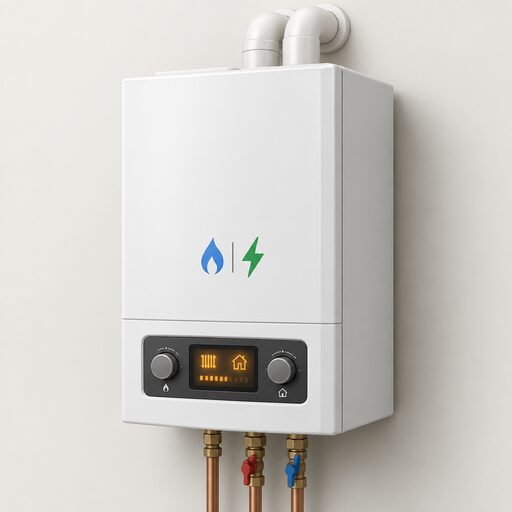
 Micro-CHP for HomesA micro-CHP boiler makes electricity while it heats your home, but only when the heating is on.
 Micro-CHP Cost and OutputDomestic micro-CHP costs more than a conventional boiler and produces roughly 1kW of electricity alongside its heat.
 Micro-CHP Performance TestingHow well a micro-CHP boiler performs in your home decides what you get paid and what you save.
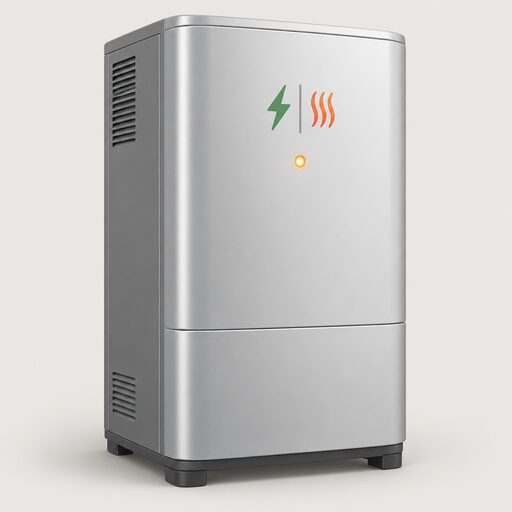 Domestic Fuel CellsA fuel cell boiler makes electricity and heat at the same time, usually from mains gas.
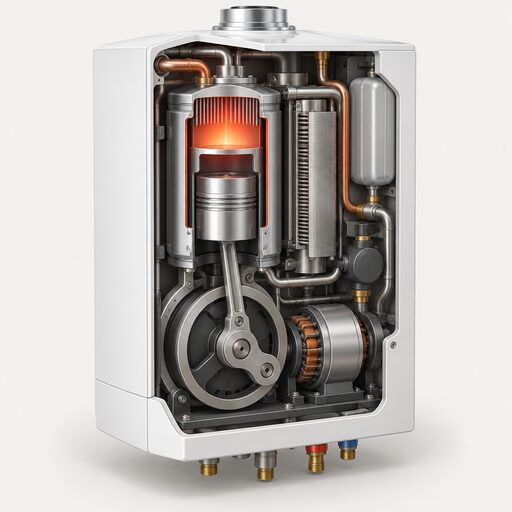 Micro-CHP TypesWhich type of micro-CHP actually gets fitted in UK homes, and how much electricity does one make while it heats your house?
 Condensing BoilersCondensing boilers squeeze extra heat out of the gas they burn by turning the steam in their waste gases back into water.