
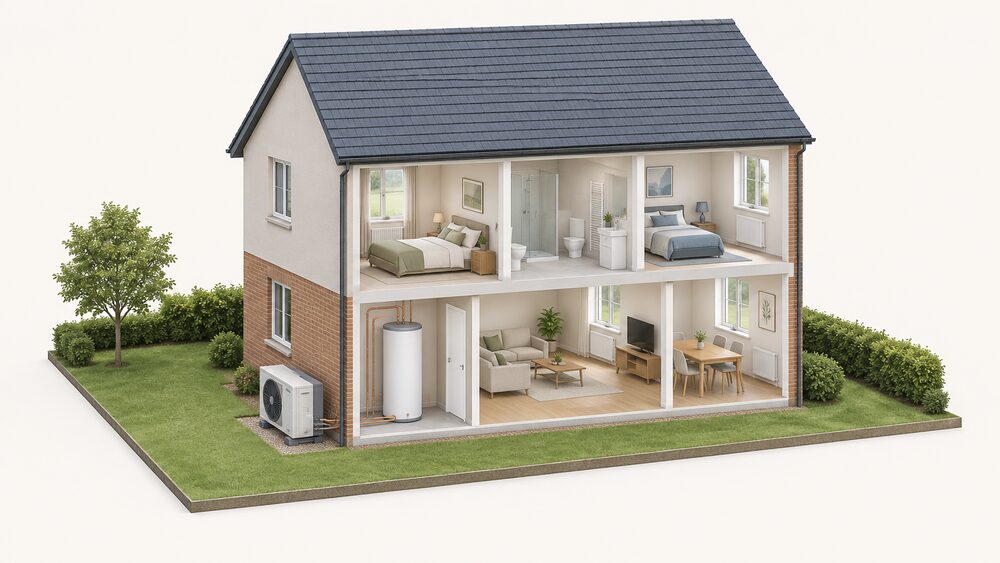
In this comparison
Micro-CHP and an air source heat pump sit at opposite ends of the same decision. Micro-CHP is a gas appliance that runs the central heating for the home and produces heat and hot water, and it also generates about 1kW of electricity while it is running1. An air source heat pump does not burn anything: it moves heat rather than creating it, and can produce several units of heat for every unit of electricity used3.
That difference decides almost everything else. Micro-CHP keeps a household on the gas grid and on a gas supply, so the dependence on a supplier and on imported gas remains, but it offsets some imported electricity. A heat pump cuts the gas connection out of the heating system and shifts the household's dependence onto electricity, the grid and the tariff it is on. Neither is an off-grid technology on its own.
On running cost the record is genuinely mixed. One independent assessment puts a typical-sized home at about the same running cost for a heat pump as for a gas boiler, with the unit price of electricity almost four times higher than gas4. Another independent source warns heat pumps may be no cheaper to run than a conventional gas appliance5. Micro-CHP's running cost is not priced against a heat pump anywhere in the record.
What each technology actually does
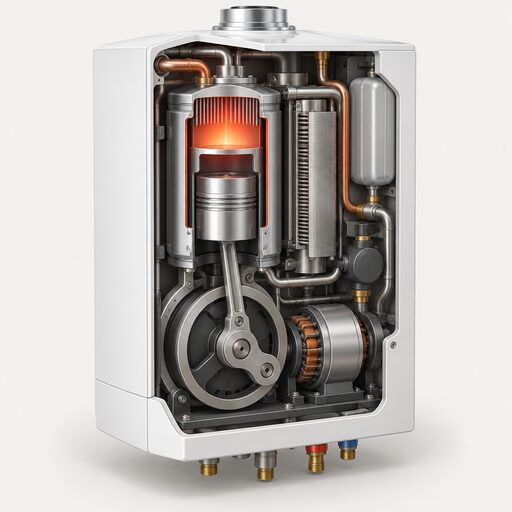
Micro-CHP generates both heat and electricity, and is described in official guidance as a highly efficient alternative to traditional boilers1. Its primary function is to run central heating for the home2. The electricity it produces is a by-product of that heating duty, at roughly 1kW while the unit is running2. It is a combustion appliance on the gas grid, and it produces heat and hot water10.
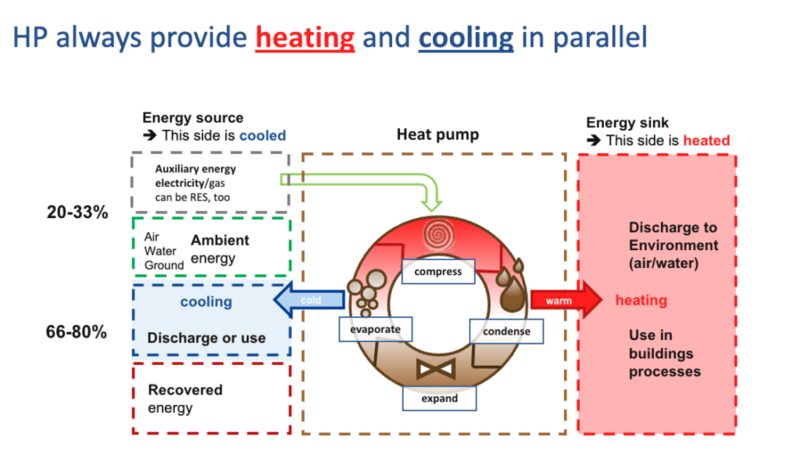
A heat pump works on a different principle entirely. Because it moves heat rather than creating it, it can operate far more efficiently and produce several units of heat for every unit of electricity used3. The key factor influencing the efficiency of a heat pump system is the temperature difference between the source temperature entering the heat pump and the distribution temperature exiting it: the smaller that difference, the more efficient the system11. That single sentence explains most of the practical differences that follow, from radiator sizing to how the unit performs on a cold day.
Both technologies are recognised in the certification and standards landscape. Micro-CHP appears alongside solar thermal, biomass, heat pumps and solar PV in the technology lists used by certification bodies12. The types of heat pump accounted for in government savings modelling are medium-temperature air source, high-temperature air source and medium-temperature ground source13.
For a household's independence, the distinction is sharp. Micro-CHP reduces the amount of electricity bought in, but it does not reduce the gas bought in, and it cannot run without a gas supply. A heat pump reduces the gas bought in to zero for heating, but increases the electricity bought in, so the household's exposure moves from the gas price to the electricity price and to whatever tariff and low-carbon generation sit behind it.
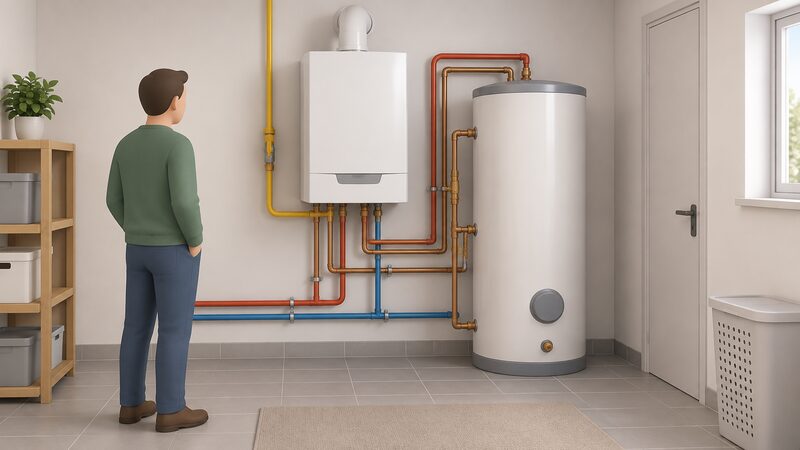
Running costs: gas input versus electricity in
This is where the two technologies are hardest to compare, because the record prices them on different bases and does not set them against each other directly.
For heat pumps, the independent assessment is that a typical-sized home currently costs about the same to run as a gas boiler, with the unit price of electricity almost four times higher than gas4. That ratio is the whole story: a heat pump has to be roughly four times more efficient than a boiler just to break even on unit price, and the same source notes heat pumps use 3 to 4 times less energy to provide the same heat4. Official guidance states that running costs for heat pumps are typically lower than those of traditional gas boilers, but adds a condition: if a system is poorly specified or poorly installed, that advantage can disappear14.
The independent consumer-facing position is more cautious. Heat pumps may be no cheaper to run than a conventional liquid fuel-fired appliance or gas appliance5. And where a heat pump operates at a low coefficient of performance, it can end up costing more to run than a gas boiler, particularly in a poorly insulated home and without pricing reform15. The COP can drop to around 2 or even lower in a poorly insulated home15.
Micro-CHP's economics rest on a different mechanism. It buys gas at the gas unit price and produces some of its own electricity, avoiding the electricity unit price for that portion. The record gives the electrical output, about 1kW while running2, but does not give a running cost figure for micro-CHP, and does not compare it with a heat pump. Any comparison of the two on running cost therefore depends on the household's own gas and electricity unit rates, which the record does not supply.
Carbon: which wins on today's grid
On carbon, the independent and official sources point the same way, and the margin is large.
Heat pump technology currently offers a carbon saving of up to 65% compared with a gas boiler6. Independent guidance classifies heat pumps as low carbon and gas boilers as high carbon, and describes low carbon heating systems as more efficient than traditional heaters like gas boilers and electric radiators16. The same independent comparison table sets carbon at high for the boiler and low for the heat pump9.
Micro-CHP's carbon position is more complicated than either label suggests. It burns gas, so its direct emissions are combustion emissions, and official guidance sets a ceiling: a micro-CHP unit's maximum heating plant emission rate must be no greater than the emission rate of a regular boiler using the same fuel17. That is a cap, not a saving. The carbon benefit of micro-CHP comes from displacing grid electricity, and the size of that benefit therefore depends on how carbon-intensive the grid is at the moment the unit runs.
That is the crux of the comparison. A heat pump's carbon performance improves as the grid decarbonises, because it uses electricity rather than burning fuel on site. A micro-CHP unit's carbon performance also improves as the grid decarbonises, but only in the portion of its output that is electrical; the heat it delivers still comes from burning gas. On today's grid, the official figure of up to 65% carbon saving against a gas boiler is the strongest single number in the record, and it applies to heat pumps6.
There is a third position worth knowing. Independent guidance argues hybrid heat pumps offer better choice and adapt the home for both low-electricity and low-carbon gas technologies, including 100% hydrogen, making it easier to introduce future strategy and policy18. That is a policy argument for keeping a gas connection alongside electrification, not a carbon claim, and it is the closest the record comes to a case for retaining gas-fired heating capacity.
Heat output and hot water: what each can deliver
The two systems deliver heat at different temperatures, and that shapes what each can do with the hot water and radiators already in a home.
A heat pump operates most efficiently when delivering lower temperature water than a traditional boiler would, up to 45°C lower19. Air-to-water units typically send hot water to radiators at 35 to 45°C20. For domestic hot water, most heat pumps will heat to 50 to 55°C very efficiently, and then a sterilisation cycle raises the temperature further; many heat pumps can provide hot water over 60°C consistently, which is the minimum temperature the hot water cylinder needs to reach19. Approved Document L sets a minimum coefficient of performance of 2.0 for heating domestic hot water, for heat pumps other than electrically driven air-to-air units with an output of 12kW or less21.
Hot water storage is the practical consequence. Unlike combi boilers, heat pumps do not provide hot water instantly, so a hot water cylinder is needed22. Heat pumps require a water storage cylinder, similar to older generations of gas boiler systems14. Indoors, the home will require space for a hot water cylinder if it does not already have one19. Heat pumps do not provide hot water on demand like a combi boiler, so another way to provide hot water is needed20.
Micro-CHP produces heat and hot water10, and its primary function is to run central heating for the home2. The record does not describe micro-CHP as requiring a cylinder in the way a heat pump does, because it is a boiler-type appliance rather than a low-temperature heat mover. What it does not do is deliver the same efficiency at low flow temperatures, since its heat comes from combustion.
For a household, the hot water question is often the deciding practical one. A home with a combi and no cylinder has to find space for one before a heat pump can be installed. A home already running a cylinder and a system boiler is closer to heat-pump-ready on the hot water side.
Space, noise and installation practicalities
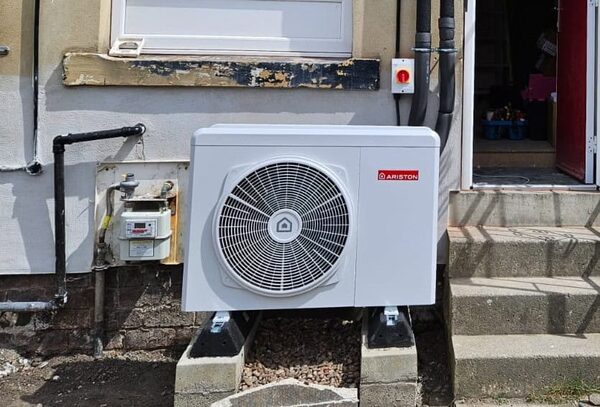
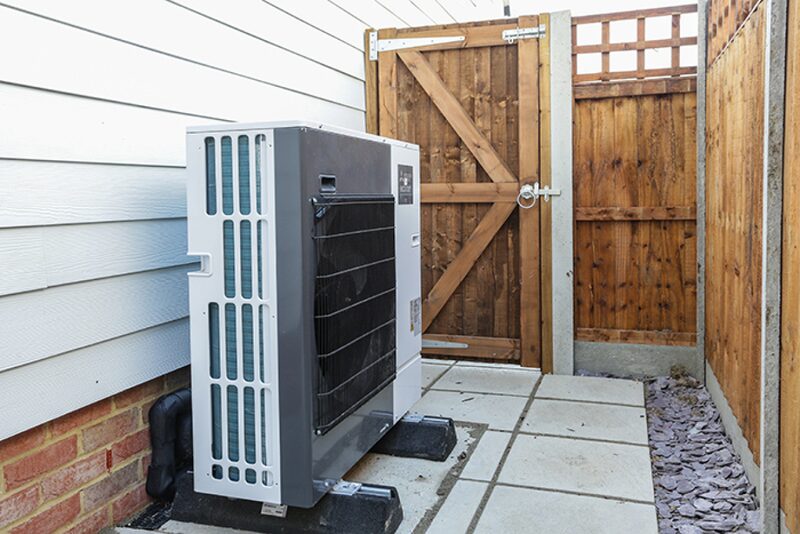
Air source heat pumps can be noisy, and that is written into the planning rules rather than left to neighbourly tolerance. Compliance with the Microgeneration Certification Scheme Planning Standards, MCS 020, is required for an air source heat pump to be permitted development, precisely because the units can be noisy23. The noise assessment calculator takes the installation address, the heat pump installation location, and the distance from the heat pump to the assessment positions in metres24. Project details are optional, but the installation address and location are not24.
Where planning permission is needed rather than permitted development, an application for an air source heat pump should include details of location, design and appearance, noise and vibration, and the efficiency of the unit25. In Wales, there are three types of domestic heat pump where permitted development rights apply: air source, ground source and water source26.
Noise is not equal across heat pump types. Ground source heat pumps are quieter as well as offering increased energy efficiency27. Water source heat pumps have the advantage of stable temperatures, like ground source, but given the improved thermal properties of water they have a smaller installation footprint than ground source11. Hybrid heat pumps are more flexible to install and produce less noise compared to an all-electric heat pump installation18.
The other practical constraint is the heat emitters themselves. When installed as a replacement for gas or liquid fuel heating, heat pumps will usually need more or larger heat emitters, or substantially improved building insulation, adding to the already high installation cost5. Heat pumps can work with radiators or underfloor heating, but some types can work without either16. Homes rated C or above on their EPC typically adapt more easily to heat pumps, although lower-rated homes can still qualify with upgrades3.
Micro-CHP's installation profile is closer to a boiler replacement. It is a gas appliance that runs central heating2, and it appears in the same certification technology lists as conventional renewable heating products12. The record does not give a separate external footprint or noise figure for micro-CHP, because it does not have an outdoor fan unit in the way an air source heat pump does.
Maintenance and what can go wrong

Air source heat pumps are built to last for 15 to 20 years, have few moving parts and generally only need a simple yearly service to keep running efficiently28. A separate independent figure puts heat pump lifespan at 20+ years9. The two sources differ, and both are worth holding: the shorter figure is the more conservative planning assumption, the longer one the optimistic case.
The main operational risk with a heat pump is not breakdown but performance. A heat pump operating at a low COP can end up costing more to run than a gas boiler, and the COP can drop to around 2 or even lower in a poorly insulated home15. That is a specification and fabric problem rather than a maintenance one, and it is why the independent guidance stresses that heat pumps may be no cheaper to run than a gas appliance5. The efficiency of the whole system turns on the temperature difference between source and distribution11, so a system that is asked to run at boiler-like flow temperatures will not deliver the efficiency the technology is capable of.
For micro-CHP, the record gives a support period rather than a service life. The Feed-in Tariff guidance sets out a 10 year eligibility period for micro CHP7, and the quarterly report refers to micro-CHP technology types which are eligible to receive support for 10 years8. That is the scheme's support window, not a manufacturer's overhaul interval, and the record does not give an engine overhaul figure for micro-CHP. Households weighing the two should treat the 10 year figure as a scheme fact and not as a guaranteed engine life.
Which suits which home: a choice guide
The choice turns on four things: whether the home is on the gas grid, what the EPC says, whether there is space for a cylinder and an outdoor unit, and what the household wants its remaining dependence to be.
Micro-CHP suits a gas-grid home that wants to keep a gas connection and offset some electricity. It is an eligible technology type for the Smart Export Guarantee, so exported electricity can earn a payment29. It also appears in the Scottish Government's list of renewable and micro-generation measures made available under Warmer Homes Scotland, alongside ground source heat pumps, micro-wind and micro-hydro30. Its support history sits in the Feed-in Tariff, with the 10 year eligible period7, and the Feed-in Tariff is a closed scheme.
A heat pump suits a home that can accommodate a cylinder and an outdoor unit, and whose fabric and emitters can be brought to a standard where the unit runs at low flow temperatures. Air source heat pumps are suitable for residential homes, apartments and small commercial buildings31. Ground source heat pumps are suitable for single-family homes, larger residential buildings and commercial properties31. Homes rated C or above on the EPC typically adapt more easily, though lower-rated homes can still qualify with upgrades3.
| Micro-CHP | Air source heat pump | |
|---|---|---|
| Fuel | Gas, on the gas grid2 | Electricity3 |
| Electricity generated | About 1kW while running2 | None; it consumes electricity3 |
| Hot water | Produces heat and hot water10 | Cylinder needed; no instant hot water22 |
| Emitters | Runs central heating2 | Radiators or underfloor; may need larger emitters16 |
| Outdoor unit | None described | Yes, with MCS 020 noise compliance for permitted development23 |
| Support period | 10 years under the Feed-in Tariff7 | Not applicable; separate scheme rules apply |
| Lifespan | Not given in the record | 15 to 20 years28; 20+ years9 |
For households thinking about the wider picture, the microgeneration pillar covers how micro-CHP, fuel cells, micro-wind and micro-hydro fit together, and micro-CHP cost and output develops the electrical side of the technology. Where the comparison is against a conventional boiler rather than a heat pump, micro-CHP vs a condensing gas boiler sets out that case, and fuel cell heating vs micro-CHP covers the fuel cell alternative.
The independence question is the one to hold on to. Micro-CHP reduces electricity bought in but keeps the household on gas, on a supplier and on the grid. A heat pump removes gas from the heating system but increases electricity bought in, so the household's exposure moves to the electricity price and to whatever generation and tariff sit behind it. Neither removes the connection.
Sources31 cited
- Sustainable home energy solutions, Planning Portal, 2024-09-02
- Micro combined heat and power, nidirect, 2026-09-17
- Is your home suitable for a heat pump?, The CPA, 2026-02-18
- Domestic heating technology options, Nesta, 2025-02-03
- Off-gas grid heating options, OFTEC, 2026-09-17
- Boiler Upgrade Scheme launch, Ofgem, 2026-09-17
- FIT Guidance for Licensed Electricity Suppliers V17.1, Ofgem, 2024-09
- Feed in Tariffs Quarterly Report Issue 59, Ofgem, 2025-03-28
- Heat pumps vs boilers, The CPA, 2025-02-18
- VAT energy saving materials and grant funded heating supplies, HMRC, 2026-09-17
- Introduction to water source heat pumps, Renewables First, 2026-04-08
- Certifying your product, MCS Certified, 2026-05-18
- Raising minimum standards for heat pumps: options assessment, DESNZ, 2024-11-27
- What impact can heat pumps have in domestic heating today?, GOV.UK, 2023-11-21
- The role of insulation in the Warm Homes Plan, NIA, 2026-03-02
- Renewable heat: right for your home, Energy Saving Trust, 2026-05-19
- Approved Document L Volume 1 Dwellings, MHCLG, 2026
- Hybrid heat pumps, HHIC, 2026-09-17
- Heat pump myths, Energy Saving Trust, 2025-09-02
- Heat pump installation: a step by step guide, Energy Saving Trust, 2026-07-15
- Approved Document L Conservation of fuel and power Volume 1, MHCLG, 2026-09-17
- Air and ground source heat pumps, London Borough of Croydon, 2026-09-17
- Heat pumps, New Forest District Council, 2026-09-17
- MCS 020 noise assessment calculator, MCS Certified, 2026-09-19
- Air source heat pumps, London Borough of Hammersmith and Fulham, 2026-09-17
- Planning permission: heat pumps, Welsh Government, 2026-09-17
- HFC phasedown reform de minimis assessment, Defra, 2025-09-02
- Heating systems, AgilityEco, 2026-09-20
- Smart Export Guarantee generators, Ofgem, 2026-09-17
- Energy saving home improvements, Scottish Government, 2026-09-17
- Heat pumps, nidirect, 2025-02-24
 Energy IndependenceA heat pump runs your heating on electricity instead of gas or oil, so how much does that really cut what you pay and how exposed you are when fuel prices jump?
 Micro-CHP Cost and OutputDomestic micro-CHP costs more than a conventional boiler and produces roughly 1kW of electricity alongside its heat.
 Micro-CHP for HomesA micro-CHP boiler makes electricity while it heats your home, but only when the heating is on.
 Micro-CHP TypesWhich type of micro-CHP actually gets fitted in UK homes, and how much electricity does one make while it heats your house?
 Hybrid Heat PumpsHow hybrid systems pair a heat pump with a gas, oil or LPG boiler, what decides which appliance runs, what they cost, how much gas they displace, and why the Boiler Upgrade Scheme will not fund them.
 Heat Pump Running CostsWhat does a heat pump cost to run each year, and is it cheaper than a gas boiler?