
In this comparison
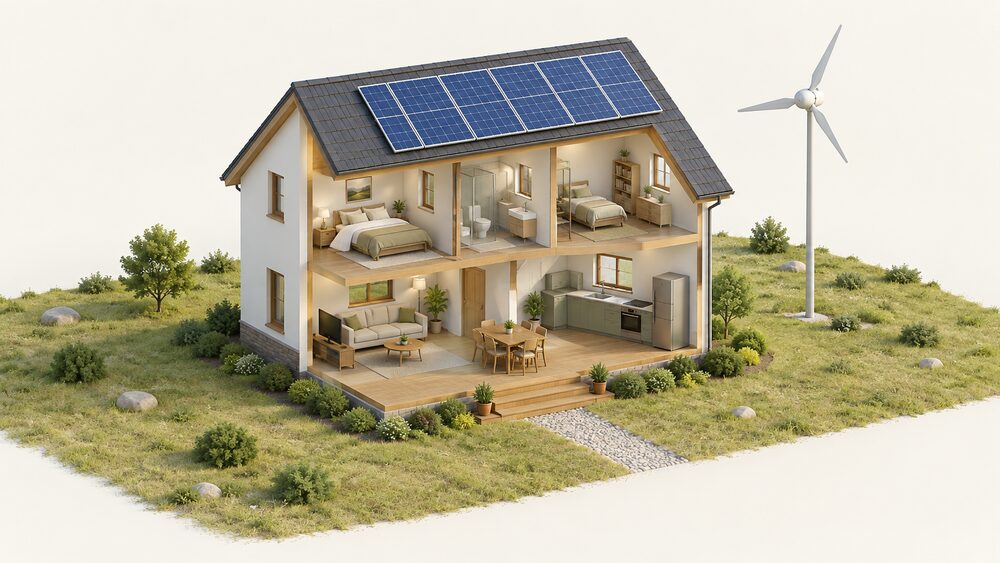
For an off-grid home, the choice between micro wind and solar PV is not really a choice between two products. It is a choice between two patterns of availability. Solar PV produces predictably and seasonally: it needs daylight, so it produces nothing at night, and in the UK it can be 25% to 50% less effective in winter than in summer because of shorter days and more cloud1. Wind is the opposite: it is not tied to daylight at all, but it is only as good as the site. Systems work best in exposed, windy locations and are less suitable for built-up or sheltered areas2.
The scale of each option differs too. A typical domestic wind system for a home is 2.5 to six kilowatts, depending on the location and size of the house, and individual turbines range from a few hundred watts to two or three megawatts3. A 6kW pole-mounted wind system costs around £35,000 for equipment and installation2. Rooftop solar panels typically generate 3,800kWh to 4,350kWh a year and carry a 25 year warranty4. Solar panel costs depend on size, roof access and whether panels or tiles are preferred, and are installer-quoted5.
For most off-grid homes the practical answer is that neither technology alone covers the year. Solar carries the summer and fails at night; wind can carry winter and night but only where the wind resource justifies it. A wind solar hybrid system means the household is covered in low light and wind conditions6. What follows sets out what each produces, what each costs, how the rules differ across the UK, and what ownership actually involves.
Wind turbine or solar panels: which suits an off-grid home
The first question is what the site offers. Solar PV needs a mainly south-facing roof to get the best power output, with southwest or southeast-facing roofs also good7. A system facing east or west tends to get around 15-20% less energy than one facing directly south, and a north-facing roof around 30% less8. Southern areas of the UK receive around 20% more solar energy than those furthest north8. So a well-oriented roof in the south of England is a strong solar site; a north-facing roof in the north of Scotland is a poor one.
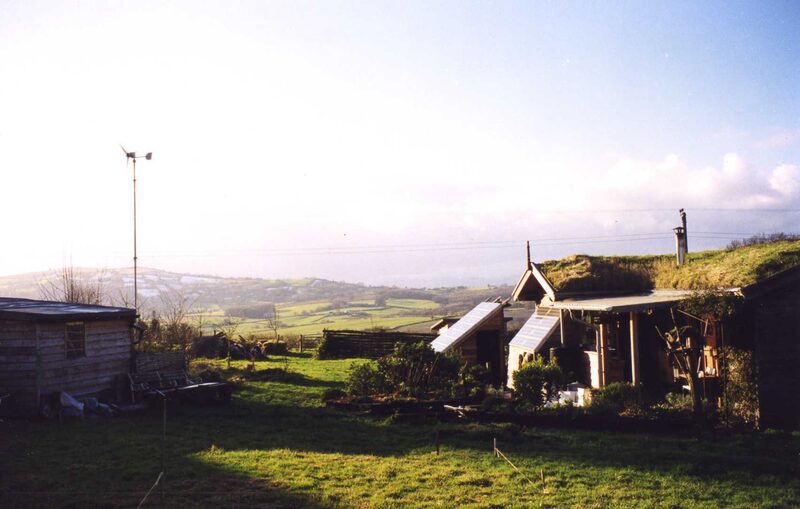
Wind inverts that logic. A turbine does not care about roof orientation, but it cares enormously about exposure. Systems work best in exposed, windy locations and are less suitable for built-up or sheltered areas2. A domestic wind turbine is therefore a site-specific proposition in a way that solar is not: two houses a mile apart can have very different wind resources, and the turbine's output follows the site rather than the machine's rating.
There is a third consideration that matters off grid specifically. Solar panels typically cannot power a home during a power cut unless the home is off the grid or has additional equipment9. An off-grid home is by definition in the second category, so the usual grid-tied limitation does not apply. But the same fact points to the real constraint: an off-grid system has to cover the whole load, not just offset it, which means the sizing question is about the worst week of the year rather than the annual average.
For a household weighing the two, the useful framing is that solar is a known quantity that can be estimated from roof orientation and location, while wind is an unknown quantity that depends on a resource most householders cannot measure without instrumentation. Where a site has genuine exposure, wind adds generation at times solar cannot; where it does not, the money is better understood as buying a smaller, less reliable contribution.
What each technology actually produces over a year
Annual figures are the easiest way to compare the two, and also the most misleading off grid, because an off-grid household lives on daily and weekly production rather than the yearly total.
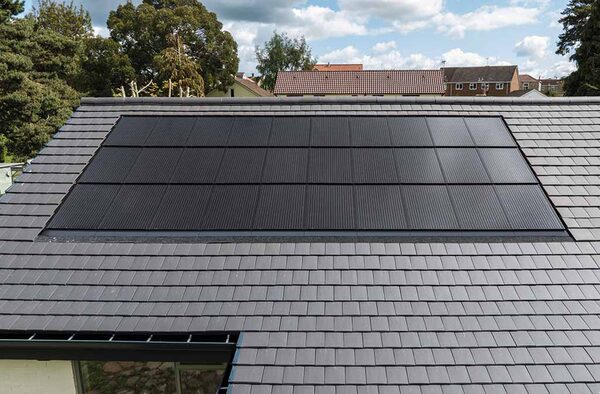
For solar, a rooftop system typically generates 3,800kWh to 4,350kWh a year4. That figure assumes a reasonable orientation and a UK location; the 15-20% penalty for east or west facing and the 30% penalty for north facing both reduce it8, and the roughly 20% advantage enjoyed by southern areas over the furthest north moves it the other way8. Solar panels work during daylight, even when cloudy or overcast, because they use light rather than heat to generate energy7. Cool and windy conditions can even be beneficial, since they cool the PV modules and increase efficiency7.
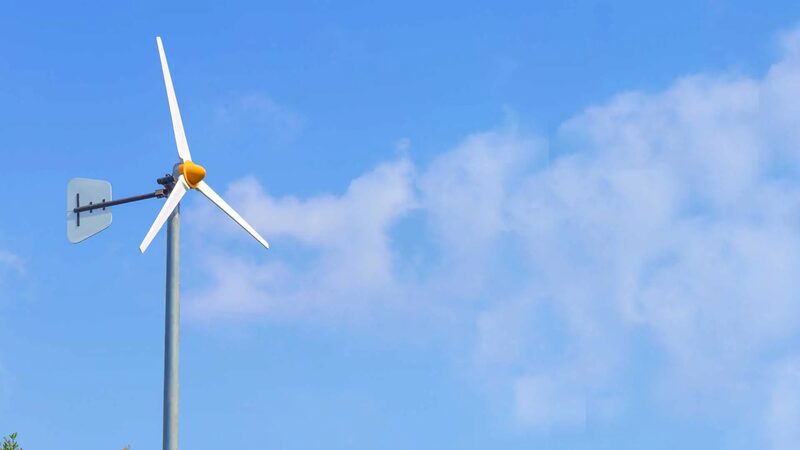
For wind, system sizes are given rather than a single annual generation figure: a typical domestic system is 2.5 to six kilowatts3. Output from a turbine of that size depends on the wind resource at the site, which is why the same machine can perform very differently in two locations. A wind turbine's annual production cannot be read off a specification sheet; it has to be estimated from the site.
The two profiles differ in shape as well as total. Solar produces a large surplus in summer and very little in winter, when an off-grid household's lighting and heating loads are highest. Wind is not tied to the seasons in the same way and can produce at night, but it can also produce nothing for days. A battery bank smooths hours and days, not weeks.
"Yes, solar panels work in winter. But they'll generate less electricity than in summer"
Output in UK conditions: wind's variability vs solar's seasonality
The UK climate treats the two technologies very differently, and the difference is structural rather than a matter of degree.
Solar's limitation is seasonal and predictable. Solar panels work in winter but generate less electricity than in summer9, and they can be 25% to 50% less effective in winter than in summer due to shorter days and increased cloud cover1. They work whenever there is daylight, so they work in winter as well1, but they do not work at night at all1. For an off-grid home, that means a daily cycle with no generation for roughly half the day in winter, and a seasonal cycle with a deep trough in December and January.
Wind's limitation is variability without a schedule. A turbine can run at night and in winter, which is exactly when solar is weakest, but it can also be still for extended periods. The site determines whether the variability averages out to something useful. Systems work best in exposed, windy locations and are less suitable for built-up or sheltered areas2, which is a statement about the resource rather than the machine.
The practical consequence for an off-grid household is that solar's output can be planned around, because the shortfall is known in advance and repeats every year. Wind's output has to be buffered, because the shortfall is unpredictable. That is why battery capacity and, in many off-grid systems, a backup generator or a second generating technology carry more of the reliability burden than either generator does on its own.
There is also a maintenance dimension to the difference. Solar has no moving parts and a 25 year typical warranty on rooftop panels4. Wind has moving parts and needs service checks every few years3. Over a 20 year horizon, the two technologies impose quite different ownership burdens even before output is considered.
Costs: upfront price, installation and ongoing maintenance
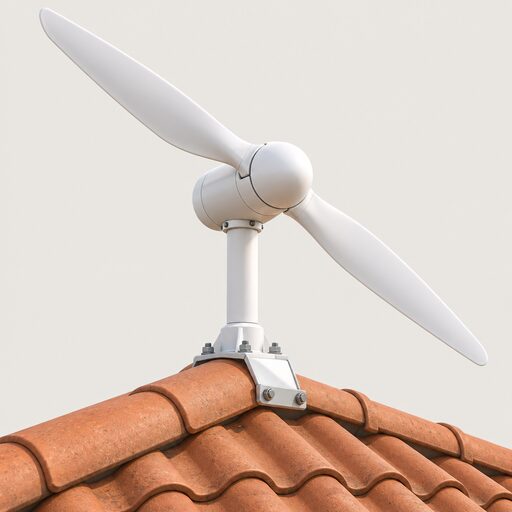
The capital costs of the two routes are not close. For equipment and installation, a 6kW pole-mounted wind system costs around £35,0002. Building-mounted turbines cost less to install than pole-mounted ones, but they tend to be smaller and less efficient2. Solar panel costs depend on size, how easy it is to access the roof, and whether panels or tiles are preferred5, and are installer-quoted rather than published as a single figure.
Ongoing costs differ in kind. Wind has moving parts and electronics. For a larger small wind system, replacing the inverter usually costs between £1,000 and £2,0006. Batteries are a shared cost across both technologies: typical battery life is around six to ten years, depending on the type, so batteries may need replacing during the life of the generating equipment3. Over a 20 year off-grid system life, that implies at least one and possibly two battery replacements, whichever generator is chosen.
Solar's ongoing costs are lower because there is little to service, but the economics of exporting surplus are poor. Rates for selling electricity to the grid are much lower than tariffs for using electricity from the grid, so using solar electricity yourself is much more cost-effective10. For an off-grid home that point is largely academic, since there is no grid to export to, but it reinforces the sizing logic: generation that cannot be stored or used is generation that has been paid for and wasted.
| Micro wind | Solar PV | |
|---|---|---|
| Typical system size | 2.5 to six kilowatts3 | Rooftop array, installer-sized5 |
| Headline capital cost | Around £35,000 for a 6kW pole-mounted system, equipment and installation2 | Installer-quoted; depends on size, roof access, panels or tiles5 |
| Typical annual generation | Site-dependent; no single published figure | 3,800kWh to 4,350kWh4 |
| Inverter replacement | £1,000 to £2,000 on a larger system6 | Not stated |
| Warranty | Not stated | 25 years typical on rooftop panels4 |
| Service interval | Every few years3 | No stated service interval |
Sizing the system around your battery bank and loads
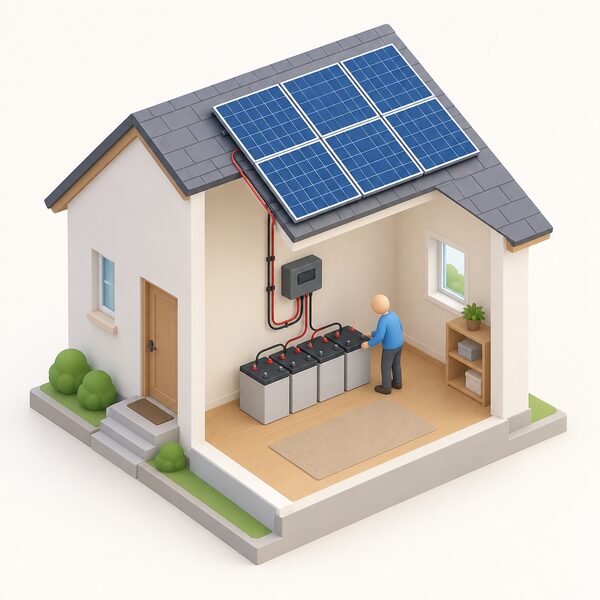
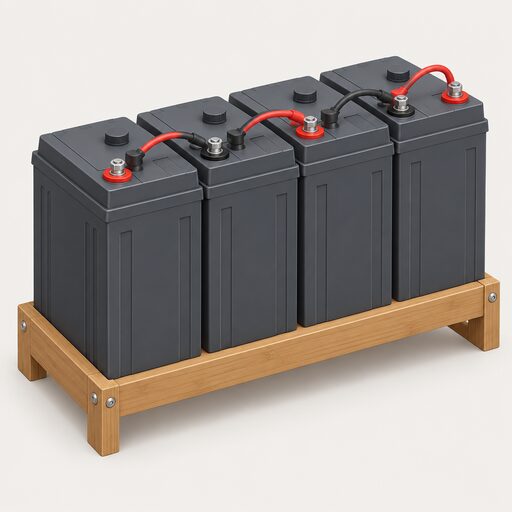
Off grid, the battery bank is not an accessory to the generating equipment; it is the thing that determines whether the household has power at nine in the evening in January. If there is battery storage, excess electricity from wind turbines and solar panels can be stored to use later2. Solar panels can be used to charge up an on-site battery storage system11.
Sizing starts from the load, not the generator. An off-grid household needs enough stored energy to cover the longest expected gap in generation, which for a solar-only system is a run of dark winter days and for a wind-only system is a run of still ones. Because the two technologies tend to fail at different times, a hybrid system reduces the size of the buffer needed, though it does not remove the need for one.
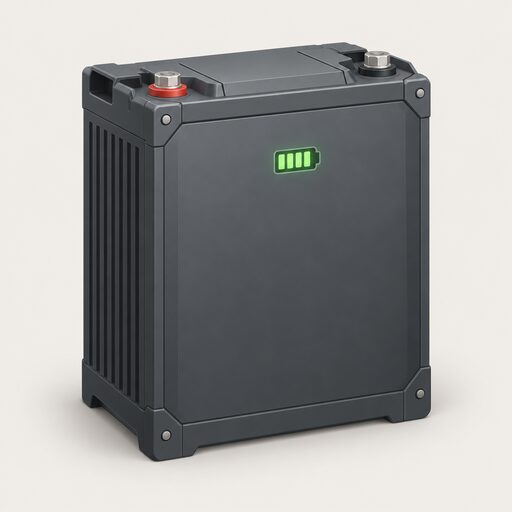
Battery life is the constraint that shapes the long-run cost. Typical battery life is around six to ten years, depending on the type, so batteries may need replacing during the life of the system3. A battery bank sized for a worst-case winter will be larger than one sized for average conditions, and it will be replaced at least once over a 20 year horizon.
There is a maintenance point that sits alongside sizing. Maintenance checks for small wind turbines are generally needed every few years6, and a turbine that is not serviced will not deliver its expected output. A battery bank sized around a turbine's rated output rather than its realistic output will be undersized in practice.
Planning permission and permitted development rules
The planning position is materially different for the two technologies, and it is one of the clearest practical arguments in favour of solar for a household that wants to avoid an application.
For wind, under permitted development rights in some cases it is possible to install domestic wind turbines without the need for an application for planning permission, so long as specified limits and conditions are met12. In other cases, an application to the local authority is needed to add a domestic wind turbine to the house or the grounds surrounding it13. A stand-alone wind turbine within the boundaries of a dwellinghouse can be considered permitted development, not needing an application, provided all the limits and conditions are met14. Building-mounted turbines are different: it will be necessary to make a planning application to the local planning authority to install a building-mounted turbine14. Additional wind turbines or air source heat pumps at the same property require an application14. In Northern Ireland, planning approval is needed3.
For solar, the position is generally more permissive. Solar panels and equipment installed on domestic buildings and land are usually considered permitted development, meaning planning permission is not required, but there are a few exceptions15. The installation of solar panels will generally not need planning permission16. In many cases, even in conservation areas, homes can have solar panels without requiring planning permission from the council under permitted development17. Solar panels fitted to roofs in conservation areas do not require planning permission provided they meet the general rules18.
The exceptions matter where they apply. Planning permission is required for panels on flat roofs18. Permission is needed if the equipment would protrude more than 0.2 metres beyond the plane of the wall or the roof slope19, or if any part of ground-mounted equipment is within 5m of the boundary of the property's grounds or gardens20. Solar panels on listed buildings need planning permission and listed building consent21. In some cases, such as in conservation areas and on listed buildings, planning permission may be required22. In Wales, the permitted development regime for solar panels has different limits on projections and in relation to protected areas23. Building regulations will normally apply to a solar panel on a roof24.
Why many off-grid homes end up with both
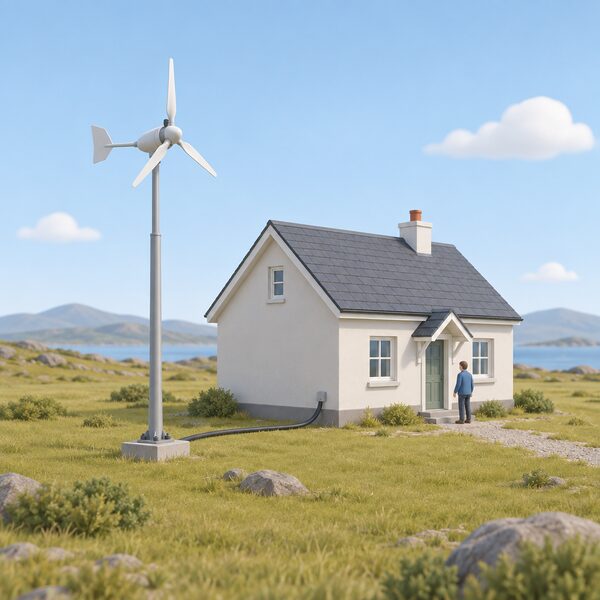
The case for combining the two is not redundancy for its own sake. It is that the two technologies have uncorrelated failure modes. A wind solar hybrid system means the household is covered in low light and wind conditions6. Solar fails at night and in winter; wind is indifferent to both. Wind fails in still periods; solar is indifferent to those, provided there is daylight.
The combination also changes the sizing arithmetic. A battery bank has to cover the longest gap in generation. If solar alone is the source, that gap is a run of short, cloudy winter days. If wind alone is the source, it is a run of still weather of unpredictable length. With both, the probability that neither is producing falls, so the buffer can be smaller relative to the load, though it cannot be eliminated.
There is a cost argument on the other side. A 6kW pole-mounted wind system costs around £35,000 for equipment and installation2, which is a substantial addition to a solar array. Whether that is justified depends entirely on the site's wind resource, and a poorly exposed site will not repay it. The hybrid case is strongest where the site is genuinely exposed and the household's winter load is high.
A third option exists where the site has moving water. For houses with no mains connection but with access to a micro hydro site, a good hydro system can generate a steady, more reliable electricity supply than other renewable technologies at a lower cost25. Where that resource is available, it addresses the variability problem more directly than either wind or solar, though it depends on a site-specific resource that most properties do not have.
Practical ownership: noise, siting, servicing and lifespan
Ownership over 20 years looks quite different for the two technologies.
Wind turbines can have a life of up to 22.5 years, but need service checks every few years to make sure they work efficiently3. Small wind turbines can last over 20 years with regular upkeep, and maintenance checks are generally needed every few years6. The service requirement is not optional: a turbine that is not maintained will not deliver its expected output, and the inverter is a wear item, with replacement on a larger system usually costing between £1,000 and £2,0006.
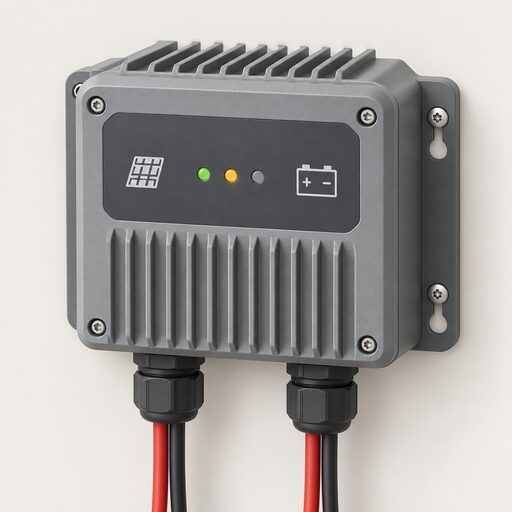
Solar has a longer stated warranty and no moving parts. Rooftop solar panels typically carry a 25 year warranty4. On noise, solar equipment does not normally give rise to noise nuisance, but care in installing it will ensure there are not loose elements such as cables which could give rise to wind noises, and that associated equipment such as inverters are located internally26. That last point is worth noting for off-grid systems, where inverters and charge controllers are often more numerous than in a grid-tied installation.
Siting is the variable that decides whether a wind turbine performs. Vertical axis turbines take up less space than horizontal turbines2, which matters on constrained sites, but the underlying requirement is exposure. A turbine in a sheltered garden will not produce what its rating suggests, and no amount of maintenance changes that.
For the household, the independence question comes down to what remains dependent. A solar array depends on daylight and on a manufacturer for warranty service. A wind turbine depends on the weather and on a service engineer. Both depend on a battery bank that will be replaced at least once. Neither removes the need for a backup source in a hard winter, and neither removes the household's dependence on the equipment maker for parts and support over a 20 year life.
Sources26 cited
- Do solar panels work in winter?, Uswitch, 2026-09-15
- Wind turbines, Energy Saving Trust, 2026-05-20
- Wind, nidirect, 2026-05-18
- Plug-in solar panels vs rooftop systems, Which?, 2026-04-27
- How do solar panels work?, Smart Energy GB, 2026-03-16
- Small wind turbines, MCS Certified, 2026-08-18
- Solar panel myths debunked, Which?, 2026-06-09
- Buying advice for solar panels, Which?, 2026-08-12
- Solar power facts, Energy Saving Trust, 2026-08-13
- Solar panels, London Borough of Hammersmith and Fulham, 2026-09-17
- Solar panels, Bath and North East Somerset Council, 2026-09-17
- Planning permission introduction, Planning Portal, 2026
- Wind turbines, Planning Portal, 2026
- Planning permission: wind turbines, Welsh Government, 2026-09-17
- Do I need planning permission?, Cornwall Council, 2026-09-09
- Solar Together, Swindon Borough Council, 2026-09-17
- Planning and solar, Frome Town Council, 2025-09-02
- Planning permission for solar panels, Bristol City Council, 2026-09-17
- Solar panels and planning permission, Cornwall Council, 2026-09-17
- Switch Together Birmingham, Birmingham City Council, 2026-01-27
- Planning permission: roof, Welsh Government, 2026-09-17
- Solar Together Norfolk, South Norfolk and Broadland Council, 2026-09-17
- Solar panels guidance, Islington Council, 2026-09-17
- Clifton Local Listed Building Consent Order guidance, Bristol City Council, 2026-09-17
- Hydro electricity, Planning Portal, 2026
- Heat pumps, New Forest District Council, 2025-02
 Off-Grid in a UK WinterHow does a home with no mains connection keep the lights on through the darkest, stillest weeks of a UK winter?
 Off-Grid SolarOff-grid solar means your home, cabin or boat runs on its own power, with no connection to the grid.
 Off-Grid Battery SystemsHow many days of power do you need when there is no sun?
 Off-Grid Wind PowerHow much power can a small wind turbine actually make for a house, boat or caravan that is not on the grid?
 Microgeneration and IndependenceWhat can you use when solar cannot cover winter evenings, and does it really make you independent?
 Building-Mounted Wind TurbinesWill a wind turbine on your roof actually make enough electricity to be worth it?