
In this answer
Short answer
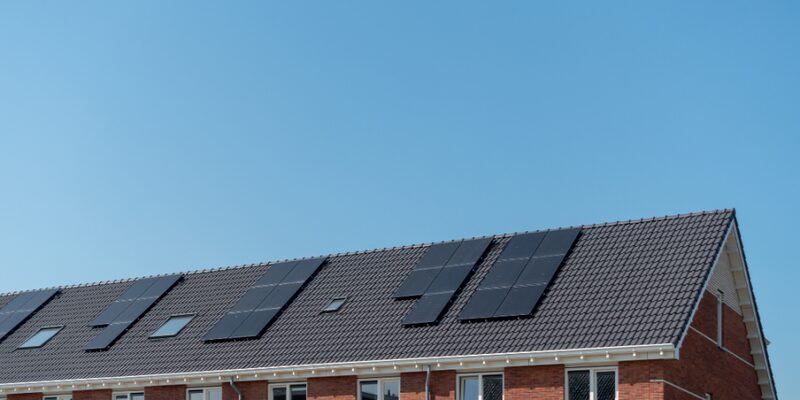
A conservation area does not by itself block a solar installation. Roof-mounted panels on a house or block of flats in a conservation area are normally permitted development, and that holds even where the roof faces a highway1. Councils state the position in the same terms: solar panels fitted to roofs in conservation areas do not require planning permission provided they meet the general rules2, and in many cases, even in conservation areas, homes can have solar panels without requiring planning permission from the council under permitted development3.
What changes in a conservation area is the edges of that right. Panels on a wall that fronts a highway need planning permission4. A flat roof in a conservation area requires prior approval before installation5. And where an Article 4 direction withdraws permitted development rights, a full planning application is required4.
The practical answer for most households is therefore: check the address, not the postcode. Conservation area status, an Article 4 direction and the position of the proposed panels relative to a road, path or public right of way each change the outcome, and the local planning authority is the body that confirms which applies.
When permitted development rights still apply in a conservation area
Permitted development rights apply to conservation areas, with the exception of those covered by an Article 4 direction4. The rights themselves come from Schedule 2, Part 14 (Renewable energy) of the Town and Country Planning (General Permitted Development) Order 2015, as amended, which sets out Class A and Class B rights for solar panels on domestic premises3. If permitted development rights do not apply, planning permission will be required7.
The distinction that matters is between the designation and the order. A conservation area is a designation; an Article 4 direction is a local order that can sit on top of it. Councils are explicit that the two are not the same thing. In Cornwall, none of the Article 4 directions affecting some conservation areas remove permitted development rights for solar panels8. Richmond publishes the same finding for its conservation areas: none of these directions remove permitted development rights for solar panels3. A household in either district can therefore install roof-mounted panels under permitted development despite living in a conservation area.
That is not a general rule. Where a direction does bite, the effect is complete: it removes permitted development rights for solar panel installations, and in those cases a planning application must be made4. Southampton describes the position as a maybe, with planning permission potentially required for buildings in conservation areas covered by Article 4 directions which remove permitted development rights for roof alterations9. The variation between districts is the reason a national answer cannot be given for a specific address.
For a household, the independence question is unaffected by any of this. A consented installation generates and exports on the same terms as one that needed no consent; the planning route changes the process and the timescale, not the output. What it does change is the risk of an enforcement case against an installation put up without the consent the district required. The planning permission in England page covers the national framework, and the full guide to solar PV sets the planning step in the wider installation sequence.
Where panels can and cannot go: walls, elevations and highways
The roof is the safe position and the wall is the constrained one. Planning permission is required when installing solar panels or other equipment on a wall fronting a highway within a conservation area1. Councils phrase the restriction as a prohibition rather than a permission: panels must not be fitted to a wall which fronts a highway, including roads, paths and public rights of way6. Bromley states that solar panels and solar thermal equipment are not permitted in a conservation area if they are to be installed on a wall which fronts a highway7.
The definition of highway is wider than most householders assume. It includes roads, paths and public rights of way4. A footpath running along the front of a terrace therefore brings the wall into scope, and the restriction applies to the elevation that faces it, not to the whole property. Brighton and Hove applies the same condition to both pitched and flat roof cases: installation is not permitted if the panels are fitted to a wall which fronts a highway5.
Wales takes a slightly different formulation. Where a property is in a conservation area or a World Heritage Site, planning consent is required when panels are to be fitted on the principal or side elevation walls and are visible from the highway10. That is a visibility test rather than a pure frontage test, and it names the elevations it covers.
"If your property is in a conservation area panels must not be fitted to a wall which fronts a highway. This includes roads, paths and public rights of way."
Two further limits sit alongside the wall rule. Equipment that would protrude more than 20 centimetres, or 0.2 metres, beyond the plane of the wall or the roof slope needs planning permission11, and panels sitting higher than the roofline or facing a highway in a conservation area may also need permission12. Flush-mounted roof panels on standard rails stay inside the projection limit; tilted mounts and deep framing are where it starts to matter. Roof orientation itself is a separate question, covered on the roof orientation, pitch and shading page.
When planning permission is required: Article 4 directions and flat roofs
An Article 4 direction is the mechanism that turns a permitted installation into an application. Where the local planning authority has issued a direction covering the area in which the property is located, an application for planning permission will be required7. Planning permission may also be required if the site is subject to an Article 4 direction restricting permitted development rights for development of this nature13.
Coverage is specific and local. In Bishopstone Conservation Area, Article 4 directions apply, so planning permission is required to install solar panels14. The same applies in the Swindon Railway Village area14. Brighton and Hove summarises the combined case as a maybe, with a planning application required in the Article 4 areas identified5. Directions are not confined to solar: one council notes that planning permission may be required if the direction places restrictions on the replacement of windows or doors15, which is a reminder that a direction found for another purpose may still be relevant to a retrofit programme.
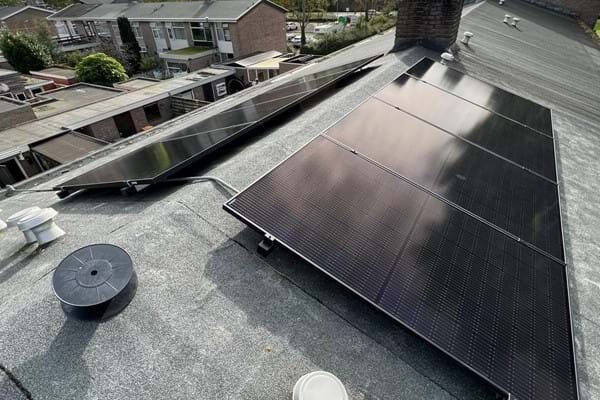
Flat roofs are the second trigger, and here the councils that publish guidance agree. Planning permission is required for panels on flat roofs in a conservation area2, panels on flat roofs require prior approval from the council3, and prior approval is required before installation5. This is the clearest divergence from the pitched roof position, where permission is not usually required even if the roof faces a highway1.
| Situation | Consent position | Source |
|---|---|---|
| Pitched roof, conservation area, facing highway | Not usually required | 1 |
| Wall fronting a highway | Planning permission required | 4 |
| Flat roof in a conservation area | Prior approval required | 5 |
| Article 4 area covering solar | Planning application required | 4 |
The flat roof rule matters for households with a rear extension, a garage or a modern flat-roofed house, where the roof is often the only practical mounting surface. A flat roof solar permitted development page covers the national position outside conservation areas, and ground-mounted solar covers arrays in the grounds, where the highway proximity test applies.
Stand-alone arrays and the highway proximity test
A stand-alone installation in the grounds of a house is judged by distance, not by elevation. In a conservation area, permission is needed if any part of the solar installation would be closer to a highway than any part of the house, and a highway includes roads, paths and public rights of way7. Islington states the same requirement as a design rule: if the property is in a conservation area, no part of the solar installation should be nearer to any highway bounding the property than the part of the property nearest to that highway6.
The test is comparative rather than a fixed measurement. There is no metre figure to work to; the array is measured against the building line of the house itself. A ground array in a large rear garden, well behind the house, will normally satisfy it. An array in a front garden, or beside a gable end that sits closer to a footpath than the front wall does, will not. Where the test fails, the route is prior approval rather than an outright refusal: the developer must apply to the local planning authority for prior approval if the equipment is installed in a conservation area closer to the highway than the nearest part of the house or flats6.
For a household, this is the point at which a garden array stops being a simple purchase. The ground-mounted solar page sets out the mounting and cable-run considerations; the planning question is whether the chosen position clears the building line. A position that clears it keeps the installation inside permitted development and avoids the application fee and determination period entirely.
Applying for prior approval, and who to ask first

Where prior approval is the route, the process is an application to the council. In a conservation area the householder must apply to the local authority for prior approval, submitting a form to the local planning authority which ensures the limits set out in legislation are met19. The form is the mechanism by which the authority confirms the installation complies, rather than a discretionary design review.
Before that, the advice stage is worth using. Islington directs householders to check with the planning department first via the Duty Planning Officer Service6, and consumer bodies give the same instruction: if a home is a listed building or in an area with planning restrictions, like a conservation area, the householder should speak to the local council21. In Northern Ireland the equivalent step is the divisional planning office, which should be consulted about planning issues before panels are installed22.
A maker's guidance frames the same requirement in stronger terms for garden installations: a home in a protected area or historic conservation area must report to the local council and receive approval before installation23. That is a manufacturer's summary rather than a statutory rule, but it points the same way as the council guidance.
The sequence that follows from the published rules is:
- Confirm whether the address is in a conservation area, and whether an Article 4 direction covers it5.
- Confirm whether the proposed surface is a roof, a wall fronting a highway, or a flat roof1.
- For a stand-alone array, check the position against the building line of the house6.
- Where prior approval or planning permission is needed, submit the form to the local planning authority19.
- Where the position is unclear, use the duty planning officer service or pre-application advice before ordering equipment6.
What this means for a household's energy independence
Planning status does not change what a system produces, but it does change what a household can install and where. A roof-mounted array in a conservation area, installed under permitted development, delivers the same self-consumption and export position as one in an unconstrained district. The dependence that remains is the usual one: the grid for import when the array is not generating, and a supplier for the export payments. The solar panels and household energy independence page sets out where those boundaries fall.
The conservation area constraint bites on the physical layout rather than the electrical one. A wall that fronts a highway is closed to panels, which can remove a south-facing elevation from consideration and push the array onto a roof plane with a less favourable orientation. A flat roof in a conservation area needs prior approval, which adds a determination period before work can start. A stand-alone array must clear the building line, which can rule out the sunniest corner of a front garden. Each of these is a siting decision, and each is settled before an installer is instructed.
The wider policy direction is towards more rooftop generation, not less. Solar Energy UK has said it will continue to call on the government to commit to 40GW of solar by 203024, and a reported government target of 70GW of solar capacity by 2035 projects generation reaching 10% of the country's demand, with about two-thirds of that capacity expected in solar farms and the remainder split between residential and commercial sectors25. In Wales, a mandate for new buildings extends to major renovations such as new roofs or material change of use projects from March 202826. None of that overrides a local Article 4 direction, but it sets the direction of travel for domestic installations.
For a household in a conservation area, the practical position is that the default is permissive and the exceptions are local. Roof-mounted panels are normally permitted development1; the wall, the flat roof, the stand-alone array and the Article 4 area are the four points at which that default is displaced. Confirming which of the four applies to a specific address, with the local planning authority, is the step that determines whether the installation proceeds under permitted development or on a submitted form.
Sources26 cited
- Solar panels and permitted development, Richmond Council, 2026-07-06
- Solar panels guidance, City of York Council, 2026-09-17
- Installing solar panels at your home, Brighton and Hove City Council, 2026-09-17
- Renewable energy: solar panels and heat pumps, Rother District Council, 2026-09-17
- Solar photovoltaic (PV) panels, London Borough of Bromley, 2026-09-17
- Solar panels guidance, Islington Council, 2026-09-17
- Solar panels, Wirral Council, 2026-09-17
- Solar panels and planning permission, Cornwall Council, 2026-09-17
- Solar Together domestic planning guidance, Southampton City Council, 2026-09-17
- Planning permission: solar panels, Welsh Government, 2026-09-17
- Solar panels and planning permission, Bath and North East Somerset Council, 2026-09-17
- Solar panel installation guide: costs, planning and savings, Independent Electrical Advice, 2026-09-20
- Planning frequently asked questions, London Borough of Hammersmith and Fulham, 2026-09-17
- Solar Together, Swindon Borough Council, 2026-09-17
- Permitted development, Cotswold District Council, 2026-09-17
- Planning permission: solar equipment mounted on a house or a block of flats, Planning Portal, 2027-08-27
- Changes to permitted development rules for domestic solar installations, Planning Portal, 2027-08-26
- The Town and Country Planning (General Permitted Development etc.) (Amendment) Regulations 2026, legislation.gov.uk, 2027-08-26
- Do I need permission for solar panels in a conservation area?, Planning Portal, 2026
- Do I need planning permission to add air conditioning to my home?, Planning Portal, 2026-09-17
- Six things to know before plug-in solar panels hit the shelves, Citizens Advice, 2026-08-21
- Solar thermal panels, nidirect, 2024-10-22
- Garden solar panels, EcoFlow, 2025-06-24
- UK solar ambitions: how do they compare, Solar Energy UK, 2030
- Solar power must be mainstay for new building regulations, MCS Certified, 2035
- Wales leads the UK: rooftop solar now mandatory for new buildings, Naked Solar, 2028-03
 Planning Permission EnglandMost homes in England can have solar panels fitted without planning permission, but does yours count as one of the exceptions?
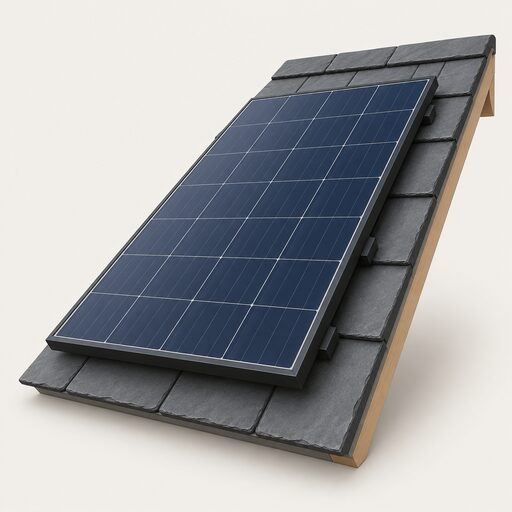 Planning Permission WalesDo you need planning permission for solar panels on your house in Wales?
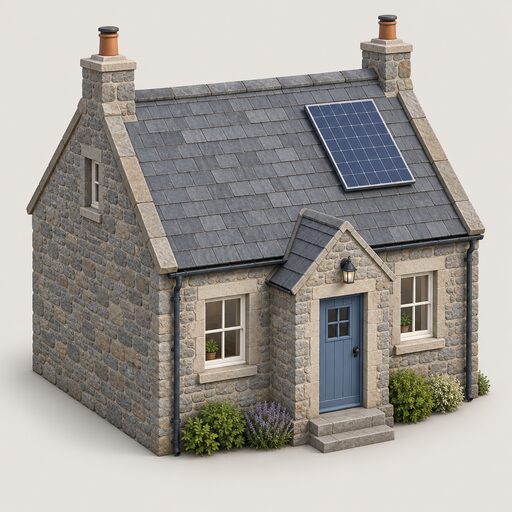 Planning Permission ScotlandMost solar panels on Scottish homes go ahead without planning permission, but flats, conservation areas and listed buildings change that.
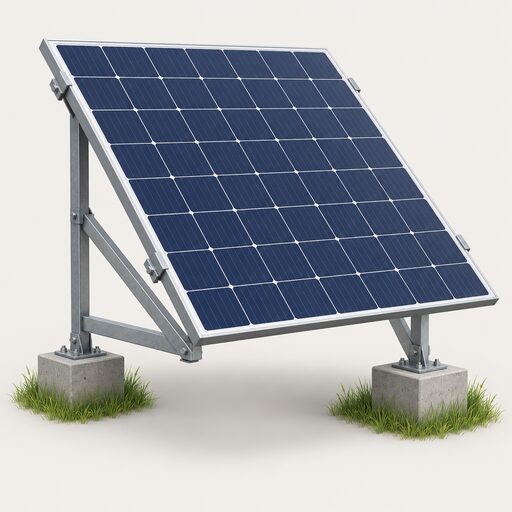 Ground-Mounted SolarGround-mounted solar panels sit on a frame in your garden instead of on your roof, which helps if your roof is shaded, small or facing the wrong way.
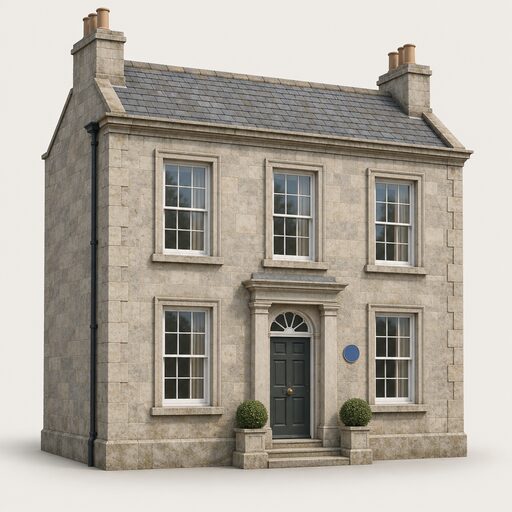 Listed Buildings and AreasYour home is listed or sits in a conservation area, so do you need permission before adding solar panels, insulation or a heat pump?
 Permitted Development by HomeCan you put up solar panels or a heat pump without asking the council?