
In this guide
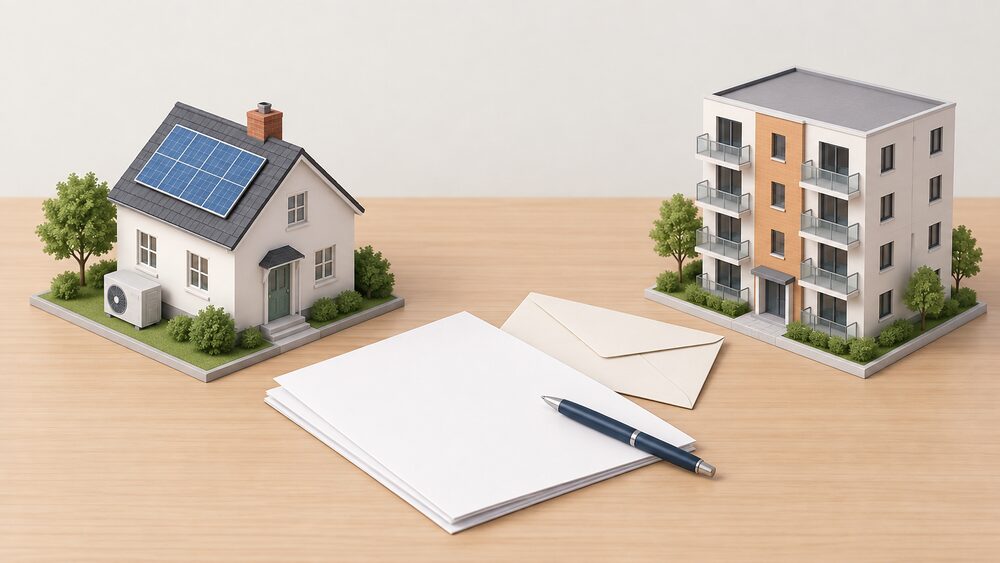
Permitted development rights are the national grant of planning permission that lets certain small works go ahead without an application. For energy equipment the dividing line is the property type, not the technology. The rights that cover heat pumps, solar panels, flues and fuel tanks are written for houses, and the Planning Portal states plainly that "the permitted development rights which apply to many common projects for houses do not apply to flats, maisonettes or other buildings"1. A flat owner therefore starts from a different position from a house owner, even where the equipment is identical.
The second dividing line is location. In some areas of the country, known generally as designated areas, permitted development rights are more restricted2. Conservation areas, national parks and Areas of Outstanding Natural Beauty all narrow what can be done without an application, and a separate instrument, the Article 4 direction, can remove rights altogether. A local planning authority is allowed to remove permitted development rights in some or all of its area by issuing such a direction3.
The third is the building itself. Whether the property is a listed building changes the answer, and listed buildings carry their own consent regime on top of planning permission3. For a household weighing up external energy equipment, the practical question is therefore threefold: what type of home is it, where is it, and has anything removed the rights that would otherwise apply.
What permitted development rights cover, and what they do not
Permitted development is a national permission granted in advance. Some small alterations and extensions to a house or in a garden can be carried out without planning permission under it, and the alteration of a roof is one of the examples given in official guidance7. Most permitted development rights are subject to conditions and limitations, so the grant is conditional rather than absolute1.
The scope is defined by building type. The householder rights for England are set out in Part 1 of Schedule 2 to the Town and Country Planning (General Permitted Development) (England) Order 2015 as amended3. Those rights do not apply to houses created through the permitted development rights to change use, and they do not apply to houses which are flats3. The same exclusion runs through the Welsh guidance: the permitted development allowances described there apply to houses, not flats, maisonettes or other buildings8. Converted houses, and houses created through permitted development rights for changes of use, are also outside the fuel tank allowances9.
Two further limits matter for energy work. Permitted development rights regarding heat pumps do not apply to commercial facilities4. And where a property has been created through permitted development, including changes of use, it usually cannot subsequently use householder permitted development rights for additional development, so planning permission is usually required1.
For a household, this is the first layer of energy independence: the ability to install generation or heating equipment on your own property without a consent process. Where the rights do not reach, that independence is mediated by the local planning authority instead.
Houses: which energy equipment usually falls under permitted development
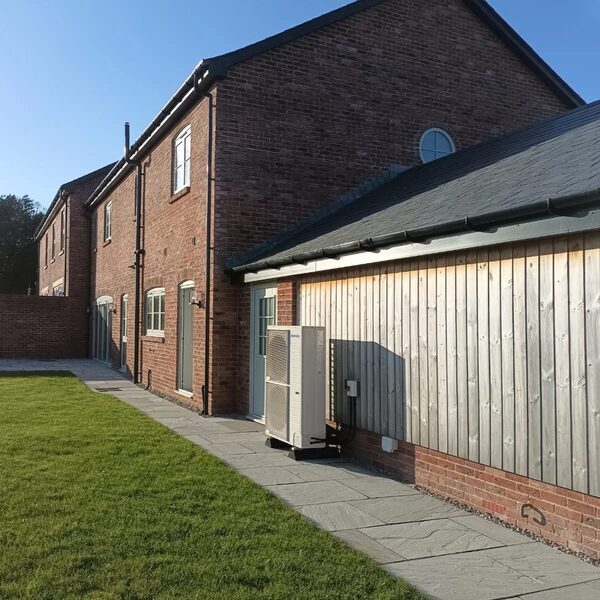
For a house, the energy equipment most often installed externally generally sits inside the householder rights, subject to conditions.
Air source heat pumps are the clearest case. In most cases, installing an air source heat pump at a house is permitted development11. The rights apply to the installation, alteration or replacement of an air source heat pump on a house or block of flats, or within the curtilage of a house or block of flats, including on a building within that curtilage12. In England the relevant rights are contained within Part 14 (Renewable Energy) of the Town and Country Planning (General Permitted Development) (England) Order 20154.
Ground source and water source heat pumps follow a similar route. Permitted development rights permit the installation, alteration or replacement of a ground source heat pump or water source heat pump within the curtilage of a dwellinghouse5. Ground source heat pumps do not usually require planning permission as long as permitted development criteria are met4, and installation within the curtilage of a house or block of flats does not require planning permission, though listed building consent may be required if the property is listed13.
Fuel tanks are covered too. Installing a fuel tank is considered to be permitted development, not needing planning permission, subject to stated limits and conditions8. The permitted development allowances described for fuel tanks apply to houses9.
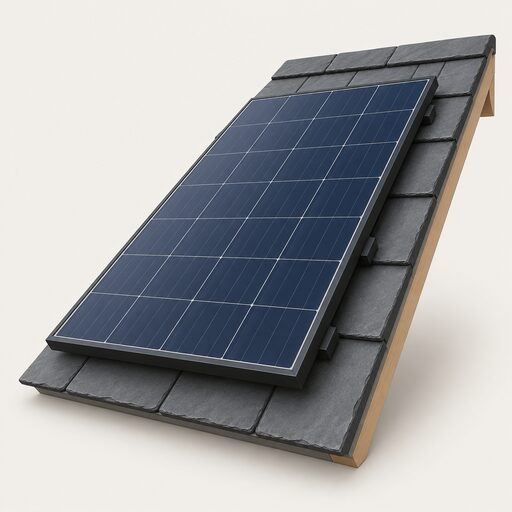
Flues, chimneys and soil and vent pipes have their own allowances, and the same building scope applies: houses, not flats, maisonettes or other buildings14. Solar panels on houses are permitted development, with flat residents directed to their local planning authority for guidance15.
| Equipment | House | Flat | Key condition |
|---|---|---|---|
| Air source heat pump | Permitted development in most cases11 | More restricted; permission more likely11 | Curtilage scope, Part 14 in England12 |
| Ground or water source heat pump | Permitted development within curtilage5 | Within curtilage of a block of flats, not an individual flat13 | Listed building consent may apply13 |
| Fuel tank | Permitted development with limits8 | Not covered by the house allowances8 | Converted houses excluded9 |
| Flue, chimney, soil and vent pipe | House allowances apply14 | Not covered14 | Building scope is houses14 |
| Solar panels | Permitted development on houses15 | Contact the local planning authority15 | Conservation area and Article 4 caveats16 |
The pattern is consistent: the rights attach to the dwellinghouse and its curtilage, and they travel with the building type rather than the technology.
Flats and maisonettes: why rights are narrower
The exclusion is explicit and repeated across official guidance. The permitted development rights which apply to many common projects for houses do not apply to flats, maisonettes or other buildings1. Flats and maisonettes are listed among the excluded property types17, and permitted development does not apply to flats, caravans or other buildings18. Flats do not have the same permitted development rights as other properties, and the advice is to consult the planning team about any proposed works19.
For energy equipment this bites hardest on air source heat pumps. Permitted development rules for air source heat pumps are more restricted for flats and shared buildings, and planning permission is more likely to be required11. The rights that do exist are framed around a house or block of flats, or land within the curtilage of a house or block of flats, which is not the same as an individual flat within a block12. Ground source heat pumps are treated slightly differently: installation within the curtilage of a house or block of flats does not require planning permission, but that is a curtilage permission, not a permission for works to the flat itself13.
Solar panels follow the same logic. The permitted development rights for roof and wall-mounted solar panels apply to houses, and flat residents are directed to their local planning authority for guidance15.
"These permitted development rights apply to houses. If you live in a flat and are considering fitting solar panels you are advised to contact your Local Planning Authority."
The practical consequence is that a flat owner's route to external energy equipment runs through a planning application, and often through the freeholder or management company as well. That is a real limit on energy independence: the household cannot act unilaterally on the building envelope, and the consent chain is longer than for a house.
Article 4 directions: when permitted development rights are removed
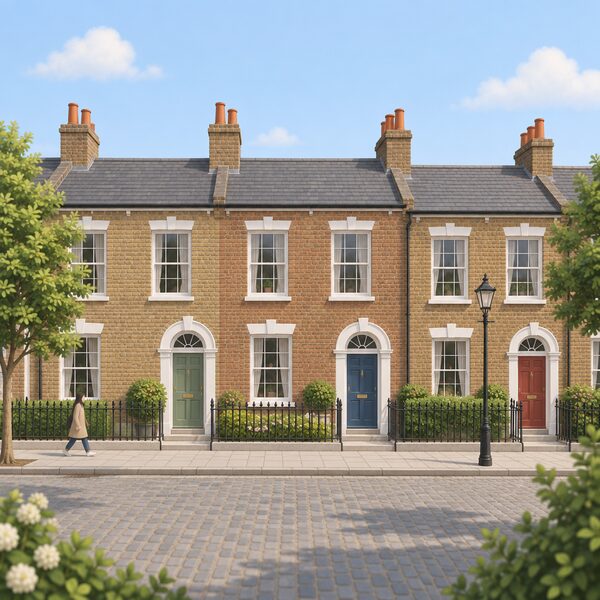
An Article 4 direction is the mechanism by which a council takes rights away. A local planning authority is allowed to remove permitted development rights in some or all of its area by issuing what is known as an Article 4 direction3. The Council can take away these permitted development rights using an Article 4 Direction18. Permitted development rights may also have been removed by an Article 4 direction, and the same wording appears across the Welsh guidance on fuel tanks, flues and external walls8.
Directions are not general. Each Article 4 Direction will be clear about precisely which permitted development rights have been removed, and for which properties21. Where a direction applies, a particular development cannot be carried out under permitted development and therefore needs a planning application22. Where an Article 4 direction covers the area, an application for planning permission will be required23.
The purpose is protective. Article 4 directions are made when the character of an area of acknowledged importance would be threatened, and they are most common in conservation areas2. In Scotland, Article 4 of the general permitted development order contains provisions which allow planning authorities and the Scottish Ministers to make directions removing permitted development rights for particular types of development or classes of development in specified locations6.
Two timing rules matter. Directions can remove permitted development rights with temporary or permanent effect, and where a direction is made with immediate effect it must be confirmed by the local planning authority within six months of coming into effect to remain in force22. A direction cannot prevent development which has been commenced, or which has already been carried out22.
For a household, an Article 4 direction is the point at which a national right becomes a local discretion. The equipment may be identical, the house may be identical, and the answer changes because of where it stands.
Conservation areas and other protected locations
Conservation area status restricts permitted development in its own right, before any Article 4 direction is considered. In a conservation area, planning permission is required for work that would ordinarily constitute permitted development, and the list includes exterior cladding, side extensions, rear extensions of more than one storey, roof extensions, chimney flue and soil vent pipe works, aerials and satellite dishes, solar panels, air source heat pumps, micro wind turbines, works to trees, and demolition of enclosure walls one metre high next to a highway or two metres elsewhere21.
That list is significant for energy work because it names solar panels and air source heat pumps directly. A household in a conservation area cannot assume the householder rights apply to those technologies in the way they would elsewhere.
Designated areas more broadly narrow the rights. In some areas of the country, known generally as designated areas, permitted development rights are more restricted, and the examples given are Conservation Areas, National Parks and Areas of Outstanding Natural Beauty2. The same restriction is stated in the general guidance on permitted development rights1.
Listed buildings sit in a separate regime again. There are different requirements if the property is a listed building24, and whether the property is a listed building is one of the factors that determines what is permitted3. For air source heat pumps, planning permission and listed building consent are required for listed buildings25, and if the property is listed, listed building consent is usually needed before installing an air source heat pump, even if planning permission is not required11. For ground source heat pumps, listed building consent may be required if the property is listed13.
| Location or status | Effect on energy equipment |
|---|---|
| Conservation area | Permission required for solar panels, air source heat pumps and flue works that would otherwise be permitted21 |
| National Park or AONB | Rights more restricted than in undesignated areas2 |
| Listed building | Planning permission and listed building consent for air source heat pumps25; consent may apply to ground source13 |
| Article 4 direction | Specified rights removed for specified properties21 |
The cumulative effect is that a protected location can remove the household's ability to install generation or low-carbon heating without consent, which lengthens timescales and adds cost. The rights still exist in law; they simply do not reach that address.
Checking whether your property has an Article 4 direction

The first check is the local planning authority, which holds the directions it has made. Permitted development rights may have been removed from certain sites or properties, and the authority is the body that can confirm whether yours is one26. Where a direction covers the area, an application for planning permission will be required, so establishing this before ordering equipment avoids a wasted installation23.
The second route is the conveyancing file. Your solicitor should have informed you of whether an article 4 direction exists when you purchased your property20. If that did not happen, the local planning authority is the fallback. The same guidance notes that rights may also have been removed by an Article 4 direction, most common in conservation areas, and that a solicitor should have informed the purchaser, otherwise check with the local planning authority15.
Directions are specific rather than blanket, which makes the check worthwhile. Each Article 4 Direction will be clear about precisely which permitted development rights have been removed, and for which properties21. A direction covering roof alterations is not the same as one covering outbuildings, and a direction covering one street is not the same as one covering a district.
Coverage varies widely between authorities. In Wirral, there is only one conservation area to have an Article 4 Direction, and that is Bromborough Pool23. In other authorities, directions cover multiple conservation areas and control some building works18. A household cannot infer the position from a neighbouring council's practice.
For energy independence, this is the check that determines whether the household can act on its own timetable or must enter a consent process. It costs nothing to ask and it is the single most useful piece of due diligence before commissioning external equipment.
How the rules differ across England, Wales and Scotland
The three nations do not share a single order. England's householder rights sit in Part 1 of Schedule 2 to the Town and Country Planning (General Permitted Development) (England) Order 2015 as amended3. Wales has its own general permitted development order, amended by the Town and Country Planning (General Permitted Development) (Amendment) (Wales) Order 2019, which substituted Part 24 and deals with development by local authorities27. The 2012 Welsh amendment order amended Schedule 2 to the 1995 Order for Wales28.
Wales publishes its own householder guidance, covering fuel tanks, flues, chimneys and soil and vent pipes, external walls, heat pumps and solar panels8. The Welsh fuel tank guidance uses the same building scope as England: the allowances apply to houses, not flats, maisonettes or other buildings8. The Welsh heat pump guidance states that domestic heat pumps benefit from permitted development rights, so that in most cases planning permission is not required, subject to limitations and conditions5. Ground source and water source heat pumps are permitted within the curtilage of a dwellinghouse5.
Scotland operates separately and is actively changing. Scottish Ministers want to ensure that there is parity in permitted development rights between Scotland and England for air source heat pumps and solar panels29. Existing Scottish rights for non-domestic solar panels run up to 45kW electricity or 50kW thermal29. For domestic properties in Scotland, a proposed projection limit of less than one metre from the external wall of the building has been consulted on30. The householder guidance for Scotland notes that the enlargement classes do not apply to flats31.
Northern Ireland has its own order, and new permitted development for domestic air-source heat pumps forms part of it, subject to relevant exceptions, limitations and conditions32.
| Nation | Framework | Energy equipment position |
|---|---|---|
| England | GPDO 2015, Part 1 householder, Part 14 renewable energy3 | Air source heat pumps permitted development in most cases11 |
| Wales | Welsh GPDO, amended 2012 and 201928 | Domestic heat pumps benefit from rights in most cases5 |
| Scotland | Separate Scottish rights, under review29 | Parity with England sought for air source heat pumps and solar panels29 |
| Northern Ireland | Separate order32 | New permitted development for domestic air source heat pumps32 |
The practical point for a household is that a rule quoted from an English source may not describe the position in Wales, Scotland or Northern Ireland, and the Welsh and Scottish guidance should be read in its own terms.
Applying for planning permission when rights do not apply

Where the rights do not reach, the fallback is an application. Proposals that do not meet the conditions are not permitted development and therefore require planning permission before they can go ahead10. If you cannot comply with the conditions, you will need to obtain planning permission for the works16. Where an Article 4 direction covers the area, an application for planning permission will be required23.
The process is the standard one, but the evidence base differs for energy equipment. An application for an air source heat pump in a sensitive location will typically turn on siting, noise and visual impact, which is why the permitted development conditions exist in the first place. For a listed building, listed building consent runs alongside planning permission, and both are needed for air source heat pumps25.
Scotland adds a further layer. Development falling within the criteria and thresholds established by the rights would not require planning permission but would remain required to gain non-planning consents such as a building warrant33. A household in Scotland should therefore expect a building warrant process even where planning permission is not needed.
For energy independence, an application is a delay and a discretion rather than a prohibition. The equipment can still be installed; the household simply cannot set the timetable, and the outcome depends on a judgement about the area rather than on the household's own plans.
Changes on the way: consultations and new orders affecting heat pumps and homes
The rules are moving in all three nations. In England, a consultation on permitted development rights opened on 13 Feb 2024 and closed on 9 Apr 2024, covering changes to support householder development, building upwards, demolition and rebuild, and the installation of electric vehicle charge points and air source heat pumps, with proposed changes to the Town and Country Planning (General Permitted Development) (England) Order 2015 as amended30.
In Scotland, the Permitted development rights to support the provision of new homes consultation closed on 27 October 20256. It sought views on potential measures to simplify planning processes and encourage the provision of new homes in rural areas and town and city centres, and it included options related to domestic air source heat pumps and heat network connections6. The Scottish Government is considering the potential to amend existing permitted development rights or introduce new ones33. The consultation received 908 responses34, and the Scottish Government anticipated that a Scottish statutory instrument containing any changes stemming from the consultation would be laid in the Scottish Parliament in early 202633.
Northern Ireland has already moved, with new permitted development for domestic air-source heat pumps forming part of its order, subject to relevant exceptions, limitations and conditions32.
The direction of travel is towards wider rights for domestic heat pumps, which would reduce the number of households needing an application. Until those changes take effect, the position described in this page stands, and a household should check the current order and any local direction before commissioning work.
Sources34 cited
- Permitted development rights, Planning Portal
- Permitted development rights (Wales), Planning Portal
- Permitted development rights for householders: technical guidance, GOV.UK
- Planning guidance: heat pumps, Richmond upon Thames Council
- Planning permission: heat pumps, Welsh Government
- Permitted development rights to support the provision of new homes: consultation, Scottish Government
- Find out if you need planning permission, Buckinghamshire Council
- Planning permission: fuel tanks, Welsh Government
- Fuel tanks, Planning Portal
- Permitted development rights for non-domestic solar panels and domestic air source heat pumps, Scottish Government
- Air source heat pumps, Westmorland and Furness Council
- Planning permission: air source heat pump, Planning Portal
- Heat pumps, New Forest District Council
- Planning permission: flue, chimney or soil and vent pipe, Welsh Government
- Planning permission: solar panels, Welsh Government
- Solar Together domestic planning guidance, Southampton City Council
- Flue, chimney or soil and vent pipe: planning permission, Planning Portal
- What is permitted development, Wandsworth Council
- Do I need planning permission for retrofitting, South Oxfordshire District Council
- Planning permission: external walls, Welsh Government
- Planning and listed building consent requirements, West Northamptonshire Council
- When is permission required, GOV.UK
- Solar panels, Wirral Council
- Do I need planning permission, New Forest National Park Authority
- Air and ground source heat pumps, Croydon Council
- Permitted development rights, Dumfries and Galloway Council
- The Town and Country Planning (General Permitted Development) (Amendment) (Wales) Order 2019, legislation.gov.uk
- The Town and Country Planning (General Permitted Development) (Amendment) (Wales) (No. 2) Order 2012, legislation.gov.uk
- Permitted development rights: impact assessments, Scottish Government
- Permitted development rights consultation: changes to support householder development, Ministry of Housing, Communities and Local Government
- Householder permitted development rights guidance, Scottish Government
- The Planning (General Permitted Development) Order (Northern Ireland) 2015, legislation.gov.uk
- Permitted development rights to support the provision of new homes: consultation paper, Scottish Government
- Permitted development rights to support the provision of new homes: consultation summary responses, Scottish Government
 Home Energy Planning ScotlandDo you need planning permission for solar panels or a heat pump in Scotland?
 Home Energy Planning WalesSolar panels and heat pumps often need no planning permission in Wales, but the rules differ from England.
 Listed Buildings and AreasYour home is listed or sits in a conservation area, so do you need permission before adding solar panels, insulation or a heat pump?
 Planning Permission in ScotlandDo you need planning permission for a heat pump in Scotland?
 Planning Permission EnglandMost homes in England can have solar panels fitted without planning permission, but does yours count as one of the exceptions?
 Planning Permission WalesDo you need planning permission for solar panels on your house in Wales?