

In this guide
Help with essential home repairs in the UK comes from three overlapping systems: home improvement agencies that case-manage the work, council loan and grant schemes that pay for it, and national energy schemes that fund heating and insulation rather than structure. The largest single offer is Cornwall Council's Home Improvement Loan, a discretionary loan of up to £25,000, or £10,000 for park home owners, for hazard removal, repairs and improvements1. It replaced the Green Homes Improvement Loan, so energy efficiency work can now be carried out alongside repairs2.
The dividing line is tenure and means. Owner occupiers and private landlords can borrow on some council schemes; social housing is excluded from the Boiler Upgrade Scheme3, and the Warm Homes: Local Grant is aimed at low-income households in the worst quality, privately owned homes in England4. Where a household cannot borrow, the fallback is often non-financial: a schedule of repair works, or signposting to a Care and Repair agency5.
What this does for a household's energy independence is real but partial. A repair loan can make a home safe, warm and secure, and can fund insulation or a heating replacement alongside the structural work. It does not remove the underlying dependence: the money is borrowed against the property, the work is done by contractors the household does not control, and the household remains connected to a supplier and, in most cases, the gas grid. The sections below set out who runs each route, what it funds, what it excludes, and where the gaps are.
What help with essential home repairs exists in the UK
The repair landscape is not one scheme but a set of funding streams with different owners, different eligibility tests and different geographies. The first distinction is between money for the fabric of the home and money for its energy performance. The second is between repayable and non-repayable support.
On the energy side, the Warm Homes: Local Grant provides grants for energy performance upgrades and low carbon heating to low-income households living in the worst quality, privately owned homes in England, with the aim of energy bill savings and carbon savings4. It is open to all fuel types, including on-gas-grid households heated by mains gas and off-gas-grid households9. Occupants on a low income will not contribute to the cost of upgrades7. Gas and oil boilers are not eligible improvements under the scheme10.
The Home Upgrade Grant took a narrower route, aimed at supporting low-income households through upgrading the worst-performing off-gas-grid homes in England11. In Greater Manchester, qualifying households were offered a free technical survey to see which improvements would be most suitable for their home12. Oxfordshire's allocation of £64m to help low-income households tackle energy inefficiency shows the scale some areas are working at13.
For households in immediate financial difficulty rather than disrepair, the Household Support Fund allows local authorities in England to provide discretionary support to vulnerable households with the cost of essentials. That may include support with energy bills for any form of fuel used for domestic heating, cooking or lighting, including oil or portable gas cylinders, and simple energy efficiency measures14. It is a crisis fund, not a repair fund, and it is administered by county councils and unitary authorities in England14.
The structural repair route runs through councils and their home improvement agencies. Manchester City Council works with Manchester Care & Repair as its partner Home Improvement Agency, and where there is an urgent risk to health and safety, grant assistance may be accessible15. Where a household is not eligible for financial assistance but is over 60, the same service can help find someone to do the work15. That combination, a funding test plus a caseworker, is the defining feature of the agency model.
Home improvement agencies: what they do and who they help
A home improvement agency is a local organisation, usually a charity or a council arm, that takes an older or disabled homeowner through a repair or adaptation from first enquiry to completed work. The functions are practical: assessing what needs doing, identifying which funding route fits, helping with applications, and in many cases supervising contractors. Manchester Care & Repair is the partner Home Improvement Agency of Manchester City Council15.
The service is not only for people who qualify for money. Manchester's Home Repairs Support Service is free and is aimed at people over 60 who are not eligible for financial assistance, helping them find someone to do the work15. Where a household is on a low income or has long term health conditions, the agency may help them access low-cost home improvement loans, repaid at affordable monthly repayments15. Where there is an urgent risk to health and safety, grant assistance may be accessible15.
That layering matters for energy independence. An agency does not make a household self-sufficient; it makes the existing support system navigable. The household still depends on a council's funding decision, on a contractor, and on the grid. What the agency removes is the administrative burden, which for an older or disabled owner-occupier is often the barrier that stops the work happening at all.

Finding the right agency is a local question. Councils commission agencies by area, so the council's housing or private sector housing team is the starting point. In Wales, the Care & Repair Cymru network covers each county. In Northern Ireland, the Housing Executive administers its own grant routes, including the Home Repair Assistance Grant for small-scale repair work and improvements, where the property must be the applicant's main or only home8.
Care & Repair Cymru: free repair help for over-60s in Wales

Wales runs a distinct version of the agency model through Care & Repair Cymru, and it sits inside a wider Welsh support architecture. The Home Repairs Support Service is free and is for people over 60 who are not eligible for financial assistance, helping them find someone to do the work15. The same principle applies across the Welsh agencies: advice and casework at no cost, with the repair itself funded separately.
The funding that sits behind it is Welsh Government money. The Homefix loan is a Welsh Government funded scheme offering interest free loans to help homeowners carry out repairs to their homes to make them safe, warm and secure16. Green Homes Wales, run through the Development Bank of Wales, helps homeowners in Wales improve their homes with energy efficiency upgrades, offering interest free loans ranging from £1,000 to £25,000 with repayment terms up to 10 years6.
Advice is available to every household in Wales, not only those in fuel poverty. All households in Wales have access to free, impartial advice to help reduce energy bills and maximise income17. Warm Wales is one provider offering such assistance for any residents in Wales17. The Welsh Government also publishes help with home energy bills through gov.wales18, and AdviceLink Cymru's Claim What's Yours helpline helps people access benefits, pensions, help with care costs and council tax reductions they may be entitled to19.
For a Welsh household, the practical sequence is advice first, then a funding route. The advice is free and universal; the loan is means-tested and secured in some form; the repair work is contracted out. The household's energy independence improves only to the extent that the completed work reduces demand or replaces a fuel. The dependence on a supplier, and on the Welsh Government's funding cycle, remains.
The Home Improvement Loan: up to £25,000 for repairs and hazard removal
The Home Improvement Loan is the largest named repair loan in the material, and it is a Cornwall Council scheme. It can help owner occupiers and private landlords meet the cost of hazard removal, repairs and improvements to their properties20. The maximum is a discretionary loan of up to £25,000, or £10,000 for park home owners1. Under the scheme homeowners and landlords can borrow up to £25,000, while park home residents can borrow up to £10,0002.
It is an extension of a previous loan scheme which focused on helping residents fund green energy upgrades2, and it replaces the Green Homes Improvement Loan, meaning energy efficiency work can be carried out alongside repairs20. Lendology CIC, a not-for-profit organisation, has been appointed to manage and deliver the loans on behalf of Cornwall Council2. Cornwall Council and Lendology hosted a free webinar on Wednesday, November 19 to answer questions on the loan scheme, eligibility and how to apply2.
| Feature | Home Improvement Loan (Cornwall) | Home Fix Loans (Swansea) | Green Homes Wales |
|---|---|---|---|
| Maximum | £25,000, or £10,000 for park home owners1 | Up to £30,000 plus fees, increasable to £35,000 in severe disrepair5 | £1,000 to £25,0006 |
| Minimum | Not stated | £1,0005 | £1,0006 |
| Interest | Not stated in the scheme rules | Interest free5 | Interest free6 |
| Term | Not stated | Repayment profile varies by term5 | Up to 10 years6 |
| Landlords | Eligible, £20,000 per unit, £60,000 per property cap21 | Eligible on separate terms5 | Homeowners6 |
The loan is not the only route in Cornwall. The council also runs a Green Home Improvement Scheme aimed at filling the gaps for those who are ineligible for grants22. Its target groups include homeowners unlikely to be able to access mainstream lending for reasons including employment status, credit history or age; homeowners considered to be in fuel poverty; homeowners living with children under 16; homeowners living with long-term health issues or disabilities; park home owners and residents; and landlords making energy efficiency improvements to their private rented sector properties that positively impact their tenants22.
For a household, the significance is that repair and energy work can be financed in one package rather than two. That reduces the number of applications and the number of contractors, but it does not change the underlying position: the money is repayable, the property is the security in most cases, and the household remains on the grid.
Who qualifies for the Home Improvement Loan and what it will not fund

Eligibility on the Cornwall scheme is tenure-based at the top level: owner occupiers and private landlords20. Landlord borrowing is limited to £20,000 per self-contained unit, capped at £60,000 per property, and landlords will only be offered a capital and interest loan over a maximum term of 5 years21. Landlords will be required to let the property for a minimum period of five years and complete a Fit and Proper Person declaration and meet the relevant criteria21. Owner occupier loans are provided on an unsecured basis, but a condition of the loan is that a Title Restriction will be made with the District Land Registry21.
The exclusions are published as a non-eligible works list, and it applies to both the Home Improvement and Empty Home loans23. It rules out a new conservatory or porch, furniture and soft furnishings, a house deposit, secondary heating, demolition and rebuilding of the whole property, and conversion of a house into flats23.
Swansea's equivalent schemes add their own conditions. Home Fix Loans are open to owner occupiers who have lived in and owned the property for 3 years or more, where the property is over 10 years old; savings of £16,000 or above disqualify; applicants must be over 60 in receipt of specified benefits or on a low income, or over 18 in receipt of a disability benefit plus specified benefits or low income; and there can be no repeat loan applications within 5 years5. Loan to value will not exceed 80%5. Loan assistance is not available for properties that are not of a permanent nature such as houseboats and caravans, structures without Building Regulations approval, or buildings not suitable for conversion to habitable dwellings24.
The pattern across schemes is that eligibility is a compound test: tenure, property age, savings, benefits status, credit history and loan to value all bear on the outcome. A household that fails one test may still qualify for a different route, which is where an agency's casework earns its place.
Council-led schemes: the Swansea approach to private sector housing renewal
Swansea Council's Private Sector Housing Renewal and Disabled Adaptations Policy 2022-27 is the fullest published example of how a council organises this work. The policy details how the council delivers assistance to help private owners and tenants to repair, maintain or adapt their homes16. Capital funding for private sector housing renewal and adaptations has traditionally been drawn down from two main sources: the Council General Capital Fund and external funding providers, for example Welsh Government24. Capital funding for energy efficiency and fuel poverty reduction measures is expected to be made available through Welsh Government Warm Homes funding and schemes available through utility companies5.
The loan terms are set out in detail. Loans will be interest free24. Loans will normally be repaid as a full repayment lump sum at the end of the loan term for loan terms of 3 years or less; for terms of 5 years or less, 25% lump sum repayment after 3 years with the remainder at the end of term; for more than 5 years, 50% lump sum after 3 years with the remainder at the end of term5. The loan will be registered as a legal charge, must be first or second charge, for the duration of the loan term, and is repayable in full on sale or transfer of title, on moving into long term care or sheltered accommodation, or on the death of the loan recipient5. Fees will be charged for administration costs, and the fee charged to the loan recipient may be added to the loan5. These fees are reviewed annually and are available on request5.
Applicants must not have any outstanding debt to the Council at the time of making an application or have adverse credit history including County Court Judgements, IVAs, Debt Relief Orders, Bankruptcy within 6 years, or Company Insolvency Liquidation5. The council may at its discretion request a property valuation report by a RICS qualified surveyor, payable by the applicant5. Where a household is not eligible or does not proceed, it may be offered non-financial forms of assistance such as provision of a schedule of repair works, or signposting to partners such as Western Bay Care and Repair5.
The policy also constrains its own amendment: grant or loan maximum allowance figures may be increased or decreased within 10% of the figures approved within the policy, and minor eligibility criteria changes are permitted only where shown not to negatively impact protected characteristic groups5. For a household, that means the published figures are stable within a band, and the caseworker's discretion is bounded.
Loans, grants and charity help: which route fits which household
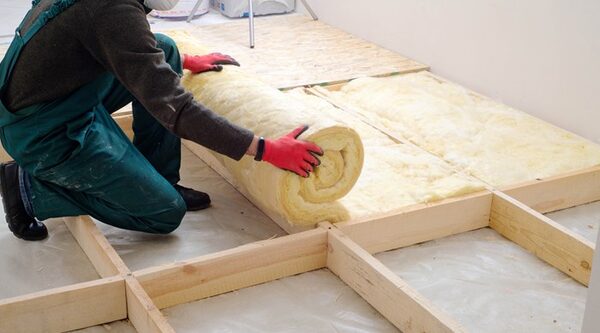
The routes divide by what the household needs and what it can repay. A grant suits a household with no borrowing capacity and an urgent hazard. A loan suits a household with equity but no savings. Advice alone suits a household that can pay for the work but cannot organise it.
| Household position | Route that fits | Key condition |
|---|---|---|
| Owner occupier, low income, urgent hazard | Council grant or Home Repair Assistance Grant15 | Urgent risk to health and safety, or small-scale work15 |
| Owner occupier over 60, not eligible for assistance | Free Home Repairs Support Service15 | Helps find someone to do the work15 |
| Owner occupier with equity, no savings | Home Improvement Loan or Home Fix Loans1 | Property age, savings and credit tests5 |
| Park home owner | Home Improvement Loan at £10,0001 | Park home residents borrow up to £10,0002 |
| Private landlord | Landlord loan21 | Let for five years, Fit and Proper Person declaration21 |
| Household in immediate financial difficulty | Household Support Fund14 | Discretionary, England, essentials including energy bills14 |
| Rural home unfit to live in | Replacement Grant8 | Rural area, unfit, repair not an option8 |
The energy-specific routes sit alongside these. The Boiler Upgrade Scheme is available only to properties in England and Wales, and social housing is not eligible3. The Warm Homes: Local Grant is England-only and aimed at low-income households in the worst quality privately owned homes4. The Green Deal, which allowed home owners, landlords and tenants to get loans for improvements such as adding insulation or solar panels, remains part of the landscape, and if you move into a property that has a Green Deal loan, it is your responsibility to repay it26.
For Scotland, the Green Heat Finance Taskforce work sets out the direction of travel on private finance for heat and efficiency, including the observation that loans provide an effective tool for residential Net Zero improvements in the £2,000 to £10,000 range that are too expensive for most households to fund outright27. A revolving loan fund is described in the same terms27. The Scottish Government has also set out an uplift of £1,500 for rural and island homes to both the clean heating and energy efficiency grants28.
Charity and advice help fills the gaps that funding cannot. Citizens Advice's free consumer service can help people living in England or Wales with problems with their energy bills or supply30. Ofgem publishes routes to get help with energy bills32. These are not repair funders, but they are often the first place a household in difficulty is routed.
What owning and repaying a home repair loan involves
A repair loan is a secured or semi-secured debt attached to the property, and the terms are set by the council that runs it. On Swansea's scheme the loan is registered as a legal charge for the duration of the loan term and is repayable in full on sale or transfer of title, on moving into long term care or sheltered accommodation, or on the death of the loan recipient5. On Cornwall's scheme, owner occupier loans are provided on an unsecured basis, but a condition of the loan is that a Title Restriction will be made with the District Land Registry21.
Repayment profiles vary with term length. Swansea sets a full repayment lump sum at the end of the loan term for terms of 3 years or less; for terms of 5 years or less, 25% lump sum repayment after 3 years with the remainder at the end of term; and for more than 5 years, 50% lump sum after 3 years with the remainder at the end of term5. That structure means the household is not necessarily making monthly payments, but it does face a substantial lump sum at defined points.
Breaching the conditions has consequences. Where conditions are breached, the council will require full repayment of the loan or grant, but has the discretion to agree a lesser amount in exceptional circumstances such as significant financial hardship or a deficit estate5. Where a grant or loan has funded works that are later the subject of an insurance payment or legal damages, the council will require repayment of the total value of grant or loan paid relating to such works, or the value of the insurance payment or legal damages if lower5.
"the Council will require repayment of the total value of grant or loan paid relating to such works or the value of the i"
The Green Deal carries a comparable principle for a different scheme: if you move into a property that has a Green Deal loan, it is your responsibility to repay it26. For a buyer, that means a repair or retrofit loan can travel with the property.
What this means for independence is that the household gains a repaired, warmer home but takes on a secured obligation. The loan does not make the home self-sufficient; it transfers the cost of making it habitable into the future, and it can affect the household's ability to sell or move.
Where repair help falls short: funding limits and eligibility gaps

The gaps are structural rather than accidental, and they fall in consistent places.
- Geographic fragmentation. The Warm Homes: Local Grant is England-only4. The Boiler Upgrade Scheme covers England and Wales only3. The Household Support Fund applies to England33. A household in Scotland or Northern Ireland is outside several of the largest routes.
- Tenure exclusions. Social housing is not eligible for the Boiler Upgrade Scheme25. The Warm Homes: Local Grant is aimed at privately owned homes4.
- Property type exclusions. Loan assistance is not available for properties that are not of a permanent nature such as houseboats and caravans24. Park home owners face a lower loan ceiling of £10,000 against £25,0001.
- Means-testing thresholds. Savings of £16,000 or above disqualify applicants from Swansea's Home Fix Loans5. The Home Upgrade Grant phase 2 was available to residents who own their home or privately rent, do not use mains gas for heating, and have a combined household income of less than £31,000, or are on means-tested benefits34.
- Narrow grant purposes. A Replacement Grant is only available to those whose home is in a rural area, is unfit to live in and where repair is not an option8. The Home Repair Assistance Grant is for small-scale repair work and improvements8.
- Credit history barriers. Applicants must not have any outstanding debt to the Council or adverse credit history including County Court Judgements, IVAs, Debt Relief Orders, Bankruptcy within 6 years, or Company Insolvency Liquidation5. A household in financial difficulty may therefore be excluded from the loan that would fix its housing.
The practical consequence is that a household can be too well off for a grant, too poorly rated for a loan, and too far outside the scheme's geography for either. The agency model exists precisely to route around those gaps, and where it cannot, the fallback is a schedule of repair works and a signpost to a Care and Repair partner5. That is useful, but it is not funding, and it leaves the household dependent on its own resources for the work itself.
Sources34 cited
- Home Improvement Loan, Cornwall Council, 2025-10-07
- Council-backed loan scheme to help homeowners fund house repairs and green improvements, Cornwall Council, 2025-10-02
- Boiler Upgrade Scheme guidance for installers V5, Ofgem, 2026-04-28
- Warm Homes: Local Grant statistics, August 2026, Department for Energy Security and Net Zero, 2026-08
- Private sector housing renewal and disabled adaptations, Swansea Council, 2026-09-20
- Green Homes Wales, Development Bank of Wales, 2026-09-17
- Warm Homes: Local Grant budget allocation, Department for Energy Security and Net Zero, 2024-11-21
- Grants we offer, Northern Ireland Housing Executive, 2026-09-17
- Heat pump deployment tables Q2 2026, Department for Energy Security and Net Zero, 2026-09-10
- Warm Homes: Local Grant, Greater Manchester Combined Authority, 2026-09-17
- Energy Company Obligation ECO4 guidance, Ofgem, 2022-10-14
- £16m fund to help homeowners pay for energy efficiency improvements, West Midlands Combined Authority, 2024-01-16
- Oxfordshire awarded £64m to help low-income households tackle energy inefficiency, Oxfordshire County Council, 2023-03-22
- Household Support Fund guidance for local councils, Department for Work and Pensions, 2026-02-26
- Home improvement assistance, Manchester City Council, 2026-09-20
- Help to repair your home, Swansea Council, 2025-05-07
- Home energy efficiency, Bridgend County Borough Council, 2026-09-17
- Get help with your energy bills, Ofgem, 2026-09-17
- Support available to help with the cost of living, Welsh Government, 2026-03-18
- Housing financial assistance, Cornwall Council, 2026-04-01
- Financial assistance schedule, Bristol City Council, 2025-05
- Green improvements to your home, Cornwall Council, 2025-05-21
- Eligible and non-eligible works, Cornwall Council, 2025-10-01
- Private sector housing renewal and disabled adaptations policy, Swansea Council, 2026-09-20
- Boiler Upgrade Scheme guidance for installers v2.1, Ofgem, 2023-05-18
- Green Deal energy saving measures, Department for Energy Security and Net Zero, 2026-09-17
- Green Heat Finance Taskforce report part 1, Scottish Government, 2023-11-22
- Scotland's Climate Change Plan 2026-2040, Scottish Government, 2025-11-06
- Scottish Government response to the Green Heat Finance Taskforce, Scottish Government, 2025-12-17
- Complain about your energy supplier, Ofgem, 2026
- Complain about your energy supplier or network operator, Ofgem, 2026
- Get help with your home or business energy bills, Ofgem, 2026
- Park Homes Warm Home Discount Scheme, House of Commons Library, 2026-02-26
- Heat Market Mechanism consultation, Department for Business, Energy and Industrial Strategy, 2021-10
 The Full Grants and Schemes GuideWhich grants can you actually get right now, and how do you apply for them?
 Vulnerable Households EnergyIf someone in your home relies on powered medical equipment, or needs extra warmth because of a health condition, what help is available?
 Grants and Energy IndependenceCan you get a grant for solar panels or a battery?
 The Full Where to Start GuideWhich home improvements actually cut your bills, and which should you do first?
 DIY or ProfessionalLoft insulation and draught-proofing are jobs most people can tackle, but anything electrical near a kitchen, bathroom or outdoors needs a registered electrician.
 DESNZ Energy PolicyThe government department behind home energy rules is not the one that pays your grant.