
In this guide
The Home Upgrade Grant (HUG) is closed. It ended in March 2025 and no household can apply for it1. It was an England-only scheme that paid for energy efficiency upgrades and low carbon heating in the worst performing homes off the gas grid, occupied by low income households, and it was delivered not by a national body but by individual local authorities that bid for funding2. The final phase, HUG 2, officially closed in March 2025, with some grant recipients given delivery extensions to complete work already committed3.
Two phases ran. Phase 1 covered 2022 to 2023 and upgraded 4,000 homes; Phase 2 covered 2023 to 2025 and upgraded 11,900 homes. Both are recorded as closed in the official statistics published in November 20252. Government allocated a total of £1.1 billion to the Home Upgrade Grant across the programme, with delivery beginning in early 20224. Different government documents give the programme's budget as £1.1 billion and as £950 million, and that disagreement has not been resolved.
What replaced it in England is the Warm Homes: Local Grant, which started in 2025, was allocated £500 million over three years in the Autumn Budget 2024 settlement, and runs from April 2025 to March 20285. It provides energy performance upgrades and low carbon heating through local authorities, including for off-grid homes previously supported by the Home Upgrade Grant1. Unlike HUG, it is open to all fuel types, including homes heated by mains gas as well as those heated by electricity, oil, coal or liquid petroleum gas6.
What the Home Upgrade Grant funded and who it was for
HUG existed to reach a group that supplier-funded obligations and boiler grants tended to miss: households in England living off the gas grid, in homes with poor energy performance, on low incomes. The scheme aimed at supporting low income households through upgrading the worst performing off-gas-grid homes in England9, and government described the focus as the worst-quality off-gas grid homes with low income households in England10.
Off-gas-grid homes are disproportionately heated by oil, liquid petroleum gas, coal or direct electric heating, which are generally more expensive per unit of useful heat than mains gas and leave the household exposed to delivered-fuel prices and tanker schedules. HUG funded fabric measures such as insulation and low carbon heating, with the intention of taking homes out of the worst EPC bands and cutting running costs rather than subsidising the fuel itself.
Phase 1 was funded at £152 million to support low-income households off the gas grid, delivered as part of the Sustainable Warmth competition11. Under that competition, low-income households who owned their home could get upgrades fully funded within the relevant cost caps and did not have to contribute11. Cost caps were central to the design in both phases: all upgrades had to be within the relevant cost caps to be eligible12.
In practice, what a household received depended on the property and on the local authority's delivery model. In some areas, qualifying homeowners were able to get upgrades fitted completely free of charge13, and in others the first step was a free technical survey to establish which improvements would be most suitable for the home14. That survey-first approach is now standard in the successor scheme, where improvements are offered in the order recommended by the Retrofit Assessment15.
For the household's energy independence, HUG mattered because it addressed the building first. Insulation reduces the amount of purchased energy a home needs regardless of who supplies it. Low carbon heating shifts the home off a delivered fuel, but onto the electricity grid and a supplier tariff: the dependence changes shape rather than disappearing.
Eligibility: EPC band, income and the off-gas-grid test
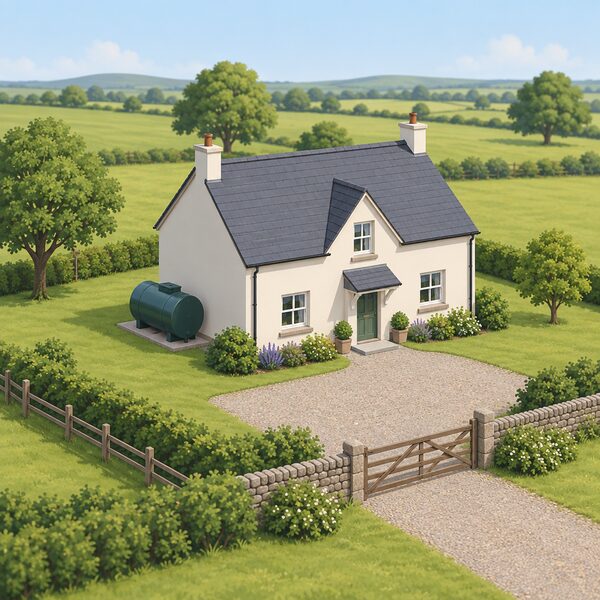
Three tests defined HUG eligibility: tenure and location in England, the property's energy performance, and household income. The scheme provided energy efficiency upgrades and low carbon heating to low income households in properties which are off the gas grid and in energy efficiency bands D to G5.
For Phase 2, households in England had to be low income, off the gas grid, and have an EPC between D and G12. The income figure used in official statistical summaries was a household income below £30,000, alongside an EPC of D or lower16. Local authorities operated flexible eligibility routes in some areas, which is why published household criteria varied between councils while the core national tests did not.
| Test | Home Upgrade Grant | Warm Homes: Local Grant |
|---|---|---|
| Nation | England9 | Home must be in England7 |
| Gas grid | Off the gas grid5 | All fuel types, on and off gas grid6 |
| EPC | D to G12 | D to G, or park home equivalent7 |
| Income | Below £30,00016 | Usually £36,000 a year or less7 |
| Savings | Not specified in scheme statistics | Less than £25,0007 |
| Tenure | Owners, tenants and private landlords could check local authority funding12 | Privately owned, by the occupier or their landlord7 |
The off-gas-grid requirement is the single biggest difference between the old scheme and the new one, and the reason many rural households searching for HUG find that the successor has widened rather than narrowed the door. At the time HUG was announced, government estimated around 100,000 homes might benefit from the scheme10. The delivered totals, 4,000 homes in Phase 1 and 11,900 in Phase 2, were substantially below that early estimate2.
How local authorities delivered the scheme
HUG was a devolved-delivery programme within England. Phase 1 was delivered by local authorities, which bid into a competition for grant funding17. £150 million had already been committed to the Home Upgrade Grant to commence delivery in early 2022, and the scheme succeeded Phase 2 of the Green Homes Grant Local Authority Delivery scheme, which concluded in December 202117. That predecessor had aimed at upgrading 50,000 homes of low-income households5.
Phase 2 ran a three stage application process for councils: an outline application stage, a delivery assurance check, and a batch application stage. Local authorities had to apply for the funding by 27 January 202312. Householders could not apply centrally: eligible homeowners, tenants and private landlords were able to check whether their local authority had funding and contact them for next steps12.
The department commissioned Verian to evaluate Phase 1, drawing on findings from 10 case studies of local authority led projects, and found the scheme was delivered by local authorities through different types of delivery models18. That variation, some councils running consortia, some contracting a managing agent, some delivering in house, is the practical reason experience of HUG differed sharply from one area to another.
Competitive, time-limited local authority delivery carries an administrative cost. The National Audit Office found that programme management and administrative expenses for the Green Homes Grant voucher scheme amounted to more than £1,000 per home upgraded19, a benchmark that informs scrutiny of any scheme routed through short funding windows.
Warm Homes: Local Grant: the successor scheme
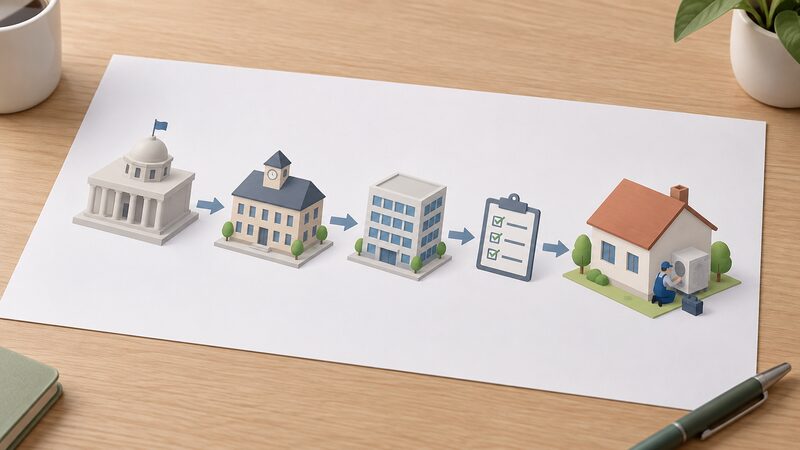
The Warm Homes: Local Grant is a government grant scheme to provide energy performance upgrades and low carbon heating via local authorities, including off-grid homes previously supported by the Home Upgrade Grant1. It started in 2025 and has been allocated £500 million over three years as part of the Autumn Budget 2024 settlement5. Funding became available on 1 April 2025 and runs until 31 March 202820.
The scheme targets low-income households living in the worst quality, privately owned homes in England. The core household tests are that the home is in England, is privately owned by the occupier or their landlord, has an EPC of D to G or the park home equivalent, that household savings are less than £25,000, and that household income is usually £36,000 a year or less. Households earning more may still be eligible if they live in a certain postcode area, or if someone in the household is getting certain benefits7. Supported home types include houses, flats, park homes and houses in multiple occupation with separate kitchens, and some other property types may also apply7.
Councils apply the rules through defined pathways. Some use a gross income test of £36,000 or an after housing costs threshold adjusted for household size21. Published after housing costs thresholds start at £20,000 for a single adult22 and rise with household composition, for example £23,600 for one adult with two or three dependants, £24,000 for two adults with one dependant, and £40,000 for two adults with five dependants23. Another common route selects whole areas: in Greater Manchester, households qualify where they live in selected areas chosen for their inclusion in Income Deciles 1 or 2 of the Indices of Multiple Deprivation 2025 and high numbers of privately owned homes in EPC bands D to G15.
Scheme guidance was updated on 2 July 2026 to reflect the publication of the Warm Homes Plan, increasing the scheme cost caps and providing new and revised guidance on household and measure eligibility, with clarifications on Trustmark and MCS requirements24. The list of successful local authorities was also updated to reflect additional funding given to some authorities in the first year of delivery25. Statistics on measures installed and homes upgraded are published monthly, are one month in arrears, and are provisional and subject to future revisions26.
Further detail on the household tests is set out on the page covering Warm Homes: Local Grant eligibility and income limits.
Measures and cost caps: what the successor pays for
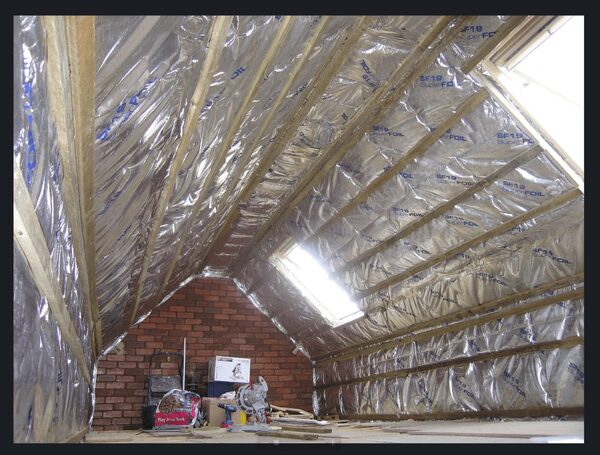
The successor scheme funds fabric and low carbon heating, not fossil fuel replacements.
"Gas and oil boilers are not eligible improvements under the scheme."
Eligible energy performance improvements include cavity wall insulation, external wall insulation, internal wall insulation, loft insulation, room in roof insulation, flat roof insulation, under floor insulation, park home insulation, draughtproofing, hot water cylinder insulation, low energy lighting, heating controls, solar PV and battery storage. Double or triple glazing and energy efficient doors are listed but recommended only in rare cases15. Delivery in other areas has been described in similar terms, covering solar panel installation, home insulation and heating system upgrades27. Improvements are offered in the order recommended by the Retrofit Assessment, and the target is to raise the property towards EPC Band C15.
Cost caps set the ceiling on what any one property can draw:
| Case | Cap | Source |
|---|---|---|
| Measures available per property | Up to £30,000 | 8 |
| Private rented, landlord's first property | £30,000 (£15,000 energy efficiency, £15,000 low carbon heating) | 20 |
| Private rented, any further property | £15,000 (£7,500 energy efficiency, £7,500 low carbon heating) | 20 |
| Owner occupier or landlord's first property, energy performance measures | 100% of the cost up to £15,000 | 15 |
| Landlord's second and subsequent properties, energy performance measures | 50% of the cost up to £7,500 | 15 |
Published figures for what a household receives are not all consistent: one guidance source gives up to £30,000 of measures per property8 while another cites an estimated whole-project average of up to £12,400 per household, and that difference has not been resolved. The cap is a maximum, not an entitlement.
Installers must be Trustmark registered and certified under the latest version of PAS 2030, or by MCS, to install the relevant measures22. The scheme also sits inside the reformed consumer protection system being consulted on, under which compliance is mandatory for the Warm Homes: Local Grant, the Warm Homes: Social Housing Fund, additional funding for low-income households, the Warm Homes Loan Scheme and the Boiler Upgrade Scheme, along with retrofit projects funded through integrated settlements to Mayoral Combined Authorities28.
Where heating is concerned, households not eligible for a council scheme may look instead at the Boiler Upgrade Scheme. From 21 July 2026 that grant increased by 20%, from £7,500 to £9,000, for owners with properties heated by oil and liquid petroleum gas29. Approved grant categories include a biomass boiler in an off-gas grid property replacing an oil heating system. Funding also cannot be blended within an ECO4 package of measures30.
Owner occupiers, tenants and landlords: who pays what
For owner occupied homes the rule is unambiguous: the upgrade should be fully funded and the household must not be required to contribute to the costs of upgrades22. Councils describe this plainly, stating that upgrades are free for eligible residents while landlords must contribute towards costs31. There is no match funding required for owner-occupied homes32.
For private rented homes the scheme fully funds upgrades for one property per landlord22. Landlords can apply for multiple eligible homes but receive full funding for only one, and must pay half of the upgrade costs for any eligible homes upgraded after the first7. There is no eligibility restriction against landlords based on the number of properties that they own22. Social housing landlords must contribute at least 50% of the total cost of upgrades22.
Tenants should not pay for upgrade costs7. Two further conditions protect them. Rent should not be increased as a result of upgrades funded by government through the scheme, and participating landlords must confirm they understand that22. Separately, under the domestic private rented property minimum standard, landlords must not unreasonably refuse tenant requests for energy efficiency improvements where those improvements can be funded at no cost to the landlord, for example through grants or third-party funding33. In some areas landlord participation is also tied to local standards, such as being a supporter of the Greater Manchester Good Landlord Charter15.
How to apply and what happens next

Applications go to the local authority or its delivery partner, not to a central government office. The usual route is an online form used to check eligibility, which may ask about benefits received, household income in one year, tax and deduction costs, council tax costs and mortgage or rent costs over the same year7.
A typical council process runs in four steps34:
- Apply, using the online eligibility form.
- Upload supporting documents, such as evidence of income or benefits.
- Have the home assessed, so measures can be recommended and ordered.
- Approve the work before installation begins.
Queue management matters more than most applicants expect. In London the scheme is delivered on behalf of 31 local authorities working together as a consortium, with total funding shared between authorities based on the number of homes in fuel poverty in each area7. In Years Two and Three applications are managed first come, first served within each local authority rather than across London as a whole, and each authority's queue is capped at up to 250% of its allocation to allow for applications that do not go ahead or are found ineligible. Once a queue is full, further applications from that area are placed on a waiting list, and if space becomes available applications are invited from the waiting list in the order they were received. Being in the queue does not guarantee funding: applications must meet the scheme eligibility7.
Contact points are local. In Greater Manchester, for example, enquiries for Bolton, Oldham, Salford, Stockport, Trafford and Wigan go to the combined authority, Bury and Rochdale have their own council contacts, and arrangements for Manchester and Tameside have been listed as to be confirmed15. Where a current EPC is missing, some partners offer limited funding towards the cost of getting a new home energy certificate7.
Scam approaches and checking that an officer is genuine
Area-based schemes involve doorstep contact: residents of homes within selected areas are contacted by officers working for the named delivery organisations15. That creates an opening for impostors, and one has already been documented.
Two checks follow from the published rules. First, money: no fee is payable at any stage, so any request for payment to secure a grant is inconsistent with the scheme7. Second, identity: all officers carry official photo identification, and the guidance asks residents to see it before letting anyone into the home15.
Behind the scenes there is verification too. Landlord information submitted to the department by participating local authorities through the online form is checked weekly by the department or its delivery partner22. Similar counter-fraud discipline applies to the linked heating grant: under the Boiler Upgrade Scheme, where government believes installers and property owners have colluded in fraudulent activity, cases will always be referred to the police, and grants already paid to an installer can be required to be repaid.
Householders who are approached unexpectedly, or who are unsure whether a caller is connected to their council's scheme, can compare what they are told against the council's own published contact details, and can read more about the wider pattern of energy grant scams and fake government schemes.
What the closure means for off-grid households

HUG's ending removed a dedicated off-gas-grid route. The successor is broader in fuel terms and narrower in nothing except that it, too, is finite: £500 million, an indicative national pot, running to 31 March 202832. Funding is allocated to particular authorities, queues are capped, and being in a queue does not guarantee an offer7.
For a household weighing independence, the honest position is this. Fabric measures funded under these schemes permanently reduce the energy a home needs, and that gain does not depend on any scheme continuing. Low carbon heating removes a delivered fuel and a tank, but substitutes reliance on the electricity grid, a supplier and a tariff, and on a manufacturer and installer for warranty and service. Solar PV and battery storage, both eligible measures in the successor scheme15, shift a share of consumption on site without severing the connection. And the grant route itself is a dependence: it relies on a council holding funding, a delivery partner being appointed, and a scheme window staying open. A wider view of the options is set out in the guide to home energy grants and schemes, and the comparison between the old off-grid scheme and supplier-funded help is covered in ECO4 vs the Home Upgrade Grant (HUG2).
Sources34 cited
- Home energy efficiency schemes research briefing, House of Commons Library, 2026-09-17
- Green Homes Grant LAD and Home Upgrade Grant statistics, November 2025, GOV.UK, 2025-11
- Heat pump deployment quarterly statistics, 2025 Q3, GOV.UK, 2025-12-04
- £1.5 billion to improve energy efficiency and slash bills, GOV.UK, 2022-09-29
- Warm Homes: Local Grant briefing, House of Commons Library, 2026
- Warm Homes: Local Grant statistics, August 2026, GOV.UK, 2026-08
- Warmer Homes: Warm Homes Local Grant in London, Greater London Authority, 2026-09-17
- Home and business grants, schemes and advice, East Herts Council, 2026-09-17
- ECO4 Guidance: Delivery, Ofgem, 2022-10-14
- Environmental Audit Committee, energy efficiency of existing homes, UK Parliament, 2021-03-22
- Apply for the Sustainable Warmth competition, GOV.UK, 2021-06-16
- Home Upgrade Grant: Phase 2, GOV.UK, 2022-09-29
- Council launches new scheme to help Leeds residents cut energy bills, Leeds City Council, 2024-01-03
- £16m fund to help homeowners pay for energy efficiency improvements, West Midlands Combined Authority, 2024-01-16
- Warm Homes: Local Grant in Greater Manchester, Greater Manchester Combined Authority, 2026-09-17
- Green Homes Grant LAD and Home Upgrade Grant statistics, March 2025, GOV.UK, 2025-03-27
- Environmental Audit Committee, government response on home energy, UK Parliament, 2021-04-30
- Home Upgrade Grant Phase 1 evaluation, GOV.UK, 2024-12-19
- Green Homes Grant report, National Audit Office, 2021-09-08
- Household energy efficiency schemes briefing, House of Commons Library, 2026-05-13
- Apply for a Warm Homes: Local Grant, Liverpool City Council, 2026-09-17
- Warm Homes: Local Grant policy guidance, GOV.UK, 2026-07
- Warm Homes: Local Grant in Surrey, Surrey County Council, 2026-09-17
- Warm Homes: Local Grant, GOV.UK, 2026-07-02
- Warm Homes: Local Grant successful local authorities, GOV.UK, 2026-07-02
- Warm Homes: Local Grant statistics, July 2026, GOV.UK, 2026-07-30
- More households benefitting from free energy saving home improvements, Cumberland Council, 2025-12-08
- Reforming consumer protection for home upgrade schemes, GOV.UK, 2026-06-17
- Thousands of homes will be eligible for £9,000 off a heat pump, GOV.UK, 2026-07-21
- ECO4 delivery guidance v3.2, Ofgem, 2025-12-08
- Warm Homes: Local Grant 2025 to 2028, Birmingham City Council, 2026-06-24
- Devolved retrofit pilot FAQs, West Midlands Combined Authority, 2026-09-17
- Trading standards guidance on private rented energy standards, Isle of Anglesey County Council, 2026-05
- Getting help with your energy bills, Birmingham City Council, 2026-04-15
 Grants and Energy IndependenceCan you get a grant for solar panels or a battery?
 Living Off the Gas GridNo mains gas at your home?
 The Full Your Type of Home GuideLiving in a flat, an old listed house or somewhere off the gas grid changes what energy help you can get and what you are allowed to install.
 The Full Grants and Schemes GuideWhich grants can you actually get right now, and how do you apply for them?
 Energy in Rural HomesHeating a rural home costs more because there is often no gas supply, so you rely on oil or electricity instead.
 Closed Energy PoliciesIf a scheme you used has closed, do you still get paid?