

In this answer
Short answer
The Warm Homes Plan is the government's flagship programme for upgrading the UK's housing stock, published on 21 January 2026 and funded through to 20301. It carries a £15 billion budget and an ambition to upgrade five million homes, with the stated purpose of helping people find ways to save money on energy bills and transforming ageing building stock into comfortable, low-carbon homes2.
For a household, the plan matters in two distinct ways. It is a funding route: around £5 billion of the total investment is grant funding for low-income households, and low and zero-interest loans are offered to homeowners regardless of income4. It is also a regulatory and delivery programme, consolidating existing schemes into a single low-income scheme from 2027/28 and reforming consumer protection for home upgrade work3.
What it does not do is remove dependence on the grid or on a supplier. The measures it funds, insulation, solar panels, batteries and heat pumps, reduce how much energy a home draws and when it draws it, but a connected home still buys electricity and, where a gas boiler remains, gas2.
What the Warm Homes Plan is and what it promises
The plan sets out how the government will help people find ways to save money on energy bills and transform ageing building stock into comfortable, low-carbon homes that are fit for the future1. It commits to funding through to 2030, and the parliamentary briefing on the programme describes it as setting out how the government intends to retrofit five million homes over five years3.
The promise is therefore twofold: a physical upgrade programme and a bill-reduction programme. The government's own framing of the plan states that through it, homes will be upgraded, fuel poverty tackled, and rooftop solar made more affordable for families11. The Spending Review position is that the measures cut bills by hundreds of pounds per year for families across the country12.
Independent bodies have treated the plan as significant but conditional. The Energy Crisis Commission described the government's promised Warm Homes Plan as important to help the most vulnerable households reduce bills and be warmer and healthier13. The Energy Saving Trust has published guidance on what the plan means for households and on making it a success, which is a signal that delivery, not intent, is the open question14.
The plan is best understood as a collection of new and existing schemes rather than a single fund6. That matters for a household trying to work out what it can actually apply for: the route in depends on tenure, income and where in the UK the home is.

The £15 billion plan: funding, targets and the 5 million homes goal
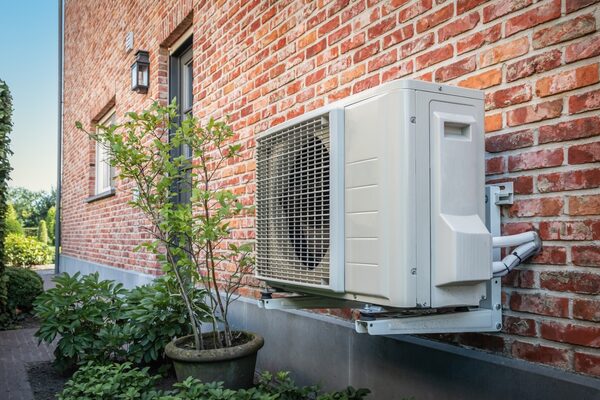
The headline figures are consistent across official documents: a £15bn Warm Homes Plan, continued delivery of that investment, and a target to upgrade 5 million homes and reduce long-term costs2. Independent guidance from the Energy Saving Trust puts it as £15 billion set to be invested with an ambition to upgrade five million homes by 2030, and describes up to £15 billion in funding for solar panels, heat pumps, insulation and energy bill support3.
The target date is where the documents diverge. Some official and independent material attaches the five million figure to 2030; other material describes five million homes over five years, or five million homes across the UK over this parliament3. The conflict is unresolved in the published material, so a household should read the five million figure as an ambition with more than one stated timescale rather than a fixed annual quota.
On heat pumps, the government's aim is 450,000 heat pump installations per year by 2030, a figure repeated in the official heat pump deployment statistics8. The Energy Saving Trust describes the same ambition as scaling up to delivering over 450,000 heat pump installations per year by 20303.
The jobs figure is modelled rather than observed. The plan is expected to support up to 180,000 additional jobs by 2030, and the technical annex puts the overall job impact of the policy at an estimated 180,0009. Elmhurst Energy repeats the same figure as up to 180,000 additional jobs in energy efficiency and clean heating by 203019.
| Figure | Value | Source type |
|---|---|---|
| Total investment | £15bn | Official2 |
| Homes targeted | 5 million | Official2 |
| Grant funding for low-income households | Around £5 billion | Official4 |
| Heat pump installations per year by 2030 | 450,000 | Official8 |
| Additional jobs by 2030 | Up to 180,000 | Official9 |
What it funds: insulation, solar, batteries and heat pumps
The measures funded under the plan are consistent across sources: insulation, solar panels, batteries and heat pumps, with the low-income element explicitly including all four2. The government's press release on the plan lists solar panels (photovoltaic and thermal), heat pumps (ground source, air source including air to air), home and heat batteries, smart controls, insulation (wall, floor and roof) and draught proofing18.
The Warm Homes: Local Grant, one of the delivery routes, funds a specific list: external or internal wall insulation; loft, room-in-roof and cavity wall insulation; air source heat pumps; high-heat-retention storage heaters; hot water cylinder insulation and thermostats; smart and digital heating controls; and solar PV panels20. That list is narrower than the plan-wide list, which is worth knowing before assuming a particular measure is available in a particular area.
The Warm Homes Fund, the loan element, is intended to help homeowners fund solar panels, batteries, heat pumps and packages of home improvements, including by combining finance with a Boiler Upgrade Scheme grant19. Loans are described as covering solar panels, heat pumps (ground-source and air-source, including air-to-air) and storage batteries21.
"solar panels (Photovoltaic and thermal)"

Support for low-income households: grants and the single consolidated scheme
Around £5 billion of the total investment under the plan will be grant funding for low-income households4. A separate government figure describes the grant element as over £4.4 billion plus £600 million from the Warm Homes Fund which the government intends to target at low-income households7. The two figures come from different documents and are not reconciled, so the grant total should be read as approximate.
The plan combines grants and loans, and independent analysis has argued that government grants should be tapered by household income and that funding should be consolidated under a single recognisable brand22. The consolidation is already scheduled: the Warm Homes: Local Grant and the Warm Homes: Social Housing Fund will be consolidated into a single scheme for low-income households from 2027/283. The Commons Library briefing confirms that the two schemes are to be consolidated into a single scheme aimed at low income households from 2027/28 onwards4.
In Northern Ireland, the equivalent route is the Warm Healthy Homes Fund, which supports targeted lower-income households in owner-occupied and private rented homes24. That is a separate scheme from the England-focused grants, and households in Northern Ireland should look to it rather than to the Warm Homes: Local Grant.
Loans for homeowners: low and zero-interest retrofit finance

The loan element is the part of the plan that is not means-tested. Low and zero-interest loans are described as available for homeowners regardless of income, and the same wording appears across independent guidance5. The Energy Saving Trust states that through a Warm Homes Fund, homeowners will have access to low and zero-interest loans14.
The measures the loans are intended to cover are solar panels, battery storage, heat pumps, smart controls, home insulation and draught proofing14. The plan also includes new plans for loans to consumers for home retrofits and investment in the retrofit supply chain, alongside the existing Warm Homes: Local Grant, Warm Homes: Social Housing Fund and Boiler Upgrade Scheme6.
The loans are not the same as the grants, and the distinction matters for a household working out what it might be offered. Grants are targeted at low-income households; loans are open to homeowners regardless of income. The published material does not set out interest rates, repayment terms or which lender will administer the loans, so those details are not yet fixed in the documents available.
Delivery: councils, schemes and the retrofit supply chain
Delivery runs through local authorities and through scheme rules set by government. In London, the Warm Homes: Local Grant is delivered on behalf of 31 local authorities working together as a consortium, with total funding shared between local authorities based on the number of homes in fuel poverty in each area28. That is a different model from a single national application route, and it means the experience of applying varies by area.
Individual councils publish their own rules. Surrey County Council states that funding allocated is dependent on survey results, viability of installation and value for money, and is at the discretion of the council, with properties not automatically entitled to a specific funding amount29. Birmingham City Council publishes a four-step application process: apply, upload documents, get your home assessed, approve the work30.
The Warm Homes: Social Housing Fund Wave 3 sets out what applicants must demonstrate, including delivery assurance and internal resourcing, an assessment of the feasibility and credibility of the project covering organisational design, fraud management and planning, and a delivery forecast covering proposed costs9. The Heat and Buildings factsheet confirms that the Carbon Budget and Growth Delivery Plan supports the delivery of the Warm Homes Plan31.
The supply chain is the constraint the sector itself has flagged. Solar Energy UK has stated that the solar sector is ready and able to deliver the government's Warm Homes Plan, which is a claim about capacity rather than a guarantee of delivery22. Consumer bodies have raised the opposite risk: defective insulation work has affected households, with 30,000 homes hit by defective insulation and MPs calling for a fraud investigation23.
Consumer protection reform and what it means for installations
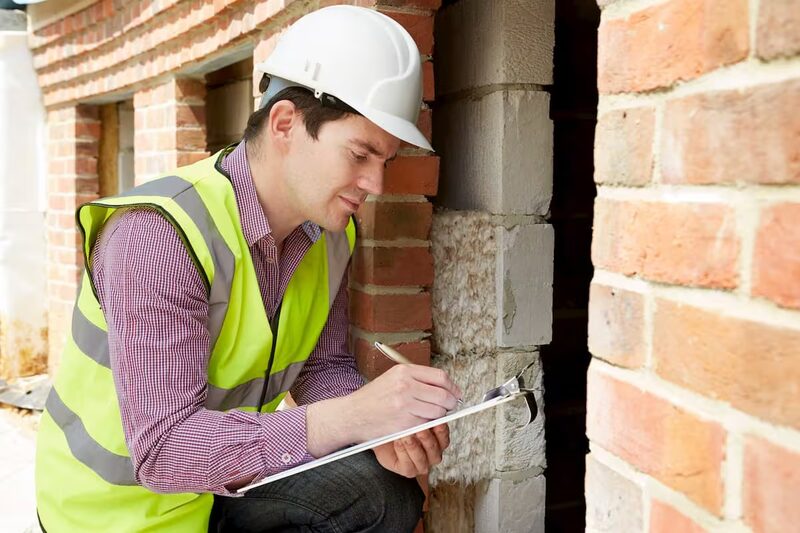
The government has committed to reforming the consumer protection system, bringing oversight of energy efficiency and microgeneration installations under closer government control4. A consultation opened on 17 June 2026 seeking views on how the consumer protection system for home upgrades should be reformed to support delivery of the Warm Homes Plan6.
The independent Committee on Fuel Poverty has recommended that Warm Homes Plan programmes embed minimum standards for handover and structured post-installation support, with a follow-up after an initial heating season and ongoing servicing and maintenance included as standard7. That recommendation is aimed at the gap between an installation being completed and a household knowing how to run it.
For a household, the practical effect is that the rules governing who can install funded measures, and what happens if the work is defective, are in flux. The existing protections apply while the reform is consulted on, and the consultation is the mechanism through which the new system will be shaped6.
"We are committed to reforming the consumer protection system, as set out in the Warm Homes Plan."
What the plan means for household energy independence

The plan's stated aims are to reduce energy bills and fuel poverty and support employment in the retrofit sector, and to enhance energy security and address the climate crisis6. Those are the two halves of the independence argument: a home that generates and stores its own electricity draws less from the grid, and a home that is insulated needs less heating in the first place.
What the plan funds is the equipment that shifts a household's position: solar panels, batteries, heat pumps and insulation2. A battery changes when a home draws from the grid rather than whether it is connected to one, and a heat pump changes the fuel a home uses rather than removing the need for a supplier27. The Energy Saving Trust's guidance on what really cuts energy bills is the relevant independent check on how much each measure contributes5.
The dependence that remains is real. A connected home still buys electricity, and where a gas boiler remains, gas. The plan does not fund disconnection from the grid, and the loans and grants are administered through schemes and suppliers rather than giving a household direct control of its own supply. The independence the plan offers is measured in reduced demand and reduced bills, not in autonomy from the network.
For households in rented homes, the position is different again, since the measures funded under the plan attach to the property and the consent sits with the landlord. The routes for tenants are set out in Renting and Home Energy and Asking a Landlord for Energy Improvements, and the wider context sits in the Home Energy by Home Type and Household guide.
Sources31 cited
- Warm Homes Plan, GOV.UK, 2026-01-21
- DESNZ Annual Report and Accounts 2025 to 2026: Performance Report, GOV.UK, 2026-09-17
- The Warm Homes Plan: What Local Authorities Need to Know, Energy Saving Trust, 2026-04-27
- Research Briefing CBP-9889, House of Commons Library, 2026-09-17
- Renewable Technologies: What Really Cuts Energy Bills, Energy Saving Trust, 2026-08-12
- Reforming Consumer Protection for Home Upgrade Schemes, GOV.UK, 2026-06-17
- Committee on Fuel Poverty Report: Heat Pump Transition, Committee on Fuel Poverty, 2026-05
- Heat Pump Deployment Statistics June 2026: Summary, GOV.UK, 2026-06-11
- Warm Homes: Social Housing Fund Wave 3 Scheme Guidance Addendum, GOV.UK, 2026-06
- Research Briefing CBP-9888, House of Commons Library, 2026
- First Regional Solar Breakdown as Installations Hit Record Highs, GOV.UK, 2026-08-27
- Spending Review 2025, GOV.UK, 2025-06-30
- Change in Energy Bill Price Cap for Jan-Mar 2026: Comment, Energy and Climate Intelligence Unit, 2025-11-21
- What the Warm Homes Plan Means for You, Energy Saving Trust, 2026-01-23
- Making the Warm Homes Plan a Success, Energy Saving Trust, 2026-02-20
- The Warm Homes Plan, Energy Saving Trust, 2026-07-01
- Heat Pump Deployment Quarterly Statistics, United Kingdom, 2026 Q1, GOV.UK, 2026
- Families to Save in Biggest Home Upgrade Plan in British History, GOV.UK, 2026-01-20
- Home Stretch: How to Make Energy Efficiency Upgrades Affordable for All, Citizens Advice, 2025-04-01
- Warm Homes Local Grant 2025 to 2028, Birmingham City Council, 2026-06-24
- Warm Homes Plan: What It Means for Households, Elmhurst Energy, 2026-08-24
- Solar Sector Ready and Able to Deliver Government's Warm Homes Plan, Solar Energy UK, 2026-01-20
- 30,000 Homes Hit by Defective Insulation as MPs Call for Fraud Investigation, End Fuel Poverty Coalition, 2026-01-23
- Warm Healthy Homes Fund, Northern Ireland Department for Communities, 2026-09-17
- Thermostats and Heating Controls, Energy Saving Trust, 2026-02-10
- Battery Storage, Energy Saving Trust, 2026-08-19
- UK Solar Panel Hotspots, Energy Saving Trust, 2026-08-13
- Warmer Homes, Greater London Authority, 2026-09-17
- Warm Homes Local Grant, Surrey County Council, 2026-09-17
- Getting Help With Your Energy Bills, Birmingham City Council, 2026-04-15
- Carbon Budget and Growth Delivery Plan: Heat and Buildings Factsheet, GOV.UK, 2026-06-23
 Policy, Targets and Coming RulesHeat pumps are central to the government's plans for greener home heating.
 Climate TargetsScotland aims to stop adding greenhouse gases by 2045, five years before the rest of the UK.
 The Full Grants and Schemes GuideWhich grants can you actually get right now, and how do you apply for them?
 The Full Heat Pumps GuideWill a heat pump keep my house warm in winter, and what does one cost to buy and run?
 Carbon Budgets and Net ZeroThe UK has promised to cut its emissions to almost nothing by the middle of the century.
 Passivhaus and EnerPHitPassivhaus homes are built to stay warm in winter and cool in summer with very little heating, but what does that mean for your bills and comfort?