In this guide
Removing a property's electricity supply is a formal process, not a switch. It is arranged with the network operator that owns the cables, it is treated in the regulatory framework as a voluntary disconnection, and it is distinct from the two things most people mean when they say "disconnected": a forced removal for non-payment, and self-disconnection, which is when a household stops using energy entirely because it cannot afford it1.
The reason most self-sufficient UK homes never complete the process is arithmetic. Solar Energy UK suggests that combining rooftop solar with a battery could enable 80% of a household's annual electricity to be low carbon, which is a strong result and still leaves a fifth of demand to be met from somewhere3. A connection is the cheapest insurance against that fifth, and against the winter weeks when generation collapses. Disconnection is available; it is simply a poor trade for most properties.
This page sets out what disconnection involves, the standards that govern any generation left behind, the kit an off-grid home needs, where off-grid living genuinely works, and what support has ended. It also sets out the dependence that remains even after the cable is cut: on a manufacturer, an app, a fuel supplier or a generator.
What disconnecting from the electricity grid actually means in the UK
A voluntary disconnection is a removal carried out at the request of the consumer and not required under health and safety legislation, for which the network charges a reasonable and cost-reflective charge approved under its connection charging methodology1. That definition comes from the gas side of the framework, but the structure is the same for electricity: the request comes from the occupier, the work is done by the party that owns the asset, and the cost falls on the person asking.
It is worth separating the vocabulary, because the words carry different legal weight. Self-disconnection is when a household stops using energy entirely due to affordability2. Ofgem defines self-disconnection more narrowly, as when a consumer with a prepayment meter does not have enough money to top up and the meter cuts out, or does not realise credit is running out8. Rota disconnection is something else again: the deliberate disconnection of customers' electricity supplies by the relevant electricity distributor for a set duration on a rota basis, so as to reduce demand to the level of capacity available9. None of these is what a householder choosing to leave the grid is doing, and none of them should be confused with it.
The framework that governs a consumer-requested removal sits within Great Britain's arrangements, with Ofgem acting as Great Britain's independent energy regulator1. Northern Ireland has its own legislation, including a requirement that the distributor give reasons for a disconnection or refusal to connect by further notice in writing10. Where a property is in a heat network rather than on individual supplies, the guidance is explicit that disconnection of a heat customer's supply should only be undertaken as a last resort, once all other reasonable options have been exhausted11.
For a household, the practical meaning is this: the cable, the meter and the standing charge go, and with them the ability to import at any hour. What does not go is the need for a supply of some kind, every day, forever.
Why most households stay connected even with solar and batteries
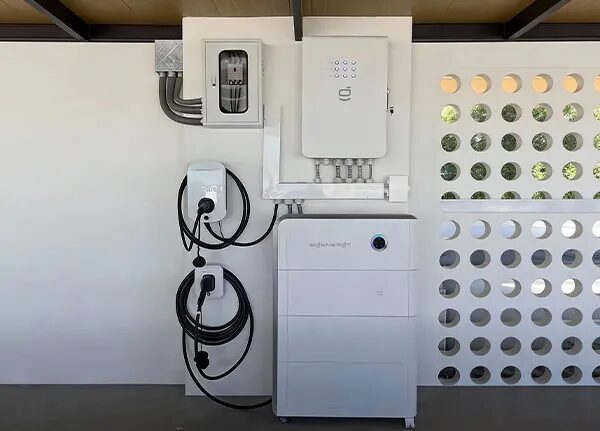
The case for keeping the connection is not sentimental. It is that the connection does something no home battery does as cheaply: it covers the gap between what a household generates and what it uses, at any scale, at any time of year, without the household owning the capacity to do so.
The numbers behind that are well established. There were 697,538 detached houses with domestic solar installations recorded by April 2026, part of a base of over 1.5 million domestic solar installations in the UK as of June 20253. Around 60% of UK grid electricity came from zero-carbon sources in 2023, including nuclear and renewables such as wind and solar12. A household that stays connected is therefore drawing on a system that is already largely low carbon, and one that can absorb its exports when generation is high.
The financial logic runs the other way too. A home battery can be charged during off-peak hours at the lowest rate and discharged during the peak-rate period to minimise the electricity bill12. That trade only exists because the connection exists. Cut the cable and the tariff disappears with it, along with the ability to sell surplus generation and the ability to buy a few hundred kilowatt hours in a bad month.
There is also a resilience argument that runs counter to intuition. Network operators restore supplies on the high voltage network by remotely diverting from a control centre, and where an alternate supply is not possible they look to restore supplies with mobile generation13. A connected household benefits from that engineering. An off-grid household is its own network operator, permanently.
The core kit: generation, storage and power management
An off-grid home needs four things working together: a generation source, a store, a way to manage the flow between them, and a backup for the weeks when the first two cannot cope. The kit is not exotic, but the sizing is unforgiving, because there is no grid to absorb a mistake.
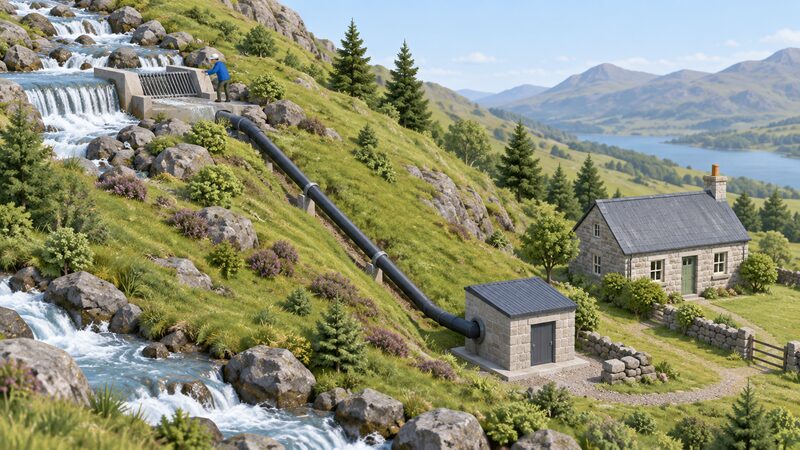
Generation is usually solar, sometimes wind, and in the right location hydro. Micro hydro stands out in the official guidance: for houses with no mains connection but with access to a micro hydro site, a good hydro system can generate a steady, more reliable electricity supply than other renewable technologies at a lower cost16. That is a strong claim from a planning authority, and it reflects the fact that a stream runs in winter when the sun does not.
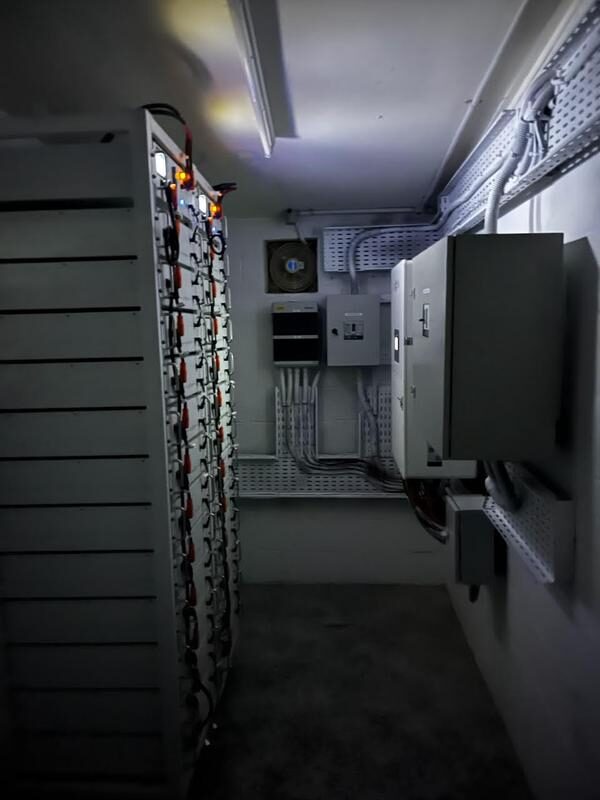
Storage is the part households most often underestimate. The useful comparison is scale rather than brand. UK grid-scale battery storage power capacity reached 7.5 GW by the end of 2025, and by May 2026 the fleet showed a 35% skip rate, meaning a substantial share of available capacity went unused5. If a national fleet of that size cannot always be used, a single home battery sized on a summer week will not carry a household through a December fortnight.
Power management is where the system either works or does not. A home battery charged off-peak and discharged at peak is the standard pattern on-grid12. Off-grid, the same hardware has to do something harder: decide what runs, what waits and what is shed. That is a control problem, and it is the reason whole-home energy system design matters more off-grid than on it.
Batteries and backup: covering the hours when generation is low
The honest position on backup is that a generator is not required by any standard, and most off-grid homes in the UK have one anyway. The reason is seasonal, and it is the subject of the winter gap: solar output is lowest exactly when heating and lighting demand is highest.
Network operators demonstrate the principle at scale. They restore supplies with mobile generation when an alternate supply is not possible14, and during that work they ask customers to use less power than usual by switching off things they do not need14. That is the same instruction an off-grid household gives itself in February, without the option of a control centre diverting supply from elsewhere.
Battery sizing is therefore a question about days of autonomy, not about a single number. A store that covers one evening is a self-consumption device. A store that covers three cloudy days is an off-grid asset, and it costs accordingly. The comparison worth holding in mind is that even grid-scale storage, at 7.5 GW of power capacity by the end of 2025, recorded a 35% skip rate in May 20265. Capacity that exists is not the same as capacity that is available when needed.
Grid connection standards: G98 and G99 and what they replaced
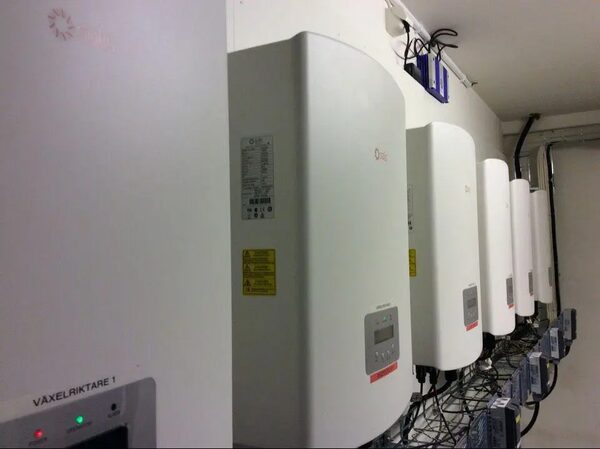
Any generation that remains connected to a network has to meet a connection standard, and the two names a household will meet are G98 and G99. G98 is a UK engineering standard written by the Energy Networks Association, previously known as G83, and it ensures small-scale generation installations connect to the grid safely and do not compromise network stability, safety or power quality18. It is an obligation under the Electricity, Safety, Quality and Continuity Regulations 200218.
The distinction between the two is about size and complexity rather than technology. G98 covers smaller installations that can connect under a simplified route; G99 covers larger or more complex connections that require prior approval from the network operator before commissioning. Both are administered through the distribution network operators, and the application route for micro-generation and storage connections is published by each operator18.
There is a territorial limit that matters. Engineering Recommendation G98 applies to Great Britain only19. Northern Ireland sits outside it, which is consistent with the separate legislative basis for connections and disconnections there, including the requirement that a distributor give reasons in writing for a disconnection or refusal to connect10.
For a household weighing disconnection, the standards matter in a specific way. They are the rules that make a connected system safe and legal, and they are also the rules a household stops needing once the connection goes. What replaces them is not freedom from regulation but a different set: the wiring regulations, building standards, and in rented property the electrical safety standards that apply in England17.
| Standard | Applies to | Route | Territorial extent |
|---|---|---|---|
| G98 (formerly G83) | Smaller generation connections | Simplified notification | Great Britain only19 |
| G99 | Larger or more complex connections | Prior approval | Great Britain |
| Northern Ireland | Separate legislative basis | Reasons in writing required for disconnection or refusal10 | Northern Ireland |
Where off-grid living works best: remote locations and suitable users
Off-grid living is often described as a remote-area pursuit, and the geography partly supports that. Off-gas-grid households are not evenly spread: the proportion was highest in inner London at 26.6% in 2024, followed by the South West at 24.0%6. That is a useful corrective, because it shows that being off a network is not the same as being far from a city.
What actually determines whether off-grid electricity works is the resource on the site and the shape of the demand. A property with a stream and a fall has an option that a flat, shaded property does not, and the official guidance is clear that micro hydro can deliver a steadier and more reliable supply than other renewables at lower cost where a site exists16. A property with a large south-facing roof and modest demand has a different but workable case.
The user matters as much as the site. Off-grid electricity rewards households that can shift load, accept variation and maintain their own equipment. It suits properties where the alternative is an expensive new connection, and it suits users who treat the system as infrastructure rather than an appliance.
Community models exist for households that want local supply without full disconnection. Ovo Communities operates mainly in southwest England and provides a model for local authorities, communities and co-operatives that want to supply energy directly to their tenants, communities or members20. That is a route to local control that keeps a network in place, and it is developed further in community energy in the UK.
Beyond the home: solar bus shelters, signage and street lighting
Disconnection is a household decision, but the generation and storage that make it possible are being deployed across the public realm, and that deployment changes what a household can expect from the equipment it buys.
The Bristol City Leap partnership has decarbonised buildings including Belbrook Children's Respite Unit, Ridingleaze House and Symes House through air source heat pumps, loft insulation, LED lighting, solar PV panels and building management system upgrades21. Great British Energy announced its first major rooftop solar project in March 2025, enabling around 200 schools and up to 200 hospitals in England to install rooftop solar power and complementary decarbonisation technologies4. These are not household installations, but they are the same components at a different scale, and they build the supply chains and installer base that domestic buyers depend on.
Street furniture is following. Northern Ireland's legislation specifically addresses the owner of a street electrical fixture in the context of disconnection and refusal to connect, requiring the distributor to give reasons in writing10. That is a reminder that public lighting and signage are separate connections with separate rules, and that a household disconnecting does not affect them.
The relevance to a household is indirect but real. A country with 1.5 million domestic solar installations and a public estate installing the same technology has a deeper market, more competition among installers and more spare parts than one without4. It also has more grid-scale storage: 7.5 GW of power capacity by the end of 20255. None of that removes the winter gap, but it lowers the cost of the kit that narrows it.
Cost, grants and policy: what support exists and what has ended
Support for the households most likely to consider off-grid living has narrowed sharply. The Home Upgrade Grant opened in January 2022 and closed in March 2025, with Phase 1 allocating £218 million to improve energy efficiency in low-income homes off the gas grid, and latest funding totals of £220 million7. Off-grid homes previously supported by it are now covered by the Warm Homes: Local Grant7. The Green Homes Grant, the Home Upgrade Grant and Green Deal loans are all now closed7.
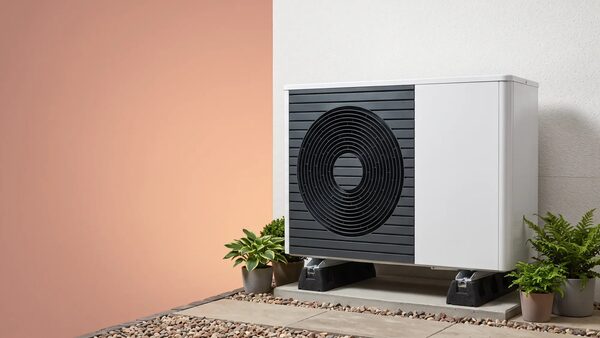
The Boiler Upgrade Scheme remains, and it has an off-grid dimension. Around 39% of grants made under the scheme had gone to homes off the gas grid as of November 202523. The scheme rules require that the property must not be attached to a heat network24. That is a condition worth noting for any household considering a private supply arrangement, because attachment to a heat network removes eligibility.
Older support is instructive about scale. Every household with a domestic energy connection in Great Britain received a £400 discount on energy bills for winter 2022 to 2023 under the Energy Bill Support Scheme25. That scheme reached connected households by definition, which is the point: the delivery mechanism for universal support is the connection itself.
Scotland has its own grant landscape. Grants are provided by the Scottish Government to support the implementation of net zero measures27. The Warm Homes Plan recommendations include removing social and environmental levies from electricity bills across Great Britain, noting that social and environmental levies are reserved to the UK Government in Scotland and Wales but not in Northern Ireland28. That asymmetry matters to any household modelling the running cost of an all-electric off-grid home.
Staying connected as a choice: partial independence vs full disconnection
The realistic choice for most UK households is not between the grid and no grid. It is between degrees of reliance, and the evidence supports treating the connection as insurance rather than as a failure of ambition.
Partial independence is well understood. A home battery charged off-peak and discharged at peak reduces the bill and shifts demand12. Solar plus storage could cover 80% of a household's annual electricity as low carbon3. Plug-in solar is designed to connect to an existing low-voltage electrical installation using a standard UK mains plug and socket, without requiring a separate electrical circuit for export19. Government intends to update regulations to allow plug-in solar of less than 800W to be connected without requiring a professional electrician3, and the consultation describes plug-in solar systems without batteries designed to be connected directly to a standard UK mains socket and to operate alongside the electricity network30. Plug-in solar is expected to be available in shops within months31, with the intention that families can buy a low-cost panel straight from a supermarket and set it up on a balcony or in a garden32.
Full disconnection is a different proposition. It removes the standing charge and the import capability together, and it transfers every hour of every winter to the household's own equipment. The regulatory framework treats disconnection as a last resort in the heat network context11, and a majority of respondents, 57%, agreed or partially agreed that proposed guidance on self-disconnection is relevant to the corresponding supply arrangements, with 3 respondents, 8%, disagreeing33. The direction of policy is towards keeping households connected and protecting them while they are.
For a household weighing the decision, the useful framing is this: the grid is a supplier, a backup and a market. Leaving it buys independence from all three and sells the resilience they provide. Most self-sufficient UK homes keep the connection, and the arithmetic above explains why. The pages on going off-grid in the UK and what energy independence costs set out the alternatives in more detail.
Sources33 cited
- Call for Input: Exercising Consumer Choice, a review of the gas disconnections framework, Ofgem, 2025
- Tackling Fuel Poverty in Scotland: A Strategic Approach, Scottish Government, 2021
- UK Solar Roadmap, Department for Energy Security and Net Zero, 2025
- Postnote: Solar PV and the electricity grid, Parliamentary Office of Science and Technology, 2026
- Clean Flexibility Roadmap, July 2026 update, Department for Energy Security and Net Zero, 2026
- Households off the gas grid, House of Commons Library, 2024
- Home Upgrade Grant scheme closure, House of Commons Library, 2025
- Energy pricing and the future of self-disconnection, House of Commons Library, 2022
- Statutory consultation on amendments to the Electricity (Standards of Performance) Regulations 2015%20Regulations%2020151680596597411.pdf), Ofgem, 2023
- Electricity (Northern Ireland) Regulations 2012, section 27, legislation.gov.uk, 2012
- Heat networks consumer protections: draft guidance, Ofgem, 2025
- The best heating for your home, Which?, 2025
- How do you get power back on during a major incident, UK Power Networks, 2026
- Why do you use generators, UK Power Networks, 2026
- DESNZ annual report and accounts 2025 to 2026: performance report, Department for Energy Security and Net Zero, 2026
- Hydro electricity, Planning Portal, 2026
- Electrical safety standards in the private and social rented sectors: guidance, Ministry of Housing, Communities and Local Government, 2025
- Micro generation and storage connections, Electricity North West, 2026
- Plug-in solar: interim product specification, Department for Energy Security and Net Zero, 2026
- Scotland without fuel poverty: a fairer Scotland in four steps, Scottish Government, 2016
- Our climate action on buildings, Bristol City Council, 2026
- Home Upgrade Grant funding allocations, House of Commons Library, 2026
- Boiler Upgrade Scheme statistics, House of Commons Library, 2025
- Boiler Upgrade Scheme: installer guidance, Ofgem, 2026
- Energy Bill Support Scheme, House of Commons Library, 2023
- Energy Bills Support Scheme: progress and lessons, Public Accounts Committee, 2023
- Green Heat Finance Taskforce report, part 1, Scottish Government, 2023
- What the UK needs from the Warm Homes Plan, Energy Saving Trust, 2026
- Postnote: Electricity constraint payments, Parliamentary Office of Science and Technology, 2025
- Plug-in solar consultation document, Department for Energy Security and Net Zero, 2026
- Britain continues to break clean power records, Department for Energy Security and Net Zero, 2026
- Heating oil support, Commons debate, Hansard, 2026
- Heat networks regulation: consumer protection guidance decision, Ofgem, 2026
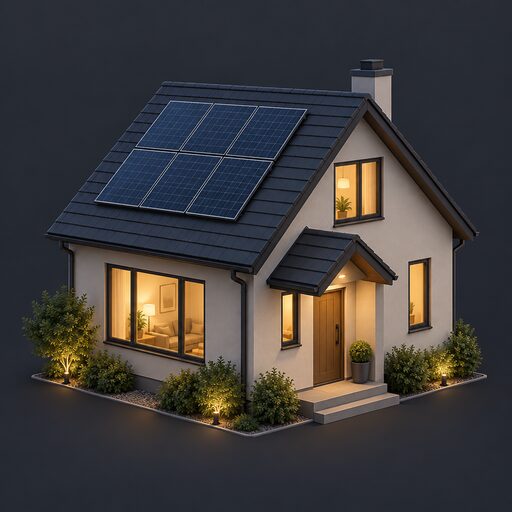 Backup Power and IndependenceA power cut leaves most homes completely dark, so how much backup do you actually need to keep the lights on?
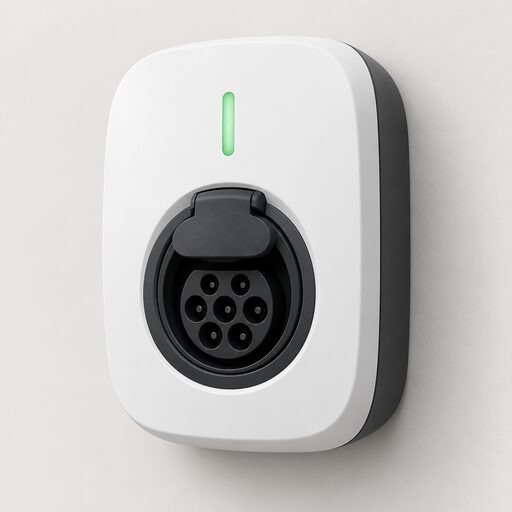 Charging and Energy IndependenceCharging an electric car at home can cut your fuel costs, but how much does it really free you from the grid?
 Off-Grid System CostWhat does going off grid really cost, and what makes up most of that figure?
 Backup Power and EPSWill your lights stay on when the power goes out?
 Energy Bills and IndependenceSolar panels can cut the part of your bill that goes up with every unit you use, but you still pay a daily standing charge just for being connected to the grid.
 Planning Energy IndependenceCutting what you use, moving heating off gas, putting solar on the roof and adding a battery all help, but none of them takes you off the grid completely.