In this guide
There is no single published UK price for "an off-grid home system", because no one sells one. What exists is a set of component prices, and a household going off-grid buys most of them: generation, storage, an inverter, a heat source, hot water, and whatever the site needs for water and drainage. Building the figure up from published UK prices, electricity alone is the smaller half. The average solar system in the UK costs £10,2701. At the small end, the basic equipment for a 1kW off-grid battery charging system is put at £5,000 to £6,000, plus installation costs2. Adding a battery of useful capacity to a solar system raises the upfront cost by around £2,000 to £6,0003.
Heat is usually the larger line. An air source heat pump costs off gas grid households £12,000 on average to install, which is £8,000 more than equivalent fossil fuel systems4. Put those together and a genuinely self-supplying house, generating its own electricity, storing it, and heating itself without mains gas, is a five-figure project in every published costing, before water, drainage, access tracks or a generator.
The comparison that matters is not against zero. It is against a grid connection and a lifetime of bills. The energy bill for a typical household was £1,755 a year from 1 October 20255, and one documented retrofit costing put a house 1,000m from the substation at £45,000 for connection work6. Where a connection is long, an off-grid system can be the cheaper of two expensive options.
What counts as an off-grid system, and what the money buys
An off-grid system replaces four services a connected home buys in: electricity supply, heat, hot water and, on many rural sites, mains water and drainage. Each is a separate purchase with its own price list, and the total is the sum, not a package discount.
The electricity side is generation plus storage plus conversion. The battery is what makes it off-grid rather than merely solar: off-grid inverter systems depend on battery quality, and the system's capacity depends on the battery size, with battery storage increasing costs significantly10. That is the structural difference from a grid-tied array, where the network absorbs the mismatch between generation and demand for free.
What disappears from the bill is the standing charge and everything bundled into it. Standing charges reflect the cost of maintaining infrastructure and the delivery of UK Government obligated programmes, and much of the recent rise has paid for transferring the customers of failed energy suppliers to new suppliers, alongside a deliberate decision on how to pay for energy networks11. Grid costs also include constraint payments, currently over £1 billion12. Those are avoided, but so is the network's role as an infinite battery.
What does not disappear is dependence. An off-grid household still depends on manufacturers for battery and inverter replacement, on a fuel supply for backup heat or a generator, and on an installer for a system that cannot simply be swapped to a competitor. The relevant reading on scope is going off-grid and disconnecting from the electricity grid.
Cost by scale: from a charging system to a year-round house
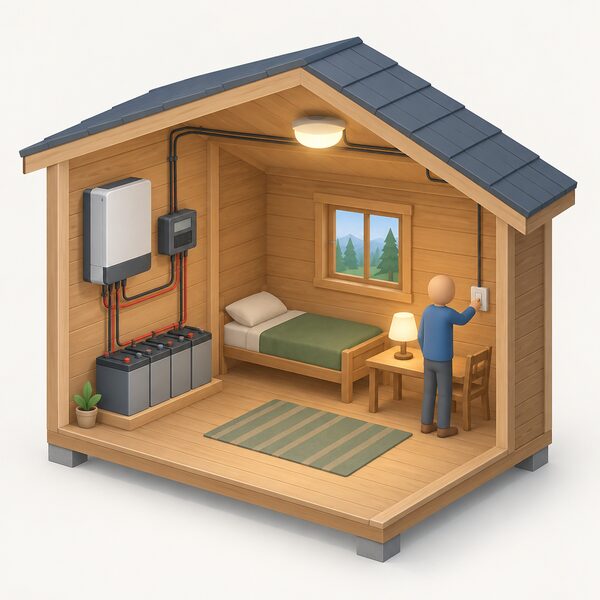
Published prices cluster into three scales, and they are not interchangeable.
| Scale | Published cost | What it covers |
|---|---|---|
| 1kW off-grid battery charging system | £5,000 to £6,000 equipment, plus installation2 | Lighting, small loads, a cabin |
| Small 1kW off-grid hydro generator | around £5,000 to £6,000, plus installation13 | Continuous output where there is a water resource |
| 3.29kW eight-panel rooftop solar with battery | about £7,87514 | Semi-detached, south-east facing pitched roof |
| 4kW solar array, no battery | £5,000 to £7,0007 | Three to four person household, most common size |
| Average UK solar system | £10,2701 | All sizes, with and without storage |
The step between these is not linear, because the constraint changes. At cabin scale the load is small and intermittent, so a modest battery carries it. At household scale the load includes heat and hot water, and the battery must carry a run of dark, still days. Micro-hydro is the exception: where a site has flow, it generates through the winter nights, which is exactly when solar does not. That resource is rare, and the winter gap is what forces most off-grid budgets upwards.
Households that stay connected and electrify instead show the alternative arithmetic: combining an EV, a heat pump, solar panels and a time-of-use tariff is modelled to save around £1,900 a year for some rural homes15. Households off the gas grid, by contrast, save around £123 a year on average on the levy side16.
Off-grid solar for a household: what 4kW costs and why quotes differ
A 4kW array is the standard reference size for a three to four person home. Independent guidance puts it at £5,000 to £7,000 without a battery7. A maker's own figures give £5,000 to £6,000 for a typical installed 4kW system with no battery, including 0% VAT, rising to £7,500 to £10,000 with a battery, where the battery add-on is £2,500 to £4,000 for roughly 5 kWh17. One consumer guide from 2024 put an average 4kW installation at £9,000 to £10,00018.
Historic figures show the direction. Small domestic solar installations of 2 to 5 kilowatts were costed at about £1,510 per kilowatt in 2021, rising to about £1,684 per kilowatt in 202219. An earlier range put installed solar at £2,920 to £15,500 depending on system size20. A 2kW system for a one to two person household is put at £4,600 to £5,800 without a battery7.
For an off-grid house, the unwelcome point is that 4kW of panels is a grid-tied specification. Sized against annual consumption, it works because the grid covers December. Sized for genuine independence, the array and the store both have to be larger, which is why off-grid totals run well above the headline solar prices. Sizing generation and storage covers the method.
Batteries and inverters: the cost that comes back
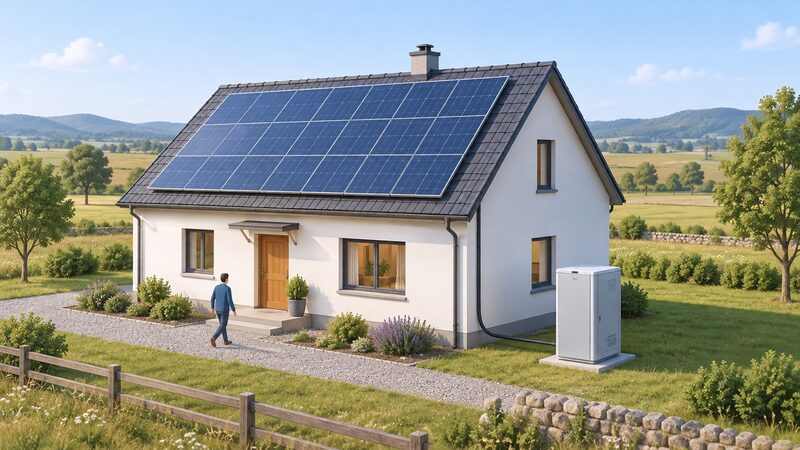
Storage is the recurring expense. Adding a battery to a solar PV system increases the upfront cost by around £2,000 to £6,000 for sufficient capacity for typical UK rooftop systems3; another independent figure puts the additional upfront cost of installing a battery at up to £2,544 more21. Then it repeats. For off-grid systems, batteries are essential and will need replacing every six to 10 years8.
Inverters last longer but are not permanent. Solar PV needs no annual maintenance or service, though the inverter is likely to need replacing at some point22. Replacement is put at about £500 to £1,00023, and for a larger small wind system the inverter replacement usually costs between £1,000 and £2,0008. An official costing exercise treated inverter replacement as 18% of the PV cost, alongside a fixed cost of £1,100 per installation for roof-mounted systems under 4kWp and maintenance of £200 every five years for a typical 4.7kWp array24.
For a household, the practical consequence is that off-grid running costs are not zero, they are lumpy: nothing for years, then a large single bill. Manufacturer dependence is real here, since a battery and inverter bought as a matched system are usually replaced as one. Hybrid inverter versus AC-coupled explains the architectures.
Heat is the biggest single line in the budget
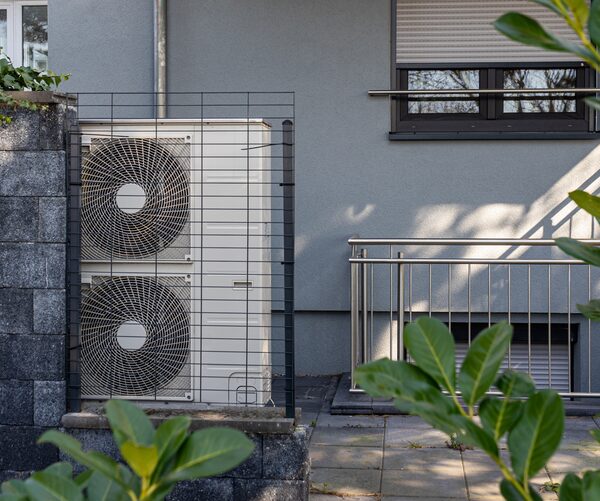
Off the gas grid, heat is bought outright. Air source heat pumps cost off gas grid households £12,000 on average to install, £8,000 more than equivalent fossil fuel systems4. Official statistics for 2021 put the median upfront cost of an air-to-water heat pump at around £10,500 and ground or water source heat pumps at around £20,00025; certification body guidance puts the average ground or water source installation closer to £25,00026. Trade guidance gives a rough range of £5,000 to £15,000 for an air-to-water installation27, and one independent costing put a new detached property at £12,79028.
| Heat measure | Published cost |
|---|---|
| Air-to-water heat pump, off gas grid | £12,000 average install4 |
| Air-to-water heat pump, median upfront (2021) | around £10,50025 |
| Ground or water source heat pump | around £20,00025 to close to £25,00026 |
| Air-to-air heat pump | typically £1,500 to £5,000 per system including install29 |
| Solar water heating, roof-mounted | £3,000 to £6,00030 |
| System boiler, including installation | £1,580 to £5,00031; gas system boilers £2,500 to £4,10032 |
| Wet underfloor heating | £85 to £110 per m²33 |
| MVHR | from as little as £2,500 installed29 |
Water-based underfloor systems cost significantly more than electric ones, with total costs after installation running into thousands of pounds34. Solar water heating handles summer hot water but not midwinter space heat, which is why most off-grid houses keep a stove or a fuel store.
The grant position matters and differs by fuel, not by nation, under the Boiler Upgrade Scheme: £9,000 for air-to-water or ground source heat pumps in off-gas grid properties replacing an oil or liquefied petroleum gas heating system, from 21 July 20269. Separately, the Warm Homes: Social Housing Fund Wave 3 sets total available grant funding for each off gas grid home, with the uplift, at £15,00035.
Off-grid against the cost of a new connection
For a remote site, the question is rarely "off-grid or nothing" but "off-grid or a connection quote". Connection cost scales with distance: one case study put a house 1,000m from the substation at £45,0006. Micro-hydro guidance notes that it might be possible to build a small scheme for under £10,000 do-it-yourself, and in some situations this could be cheaper than paying for a grid connection2.
Smaller connection costs appear in building regulation work too. Scottish proposals allowed an exemption from the requirement to install an EV charge point where the additional cost of electricity grid connection exceeds £2,000 per charge point, with per-unit charge point costs of £615 to £1,115 for new off-street parking and £982 to £2,415 for retrofit36. Those are connection increments, not whole-house supplies, but they show how quickly reinforcement costs appear.
Against that sits the avoided bill. The typical household bill was £1,755 a year from October 20255, and the price cap was set to fall by £117, or 7%, for a typical household on electricity and gas from 1 April 202637. Regional electricity caps for 1 October to 31 December 2025 on the other payment method ran to £960.22 a year in the South East at 3,100 kWh single-rate, and £936.78 in Southern38. An off-grid household avoids that annual outflow but pays it forward as capital and as battery replacements.
Real examples and what a lower or higher figure buys
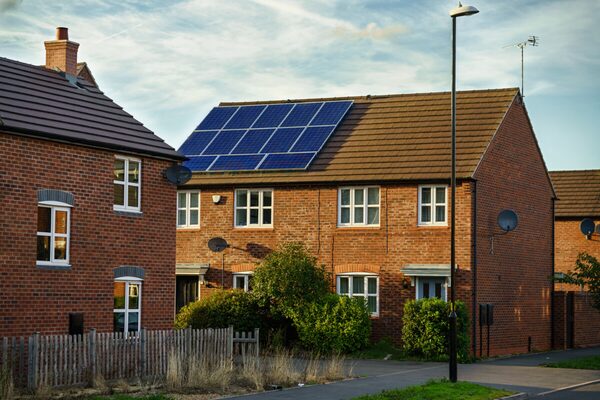
Documented UK costings give a useful spread. A 3kWp PV system was costed at £3,500 as a single retrofit measure39. An eight-panel, 3.29kW rooftop system with a battery on a south-east facing semi-detached roof came out at about £7,87514. At the other end, the £45,000 connection retrofit for a house 1,000m from a substation6 is the figure that pushes households towards independence in the first place.
What separates a low figure from a high one:
- At the low end (£5,000 to £8,000): a small array or a 1kW charging system, a modest battery, no heat pump, and a household that accepts a generator or solid fuel through winter2.
- In the middle (£10,000 to £20,000): a household-scale array at or above 4kW, meaningful storage, and either a heat pump or an existing heat source retained1.
- At the high end: ground source heat at close to £25,000 on its own26, a larger battery bank, wet underfloor distribution at £85 to £110 per m²33, mechanical ventilation, and site works for water and drainage.
Water supply and drainage costs are quoted by the installer and vary with the site; no published national range applies. Off-grid water, drainage and waste sets out what is involved.
What the budget does not buy: remaining dependencies
Spending the capital removes the supplier and the standing charge. It does not remove dependence. The household still relies on a manufacturer for battery and inverter replacement every six to 10 years8, on fuel deliveries for backup heat, and on whoever installed and commissioned the system. Where an electric vehicle is part of the picture, note that a connected household can charge for less than £10 a full charge on an off-peak tariff40, a running cost an off-grid house replicates only by oversizing generation; charging equipment adds its own items, such as an additional off-site charging cable at around £14541.
The honest framing is that off-grid is a capital-for-bills trade with a maintenance tail. It suits sites where the connection quote is large, where a water resource or good roof exists, and where the household will tolerate winter constraint. It is not a cheaper route to the same service. For the wider comparison, see what energy independence costs a UK household and the pillar guide.
Sources41 cited
- Average UK solar system cost, Ivie, 2026-09-20
- Micro-hydro information sheet, Centre for Alternative Technology, 2025-07-01
- Could solar panels save you £500 a year?, Which?, 2026-06-17
- Off gas grid heating costs evidence, UK Parliament Committees, 2022-05-17
- October 2025 price cap polling, National Energy Action, 2025-10-01
- Three-phase EV connection report, Renewable Energy Association, 2018-08
- Solar panel costs by system size, Uswitch, 2026-09-09
- Small wind turbines guidance, MCS, 2026-08-18
- Boiler Upgrade Scheme guidance for installers, Ofgem, 2026-07-21
- Off-grid, on-grid and hybrid inverter comparison, Sungrow, 2025-01-07
- Standing charges explained, National Energy Action, 2026-04-28
- Electricity network constraints briefing, POST, UK Parliament, 2025-01-06
- Hydroelectricity advice, Energy Saving Trust, 2025-11-06
- Plug-in balcony solar research, Uswitch, 2026-08-18
- Faster electrification would cut household bills, Climate Change Committee, 2026-06-24
- Balancing act: policy levies on bills, Citizens Advice, 2023-10-05
- Are solar panels worth it?, EcoFlow, 2025-07-23
- Renewable energy savings guide, Confused.com, 2024-03-19
- Energy price crisis drives growth in UK solar, Solar Energy UK, 2022-07-14
- Solar panels: costs and rewards, Which?, 2020-01-12
- Solar panel installation and maintenance, NICEIC, 2026-09-17
- Installing solar panels case study, Energy Saving Trust, 2025-09-24
- A complete guide to solar PV, Centre for Sustainable Energy, 2025-11
- Part F draft regulatory impact assessment, NI Direct, 2021-10
- Heat and buildings impact assessment, GOV.UK, 2025
- Ground and water source heat pumps, MCS, 2026-06-09
- Air source heat pumps explained, CIPHE, 2022-09-28
- Reduce the cost of heat pumps, Nesta, 2022-03-02
- Future Homes Standard network to emitter report, BEAMA, 2023-04
- Solar water heating information sheet, Centre for Alternative Technology, 2025-06-27
- New boiler costs, Uswitch, 2025-03-21
- Different boiler types and costs, Uswitch, 2026-09
- Underfloor heating advice, Energy Saving Trust, 2025-10-02
- Underfloor heating guide, Uswitch, 2025-12-10
- Warm Homes: Social Housing Fund Wave 3 guidance addendum, GOV.UK, 2026-06
- Proposed changes to energy standards, Scottish Government, 2021-07-23
- April 2026 price cap, National Energy Action, 2026-04-01
- Energy price cap levels 1 October to 31 December 2025, Ofgem, 2025
- Clean heat: supporting low income households, Energy UK, 2026-06-11
- Should I buy an electric car?, Which?, 2026-04-16
- Electric vehicle charge points, Flexi-Orb, 2025-04-22
 Leaving the Electricity GridCan you really cut your home off the grid completely, and what does it cost to have your electricity supply removed for good?
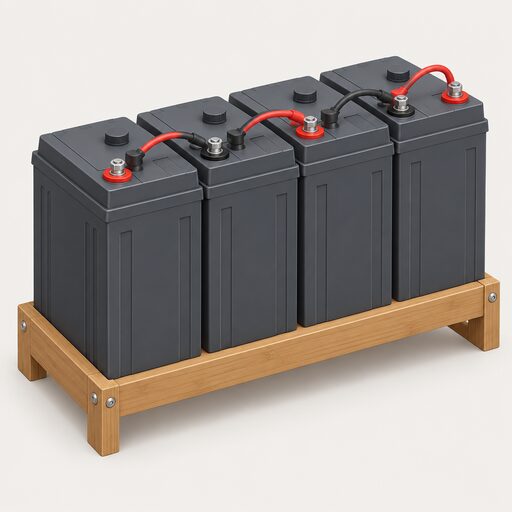 Off-Grid Battery SystemsHow many days of power do you need when there is no sun?
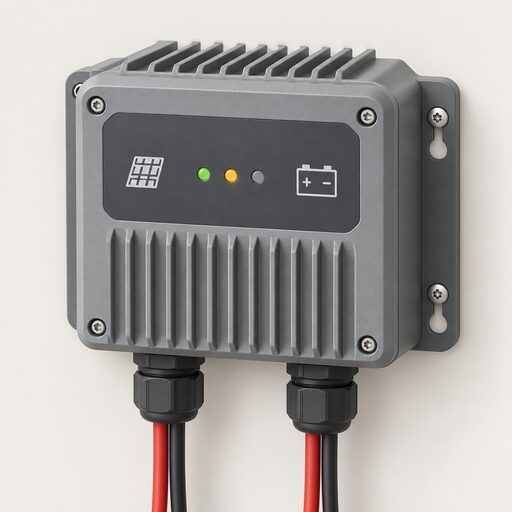 Off-Grid SolarOff-grid solar means your home, cabin or boat runs on its own power, with no connection to the grid.
 Backup Power and IndependenceA power cut leaves most homes completely dark, so how much backup do you actually need to keep the lights on?
 The Full Solar Panels GuideHow much do solar panels cost, and what could they save you each year?
 Energy IndependenceA heat pump runs your heating on electricity instead of gas or oil, so how much does that really cut what you pay and how exposed you are when fuel prices jump?