
In this guide
Solar panels save money in two ways: electricity you generate and use yourself is electricity you do not buy, and the surplus you send out can earn an export payment. Everything else, the payback period, the value of a battery, the choice of tariff, follows from the balance between those two. Panels are suitable for anywhere in the UK, and even on overcast days there is enough light for them to work1.
On typical numbers, a professionally installed rooftop system costs somewhere between about £4,600 and £11,000 depending on size and specification, and cuts an electricity bill by a few hundred pounds a year: official guidance for a home without electric heating or an electric vehicle puts the saving at £530 to £650 a year and the payback at 10 to 12 years4. Independent estimates run wider, from 5 to 10 years at the optimistic end to 16 years for a shaded east-facing roof. Plug-in solar, legal across Great Britain since 27 August 2026, is a much smaller proposition: roughly £450 to £600 for a kit saving £70 to £110 a year.
The honest answer to "are solar panels worth it" is that they are a long-dated investment whose return is set by three things you can check before buying: how much of the generation you can use in the home, what your supplier pays for the rest, and what electricity would otherwise have cost you. None of the three is fixed, which is why credible published payback figures disagree by a factor of two.
What solar panels cost in the UK
There is no single price, and the published averages differ because they describe different system sizes and include different work. One independent guide gives a range of around £4,600 to £8,000 based on panel quality and system size, with a 2kW system suited to a one or two person household at £4,600 to £5,80011. Another puts the cost at £6,100 to £11,000 depending on property size12, and a third quotes £4,600 to £8,000 as an average among the suppliers it works with13. Scottish guidance spans a wider £1,500 to £10,0007.
Two figures recur as central estimates: around £6,100 for an average installation5, and around £7,600 to install a typical 4.5kWp system14. A separate estimate of £6,000 to £10,000 as the typical initial cost sits across both15. An older figure, £4,800 as an average cost, dates from 202416.
| Source type | Quoted installed cost | Basis |
|---|---|---|
| Independent guidance | £4,600 to £8,00011 | Panel quality and system size |
| Independent guidance | £4,600 to £5,80011 | 2kW system, 1 to 2 people |
| Independent guidance | £6,100 to £11,00012 | Property size |
| Independent guidance | Around £6,1005 | Average installation |
| Independent guidance | Around £7,60014 | 4.5kWp typical system |
| Independent news | £6,000 to £10,00015 | Typical initial cost |
| Scottish guidance | £1,500 to £10,0007 | Range in Scotland |
Prices have fallen a long way over the life of the domestic market: a comparable installation once cost an extra £4,000 against a point less than two years earlier, as noted in 201217. That history matters mainly as context. What a household pays now is installer-quoted, and depends on roof access, scaffolding, panel choice and whether a battery is included. More detail sits on the solar panel cost page, and system sizing is covered under what size solar system does a home need.
Payback periods: 5 to 16 years depending on the setup
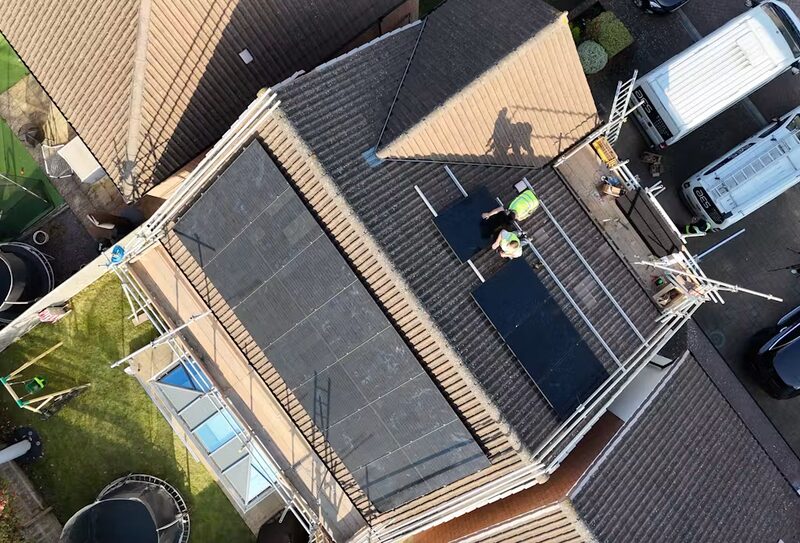
Official guidance states that solar panels usually pay for themselves in 10 to 12 years4. Scottish guidance gives around 8 to 12 years depending on maintenance, and elsewhere on the same site a 5 to 10 year payback7. An independent figure of about 10 to 12 years agrees with the official one18, while a consumer body puts a typical rooftop system at 10 to 13 years8. A local authority plan describes payback in the region of 6 to 12 years19, and another independent guide says 7 to 10 years13.
The spread is not carelessness. Payback is cost divided by annual benefit, and both halves move. Worked examples from a consumer body, modelled for a 4.6kWp ten-panel system on a 35 degree pitched roof as of 1 June 2025, show the effect of orientation and shading better than any average:
| Location and roof | Annual generation (kWh) | Bill saving | Export income | Total | Payback |
|---|---|---|---|---|---|
| London, south-facing, no shading | 4,200 | £285 | £370 | £655 | 11 years 3 months20 |
| London, east-facing, modest shading | 2,800 | £225 | £235 | £460 | 16 years 1 month20 |
| Cardiff, east-facing, modest shading | 2,900 | £225 | £245 | £470 | 15 years 8 months20 |
A south-facing unshaded roof in London generated half as much again as the east-facing shaded one and paid back nearly five years sooner. Official guidance for Stirling gives 11 to 12 years with export payments included21. Orientation, pitch and overshadowing are dealt with in more depth under roof orientation, pitch and shading and for side-facing roofs under are solar panels worth it on east or west roofs.
The practical reading is that a household should treat the widely quoted 10 to 12 years as a mid-case for a good roof and expect the number to lengthen where shading, orientation or a small daytime load work against it.
How the energy price cap shapes your savings
Every pound of bill saving is a unit of electricity not bought, so the value of solar rises and falls with the price of imported electricity. Most households in Britain are exposed to the price cap: it protects customers on standard variable tariffs, where the unit rate can move with the energy market, and applies where a customer has not signed a fixed-term contract22. It does not apply to fixed tariffs, business contracts, heat networks or heating oil22.
Ofgem sets the cap every three months, and it caps unit rates and daily standing charges, separately for gas and electricity, rather than capping annual bills, which depend on how much a household uses22. A separate cap is set for each of the 14 supply regions and applies throughout that region, with no breakdown below regional level23. The cap was introduced across all payment types in January 201924. Network costs make up almost 30% of the total, and in April 2026 the government cut policy costs by ending a levy-funded energy efficiency scheme and shifting the largest renewable generation support scheme to general taxation23.
Recent levels give a sense of scale. For 1 October to 31 December 2025 the cap rose 2%, to £1,755 for Direct Debit, £1,890 for Standard Credit and £1,707 for prepayment25. Welsh guidance gives an electricity unit rate of 27.69p per kWh with a 54.75p daily standing charge for 1 January to 31 March 2026, a typical dual-fuel direct debit bill of around £1,758, a 7% fall for April to June 2026 and an expectation that the cap stays roughly the same to the end of the year26. Typical consumption for cap purposes is assumed at 2,500 kWh of electricity24.
The 2022 episode shows how much the arithmetic can move: rapid wholesale rises drove a 54% cap increase in April 2022, and the October to December 2022 cap was £3,37124. The higher electricity costs, the faster solar pays back, which is precisely why fixed payback figures age quickly.
How much you actually save: £350 to £1,000 a year
Official guidance for a typical home without electric heating or an electric vehicle gives a saving of £530 to £650 a year4. Government modelling in the solar roadmap puts the bill reduction at around £500 a year for a typical UK home installing solar, based on the price cap at the time27, and Welsh government guidance also says households save over £500 a year on average28.
Lower figures appear where the assumptions are tighter. One estimate gives £360 a year in Great Britain5, another around £260 a year depending on location and including Smart Export Guarantee income14. Guidance that assumes occupants are home only from 6pm gives around £0 a year in Great Britain and £180 in Northern Ireland29. That Northern Ireland difference matters: the Smart Export Guarantee covers England, Scotland and Wales, so a Northern Irish household's savings are built differently30.
Occupancy is the single largest behavioural driver. Official figures put the saving at £650 a year if someone is home all day against £530 a year if everyone is out until 6pm4. Over one heatwave week in June 2026, households with solar saved £21.27 across the seven days, with a high-usage household on ten panels and 4,100kWh annual consumption reaching a total of £29.84 for the week9.
- Self-consumption: electricity used in the home avoids the full import unit rate, so it is worth more than export.
- Export income: everything not used is paid at the export rate, typically lower.
- Load shifting: running washing, dishwashing and hot water heating in daylight raises self-consumption without any extra hardware.
- Region: generation differs across the UK, and export schemes differ between Great Britain and Northern Ireland.
Related reading sits under solar panels and household energy independence and solar diverters, which cover the two main ways of lifting self-consumption.
Earning from exports: the Smart Export Guarantee
Any excess electricity generated by panels can be exported to the grid31, and households with solar panels, small wind of 5MW or less, or micro CHP of 50kW or less can be paid for it through the Smart Export Guarantee, a UK-wide scheme that requires larger energy suppliers to pay for surplus electricity sent back to the grid30. To receive payment a household signs up to a supplier's Smart Export Guarantee tariff32; suppliers set their own rates, and one estimate puts typical earnings at around 12p per kWh9.
Eligibility is not automatic. Only installations certified under the Microgeneration Certification Scheme or Flexi-Orb, with suitable export metering, qualify33. That rules out most self-installed and plug-in systems. MCS certification for solar PV and getting paid for solar export cover the detail.
Export tariff choice matters more than most buyers expect. An independent assessment states that the level of savings depends strongly on export tariffs, with the best Smart Export Guarantee rates significantly increasing returns34. In the worked London example above, export income of £370 exceeded the £285 bill saving on the south-facing roof20, so the rate a supplier pays was the larger half of the return.
The closed Feed-in Tariff still illustrates the scale of export across the fleet: in scheme year 14, just over 1.3 TWh was exported to the grid, with associated export payments of around £78.4 million35.
Plug-in solar: the low-cost entry point
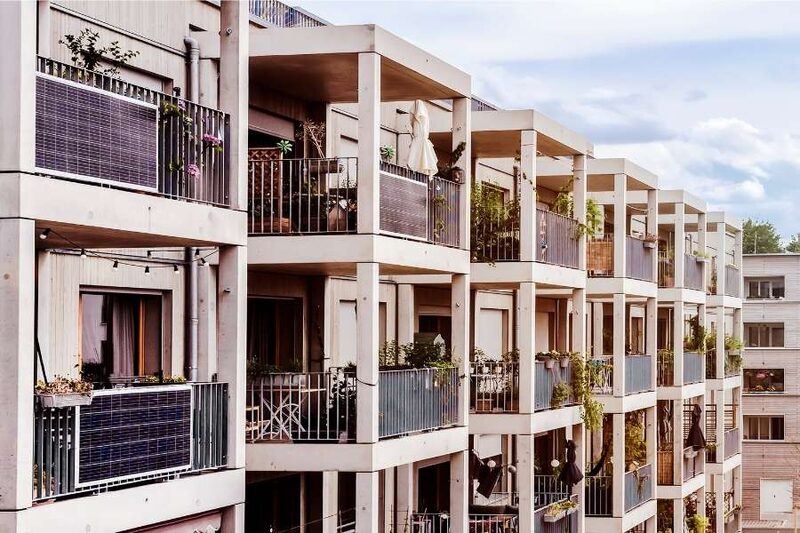
Plug-in solar panels, also described as balcony solar, became legal across Great Britain on 27 August 2026 where they meet certain standards36, and are now available to buy and use across Great Britain38. Government had said they would be in shops within months and would let families buy a low-cost panel straight from a supermarket and set it up on a balcony or in a garden39.
Prices are still settling. Devices meeting UK regulations cost from around £45037; an estimate before launch suggested around £400 for a basic setup41; typical system cost is put at £400 to £50033; panels on sale at Argos range from £599 to £1,19942; and one price is expected to settle at around £400 to £60043. A benchmark 0.8kW kit is put at around £50044. A two-panel system is quoted at around £50010, entry-level single-panel kits at around £200 to £300 on European estimates not yet officially priced for the UK10, and kits generally at £500 to £1,00045. One 460W plug-in kit is listed from £599.00, ground mount only33.
| Measure | Plug-in solar | Source |
|---|---|---|
| Typical system cost | £400 to £500 (estimated) | 33 |
| Cost of compliant devices | From around £450 | 37 |
| Annual saving | £70 to £110 | 33 |
| Annual saving, home all day | £100 a year | 37 |
| Annual saving, out during the day | £70 a year | 37 |
| Payback | 3.6 to 7.1 years | 33 |
| Payback, two-panel 800W kit | Two to three years | 10 |
| Payback, general | Five to ten years | 45 |
The payback estimates disagree sharply: two to three years for a two-panel 800W system10, 3.6 to 7.1 years33, over four years43, and five to ten years45. The difference is mostly the assumed price and how much of the output the household uses. Because plug-in kits are generally not MCS or Flexi-Orb certified with export metering, they do not earn export payments33, so every unit must be consumed in the home to have value. See plug-in solar kits, balcony solar and plug-in solar vs professionally installed solar.
Batteries and solar: better self-sufficiency, slower payback
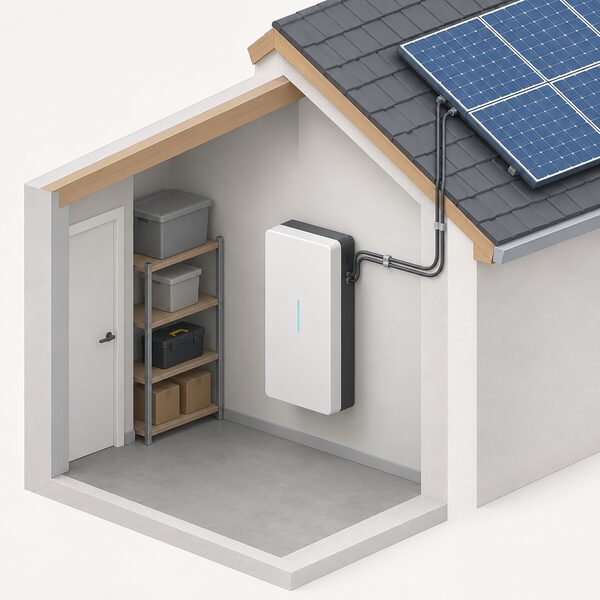
A battery raises the share of generation you use yourself. Self-consumption is reported at around 70% with a 10kWh battery9, against far lower figures without storage. Official analysis says battery storage increases annual savings from around £150 to £450 a year46. An independent guide has a £2,500 battery lifting annual savings to £932 and the combined system paying off in about 10.5 years47.
The costs are substantial. Battery storage tends to cost around £5,000 to £8,00021, while another estimate puts an average solar battery at around £4,500 on top of an existing panel system47. Against that, an independent assessment is blunt:
"Adding a battery to a solar panel system can increase bill savings, but often not enough to recover the cost of the battery within its expected lifetime, particularly where households already have access to a good export tariff"
That is the trade-off in one sentence. A battery buys self-sufficiency, evening supply and insulation from import prices; it does not generally buy a faster payback, and it cannibalises export income by keeping units at home rather than sending them out. The same assessment notes that solar panels generally offer a reasonable payback within their lifetime34, which is a different claim from saying the same of storage.
For households whose priority is independence rather than internal rate of return, the calculation changes: adding battery storage to a solar system and can I get solar panels without a battery set out both sides, and do solar panels work in a power cut explains why panels alone do not keep the lights on.
Running costs: cleaning and maintenance
Payback figures usually assume the array keeps working with little intervention, and maintenance costs are modest but not zero. Professional cleaning is quoted at around £4 to £15 per panel, depending on how easy the panels are to access and how dirty they are8, which comes to roughly £80 to £150 for a typical home installation of 10 to 16 panels13. Householder cleaning kits are sold online and in some hardware stores, typically costing around £10032. Scottish guidance ties payback directly to upkeep, giving 8 to 12 years depending on how well panels are maintained7.
Where panels sit matters for maintenance as much as for output: contrary to popular belief, panels can be installed on flat roofs8. More on upkeep is set out under solar panel maintenance, cleaning and inspection and how often do solar panels need cleaning.
Carbon payback: one to four years
Financial payback is the slow one. The carbon payback period for a solar panel, the time it takes to offset the emissions from manufacturing, is typically one to four years10. Official analysis from 2014 found that thinner wafers reduced the carbon payback time for crystalline silicon in the UK from approximately four years to 11 months, assuming 925kWh/m248. Set against a system life measured in decades, the embodied carbon is repaid many times over, and well before the cash is. End-of-life handling is covered under solar panel recycling and disposal.
Where solar fits in the UK's energy future, and what dependence remains
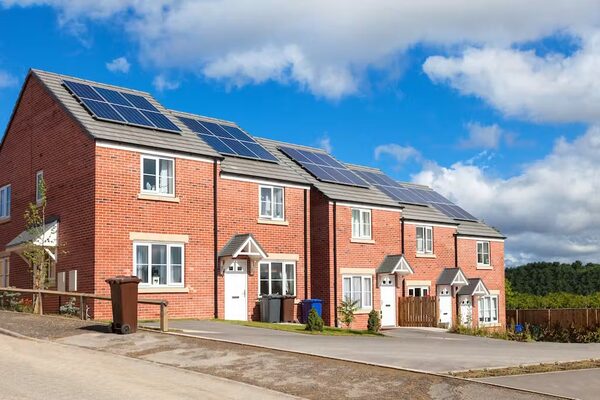
Domestic rooftops are now a serious share of the national fleet. At the start of 2026 domestic solar made up 30% of UK solar capacity and 84% of total UK solar installations46. Counts of homes with panels vary by source and date: more than 1.4 million28, more than 1.5 million8, around 1.65 million49 and nearly 1.7 million installations18. Solar is described as the most common domestic renewable energy source in the UK. Assessments of where further growth could come from use criteria including below average installations per 10,000 people against a UK median of 123, above average homeownership against a UK median of 68%, a higher than average share of rural homes, and above average growth against a UK median of 23%1.
For a household, the independence gained is real but partial. Panels cut imported units during daylight and, with a battery, into the evening. What remains is a set of dependencies worth stating plainly:
- The grid, for everything generated below demand, for winter and for night, and as the destination for surplus.
- A supplier, both for import at a capped or fixed rate and for the export tariff, which is a commercial offer that can change.
- Certification, since export payments require an MCS or Flexi-Orb installation with suitable export metering33.
- Regional rules, because the Smart Export Guarantee covers England, Scotland and Wales, not Northern Ireland30.
- Manufacturers and installers, for warranty cover over a payback period that commonly exceeds a decade.
That is why the answer to whether solar is worth it turns on the household rather than the technology. A well-oriented unshaded roof, daytime occupancy or shiftable loads, a decent export tariff and a plan to stay in the house for the length of the payback all point one way. A shaded east-facing roof, an empty house until 6pm and a short intended tenure point the other. The solar PV pillar guide and which homes suit solar panels work through those conditions in more detail.
Sources49 cited
- UK solar panel hotspots, Energy Saving Trust, 2026-08-13
- Solar panel installation, Energy Saving Trust, 2026-09-07
- How much of your electricity can solar panels produce?, Which?, 2024-06-27
- Solar panels: energy improvement options, London Borough of Hammersmith and Fulham, 2025-10
- Energy saving upgrades for home renovation, Energy Saving Trust, 2026-05-05
- Solar panel costs, Which?, 2026-08-03
- Solar panels, Home Energy Scotland, 2026-09-20
- Solar panel myths debunked, Which?, 2026-06-09
- Britain's homes with solar panels reap £40 million during the heatwave, Uswitch, 2026-06-28
- Plug-in solar explained, Low Carbon Hub, 2026-07-09
- Solar panels, Uswitch, 2026-09-09
- Make your home more energy efficient, Confused.com, 2026-07-06
- Are solar panels worth it?, Uswitch, 2026-09-16
- Tips to improve the EPC rating of your home, Energy Saving Trust, 2026-08-03
- Do solar panels increase home value?, The CPA, 2026-01-20
- Energy price cap rise: energy saving habits, Ivie, 2024-09-27
- Britain's solar energy boom is built on unsustainable foundations, GOV.UK, 2012-01-04
- Solar power facts, Energy Saving Trust, 2026-08-13
- Bristol Warm Homes Plan, Bristol City Council, 2025-04
- Are solar panels worth it?, Which?, 2025
- Solar panels advice, Energy Saving Trust, 2026-08-27
- Energy price cap, Ofgem, 2026-09-17
- Domestic energy prices, House of Commons Library, 2026-09-20
- Domestic energy prices briefing, House of Commons Library, 2026-08-28
- Summary of changes to the energy price cap, 1 October to 31 December 2025, Ofgem, 2025-08-27
- Energy price cap explained, Welsh Government, 2026-03-04
- UK Solar Roadmap, DESNZ, 2025-06
- Solar panels, Welsh Government, 2026-01-14
- Top energy saving ideas for your home improvement project, Energy Saving Trust, 2026-08-03
- Smart Export Guarantee, MCS, 2026-04-27
- Solar panels research briefing, House of Commons Library, 2026-09-17
- Make the most of your solar panels, Which?, 2026-08-12
- Plug-in solar panels, Which?, 2026-09-15
- Supporting households with low carbon technology combinations, Energy Saving Trust, 2026-07-15
- Feed-in Tariff annual report, scheme year 14, Ofgem, 2024-12
- First regional solar breakdown as installations hit record highs, GOV.UK, 2026-08-27
- Plug-in solar panels, Energy Saving Trust, 2026-09-17
- Simple tips for a greener Easter, Home Energy Scotland, 2026-03
- Britain continues to break clean power records, GOV.UK, 2026-05-28
- Heating Oil Support debate, Hansard, 2026-03-16
- Plug-in solar panels vs rooftop systems, Which?, 2026-04-27
- Plug-in solar panels guide, Uswitch, 2026-09-04
- Plug-in solar panels set to go on sale to help bring down bills, End Fuel Poverty Coalition, 2026-08-28
- 7 million want plug-in balcony solar as law changes on 27 August, Uswitch, 2026-08-18
- Plug-in solar, Centre for Sustainable Energy, 2026-09
- Domestic solar power, Parliamentary Office of Science and Technology, 2026-06-25
- Battery storage and solar panels, The CPA, 2026-01-06
- UK Solar PV Strategy Part 2, Department of Energy and Climate Change, 2014-04
- Could solar panels save you £500 a year?, Which?, 2026-06-17
 The Full Solar Panels GuideHow much do solar panels cost, and what could they save you each year?
 Payback and SavingsHow long until a home battery pays for itself, and why do quoted payback times vary so much?
 Solar Export PaymentsIf you have solar panels, how do you actually get paid for the electricity you send back to the grid?
 Solar and Energy IndependenceHow far domestic solar cuts dependence on suppliers and the grid, what self-consumption really looks like across the year, what a battery, diverter or EV adds, and the grid-outage limit of ordinary inverters.
 MGD 003 Self-ConsumptionBuying a battery with solar panels means asking how much of your own solar you will actually use instead of sending it to the grid.
 Energy Bills and IndependenceSolar panels can cut the part of your bill that goes up with every unit you use, but you still pay a daily standing charge just for being connected to the grid.