
In this guide
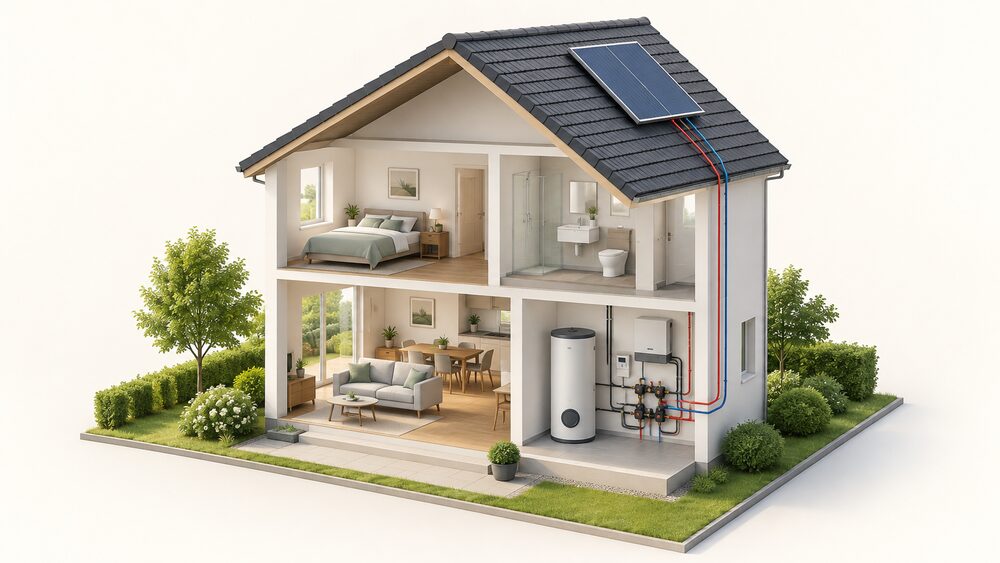
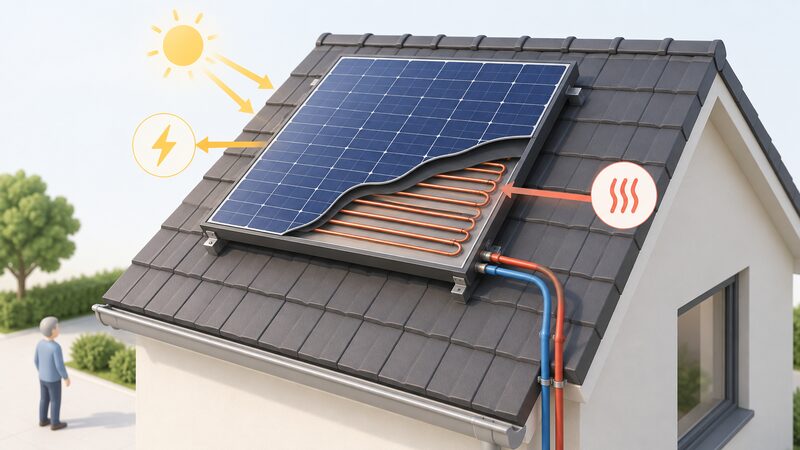
A PVT panel, short for photovoltaic-thermal, is a single collector that does two jobs from one aperture: it generates electricity from photovoltaic cells and captures the heat that those cells shed, passing it to a fluid for water heating. The electrical side is ordinary solar PV, which converts sunlight into clean, renewable electricity1. The thermal side works on the same principle as solar water heating, which uses energy from the sun to work alongside your conventional water heater2.
The appeal is space. A household with a roof that cannot carry both a PV array and a separate solar thermal collector can put one hybrid panel up instead. Independent testing puts hybrid module efficiency at around 20%3. That figure describes the electrical conversion, and it sits in the same band as conventional PV, because the cells themselves are conventional.
What PVT does not do is remove the household's dependence on the grid, a boiler or a cylinder. The heat it collects needs somewhere to go, normally a hot water cylinder, and the electricity it makes is still used through an inverter and, in most homes, a grid connection. It reduces the amount of gas, oil or electricity a home buys. It does not make the home self-sufficient.
What a PVT panel is: one panel producing electricity and heat together
Solar electricity panels, also known as photovoltaics (PV), capture the sun's energy using photovoltaic cells and turn it into electricity for the home to use1. A PVT collector takes that same laminate and adds a heat exchanger behind it, so the fluid circuit draws heat away from the cells and delivers it to a store. The electrical output is unchanged in kind; the thermal output is a second product from the same roof area.
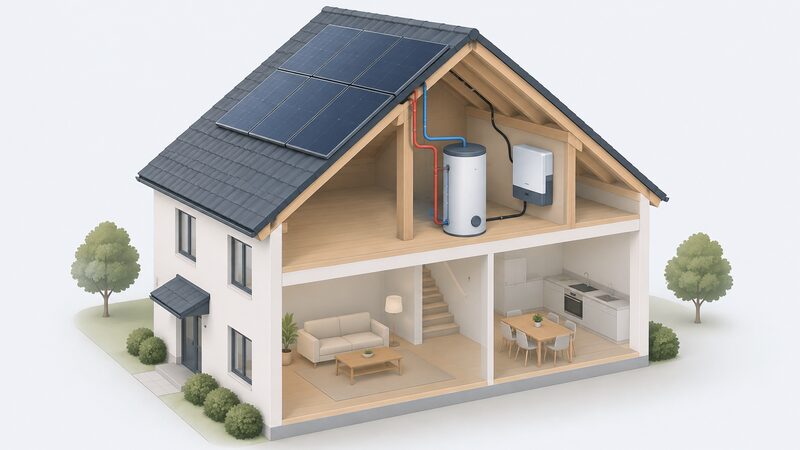
The equipment list for a PV system gives a sense of what sits around the panel: cabling, a control panel and an AC/DC inverter7. A PVT installation adds a pump station, a controller and a cylinder to that list, because the heat has to be moved and stored. That is the practical difference between buying PV and buying PVT.
Official guidance recognises hybrid as a distinct technology type alongside crystalline cells and thin-film6. It also notes that solar PV can be installed as PV tiles and slates, which work in the same way as traditional panels but resemble traditional tiles or slates8. A PVT collector is a third route: same roof, two outputs.
For a household's energy independence, the gain is real but partial. The panel makes electricity on site and preheats water on site, cutting the volume of imported energy the home needs. It does not store electricity by itself, and it does not remove the need for a conventional heat source. The dependence that remains is the grid for electricity, a boiler or heat pump for winter heat, and the manufacturer for the panel itself.
How the heat side works: the same principle as solar water heating
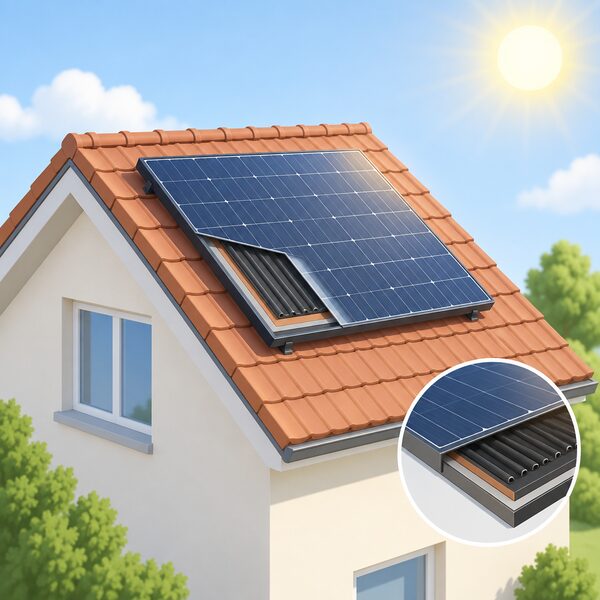
Solar water heating systems gather the sun's free energy and convert it into hot water alongside a conventional water heater2. They do this by retaining the heat from the sun's rays and transferring that heat to a fluid, in order to preheat water2. A PVT collector follows exactly this route; the difference is that the absorber is the back of a PV module rather than a dedicated flat plate or evacuated tube.
The requirement is roof space with good sun exposure9. Official guidance for solar thermal is explicit that the system works alongside the existing water heater rather than replacing it7. That is the honest description of what the heat side delivers: preheated water entering a cylinder, with the boiler or immersion bringing it to temperature when the sun cannot.
The principle is shared with heat pumps in one respect. Ground source heat pumps make use of heat stored in the ground to preheat water for the heating system, which is then heated to the required standard using electricity8. Air source heat pumps operate by absorbing heat from outside air to provide heating10. Water source heat pumps can also be used to augment existing heating systems in the same way as solar panels11. All of these technologies preheat or supplement; none of them removes the need for a final heat source.
For independence, the thermal side is the more valuable half in a gas-heated home, because it displaces purchased fuel directly. It is also the half that is seasonal. In summer a well-sized collector can meet much of the hot water demand; in winter it contributes little, and the cylinder is reheated by the boiler.
PVT and heat pumps: why the two are often paired
The pairing is logical because the two technologies cover each other's weak points. A heat pump delivers heat efficiently but draws electricity, and its output is steady across the year. A PVT array generates electricity in summer and preheats water whenever there is sun. Put together, the array can supply some of the power the heat pump consumes, and the collector can lift the temperature of the water entering the cylinder.
The Boiler Upgrade Scheme supports this combination. Heat pumps that integrate with solar photovoltaic systems are eligible under BUS12. That is an official statement of eligibility, not a performance claim, and it matters because it means a household installing both does not lose access to the grant by doing so.
Independent guidance makes the same connection from the household side: a heat pump transfers heat from outside your home into your home using electricity, and you can use solar panels to power a heat pump, which can lower both your electricity and heating bills13. The mechanism is straightforward: generation on the roof offsets consumption in the heat pump.
There are limits worth stating. The heat pump's own permitted development rights are conditional. Development is permitted only if the installation complies with the Microgeneration Certification Scheme Planning Standards (MCS 020a), and the volume of the outdoor compressor unit must not exceed 1.5 cubic metres on a house or 0.6 cubic metres for a block of flats14. Installations on pitched roofs are not permitted development, and on land within a Conservation Area or World Heritage Site the unit must not be installed on a wall or roof which fronts a highway14.
Efficiency and output: what the combined panel delivers
The headline figure available for hybrid modules is around 20% efficiency3. That is the electrical conversion figure, and it is the number to hold on to when comparing a PVT panel with a standard PV panel: the electricity yield per square metre is in the same territory, because the cells are the same generation of cells.
The thermal output is the additional product, and it is where the combined panel earns its roof area. A dedicated solar thermal collector will generally capture more heat per square metre than the thermal circuit of a hybrid, because it is optimised for heat rather than electricity. The trade-off is that a hybrid gives both outputs from one footprint, which matters on a roof that cannot take two arrays.
Orientation and pitch govern what either side delivers. Panels ideally need to be orientated between south-east and south-west, with a pitch of 30 to 40 degrees15. A roof outside that band will still generate, but the yield per panel falls, and the thermal side is affected in the same way because it depends on the same incident sunlight.
The electrical side is more forgiving than households expect. Solar PV requires only daylight and not direct sunlight to generate electricity, and power can be generated even on a cloudy day6. Official guidance for one local authority area puts it plainly: even on a cloudy day, good generation can be achieved1. Independent guidance agrees that panels can still generate electricity on cloudy days and during winter, though they are more efficient in direct sunlight13.
Cost: what a PVT installation adds over standard solar
The published cost evidence in the UK is for conventional PV, not for PVT, and that distinction matters. Independent testing gives a cost of installation of £7,400 for a 4.6kWp ten-panel system on a 35-degree pitched roof, both for a south-facing roof with no shading and for an east-facing roof with modest shading, as of 1 June 20253. That is the benchmark a PVT quote sits above, because a hybrid installation adds a pump station, a controller and cylinder work.
Where there is no published price for PVT specifically, prices are installer-quoted. There is no reliable published range to quote, and the honest position is that a household should expect the thermal side of the installation to carry its own labour and equipment cost on top of the PV benchmark.
VAT treatment is a live consideration. The combined installation of solar panels and a battery for the storage of power generated from the solar panels is treated as a single supply of the installation of solar panels for VAT purposes5. That single-supply treatment matters for how the invoice is structured. The zero rate on eligible solar panel and battery installations runs until 31 March 2027, after which it moves to 5% from 1 April 20275.
For a household weighing independence, the cost question is really a question about what the money buys. A PVT array buys electricity and preheated water from one roof area. A standard PV array buys electricity only, at a lower installed cost, and can be paired with a diverter to send surplus generation to the cylinder instead. Both routes reduce imported energy; they differ in how much of the roof they use and how much plumbing they add.
Solar Keymark certification: the quality mark to look for
Certification is the part of a PVT purchase that households most often overlook, and it is the part that determines whether the installation is eligible for schemes and permitted development. The evidence available does not establish Solar Keymark as a grant condition in its own right. What it does establish is that government-backed quality schemes operate in this market: TrustMark is described as a government endorsed quality scheme16.
For the electrical and heat pump side, certification is not optional. Development is permitted only if the air source heat pump installation complies with the Microgeneration Certification Scheme Planning Standards (MCS 020a)14. MCS also publishes consumer-facing guidance on solar photovoltaic technology13. A household installing PVT alongside a heat pump should expect the installer to work to those standards, because permitted development depends on it.
The practical advice is to ask what certification a collector carries before signing, and to check the current rules for any grant being used. Certification schemes change, and the conditions attached to a grant are set by the scheme, not by the panel. A collector that carries a recognised mark is easier to place in a scheme and easier to insure.
"In most cases, you don't need planning permission to install solar panels."
Planning permission and where extra rules apply
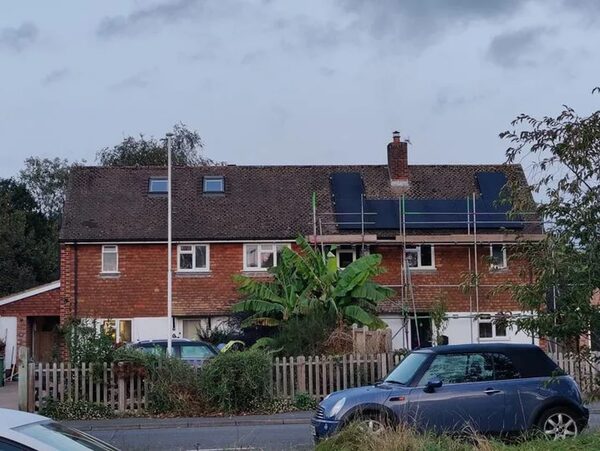
Roof-mounted solar in England benefits from permitted development rights set out in Schedule 2, Part 14 (Renewable energy) of the Town and Country Planning (General Permitted Development) Order 2015, as amended17. In most cases planning permission is not needed to install solar panels13. The position changes with the building and the location.
In a conservation area, planning permission is not usually required to install solar panels on the roof of a house or block of flats, even if the roof faces a highway18. Solar panels fitted to roofs in conservation areas do not require planning permission provided they meet the general rules19. Planning permission is required if panels are fitted to a wall facing a public road, defined in planning terms as a highway, which includes adopted roads but not footpaths, and for panels on flat roofs19.
Article 4 Directions change this. Where one applies, it removes permitted development rights for solar panel installations, so planning permission must be applied for20. Two named examples in the evidence are the Bishopstone Conservation Area and the Swindon Railway Village Area, where Article 4 Directions mean planning permission is required to install solar panels21.
Listed buildings are stricter again. Solar panels on listed buildings need planning permission and listed building consent22. Listed Building Consent is always needed for solar panels on listed properties19. Panels on a building within the grounds of a listed building, or on a site designated as a scheduled monument, are excluded from permitted development23.
| Situation | Position |
|---|---|
| Roof-mounted, no designation | Permitted development, no application23 |
| Conservation area, roof | Not usually required, even facing a highway18 |
| Conservation area, wall facing a highway | Planning permission required18 |
| Flat roof in a conservation area | Planning permission required19 |
| Article 4 Direction area | Permitted development removed, application required20 |
| Listed building | Planning permission and listed building consent22 |
Local rules can add further conditions, and guidance based on national rules may not capture them7. In Northern Ireland the legislative basis differs, with solar PV defined in the Planning (General Permitted Development) Order (Northern Ireland) 201524. Households in Scotland, Wales and Northern Ireland should check the devolved position rather than assume the English rules apply.
Where PVT falls short: winter output and the need for a storage cylinder
The limitations are structural, not fixable by buying a larger panel.
- Winter output falls on both sides. The electrical side keeps generating in daylight, but the thermal side contributes little when the sun is low and the days are short.
- A cylinder is required. The collected heat has nowhere to go without a store, and the cylinder takes space that a PV-only installation does not need.
- The conventional heat source stays. Solar water heating works alongside your conventional water heater, not instead of it7.
- The thermal side competes with the electrical side for roof area. A hybrid gives both outputs from one footprint, but neither output is as large as a dedicated array of the same size.
- The installation has more moving parts than PV alone: a pump, a controller and a fluid circuit that need commissioning and maintenance.
Battery storage is the usual answer to the electrical half of the winter problem. A PV system can be paired with a battery storage system to store excess electricity for when it is most needed13. That addresses the timing mismatch between summer generation and winter demand, but it does not create heat in December.
PVT or separate solar thermal and PV panels: which fits which home
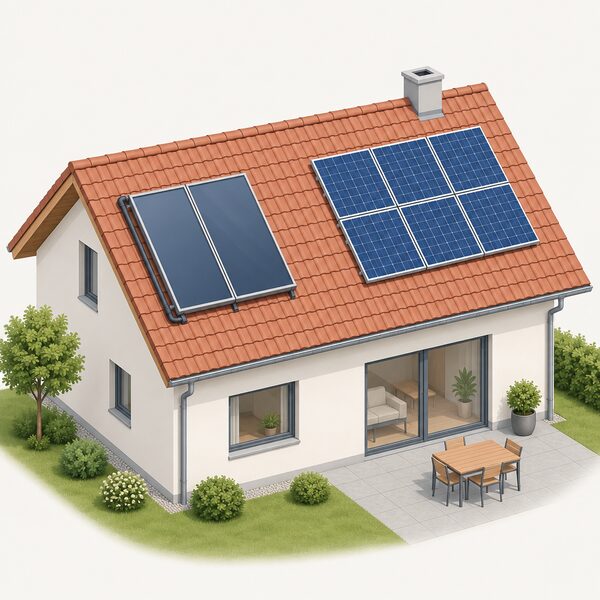
The choice comes down to roof area and how much plumbing the household is willing to add.
Separate arrays suit a home with enough unshaded roof to carry both a PV array and a solar thermal collector. Each technology is then optimised for its own job, and the thermal collector can be sized for the hot water demand without compromising the electrical layout. The cost is roof area and two installations.
A hybrid array suits a roof-constrained home, or one where the visual impact of two separate arrays is a concern. It gives electricity and preheated water from one footprint, at the cost of a thermal output that is generally lower than a dedicated collector.
A PV-only array with a diverter suits a household that wants the simplest installation and is willing to send surplus electricity to the cylinder rather than capturing heat directly. It is the lowest-complexity route and the easiest to extend later.
| Route | Roof area | Outputs | Added complexity |
|---|---|---|---|
| Separate PV and solar thermal | Highest | Electricity and heat, each optimised | Two systems, two installs |
| PVT hybrid | Lowest | Electricity and heat from one aperture | Pump, controller, cylinder |
| PV only with diverter | Moderate | Electricity, surplus to hot water | Diverter and cylinder |
For independence, all three reduce imported energy. None of them removes the household's reliance on the grid for winter electricity or on a boiler or heat pump for winter heat. The choice is about how much roof is available and how much of the hot water load the household wants the sun to carry.
Sources24 cited
- Solar panels, Oxfordshire County Council, 2026-09-17
- Solar thermal water heating, Planning Portal, 2026-09-17
- Are solar panels worth it?, Which?, 2025
- Solar water heating with solar thermal panels, Which?, 2026-05-15
- VAT on energy-saving materials, HM Revenue & Customs, 2026-09-20
- Generating your own energy: solar electricity, Welsh Government, 2018-09
- Generating your own energy: solar water, Welsh Government, 2018-09
- Advice on improving energy efficiency, Eryri National Park Authority, 2022
- ECO4 new measures and products guidance, Ofgem, 2026-03-26
- Air source heat pumps, London Borough of Hammersmith & Fulham, 2026-09-17
- Sustainable home energy solutions, Planning Portal, 2024-09-02
- Boiler Upgrade Scheme guidance for installers, Ofgem, 2026-04-28
- Solar photovoltaic (PV), MCS Certified, 2026-07-30
- Planning permission: air source heat pump, Planning Portal, 2026-09-17
- Insulation, nidirect, 2026-09-17
- Installing solar panels at your home, Brighton & Hove City Council, 2026-09-17
- Solar panels guidance, City of York Council, 2026-09-17
- Solar panels and planning permission, Frome Town Council, 2025-09-02
- Renewable energy: solar panels and heat pumps, Rother District Council, 2026-09-17
- Solar Together, Swindon Borough Council, 2026-09-17
- Solar panels and planning permission, Cornwall Council, 2026-09-17
- Planning permission for solar panels, Bristol City Council, 2026-09-17
- The Planning (General Permitted Development) Order (Northern Ireland) 2015, legislation.gov.uk, 2015
- Solar panel electricity systems, House of Commons Library, 2026-09-17
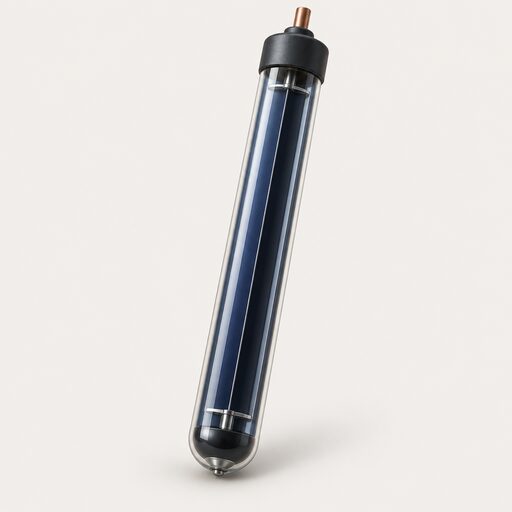 Solar Water Heating CollectorsSolar water heating uses panels on your roof to warm the water in your cylinder, working alongside your boiler rather than replacing it.
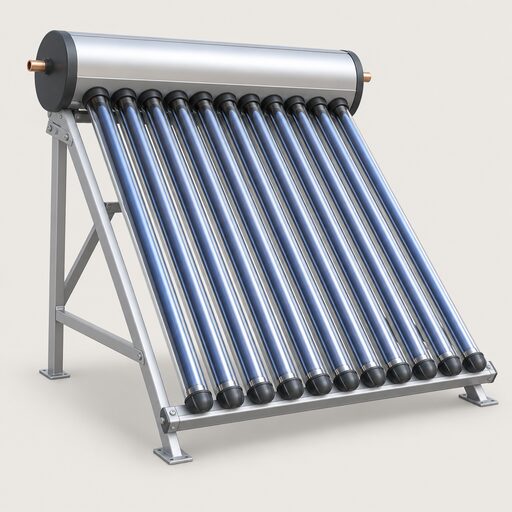 Solar Thermal Water HeatingSolar thermal panels heat your water using the sun, working alongside your boiler rather than replacing it.
 Solar DivertersYour panels often make more electricity than your home needs.
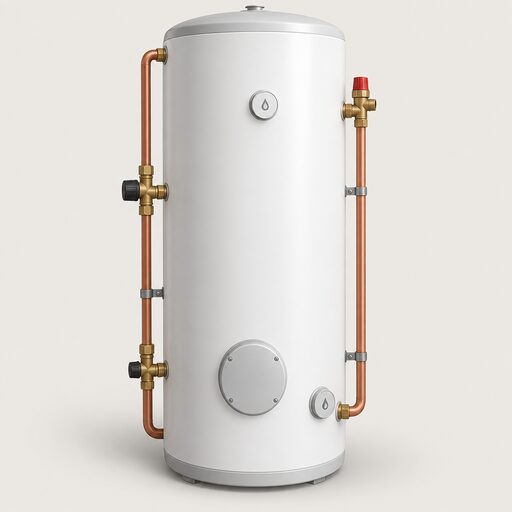 Whole-Home Energy DesignHeating and hot water use more energy than anything else at home, so that choice shapes everything.
 Energy IndependenceA heat pump runs your heating on electricity instead of gas or oil, so how much does that really cut what you pay and how exposed you are when fuel prices jump?
 Infrared Heating and PanelsDo infrared heating panels cost less to run than normal electric heaters, and how much do they add to a bill?