In this guide
Virtu PVT is a hybrid solar collector that produces electricity and heat from the same unit. The maker, Naked Energy, describes it as "the hybrid solar collector that combines solar photovoltaics (PV) and solar thermal technology", and rates each module at 375W electrical and 1375W peak thermal, with the combined absorber generating electricity and heat up to 75°C1. A separate collector in the range, Virtu HOT, is rated at 2000W peak thermal per module and up to 120°C1.
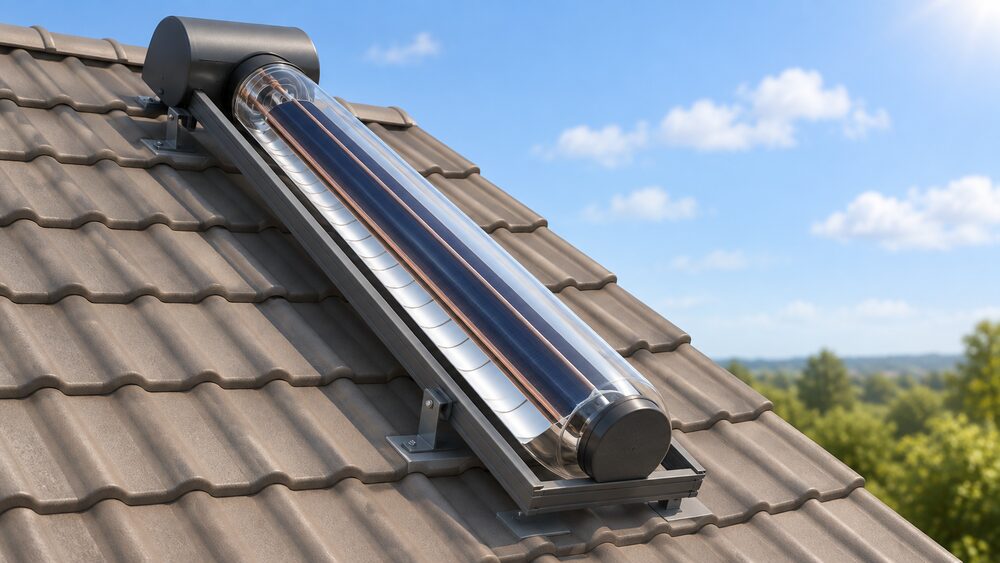
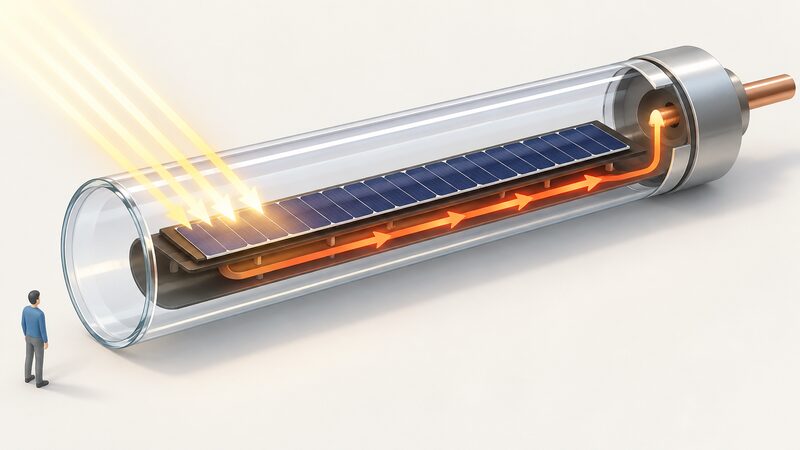
The design is an evacuated borosilicate glass tube holding a high efficiency absorber plate, with integrated reflectors and a bespoke building mounting system. The maker states the collector occupies over 85% of roof area, compared with 50% for conventional solar, and claims 2 to 10 times more carbon savings and 50 to 100% greater financial returns than conventional solar1. Those are the maker's own comparisons, not independently verified figures.
For a household, the appeal is straightforward: one installation producing two useful outputs, where a conventional array produces only electricity. The dependence is equally clear. Virtu is designed for commercial scale, is supplied through trade and commercial channels rather than retail, and its monitoring runs through a manufacturer's platform. It does not remove a home from the gas grid or a heat pump's electricity supply, and it does not replace a backup heat source.
One collector, two outputs: what Virtu PVT actually is
A conventional solar installation makes a choice. A PV array converts sunlight to electricity at a cell efficiency that falls as the module heats up; a solar thermal collector captures heat but produces no power. Virtu PVT puts both functions in the same evacuated tube, so a single roof area serves both loads1.
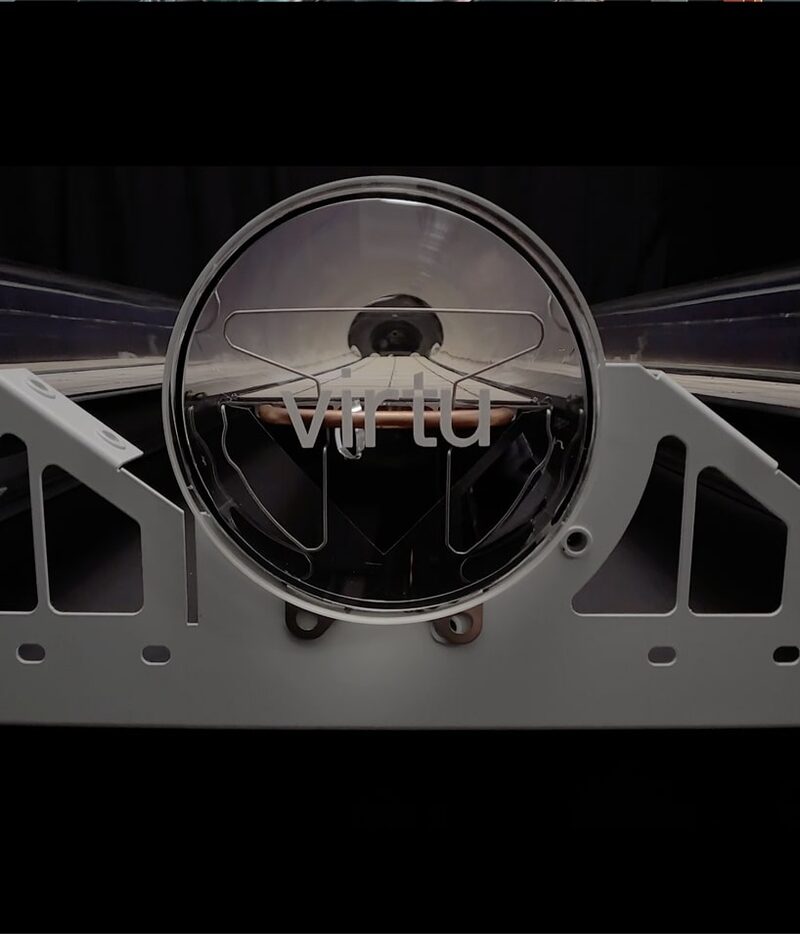
The construction is what makes that possible. Each unit is a borosilicate glass tube with a vacuum, which limits heat loss from the absorber, and the absorber itself is a high efficiency plate that carries both the PV cell and the heat transfer path. Integrated reflectors direct more light onto the absorber, and the maker describes the assembly as simple and modular2. The vacuum tube is the same principle used in evacuated tube solar water heating, which is covered in more detail in solar water heating.
The outputs are quoted per module: 375W electrical and 1375W peak thermal for Virtu PVT, and 2000W peak thermal for Virtu HOT, which is the thermal-only variant1. The word peak matters. These are maximum figures under favourable conditions, not averages across a UK year, and the maker does not publish an annual yield figure for either product.
What the household gets is a collector that pre-heats a system, with the backup heat source topping it up and maintaining it1. That is a different proposition from a system that meets the whole load. It reduces the work the boiler or heat pump has to do rather than replacing it, and the electrical output sits alongside the thermal output rather than being sized to run the house.
Outputs and specifications: 375W electrical, 1375W thermal, up to 75°C
The headline figures are the ones a specifier needs first. Each Virtu PVT module is rated at 375W electrical and 1375W peak thermal, with heat delivered up to 75°C. The Virtu HOT module, which produces heat only, is rated at 2000W peak thermal and up to 120°C1. The electrical side uses a 22% efficient mono-crystalline PERC cell2.
| Specification | Virtu PVT | Virtu HOT |
|---|---|---|
| Electrical output per module | 375W1 | Not stated |
| Peak thermal output per module | 1375W1 | 2000W1 |
| Maximum temperature | up to 75°C1 | up to 120°C1 |
| Cell type | 22% mono-crystalline PERC2 | Not applicable |
| Tube | Borosilicate glass with vacuum2 | Borosilicate glass with vacuum2 |
| Mounting | Roof, façade or ground1 | Roof, façade or ground1 |
The 75°C ceiling is the figure that shapes what the collector can serve. Domestic hot water cylinders typically store water well below that, and a heat pump running at 75°C flow would be at the top of its range rather than its efficient middle. The collector's output temperature is a capability, not a setpoint, and the delivered temperature depends on flow rate, cylinder volume and controls.
The 22% cell figure is a cell-level number, not a module or system efficiency. It sits in the same band as mainstream PERC cells used in conventional modules, which are covered in solar cell technology. The difference with Virtu is not a better cell; it is that the same absorber also carries heat away, which in a conventional module would simply be lost.
Energy density: the maker's claim on area and returns
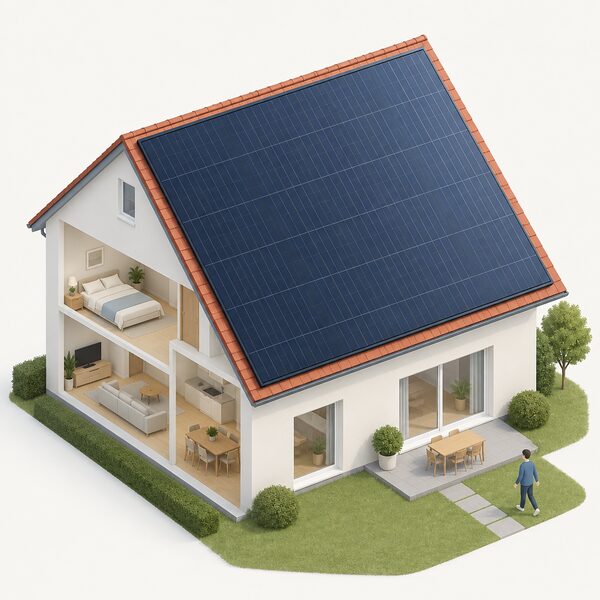
The central commercial argument for PVT is area. A roof has a fixed size, and a conventional PV array leaves gaps between rows and around the array. The maker states that Virtu enables over 85% of roof area to be occupied, compared with 50% for conventional solar, and that this produces 2 to 10 times more carbon savings and 50 to 100% greater financial returns than conventional solar1.
Those are maker figures and should be read as such. They are not independently verified in the material available, and the ranges are wide: a 2 to 10 times carbon saving and a 50 to 100% return improvement span a factor of five and a factor of two respectively. The comparison also depends on what "conventional solar" means in each case, and on whether the thermal output is actually used. Heat that is generated and not drawn off has no financial value.
What is not in dispute is the underlying point about roof area. Solar PV is the dominant technology in the UK by installed capacity, accounting for 79.32% of capacity under the Feed-in Tariff scheme lifetime, with wind at 11.89%3. In the most recent quarterly figures, solar PV accounts for 79.32% of capacity and over 74% of installed capacity in all regions outside the leading one3. A technology that produces two outputs from the same area is competing for a resource that is genuinely constrained.
For a household, the practical question is whether the heat can be used. A home with a cylinder and a boiler or heat pump that draws hot water daily can absorb the thermal output. A home with a combi boiler and no cylinder has nowhere to put it, which is the limit discussed below.
How Virtu works with heat pumps and boilers
The maker states that Virtu can easily be combined with existing heating technology, such as heat pumps or gas boilers, and that it pre-heats the system, which is then topped up and maintained by the backup heat source1. That is the operating model: the collector does the low-grade work, and the boiler or heat pump raises the temperature to what the system needs.
Independent guidance on hybrid controls supports the arrangement. Heat pump and hybrid controls can be fitted to different heat sources and boiler types, including regular or combination boilers5. That matters because it means the collector is not tied to one fuel. A home on gas can add Virtu without changing the boiler, and a home on a heat pump can add it without changing the heat pump.
The pairing with a heat pump is the more natural one on efficiency grounds. A heat pump delivers heating and hot water for a wide range of properties and is described as suitable for most UK homes5. Pre-heating the return or the cylinder with a solar collector reduces the lift the heat pump has to provide, which is where a heat pump's running cost is concentrated. The relationship between the two is set out further in PVT hybrid panels.
With a gas boiler the logic is similar but the fuel is different. The collector reduces gas consumption for hot water, and the boiler remains the source of top-up heat. The household stays on the gas grid and on a gas supplier. That is a reduction in gas use, not independence from gas, and the boiler's own controls and electrical supply remain part of the system.
"it can easily be combined with existing heating technology, such as heat pumps or gas boilers."
Where it fits: roofs, façades and ground mounting
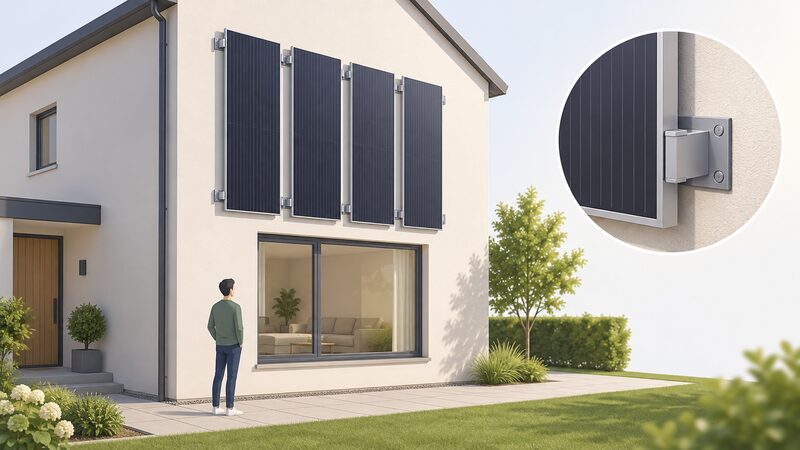
Virtu is described as roof, façade or ground mounted, suitable for flat and pitched roofs and façades, and compatible with any roof type, using a bespoke building mounting system1. That is a wider set of options than a conventional framed module, which is normally mounted on a pitched roof or a flat roof tray.
The façade option is the one that changes what is possible. A wall facing the sun can carry collectors where a roof is shaded, small or already occupied. It also brings a planning condition: planning permission is required if panels are fitted to a wall facing a public road, defined in planning terms as a highway, which includes adopted roads but not footpaths6. That applies to solar panels generally, and a façade-mounted collector falls within it.
Ground mounting is the third route, and it is covered in more detail in ground-mounted solar. For a household with land but a poor roof, it removes the roof constraint entirely, at the cost of a separate structure and the space it occupies.
Installation: low profile, self-ballasting, no roof penetration
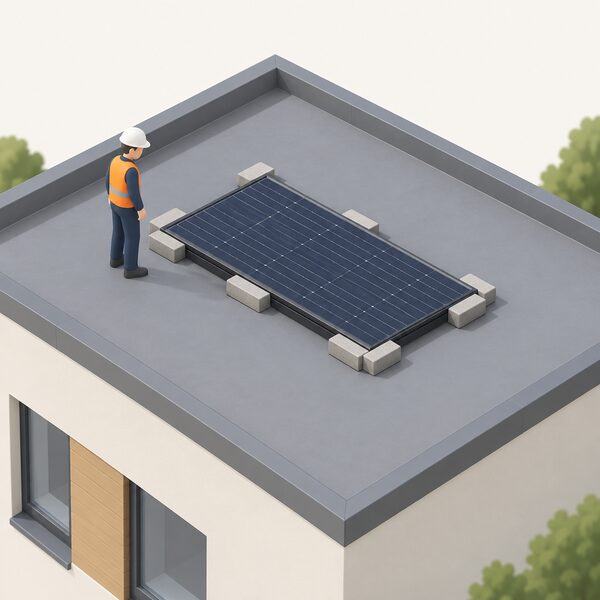
The installation characteristics the maker lists are low profile, self-ballasting, and no need for roof penetration or additional mounting2. Taken together, those three points describe a system that sits on a surface rather than being fixed through it.
Self-ballasting means the mounting is held down by weight rather than by fixings driven into the roof structure. That removes the roof penetration, which is the point most often raised about conventional mounting, and it removes the associated risk of a fixing leaking. It also means the load is spread as ballast rather than concentrated at anchor points, which is a different structural question from a bolted array. Roof loading and building regulations for solar are covered in building regulations.
The low profile matters for two reasons. Visually, a collector that sits close to the surface is less obtrusive than a tilted frame, which can matter in sensitive locations. Practically, a lower profile reduces wind loading, which is part of why a ballasted system can be specified without penetration.
The trade-off is that ballasted mounting is most naturally suited to flat surfaces. On a pitched roof, the same approach is harder to achieve, and the maker's own compatibility statement covers any roof type without specifying how the fixing is achieved in each case. A household should expect the mounting method to be settled at survey rather than assumed from the product description.
Designed for commercial scale: what that means for households
The maker describes Virtu as designed for commercial scale2. That single phrase explains most of what a household will encounter when trying to buy it.
Commercial scale means the product is specified in arrays rather than single units, sold through trade and commercial channels, and supported by a monitoring platform built for portfolio management. It also means the economics are presented in commercial terms: return on investment, carbon savings across a building, and area utilisation across a large roof. The Clarity 24-7 platform is described as an operational management and monitoring platform that maximises return on investment and ensures optimal long-term savings1.
For a household, the practical consequences are these. There is no published retail price, so costs are quoted by the supplier or installer rather than listed. The product is not aimed at a single-roof retrofit in the way a conventional domestic array is. And the reference case for the technology is a building with a large, regular roof area and a steady thermal load, which is a different profile from a three-bedroom house.
That does not make it unsuitable for a home. It means the household is buying into a commercial product line, and should expect the specification, the sales route and the support arrangements to reflect that. The wider category is covered in PVT hybrid panels.
Monitoring, certification and maintained components

Virtu PVT is monitored through Clarity 24-7, the maker's operational management and monitoring platform, which reports on the collector's performance1. That is a manufacturer-run service, so performance data, fault detection and long-term oversight depend on the maker's platform rather than on equipment in the home. It is the same pattern as any app-based monitoring system, and it is a continuing relationship rather than a one-off purchase.
On certification, the maker states that Virtu PVT is the first and only evacuated tube collector worldwide to have passed the rigorous TUV Rhineland testing process2. That is a maker statement about a testing milestone, and it is the kind of claim a buyer would want to see confirmed on the certificate itself.
The wider certification landscape for renewable installations is built on maintained certificates and vetted businesses. Certification schemes operate through testing, audit and certification7, and certificates are maintained and held in force through periodic review and verification8. TrustMark registered businesses are vetted and monitored by scheme providers to ensure they meet standards of technical competence, customer service and trading practices, with regular audits helping to keep standards high11. Continuous validation of installation contracts is also used to ensure consumers are given correct and transparent estimates12.
For a household, the practical reading is that certification and monitoring are both ongoing obligations rather than badges. A certificate that lapses and a platform that stops being supported are both real risks in a product line aimed at commercial buyers. MCS certification for renewable installations is explained in MCS certification.
Planning permission and where the rules bite
Solar installations on residential buildings and land may be permitted development with no need to apply to the council for planning permission13. Solar PV installations are considered permitted development and will generally not need planning permission14, and the installation of solar panels will generally not need planning permission15.
The exceptions are where the rules bite. If an installation does not meet government requirements, planning permission must be applied for13. If permitted development rights do not apply, planning permission will be required16. If the conditions cannot be met, permission must be obtained15. In conservation areas and on listed buildings, permission may be needed14. Panels fitted to a wall facing a public road require permission6. For non-residential listed buildings, planning permission will still be required16.
Where a household believes an installation is lawful under permitted development and wants written confirmation, the recommended route is to submit an application for a lawful development certificate13. That is a formal confirmation rather than an opinion, and it is the sensible step where a façade or ground-mounted installation is proposed in a sensitive location.
The rules differ across the four nations, and the position in each is set out in England, Scotland, Wales and Northern Ireland. Small-scale wind is a different regime again, where planning approval is needed17, and domestic turbines are permitted development only in some cases where specified limits and conditions are met17.
What Virtu PVT does for energy independence, and what it does not
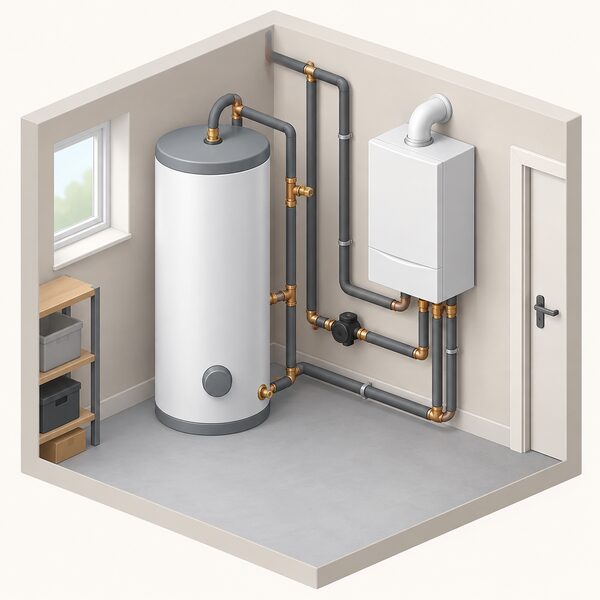
The independence case for Virtu PVT rests on two things. It produces electricity on site, which reduces the volume drawn from a supplier, and it produces heat on site, which reduces the fuel burned in a boiler or the electricity drawn by a heat pump. Because both come from the same absorber, the roof area needed for a given output is smaller than two separate systems would require, and the maker puts that at over 85% utilisation against 50% for conventional solar1.
What remains is substantial. The collector pre-heats; the backup heat source tops up and maintains the system1. A gas boiler keeps the household on the gas grid and on a gas supplier. A heat pump keeps it on electricity, and the collector's own controls and pumps draw power. Monitoring runs through the maker's Clarity 24-7 platform, so performance visibility depends on a manufacturer's service1. The longest-term support arrangements depend on a commercial product line rather than a domestic one.
The honest summary is that Virtu PVT reduces the quantity of energy a home buys and the carbon attached to it. It does not make a home self-sustaining, and it is not designed to. The wider question of what solar can and cannot do for a household's independence is covered in solar and energy independence, and the category as a whole in PVT hybrid panels.
Sources17 cited
- Virtu hybrid solar collector, Naked Energy, 2026
- Virtu PVT product page, Naked Energy, 2026
- Feed-in Tariffs quarterly report, issue 63, Ofgem, 2026
- Feed-in Tariffs quarterly report, issue 57, Ofgem, 2024
- Hybrid heat pumps guidance, HHIC, 2026
- Planning and solar, Frome Town Council, 2025
- MCS microgeneration certification, BSI, 2026
- Delivering high quality insulation across Scotland, Energy Saving Trust, 2026
- Heat pump certificate 041-K032-03.03, Heat Pump Keymark, 2026
- Heat pump certificate 041-K002-78, Heat Pump Keymark, 2025
- Consumer protection, TrustMark, 2026
- Improving renewable energy installation standards, EPVS, 2026
- Guidance on retrofitting homes: solar panels, Lambeth Council, 2026
- Buying solar panels and battery storage, Birmingham City Council, 2026
- Solar photovoltaic panels, Bromley Council, 2026
- Solar panels guidance, Islington Council, 2026
- Householder planning consent, Planning Portal, 2026