

In this guide
Permitted development rights are the mechanism that lets most household energy equipment go in without a planning application. Solar panels and equipment installed on domestic buildings and land are usually considered permitted development, meaning planning permission is not required, though there are a few exceptions1. Domestic heat pumps benefit from permitted development rights, so in most cases no planning permission is required to install them, subject to certain limitations and conditions2. The rights are not a blanket exemption: most are subject to conditions and limitations, and they can be withdrawn property by property or area by area1.
The legal basis in England is the Town and Country Planning (General Permitted Development) (England) Order 2015, which sets out classes of development for which a grant of planning permission is automatically given, provided the stated conditions and exemptions are met1. That Order is the principal order, and its latest available version is a revised text3. Northern Ireland has its own equivalent, the Planning (General Permitted Development) Order (Northern Ireland) 2015, made under sections 32 and 247(6) of the Planning Act (Northern Ireland) 20115. Scotland and Wales operate their own regimes, and guidance written for England says so explicitly: the policy in Wales may differ6.
What this means for a household's energy independence is straightforward. Planning consent is one of the few remaining gatekeepers between a home and its own generation or heating plant, and permitted development removes that gatekeeper for the common technologies. What it does not remove is everything else: building regulations, the Party Wall Act, environmental consents, and any Article 4 direction that has stripped the rights from a particular street or building7.
What permitted development rights are, and where the legal basis comes from
Permitted development is a deceptively simple idea. You can do certain types of development without applying for planning permission, and that is what the term means11. Some building projects do not need planning permission at all, and this is known as permitted development rights2. The purpose is proportionality: the rights allow householders to improve and extend their homes without applying for planning permission where an application would be out of proportion with the impact of the works7.
The mechanism is a general grant. The Town and Country Planning (General Permitted Development) (England) Order 2015 sets out classes of development for which a grant of planning permission is automatically given, provided that the stated conditions and exemptions are met1. It is the principal order for England, and it carries the instrument number 2015 No. 5964. Householder permitted development rights specifically are set out in Part 1 of Schedule 2 to that Order as amended7. The Order also contains provisions on prior approval applications and the time periods for deciding them3.
Whether a particular project falls inside the grant depends on the property, not just the technology. The type of property and the use of the property both bear on whether permitted development applies12. Whether the property is a listed building is a further determinant12. Rights may also have been removed from certain sites or properties, for example by conditions attached to a previous permission13. Access ramps are one of the everyday examples of works that can fall under the rights13.
Northern Ireland's Order does the same job in a different jurisdiction. It grants planning permission for certain classes of development described in the Schedule to the Order, and the consolidation that produced it was stated not to alter the policy principle of permitted development5. It came into operation on 1 April 2015 and was subject to the negative resolution procedure5. The transfer of planning powers to district councils formed part of the context5.
The practical consequence is that permitted development is a default, not a guarantee. It applies unless something removes it, and the things that remove it are specific and checkable.
Which home energy technologies are covered

The coverage is broader than many householders assume, and it spans generation, heating and vehicle charging.
Heat pumps. There are three types of domestic heat pump where permitted development rights apply: air source, ground source and water source2. The rights permit the installation, alteration or replacement of a ground source heat pump or water source heat pump within the curtilage of a dwellinghouse2. Local guidance describes the same scope for microgeneration ground source and water source heat pumps within the curtilage of a dwellinghouse or a block of flats14.
Solar. Solar panels and equipment installed on domestic buildings and land are usually considered permitted development, meaning planning permission is not required, but there are a few exceptions15. Stand-alone solar equipment, meaning panels not on a building but within the grounds of a house or block of flats, has its own class, and under the rules prior to the 2026 amendment only the first stand alone solar installation will be permitted development, with further installations requiring planning permission8.
Wind. Stand-alone wind turbines have a dedicated permitted development class, and the guidance for it relates to the planning regime for England, with the policy in Wales possibly differing6. Welsh guidance on wind turbines exists separately16.
Biomass and flues. Biomass-fuelled appliances have their own class17. Flues, chimneys and soil and vent pipes are covered by separate Welsh guidance18.
Electric vehicle chargers. Domestic electric vehicle chargers sit within permitted development, though this may change if you live in a conservation area or listed building19. Permitted development rights do not extend to on-street parking, and in those circumstances a planning application is required19.
Microgeneration on agricultural land. Part 43 of Schedule 2 to the 1995 Order confers permitted development rights for the installation of specified types of microgeneration equipment on or within buildings on agricultural or forestry land, in particular to house hydro-turbines, to house biomass boilers and anaerobic digestion systems20.
How the rules differ across England, Wales and Northern Ireland
The four nations do not share a single Order, and the differences are structural rather than cosmetic.
England's regime rests on the Town and Country Planning (General Permitted Development) (England) Order 20154. Guidance written for England states plainly that it applies to England, and that the policy in Wales may differ7. That caveat appears on the solar, wind and heat pump pages alike, which is a signal that a householder in Wales cannot rely on an English class description.
Wales has its own instruments and its own guidance. The Welsh Government publishes dedicated pages on planning permission for heat pumps, wind turbines, external walls, and flues, chimneys and soil and vent pipes21. The Planning Portal's Welsh section sets out permitted development rights for Wales separately, and notes that in some areas of the country, known generally as designated areas, permitted development rights are more restricted23. A Welsh statutory instrument, the Town and Country Planning (General Permitted Development) (Wales) Order 2012, provides part of the Welsh legal basis20.
Northern Ireland's Order is the Planning (General Permitted Development) Order (Northern Ireland) 2015, statutory rule 2015 No. 705. It introduced a wide range of permitted development changes including small-scale domestic and commercial renewable energy projects5. It applies only to Northern Ireland5.
Scotland operates a separate development rights regime, with its own guidance and consultation material on householder permitted development24.
| Nation | Principal instrument | Notes |
|---|---|---|
| England | Town and Country Planning (General Permitted Development) (England) Order 2015, 2015 No. 5964 | Guidance applies to England; Wales may differ7 |
| Wales | Town and Country Planning (General Permitted Development) (Wales) Order 201220 | Separate Welsh guidance for heat pumps, wind, flues21 |
| Northern Ireland | Planning (General Permitted Development) Order (Northern Ireland) 2015, 2015 No. 705 | Covers small-scale domestic and commercial renewables5 |
| Scotland | Separate development rights regime24 | Own householder guidance and consultation material24 |
The practical point for a household is that the class number quoted on an English website may have no counterpart in the nation where the work is being done. The nation's own guidance is the starting point.
Article 4 directions: when permitted development rights are removed
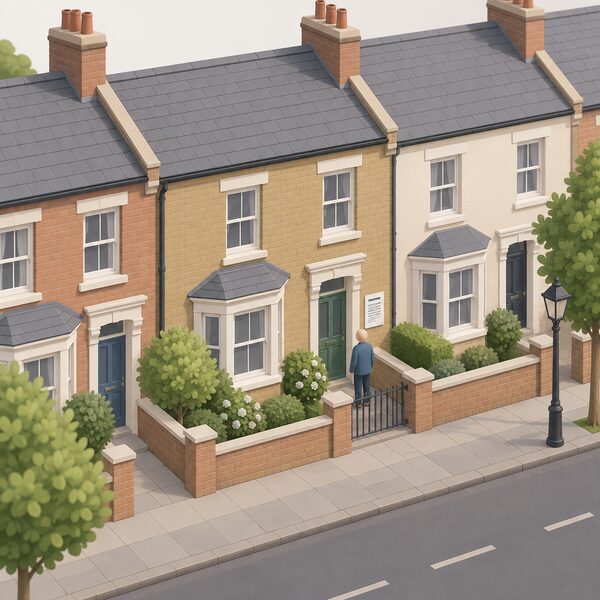
A local planning authority is allowed to remove permitted development rights in some or all of its area by issuing what is known as an Article 4 direction7. The council can take away these permitted development rights using an Article 4 direction25. The effect is that permission is also required where an Article 4 direction has been put in place26.
Directions are not arbitrary. They are made when the character of an area of acknowledged importance would be threatened, and they are most common in conservation areas1. A direction can apply to a property or to an area11. Where rights have been removed by condition or by the issuing of an Article 4 direction, a planning application is required for works that normally would not need one15.
The timing rules matter. Article 4 directions cannot prevent development which has been commenced, or which has already been carried out10. They remove rights with temporary or permanent effect, so a direction may be time-limited or indefinite10. A householder who wants certainty can apply for a lawful development certificate, which is the formal route for having the council check whether proposed works need planning permission and whether plans are permitted development27.
"Permitted development rights may also have been removed by an 'Article 4' direction."
For energy independence, an Article 4 direction is the clearest example of a planning constraint that overrides the technology. A heat pump or a solar array that would be permitted development a street away may need a full application here, with the cost, delay and uncertainty that brings. The rights are a default that a local authority can switch off, and the switch is not visible from the technology itself.
Conservation areas and other places where the rules fall short
In some areas of the country, known generally as designated areas, permitted development rights are more restricted1. The designated areas include conservation areas, national parks and areas of outstanding natural beauty23. A property's rights can be affected if it is in a conservation area or is a statutory listed building27.
The position in conservation areas is not a blanket ban. Permitted development rights also apply to conservation areas, with the exception of those covered by an Article 4 direction14. But the conditions tighten. For solar equipment on a flat roof on Article 2(3) land, the developer must apply to the local planning authority for prior approval28. Stand-alone solar equipment in a conservation area, closer to the highway than the nearest part of the house or flats, also requires a prior approval application8. In a conservation area, a householder must apply to the local authority for prior approval, submitting a form that ensures the limits set out in legislation are met9.
Wind has a harder exclusion. Permitted development rights do not apply to a turbine within the curtilage of a listed building or within a site designated as a scheduled monument, or on designated land other than conservation areas6.
Electric vehicle charging follows the same pattern: the permitted development position may change if the property is in a conservation area or a listed building19. External insulation rights can vary or be removed in areas like conservation zones and by Article 4 directions, so it is best to check before proceeding29. For flues, if the building is listed or in a designated area, even where permitted development rights are enjoyed, it is advisable to check with the local planning authority before a flue is fitted17.
The independence implication is that designation converts an automatic right into a discretionary process. The household still may be able to install the equipment, but the timetable and the outcome are no longer in its hands alone.
Prior approval and conditions: what the Order still requires

Permitted development is not the same as no process. Some classes operate through prior approval, where the authority must be notified and can consider specific matters before work begins.
Solar equipment on domestic premises is one such case: installation or alteration can be completed under permitted development rights subject to prior approval30. The same applies to solar equipment on non-domestic premises30. Certain developments for agriculture or forestry have specific permitted development rights that require a prior approval application30. Electronic communications networks require a prior approval application for installation, alteration and replacement of relevant apparatus, ancillary development and temporary placement of movable apparatus30.
The fee for prior approval for mounting solar equipment is £2409. Some standalone solar equipment on Article 2(3) land may need a prior approval application, and if needed this must be before work begins31. Demolition normally has permitted development rights, but before beginning, approval to demolish must be obtained2.
Conditions attach to the rights themselves. Most permitted development rights are subject to conditions and limitations1. In Northern Ireland the Order is explicit that applicants still have to make sure their development complies with any environmental and other consents that may be needed, including building regulations5. In England the same principle is stated as a general rule: permitted development rights do not remove requirements for permissions or consents under other regimes such as building regulations and the Party Wall Act7.
The distinction between permitted development and prior approval is worth holding onto. Permitted development needs no application or notification to the planning service if the project qualifies27. Prior approval needs a submission, a decision period, and in some cases a fee, before work can start. A household planning an installation should establish which of the two applies before ordering equipment.
How to check your own property before installing
The check is a sequence, and it is worth running in order because each step can change the answer.
- Establish the nation and the applicable Order. England, Wales, Scotland and Northern Ireland each have their own regime, and English guidance states that Welsh policy may differ7.
- Establish the property type and use, since both bear on whether permitted development applies12.
- Establish whether the property is a listed building, which is a determinant in its own right12.
- Establish whether the property sits in a designated area such as a conservation area, national park or area of outstanding natural beauty, where rights are more restricted23.
- Establish whether an Article 4 direction applies to the property or the area, since a direction removes rights and makes a planning application necessary11.
- Establish whether conditions attached to a previous permission have removed the rights, which is a recognised route by which they are lost13.
- Establish whether the specific technology sits under permitted development or under prior approval, and if the latter, submit before work begins30.
Councils advise seeking confirmation from the planning department before any purchase or installation, to check whether planning permission is required26. A lawful development certificate is the formal mechanism: it allows the council to check whether proposed works need planning permission and whether plans are permitted development27. Pre-application advice is the less formal route, allowing contact between the local planning authority and the applicant before a planning application is submitted32. Local authorities may charge a fee for pre-application advice, and the cost varies with the level of information required32. Some local planning authorities also publish free technical advice notes covering particular installations, available on the authority's website32.
Your solicitor should have informed you whether an Article 4 direction exists when you purchased your property, but that is not a substitute for checking with the authority22. The council's own records are the definitive source for what is in force on a given property.

Where the rules are heading: amendments, reviews and coming changes
The regime is under active revision, and the direction of travel is toward wider rights for household energy equipment.
A government consultation on permitted development rights opened on 13 February 2024 and closed on 9 April 2024, covering changes to support householder development, building upwards, demolition and rebuild, and the installation of electric vehicle charge points and air source heat pumps33. It contained proposed changes to the Town and Country Planning (General Permitted Development) (England) Order 2015, as amended33. A parallel consultation on changes to various permitted development rights is recorded as closed, with feedback being analysed, and it consulted on changes to the demolition and rebuild right to increase the scope of buildings that can benefit from the right and to allow for a larger rebuild footprint34.
The stand-alone solar class has already moved. Under the rules prior to the 2026 amendment, only the first stand alone solar installation will be permitted development, with further installations requiring planning permission8. The rules following the 2026 amendment add a prior approval requirement where solar equipment is to be installed on Article 2(3) land within 5 metres of the boundary of the curtilage8.
For a household, the practical reading is that the rights are likely to widen for heat pumps and electric vehicle charging, and to become more procedural for stand-alone solar. Anyone planning work near a boundary or in a sensitive location should check the current position rather than rely on a description written before the amendments.
Sources34 cited
- Permitted development rights, Planning Portal, 2026-09-17
- When you don't need planning permission, GOV.UK, 2026-09-17
- The Town and Country Planning (General Permitted Development) (England) Order 2015: contents, legislation.gov.uk, 2026-09-17
- The Town and Country Planning (General Permitted Development) (England) Order 2015, legislation.gov.uk, 2026-09-17
- The Planning (General Permitted Development) Order (Northern Ireland) 2015, legislation.gov.uk, 2015-02-25
- Planning permission: stand alone wind turbines, Planning Portal, 2026-09-17
- Permitted development rights for householders: technical guidance, GOV.UK, 2026-09-17
- Stand-alone solar equipment within the grounds of a house or a block of flats, Planning Portal, 2026-09-17
- Do I need planning permission to add air conditioning to my home, Planning Portal, 2026-09-17
- When is permission required, GOV.UK, 2014-03-06
- Permitted development rights, Cornwall Council, 2026-09-17
- Find out if you need planning permission, Buckinghamshire Council, 2026-09-17
- Permitted development rights, Dumfries and Galloway Council, 2026-09-17
- Renewable energy, e.g. solar panels and heat pumps, Rother District Council, 2026-09-17
- Do I need planning permission, Cornwall Council, 2026-09-09
- Planning permission: wind turbines, Welsh Government, 2026-09-17
- Biomass fuelled appliances, Planning Portal, 2026-09-17
- Planning permission: flue, chimney or soil and vent pipe, Welsh Government, 2026-09-17
- Electric vehicle chargers, Planning Portal, 2026
- The Town and Country Planning (General Permitted Development) (Wales) Order 2012, legislation.gov.uk, 2026-09-17
- Planning permission: heat pumps, Welsh Government, 2026-09-17
- Planning permission: external walls, Welsh Government, 2026-09-17
- Permitted development rights, Planning Portal, 2026
- Householder permitted development rights guidance, Scottish Government, 2026-09-17
- What is permitted development, Wandsworth Borough Council, 2026-09-17
- Solar panels, East Herts Council, 2026-09-17
- Permitted development, London Borough of Redbridge, 2026-09-17
- Solar equipment mounted on a house or a block of flats or on a building, Planning Portal, 2026-09-17
- Do I need planning permission for external insulation, Planning Portal, 2026-09-17
- Prior approval, Planning Portal, 2026-09-17
- Solar panels and planning permission, Cornwall Council, 2026-09-17
- Pre-planning advice, Planning Portal, 2026
- Permitted development rights consultation: changes to support householder development, Ministry of Housing, Communities and Local Government, 2026-09-17
- Changes to various permitted development rights: consultation, GOV.UK, 2024-02-13
 Permitted Development by HomeCan you put up solar panels or a heat pump without asking the council?
 Home Energy Planning ScotlandDo you need planning permission for solar panels or a heat pump in Scotland?
 Home Energy Planning Rules in NIDo you need planning permission for solar panels or a heat pump in Northern Ireland?
 Listed Buildings and AreasYour home is listed or sits in a conservation area, so do you need permission before adding solar panels, insulation or a heat pump?
 Planning Permission in EnglandDo you need planning permission for an air source heat pump?
 Building Regulations EnglandAdding a heat pump, solar panels or an extension usually needs building regulations approval, and it is separate from planning permission.