
In this guide
The Zero Emission Vehicle (ZEV) mandate is a regulatory requirement on vehicle manufacturers, not a ban on drivers. It sets a minimum share of each brand's new car and van registrations in the UK that must be zero emission, rising year by year. The headline targets run from 22% for cars and 10% for vans in 2024 to 80% for cars and 70% for vans in 2030, reaching 100% in 20351. The mandate has been implemented in legislation and applies across the UK3.
The policy is the first commitment of its type in Europe, announced in the 2021 Net Zero Strategy3. It operates as a trading scheme under the Climate Change Act 2008, with allowances that manufacturers can bank, borrow and trade1. A manufacturer that falls short after using those flexibilities faces a compliance payment of £12,000 for every zero emission car and £15,000 for every zero emission van it is short of the target, reduced from £15,000 and £18,000 respectively1.
For a household, the mandate changes what is available to buy new, not what may be owned or driven. It does not require anyone to scrap a petrol or diesel car, install a charger or change supplier. Its practical effect at home is indirect: more electric vehicles on UK roads means more demand for charging, including from domestic supplies, and a slow shift in household transport fuel from imported petrol and diesel towards grid electricity.
What the mandate actually requires
The mandate is a supply-side rule. It obliges manufacturers to ensure that a minimum proportion of the new cars and vans they register in the UK are zero emission at the exhaust, meaning they emit no greenhouse gases from the tailpipe2. It does not restrict what a household may buy secondhand, keep, drive or fuel.
The targets are annual and apply to each manufacturer's own registrations, not to the market as a whole. The trajectory starts at 22% for cars and 10% for vans in 2024 and rises to 80% and 70% in 2030, reaching 100% in 20351. The Society of Motor Manufacturers and Traders (SMMT) sets out the near-term steps as 33% this year, 38% next year and 52% by 2028, with the regulated 2030 target of 80% for cars and 70% for vans4.
Manufacturers also have to meet targets for the petrol and diesel vehicles they sell, ensuring those have lower emissions6. Credits are earned for each zero emission vehicle sold, and manufacturers that exceed the legal target can bank, borrow or trade credits to manage compliance6. Those that fail to meet annual targets can face penalties6.
The first year produced a mixed result. Cars achieved a compliance rate of 24.3%, exceeding the 22% target, while vans reached 9.3%, just below the 10% target1. Energy UK, an industry body, notes that to date the UK market has complied with the ZEV Mandate6.
The targets, year by year
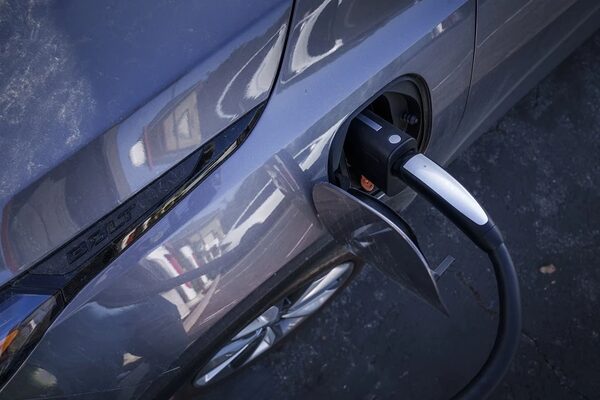
The annual headline targets are the spine of the policy, and they are the figures a household is most likely to encounter in reporting. They apply per manufacturer and per vehicle type, so cars and vans run on separate trajectories.
| Year | New car target | New van target |
|---|---|---|
| 2024 | 22%1 | 10%1 |
| 2025 | 28%7 | 24% (2026)8 |
| 2026 | 33%4 | 24%8 |
| 2027 | 38%4 | |
| 2028 | 52%4 | |
| 2030 | 80%4 | 70%4 |
| 2035 | 100%1 | 100%1 |
The van trajectory is the harder one in practice. The 2026 van target of 24% was described as less than half met by the market at one point, and the 2024 outturn of 9.3% fell just below the 10% target8. The SMMT has repeatedly reported that van electrification lags cars, with the 2024 outlook for electric vans halved to just 20,000 units, a 5.7% market share against a 2024 target of 10%9.
The car side has run closer to target. The 2024 market was expected to deliver 457,000 electric cars, 23.3% of all new car registrations, but the latest outlook at the time showed 94,000 fewer, totalling just 363,000, an 18.7% market share9. That gap between expectation and outturn is the recurring theme in the SMMT's reporting: the mandate sets the requirement, and the market decides how close the industry gets.
How the flexibilities work
The mandate is not a hard cliff for each manufacturer. It is a trading scheme under the Climate Change Act 2008, and it carries a set of mechanisms that let manufacturers manage compliance across years and across vehicle types1.
- Banking. ZEV allowances can be banked, subject to limits and restrictions, and banked allowances expire after three years1.
- Borrowing. Borrowing was allowed between 2024 and 2026, with all debts repaid by 2027 under the original design1. The government later extended the existing borrowing mechanism out to 2029, with all borrowed allowances to be repaid by 2030 at the latest, for both cars and vans1.
- Trading. Manufacturers can trade allowances. Open pooling is not allowed, but multiple connected legal entities can be treated as one manufacturer per vehicle brand, which is a form of closed pooling1.
- Transfer between schemes. Excess car ZEV mandate allowances are transferable to the non-ZEV car CO2 regulation, and excess van allowances to the non-ZEV van regulation only1.
- Exchange rates. The exchange rate for ZEV car to ZEV van is 0.4, and for ZEV van to ZEV car it is 21.
The government has also proposed changes to the flexibilities. It committed to maintaining the headline trajectories for both the car and van mandates, while proposing an increase and extension to non-ZEV to ZEV CO2 transfer finishing in 2029, and an increase and extension to borrowing for cars and vans finishing in 20291. It suggested review points in 2026 and again in 20291. It also stated it will consider models that seek to incentivise vehicles with bidirectional charging capabilities1.
The borrowing caps tighten over time. Under the original design, manufacturers could borrow 75% of the car target in 2024 (16.5% of total car sales), reducing to 50% (14% of car sales) in 2025 and 25% (8.25% of car sales) in 20261. The equivalent van values were 7.5% in 2024, 9% in 2025 and 5.5% in 20261. The proposed caps for later years are 10% for both cars and vans in 2029, and 0% for cars in 20301.
What a manufacturer pays for missing the target

The compliance payment is the backstop, applied only after a manufacturer has used the other routes. The government proposed reducing the existing levels to £12,000 for every zero emission car and £15,000 for every zero emission van a manufacturer falls short of the target, down from £15,000 and £18,000 respectively1.
The scale of the exposure is significant. The SMMT estimated that manufacturers missing their targets faced a potential £1.8 billion bill for compliance for cars alone, assuming each manufacturer pays a compliance fee of £15,000 per vehicle9. That figure predates the proposed reduction to £12,000, so the current exposure would be lower if the reduced rate applies.
There is also a levy on any allowance deficit. A 3.5% levy on any allowance deficit is charged annually, and the government proposed removing the 3.5% compounding interest rates on allowance transfers1.
"Reduce existing compliance payment levels to £12,000 for every zero emission car manufacturers fall short of the target"
The payment is a cost on the manufacturer, not on the buyer. Nothing in the mandate passes a compliance payment to a household, and no rule requires a dealer or a driver to make up a shortfall. The practical effect on a household is indirect: a manufacturer facing a large compliance bill has a commercial reason to discount electric models or to restrict the supply of petrol and diesel ones, which shapes what appears in showrooms.
Small volume makers and specialist vehicles
The mandate carves out smaller manufacturers and rewards certain vehicle types, which matters for the shape of the market a household sees.
Manufacturers registering fewer than 2,500 vehicles per annum qualify for the small volume derogation, and from 2024 to 2029 these manufacturers will not be required to meet any ZEV targets1. Instead they are allocated allowances for 100% of their car or van sales1. The condition attached is firm: they will still have to end the sale of new petrol and diesel cars and vans by 2030, and be zero emission at the exhaust by 20351.
Specialist and accessible vehicles attract additional credits. Selling ZEVs to car clubs and selling zero emission wheelchair accessible vehicles (WAVs) are situations qualifying for additional credits, with ZEV WAVs making it 1.5 credits in total1. Any ZEV special purpose vehicles are rewarded with a credit in the ZEV mandate, and all SPVs are exempt from annual targets, but for a time-limited period1.
Multi-stage vehicles are in scope, and the government also proposes that these vehicles be in scope1. The limited type-approval routes in scope are GB Small Series, National Small Series and Individual Vehicle Approval1.
There is also a minimum specification for what counts as a qualifying zero emission vehicle. The eligibility criteria include a minimum of 3 year vehicle warranty and an 8 year/100,000 mile battery/drivetrain warranty, whichever comes first, with a commitment to replace the battery if it drops below 70% capacity within that window1. That is a condition on the manufacturer's product, not a rule a household must enforce, but it sets a floor for the warranty terms a buyer can expect on a qualifying model.
The phase-out dates for petrol and diesel
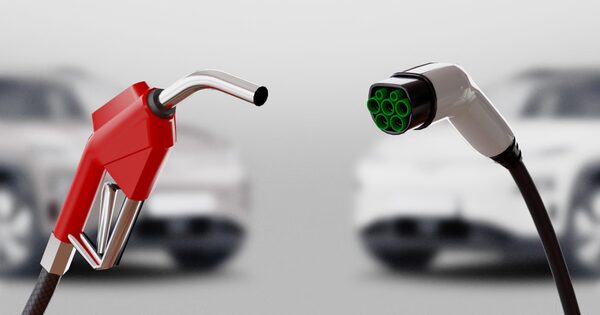
The mandate and the phase-out dates are related but distinct. The mandate sets annual sales shares; the phase-out sets the end date for new conventional petrol and diesel sales.
The original plan was designed to transform the UK's new car and van markets by 20305. That date was pushed back to 2035, and the SMMT noted that the new 2035 deadline made consumer support more vital than ever5. The mandate itself runs until reaching 100% in 20351.
The 2030 milestone survives inside the mandate as a target rather than an end date. The government stated that 80% of new cars sold by 2030 will be zero emission, and the SMMT describes the regulated 2030 target of 80% for cars and 70% for vans as on track4. The SMMT also reported that the mandate requires ZEVs to comprise half of each manufacturer's new registrations within five years, and 80% by 203013.
For vans, the picture is more stretched. The 2026 van target of 24% is well below the car trajectory, and the 2030 van target of 70% leaves a longer tail of non-zero emission vans than cars8.
Where the market actually stands
The mandate sets the requirement; the market decides the outturn, and the gap between the two is the story of the policy so far.
The first year, 2024, delivered a car compliance rate of 24.3% against a 22% target, and a van compliance rate of 9.3% against a 10% target1. The SMMT's own reporting through 2024 and 2025 tracked a market that repeatedly fell short of the mandated share. In May 2025 the market was still seven percentage points off the 28% mandated by regulation14. In July 2025 it remained short of the 28% required by the ZEV Mandate15. In August 2025 the market was described as significantly short of the 33% required by the mandate10.
The pattern is consistent: record electric market share alongside weak private demand. The SMMT reported a record EV market share but weak private demand frustrating ambition, and separately that the market was well below the 33% dictated by the mandate16. It also reported that the UK's zero emission sales target would next year require BEVs to comprise one in three new car registrations17.
The SMMT has been explicit that the constraint is on the demand side, not the supply side. It reported that industry investment drives new EV milestones and that the UK's EV choice gets bigger still, while also warning that alarm bells are ringing as the EV transition hits the auto industry8. It called for consumer support to convert electric sceptics to EV benefits, and stated that consumer support is key to a faster and fairer EV transition as the market enters a new phase19.
"well below the 33% dictated by the Zero Emission Vehicle Mandate"
The government has responded with a consultation on the ZEV Mandate, which the SMMT welcomed21. The government has also stated it is committed to maintaining the headline trajectories for both the car and van mandates1. The framework is therefore settled in legislation but open to adjustment, and the flexibilities are the part most likely to move.
Does the mandate apply across the UK?

Yes. The mandate applies across the UK, and the consultation that designed it was published jointly by the UK Government, the Scottish Government, the Welsh Government and the Department of Infrastructure for Northern Ireland2.
That joint publication matters because it signals that the four administrations agreed the framework together, even though vehicle regulation and CO2 emissions standards are largely reserved matters. The Welsh Government published the consultation on the ZEV mandate and CO2 emissions regulation for new cars and vans in the UK, and the territorial extent is stated as across the UK2.
The practical consequence is that a manufacturer selling cars or vans in Cardiff, Glasgow, Belfast or London faces the same annual targets and the same compliance rules. There is no separate Scottish, Welsh or Northern Irish ZEV target, and no devolved variation in the compliance payment. Where the nations differ is in adjacent policy, such as building standards and home energy rules, which are devolved and covered elsewhere on this site, including energy and buildings policy in Scotland and energy and buildings policy in Wales.
The mandate's targets run between 2024 and 2030, with the final step to 100% in 20352. The consultation was first published on 30 March 2023 and last updated on 24 May 20232. The mandate came into force on 1 January 2024, with ZEV targets requiring manufacturers to meet annual shares of their UK new car and van sales1.
What it means for household energy independence
The mandate's relevance to a household is about fuel, not about obligation. It shifts the new vehicle market away from petrol and diesel, which are refined from imported crude oil, towards electricity, which can be generated domestically. That is a genuine reduction in exposure to global oil markets, and it is the policy's main contribution to energy sovereignty.
What it does not do is remove dependence. A household charging an electric vehicle at home remains dependent on the electricity grid, on a licensed supplier and on the network that delivers the power. The mandate changes the fuel a new car uses; it does not make the household self-sufficient. The same is true of the charging infrastructure: the government has called for evidence on solar carparks and EV charging, which points to a future in which generation and charging are co-located, but that is a proposal, not a settled rule22.
There is also a cost signal on the horizon. At Autumn Budget 2025 the government announced the introduction of electric Vehicle Excise Duty (eVED), a new mileage-based charge for electric vehicles and plug-in hybrid vehicles, which will take effect from April 202823. The SMMT reported plans to introduce a pence per mile electric Vehicle Excise Duty even if it will be from 202824. That is a change to the running cost of an electric vehicle, and it is a reminder that the fiscal treatment of electric motoring is not fixed.
For a household already generating its own electricity, the mandate is indirectly supportive: more electric vehicles on the road increases the value of home generation and of smart charging, and the government has said it will consider models that seek to incentivise vehicles with bidirectional charging capabilities1. For a household without generation, the mandate means a new car is more likely to be electric, and the fuel bill moves from the forecourt to the electricity bill. The dependence on a supplier and the grid remains, and the policy does not change that.
Sources24 cited
- Government response and outcome to technical consultation on zero emission vehicle mandate policy design, UK Government, 2025
- Consultation on a zero emission vehicle (ZEV) mandate and CO2 emissions regulation for new cars and vans in the UK, Welsh Government, 2023
- UK's path to net zero set out in landmark strategy, UK Government, 2021
- EV mandate debate needs facts not anti-industry fiction, Society of Motor Manufacturers and Traders, 2026
- Why the new 2035 deadline makes consumer support more vital than ever, Society of Motor Manufacturers and Traders, 2023
- Energy UK explains why is the zero emission vehicle (ZEV) mandate important, Energy UK, 2026
- New car market falls in April as tax changes bite, Society of Motor Manufacturers and Traders, 2025
- Industry investment drives new EV milestone, Society of Motor Manufacturers and Traders, 2026
- Alarm bells ringing as EV transition hits auto industry, Society of Motor Manufacturers and Traders, 2024
- Two millionth electric car registered as market rebounds strongly from tax changes, Society of Motor Manufacturers and Traders, 2026
- EV growth should not be mistaken for mission accomplished, Society of Motor Manufacturers and Traders, 2026
- CCC assessment of recent announcements and developments on net zero, Climate Change Committee, 2023
- September new car market grows but motorist support needed to reverse falling private consumer EV demand, Society of Motor Manufacturers and Traders, 2023
- New car market returns to growth as discounting lifts EV registrations, Society of Motor Manufacturers and Traders, 2025
- New car registrations stall in July but recovery expected, Society of Motor Manufacturers and Traders, 2025
- Record EV market share but weak private demand frustrates ambition, Society of Motor Manufacturers and Traders, 2026
- UK new car market breaches two million as almost one in four buyers go electric, Society of Motor Manufacturers and Traders, 2026
- UK's EV choice gets bigger still, Society of Motor Manufacturers and Traders, 2025
- Incentives needed to convert electric sceptics to EV benefits, Society of Motor Manufacturers and Traders, 2025
- Consumer support key to faster and fairer EV transition as market enters new phase, Society of Motor Manufacturers and Traders, 2026
- SMMT statement on announcement of ZEV mandate consultation, Society of Motor Manufacturers and Traders, 2026
- Solar carparks and EV charging call for evidence, UK Government, 2025
- Consultation on the introduction of electric Vehicle Excise Duty (eVED), UK Government, 2025
- A disquieting month for UK's new car market, Society of Motor Manufacturers and Traders, 2025
 EPC Regulations and ReformSelling or renting out a home means you need an Energy Performance Certificate.
 Will Gas Boilers Be Banned?What has actually been legislated, proposed or dropped on gas and oil boiler phase-out across the four UK nations, and the difference between new build rules and replacement in existing homes.
 Closed Energy PoliciesIf a scheme you used has closed, do you still get paid?
 Storing Generator Fuel at HomeHow much petrol can you legally keep at home, and where should you put it?
 Environmental ClaimsIf a solar panel is advertised as carbon neutral or made with recycled materials, how do you know the claim is true?
 Panel RecyclingWhat actually happens to a solar panel when it stops working, and what can a household do with one?