In this guide
Solar panels are the most common domestic renewable energy source in the UK, and more than 1.5 million homes now have them1. Every one of those panels will eventually stop producing useful power, and the question of what happens next is arriving faster than most households expect. The short answer is that a retired panel is electrical waste, not general rubbish, and the UK has only a handful of solar panel disposal companies beginning to recycle using crushing techniques3.
The published figures on recovery are more modest than the headline claims. UK crushing techniques recover materials which mostly cannot be used in a new panel without further purification, while more advanced techniques being developed in France can recover an estimated more than 65% of a panel's mass3. There is one factory in the UK that states it is approved by the Environment Agency for this work, and it accepts panels from rooftop arrays and utility-scale farms4.
For a household, the practical position is this: removal is normally arranged rather than dropped off, the cost is quoted by whoever does the work, and the paperwork that matters is the contract you already hold, not a certificate issued at the end. What follows sets out the routes, the rules and the limits.
Why panels in the UK eventually need recycling
Solar deployment in the UK is not slowing. The government's solar roadmap sets out that the solar supply chain must manage a significant increase in turnover if it is to deliver 45 to 47GW by 2030, and the 2030 estimate assumes up to 47 GW of installed solar PV capacity is deployed by 20303. Solar Energy UK's own projections run further: by 2035 it estimates 90GW of solar capacity, 50GW of storage, almost 43,000 jobs and £3.5bn per year in the sector7.
Every gigawatt of that is panels, and panels have a working life. The consequence is a waste stream that grows on a lag of roughly two to three decades behind installation. The UK's early mass deployment is now old enough to start feeding it.
Two policy decisions sharpen the picture. The UK Government is set to include requirements in its Future Homes Standard for most new builds in England to have solar panels, and separately it has committed to ensuring solar panels are fitted on new homes in England as standard8. Plug-in solar panels became legal across Great Britain, with the government stating they would be available in shops within months10. More panels on more buildings means more panels to remove later.
There is also a materials argument. A solar panel system reduces a household's carbon footprint by around 34 tonnes over its life, and the UK's solar deployment plays a crucial role in reducing emissions from the power sector while improving air quality12. Recycling is what keeps that environmental case intact at the end of the chain rather than letting it leak away into landfill.
How many panels reach end of life: the forecast tonnage
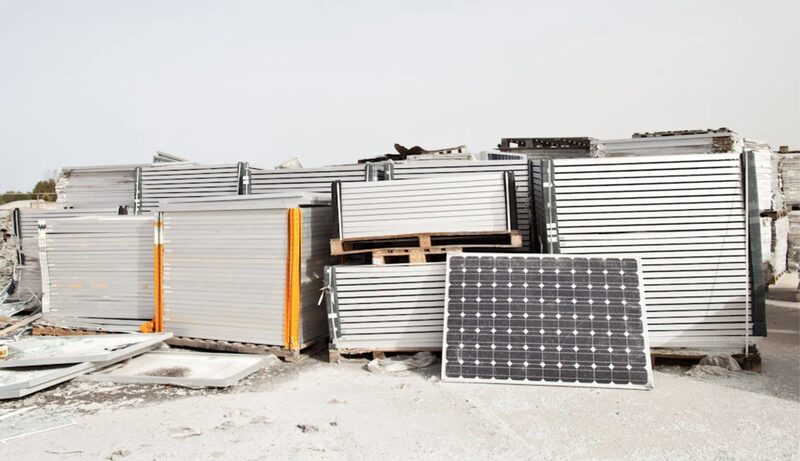
The tonnage figure that circulates for UK end-of-life panels is around 30,000 tonnes. It is a forecast, not a measurement, and it follows directly from the deployment numbers above: capacity installed in the 2010s reaches retirement in the 2030s and 2040s.
The scale of what is coming is set by the installation base. More than 1.5 million homes in the UK now have solar panels, and over 1.3 million homes in the UK are generating electricity from solar panels2. A typical 4kW solar panel system, made up of 8 to 12 panels, can generate approximately 3,400 kWh annually under UK conditions5. Multiply that panel count across the installed base and the eventual waste volume is large, even before the commercial and utility-scale fleets are counted.
Where those panels are matters for logistics. Solar panels are suitable for anywhere in the UK, and the regional concentration of installations shapes where disposal capacity will be needed first15. The UK's solar capacity is not evenly spread, and neither is the small number of firms able to process it.
The forecast also has to be read against the fact that the overwhelming majority of panels installed in the UK are imported16. The UK is a destination for modules made elsewhere, which means the country inherits the end-of-life obligation for products whose manufacturers are largely overseas. That is the structural reason the UK's recycling capacity has lagged: the installation market grew faster than the disposal market.
What happens to a retired panel: the UKSOL recycling process
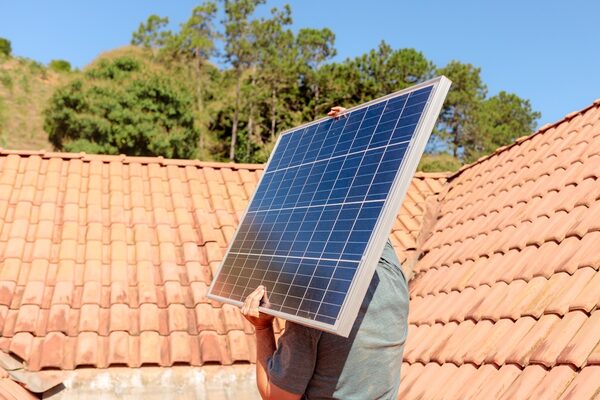
The one UK facility with a published process description is UKSOL's solar module recycling operation. The company states that it transforms retired solar panels into reusable raw materials, and that panels are converted into reusable raw materials that can be manufactured into new products and given a second life4. Its stated purpose is stopping harmful and toxic materials going to landfill4.
The facility accepts panels from a rooftop array or a utility-scale farm, so it is not restricted to domestic volumes4. UKSOL also runs a solar farm service, replacing aging or faulty legacy solar panels with high-quality modules, and states it handles failing poly or mono panels4. That service is aimed at the commercial end of the market, but it describes the same physical problem a household faces: a panel that has failed or degraded has to be taken down, transported and processed.
The process itself, as described, is a materials recovery route rather than a refurbishment route. Panels go in as whole units and come out as raw materials for new products. What the published description does not give is a per-panel yield, a turnaround time or a household drop-off point.
"we transform retired solar panels into reusable raw materials"
For a household, the significance is that a UK processing route exists at all. Before this kind of facility, the realistic options for a retired panel were storage, export or landfill. The existence of an approved UK factory changes the default, though it does not by itself make removal cheap or convenient.
How much of a panel can actually be recycled
This is where the published evidence is more cautious than the marketing. The UK's current approach uses crushing techniques, and the government's own roadmap states that this recovers materials which mostly cannot be used in a new panel without further purification3. In other words, the material is recovered but not returned to panel manufacturing.
France is developing more advanced techniques which can recover an estimated more than 65% of a panel's mass3. That is the highest recovery figure in the published evidence, and it is an estimate for a process at small scale, not a UK operating result.
The frequently repeated claim that roughly 90% of a panel's materials can be recycled is not supported by the figures available here. The supported position is a two-tier one: crushing recovers material of limited further use, and advanced techniques reach an estimated more than 65% of mass. A household should treat any higher figure as unverified.
What is in a panel explains why recovery is difficult. A module is a laminate of glass, encapsulant, cells, connectors and a frame, bonded so that separating the layers cleanly is the hard part. Crushing breaks the laminate apart; it does not sort it into clean streams. That is the technical reason the recovery rate is what it is.
Where to recycle: the UK disposal companies
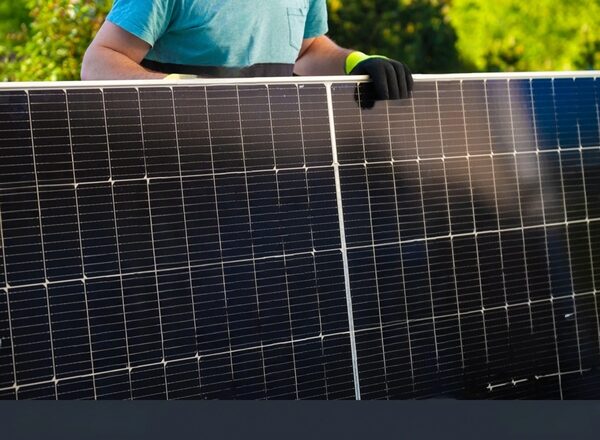
Currently the UK has a handful of solar panel disposal companies beginning to recycle using crushing techniques3. That is the whole of the domestic processing sector as described in the government's roadmap, and it is the single most important practical fact on this page.
The consequence for a household is that recycling is arranged, not visited. There is no network of household waste recycling centres taking panels as a matter of course, and no kerbside route. In practice a retired panel is handled as part of a removal job: the contractor takes it away, and it enters the commercial waste stream.
For a system being replaced or removed for roof work, the removal and the disposal are usually the same operation. The relevant page on this site is removing and refitting solar panels for roof repairs, which covers the practical sequence. For a system that has simply reached the end of its life, the question of whether to replace it at all is covered in how do I know if my solar panels need replacing.
The geography of the sector matters too. With a handful of companies, transport distance is a real part of the cost and the carbon footprint of recycling. A panel removed in the south west and processed in another region has travelled before it is processed. That is a limitation of the current UK position, not a reason to landfill.
UKSOL: the only Environment Agency-approved recycling facility
UKSOL operates a solar module recycling facility that it states is the only factory approved by the Environment Agency in the UK4. That is a maker's statement about its own facility, and it is the only such claim in the published evidence.
The company behind it is UKSOL UK Ltd, described as the British solar PV module producer based in Gerrards Cross, Buckinghamshire17. Its modules are produced in Spain, and UKSOL solar panel stock is available to supply to solar installers nationally17. The company's modules have been used in grant funded ECO 3 social solar housing projects in the United Kingdom, and are supported with a 30-year British warranty17.
UKSOL's own panels appear in the ECO4 innovation measures. The system consists of MCS certified monocrystalline PV modules, and the product was approved under the innovation measure on 26/09/202318. That is the official record of the product's approval, separate from the company's own description of its recycling arm.
For a household, the practical relevance is narrow but real: there is at least one UK destination that describes itself as approved for this waste stream, and it accepts both rooftop and utility-scale panels4. Whether a given installer uses it is a commercial matter between the household and the contractor.
What recycling costs: £20 to £40 per panel
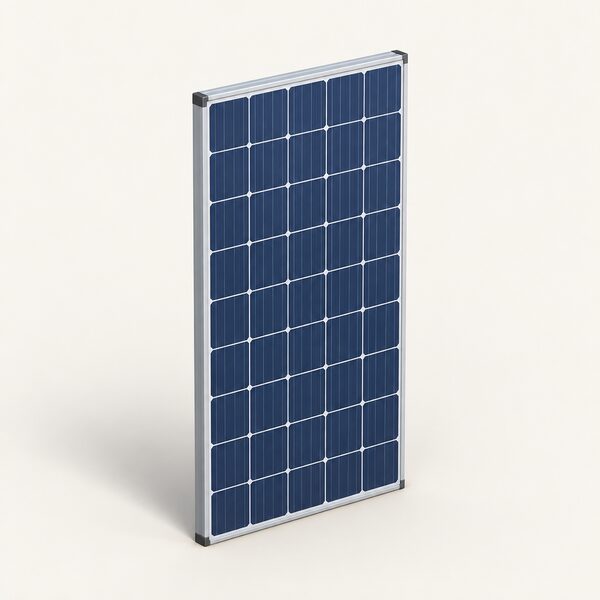
The published cost range for solar panel recycling in the UK is £20 to £40 per panel. That is the figure to work from when budgeting for a removal, and it sits alongside the other per-panel costs a household may meet.
For context on the wider cost picture, professional cleaning runs at £4 to £15 per panel, or roughly £80 to £150 for a typical home installation of 10 to 16 panels2. A full solar panel installation costs on average £4,600 to £8,000 among the suppliers Uswitch works with, and EDF Energy installs solar panels starting from £5,77520. Against those numbers, recycling at £20 to £40 per panel is a small fraction of the original installation cost, but it is not nothing across a 10 to 16 panel array.
Removal labour, scaffolding and transport are separate from the per-panel recycling charge and vary with roof height, access and distance to the processing facility. No published price exists for these services, so they are installer-quoted.
Waste regulations: UK and EU compliance for panel disposal
Solar panel recycling in the UK operates under waste regulations that the processing sector describes as meeting UK and EU compliance for waste regulations4. The relevant framework for the equipment itself is the Waste Electrical and Electronic Equipment Regulations.
That framework is visible in the product rules. For plug-in solar devices, the decommissioning and disposal information supplied with the product must be compliant with the Waste Electrical and Electronic Equipment Regulations22. In other words, the obligation to tell an owner how to dispose of the equipment properly starts at the point of sale, not at the point of disposal.
There is a separate regulatory layer for the electrical work. Building regulations apply to the associated electrical works when panels are installed or removed23. That is the reason a removal is not a purely manual job: the DC side has to be isolated and made safe, which is covered in solar PV safety: fire risk, DC isolation and surge protection.
Planning rules are a further consideration for anyone replacing a system. Planning permission is not normally needed for solar panels on domestic roofs, with some exceptions, as they are covered by permitted development rights in England24. In many cases, even in conservation areas, homes can have solar panels without requiring planning permission from the Council under permitted development25. If you live in a listed building, a conservation area or World Heritage Site, or other designated area, you may need planning permission for solar panels2. Where a household wants written confirmation, the guidance is to submit an application for a lawful development certificate26. The full position is set out in solar panel planning permission in England.
Who pays, and what the contract says

For a system a household owns outright, the cost of removal and recycling falls on the owner as part of the work. There is no published UK scheme that transfers that cost to the manufacturer or the installer for domestic systems.
The position is different where the system was never owned by the household. For free solar PV systems, the documentation that matters is the one that states who will be responsible for removing the system at the end of its useful life27. That is the clause to find before signing anything, and it is the clause that determines whether a household faces a removal bill years later.
"who will be responsible for removing the system at the end of its useful life"
This is the single most useful piece of paperwork in the whole subject. A household that took a free system should locate that clause now rather than at the point of removal, because the answer determines the cost.
For an owned system, the practical sequence is: the contractor quotes for removal, the panels leave as part of that job, and the recycling charge appears within the quote. The £20 to £40 per panel figure is the part of that quote attributable to processing.
The Solar Stewardship Initiative: two standards for traceability
The Solar Stewardship Initiative was established in 2018 by UK and EU solar trade associations, and the SSI has developed two standards28. Its stated purpose is to tackle forced labour in the supply chain for raw materials12.
The scheme's relevance to UK buyers is indirect but growing. The traceability system will be used by GB Energy to ensure that it avoids tainted products12. That means the standards shape which modules enter UK projects, rather than what happens to a module at the end of its life.
The UK's dependence on imported modules is the reason the scheme exists in this form. The overwhelming majority of panels installed in the UK are imported, and there is potential for producing transformers, inverters and other components domestically16. Traceability is the mechanism by which a buyer can know where the materials in an imported panel came from.
The government's own roadmap supports this direction. Action 33 commits the UK Government to explore opportunities to support the development of standards for next generation solar panels and emerging applications, and Action 30 commits it to consider the case to further support companies looking to scale up production of innovative solar technologies, processes and balance of system components3.
For a household, the SSI is not something to act on directly. It is a supply-chain assurance scheme, and its value is that it makes the provenance of a panel checkable rather than assumed.
Environmental Product Declarations: what an EPD tells you
An Environmental Product Declaration is a published statement of a product's environmental impact over its life, verified against a standard. For solar panels, it is the document that turns a carbon claim into a checkable figure.
The UK's own carbon footprint figures for solar PV show why the detail matters. In South West England, the carbon intensity of solar PV is 21 gCO2e/kWh for CdTe and 54 gCO2e/kWh for cSi29. The two technologies differ by more than a factor of two on the same measure in the same region, and official guidance from 2014 gives the CdTe figure as both 21 gCO2e/kWh and 28 gCO2e/kWh29. That conflict is unresolved.
Verification against a recognised standard is what makes an EPD usable. In 2012, Trina Solar obtained the Carbon Footprint Verification for the company's solar PV modules from British Standards Institution based on the requirements of the PAS 2050:2011 standard29. That is the model: an independent body, a named standard, a dated verification.
For a household, an EPD is not a document to read cover to cover. It is the evidence behind a manufacturer's environmental claim, and its value is that it can be checked. Where a maker publishes one, the claim has a basis; where a maker makes a carbon claim without one, the claim is unverified.
What recycling means for a household's energy independence
Recycling does not make a home more energy independent. It is what happens after the independence has been delivered and the equipment has failed. The distinction matters because it sets the limits honestly.
A solar system gives a household a measure of independence from the grid for the electricity it generates, and the export figures show what that is worth in practice. During a heatwave week, British households with solar panels sold 4.6kWh of electricity back to the grid per household per day, earning 55p, and an average usage household with solar and seven panels exported £3.83 in a week against a total of £21.2730. Those are real but modest numbers, and they describe a household still firmly connected to the grid and to a supplier.
The dependence that remains is structural. The overwhelming majority of panels installed in the UK are imported, so the hardware comes from overseas supply chains16. The traceability system behind those imports is to be used by GB Energy to avoid tainted products12. And at the end of life, the household depends on a UK processing sector that currently amounts to a handful of companies3.
Recycling is therefore the last link in a chain of dependencies, not an escape from them. What it does is keep the materials in circulation and keep the environmental case for solar intact. The UK's solar deployment plays a crucial role in reducing emissions from the power sector while improving air quality, and integrating solar power into the national grid has become a model for other nations13. Recycling is what stops that record being undermined by the waste it leaves behind.
For the wider picture of what a system does and does not deliver, see solar panels and household energy independence.
Sources30 cited
- Are home renewables right for you?, Energy Saving Trust, 2025-12-11
- Solar panel myths: five common concerns about solar PV debunked, Which?, 2026-06-09
- UK Solar Roadmap, Department for Energy Security and Net Zero, 2025-06
- Solar panel recycling, UKSOL, 2026-09-17
- Integrating solar panels with EV charging, Uswitch, 2025-07-02
- Job estimates for solar PV by 2030: methodology note, GOV.UK, 2030
- Britain benefits from the summer sun as July smashes solar generation record, Solar Energy UK, 2035
- Buying a house with solar panels, Energy Saving Trust, 2026-08-13
- Britain continues to break clean power records, GOV.UK, 2026-05-28
- First regional solar breakdown as installations hit record highs, GOV.UK, 2026-08-27
- Heating Oil Support, Hansard, 2026-03-16
- Ignore the doubters: the UK is seizing the solar opportunity, Solar Energy UK, 2025-07-01
- The UK's clean energy leadership: insights from the World Energy Outlook 2024, Solar Energy UK, 2024-11-29
- UK Solar PV Strategy: Part 1, roadmap to a brighter future, GOV.UK, 2013-10-08
- UK solar panel hotspots, Energy Saving Trust, 2026-08-13
- Solar carparks and EV charging: call for evidence, GOV.UK, 2025-05
- Smith Bros becomes UKSOL's distributor for the United Kingdom, Flexi-Orb, 2021-07-13
- ECO4 Innovation Approved Innovation Measures v1.6, Ofgem, 2024-01
- ECO4 Innovation Approved Innovation Measures v1.10, Ofgem, 2024-07
- Are solar panels worth it?, Uswitch, 2026-09-16
- Solar panel costs, Which?, 2026-08-03
- Plug-in solar interim product specification, GOV.UK, 2026-06
- Solar panels guidance, City of York Council, 2026-09-17
- Solar panels and permitted development, London Borough of Richmond upon Thames, 2026-07-06
- Solar panels, London Borough of Hammersmith and Fulham, 2026-09-17
- Guidance on retrofitting homes: solar panels, London Borough of Lambeth, 2026-09-17
- Information regarding free solar PV systems, RECC, 2026-09-17
- Solar PV and the energy transition, Parliamentary Office of Science and Technology, 2026-06-25
- UK Solar PV Strategy: Part 2, Department of Energy and Climate Change, 2014-04
- Here comes the sums: Britain's homes with solar panels reap £40 million during the heatwave, Uswitch, 2026-06-28
 The Full Solar Panels GuideHow much do solar panels cost, and what could they save you each year?
 Warranties and DegradationHow long do solar panels actually last, and what do the warranties really cover?
 Solar Export PaymentsIf you have solar panels, how do you actually get paid for the electricity you send back to the grid?
 Environmental ClaimsIf a solar panel is advertised as carbon neutral or made with recycled materials, how do you know the claim is true?
 Solar Panel CostsA typical UK home pays somewhere between four and eleven thousand pounds for solar panels fitted, with most landing in the middle.
 Recycling and DisposalWhat happens to a domestic storage battery at end of life, who takes it back, the transport and handling rules for damaged lithium units, and the difference between recycling, refurbishment and second-life reuse.