In this guide
Around 80% of the solar panels available in the UK are made in China, and the same figure is given for the share of panels sold here1. Heat pumps are a different story: around 35% of the roughly 125,000 heat pumps sold in the UK in 2025 were made here, with approximately 45,000 units manufactured in the UK that year3. The two product categories that most often sit on a British home therefore arrive from opposite ends of the supply chain, and the country on the box tells you less than the certification and support arrangements behind it.
The distinction that matters most is between where a product is assembled and where its components are made. A module assembled in Malaysia may contain cells from elsewhere; an inverter branded in one country may be built in another. LONGi's main manufacturing facilities are based across China, with factories in Kuching, Malaysia and in Vietnam, and its headquarters are in Yunnan, China4. JinkoSolar has manufacturing facilities in China, Malaysia, Vietnam and the United States5. SolarEdge products are manufactured in various locations around the world including Israel, China and the USA6. REC solar panels are made in Singapore7.
For a household, manufacturing location bears on three practical things: how quickly a replacement or spare part can reach the UK, which certification regimes the product already satisfies, and how exposed the supply chain is to a single country or region. It does not, on its own, determine quality. What follows sets out where the main brands are made, how European production fits in, and how to read a country-of-origin claim on a datasheet.
Where solar panel and heat pump brands are made: the short answer
The headline split is stark and well evidenced. Around 80% of panels available in the UK are made in China, a figure that appears in independent product reviews of two separate brands1. That concentration is the single most important fact about the solar supply chain as it reaches British roofs, and it explains why country-of-origin questions cluster around panels rather than around inverters or mounting.
Heat pumps are more distributed. Between 60 and 70 percent of heat pumps sold in Europe are domestically produced, and the European Heat Pump Association puts the figure at up to 73%, adding that this is set to increase8. Only 15% of all heat pumps sold globally are manufactured in Europe8. Within the UK specifically, around 35% of the roughly 125,000 heat pumps sold in 2025 were made here, with approximately 45,000 manufactured in the UK that year, a record sales year representing a 27% increase over 20243. An earlier official consultation put the UK manufacturing share at around one third, with two thirds imported6.
The direction of travel is stated in policy. The Warm Homes Plan sets a target that at least 70% of heat pumps installed in the UK are made in the UK10. A separate official consultation predicts the market share will grow to around one half of heat pumps manufactured in the UK by 20306. Those are targets and predictions rather than current output, and the gap between the 35% achieved in 2025 and the 70% target is the measure of how much reshoring remains.
For a household, the practical reading is this. A solar array is almost certainly built around Chinese modules, whatever the brand on the datasheet, and that is a mature, price-competitive supply chain rather than a warning sign. A heat pump is more likely than a panel to have been made in Europe, and increasingly in the UK. Neither fact tells you how well the equipment will perform, but both shape what happens if something fails in year eight.
Solar panel makers: LONGi and BISOL
LONGi and BISOL sit at opposite ends of the manufacturing map, and comparing them shows how little a brand name tells you about origin.
LONGi's main manufacturing facilities are based across China, and it also has factories in Kuching, Malaysia and in Vietnam. Its headquarters are in Yunnan, China4. That is a Chinese manufacturer with Southeast Asian assembly capacity, which is a common structure in the sector because it spreads production across tariff and logistics regimes. On performance, independent survey work found that many owners with LONGi solar panels reported they had produced more electricity than expected, including on cloudy days4. That is owner-reported satisfaction rather than a measured output figure, and it should be read as such.
BISOL states that its modules have been designed, crafted, and certified within the European Union, and describes its PV modules as designed and manufactured in Europe and 100% made in Europe11. Those are the maker's own claims about its own products, and they are the strongest European-origin statement in this category. The company reported in June 2022 that the Certisolis certificate enables it to participate in more projects and tenders in France where a low carbon footprint for solar panels is required, which shows how a European manufacturing base converts into access to procurement that Asian-made modules may not reach.
JinkoSolar, for completeness, has manufacturing facilities in China, Malaysia, Vietnam and the United States5. SolarEdge products are manufactured in various locations around the world including Israel, China and the USA6. REC solar panels are made in Singapore7.
The pattern across these makers is that a single brand rarely equals a single country. A household reading a datasheet should expect to find an assembly location, a company headquarters and a cell origin that may all differ, and should treat the assembly location as the least informative of the three.
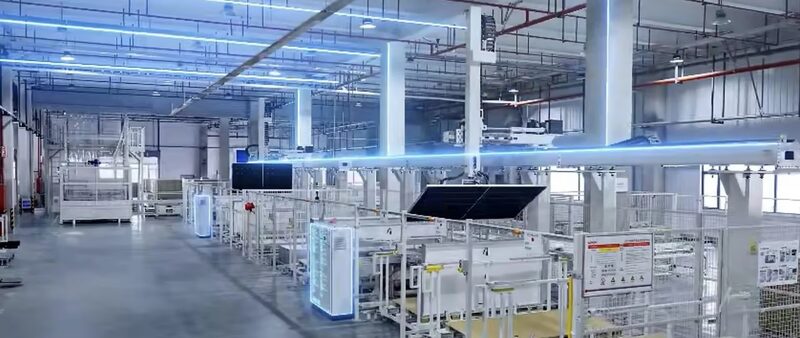
BISOL: European manufacturing and the Spectrum coloured module range
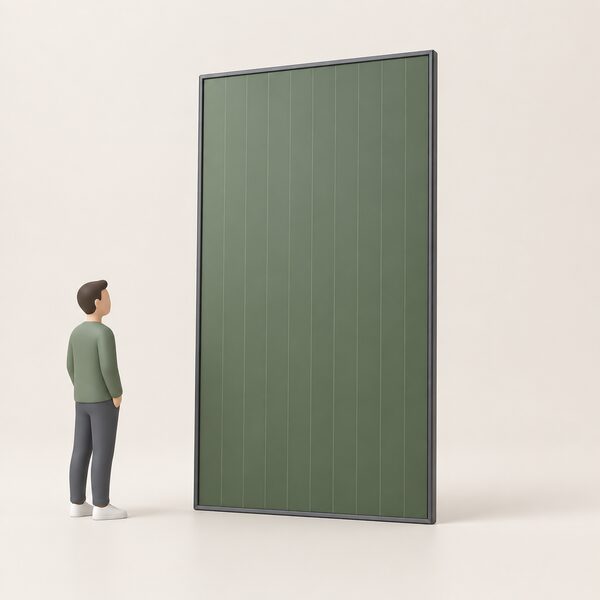
BISOL is the clearest European-origin case among the makers covered here. The company states that its modules have been designed, crafted, and certified within the European Union, and that its PV modules are 100% made in Europe11. It introduced its Spectrum coloured photovoltaic module range in a post dated 20 November 2025, aimed at projects where design is an important consideration11. Coloured modules are a niche rather than a mainstream product, and they exist because some planning contexts and some households will not accept a standard blue-black array.
The wider European picture supports the idea that European manufacturing is a real category rather than a marketing line. There are now over 300 manufacturing sites in Europe for heat pumps9, and between 60 and 70 percent of heat pumps sold in Europe are domestically produced, with some sources putting the share at up to 73%8. Solar module production in Europe is a smaller and more specialised base than heat pump production, which is why BISOL's position is unusual enough to be worth naming.
For a household, European manufacturing has three consequences that are worth separating. The first is supply chain length: a European factory is closer to a UK installer than an Asian one, which can matter for lead times and for replacement modules matched to an existing array. The second is certification access: European schemes such as Certisolis reward a low carbon footprint, and a European-made module can qualify for tenders that others cannot enter. The third is carbon accounting: a shorter transport distance and a European grid mix change the embodied carbon of the module, which is the basis of those schemes.
None of that makes a European module better at generating electricity. The performance of a panel is set by its cells, its construction and its testing, not by the continent it was assembled on. What European origin changes is the commercial and logistical context around the product, and for some projects that context is decisive.
Inverters, chargers and control gear: Ginlong, Sunsynk and go-e
Inverters and control gear are where the manufacturing map becomes genuinely mixed, and where the brand's home country is often not the factory's.
Ginlong is the company behind the Solis inverter range. It exhibited at Intersolar North America in San Francisco, where it announced UL 1741 certification for its second-generation Solis PV inverter12. That is a Chinese manufacturer building a certification record in overseas markets, which is the standard route by which an inverter brand becomes acceptable to installers in the UK and North America. The relevant question for a household is not the factory address but whether the specific model carries the certification the installation requires.
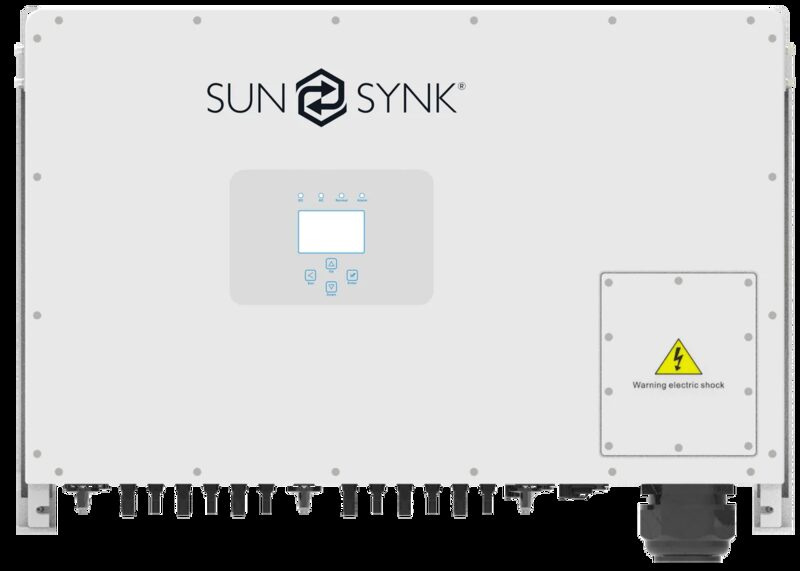
Sunsynk is a hybrid inverter and battery brand with a substantial installed base. It reports 500,000+ systems installed globally across residential and commercial applications, and its inverter range offers live data, fault alerts and remote installer access13. That remote access is the mechanism by which firmware reaches a unit already installed, and it is the reason a hybrid inverter's support life is measured in updates rather than in years alone.
go-e is an Austrian company best known for home EV charging equipment. Its news section carried an article titled "Range Anxiety: Where Does It Come From, and Is It Justified?" dated 2 September 202614. A European base for a charger manufacturer means a shorter spares route and a support function in a comparable time zone, though it says nothing about where every subcomponent is sourced.
The pattern across these three is that control gear is assembled and branded in many countries, and that the meaningful differentiators are certification, remote support capability and the length of the firmware support record. A household choosing between inverters is choosing between support regimes as much as between factories.
| Brand | Product type | Manufacturing or base location | Source |
|---|---|---|---|
| Ginlong (Solis) | Solar inverters | China; exhibited at Intersolar North America, July 2014 | 12 |
| Sunsynk | Hybrid inverters and batteries | 500,000+ systems installed globally; remote installer access | 13 |
| go-e | EV charging equipment | Austria; news article dated 2 September 2026 | 14 |
| SolarEdge | Inverters and optimisers | Israel, China and the USA | 6 |
| JinkoSolar | Solar modules | China, Malaysia, Vietnam and the United States | 5 |
Certifications that matter when buying across borders
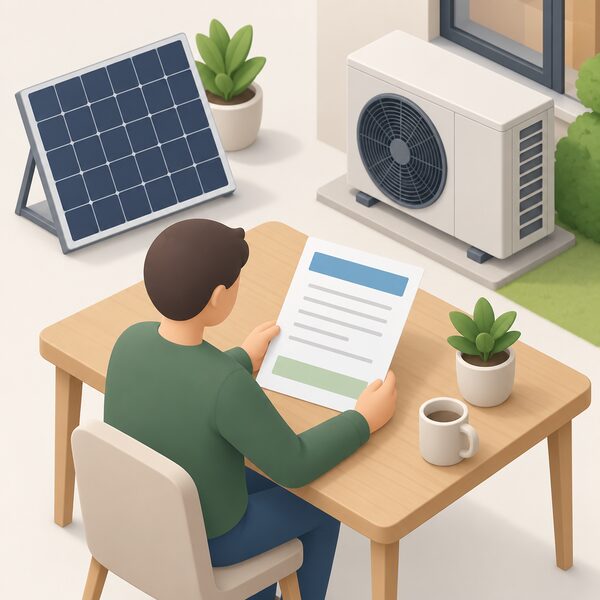
Certification is the mechanism that makes a product made anywhere usable in the UK, and it is more informative than a country-of-origin label.
MCS is the UK's quality mark for renewable energy technologies like solar panels and heat pumps15. Certified installers use MCS certified products, including solar heating panels and mounting kits16. The scheme certifies, quality assures and provides consumer protection for microgeneration installations and installers including solar photovoltaic panels, biomass, wind, heat pumps and heat products17. It also gives peace of mind if something were to go wrong when installing renewable technologies, like solar PV and heat pumps, in your home or small business15. The product-level schemes are specific: solar photovoltaic modules fall under MCS 005 and heat pumps under MCS 00718.
For installers, the certification chain is explicit. Under one Welsh scheme specification, installers must carry a current and valid MCS Certificate issued by Certsure LLP t/a NICEIC, Napit Certification Ltd, Simply Certification, The IAA, or Amtivo Group t/a British Assessment Bureau19. That list is a useful reminder that MCS certification is issued by named bodies rather than by a single authority.
Cross-border recognition exists but is bounded. MCS recognises equivalent overseas schemes, with certification available for Solar Heating products under the Cen Solar Keymark and for Heat Pump products under the CEN Heat Pump Keymark20. Solar Heat Europe describes the purpose of such certification as being to reduce trade barriers for manufacturers, and notes that relevant certificates for European solar thermal products are available through linked pages21. Eurovent Certita Certification covers heat pumps, and Intertek Testing Services Ltd. Shanghai covers heat pumps and solar PV22.
The practical consequence for a household is that a product's route to the UK market runs through a named certification body, and that route is checkable. A country-of-origin claim on packaging is not.
Support after purchase: firmware updates and what they fix
Firmware is where manufacturing location stops being an abstraction and becomes a service question. A unit built in one country and supported from another depends on a remote update path, and the record of that path is public.
A release dated 28 September 2024 fixed a Sunsynk issue where the battery would not consistently reach 100 percent state of charge, raised the 15.5kWh Gen 1 charge current limit with Sunsynk from 95A to 195A, and corrected a Growatt communication error25. Three separate faults, three separate fixes, all delivered to hardware already installed. That is the normal shape of support for hybrid inverters and batteries, and it is why the maker's monitoring and remote access features matter beyond convenience.
Sunsynk's inverter range offers live data, fault alerts and remote installer access, and the company reports 500,000+ systems installed globally13. Remote installer access is the channel through which a firmware change is applied, and it means the installer rather than the household is usually the route to a fix.
The wider support picture includes supply chain work. Support is also available for installers and manufacturers to expand supply chains26. That matters for manufacturing location because a brand's ability to supply a replacement unit or a matched module years after installation depends on a supply chain that still exists, not on where the original was built.
For a household, the questions worth asking before purchase are how long the maker has published firmware updates, whether the unit can be updated remotely, and who holds the access. A product with a long update record and remote access has a support life that extends well beyond its warranty term. A product with neither leaves the household dependent on the installer alone.
Trade shows and where manufacturers announce new products
New products are announced at trade shows, and the show calendar is a reasonable guide to where a manufacturer's engineering and marketing effort sits.
The 2026 SNEC exhibition took place at the Shanghai National Exhibition and Convention Centre from 3 to 5 June 2026, where AIKO exhibited its new products27. SNEC is the largest solar industry gathering and its location reflects where module manufacturing capacity is concentrated. A brand launching there is signalling that its primary market and supply base are Asian.
Ginlong exhibited at Intersolar North America in San Francisco, where it announced UL 1741 certification for its second-generation Solis PV inverter12. That is an example of a manufacturer using a regional show to announce certification for that region, which is how a Chinese inverter brand establishes itself with North American and, by extension, other Western installers.
Hydrogen Homes show homes offer a different model. The Hy4heat appliances, which have been developed in the UK, are available on rotation so that different manufacturers can share their innovations with the public28. That rotation model is a deliberate way of giving several manufacturers visibility without a permanent exhibit, and it is a UK-specific arrangement.
For a household, trade show announcements are a weak signal about a product's suitability. A launch at a major show indicates investment and intent, but it says nothing about whether the model will be certified for the UK, supported with firmware, or stocked with spares. The certification and support records are the durable evidence.
What manufacturing location means for household energy independence
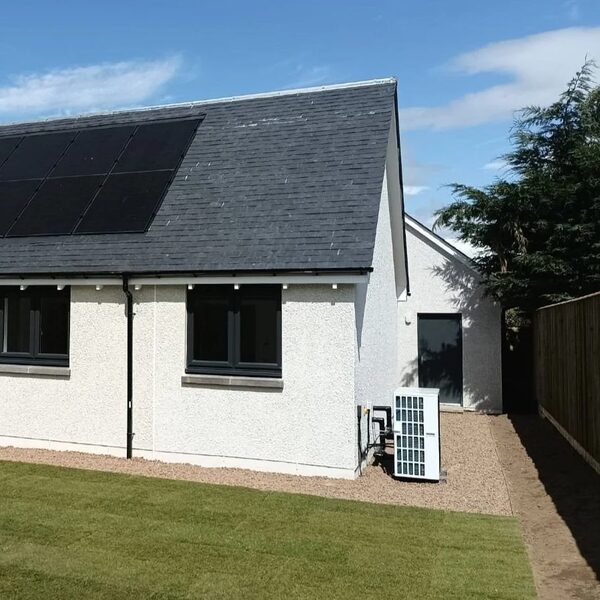
Manufacturing location bears on independence in a way that is easy to overstate and easy to dismiss. The honest position is that it changes the shape of the dependence rather than removing it.
A solar array generates electricity that can be used in the building, and the associated electrical works are part of the installation29. Solar panels can generate electricity that can help power a heat pump, reducing grid electricity use31. That is the independence gain: a household with panels and a heat pump is buying less electricity and less gas than it otherwise would. But the panels themselves came from a supply chain that is around 80% Chinese for the UK market1, and the inverter and battery behind them came from another manufacturer with its own support platform. The household has traded a dependence on a utility for a dependence on a manufacturer and its firmware.
Heat pumps are more likely to be European or British. Around 35% of the roughly 125,000 heat pumps sold in the UK in 2025 were made here3, and the policy direction is towards at least 70% of installed units being UK-made10. A UK-made heat pump shortens the spares route and keeps the support function in the same regulatory and legal system as the household. That is a real, if modest, independence benefit.
Installation rules vary across the four nations. Heat pumps can be installed in an eligible self-build, the property can be on or off the gas grid, and urban and rural properties in England or Wales are covered by the relevant scheme guidance33. In Scotland, permitted development rights allow in many instances for the installation of a range of low and zero emissions heating technologies, including solar panels and ground and water source heat pumps on non-domestic properties34. An individual air source heat pump needs a place outside the home where it can be fitted to a wall or placed on the ground35. For non-domestic solar panels, no output limit is applied34.
Grant funding also differs by nation. ECO4 Flex funds solar PV panels36. The Nest scheme in Wales funds heat pump, insulation and solar panels37. The ECO Flexibility Funding route in Ceredigion covers the same territory17. A household in England, Scotland, Wales or Northern Ireland therefore faces a different set of rules and a different set of funding routes for the same equipment.
The dependence that remains is worth stating plainly. A grid connection remains, because most systems are not islanded. A supplier remains, for export payments and for import when generation falls short. A manufacturer remains, for firmware, spares and warranty administration. And a certification body remains, because the product's route to market ran through one. Manufacturing location shifts the balance between these dependencies; it does not remove any of them.
Sources40 cited
- AIKO solar panels review, Which?, 2026-08-12
- SolarEdge solar panels review, Which?, 2026-08-12
- Carbon Budget and Growth Delivery Plan: heat and buildings investor factsheet, GOV.UK, 2025
- LONGi solar panels review, Which?, 2026-08-12
- Jinko Solar solar panels review, Which?, 2026-08-12
- Raising minimum standards for heat pumps: options assessment, GOV.UK, 2024-11-27
- REC Solar panels review, Which?, 2026-08-12
- Plugging heat in: smart policy can help electrify household heating in Europe, Ember, 2025-12-17
- EHPA Market Report 2025 executive summary, European Heat Pump Association, 2025-07
- Families to save in biggest home upgrade plan in British history, GOV.UK, 2026-01-20
- PV modules, BISOL, 2026-09-17
- Ginlong news, Solis Inverters, 2014-07
- Inverters, Sunsynk, 2026-09-17
- go-e news, go-e, 2026-09-02
- Why MCS certification matters, MCS Certified, 2026-08-17
- Solar heating, MCS Certified, 2026-08-17
- ECO Flexibility Funding, Ceredigion County Council, 2026-09-17
- MCS Microgeneration Certification, BSI Group, 2026-09-17
- Barcud Solar Panel Installation Scheme Specification, Sell2Wales, 2026-06-15
- Product scheme equivalency, MCS Certified, 2026-05-08
- Certification, Solar Heat Europe, 2025-04-01
- Certifying your product, MCS Certified, 2026-05-18
- Smart Export Guarantee, MCS Certified, 2026-04-27
- Solar panels, Oxfordshire County Council, 2026-09-17
- Firmware updates, Fogstar, 2024-09-28
- Post note 0699, UK Parliament POST, 2026-09-19
- AIKO G4 launch, AIKO Solar, 2026-06-03
- Case study: UK hydrogen heated homes of the future, Ofgem, 2021-07-29
- Solar panels, East Herts Council, 2026-09-17
- Solar panels guidance, City of York Council, 2026-09-17
- Heating your home, Energy Saving Trust, 2026-05-19
- Renewable heat right for your home, Energy Saving Trust, 2026-05-19
- BUS PO guidance V2.3, Ofgem, 2023-09-25
- Permitted development rights: non-domestic solar panels and domestic air source, Scottish Government, 2021-10-07
- Heat Buildings Strategy strategic environmental assessment, Scottish Government, 2021-02
- ECO4 Flex open, South Cambridgeshire District Council, 2026-09-17
- Get free home energy efficiency improvements: Nest, Welsh Government, 2026-09-17
- DMEGC SOLAR warranty document, DMEGC SOLAR, 2026-04-01
- DMEGC SOLAR warranty document, DMEGC SOLAR, 2026-04-01
- DMEGC SOLAR warranty document, DMEGC SOLAR, 2026-06-01
 The Full Brands GuideWhich boiler, heat pump or solar brand can you trust, and who actually owns it?
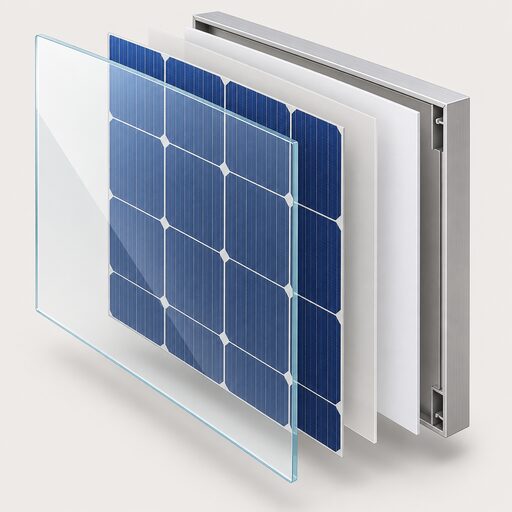 Solar Panel Manufacturers UKWhich solar panel brands are actually worth buying in the UK, and who really makes them?
 Buying Energy Equipment OnlineWho fits your solar panels, battery or heat pump when you buy them online, and who puts things right if they go wrong?
 How Energy Products Are TestedWhy does a solar panel's datasheet power rating look better than what you actually get on a UK roof?
 Comparing Specs Like for LikeTwo solar panels or heat pumps can look different on paper even when they do the same job.
 Manufacturer WarrantiesHow long does a boiler, heat pump or solar panel warranty actually last, and what do you have to do to keep it valid?