
In this guide
A boiler warranty is not automatic. It is activated by registration, and the registration window is short. Baxi, Vaillant, Intergas, Ideal Heating and Viessmann all tie the long guarantee to a registration made within 30 days of installation1. Miss it and the cover does not vanish, but it shrinks: Vaillant states that failure to register within 30 days results in the guarantee reverting to 12 months from the date of installation, and Ideal Heating gives the same 12-month reduction2.
The second condition is the paperwork left behind by the installer. The Benchmark Commissioning Checklist, printed at the back of the boiler instruction manual alongside the servicing record, is the document that proves the boiler was installed correctly and commissioned properly1. The Heating and Hotwater Industry Council states that the Benchmark Checklist will be required for warranty purposes, and Baxi says it may ask to see the checklist if a claim is made7.
The third condition runs for the life of the guarantee. Most boiler warranties require an annual service to remain valid, carried out by a Gas Safe registered engineer, with the details recorded in the Benchmark Checklist or proof of service available on inspection3. Registration, commissioning and servicing are three separate obligations, and a gap in any one of them is what turns a ten year guarantee into a dispute.
Why registration matters: an unregistered boiler may have no warranty at all
The long guarantee a household is quoted at the point of sale is a conditional promise, not a default. Intergas states plainly that if its conditions are not met, the warranty will not be valid3. HRM Boilers goes further for its own appliance, requiring complete customer details before the warranty can be registered at all, and stating that the appliance must be registered to activate the 2 year warranty on the boiler10.
What an unregistered boiler falls back to varies by maker. Viessmann states that a boiler not registered as per the terms and conditions of sale falls into a standard 2 year warranty4. Baxi says that if the boiler warranty is not registered within 30 days of installation, the warranty defaults to the standard two years1. Vaillant and Ideal Heating both reduce the period to 12 months from the date of installation2. Fuse Energy, writing on warranty terms generally, notes that some manufacturers may limit the warranty period to as little as 12 months if it is not registered within a specified timeframe, such as 30 days11.
There is a second route to losing cover that has nothing to do with paperwork. Attempting repairs or a boiler installation yourself, or using someone who is not properly qualified, could void your boiler warranty in the likely event it causes damage12. Uswitch makes the same point about unqualified engineers: a household may void the boiler's warranty and end up paying significantly more to have larger repairs done13.
For a household's energy independence, the warranty is the mechanism that keeps the heating system repairable at someone else's cost rather than the owner's. A boiler is a gas appliance tied to the grid and to a registered engineer, and the guarantee is the only part of that arrangement the household controls directly. Registration is the act that switches it on.
The 30-day deadline: how long you have after installation

Thirty days is the common window, and it is consistent across the makers whose terms are published. Vaillant requires the boiler guarantee to be registered within 30 days of installing the appliance2. Intergas requires registration within 30 days of the boiler being installed3. Baxi states that the warranty must be registered within 30 days of installation, alongside the Benchmark checklist and an arranged annual service1. Ideal Heating tells owners they need to do this within 30 days of installation, and Viessmann sets the same period from the installation date4.
The consequence of missing it is a shorter term, not no term, in every published case. Vaillant's wording is the clearest: failure to register within this time period will result in the guarantee reverting to 12 months from date of installation2. Ideal Heating states that should this condition not be met, the period of guarantee will be reduced to 12 months from the date of installation5. Baxi's fallback is the standard two years1. Viessmann's is a standard 2 year manufacturer warranty4.
Which? lists failing to register the warranty with the manufacturer within 30 days of the installation as one of the common mistakes that can invalidate a boiler warranty14. The practical point is that the deadline runs from installation, not from the day the household moves in, takes delivery of the paperwork or notices the boiler. In a new build, Baxi notes that depending on what has been agreed on the contract, either the contractor, developer or first occupier may register the boiler1. That is the case where a missed deadline is most likely, because responsibility sits with someone other than the occupant.
How to register: online, by phone or through your installer
Registration is free and takes minutes once the serial number is to hand. Which? advises that you can usually do this on the manufacturer's website, or by calling them14. Baxi tells owners to register the warranty online or call the warranty registration phoneline1. Viessmann offers two routes: the installer may register the product through a VPlus account or the company website, or the homeowner can register directly through the dedicated warranty registration page4.
Ideal Heating runs a trade route alongside the homeowner one. Installers sign up or log into a Connect loyalty account and earn points for every eligible product registered through that account5. For homeowners, Ideal Heating states that there are different ways you can register your boiler for free warranty5.
A useful check exists for households who are unsure whether the installer already registered the appliance. Baxi advises starting the process of registering using the boiler's serial number, because if the boiler is already registered the form will tell you1. That avoids a duplicate registration and confirms the position in one step.
Registration also carries a consent point that is easy to overlook. HRM Boilers states that by registering the appliance for warranty, the customer acknowledges that HRM Boilers may contact them about the appliance, its warranty and service reminders10. That is a maker's own term rather than a general rule, but it illustrates why the registration form is worth reading rather than skimming.
Extended cover is a separate, chargeable transaction. Viessmann states that it is possible to extend the length of a warranty, either if the installer registers the installation within 30 days, or by homeowner registration within 30 days with the purchase of an extended warranty period, with the homeowner route available for residential boilers only4.
Benchmark: the commissioning checklist your warranty depends on
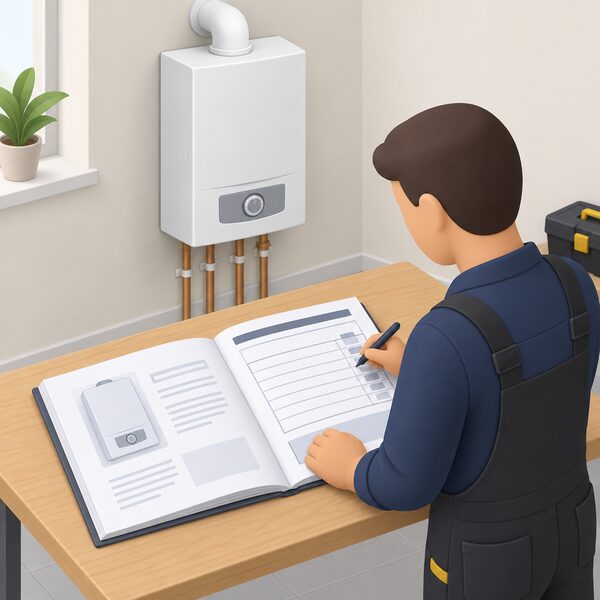
The Benchmark Commissioning Checklist is the document that connects the installation to the guarantee. It can be found at the back of the boiler instruction manual, along with the servicing record6. Its purpose, as MCS describes it, is to demonstrate the heating system is installed per the manufacturer's instructions and the warranty is valid15.
The checklist is not optional paperwork. The Heating and Hotwater Industry Council states that the Benchmark Checklist will be required for warranty purposes7. Baxi states that the installer must complete the Benchmark checklist when he finishes installing the boiler, and that Baxi may ask to see the checklist if a warranty claim is made6. Vaillant will require proof of purchase, meaning an invoice or completed Benchmark logbook2. Fuse Energy lists the documents a claim generally needs: the boiler's warranty certificate, proof of purchase and installation, and all annual service records11.
The completed checklist also has a regulatory function. It provides documented evidence that the customer's boiler has been correctly installed by a Gas Safe registered engineer, in line with the manufacturer's instructions and complying with the appropriate Building Regulations6. The installer is legally required to complete a commissioning checklist as a means of complying with the appropriate Building Regulations in England and Wales7. The Heating and Hotwater Industry Council describes completing the Benchmark checklist as a means of meeting the commissioning requirements within Part L of the Building Regulations16.
"The Benchmark Checklist will be required for warranty purposes."
What the Benchmark logbook covers and why installers must complete it
The Benchmark Scheme exists to ensure that customers are provided with the correct domestic heating and hot water products for their needs, and that those products are installed, commissioned and serviced in accordance with the manufacturer's instructions by competent persons, in a way that they will be safe, perform with optimum efficiency, and meet the requirements of the appropriate Building Regulations7. Its scope is wider than the regulations alone: Benchmark covers all aspects of installation, not simply those directly covered by Building Regulations7.
The products within scope extend well beyond gas boilers. The scheme covers gas-fired space heating and hot water systems, hot water storage cylinders, water treatment products, solar thermal systems, heat pumps including ground source, air to water and exhaust air, oil and gas cooker boilers, warm air heating systems and micro CHP7. A household replacing a boiler with a heat pump therefore meets the same commissioning discipline, and MCS notes that the Benchmark commissioning checklist must be completed in full15.
Installers are required to carry out installation, commissioning and servicing work in accordance with the Benchmark Code of Practice, which covers requirements in relation to standards of work and customer service7. The homeowner's part is to check the checklist has been fully completed on the inside back pages of the installation instructions, and to sign it to say that they have received a full and clear explanation of how the appliance operates7.
Commissioning itself involves more than filling a form. BEAMA's guidance on Part L describes the requirement as system balanced, with the Benchmark checklist or equivalent completed and a commissioning notice given to building control17. HETAS notes that many manufacturers include commissioning checklists in installation and user instructions which have to be completed by the installer to activate any warranty18. The HHIC adds that installers should complete the Benchmark commissioning documentation to confirm that system cleaning has been done19.

Keeping the warranty valid: annual servicing and record-keeping
Registration starts the guarantee; servicing keeps it alive. Which? states that many boiler warranties require regular servicing to remain valid, and that failure to get your boiler serviced annually will also, in most cases, invalidate its warranty20. Which? adds that the small print of a boiler's warranty often requires an annual boiler service to remain valid, and that not keeping up with annual servicing can invalidate any warranty you may have on your boiler22. Uswitch notes that many manufacturers also require an annual service in order to keep the warranty valid24.
The service must be done by the right person. Fuse Energy states that annual servicing by a Gas Safe registered engineer is a standard and crucial condition for maintaining a boiler warranty, and lists the conditions that keep a warranty valid as annual servicing, prompt registration after installation, and installation by a qualified engineer11. For oil-fired boilers the register differs: Confused.com advises checking that the company or engineer is on the Gas Safe register, or OFTEC registered for an oil-fired boiler25. The Consumer Council for Northern Ireland points households to OFTEC registered engineers for oil heating26.
Record-keeping is where claims are won or lost. Intergas requires that service details must be recorded in the Benchmark Checklist, or proof of service must be available on inspection3. Vaillant requires the Benchmark logbook to be completed by the installer at the point of installation and retained on site for inspection during an engineer's visit2. Intergas states the same retention duty for its Benchmark Commissioning Checklist3. Fuse Energy lists all annual service records among the documents needed for a claim11.
The wider industry position is that annual servicing is a baseline rather than a warranty technicality. The Gas Safe Register and major boiler manufacturers strongly recommend an annual boiler service27, and the European Heating Alliance reports that its members promote the importance of annual servicing28. For a household, the service record is also the practical history of the appliance: it is what a future buyer, insurer or engineer reads to judge how the boiler has been treated.
Who registers what: homeowners versus installers

Responsibility is split, and the split is the source of most missed deadlines. Baxi advises that it is beneficial to the homeowner to make sure that either the installer has registered the warranty, or that they have done it themselves1. Viessmann allows either route, with installer registration through a trade account or homeowner registration through the warranty page4. Ideal Heating's installer route runs through a Connect loyalty account5.
The installer's side carries its own conditions. Intergas requires that the installer must be registered with Gas Safe3. For new boilers generally, official guidance in Wales states that compliance is generally achieved by employing an installer who is registered under an approved scheme, and that for oil fired boilers an installer should be registered with the Competent Person Schemes9. Where the installer is not registered, the Planning Portal explains that the installer will not be able to self-certify that their work is compliant, and the firm or the householder must give notice to the local authority of the intention to carry out the boiler work in advance and pay a notification fee8.
The pattern of installers leading on registration is not confined to boilers. Energy Saving Trust notes that for home chargepoints, usually your installer will register the device for you29. The same model applies to heat pump grants: under the Boiler Upgrade Scheme, homeowners do not need to apply directly, because an approved heat pump installer will submit an application on their behalf30. Ofgem's guidance for the scheme requires installers to retain a copy of any information relied upon for the submission of voucher applications and voucher redemption applications for six years31. MCS describes installers as required to lead the voucher application on behalf of the consumer, and HETAS confirms the scheme is open on that basis32. Ofgem also states that installers are responsible for the accuracy of the information they submit as part of their applications34.
For households, the practical conclusion is that the installer holds the commissioning and registration duties, but the warranty belongs to the owner. Confirming that registration has happened, and keeping the Benchmark logbook and service records together, is the part that cannot be delegated.
Sources34 cited
- How to register your boiler warranty and keep it valid, Baxi, 2026
- Domestic boiler guarantee, Vaillant, 2026
- Warranty terms and conditions, Intergas Heating, 2026
- Viessmann warranty, Viessmann, 2025
- Warranties FAQ, Ideal Heating, 2026
- Benchmark, Baxi, 2026
- Benchmark guidance, Heating and Hotwater Industry Council, 2026
- Boilers and heating: building regulations, Planning Portal, 2026
- Building regulations: boilers and heating, Welsh Government, 2026
- Warranty, HRM Boilers, 2026
- Boiler warranty, Fuse Energy, 2026
- Five reasons households should not attempt DIY repairs, OFTEC, 2026
- Boiler repair, Uswitch, 2024
- Common mistakes that can invalidate your boiler warranty, Which?, 2025
- MCS and Benchmark online integration, MCS Certified, 2023
- Benchmark and Part L consultation response, Heating and Hotwater Industry Council, 2024
- Part L 2022 heating controls guidance, BEAMA, 2022
- The importance of commissioning, HETAS, 2023
- Benchmark commissioning documentation, Heating and Hotwater Industry Council, 2026
- Getting the best boiler service, Which?, 2025
- Common boiler problems and repair costs, Which?, 2025
- Planning for your boiler's replacement, Which?, 2026
- Why you need a boiler service and what to ask about, Which?, 2025
- How long does a boiler last?, Uswitch, 2024
- Boiler servicing, Confused.com, 2025
- Home heating oil, Consumer Council for Northern Ireland, 2026
- The best way to run your central heating, ivie, 2026
- HWA members promote the importance of annual servicing, European Heating Alliance, 2026
- Charging electric vehicles, Energy Saving Trust, 2026
- 5 million to help Welsh households invest in greener homes, Welsh Government, 2026
- Administration of the Boiler Upgrade Scheme, Ofgem, 2023
- Boiler Upgrade Scheme launch: what installers need to know, MCS Certified, 2022
- Boiler Upgrade Scheme now open, HETAS, 2022
- Administration of the Boiler Upgrade Scheme consultation, Ofgem, 2021
 Boiler WarrantiesHow long does a boiler warranty actually last, and what do you have to do to keep it?
 Manufacturer WarrantiesHow long does a boiler, heat pump or solar panel warranty actually last, and what do you have to do to keep it valid?
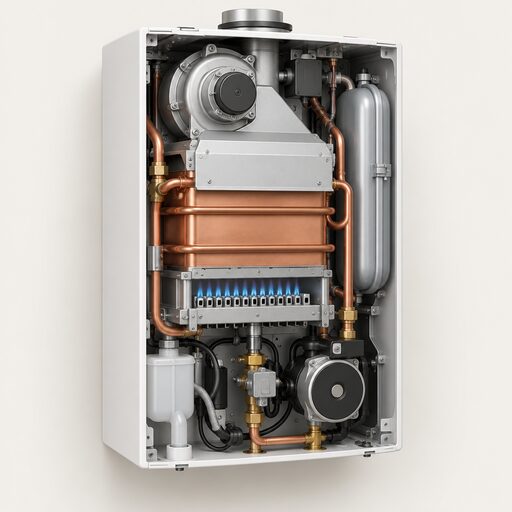 Servicing and MaintenanceWhat an annual gas or oil boiler service covers, the intervals manufacturers specify, the link between servicing records and warranty validity, and what servicing means for a household's energy independence.
 Certificates You Should ReceiveAfter work like solar panels or a new boiler, what paperwork should you actually be handed, and by when?
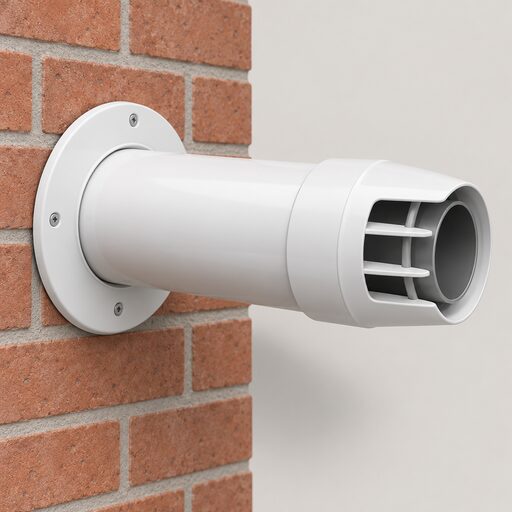 Boiler InstallationGetting a new boiler means following building rules, and the person fitting it must be registered to sign the work off.
 Manufacturer Approved NetworksDoes an approved installer badge mean better work, or just a longer warranty on the boiler or heat pump?