

In this answer
Short answer
A failed SolaX warranty registration is usually a fixable administrative problem, not a lost warranty. SolaX asks owners to register within 90 days of the commissioning date, and the UK and Ireland warranty terms repeat that 90-day window1. Where registration is not completed, the warranty does not disappear: the period is calculated as the production date plus 6 months, so the cover simply starts earlier than the household expects2.
What registration failure cannot fix is an installation that breached the rules. SolaX states that failure to follow the official installation manual or safety regulations immediately invalidates the warranty, and that cover is only valid where the product was bought from an authorised distributor and installed by a certified professional1. A registration completed successfully on a non-compliant installation leaves the household with a certificate and no enforceable claim.
The practical sequence is therefore: check whether the product was bought and installed through authorised channels, find the serial number, attempt registration through SolaX Cloud, and if the portal still reports a failure, contact the service team directly. SolaX directs owners whose devices show warranty register failed, and which are not from a stolen batch, to service.eu@solaxpower.com4.
The 90-day rule and the 6-month fallback
The registration clock starts at commissioning, not at purchase and not at delivery. SolaX guidance says the product must be registered online within 90 days of the commissioning date, and the warranty terms say the same: products must be registered and the information uploaded within 90 days from the date of commissioning2. Registering inside that window stores the warranty certificate and the exact expiration date in the online account, which is the document a household needs years later when a fault appears1.
Miss the window and the start date moves. SolaX states that if the system was not registered within 90 days, the warranty automatically starts 6 months after the battery left the factory1. For inverters the same principle is expressed as the production date plus 6 months2. The warranty terms describe the start date options as the installation or commissioning date, the purchase invoice date, or the shipment date from the factory where no registration is completed2.
For residential batteries specifically, the period begins from the earlier of the installation date or 6 months after the production date1. That wording matters: it is not a penalty applied only to the careless, it is a default rule that applies whenever the paperwork is absent, and it can cost several months of cover on a unit that sat in a distributor's stock before installation.
The 6-month figure also appears in a second, separate context. Extended warranty cover must be purchased no later than 6 months after the first installation date, or 12 months after the production date2. A household that has not registered cannot buy the extension through the SolaX Cloud platform, because that route requires the system to be registered first2. So a failed registration can close off the paid extension even where the standard term survives.
Void conditions: how installation mistakes invalidate the warranty
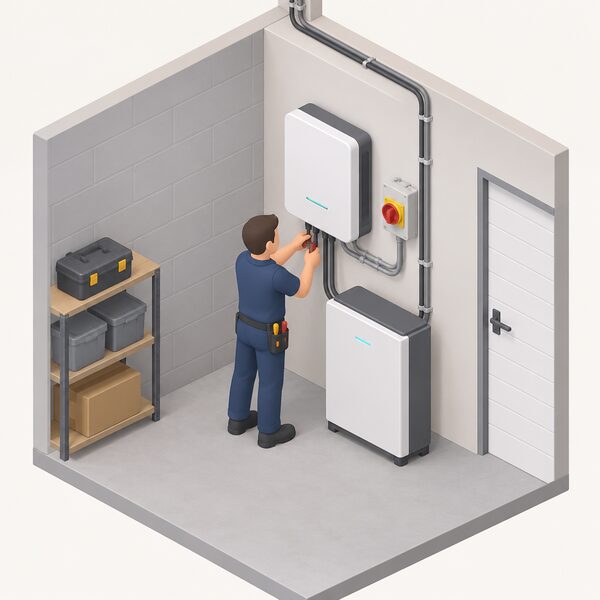
Registration and validity are two different tests, and passing the first does not satisfy the second. SolaX states plainly that failure to follow the official installation manual or safety regulations will immediately invalidate the warranty1. The inverter guidance adds that the warranty is only valid if the product is purchased from an authorised distributor and installed by a certified professional2.
The warranty terms set the same boundary from the manufacturer's side: the warranty only applies when products are purchased from an authorised reseller, and installed and activated by an installer3. They also limit the geographical scope, covering products originally purchased from SolaX's authorised channels and installed in the United Kingdom and Ireland, and stating that for units sold for one country or region but installed in another, the warranty becomes invalid without written confirmation from SolaX3.
Several further conditions sit alongside installation quality:
- Moving the inverter after its initial installation, or a setup that does not follow the official manual to the letter, typically voids the warranty2.
- Using third-party hardware or software to control the inverter without written consent, or altering the product's serial number, voids the warranty2.
- Replacing the battery or accessories without prior consent from SolaX can void a claim1.
- Minor scratches or stains that do not affect performance are excluded rather than covered2.
- Accessories and tool kit items supplied with a residential battery are not included in that battery's warranty1.
The pattern across these conditions is that SolaX retains control of who touches the equipment and how. A household that adds a third-party monitoring dongle, moves the unit during a loft conversion, or has the battery swapped by an unauthorised party has stepped outside the terms regardless of what the registration portal shows.
This is not unique to SolaX. Ideal Heating's MAX Confidence terms exclude any defect resulting from the incorrect installation of the boiler, the flue system or the facility for condensate disposal5, and guidance on installer guarantees notes that where an installer fails, the warranty usually ends6. Ofgem's guaranteed standards consultation lists installer shortcomings, including lacking the correct meter or asset equipment, safety equipment, tools or skills, as qualifying scenarios for a failed installation7. The lesson for a SolaX owner is that the installer's competence is part of the warranty, not separate from it.
The standard warranty you fall back on if registration failed
The fallback is not a shorter warranty, it is the same warranty with an earlier start date. SolaX's terms state that if a customer fails to register a SolaX product, the product warranty period will be obtained standard warranty, and counted automatically after the manufacturing date, and additional 9 months3. Read alongside the inverter guidance, which puts the unregistered start at production date plus 6 months2, the two figures for the offset differ. A household should expect the start date to be set from production, and should ask SolaX service to confirm the dates that apply to its serial number.
What the standard term actually is depends on the product and on whether it is connected to SolaX Cloud. The published terms include several tiers:
| Product group | Standard term | Condition |
|---|---|---|
| X3-MEGA G2, X3-Forth, X3-GRAND | 5 years standard plus 1 year parts | Connected to SolaX Cloud with generation data uploaded4 |
| X1 Smart, X1-AC | 5 years standard plus 5 years parts | Connected to SolaX Cloud with generation data uploaded4 |
| X1-Hybrid-LV, X1-Lite-LV, X3-NEO-LV | 10 years standard | Paired with a SolaX battery and connected to SolaX Cloud5 |
| X1-Hybrid-LV, X1-HYB-Lite, X3-NEO-LV | 10 years standard | Paired with a SolaX battery and connected to SolaX Cloud5 |
| T-BAT residential batteries | 5 years standard | From the earlier of first installation or 6 months after production5 |
| X1 IES | 10 years | Datasheet figure8 |
| Microinverters | 7 years, extendable to 12 | Standard term9 |
| X1-Micro Series | 12 years standard | Standard term10 |
| Microinverter solution | 12 years, extendable to 15 or 25 | Standard term11 |
The cloud connection is doing real work in that table. Several inverter ranges are upgraded to a longer term only where the unit is connected to SolaX Cloud and generation data has been successfully uploaded to the SolaX server4. That makes the app and the cloud account part of the warranty, not an optional extra: a household that never connects the inverter, or that loses connectivity, may be relying on a shorter term than it assumed. It also means the household's warranty position depends on a manufacturer's platform remaining available, which is a dependence worth naming alongside the grid dependence the system was bought to reduce.
Battery performance cover runs on a separate clock. The warranty terms give a performance period of 120 months after the commissioning date3. That is a longer horizon than the 5-year standard term on the T-BAT residential models, and it is measured from commissioning, so the commissioning record matters even where registration failed.
Contacting SolaX about a failed registration
SolaX's own guidance sets an order of approach. Claims guidance states that owners are required to contact the local distributor or the company that installed the system first2. Where that route fails, the same guidance allows escalation directly to SolaX via service.global@solaxpower.com or the official contact page1. A general address, info@solaxpower.com, is also published2.
For a device showing warranty register failed, the specific instruction is different. SolaX asks owners of devices that are not in a stolen batch but which show warranty register failed to contact the SolaX service team at service.eu@solaxpower.com4. That is the address to use for a registration fault rather than a hardware fault.
Whichever address is used, the information required is the same. SolaX support guidance asks for the inverter model, operating mode, time of occurrence, recovery behaviour and the serial number from the product label or from SolaXCloud6. For a fault report it asks for the inverter model, serial number, complete fault code and relevant SolaXCloud records7. A registration query that arrives without the serial number will usually be sent back for it.
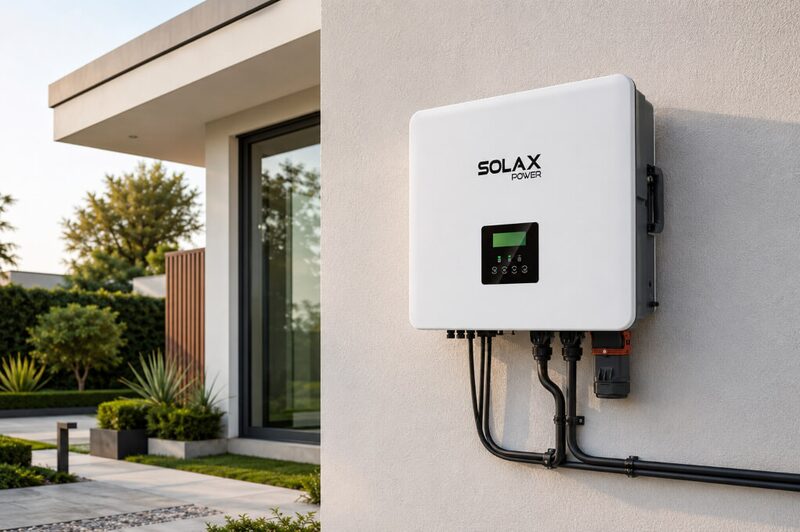
A short process, in order:
- Confirm the product was bought from an authorised reseller and installed by an authorised installer, since registration cannot cure a breach of that condition2.
- Locate the serial number on the product label or in SolaXCloud6.
- Attempt registration through the SolaX Cloud user centre within the 90-day window if it is still open3.
- If the portal reports a failure, email service.eu@solaxpower.com with the model, serial number and the registration error4.
- If the distributor or installer is unresponsive, escalate to service.global@solaxpower.com1.
- If a fault has also appeared, report it within 4 weeks of the failure date and provide the claim details within one month1.
Two further conditions are worth knowing before a claim is opened. If a faulty device is not returned to SolaX within 6 weeks after replacement, SolaX reserves the right to charge based on the current market selling price3. And incomplete or inaccurate information on a registration form can lead to rejection of a claim, which is the same rule Sunsynk applies to its own registrations: the registrant confirms all fields are completed correctly and agrees to the warranty terms12.
What this means for a household's energy independence
A SolaX system reduces dependence on the grid for the hours it can cover from its battery and panels, but it introduces a different dependence: on the manufacturer's registration portal, cloud platform and service team. The warranty position is tied to all three. Registration inside 90 days preserves the full term and the certificate; the cloud connection upgrades several inverter ranges to a longer term4; and the service addresses are the only route to a claim once the installer stops responding1.
The failure modes are administrative as much as technical. A serial number misread from the label, a commissioning date recorded wrongly, an installer who never completed the activation step, or a unit that sat in stock long enough for the 6-month production offset to bite, all produce the same result: a warranty that starts earlier than the household believed. None of them is a reason to expect no cover, and none of them is cured by waiting.
For a household weighing a battery or inverter purchase, the practical point is that the paperwork is part of the product. The registration window, the cloud connection and the installer's authorisation status are all conditions of cover, and they are all settled in the first weeks after commissioning. Households that keep the commissioning record, the serial number and the registration confirmation together have what they need when a fault appears years later. Those that do not are relying on the production date fallback and on SolaX service being able to trace the unit from its serial number alone.
Sources12 cited
- Solar battery warranty guide, SolaX Power, 2026-06-23
- Solar inverter warranty, SolaX Power, 2026-06-18
- Warranty terms and conditions, UK and Ireland, SolaX Power, 2024-08-21
- Warranty, SolaX Power UK, 2026-09-17
- Warranty, SolaX Power, 2026-09-17
- Solar inverter fault codes, SolaX Power, 2026-08-12
- SolaX grid voltage fault IE03, SolaX Power, 2026-08-14
- SolaX X1 IES datasheet, SolaX Power, 2026-09-17
- Best microinverters for solar panels, SolaX Power, 2026-08-11
- Best solar inverters, SolaX Power, 2026-05-11
- Microinverter solutions, SolaX Power, 2026-09-17
- Warranty registration, Sunsynk, 2026-09-17
 Registering a WarrantyGetting a new boiler covered for longer usually means registering it quickly, often within a month of installation, or the long guarantee drops to a year.
 Boiler WarrantiesHow long does a boiler warranty actually last, and what do you have to do to keep it?
 When an Installation Goes WrongYour solar panels have stopped generating.
 Warranties and DegradationHow long do solar panels actually last, and what do the warranties really cover?
 Workmanship WarrantiesIf something goes wrong with your solar panels, who actually fixes it and who pays?
 Home Battery WarrantiesHow long does a home battery warranty really last, and what does it actually promise?