
In this guide
An installer workmanship warranty is the guarantee on the labour and the installation itself, and it is a separate thing from the manufacturer's warranty on the equipment. The common benchmark in the UK is two years: consumer guidance states that the installer's workmanship should have a guarantee for 2 years1, and MCS Certified requires its installers to guarantee the workmanship of the installation for a minimum of two years following installation2. Some schemes go further. OFTEC's workmanship warranty runs for six years from the date of installation where the job is notified on time3, and NAPIT states that its schemes require installers to warrant relevant work for a period of at least 6 years4.
The distinction matters because the two warranties answer different questions. A manufacturer's guarantee covers the products used, while an installer's guarantee covers the workmanship and the installation process5. When something fails, the first question is whether the fault lies in the equipment or in how it was fitted, commissioned and maintained. That question is usually settled by the paperwork produced on the day: the commissioning record, the service history and the handover documents.
Aftercare is where the two meet. Heat pump service plans, extended warranties on chargepoints and scheme-backed guarantees each carry their own conditions, notice periods and exclusions, and a claim can be refused where installation, commissioning or routine maintenance has been neglected6. This page sets out what each layer covers, what it excludes, and how the routes for a problem differ between England, Scotland, Wales and Northern Ireland.
What an installer workmanship warranty covers
A workmanship warranty is a guarantee on the installation as a piece of work, not on the components inside it. The clearest statement of scope comes from OFTEC, whose scheme was introduced by Government and covers the cost of rectifying any contravention of building regulations directly attributable to the installation3. That is a narrower promise than many householders assume: it is about the installation failing to meet the standards it should have met, rather than about wear and tear on a boiler or a heat pump.
The term varies by scheme and by trade. MCS Certified sets a floor of two years for domestic customers following installation2, and the Renewable Energy Consumer Code requires workmanship guarantees to be valid for a minimum of 2 years and to be transferable to the new owner if the home is sold7. Insurance-backed guarantee products sold into the market commonly advertise minimum 2-year workmanship cover9. Against that floor, OFTEC and NAPIT both operate at six years for the work they register3, and independent guidance for heat pumps notes that workmanship warranties are often longer and can cover up to 10 years10.
Two features are worth separating. The first is transferability: a workmanship warranty is fully transferable between owners of a property and automatically passes to the new owner if the home is sold, for the duration of the warranty period3. The second is what happens when the installer stops trading. An insurance-backed guarantee backs the installer's workmanship warranty and provides protection should the installer cease to trade9, and it carries the same period of validity as the original workmanship warranty11. Not every installer offers one, so the warranty on the work and the insurance behind it are two separate things to establish before signing.
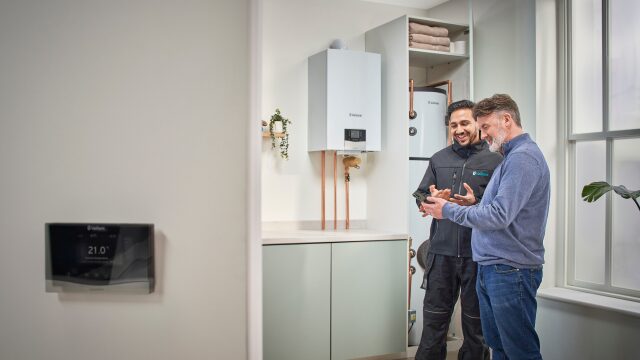
How a workmanship warranty differs from the manufacturer's product warranty

The split is straightforward in principle. A manufacturer's guarantee covers the products used; an installer's guarantee covers the workmanship and the installation process5. In practice the boundary is where most disputes begin, because a heat pump that underperforms may be a correctly built machine fitted to a badly sized system, or a correctly sized system running a faulty unit.
The Northern Ireland Sustainable Energy Programme states the position plainly for funded work: all installations will include a workmanship warranty and product warranties12. That dual structure is the norm across schemes. What differs is the length. Product warranties on major equipment are typically longer than the two-year workmanship floor, which means that after the second year a household may still have cover on the box on the wall but no cover on the pipework, the wiring, the controls or the commissioning decisions that make the system work.
There is a further layer in registered work. Competent person schemes have insurance-backed warranties and complaints procedures if there's a problem with the work13, and the installer is expected to produce a commissioning certificate such as a Benchmark certificate and notify the local authority building control department, either directly or through the scheme operator14. That notification is what ties the installation to a building regulations record, and it is also what makes a later claim traceable to a named installer.
Where an installer is not registered, the position weakens sharply. OFTEC states that a household using a non-registered installer is unlikely to receive a warranty on the work carried out15. The practical consequence is that the warranty is not a document that can be bought after the fact: it is created by the registration, the notification and the commissioning record at the time of the work.
Benchmark commissioning: the checklist that underpins both warranties
Benchmark is the industry scheme that records how an installation was commissioned, and it is the single most useful document a household holds after the work is done. The installer is legally required to complete a commissioning checklist as a means of complying with the appropriate Building Regulations in England and Wales11, and the Benchmark Checklist will be required for warranty purposes11. Benchmark covers all aspects of installation, not simply those directly covered by Building Regulations11.
The mechanics are specific. The installer has to complete the Benchmark Checklist on the inside back pages of the installation instructions supplied with the product, and the householder signs it to confirm they have received a full and clear explanation of its operation11. The manufacturer's instructions, including the checklist, are handed over on completion11. For boiler work, the installer completes the Benchmark commissioning documentation to confirm that cleaning has been done16, and then produces a commissioning certificate such as a Benchmark certificate and notifies the local authority building control department, either directly or via the scheme operator, with the local authority supplying a building regulations completion certificate17.
The Benchmark Code of Practice sets out what the installer is required to do, and the list is a fair summary of what a warranty claim will later be tested against: be competent and qualified; install, commission, service and use products in accordance with the manufacturer's instructions; ensure the installation is correctly sized and fit for purpose where design responsibility sits with the installer; meet the requirements of the appropriate Building Regulations; complete all relevant sections of the Benchmark Checklist and Service Record; leave the product or system in a safe condition and, where possible, in good working order; highlight any remedial or improvement work identified; refer to the manufacturer's helpline where assistance is needed; and report product faults and concerns to the manufacturer in a timely manner11.
"Please ensure that the installer has fully completed the Benchmark Checklist on the inside back pages of the installation instructions supplied with the product and that you have signed it to say that you have received a full and clear explanation of its operation."

Manufacturer warranties on heat pumps: Daikin Altherma's 3 to 7 years
Heat pump product warranties are set by the maker and vary by model, registration route and service history. For Daikin's Altherma range, the headline term differs between maker documents: guidance dated 18 September 2026 states a 5-year warranty, while a product page dated 17 September 2026 states up to 7 years manufacturer's warranty. The two figures are not reconciled, and a household relying on the longer figure should confirm the term that applies to the specific model and registration route in writing.
What can be said with confidence is the direction of travel across the market. Independent guidance for heat pump buyers notes that workmanship warranties are often longer and can cover up to 10 years10, which is the opposite of the usual pattern in boilers, where the product warranty is the long one and the workmanship warranty is short. The reason is that a heat pump's performance depends heavily on design and commissioning decisions, so the installation itself carries more of the risk.
The wider context is that warranty expiry is a recognised point of exposure. Official analysis of the heat pump transition found that owner-occupiers were particularly exposed once warranties expired18. That finding is about the cost of repairs falling on the household after cover ends, and it is the reason service plans and extended warranties exist as a market at all.
For any heat pump, the conditions attached to the product warranty are as important as its length. The recurring requirements are registration of the product after installation, commissioning in line with the manufacturer's instructions, and evidence of annual servicing. Where those are not met, the maker's own terms list the grounds on which a claim can be refused, which are set out below.
Mitsubishi Electric Ecodan: the annual service condition and the Homeowner Guarantee

Mitsubishi Electric's Ecodan Homeowner Service and Maintenance plan is a paid aftercare contract rather than a warranty extension, and its terms are unusually explicit. The plan guarantees any replacement parts and the company's workmanship for a period of one year from the date of installation by its engineer6. That is a one-year workmanship guarantee on the service work itself, distinct from the product warranty on the heat pump.
The plan's scope is defined by what it will attend to: Mitsubishi Electric's Ecodan air source heat pump, a Mitsubishi Electric cylinder, or a third party cylinder meeting minimum heat transfer requirements, plus system components and connections originally installed6. Eligibility is restricted. Services are available at a home anywhere in England, Scotland or Wales provided it is in a reasonably accessible location6, and the terms state that the services are not offered for any commercial installation or to any landlord6. The initial period is 12 months from the date of payment of the fee due6, and all fees and charges include VAT, with the price fixed unless the VAT rate changes or a statutory levy is introduced6.
Payment can be made in full in advance, or monthly by Direct Debit where the householder confirms that arrangement as a pre-condition of acceptance6. The company reserves the right to use new or reconditioned genuine parts as spare parts, with chargeable parts at the then current list price less any discount per the agreed cover level6. The terms are governed by the laws of England and Wales6.
There is a separate safety matter that any Ecodan owner should know about. The Mitsubishi Electric Ecodan heat pump has been subject to a voluntary recall from consumers by the manufacturer19. A recall is not a warranty question: it is a safety action, and it applies regardless of the age of the unit or the state of any service plan.
Service plans for heat pump owners: what the Ecodan plan includes
A heat pump service plan buys scheduled attention rather than insurance against failure. The Ecodan plan covers maintenance of the named equipment and the system components and connections originally installed6, and it carries a one-year guarantee on replacement parts and the engineer's workmanship from the date of installation6. The commercial logic is that annual servicing is also the condition on which many product warranties depend, so the plan and the warranty are linked even where they are sold separately.
The terms set out a schedule of notices that a householder should diarise. Notification is required by 12 noon on the working day before a visit to reschedule the date or time6. Where access is not possible at the agreed time, a wasted visit is charged at the then current standard rate along with reasonable travel costs6. The company will give at least 4 weeks' advance notice of any change in pricing or services effective at the renewal date6, and at least 4 weeks' prior written notice of non-renewal where the system is beyond normal operational life, beyond economic repair, or parts are unavailable6. It reserves the right to terminate the agreement on not less than 14 calendar days' written notice where the customer fails to pay on time, where there are ongoing health and safety issues, or where advised repairs are not carried out6.
Cancellation runs on a different clock. The services agreement can be cancelled up to 14 calendar days from the date of written acceptance of the order, with a full refund where no services have been provided6. Consumer guidance notes an automatic 14-day cooling-off period where an extended warranty is signed up to on the phone or online20. For the separate Ecodan Expert Engineer Video Consultation, a 90 minute cancellation notice is required, reduced to 30 minutes where the call is booked within 90 minutes, and failure to give notice may result in a charge with no refund6.
Voucher redemption codes issued with the plan are valid only for specified Ecodan Heating Service and Maintenance plans, namely Heat Pump Service, Yearly System Service and 3 Diamond Cover, with the Heat Pump Service not covered for the £50 off vouchers6.
What service plans exclude: cylinders, underfloor heating, glycol and access limits
The exclusions in a service plan are where a household's expectations most often outrun the contract. The Ecodan terms exclude all Gledhill BoilerMate cylinders and any other Gledhill BoilerMate product, any unvented cylinder using an internal expansion vessel, non-Mitsubishi or customised flow temperature controllers, underfloor heating systems, and inaccessible pipework6. For underfloor heating, services extend only to accessible pipework up to the UFH manifold, and UFH system maintenance itself is excluded6.
Access and siting conditions also bite. The heat pump must be installed and accessible from ground level, and where it is installed at any height above one metre from ground level, or where there is any access difficulty, the company must be consulted before ordering6. A cylinder must be fed only from the public mains water supplies and used only for storage of potable water, and must not have been subject to frost damage6.
Consumables sit in a middle ground. Glycol top-up is an additional cost with no labour charge, but any full system flush and refilling with glycol is an additional cost subject to a labour charge6. That distinction matters for systems that use glycol for frost protection, because a top-up and a full refill are priced differently.
The risks excluded from cover are listed explicitly: incorrect installation, incorrect application, inadequate commissioning or failure to commission, failure to conduct routine maintenance, neglect, accidental or malicious damage, misuse, inadequate power supply or water pressure, unapproved alteration or repair, non-domestic use, and, for maintenance-only cover, equipment beyond its anticipated life span6. Read together, those exclusions mean the plan protects a system that was installed and commissioned properly and has been looked after. It does not correct a poor installation.
EV charger warranties: zappi's 3 years standard, 5 years with the extended warranty
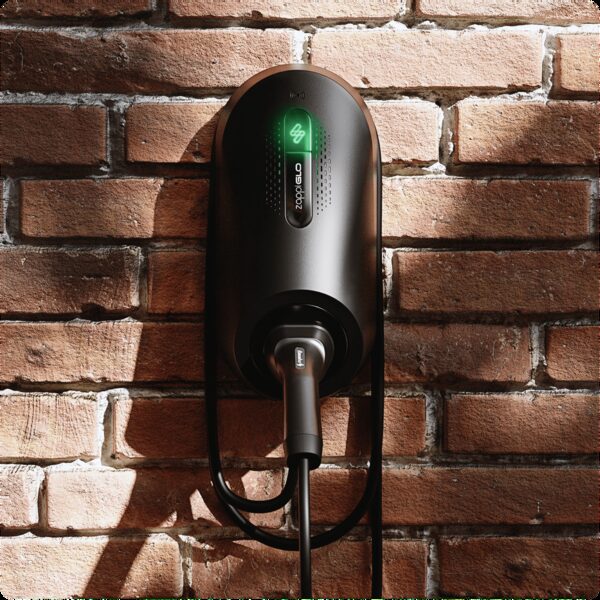
Chargepoint warranties follow the same two-layer pattern as heating, and the maker's terms are the place to check them. The myenergi warranty schedule lists the zappi as covered for 36 months, or 60 months if the extended warranty is purchased, and records that the extended warranty is available8. The product page describes the same thing from the buyer's side: the option to extend the standard 3-year warranty to a total of 5 years21.
The conditions are specific and worth reading before purchase. A product serial number is required to buy the extended warranty21. On a standard zappi the serial number is on a silver sticker located on the left-hand side of the unit21. On a zappi GLO it is printed on a silver sticker located under the sun-shield on the right side of the unit, which has to be removed to reveal it21. myenergi Ireland technical support can be contacted if further assistance is needed entering the serial number21.
Two limits apply. Extended warranties cannot be stacked or purchased more than once for the same device, and the buyer must not already hold an extended warranty for the same device21. The schedule also shows that not every product in the range carries the same cover: the zappi pedestal is listed at 12 months with no extended warranty available8. The harvi and the hub have no separate extended warranty available, but will be covered under an extended warranty for either an eddi or a zappi if installed at the same time as either8.
| Product | Standard cover | Extended warranty | Notes |
|---|---|---|---|
| zappi | 36 months | Available, to a total of 60 months | Serial number required; cannot be stacked21 |
| zappi pedestal | 12 months | No | 8 |
| harvi | Not separately listed | No separate cover | Covered if installed with an eddi or zappi8 |
| hub | Not separately listed | No separate cover | Covered if installed with an eddi or zappi8 |
When a warranty claim can be refused
Refusal usually turns on one of three things: who did the work, how it was commissioned, and whether it has been maintained. The maker's exclusions for the Ecodan plan name incorrect installation, incorrect application, inadequate commissioning or failure to commission, failure to conduct routine maintenance, neglect, accidental or malicious damage, misuse, inadequate power supply or water pressure, unapproved alteration or repair, non-domestic use, and equipment beyond its anticipated life span under maintenance-only cover6. Those categories cover most of the reasons a claim fails in practice.
Registration is the first gate. A household using a non-registered installer is unlikely to receive a warranty on the work carried out15. Where the installer is registered, the workmanship warranty covers work where the installer is no longer trading and the work does not meet building regulations3, which is the scenario the scheme exists for.
Commissioning is the second gate. The installer is required to install, commission, service and use products in accordance with the manufacturer's instructions provided11, and installers are supplied with the means, including documentation, training and technical support, to carry out and notify installation, commissioning and servicing work in accordance with those instructions11. Where commissioning was skipped or recorded incompletely, the paperwork that a claim depends on does not exist.
Maintenance is the third. Failure to conduct routine maintenance is an express exclusion6, and the annual service is the evidence that the system has been looked after. For funded work, the pattern is the same: families affected by faulty ECO4 and GBIS installations should first contact the installer who carried out the installation, and where the installer is no longer trading or unable to remedy damages, they can contact their guarantee provider to initiate a claim22.
Aftercare and complaints: how makers and installers handle problems
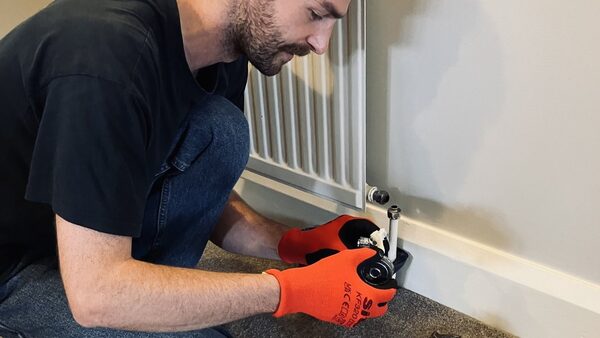
The route for a problem depends on whether it is a product fault, an installation fault or a service dispute. For product faults, the installer is expected to report product faults and concerns to the manufacturer in a timely manner11, and to rectify any installation problems at no cost to the customer during the installer's guarantee period11. For a service dispute with Mitsubishi Electric, the Ecodan terms direct complaints to the Customer Service Manager on 0161 866 6064, or in writing to MELSmart Maintenance, Mitsubishi Electric Europe B.V., Unit 12, Mercury Park, Mercury Way, Trafford Park, Manchester M41 7LY, or by email to ecodan.service@meuk.mee.com6.
For installation quality, the Boiler Upgrade Scheme guidance sets the escalation order: raise it with the installer in the first instance, then the installer's consumer code, HIES or RECC, or MCS installation quality complaints23. Competent person schemes have insurance-backed warranties and complaints procedures if there's a problem with the work13. Where a guarantee scheme is involved, the CIGA Guarantee requires that all problems relating to the installation must be reported to the installer as soon as practicable, and CIGA must be informed if the matter is not resolved satisfactorily within 2 months24. Under the Installation Assurance Authority's complaints procedure, where remedial works are recommended these will be arranged by the installer, the system supplier or the IAA as appropriate, and regular updates will be provided25.
One procedural point can complicate a claim. Where an installer is asked to repair or remediate an installation not originally done by them, they should inform the customer and get their written agreement before proceeding, and starting any work may mean that if a complaint is ongoing or raised later, MCS cannot determine which installer was responsible26. A household with an unresolved complaint should therefore settle the complaint route before commissioning remedial work from a different firm.
For warranties and guarantees generally, a claim needs details of what the problem is20, and the practical evidence is the same in every case: the commissioning record, the service history, the purchase documents and the registration details.
Service plans, guarantees and household energy independence
Aftercare sits at the point where a household's independence meets its dependence. A heat pump, a solar array or a home chargepoint reduces reliance on imported gas and on a supplier's standard tariff, but it does not remove reliance on the manufacturer, the installer and the service network. The warranty structure is what determines how much of that reliance is priced and how much is open-ended.
The evidence points in two directions. On the protective side, workmanship guarantees must be valid for a minimum of 2 years and be transferable to the new owner if the home is sold7, and an insurance-backed guarantee provides protection should the installer cease to trade9, carrying the same period of validity as the original workmanship warranty11. That is meaningful cover against the most common failure mode, which is not a broken machine but a firm that has stopped trading.
On the exposure side, official analysis found that owner-occupiers were particularly exposed once warranties expired18. A service plan shifts some of that exposure back to the maker for a defined period and a defined scope, but the exclusions are real: cylinders of certain types, underfloor heating systems, inaccessible pipework and glycol refills all sit outside the Ecodan plan6. The dependence that remains is on the maker's service network, the availability of parts, and the annual servicing that keeps the product warranty valid.
For a household weighing up an installation, the practical reading is that the warranty package is part of the system specification, not an afterthought. The length of the workmanship warranty, whether it is insurance-backed, whether it transfers on sale, and what the annual service requires are all knowable before signing. Where a scheme or code sets a floor, that floor is the minimum a household should expect to see in writing.
Sources26 cited
- How to choose a good solar installer, Low Carbon Hub, 2025-10-20
- Insurance backed guarantee products, MCS Certified, 2026-05-13
- Workmanship warranty, OFTEC, 2026-09-20
- Consumer advice for households, NAPIT, 2026-09-17
- Compare contractors fairly, The CPA, 2025-11-27
- Ecodan Homeowner Service and Maintenance, Mitsubishi Electric, 2026-09-17
- RECC Consumer Code, Renewable Energy Consumer Code, 2026-07-01
- myenergi product warranty, myenergi, 2026-05
- Insurance backed guarantees for homeowners, Flexi-Orb, 2026-02-25
- Living with a heat pump, Home Energy Scotland, 2024-02
- Faulty or underperforming system issues FAQs, Renewable Energy Consumer Code, 2017-04-10
- Northern Ireland Sustainable Energy Programme, Energy Saving Trust, 2026-09-07
- Use a competent person scheme, GOV.UK, 2026-09-17
- Building regulations: boilers and heating, Welsh Government, 2026-09-17
- Why choose an OFTEC registered competent person, OFTEC, 2026-09-17
- HHIC guidance document, HHIC, 2026-09-17
- Building regulations for boilers and heating, Planning Portal, 2026
- Heat pump transition report, Department for Energy Security and Net Zero, 2026-05
- Mitsubishi Electric heat pump Ecodan recall, Electrical Safety First, 2026-09-17
- Claim using a warranty or guarantee, Citizens Advice, 2026-09-17
- zappi extended warranty, myenergi, 2026-09-17
- Energy market consumer protection, Hansard, 2026-06-17
- Boiler Upgrade Scheme guidance for property owners, Ofgem, 2026-03-25
- The CIGA Guarantee, CIGA, 2026-09-20
- Complaints procedure, The IAA, 2026-09-20
- Whistleblowing, MCS Certified, 2026-05-13
 Warranties and DegradationHow long do solar panels actually last, and what do the warranties really cover?
 Manufacturer WarrantiesHow long does a boiler, heat pump or solar panel warranty actually last, and what do you have to do to keep it valid?
 When an Installation Goes WrongYour solar panels have stopped generating.
 Buying Energy Equipment OnlineWho fits your solar panels, battery or heat pump when you buy them online, and who puts things right if they go wrong?
 When Your Installer Goes BustWhat happens to deposits, part-completed work, workmanship guarantees and complaints when a home energy installation company fails, and how to claim on deposit protection, an insurance-backed guarantee, card or finance cover, and who honours the manufacturer's warranty.
 EV Charger WarrantiesCovers typical warranty lengths on UK home charge points, what parts and labour are included, registration conditions and extended warranty options.