In this guide
myenergi is a British manufacturer of home energy products, best known for the zappi, described by the company as the world's first solar-compatible electric vehicle charger1. The zappi is a smart home charge point that can run from the grid like any other charger, or divert surplus solar generation into the car instead of exporting it. Prices start from £779 including VAT where applicable, and the charger carries a three-year warranty2.
The company is not a charging-only business. It sells the zappi alongside the libbi home battery, the eddi solar power diverter and the harvi wireless energy monitor, all controlled through a single myenergi app4. That ecosystem is the reason the brand comes up so often in solar households: the charger is designed to work with generation and storage rather than beside them.
For a household weighing energy independence, the zappi's value is that it can absorb self-generated electricity that would otherwise be exported, and its limit is that it remains a grid-connected appliance with an app, a manufacturer's servers and a warranty tied to registration. This page sets out the range, the solar behaviour, the warranty terms, the buying and installation route, and what ownership means in practice.
myenergi at a glance: the company behind zappi
myenergi describes itself as a leading manufacturer of renewable energy solutions for homes and businesses, and says it innovates and manufactures affordable, pioneering technology for its customers9. It began in the Humber Freeport and now operates what it calls a state of the art manufacturing facility in Lincolnshire10. The company states that it has shipped over 500,000 British-made home technology products worldwide, and separately that more than 350,000 myenergi products are installed across 10 countries6.
The zappi is the product that built the brand. myenergi says it brought the world's first solar-compatible electric vehicle charger to market, and independent coverage has described the company as best known for that charger1. The range has since widened into battery storage and hot water diversion, and the company sells through an installer network rather than direct to the public alone.
Support is UK-based. myenergi advertises UK technical and customer support and a single dedicated UK support line intended to resolve problems in one call11. Warranty faults are reported first to the support team by calling +44 (0)333 300 1303 or emailing support@myenergi.com, with proof of purchase5. Northern Ireland customers are given a separate number, 028 2044 06065.
The company's independence credentials are real but bounded. It manufactures in Britain, which shortens the supply chain for parts and service, and its products are designed to work with a household's own generation. It is still a private manufacturer whose app, cloud services and warranty administration sit with the company, so the household's relationship with it continues after installation.
The zappi range: what the chargers do
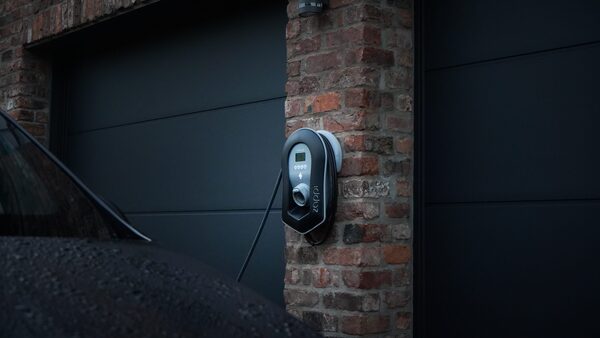
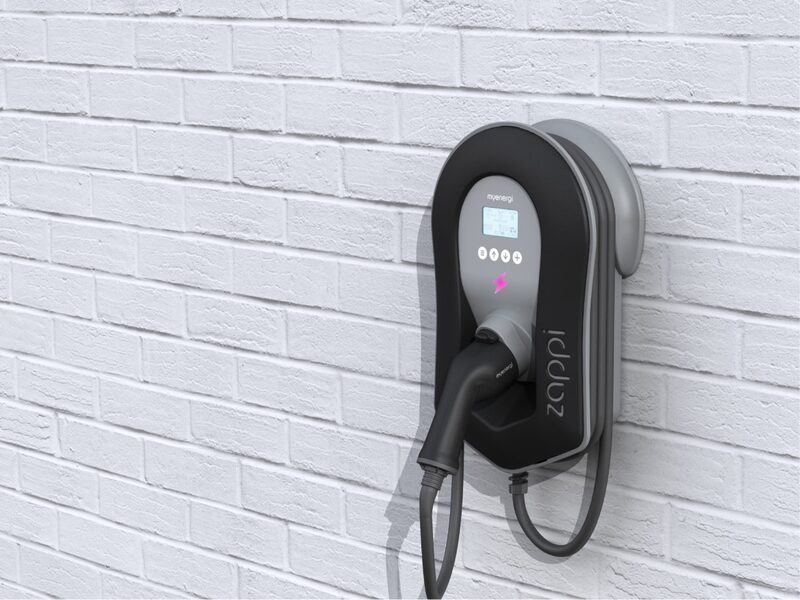
The zappi is a smart home charge point sold in a range of configurations. myenergi states that buyers can choose the power output, the connection type and the colour, so the same product family covers tethered and untethered installations and different supply arrangements3. The company's own guidance has used a 7kW zappi as its home charger example and a 22kW zappi as a workplace charge point example15.
Three charging modes define how it behaves. Eco, eco+ and fast are the distinct modes offered, and the charger is described as having the ability to charge with 100% green energy3. In practice the modes govern how much grid power the charger is willing to draw alongside whatever the solar array is producing: fast charges at full rate from whatever source is available, while the eco modes prioritise self-generated electricity and slow or pause charging when generation falls away.
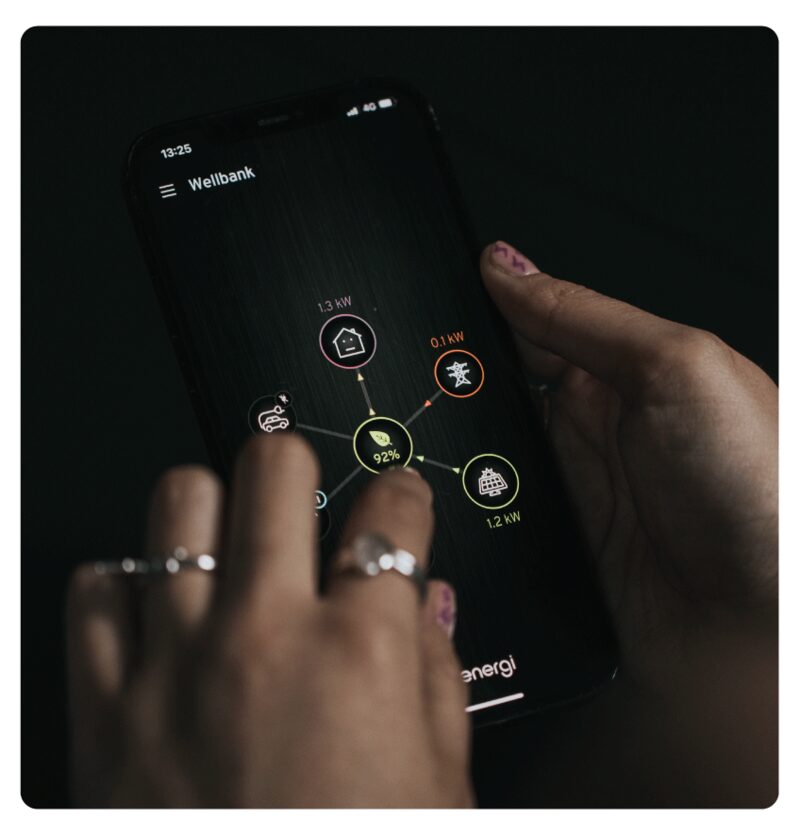
The wider ecosystem matters to how the charger is used. myenergi lists the zappi EV charger, libbi home energy storage, eddi solar power diverter, harvi wireless energy monitor and the myenergi app as the components of its ecosystem4. The libbi product page states that battery, solar, EV charger and hot water all work together through a single myenergi app12. The company also sells a zappi GLO variant, described as designed and manufactured in Britain16.
| Feature | Detail |
|---|---|
| Charging modes | eco, eco+ and fast3 |
| Buyer options | Power output, connection type and colour3 |
| Home charger example | 7kW zappi15 |
| Workplace example | 22kW zappi15 |
| Ecosystem partners | libbi battery, eddi diverter, harvi monitor, myenergi app4 |
| Warranty | 3 years from date of purchase3 |
For households comparing charger types before choosing, types of home EV charger sets out how tethered, untethered and solar-aware units differ, and smart EV chargers explains what the smart label requires.
Solar matching: charging from your own generation
The zappi's central claim is that it can charge a car from a household's own solar generation rather than from the grid. myenergi states that the charger has the ability to charge using free solar energy, and that it allows charging with 100% green energy2. The company describes its patented technology as monitoring energy generation and usage to maximise the use of self-generated energy and minimise grid consumption10.
That behaviour is what distinguishes a solar-aware charger from an ordinary smart one. A standard charger draws whatever the car asks for, regardless of what the roof is producing, so surplus generation is exported and the car is charged from the grid. A charger that can modulate its draw can instead follow the array's output, absorbing the surplus into the battery pack. myenergi states that its ecosystem works alongside existing solar PV systems, helping households make the most of the energy they generate4.
The company's own guidance is careful about the starting position. It states that a zappi will draw power from the national grid, much like a conventional electric vehicle charger, and that it is future-proofed for solar added later7. That is the honest framing: without solar, the zappi is a grid charger with solar capability built in. Independent guidance on solar and EV charging notes that compatibility between the charger, the solar system and any battery storage is best considered from the outset rather than retrofitted around17.
The dependence that remains is the grid itself. Solar matching reduces the amount of grid electricity a household buys, and it does not remove the connection, the meter or the supplier. On days of low generation the car charges from the network like any other. For a fuller treatment of the arrangement, charging an EV from solar panels covers sizing and behaviour, and EV charging alongside a home battery covers the storage side.
Warranty: three years from the date of purchase
The standard term is three years. myenergi states that its products are protected for three years from the date of purchase against faults in material and workmanship, and the zappi product pages repeat that the charger comes with a three-year warranty3. An extended warranty can take the standard three-year period to five years, and it can be purchased for zappi and eddi products19.
Registration is a condition of getting the full benefit. myenergi asks owners to register their individual products once installed to take full advantage of the three-year warranty support, and the warranty document requires an account to be set up and the product registered in My Account through the myenergi app or on the myenergi site10. The warranty covers domestic or non-commercial use, with a stated exception: zappi and zappi pedestal are also covered when used in private off-street charging in commercial settings such as private car parks, multi dwelling residential properties or workplace charging20.
The remedy sits with the maker. myenergi will, at its sole discretion and free of material and labour charges, repair or replace the defective product20. A replacement may be refurbished or contain refurbished materials, is covered only for the remaining term of the warranty period, and replaced parts become the property of myenergi20. Third party costs for repair and replacement are not reimbursed unless authorised in advance and in writing21.
Two further conditions are worth knowing. Where an EV charger was bought with an OZEV Electric Vehicle Homecharge Scheme grant, the change of address must have been reported to OZEV; until it is, myenergi will not register the new address and the product is not covered20. And the extended warranty states that all costs associated with resolving an issue are covered, subject to its terms and conditions19. EV charge point warranties and aftercare compares how makers structure these terms.
Buying and installing a zappi in the UK

There is a published starting price. myenergi lists the zappi from £779 including VAT where applicable2. That is the charger, not the installed job. The company's own guidance states that installation costs typically start at £1,099 and that this includes the price of the charger7. Separately, myenergi advertises installation and 3+ years warranty from £94922. The figures come from different pages and cover different things, so they should be read as starting points rather than a single price.
Installation itself is a qualified trade job. myenergi states that the zappi can be easily installed by a qualified electrician in less than a few hours23. Independent guidance is firmer: EV chargers should be installed by a qualified electrician with relevant experience, with compatibility between the charger, solar system and any battery storage considered from the outset17. The NICEIC advises householders to hire an electrician registered with a recognised certification body24. Most home charger installations take just a few hours, with installers typically completing everything in one day from fitting to commissioning22.
myenergi runs an installer network rather than a single national fitting service. The company states that hundreds of trained zappi installers across the UK are ready to provide a quote, found by entering a postcode22. It also describes a dedicated in-house team of specialist installers serving customers throughout the UK, complemented by a network of authorised subcontractors6. For developers, the company offers an end to end supply and install service with a bespoke call off plan to meet timescales11.
| Route | What it covers |
|---|---|
| Charger only | From £779 including VAT where applicable2 |
| Maker installation guidance | Installation costs typically start at £1,099, including the charger7 |
| Advertised installation offer | Installation and 3+ years warranty, from £94922 |
| Installer network | Hundreds of trained zappi installers, postcode search22 |
Independent guidance lists the MyEnergi Zappi among the top smart chargers in the UK25. For the wider process, home EV charge point installation covers what a fitting involves, and how much a home EV charge point costs, fitted sets out the cost structure.
Returns, replacements and getting support
Returns start with an email. myenergi asks customers to email customersupport@myenergi.com to request a return, or to use the online form, stating the details for the return, their name, receipt number and address26. Cancellation can be given in writing with a name, address and order reference, or by completing and submitting the cancellation form on the website or by calling 0333 300 130326. Items are sent to FAO myenergi Returns Dept, Pioneer Business Park, Faraday Way, Stallingborough, Grimsby, DN41 8FF26.
Replacement timing is stated but not guaranteed. myenergi says it processes and dispatches all replacements within approximately 48 hours of them being reported, and that an email with return instructions for the faulty product follows within 24 hours of dispatch5. The underlying remedy remains repair or replacement at myenergi's sole discretion, free of material and labour charges20.
Support runs through the same channels as warranty claims. Faults are reported first to the support team by calling +44 (0)333 300 1303 or emailing support@myenergi.com, with proof of purchase5. Northern Ireland customers are directed to 028 2044 06065. The company advertises a single dedicated UK support line intended to resolve problems in one call14.
Two practical points sit behind the paperwork. The charger's security updates are provided for five years from the date of manufacture, which sets a horizon on how long the connected product is supported8. And the warranty is registered to an address, which is why the OZEV notification condition matters for anyone who moves house with a grant-funded unit20. EV charger faults and troubleshooting covers diagnosis, and EV charger apps, Wi-Fi, 4G and firmware covers the connectivity side.
What owning a zappi means for energy independence

The zappi's contribution to a household's independence is straightforward: it can turn surplus rooftop generation into miles instead of an export payment. myenergi states that the charger offers the ability to charge using free solar energy and to charge with 100% green energy, and that it works with solar panels, a home battery, a heat pump and an energy tariff2. The company's wider technology is described as monitoring generation and usage to maximise self-generated energy and minimise grid consumption10.
The dependence that remains is substantial and worth stating plainly. Without solar, the charger draws from the national grid like any other, as myenergi itself notes7. Even with solar, the household stays connected to the network, to a supplier and to a meter, and charges from the grid whenever generation is short. The app-based control adds a further layer: scheduling, monitoring and remote features depend on home broadband, myenergi's services and a manufacturer's app, and the security update commitment runs for five years from manufacture8. The warranty depends on registration and, for the longest term, on an approved installer carrying out any reinstallation19.
The company's own framing of the ecosystem is that solar, battery, EV charger and hot water sit in one intelligent ecosystem10. That is a genuine integration benefit for a household already generating its own power, and it is also a single-vendor relationship that outlasts the installation. EV charging and household energy independence sets out the wider picture, and zappi solar-aware EV charger covers the model-level detail.
Sources26 cited
- myenergi news: solar-compatible charger, myenergi, 2026
- myenergi products shop, myenergi, 2026
- zappi home EV charger guide, myenergi, 2026
- One solar ecosystem, myenergi, 2026
- myenergi customer support, myenergi, 2026
- myenergi EV chargers, myenergi, 2026
- Electric car charging at home, myenergi, 2026
- myenergi product support policy, myenergi, 2026
- myenergi EV charging solutions, myenergi, 2026
- myenergi homepage, myenergi, 2026
- myenergi for home builders, myenergi, 2026
- libbi battery storage, myenergi, 2026
- SUNAMP funding for living lab trial, Energy Systems Catapult, 2022
- One solar ecosystem, myenergi, 2026
- OZEV electric car grant guide, myenergi, 2022
- zappi GLO, myenergi, 2026
- Can solar panels charge electric cars?, The CPA, 2026
- zappi product page, myenergi, 2026
- myenergi extended warranty, myenergi, 2026
- myenergi product warranty v4.1, myenergi, 2026
- myenergi product warranty v2.0, myenergi, 2023
- myenergi chargers, myenergi, 2026
- zappi EV charger, myenergi, 2026
- EV charger installation and maintenance, NICEIC, 2025
- Best EV tariffs for multi-car families, Uswitch, 2025
- myenergi returns policy, myenergi, 2026
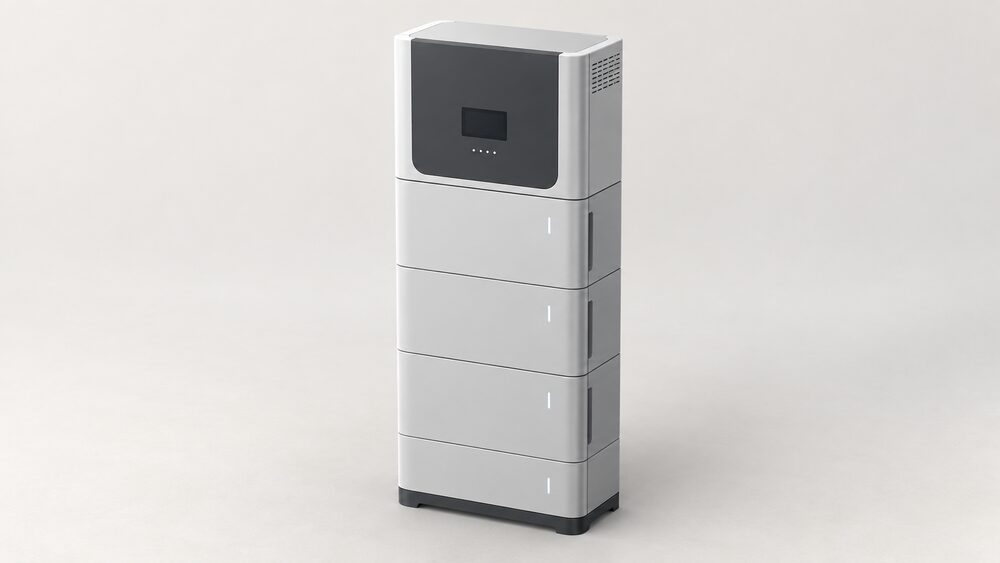 myenergi libbiHow much does a myenergi libbi cost, and how many units do you need to run a typical home?
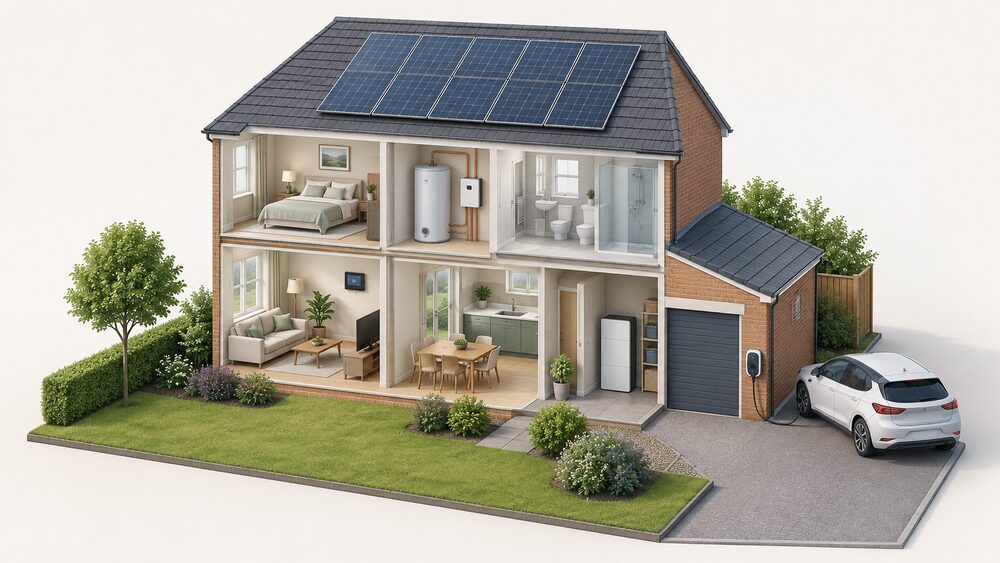 MyenergiMyenergi is a British company making home energy kit in Lincolnshire, best known for the zappi car charger.
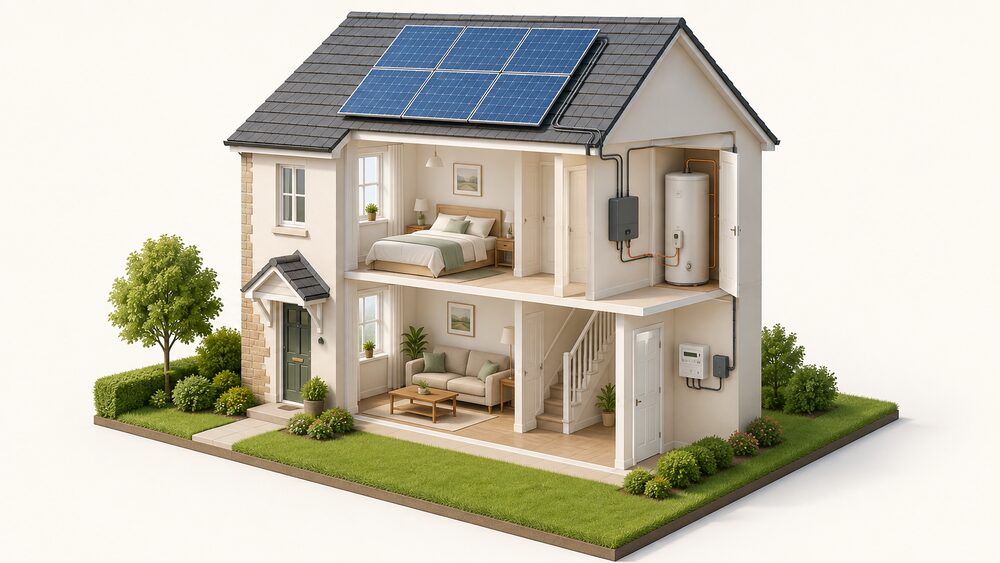 myenergi eddiThe myenergi eddi diverts surplus solar into an immersion heater instead of the grid, with up to 95% self-consumption claimed, a three-year warranty and UK manufacture in Lincolnshire.
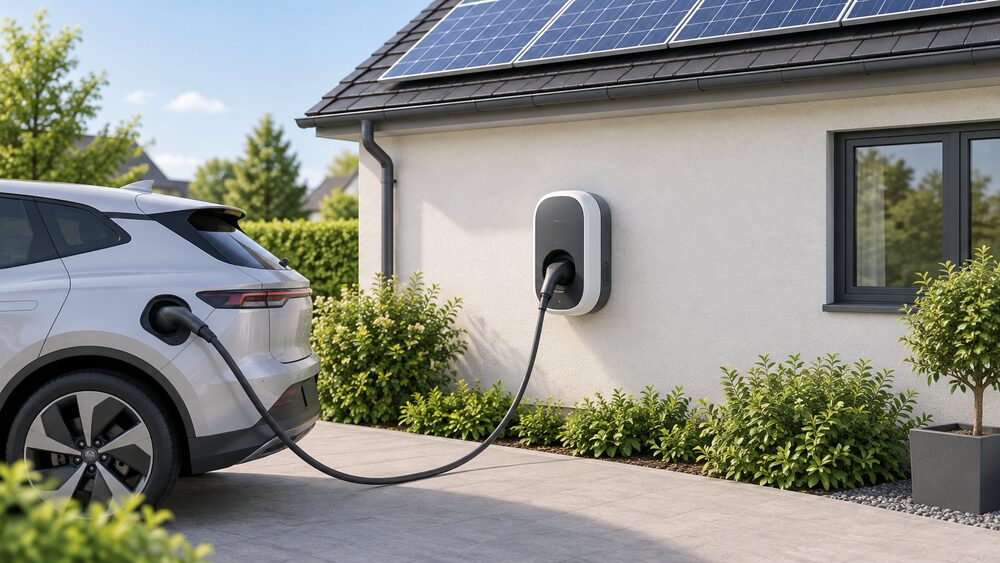 Zappi solar-aware EV chargerThe myenergi zappi is a UK-made solar-aware home EV charger sold in 7kW single-phase and 22kW three-phase forms, with ECO and ECO+ modes that divert surplus solar or wind generation into the car.