In this guide
A household's energy independence is decided twice: once when the equipment is chosen, and again every time that equipment needs a firmware update, a spare part, a replacement or a service. The first decision is visible on a quote. The second is buried in a protocol, an app and a warranty document, and it is where brand lock-in lives.
The mechanism is not mysterious. An energy smart appliance is defined in government guidance as an appliance, such as an electric vehicle charging point or a heat pump, capable of increasing or reducing its electricity demand in response to signals received remotely from a third party1. That remote signal is the point of value and the point of dependence at once. If the signal comes from a manufacturer's cloud, the household's control of its own demand runs through a company that may change its terms, its app or its business.
The counterweight is certification and open standards. The Microgeneration Certification Scheme is a certification scheme for microgeneration installation companies and products, defining and maintaining consistent standards, and it is what makes a product eligible for the Smart Export Guarantee, the Feed-in Tariff and the Renewable Heat Incentive2. Certification tells a household that a product met a published standard at a point in time. It does not tell them whether the maker will still exist in ten years, whether the app will still work, or whether the inverter will accept a battery from another brand.
What brand lock-in means for a household
Lock-in is the cost of leaving. For home energy equipment it appears in four places, and they are worth separating because they fail differently.
The first is the protocol. If an inverter, battery and gateway speak only to each other, the household cannot add a battery from a different maker or move to a cheaper monitoring platform without replacing working hardware. The second is the cloud. Monitoring and control that run only through a manufacturer's servers mean the system's visibility depends on that company continuing to run those servers. The third is the setting. A device that will only charge at times the manufacturer's algorithm chooses, or that will only respond to one supplier's tariff signal, has handed a decision to someone else. The fourth is the tariff tie-in, where a product is sold with a rate that assumes a particular piece of hardware.
Government has been moving into this space. The Energy Bill would allow regulations to be created for energy smart appliances and require load controllers to have a licence, and the enforcement scope could apply to any person making, supplying, importing or distributing energy smart appliances or carrying out load control1. That is a recognition that remote control of household demand is now a regulated activity rather than a private arrangement between a buyer and a maker.
The same logic runs through product regulation more broadly. The Ecodesign for Energy-Related Products and Energy Information Regulations 2021 aim to increase producer responsibility, reduce energy usage and electrical waste, and enable consumers to identify the most energy efficient products on the market7. Repairability and producer responsibility are the regulatory answer to a product that cannot be kept going. For a household, the practical question is simpler: if the maker withdrew tomorrow, what would still work?

Why manufacturers matter to energy independence
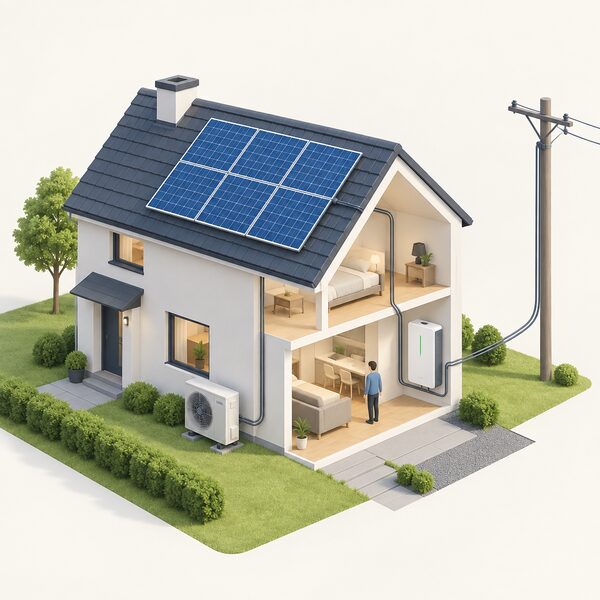
A household that generates, stores and controls its own energy is independent of the grid only at the margins. It remains connected, remains subject to standing charges, and in most cases remains a customer of a supplier. What the manufacturer decides is how much of the system the household can actually operate on its own terms.
The funding landscape shows how much of this sits with bodies other than the household. The Energy Company Obligation started in 2013 and requires energy suppliers to fund heating and insulation measures, and it is up to energy suppliers to determine which energy efficiency measures they want to fund, the level of funding they provide, and the retrofit coordinator or installers they choose to work with8. Suppliers also had to publicly share their annual installation target9. The choice of equipment under those schemes is therefore made upstream of the household, by a supplier working to its own obligations.
Certification is the other lever. A key driver for TrustMark registration is the Great Britain wide Energy Company Obligation scheme, which requires suppliers to be TrustMark approved in order to access the funding10. Installers under ECO must be TrustMark accredited and will have a registration number, except in the case of installers of district heating connections8. For a household, this means the manufacturer and the installer are bound together by scheme rules: a product that loses its certification can take the household's access to support with it.
The independence question, then, is not whether a household can leave the grid. It is whether the household can keep operating its equipment, and keep choosing who services it, when a manufacturer changes course. That is decided by protocols, spare parts, warranty terms and the availability of local control, and it is worth judging a maker on those before judging it on efficiency.
Solar panels: consolidation and the end of polycrystalline production
The solar panel market has consolidated to the point where a household is choosing between a small number of very large manufacturers and a long tail of smaller ones. Nine ranked manufacturers shipped a combined 222.4GWp of solar panels in the first half of 2024. That is a shipment figure for the ranked group, not a UK market share, and it says nothing about which of them supports a product for twenty years.
The clearest demonstration of product-line risk is polycrystalline silicon. Manufacturers completely stopped producing polycrystalline solar panels in 2023. A household that bought into that technology now owns a module type no longer made, which affects matching, replacement and the second-hand market. Monocrystalline ranges have replaced it, and the same risk applies to any range a maker decides to retire.
Materials policy is now part of the picture. There are small amounts of antimony in solar panels, which is a hazardous substance and may impact recyclability, and some European manufacturers produce panels without antimony11. That is a design choice with an end-of-life consequence, and it is the kind of thing that separates makers on something other than price per watt.
For households buying at the small end, the rules are still forming. Plug-in solar panels became legal to buy and use across Great Britain from 27 August 2026, and retailers including Amazon, Argos, Curry's and Wickes have committed to stocking plug-in solar panels6. The government has stated that all plug-in solar equipment supplied for use in the UK would be required to comply with the specifications set out in its interim product specification12. Group-buying schemes have also become a route to market: Solar Together is a group-buying scheme for solar panels and battery storage13, and one such scheme entered the UK energy market in 2012 after focusing on group-buying in the Netherlands and Belgium13.
Heat pumps: €7 billion of manufacturer investment and what it signals
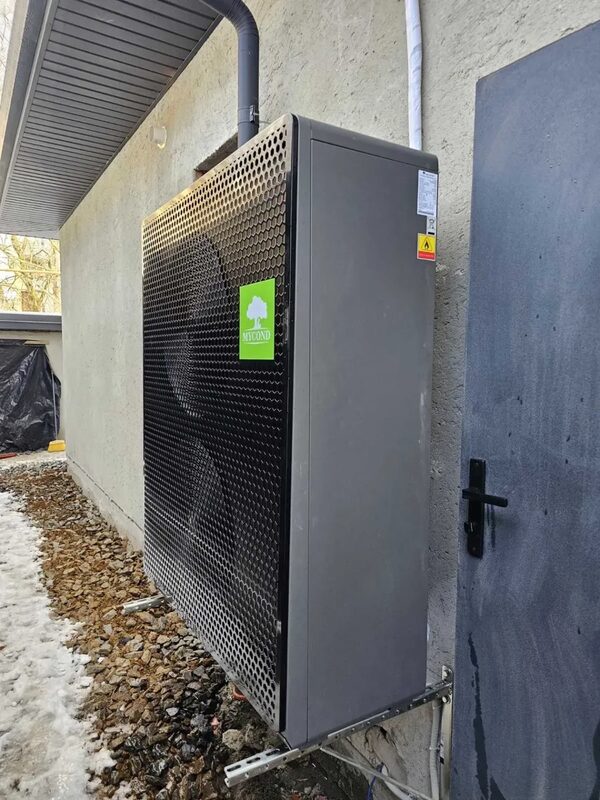
Manufacturer investment in heat pumps is large and recent, and it is the clearest signal that the supply chain is being rebuilt around a technology rather than a fuel. European heat pump manufacturers announced investments totalling nearly €7 billion over the next three years, reported in December 2023.
The UK targets behind that investment are set out in government guidance: an aim of 450,000 annual installations per year by 2030, 70% of which are targeted to be manufactured in the UK by 20354. A separate official figure puts the deployment ambition at 600,000 heat pump installations per year by 202816, and the same 600,000 installations a year by 2028 target appears in parliamentary research17. The two figures, 450,000 by 2030 and 600,000 by 2028, come from different documents and describe different things: one is an installation aim with a manufacturing share attached, the other a deployment ambition. They are not a contradiction so much as two measures of the same policy.
The money attached to the supply chain is substantial. The Heat Pump Investment Accelerator Competition offers £90 million to support major investment in UK-based manufacturing of heat pumps and key components4, and the Warm Homes Plan trebled the Government's investment in the heat pump supply chain to £90 million18. The heat pump net zero investment roadmap states that the programme will require cumulative investment of up to £28 billion across the supply chain by 20285.
For a household, the significance is about where the equipment comes from and who can service it. A target of 70% UK manufacturing by 2035 implies a shift in the origin of the boxes on the wall, and with it a shift in the availability of parts and engineers. It does not, on its own, tell a household whether a particular maker will support a particular model for fifteen years.
Boilers and cylinders: the UK manufacturer landscape
The boiler market is the most mature part of the home energy sector, and it is also the most crowded with brands that share owners. Which? publishes a boiler service survey that rates a long list of brands and cover providers, including Ariston, Baxi, Worcester Bosch, Alpha, Glow worm, Ideal, Vaillant, ATAG, Ferroli, Viessmann, Intergas, Main and others, alongside insurers and home cover providers19. The breadth of that list is itself the point: a household comparing boilers is often comparing the same parent group under different badges.
Independent comparison material exists for 2026. iHeat published a guide comparing the UK's top boiler manufacturers for 2026, covering Worcester Bosch, Vaillant, Viessmann, Ideal and Alpha. Which? also maintains a directory of businesses, including entries such as Boiler Plumbing Installations Ltd, which carries a 5.0 quality rating and is described as fully insured20. Such entries are a starting point for checking an installer, not an endorsement of a brand.
Cylinders are a separate manufacturing base. OSO Hotwater published an article in June 2026 on the established manufacturers serving the UK domestic unvented hot water cylinder market. The cylinder matters to independence because it is the component that stores hot water and, in some designs, allows a household to shift when it heats water. A combi boiler removes that store, and with it the ability to heat water at times of cheap or self-generated electricity.
The Scottish quality assurance framework is worth noting for households north of the border. The Scottish Government's heat in buildings quality assurance policy statement sets out how work is to be assured10, and the Building Standards Technical Handbook for domestic buildings covers Section 6 Energy, economy and heat retention21. Where a household is in Scotland, the assurance route and the building standards context differ from England.
Certification and approval schemes: MCS, the EAG White List and manufacturers' declarations

Certification is the mechanism that turns a manufacturer's claim into something a scheme will accept. The Microgeneration Certification Scheme is a certification scheme for microgeneration installation companies and products, defining and maintaining consistent standards2. The Smart Export Guarantee and the government's previous Feed-in Tariff and Renewable Heat Incentive schemes all require the renewable energy product and installer to be certified and meet MCS standards22.
The Boiler Upgrade Scheme applies the same principle. Installers and the low-carbon heating products supported under the scheme must be Microgeneration Certification Scheme certified, and members of an approved consumer code3. Ofgem maintains a Product Eligibility List showing the makes and models of renewable heating products which it has assessed as eligible for the scheme based on information supplied to it by the Microgeneration Certification Scheme23. That list is the practical document a household or installer checks before assuming a grant applies.
MCS has been investing in the scheme itself. In 2024/25 the Green Heat Installer Engagement Programme supported 25 installers to achieve MCS certification24, and MCS reported in August 2026 that a new appointment and further investment in the Scheme team would strengthen relationships with Product Certification Bodies, manufacturers, distributors and merchants.
Outside the UK, national lists can decide market access outright. Austria's EAG White List, the official list of European PV manufacturers, was published on the EAG Abwicklungsstelle website in May 2025, and BISOL Group announced that its solar modules had been officially approved for inclusion on it. A manufacturer's declaration is a different instrument: it is a document a maker issues about its own product, such as the declaration Solarwatt GmbH dated in Dresden on 15 April 2025 on the dazzle effect. Formal marking rules sit alongside these: plug-in solar devices must carry the manufacturer's name, registered trade name or registered trademark, postal address and email address as permanent product marking25, and must be supplied with a durable label intended to be affixed at or near the consumer unit indicating the presence of a plug-in generation device25. The interim product specification includes labelling requirements for products that are tested by the manufacturer and found compliant12.
European manufacturers under policy pressure: the Italian draft energy law
Support schemes can be written in a way that excludes manufacturers, and the Italian draft energy law is the current example. BISOL Group said in December 2025 that the proposed eligibility wording could exclude nearly all European PV manufacturers from Italy's new tax incentive scheme, and called for open and technologically neutral access to incentives. In February 2026, European photovoltaic manufacturers expressed concern about proposed restrictions on eligibility for Italy's future solar refurbishment incentive schemes and urged the Italian government to reinstate section a eligibility or adopt a performance-based section b criterion.
The dispute is about how eligibility is defined. A rule that names a technology, a manufacturing location or a component origin decides which makers can sell into a supported market, and therefore which products a household can choose from. A performance-based criterion decides the same thing by measuring output instead. The manufacturers' argument is for the second approach.
This matters to UK households indirectly but genuinely. European manufacturers under pressure in one market adjust their pricing, their product ranges and sometimes their presence in others. A maker that retreats from a supported market may also reduce its service network. The wider regulatory context is also moving: the government will proceed with new Ecodesign and Energy Labelling regulations for household tumble dryers in Great Britain, broadly as consulted upon, with a small number of refinements based on stakeholder feedback26, and that consultation involved reforming the current household tumble dryers energy efficiency and condensation efficiency scales and introducing a new acoustic airborne noise emission and repairability index scale26. Repairability indices are the direction of travel, and they bear directly on how long a product can be kept working.
How to judge a manufacturer before you buy
There is no single test, but there is a sequence of checks that a household can make without specialist knowledge.
- Check the certification. Confirm the product appears on the relevant list, such as the MCS certified product directory or Ofgem's Product Eligibility List for renewable heating23.
- Check the installer. Installers under ECO must be TrustMark accredited and will have a registration number, except in the case of installers of district heating connections8. Searching a competent person register such as TrustMark is the route to finding an installer that will assess your circumstances and property to identify suitable measures27.
- Check the company. Look for current filings, a live product page, and a spare parts route. Where a dispute arises, the Energy Ombudsman expects the household to notify the supplier and work with them to try and resolve the issue before contacting the Ombudsman28, and the supplier must be the correct one to raise the dispute against, with the consumer having already complained and holding sufficient evidence including the date the complaint was raised29.
- Check the control model. Ask whether the system can be monitored and controlled locally, and whether it will accept a battery or charger from another maker.
- Check the support life. Ask how long firmware and app support is committed for, and what happens to the hardware if the service ends.
For plug-in solar specifically, the manufacturer carries a registration duty. Manufacturers shall register devices on the ENA Type Test Register (ENA Direct Connect platform) and obtain confirmation that the device has been assessed and identified as compliant prior to placing them on the market30. That registration is a check a household can ask about.
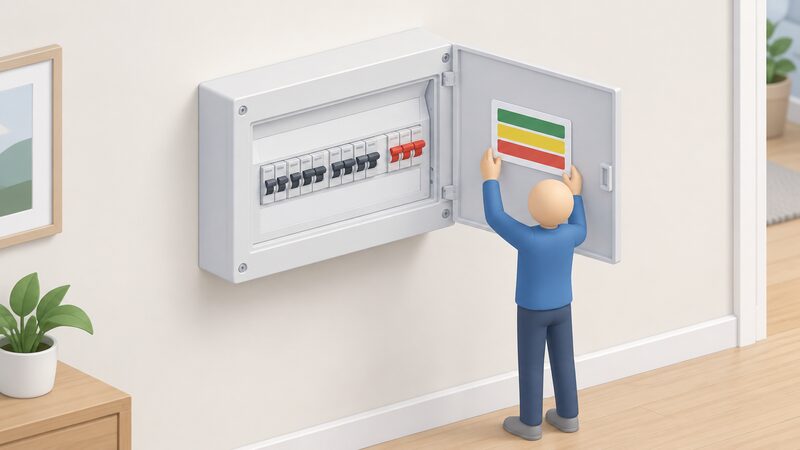
Reducing lock-in: warranties, spare parts and open standards
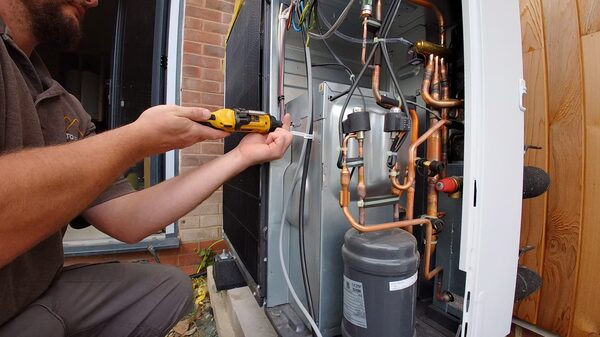
Lock-in is reduced by three things: a warranty that survives the company, spare parts that remain available, and standards that let components from different makers work together.
Warranties are the weakest of the three if the maker fails, because a warranty is only as good as the entity standing behind it. The practical protections are the ones that do not depend on the maker's continued goodwill: a product that can be operated locally, a protocol that is documented, and a component that a third party can service. Where a manufacturer has failed or is in administration, its warranty is not something a buyer can rely on, and the household's position depends on what the installer and any third-party service network will support.
Spare parts availability is the second lever. A maker that publishes a parts list and sells through distributors is easier to keep running than one that treats the product as sealed. The repairability direction in Ecodesign regulation, including the repairability index scale proposed for tumble dryers26, is the policy expression of the same idea.
Open standards are the third and the most durable. A documented protocol lets a household add storage or a charger from another maker, and it lets a service engineer work on the system without the original manufacturer's cloud. The Energy Bill's provisions on energy smart appliances and load controllers1 are the regulatory backdrop: as more household equipment becomes remotely controllable, the question of who holds the control, and under what licence, becomes a matter of law rather than of product design.
For a household, the honest summary is that full independence from manufacturers is not available. Every system has a maker, and every maker has a commercial life. What is available is a choice about how much of the system depends on that maker continuing to behave as it did on the day of purchase. Certification, local control, documented protocols and available spare parts are the four things that decide it, and they are all checkable before the money is spent.
Sources30 cited
- [Energy Bill [HL] 2022-23: energy smart appliances](https://commonslibrary.parliament.uk/research-briefings/cbp-9865/), House of Commons Library, 2026-09-20
- Feed-in Tariffs Annual Report, Scheme Year 13, Ofgem, 2023-12
- Boiler Upgrade Scheme Annual Report 2024 to 2025, Ofgem, 2025-07
- Carbon Budget and Growth Delivery Plan: heat and buildings factsheet, GOV.UK, 2026-06-23
- Heat pump net zero investment roadmap, GOV.UK
- Households can save as plug-in solar panels come to market, GOV.UK, 2026-08-27
- Ecodesign for Energy-Related Products and Energy Information Regulations 2021, House of Commons Library, 2026-09-17
- Energy Company Obligation: homeowners and tenants, Ofgem, 2026-09-17
- Supplier smart metering installation targets, Ofgem, 2026-09-17
- Heat in buildings strategy: quality assurance policy statement, Scottish Government, 2022-05
- Antimony in solar panels, Parliamentary Office of Science and Technology, 2026-06-25
- Plug-in solar consultation document, GOV.UK, 2026-06-16
- Switch Together Birmingham: buying solar panels and battery storage, Birmingham City Council, 2026-09-17
- Energy-saving materials: solar panels, legislation.gov.uk, 2026-09-17
- Common queries about planning permission, Wiltshire Council
- British Energy Security Strategy, GOV.UK
- Heat pump deployment targets, Parliamentary Office of Science and Technology, 2025-01-06
- Families to save in biggest home upgrade plan in British history, GOV.UK, 2026-01-20
- Getting the best boiler service, Which?, 2025
- BPI Boiler Plumbing Installations, Which? Trusted Traders, 2026-09-17
- Building Standards Technical Handbook: Domestic (April 2026), Scottish Government, 2026-03
- Microgeneration Certification Scheme and government schemes, House of Commons Library, 2026-05-13
- Product Eligibility List, Ofgem, 2026-09-17
- Scotland's Climate Change Plan 2026-2040, Scottish Government, 2024
- Plug-in solar interim product specification (withdrawn), GOV.UK, 2026-06
- Raising product standards for household tumble dryers, GOV.UK, 2025-07-17
- Energy Company Obligation scheme and home energy efficiency, Leeds City Council, 2026-09-20
- Network operators and the Energy Ombudsman, Energy Ombudsman, 2026-09-20
- Raise a dispute: JM Energy Services Ltd, Energy Ombudsman, 2026-09-19
- Plug-in solar interim product specification, GOV.UK, 2026-07
 Energy IndependenceHow the choice of installer or retailer shapes a household's long-term control over its energy system, from certification and consumer codes to spare parts, servicing access and what happens when a firm stops trading.
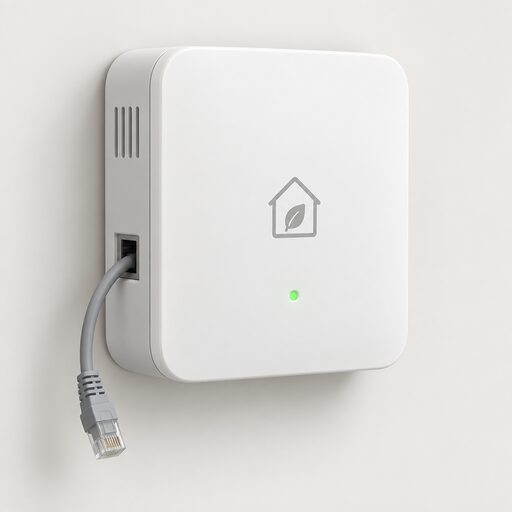 Local Control vs the CloudCan your solar, battery or charger still work if the maker's app or servers disappear?
 App Subscriptions and CloudWill you have to pay a monthly fee for the app that comes with your heat pump, boiler or solar setup?
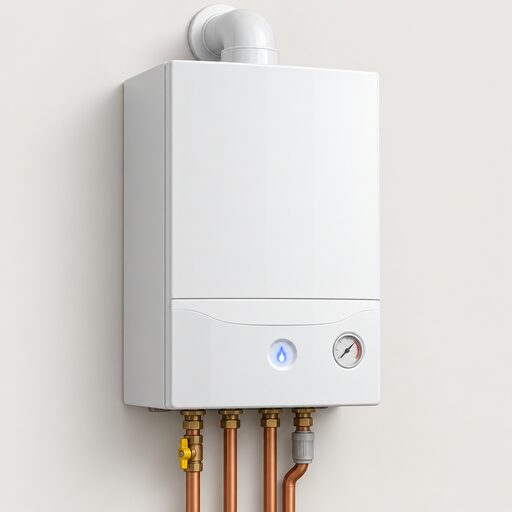 Suppliers and IndependenceCan you really cut your energy bills by making your own power, and how much of your supplier do you still need?
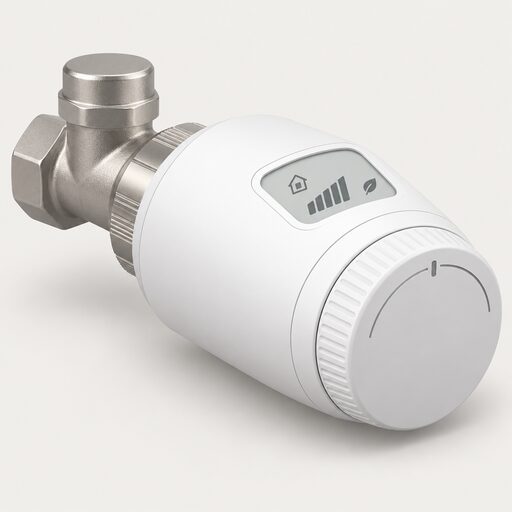 Controls and Energy IndependenceIf the broadband goes down, will your heating still come on?
 The Full Brands GuideWhich boiler, heat pump or solar brand can you trust, and who actually owns it?