
In this answer
Short answer
Your electricity supplier is the company you choose to buy your electricity from, and who you pay your bills to1. It is not the company that owns the cables running to your home. That is your electricity network operator, and the two roles are held by entirely separate businesses: network operators are different from your energy supplier, which is the company you pay to use electricity2.
That distinction answers most of the confusion behind the question. If you want to know who bills you, the fastest route is your own paperwork, then a postcode lookup, then a phone call to 105. If you want to know who to ring when the lights go out, the answer is never your supplier.
What a supplier is, and how it differs from your network operator
The supplier is the commercial party. Your electricity supplier is the company you choose to buy your electricity from, and who you pay your bills to1. It buys wholesale energy, sets your tariff, issues bills, handles your account and is the company named on the bill. An energy supplier is responsible for providing energy to homes and businesses6.
The network operator is the physical party. Energy network operators are different to your energy supplier and you don't pay your bill to them7. They own and maintain the cables, substations and meters that carry electricity to your door, and they are responsible for fixing power cuts and paying you compensation8. The same split applies on the gas side, where the gas distribution network operator is a company different and separate to your energy supplier9.
That separation matters for household independence. You can change supplier at will, but you cannot change network operator: the wires to your home are a regional monopoly, and the company that owns them is fixed by where you live. Your dependence on the grid is therefore structural, not commercial. What you control is the contract, not the connection.
The Energy Ombudsman can look at disputes involving your energy supplier, energy broker, network operator, green deal or heat network supplier, so the two roles are treated as distinct even in the complaints system10.
Find your supplier by asking your local distribution company
There are three practical routes, and they work in different ways.
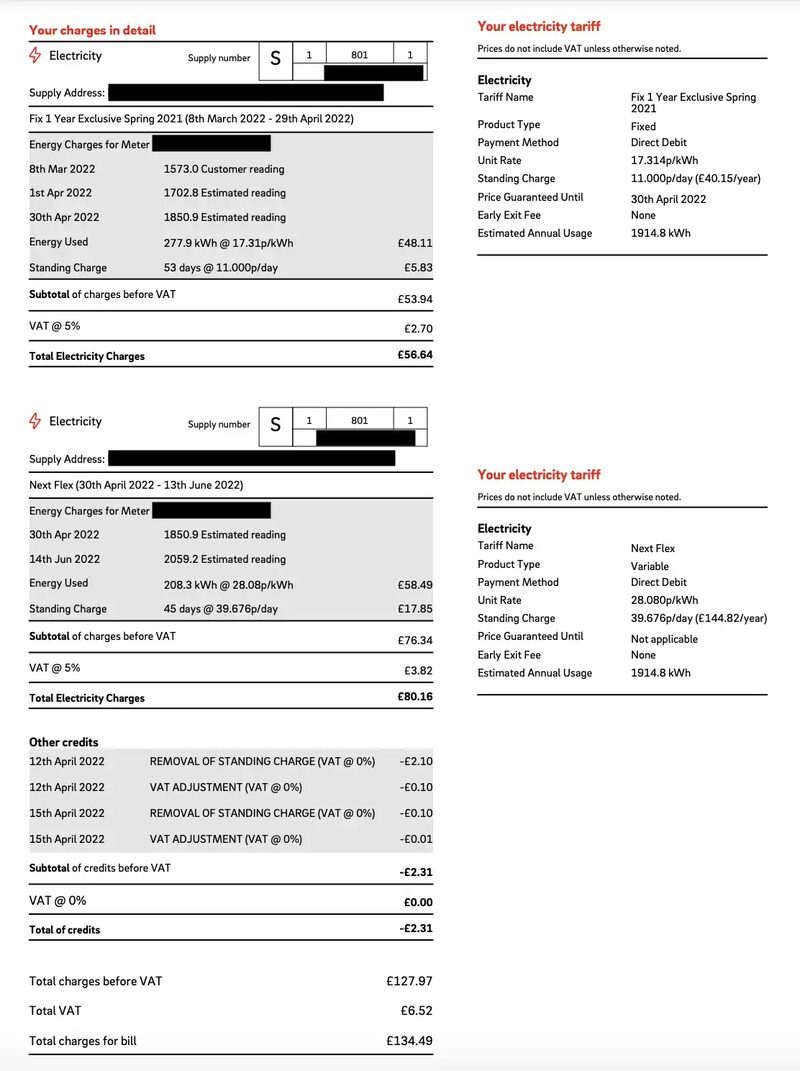
The first is your own paperwork: a bill, a statement or an online account names the supplier directly. The second is a postcode lookup. The Energy Networks Association runs a tool to find your network operator, and you can find the details for all the electricity Distribution Network Operator companies on the Energy Networks Association site11. For gas, the Find My Supplier service requires only a postcode to identify your gas supplier12. Some operators go further: Electricity North West offers an online search tool to help identify your electricity supplier, one of five such tools13.
The third route is the phone. If you still can't find the information, call 105 to speak to your local electricity network operator (DNO), who can tell you who your supplier is14. The call is free and it connects you to the network company for your area, not to a supplier.
| Route | What you need | What it returns |
|---|---|---|
| Your bill or online account | Account access | Supplier name, MPAN, tariff1 |
| Energy Networks Association lookup | Postcode | Your network operator11 |
| Find My Supplier | Postcode | Your gas supplier12 |
| Operator search tool | Postcode, bill payer status | Supplier, in some regions13 |
| Call 105 | Nothing | Supplier name from the network operator14 |
If you live in London, the South East and the East of England and are the electricity bill payer you can use UK Power Networks' online tool15. Coverage of these operator-run tools is regional, which is why the postcode and phone routes remain the reliable fallbacks.
What your supplier handles once you know who it is
Once you have a name, that company is your point of contact for almost everything commercial. It bills you, sets your tariff, holds your account and manages your meter. Your electricity meter is owned by your electricity supplier16, which is why meter faults, replacements and access arrangements run through the supplier rather than the network operator.
There are limits to that. If a meter board does not hold the network operator's electricity supply, the electricity supplier is responsible for the replacement17. Where the board does hold the network supply, the operator handles it. The dividing line is physical: whatever carries or measures the supply belongs to one party or the other, and the supplier's responsibility stops at the boundary.
Switching is also the supplier's job. The new energy supplier you have chosen will manage the switch18, including the transfer of your account and the notification to your old supplier. Switching supplier doesn't change the energy you receive at all, just who you pay for it, so there's no need to change any pipes or cables and there is no interruption to supply19. If you pay a supplier directly for the electricity or gas you use at home, you can choose to switch to a different supplier or tariff at any time20.
For a household, this is where independence is real but partial. You can move your account between suppliers without touching the infrastructure, and you can do it at any time. You cannot move the meter, the cable or the connection. The supplier relationship is the one lever a household holds.
When your supplier changes without you switching
Two situations produce a change of supplier that you did not initiate.
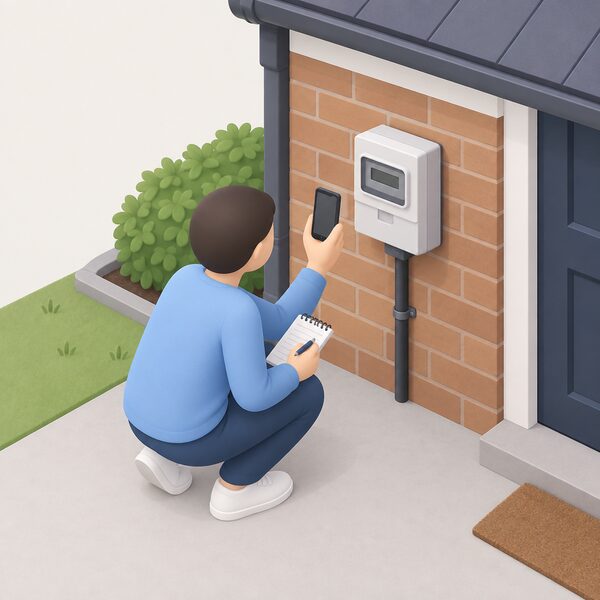
The first is moving home. When you move in, whoever supplied energy to the previous owners will automatically become your supplier21. You inherit the account whether or not you chose it. The practical steps are to find out who your energy supplier is, contact your supplier to let them know you've moved in, and submit your meter readings and take pictures for evidence22. In a newly built home the developer or house-building company will be able to tell you who supplies the gas and electricity22. In a rented house you can find out who the supplier is from your landlord22.
The second is supplier failure. You do not need to do anything if your current supplier goes out of business: Ofgem will automatically move you to a new supplier and make sure your energy supply is not interrupted20. When an energy supplier ceases trading, to prevent a drop in service to customers Ofgem will appoint another supplier to provide their energy supply23. If your energy supplier goes out of business because of financial problems, you will still have electricity and gas supplied to your home or business, and your energy supply will not be cut off24.
There is also the erroneous transfer, where a switch happens without your agreement. When you're switched back you'll still get bills from your old supplier, and you won't have to pay the new supplier anything25. The Energy Ombudsman can consider disputes of this kind alongside complaints about suppliers, brokers and network operators10.
Suppliers and the price cap: what affects your bill
The price cap is set by Ofgem, Great Britain's energy regulator, and it limits the maximum amount of energy suppliers can charge you for each unit of energy you use26. It is set by Ofgem and limits how much a supplier can charge for each unit of electricity and gas you use27.
The critical qualification is what the cap does not do. The price cap is not the maximum amount your bill can be; it's the maximum amount you'll pay per unit of energy you use27. A household that uses more units pays more, however the cap is set. The standing charge, the fixed daily amount, is set by your supplier and included in the energy price cap set by Ofgem27.
The cap applies in Great Britain. Northern Ireland has a separate market and separate arrangements, so the cap described here does not govern bills there.
Knowing your supplier also determines access to support. The Warm Home Discount scheme requires large domestic energy suppliers to provide an annual discount of £150 to eligible households5, and it requires suppliers to provide an electricity bill discount for certain customers28. To qualify you must be a customer of an electricity supplier and be an account holder or named on an electricity bill29, and your energy supplier must be part of the scheme30. The same conditions apply in Scotland31 and in England and Wales30.
"The Warm Home Discount scheme requires large domestic energy suppliers to provide an annual discount of £150 to eligible households"
For a household, the cap and the discount both run through the supplier, not the network. That is the remaining dependence: the price you pay is set within a regulatory framework you do not control, and the support you can claim depends on which company holds your account.
Sources31 cited
- What's the difference between you and my electricity supplier, UK Power Networks, 2026-09-17
- Find my network operator, Energy Networks Association, 2026-09-17
- Network operators, Energy Ombudsman, 2026-09-20
- Check if you can get payment for a power cut, Ofgem, 2026
- Warm Home Discount statistics 2025 to 2026, GOV.UK, 2026-06-18
- Moving house energy checklist, Energy Saving Trust, 2026-05-01
- Customers, Energy Networks Association, 2026-09-17
- Get compensation if you have a power cut, Citizens Advice, 2026-09-17
- Disconnecting from the gas network, IGEM, 2026-09-20
- Switching supplier with a smart meter, Smart Energy GB, 2026-03-16
- What to do in a power cut, Met Office, 2026-09-20
- The Electricity and Gas (Energy Company Obligation) Regulations 2026, legislation.gov.uk, 2026
- Don't know your supplier, Smart Energy GB, 2026-03-16
- Disconnect an electricity meter, UK Power Networks, 2026-09-17
- Who supplies my electricity and gas, Uswitch, 2026-06-29
- Complain about your energy supplier, Ofgem, 2026
- Replace meter board, UK Power Networks, 2026-09-17
- Replace fuse, UK Power Networks, 2026-09-17
- We may be able to help resolve your energy dispute, Energy Ombudsman, 2026-09-20
- Switch your home energy supplier, Ofgem, 2026
- A step by step guide to setting up gas and electricity in a new home, Energy Helpline, 2026-09-20
- Who is my gas and electricity supplier, Confused.com, 2026-07-03
- FAQs, Energy Ombudsman, 2026-09-19
- What happens if your energy supplier goes out of business, Ofgem, 2026
- You've been switched to a new energy supplier without your agreement, Citizens Advice, 2026-09-17
- Grants and schemes, Smart Energy GB, 2026-05-28
- What role does National Grid play in your energy bill, National Grid, 2026-09-17
- Warm Home Discount research briefing, House of Commons Library, 2026-09-17
- Warm Home Discount eligibility statement England and Wales 2026 to 2027, GOV.UK, 2026-09-17
- Warm Home Discount if you live in England and Wales, GOV.UK, 2026-09-17
- Warm Home Discount if you live in Scotland, GOV.UK, 2026-08-23
 Who Owns Which Energy SupplierWho is actually behind the company that sends your energy bill?
 Erroneous TransfersSomeone else has switched your gas or electricity without asking you.
 Who Supplies Your Energy?Not sure who bills you for gas or electricity?
 The Full Energy Suppliers GuideWho the UK's domestic gas and electricity suppliers are, how the market is structured across Great Britain and Northern Ireland, what a supplier is licensed and obliged to do, how the price cap limits bills, what happens when a supplier fails, and who regulates it all.
 Network Operators and 105When the lights go out, who do you actually ring?
 Heat Network SuppliersWho supplies the heating in your home if it runs on a communal or district system?