

In this answer
Short answer
When the lights go out, the first question is whether the fault sits inside your own property or out on the local network. The answer decides who you call and how long you wait. If your neighbours still have power, the Met Office advises that it is likely there is a problem with the fuses or trip switches in your home1. If the whole street is dark, the fault is on the network and your electricity network operator is responsible for fixing it and for paying any compensation, not your energy supplier2.
The fastest way to confirm a local cut is to check your operator's live map or postcode tool, or the industry reporting site powercut105.com3. To report a cut, call 105 free of charge, which puts you through to your electricity network operator4. The operator must restore supply within 12 hours for interruptions outside severe weather, and a single cut must have lasted at least 3 hours for a Guaranteed Standards payment5.
This page sets out the first checks, how to confirm a local cut before reporting it, who to call, what the operator is obliged to do, when compensation is due, and why one house can lose power while the next keeps theirs.
First checks: is it one property or the whole street?
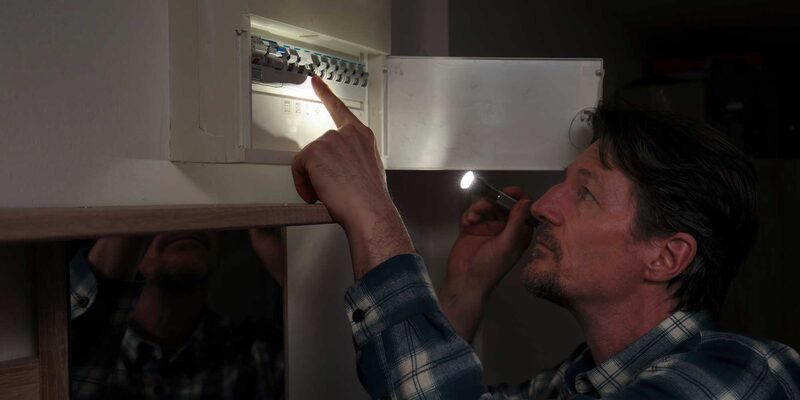
The diagnostic starts at your own consumer unit. NIE Networks advises checking your trip switch first, because that establishes whether the problem lies with the electrics in your property rather than the supply7. If the switch resets and holds, the fault was internal. If it trips again immediately, the fault is still inside the home and an electrician is the right call, not the network operator.
Look out of the window. If neighbouring properties are also dark, the fault is almost certainly on the network. If they are lit, the Met Office's guidance is that the problem is likely with your own fuses or trip switches1. NIE Networks makes a related point about lightning: it often affects supplies to individual properties or small numbers of properties, so where neighbours are not off, the network operator is the one to inform, and the property's trip switches are the first thing to check8.
There is a third possibility that catches householders out: a looped supply. Where two properties share a single incoming cable, a fault or a planned separation can affect both. UK Power Networks states that separating a looped supply requires extensive checks to both properties to understand who has the main supply, and work with both neighbours to plan and complete the separation9. That is a network job, not a householder job.
How to confirm a local power cut before reporting it
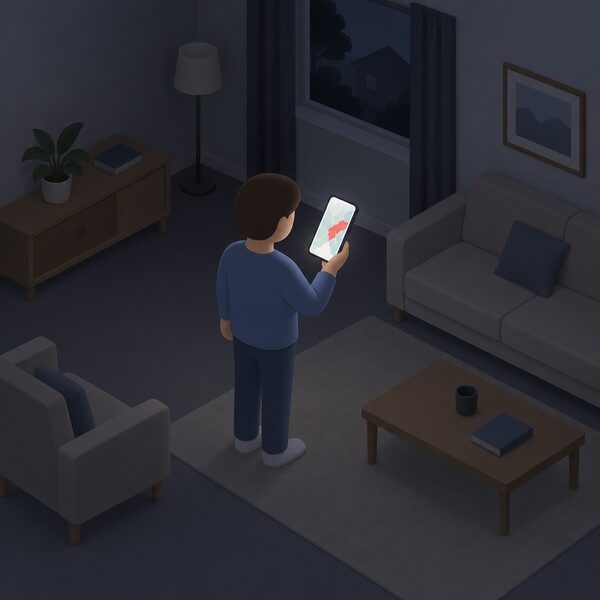
Before calling, confirm whether the cut is already known. NIE Networks offers a tool to check if there is a power cut in your area10. Across Great Britain, the reporting site powercut105.com is the industry's own route into the relevant operator3. Both are quicker than waiting on a phone line during a storm, when call volumes rise sharply.
Once you know a cut is affecting others, the practical steps during the outage matter. NIE Networks advises never touching damaged electricity equipment, checking on vulnerable family and friends, keeping the freezer door closed, reporting the power cut, turning off cookers, heaters and sensitive equipment, and leaving a light on so you know when supply returns11. That list is the same whether the cut is local or wider.
It helps to know what stops working. Gas boilers and heating, electrical appliances, and your home's internet and landline connections will stop working in a power cut12. A gas boiler needs electricity to run its pump and controls, so a gas-heated home still loses heating. That is why a cut in winter is more than an inconvenience.
If the cut is planned rather than accidental, notice arrangements differ. For planned emergency power cuts in Northern Ireland, the aim is to notify customers via media and social media channels before the cut is undertaken13. Emergency disconnections of this kind are rare and are instructed at national level; UK Power Networks, as the network operator for London, the East and South East, states it would be legally instructed by National Grid ESO to disconnect14.
Reporting a cut to your network operator: who to call and how
Call 105. Ofgem states that 105 is free and will put you through to your electricity network operator4. The same number is repeated in consumer guidance: call 105 in a power cut15. It works across Great Britain and Northern Ireland, and it is the single number a householder needs to remember.
The distinction between supplier and operator is the one most people get wrong. Ofgem's guidance is that a network operator is responsible for the pipes and wires that move energy, and should be contacted about power cuts or connection issues in your area16. Citizens Advice is explicit that your gas or electricity network operator is responsible for fixing power cuts and paying you compensation, and that this company is not your energy supplier2. Age UK gives the same routing for complaints about power cuts or connection problems: contact your distribution network operator, the company in charge of the supply to your area17.
If you do not know who your operator is, the Energy Networks Association runs a postcode lookup tool listing all the electricity Distribution Network Operator companies1. Your operator is set by geography, not by who bills you.
There are also circumstances where an installer must contact the operator directly rather than the householder. Network operators have agreed that customers or installers must contact the appropriate network operator where a property's maximum demand exceeds the known supply capacity, where there are safety concerns over the cut-out or fuse, where supply capacity is uncertain, where an upgrade is certain, where there is a looped supply, or where the supply is unmetered18. Electric vehicle charge points and heat pumps are the common triggers.
What your network operator must do during an outage
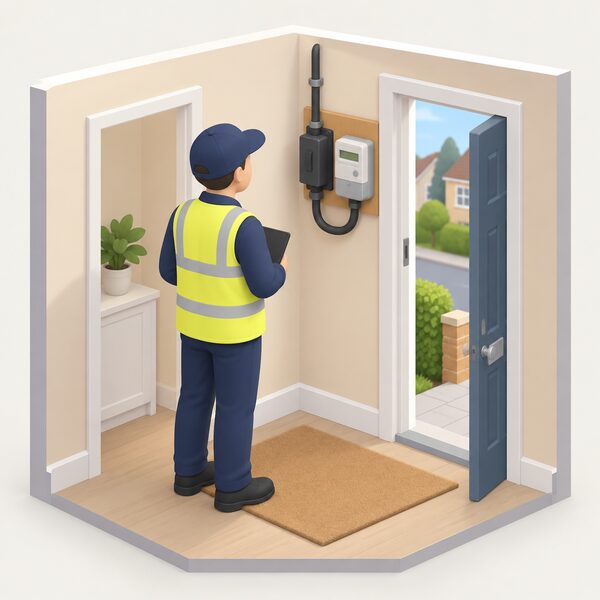
The operator's core duty is restoration. Ofgem's standards set a restoration time limit of 12 hours for interruptions outside severe weather hours5. That is the benchmark against which performance is measured, and it is the figure that matters when a cut drags on.
Severe weather changes the picture. Energy Networks prepares for named storms, and the industry body publishes storm and bad weather guidance for customers12. During widespread storm damage, restoration times extend because multiple faults occur at once and access can be blocked. The 12-hour standard applies outside those severe weather hours.
The operator also has duties around access and inspection. National Grid's cut-out inspection programme involves visual-only inspection of the cut-out asset, the incoming cable and fuse that supplies power to the property, carried out by door-to-door visits without prior appointment19. Separately, where new connections are involved, NIE Networks will inspect customer or contractor works before deciding whether to proceed with the connection work20. These are network-side checks, not householder responsibilities.
For heat networks, the notification duty is tighter. Your heat network supplier should contact you or your landlord about an outage within 24 hours21. That is a different regime from the electricity network, and it applies where a communal heat network serves the property.
Compensation for long or repeated power cuts
Compensation is governed by the Guaranteed Standards of Performance. For a single cut, each power cut must have lasted at least 3 hours for a payment to be due5. The operator, not the supplier, pays it2.
For repeated cuts, the conditions tighten. Each power cut must also have lasted at least 3 hours, and the payment is not available if you qualified for compensation from any power cuts in the same 12 months; planned cuts you were told about do not count22. Electricity North West publishes compensation information for customers who have experienced multiple power cuts, alongside an explanation of why they happen and how they aim to fix them23.
There are exclusions. Ofgem lists blackouts caused by a national power shortage, damage to electrical equipment or appliances, and a low supply after a power cut as matters outside the scheme24. On the gas side, you will not be able to get compensation if more than 30,000 homes were affected, if you caused the gas supply to be cut off, or if the operator took reasonable steps to prevent a cut during bad weather2.
| Item | Position |
|---|---|
| Single cut threshold | Each power cut must have lasted at least 3 hours5 |
| Restoration target | 12 hours outside severe weather5 |
| Repeated cuts | Each cut at least 3 hours; no payment if already compensated in the same 12 months22 |
| Claim deadline | 3 months to claim after the end of March; payment within 10 working days if accepted2 |
| Food spoilage | No specific compensation claim for spoiled refrigerated or frozen food6 |
| Excluded causes | National power shortage, damage to appliances, low supply after a cut24 |
Claims have a deadline. You have 3 months to claim after the end of March, and if a claim is accepted the operator should pay within 10 working days2. Payments are automatic in many cases, but the deadline matters where a claim has to be made.
Food spoilage is the question householders ask most, and the answer is no. Independent guidance states plainly that you cannot make a specific claim for compensation if refrigerated or frozen food spoils because of a power outage6. Household insurance may cover contents under some policies, but that is a separate contract with an insurer.
Why one house can lose power while neighbours keep theirs
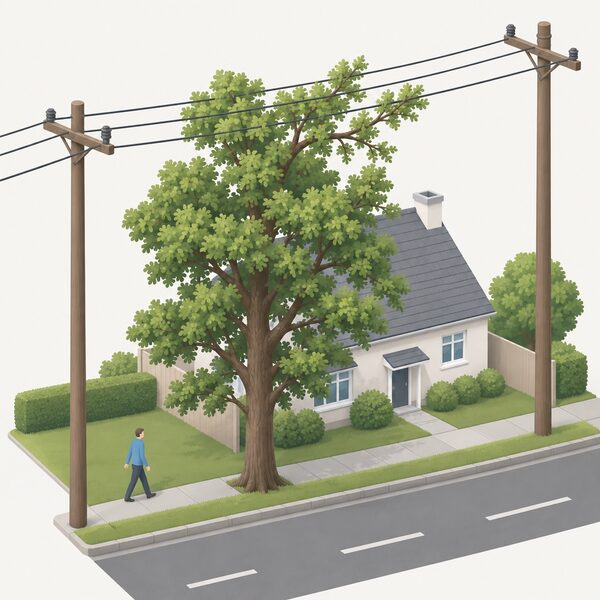
The network is not a single wire feeding a street. Electricity North West explains that each property is connected through different circuits or phases of the same cable, so it is not uncommon for one house to have power while the next does not25. A fault on one phase, one service cable or one cut-out fuse takes out a subset of homes, not the whole road.
That explains the pattern householders see: two houses dark, four lit, and no obvious logic to it. It also explains why reporting matters even when the operator's map shows nothing. A fault affecting a handful of properties may not register as a wider incident until enough reports arrive.
Causes vary. Power cuts occur especially if cables and equipment become damaged3. Trees and vegetation near overhead lines are a common trigger, and UK Power Networks offers a free site visit to report trees near its power lines or to arrange a temporary power off26. Where a permanent disconnection is wanted, a surveyor visits the property to give a price before work proceeds27.
There is a household-equity dimension worth stating. Households with less ability to shift their electricity use may end up paying more for their electricity28. Some households in deprived areas with low electricity consumption may be rationing their energy use to manage limited budgets, potentially compromising their comfort and health29. A power cut lands hardest on homes already managing tight budgets, and on those relying on electrically powered medical equipment.
For a household's energy independence, the diagnostic above is the first layer: knowing whether the fault is yours or the network's tells you whether you can act at all. Beyond that, resilience comes from what you control. A portable power station or a home UPS can carry essential loads through a short cut, and the Priority Services Register provides extra support for those who need it. The dependence that remains is structural: the wires, the operator and the restoration timetable are not yours to control, and no household backup changes that.
Sources29 cited
- What to do in a power cut, Met Office, 2026-09-20
- Get compensation if you have a power cut, Citizens Advice, 2026-09-17
- Powercut105, Powercut105, 2026
- Check if you can get payment for a power cut, Ofgem, 2026
- Check if you can get payment for a power cut, Ofgem, 2026
- How to get power cut compensation, Uswitch, 2025-06-23
- I have a power cut, what should I do?, NIE Networks, 2026-09-19
- Severe weather, NIE Networks, 2026-09-19
- Replace power cable or power line, UK Power Networks, 2026-09-17
- Preparing for winter, NIE Networks, 2026-09-19
- Power cuts advice, NIE Networks, 2026-09-19
- Storms and bad weather, Energy Networks Association, 2026
- How much notice will be given, NIE Networks, 2026-09-19
- Emergency power cuts, UK Power Networks, 2026-09-17
- Power cuts, SGN, 2026
- Complain about your energy supplier or network operator, Ofgem, 2026
- Energy complaints, Age UK, 2026-08-26
- Frequently asked questions about connecting to the networks, Energy Networks Association, 2026-09-17
- Entering premises guide for customers, National Grid, 2026-09-17
- New electricity supply (1 to 11 houses), NIE Networks, 2026-09-19
- If there's a problem with your heat network, Citizens Advice, 2026-09-17
- Get compensation if you have a power cut (Wales), Citizens Advice, 2026-09-17
- Multiple or repeat power cuts, Electricity North West, 2026-09-19
- Plan for a power cut, Ofgem, 2026
- Advice and support FAQs, Electricity North West, 2026-09-20
- Cut trees and bushes, UK Power Networks, 2026-09-17
- Permanently disconnect FAQs, UK Power Networks, 2026-09-17
- Research briefing: energy consumption patterns, UK Parliament POST, 2026-06-07
- Understanding GB energy consumption patterns, Nesta, 2025-08-06
 Network Operators and 105When the lights go out, who do you actually ring?
 Power Cuts in WalesWho do you call when the power goes out in Wales, and how long should it take to come back on?
 Backup Power and IndependenceA power cut leaves most homes completely dark, so how much backup do you actually need to keep the lights on?
 Leaving the Electricity GridCan you really cut your home off the grid completely, and what does it cost to have your electricity supply removed for good?
 Power Cuts in ScotlandWho do you call when the power goes out in Scotland, and how long should it take to come back on?
 New Electricity ConnectionWho do you contact for a new or upgraded electricity connection, and what will it cost?