
In this answer
Short answer
A power cut rarely damages a home directly, but it can spoil food, stop heating and leave appliances to fail when the supply returns. Two separate routes exist for recovering the cost, and they cover different things. The first is the network operator's Guaranteed Standards of Performance, which pays set amounts for the interruption itself. The second is a household insurance policy, which may cover the contents of a freezer or consequential damage inside the property.
The compensation route is the more predictable of the two. Ofgem sets a maximum of £400 where a power cut affects 5,000 or more properties1. For an unplanned cut affecting more than 5,000 homes, the figures are £100 once power has been off longer than 24 hours, then £45 for every 12 hours after that, up to the same £400 ceiling2. Planned cuts carry £40 where the operator fails to give two days' notice or cuts supply on a different day2.
The insurance route is less certain, because it depends entirely on the policy. What is clear is that the network operator will not pay for food. UK Power Networks states it is not liable for any loss of fridge freezer contents as a result of a power cut3, and Electricity North West says it cannot be held responsible for loss of fridge or freezer contents due to interruptions4.
What a standard home insurance policy covers after a power cut
A household policy responds to damage and loss at the property, not to the interruption itself. The distinction matters because the compensation scheme already pays for the interruption, and the two are not meant to be claimed twice for the same loss.
The clearest exclusion sits in the Guaranteed Standards of Performance, which makes no payment for blackouts caused by a national power shortage, for damage to electrical equipment or appliances, or for a low supply after a power cut1. That removes the most obvious consequential losses from the distributor route and pushes them towards insurers.
Where a policy does respond, it is usually through contents cover for food, or through escape of water and accidental damage cover for pipework and appliances. Oil-heated homes carry a specific risk: official guidance advises checking that home insurance covers clean up costs on both your own property and neighbouring land, and telling insurers immediately if there is a spill or suspected spill7. That is a condition of cover rather than a courtesy, and delay can affect a claim.
The scope of the network side is narrow by design. The standards cover how operators respond to and deal with power cuts, and the service provided to people wanting to connect to the network8. They are a service guarantee, not a property insurance policy, and reading them as the latter leads to refused claims.
For a household, the practical position is that independence from the grid does not extend to independence from paperwork. A cut that spoils food or bursts a pipe is an insurance matter; a cut that simply lasts too long is a compensation matter. Keeping the two apart, and keeping evidence for both, is what makes either claim work.
Spoiled food: how freezer and fridge contents claims work
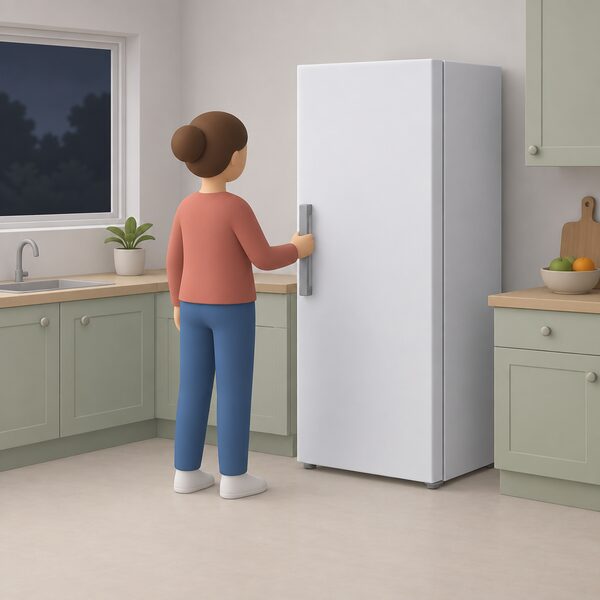
Food loss is the most common power cut claim a household considers, and the one most often refused. The compensation scheme does not accept it: no specific claim can be made for compensation if refrigerated or frozen food spoils because of a power outage9. The network operators say the same in their own words. UK Power Networks states it is not liable for any loss of fridge freezer contents as a result of a power cut3, and Electricity North West says it is unable to reimburse customers for food lost during a power cut6.
That leaves the household insurer, and here the position varies. Electricity North West notes that home insurance might cover such losses, and that it can issue an insurance letter to support a claim4. Whether a policy pays depends on whether freezer contents cover is included as standard or added, and on the sum insured.
How long food survives is a separate question with published answers. A fridge should keep its contents protected for up to 4 hours during a power cut if left unopened5. A half-full freezer holds its temperature for about 24 hours6. The practical instruction from the network side is simple: keep the freezer door closed to help preserve your food10.
"Keep the freezer door closed to help preserve your food."
For a household weighing up backup power, this is where the arithmetic sits. A modest battery or power station that keeps a fridge running through a four-hour cut removes the loss entirely, and the cost of that equipment can be compared against the value of a freezer's contents. The power cut food safety page sets out the timings in more detail, and keeping a fridge or freezer running on a UPS covers the equipment side.
Damage caused by a power cut versus damage caused by the supply itself
These are two different events with two different answers, and conflating them is the most common reason a claim fails.
Damage caused by the supply itself, meaning a surge or a fault on the network that destroys an appliance, sits with the network operator, and the operator's position is that it does not have to pay. The network operator does not have to give compensation for damage to electronic devices after a power cut, though it may offer a goodwill payment11. UK Power Networks is explicit: it is not liable for any damage to electrical appliances such as TVs, computers and similar equipment as a result of a power cut12.
Damage caused by the power cut, meaning the consequences of the supply being off, is a household insurance matter. A freezer warming, a pipe freezing because the boiler has stopped, a sump pump failing: these are losses inside the property, and the policy decides.
The responsibility split is worth stating plainly. The gas or electricity network operator is responsible for fixing power cuts and paying compensation, not the energy supplier2. Complaints about power cuts or connection problems go to the distribution network operator, the company in charge of the supply to the area13. The supplier handles billing, not interruptions.
For a household, the split means two records should be kept: one of the interruption, for the operator, and one of any damage, for the insurer. Photographs and dated notes serve both. The compensation for damaged appliances page deals with the device side, and surge protection covers prevention.
Claiming from the distributor instead: the compensation scheme

The Guaranteed Standards of Performance are a set of payments triggered by defined failures, and they are the most reliable money available after a cut. The maximum is £400 where the power cut affects 5,000 or more properties1. For an unplanned cut affecting more than 5,000 homes, £100 is payable once power has been off longer than 24 hours, then £45 for every 12 hours after that, up to £4002. A planned cut that breaches the notice or timing rules carries £402.
The scheme is funded by electricity customers rather than by the operators' shareholders: the cost of compensation under the severe weather scheme is paid for by electricity customers15. That is worth knowing when a payment feels small relative to the disruption.
| Situation | Payment | Source |
|---|---|---|
| Planned cut, no two days' notice or cut on a different day | £40 | 2 |
| Unplanned cut over 24 hours, more than 5,000 homes affected | £100, then £45 per further 12 hours | 2 |
| Maximum under the Guaranteed Standards | £400 where 5,000 or more properties are affected | 1 |
Northern Ireland runs its own arrangements. NIE Networks states that it will restore electricity within 24 hours of a power cut16, and the same standard appears in consumer guidance17. The Northern Ireland compensation page sets out how that scheme differs, and the Guaranteed Standards page covers the framework across the four nations.
Two conditions catch people out. There is no compensation in certain emergency situations, for example a blackout because of a national power shortage2. And repeated cut compensation is not available if the household qualified for compensation from any power cuts in the same 12 months, with planned cuts that were notified not counting2.
How to make a claim and what evidence to gather
The claim itself is straightforward, but the evidence is what decides it. Consumer guidance is to take photos of any damage caused so they can be used as evidence, and to keep notes of dates and times18. For a food claim, that means a photograph of the contents and a note of when the power went off and came back.
The claim windows differ by type, and they are short.
| Claim type | Deadline | Source |
|---|---|---|
| Unplanned cut | 3 months from power returning; no limit on the Priority Services Register | 2 |
| Storm cut | 3 months from power returning; no limit on the Priority Services Register | 2 |
| Planned cut | 1 month from the start of the power cut | 2 |
| Planned outage | 30 days from the outage | 9 |
| Four or more cuts | 3 months after the end of March | 2 |
Payment timing is also set. If a claim is accepted, the operator should pay within 10 working days2. Storm compensation is often automatic, and if it has not been paid within four weeks of the power coming back on, the operator should be contacted to make a claim2.
For a planned emergency cut, Electricity North West asks customers to contact its helpline if supply has not been restored after four hours19. The national number for a power cut is 10520. Households on the Priority Services Register, or in Northern Ireland the Customer Care Register, have no time limit for unplanned and storm claims2, and the Priority Services Register page explains who qualifies. The 105 number page covers how the line works.
When a claim is refused: excesses, wear and gradual damage
Refusals cluster around a few predictable points. The first is that the loss was not covered in the first place: food spoilage has no distributor route at all9, and appliance damage from a cut is excluded from the standards1 and disclaimed by operators12.
The second is the excess. Where a policy carries an excess, small claims can fall below it. Insurance-backed guarantee products in the home improvement market commonly specify an excess of no more than £25021, which gives a sense of the scale at which a claim becomes worth making, though a household policy sets its own figure.
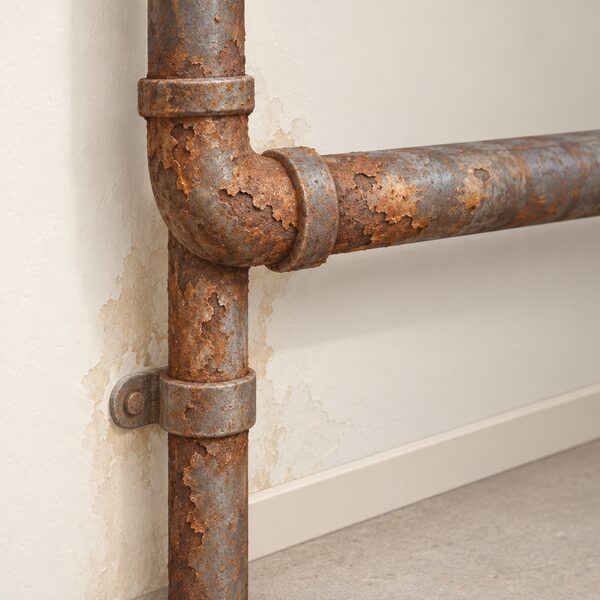
The third is gradual damage. A freezer that was already failing, pipework that was already corroded, or an appliance at the end of its life is wear rather than a power cut loss, and policies exclude it. The distinction between a sudden event and a gradual process is where most disputes sit.
There is also a public-funding angle worth knowing. Where a council grant or loan has funded works and an insurance claim later covers the same cost, the council will require repayment of the total value of grant or loan paid relating to such works, or the value of the insurance payment or legal damages if lower22. Claiming twice for the same works is not permitted.
For a household, the pattern is consistent: the compensation scheme pays for time without power, insurance pays for what the outage destroyed, and neither pays for wear. The backup power pillar sets out how to reduce exposure to both, and backup power and energy independence explains what a household can and cannot insulate itself from.
Sources23 cited
- Check if you can get payment for a power cut, Ofgem, 2026
- Get compensation if you have a power cut, Citizens Advice, 2026-09-17
- A power cut ruined food in my fridge freezer, UK Power Networks, 2026-09-17
- Advice and support FAQs, Electricity North West, 2026-09-20
- Power cuts: what to do if your power goes out, Smart Energy GB, 2026-08-19
- Be summer ready, Electricity North West, 2026-09-19
- Check your oil tank, nidirect, 2026-09-17
- Guaranteed standards, Electricity North West, 2026-09-19
- How to get power cut compensation, Uswitch, 2025-06-23
- Power cuts help, NIE Networks, 2026-09-20
- Get compensation if you have a power cut, Citizens Advice Wales, 2026-09-17
- A power cut damaged something in my home, UK Power Networks, 2026-09-17
- Energy complaints, Age UK, 2026-08-26
- Power cut compensation, Energy Networks Association, 2026-09-17
- Is compensation paid in other parts of the UK, NIE Networks, 2026-09-19
- Customer standards, NIE Networks, 2026-09-20
- Power cuts: how to find out if there's a power cut, Which?, 2026-06-04
- Claim compensation if an item or product causes damage, Citizens Advice, 2026-09-17
- Emergency power cuts, NIE Networks, 2026-09-19
- Be winter ready, SGN, 2026
- Insurance backed guarantees, Flexi-Orb, 2026-02-25
- The energy price crisis: issues for energy use, CREDS, 2022-08-30
- Raise a dispute, Energy Ombudsman, 2026-09-19
 Prepare a Home for a Power CutA household checklist for before, during and after an outage: what to keep charged and to hand, which appliances to switch off, how long food stays safe and what to do about medical equipment.
 Vulnerable Households EnergyIf someone in your home relies on powered medical equipment, or needs extra warmth because of a health condition, what help is available?
 When Your Installer Goes BustWhat happens to deposits, part-completed work, workmanship guarantees and complaints when a home energy installation company fails, and how to claim on deposit protection, an insurance-backed guarantee, card or finance cover, and who honours the manufacturer's warranty.
 Insurance-Backed GuaranteesDescribes what an insurance-backed guarantee covers, how long it runs and when a code or grant scheme requires one.
 Workmanship WarrantiesIf something goes wrong with your solar panels, who actually fixes it and who pays?
 The Full Backup Power GuideHow long do UK power cuts usually last, and what can keep your fridge, heating or phone going until the power comes back?