
In this answer
Short answer
When the power goes off in a household that depends on medical equipment, the decisive work has usually been done beforehand, in a power cut plan rather than in a phone call to the network operator. Energy Networks Association guidance is direct on this point: households that depend on medical equipment requiring power, and that do not already have a power cut plan, are told to speak to their healthcare provider now1. The same instruction appears in National Grid's rota load disconnection guidance and in the association's storms and bad weather material2.
The second element is the Priority Services Register, the free list that network operators keep so they know which households need extra help. Ofgem states that for both planned and unplanned power cuts, network operators must offer customers on the priority service register extra help, giving the example of battery packs so that people can still charge phones or medical equipment4. The Met Office adds that where electricity is crucial for medical equipment, the distribution network operator can be contacted at any time, as it may be able to add the household to its Priority Register5.
For the outage itself, the number to know is 105, the free power cut emergency number for England, Scotland and Wales6. Northern Ireland uses 03457 6436433. Food safety has its own clock: a fridge holds safe temperatures for roughly four to six hours with the door closed, and a freezer for 15 to 24 hours if it is not opened7.
What to do first when the power goes off and you rely on medical equipment
The sequence matters more than any single action. Before an outage, the plan begins with the healthcare conversation: Energy Networks Association guidance says that a household depending on medical equipment that requires power, and without a power cut plan, should speak to its healthcare provider now1. National Grid repeats the same instruction for customers dependent on medical equipment, and the association's storm guidance frames it as having a power cut plan in place before the weather turns2.
For care and assisted living providers, the guidance is to contact medical equipment and partner health care providers to prepare risk management plans, so that the equipment losing power unexpectedly is anticipated rather than discovered4. That is a different audience from a household, but the principle transfers: the equipment supplier and the clinical team are the people who know what the device needs and how long it can be without supply.
Backup equipment is the other half. Energy Networks Association guidance states that where medical equipment requiring electricity is in use, back up equipment should be checked to confirm it is in working order1. That check belongs in the calm period rather than during the outage, because a battery pack or backup supply that has been sitting unused is exactly the item that fails when it is needed.
Outages themselves are usually faults rather than rationing. The 105 service describes them as happening especially if cables and equipment become damaged5. That matters for expectations: most cuts are local and restored once the fault is found, which is why reporting the outage promptly helps the operator locate it.
Priority Services Register: how to get on your network operator's list
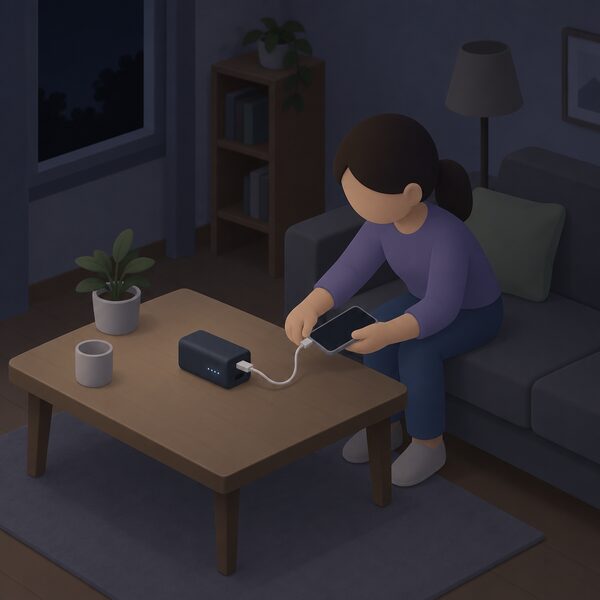
The Priority Services Register is the mechanism that turns a household from an anonymous address into one the operator knows about. Energy network operators run it, and it can help support you if there is a power cut or other energy emergency8. Ofgem's consumer guidance sets out the obligation: for both planned and unplanned power cuts, network operators must offer customers on the priority service register extra help, with battery packs to charge phones or medical equipment given as the example4.
Eligibility is broad enough to cover the medical case directly. SSEN Distribution lists "use medical equipment/aids reliant on electricity" among the register categories9. The Met Office route is to contact your distribution network operator at any time if electricity is crucial for any medical equipment you have, as they may be able to put you on their Priority Register for assistance during any power outage5. The register is a free service5.
What it provides goes beyond a warning. UK Power Networks describes the help available during a power cut, signing up or updating details, information safety, and partner support10. Cadent's gas-side register includes adding a nominated contact to deal with your bills or help in a power cut on your behalf, which matters for a household where the person who manages the equipment may not be the person who answers the door11. UK Power Networks has promoted the register through community work, describing the aim as free extra help if a power cut ever happens12.
Joining is a matter of contacting the operator for your area, and the operator finder from Energy Networks Association identifies which one that is13. The Priority Services Register page covers eligibility and what each operator provides in more detail, and households in Northern Ireland use a separate Customer Care Register.
Calling 105: the free power cut line, open 24 hours a day
The 105 number is the single most useful thing to store in a phone. It is the free power cut line, and it is free to call from a mobile or landline, connecting you to your local operator's emergency number14. The Centre for Sustainable Energy describes it as the dedicated and free power cut emergency number15, and Energy Networks Association calls it the free power cut emergency number6. Cadent's consumer FAQ simply says: have a power cut, call 10516.
The service is not new. Powercut105 reached its tenth anniversary in September 2026, and the related material describes it as connecting people with help and support during power disruptions17. That longevity matters for trust: it is an established industry service rather than a temporary line.
Coverage is the point to check. The 105 number covers England, Scotland and Wales6. Northern Ireland is the exception, and the number there is 03457 6436433. A household in Belfast calling 105 will not reach the same service, so the number stored in the phone should match the nation.
The line is also the reporting route, not just an information line. Smart Energy GB advises calling 105 for free to report a power cut or get updates14. Reporting helps the operator confirm the extent of a fault, which is why a household that can see the lights out across the street is providing useful information when it calls.
Who to call in your region: UK Power Networks in London, the South East and East of England

UK Power Networks is the distribution network operator for London, the South East and East of England18. Households in that area can call 0800 31 63 105, and the operator states that customers who live in London, the South East and East of England can still call on that number18. The same coverage is given by comparison services, which list UK Power Networks for London, south-east and eastern England19.
The emergency line is free to call from a landline or mobile and runs 24 hours a day21. UK Power Networks also states that its free emergency 24 hour number is 0800 31 63 105 or simply 10522. The two routes reach the same place, so a household that already knows 105 does not need the longer number.
There is a distinction worth holding on to: the network operator is not the electricity supplier. UK Power Networks explains that if you live in London, the South East and East of England it can help by telling you who the current electricity supplier is for your address23. The supplier bills you; the operator runs the wires and restores the fault. The network operators page sets out that split in full.
For non-emergency contact, UK Power Networks offers email for some services. Its domestic connection team and its domestic supply move service both state that the team will get back to you within 48 hours24. It also runs a partner service where customers email with contact details and the support needed and are put in touch with a partner advisor, or can visit the additional services page directly26. The documents also disagree on customer service opening hours, giving both 8.30am to 5.00pm and 9:00am to 5:00pm on weekdays.
Keeping food safe during an outage: 4 to 6 hours for the fridge, up to 24 hours for a freezer
Food safety during an outage is a timing question with a clear answer at each end. Network operator guidance for emergency power cuts states that food should keep for between 4-6 hours in the fridge and 15-24 hours in the freezer if you can avoid opening it7. NIE Networks gives the same figures for planned emergency power cuts27.
The fridge figure varies across sources, and the variation is worth understanding rather than averaging. National Grid cites Food Standards Agency guidance that a fridge will keep food safe for up to four hours during a power outage provided the door is kept closed as much as possible28. Which? gives four to six hours without power, as long as you keep the doors closed29. Electricity North West, in summer guidance, puts fridge food at around four hours without power30. The Centre for Sustainable Energy gives up to four hours in the fridge and 48 hours in the freezer with doors kept closed15. Smart Energy GB says a fridge should keep its contents protected for up to 4 hours14.
| Item | Safe duration without power | Source |
|---|---|---|
| Fridge, door closed | 4 to 6 hours | Network operator guidance7 |
| Fridge, FSA guidance as cited | Up to 4 hours | National Grid28 |
| Freezer, unopened | 15 to 24 hours | Network operator guidance7 |
| Freezer | 24 to 48 hours | Electricity North West31 |
| Half-full freezer | About 24 hours | Maker guidance32 |
The freezer range is wider because it depends on how full the appliance is and on the doors staying shut. A half-full freezer is given about 24 hours by one maker32, while Electricity North West puts freezers at 24 to 48 hours31. A fuller, colder load holds its temperature longer, which is why the operator figure reaches as high as 48 hours while the maker figure for a half-full unit sits at about a day.
"Food should keep for between 4-6 hours in the fridge and 15-24 hours in the freezer if you can avoid opening it."
The practical rule that runs through every source is the door. The difference between four hours and six hours in the fridge is not the appliance, it is how often it is opened. The food safety page covers the fuller picture, including what to do with food that has been above temperature for longer.
What this means for a household's energy independence
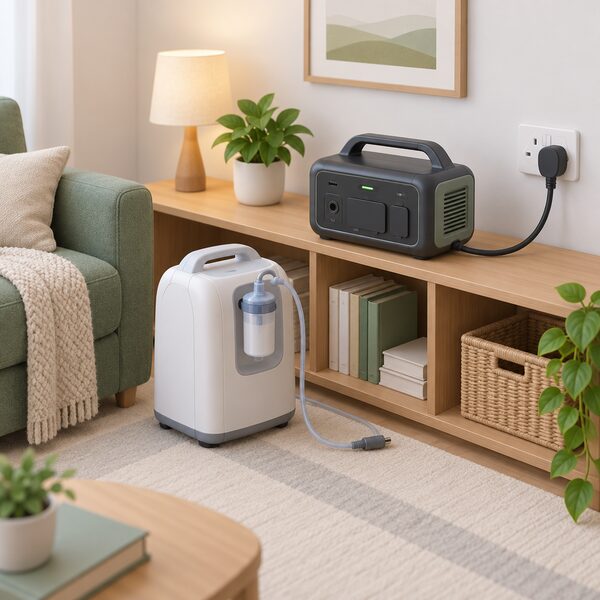
The support system around a medically dependent household is real, free and worth using, but it is not independence. The Priority Services Register tells the operator who needs help and can include battery packs to charge medical equipment4. It does not keep the equipment running through a long outage, and it does not remove the dependence on the grid that the equipment itself creates.
What the register and the 105 line do is shorten the period of uncertainty. A household that is on the list, has the right number stored for its nation, and has checked its backup equipment is in working order1 is in a different position from one that is discovering all three during a fault. The remaining dependence is on the network operator to find and fix the fault, and on the healthcare provider's plan for how long the equipment can be without supply.
For households that want to go further, the options are the same ones that serve any home: a portable power station sized to the equipment's draw, a home UPS for a single critical device, or a standby supply for the whole house. The backup power pillar sets out how those choices fit together, and the essential loads page covers how to decide what stays on. None of them removes the need for the clinical plan, and none of them should be bought before that conversation has happened.
Sources32 cited
- What happens in an energy shortage, Energy Networks Association, 2026-09-17
- Rota load disconnections, National Grid, 2026-09-17
- Storms and bad weather, Energy Networks Association, 2026-09-17
- Plan for a power cut, Ofgem, 2026
- What to do in a power cut, Met Office, 2026-09-20
- Power cut, Energy Networks Association, 2026-09-17
- Emergency power cuts, Electricity North West, 2026-09-19
- Customers, Energy Networks Association, 2026-09-17
- Weather Warning status in the north of Scotland, SSEN Distribution, 2025-08-01
- Priority services, UK Power Networks, 2026-09-17
- Priority Services Register, Cadent, 2026-09-20
- Luton radio station ready to fight fuel poverty, UK Power Networks, 2026-09-17
- Find my network operator, Energy Networks Association, 2026-09-17
- Power cuts: what to do if your power goes out, Smart Energy GB, 2026-08-19
- Preparing for a power cut, Centre for Sustainable Energy, 2026-08
- Frequently asked questions, Cadent, 2026-09-20
- Get winter ready, Energy Networks Association, 2026-09-05
- What is 105, UK Power Networks, 2026-09-17
- Who supplies my electricity and gas, Uswitch, 2026-06-29
- Who is my gas and electricity supplier, Confused.com, 2026-07-03
- What is an electrical substation, UK Power Networks, 2026-09-17
- Safety advice and resources, UK Power Networks, 2026-09-17
- What's the difference between you and my electricity supplier, UK Power Networks, 2026-09-17
- Adding more power: what's involved, UK Power Networks, 2026-09-17
- Moving home, UK Power Networks, 2026-09-17
- Saving energy and reducing your electricity bills, UK Power Networks, 2026-09-17
- Emergency power cuts, NIE Networks, 2026-09-19
- Standards of performance, National Grid, 2026-09-17
- What to do in a power cut, Which?, 2026-06-04
- Be summer ready, Electricity North West, 2026-09-19
- Tips to prepare for a power cut, Electricity North West, 2026-09-19
- Winter storm backup power, BLUETTI UK, 2026-09-19
 Prepare a Home for a Power CutA household checklist for before, during and after an outage: what to keep charged and to hand, which appliances to switch off, how long food stays safe and what to do about medical equipment.
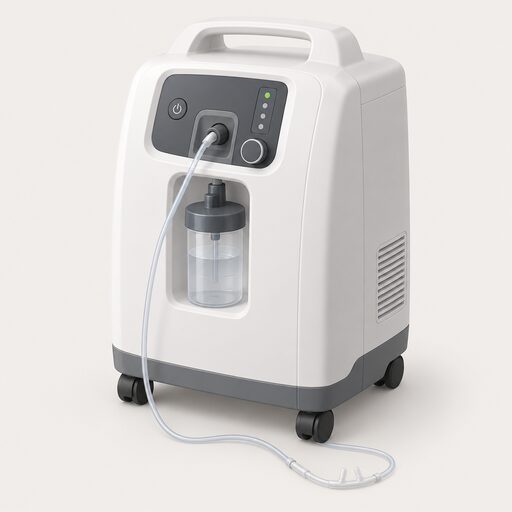 Vulnerable Households EnergyIf someone in your home relies on powered medical equipment, or needs extra warmth because of a health condition, what help is available?
 Power Cuts in ScotlandWho do you call when the power goes out in Scotland, and how long should it take to come back on?
 The Full Backup Power GuideHow long do UK power cuts usually last, and what can keep your fridge, heating or phone going until the power comes back?
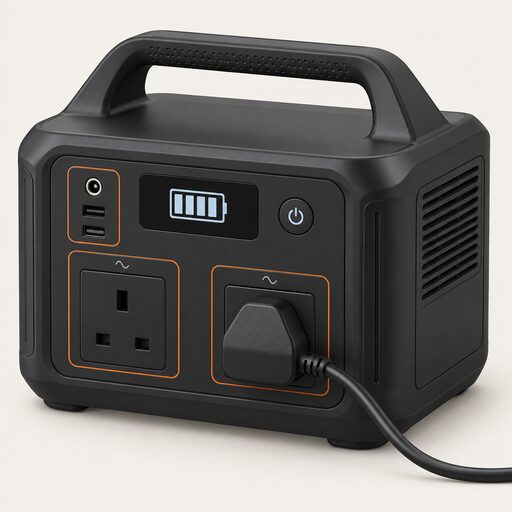 Backup Power for HeatingWhy gas boilers, heat pumps and storage heaters stop in a power cut, what a portable power station can and cannot carry, how to size one, and what home battery systems do when the mains fails.
 Starting on a Small BudgetCovers the order of work for households with little to spend, the support routes open on low incomes, and the measures with the shortest payback.