
In this guide
Backup power equipment is bought for the day it is needed and then left alone, which is precisely when it stops being reliable. A standby generator that has not run for a year, a UPS whose battery has quietly lost capacity, or a power station stored at 100% in a cold garage will all fail in the same way: not at the moment of purchase, but at the moment of the cut.
The maintenance pattern for combustion equipment is well established in UK law and guidance. Gas appliances and flues in rented property require an annual gas safety check, and homeowners are advised to have a safety check carried out annually or at any other time if there is a safety doubt1. Battery equipment has no equivalent statutory interval, so the discipline has to come from the owner: a load test at least once a season, a check of the display and firmware, and a note of what the unit actually ran.
What follows sets out what each type of equipment needs, what the law requires where it applies, how battery chemistry and storage conditions change runtime, and what a full test run should show on the display. It also covers the costs that continue after purchase, including the standby draw that quietly erodes the value of any backup system.
Why backup power equipment needs regular maintenance
The case for maintenance is not about tidiness. It is about the gap between what a unit is rated to do and what it will do after months of disuse. A generator that has sat with stale fuel, a UPS whose sealed battery has sulfated, and a power station that has been cycled at high temperature all lose capacity without any visible sign.
The clearest official statement of the principle comes from network operators, who advise households that depend on powered medical equipment to check backup equipment is in working order1. That advice is aimed at a specific group, but the logic applies to every household that has bought a generator, a UPS or a power station for resilience. The equipment is only worth what it does on the day.
There is also a safety dimension that is easy to overlook. Incorrectly installed, poorly maintained or poorly ventilated household appliances are the most common causes of accidental exposure to carbon monoxide6. That finding is about cookers, heaters and boilers, but the same mechanism applies to any combustion appliance, including a petrol generator run in a garage or a lean-to. Carbon monoxide can be produced by any combustion appliance, including those that burn fossil fuels such as oil, wood and coal7.
For battery equipment the risk is different but real. A damaged or swollen cell, a unit that has taken on water, or a charger that has been substituted for the maker's own are the conditions under which lithium units become a fire risk rather than a backup. Maintenance is therefore two things at once: keeping the unit capable, and keeping it safe.
What maintenance buys a household is independence that holds. A unit that has been tested under load, has fresh fuel or a healthy battery, and has a known runtime is a unit that can carry a fridge, a router and a few lights through an evening cut. A unit that has not been touched since delivery is a hope, not a plan.
The legal and safety duty: regular checks by a competent person
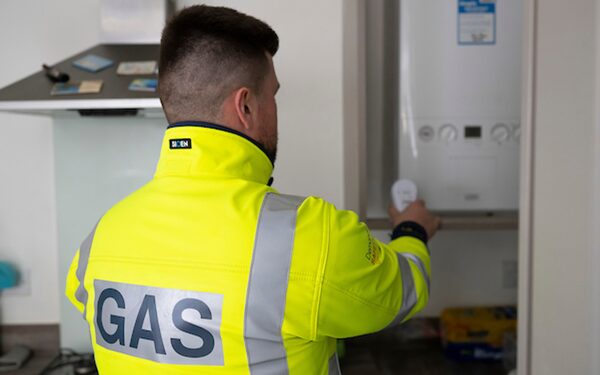
The statutory framework in the UK is built around gas, and it is strict where it applies. By law, all gas engineers must be on the Gas Safe Register and hold current qualifications to install, repair or maintain domestic gas appliances8. A gas appliance should be properly installed and maintained at regular intervals by an engineer who is on the Gas Safe Register9.
For rented property the duty is explicit and annual. All permanent and portable gas appliances and flues in the property require an annual gas safety check1, and a gas safety check must be done every year on each gas appliance or flue1. Landlords must ensure that gas pipework, flues and appliances are in good condition and checked every year by a Gas Safe registered engineer10. Where a communal appliance is used by multiple dwellings, the landlord must ensure that the appliance is maintained by a Gas Safe registered engineer and is checked as part of the annual gas safety check1.
Northern Ireland follows the same pattern through its own guidance. Tenants should make sure that gas appliances or flues they own are regularly maintained, with a safety check carried out at least once every 12 months by a Gas Safe registered installer2. Homeowners are advised that all gas appliances or flues are regularly maintained and a safety check is carried out annually or at any other time if there is a safety doubt2. For LPG appliances owned and provided by a landlord, a Gas Safe registered engineer must carry out a safety check at least once every 12 months11.
Electrical installations in the private rented sector carry a parallel duty. A landlord must ensure every electrical installation in the dwelling-house is inspected and tested at regular intervals by a qualified person12. That requirement is set in Northern Ireland regulations, and it is the nearest statutory analogue to a periodic test for the wiring that a backup supply will feed.
Where a system has been altered, responsibility follows the work. If an existing system has been altered or replaced then the person who last worked on the system is responsible for its safe running and should issue a certificate showing the necessary checks have been carried out13.
| Equipment | Statutory interval | Who may carry out the check |
|---|---|---|
| Gas appliances and flues in rented property | Annual gas safety check1 | Gas Safe registered engineer8 |
| Gas appliances or flues owned by a tenant (Northern Ireland) | At least once every 12 months2 | Gas Safe registered installer2 |
| LPG appliances owned and provided by a landlord | At least once every 12 months11 | Gas Safe registered engineer11 |
| Electrical installation, private rented sector (Northern Ireland) | At regular intervals12 | Qualified person12 |
| Battery power station or UPS | No statutory interval | Owner sets the schedule |
Portable power station or fuel generator: what you own changes what you maintain
The maintenance regime follows the energy source, and the two categories have almost nothing in common beyond a plug socket.
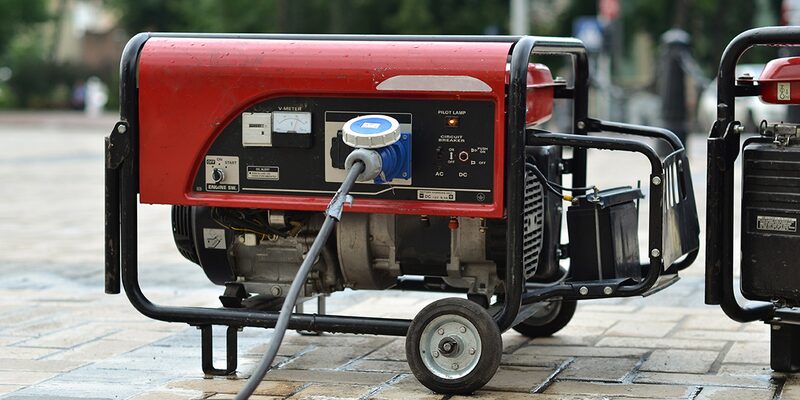
A fuel generator is a small engine plus an alternator. It needs fresh fuel, a clean air filter, oil at the right level, a spark plug that fires, and a run under load to keep the windings and the carburettor in condition. It also needs to be sited correctly. Network operators connect generators as close as possible to the local electricity substation, depending on how close a customer lives to a substation, which is a reminder that generators are ordinary industrial equipment with siting rules of their own14. For a household unit, the equivalent rule is that exhaust gases go outside, away from windows, doors and vents.
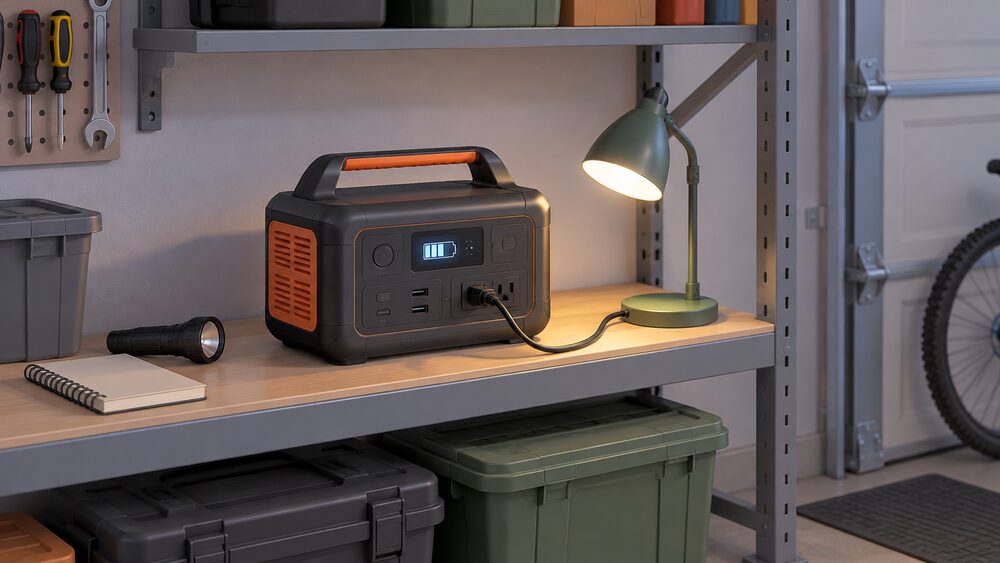
A battery power station or a home battery has no fuel and no exhaust. What it has is cells, a battery management system, an inverter and firmware. Maintenance means keeping the cells within their temperature range, charging to a storage level rather than full, checking that the firmware is current, and running the unit under load so the management system can recalibrate. Most battery storage systems monitor battery health and will alert you when a replacement is needed15.
The two categories also differ in what they can be combined with. Home renewable electricity generation can power electrical appliances, or even an electric vehicle, and combining renewable energy with an energy storage means you can make more use of the energy you generate16. A battery unit sits naturally in that arrangement; a fuel generator does not, though it can charge a battery through a charger.
For a household's independence, the distinction matters. A fuel generator depends on a fuel supply, a supply chain and safe storage, and it cannot be run indoors. A battery unit depends on the grid or a solar array to recharge, and on a manufacturer for cells and firmware. Neither is fully independent, and the maintenance schedule is where that dependence becomes visible.
| Task | Fuel generator | Battery power station or home battery |
|---|---|---|
| Fuel | Fresh fuel, turned over regularly | None |
| Mechanical | Oil, air filter, spark plug | None |
| Electrical | Run under load to exercise windings | Run under load to recalibrate the management system |
| Firmware | Not applicable | Check for updates |
| Siting | Outdoors, exhaust clear of openings | Indoors, out of freezing and direct sun |
| Health signal | Starting and holding load | Health alert from the management system15 |
Battery care: capacity, chemistry and how storage affects runtime
Battery care is the part of maintenance that most households get wrong, usually by storing a unit at full charge in a cold place and then expecting full capacity a year later.
The first thing to understand is that capacity is not fixed. Domestic battery storage has a shorter lifetime of around 10 to 15 years, when compared to solar panels3. That figure is for home batteries, and it sets the outer boundary for any lithium unit: cells degrade with every cycle and with time, and the degradation is faster at high temperature and at extreme states of charge.
The second is that storage duration is a design parameter, not a promise. Official statistics describe batteries, both domestic and grid-scale, which store electricity for up to eight hours4. A portable power station is not built to that specification, but the same principle applies: the unit's usable energy is what its cells hold after losses, not the number on the box.
Sizing a battery is a question about the household, not the hardware. The amount of storage you need depends on your current energy use and the size of any energy generation technologies you have installed17. Battery storage helps you make the most of renewable electricity from solar panels, wind turbines and hydro turbines17, and with a battery, any excess power produced during the day can be stored and used when demand is higher18.
There is also a legal definition that matters for anyone installing a fixed battery. An electrical storage battery qualifies where it is intended for use solely for storing energy converted from electricity supplied to the residential accommodation or building in question, or generated by a microgeneration system19. That definition governs how the installation is treated, and it is one reason a fixed battery is an installer's job rather than a DIY one.
In practice, battery care comes down to four habits:
- Keep the unit between roughly half and full charge for long storage rather than pinned at 100%.
- Keep it out of freezing conditions and out of direct sun.
- Run it under load periodically so the management system sees real current.
- Act on any health alert the unit raises.
A unit that reports its own state is easier to maintain than one that does not, which is the argument for choosing equipment with monitoring built in.
Testing your unit before you need it: what a full test run looks like
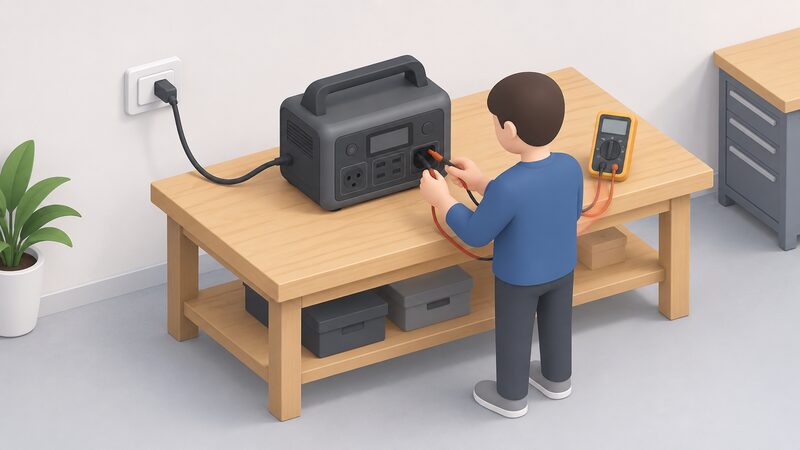
A test run is not a glance at the indicator light. It is a deliberate discharge under a known load, long enough to show what the unit will actually deliver.
The sequence that works for most households runs in four stages:
- Record the starting state: state of charge, any fault codes, and the ambient temperature.
- Connect a load that resembles the real one, such as a fridge, a router and a lamp, and run it for a set period.
- Watch the display throughout, noting the output figure and how quickly the state of charge falls.
- Recharge fully and note how long that takes and by which path.
For a fuel generator the equivalent test adds fuel and mechanical checks. Start it from cold, let it run under load rather than at idle, and check for exhaust leaks, unusual noise and any smell of fuel. A generator that starts easily but cannot hold a load is a generator that will fail in a cut.
Certification is a separate question from testing, and worth understanding when buying. A fully type tested unit is one where the whole micro-generator or power generating module is type tested, rather than just part of it21. That distinction tells a buyer how much of the product has been assessed as a system, and it is the kind of detail that matters more for a fixed installation than for a portable unit.
Recharging readiness: wall, car and solar charging paths

A backup unit is only as good as its ability to refill, and the recharge path is where most households discover a gap during a long cut.
The wall is the default and the fastest path for a battery unit, but it depends on the grid being up. In a wide-area outage the wall is unavailable, which is why a second path matters. A car charger or a generator is slower but independent of the mains, and it will top up a power station over a few hours of driving or idling. Charging options typically include AC wall outlets, solar panels, generator charging, and car charging1.
Solar is the third path and the one that offers genuine independence in daylight. Stand-alone solar means solar PV or solar thermal equipment which is not installed on a building21, and solar panels with batteries that store the power they produce can form a single supply of the installation of energy-saving materials in residential accommodation22. That framing matters because it confirms that a panel and a battery can be treated as one system rather than two separate purchases.
For households considering a fixed installation, the building standards framework is moving toward electric vehicle charging provision. The Scottish technical handbook covers charge point provision to new dwellings, provision to domestic buildings undergoing major renovation works, mixed development, location, specification, enabling infrastructure and information on installation and operation23. That is a Scottish requirement, and it illustrates how recharge infrastructure is being designed into new homes rather than added later.
The practical test of recharge readiness is simple: with the mains off, how many days can the unit be kept running? A unit with a solar panel and a car charger has more than one answer to that question. A unit with only a wall charger has one, and it depends on the grid.
Monitoring battery state: what the instruments report
Monitoring is what turns maintenance from a guess into a schedule, and the equipment available ranges from a simple state-of-charge readout to a dedicated battery monitor.
At the simplest level, most battery storage systems monitor battery health and will alert you when a replacement is needed15. That alert is the single most useful maintenance signal a household can receive, because it arrives before the failure rather than during it.
At the next level, a smart meter's in-home display shows how much energy you are using during the day24. That figure is about the whole house rather than the backup unit, but it is the baseline against which a test run can be judged: if the house draws a known amount and the backup unit is carrying part of it, the display shows what has been removed from the mains supply.
For a fixed battery or an inverter-charger installation, a dedicated monitor reports state of charge, voltage, current and, on better units, the history of charge and discharge cycles. That history is what reveals a cell that is losing capacity faster than its neighbours, and it is the evidence an installer needs when a warranty claim is made.
The limits of monitoring are worth stating. A monitor reports what the battery management system tells it, and a management system that has lost calibration will report confidently and wrongly. That is why a periodic full discharge under load matters: it forces the system to see the true bottom of the battery, and it corrects the estimate. Monitoring and testing are complements, not substitutes.
Displays, controls and features to check during a test
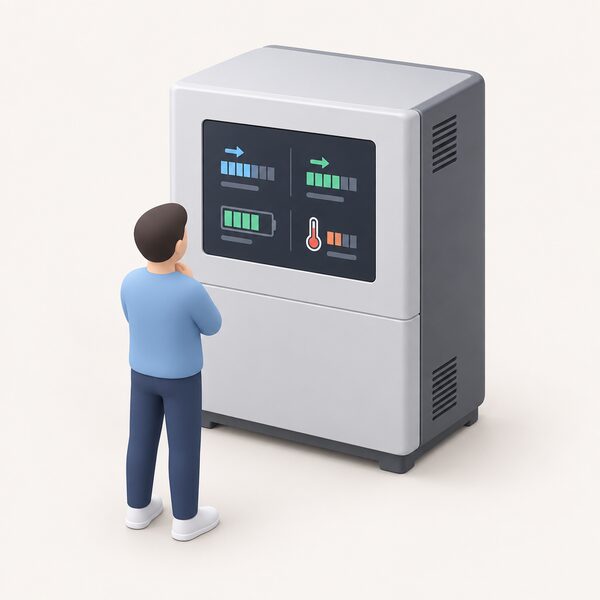
The display is the instrument panel of the whole system, and a test run should be read from it rather than from the appliance at the other end.
The first thing to check is the input and output figures. A unit that shows power in and power out lets the owner confirm that the load is actually being carried and that the recharge path is actually delivering. A unit that shows only a percentage is harder to diagnose.
The second is the state of charge and its rate of change. A state of charge that falls faster than the load implies points to a cell problem or a calibration error. A state of charge that does not move at all under load points to a display fault or a management system that has stopped reporting.
The third is temperature. Lithium cells perform and age differently at different temperatures, and a unit that reports cell temperature gives the owner a reason to move it before damage occurs.
The fourth is the control set. Features worth confirming during a test include open window detection, GPS tracking, frost protection, child lock, on-valve controls and Matter compatibility, which are the kinds of controls found on connected heating devices and illustrate the level of feature checking a modern test involves27. Not every backup unit carries these, but the principle holds: a control that has never been exercised is a control that may not work.
Finally, firmware. A unit that has not been updated since purchase may be running an old charge profile, and charge profiles are exactly what a manufacturer changes when field data shows a problem. Checking for updates is part of the test, not a separate task.
Costs of ownership: upfront price and ongoing running costs
The purchase price is the visible cost. The costs that follow are the ones that decide whether a backup system is worth keeping.
The first is standby draw. Equipment left plugged in and ready consumes power continuously, and the amounts are not trivial across a house. A television left on standby costs £9.50 a year, a microwave £6.64 and a coffee machine £5.695. A backup unit kept permanently on charge adds its own draw to that total, and the figure is worth knowing before a unit is left connected year-round.
| Appliance left on standby | Annual cost |
|---|---|
| Television | £9.50 a year5 |
| Microwave | £6.64 a year5 |
| Coffee machine | £5.69 a year5 |
The second is replacement. Domestic battery storage has a shorter lifetime of around 10 to 15 years, when compared to solar panels3, so a home battery bought today will need replacing within the life of the solar array it supports. That replacement cost belongs in the ownership calculation from the start.
The third is the cost of the fuel or the electricity used to keep the unit ready. For a generator, that is fuel and the oil and filters that go with it. For a battery, it is the electricity drawn to hold it at charge, plus the round-trip losses on every cycle.
There is also a financing model worth understanding for anyone considering a fixed system. Under a roof-top lease PPA, a third party finances the upfront and maintenance costs and owns the generating asset28. That arrangement shifts the maintenance burden to the asset owner, and it changes who is responsible for the checks described on this page.
For the feed-in tariff scheme, which closed to new applicants, the administrative costs are set out in the scheme rules. Ongoing generator costs are defined as the costs which continue to be incurred by a FIT licensee in respect of an accredited FIT installation which remains identified on the central FIT register in respect of that FIT licensee during FIT year 1729. The per-generator figures are £30 for a small FIT licensee and £15 for a large one29. FIT generators receive support for between 10 and 25 years depending on technology type, capacity, when their installation was commissioned, and whether it was previously accredited under the Renewables Obligation scheme30. Those figures are historical scheme administration rather than a current household cost, but they show how long a support period can run and therefore how long a maintenance obligation can last.
Sources30 cited
- What happens in an energy shortage, Energy Networks Association, 2026-09-17
- Domestic gas installation and health and safety, nidirect, 2025-10-28
- Domestic battery storage, Parliamentary Office of Science and Technology, 2026-06-25
- Statutory security of supply report 2025, Department for Energy Security and Net Zero, 2025-12-17
- Standby power: the hidden costs of vampire devices, NICEIC, 2026-01-28
- Carbon monoxide poisoning, nidirect, 2026-09-17
- Carbon monoxide, Health and Safety Executive, 2026
- Gas Safe Register, nidirect, 2025-10-29
- Gas safety and carbon monoxide, nidirect, 2025-11-24
- Keeping gas safe: carbon monoxide, SGN, 2026
- Gas safety FAQs, Health and Safety Executive, 2026
- Private tenancies (electrical safety) regulations (Northern Ireland) 2024, legislation.gov.uk, 2024-11-27
- Boilers and heating: building regulations, Planning Portal, 2026
- Why do you use generators?, UK Power Networks, 2026-09-17
- Battery storage, MCS Certified, 2026-09-17
- Generating renewable electricity, Energy Saving Trust, 2025-12-11
- Storing energy, Energy Saving Trust, 2026-07-15
- Batteries in the home, Solar Energy UK, 2026-09-17
- Electricity Act 1989, Schedule 7A, legislation.gov.uk, 2026-09-17
- Electricity Act 1989, Schedule 8, legislation.gov.uk, 2026-09-17
- G98 single premises, Energy Networks Association, 2026-09-17
- VAT energy saving materials and grant funded heating supplies, HM Revenue and Customs, 2026-09-17
- Building Standards Technical Handbook: domestic, Scottish Government, 2026-03
- Get help with your smart meter, Ofgem, 2026
- Getting a smart meter, Ofgem, 2026
- How to manage your energy supply, Ofgem, 2026-09-17
- Best smart radiator valves, Which?, 2026-09
- Behind meter energy systems guidance, Welsh Government, 2026-06-29
- Feed-in tariffs determinations: year 16, Ofgem, 2026-02-26
- Feed-in tariffs, Ofgem, 2026-09-17
 Backup Power and EPSWill your lights stay on when the power goes out?
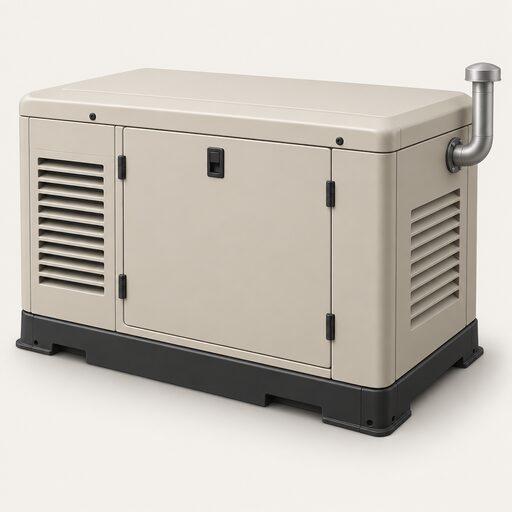 Standby Generators for HomesA standby generator starts itself when the power cuts out, so your home keeps running even when you are out.
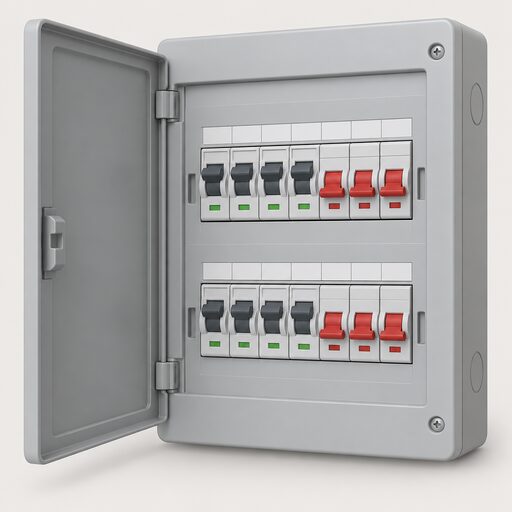 Essential Loads and CircuitsWhich plugs and lights should stay on when the power goes off, and which can safely go without?
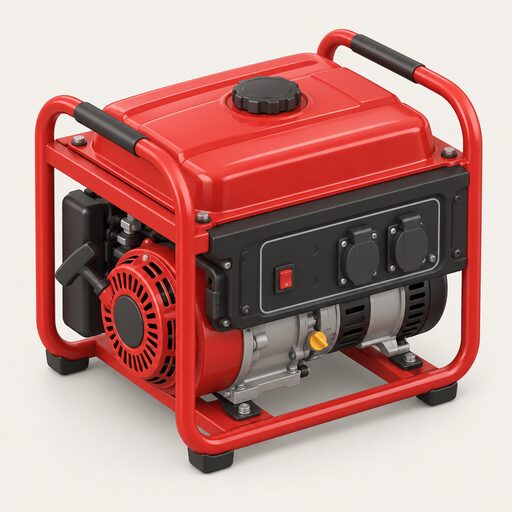 The Full Backup Power GuideHow long do UK power cuts usually last, and what can keep your fridge, heating or phone going until the power comes back?
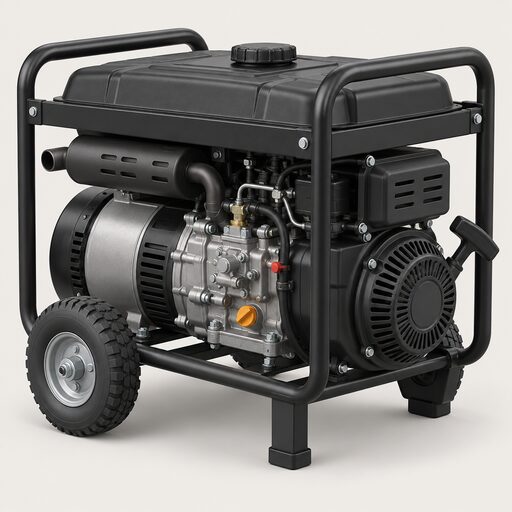 Portable Generators for HomesWhat can a portable generator actually run in a power cut, and for how long?
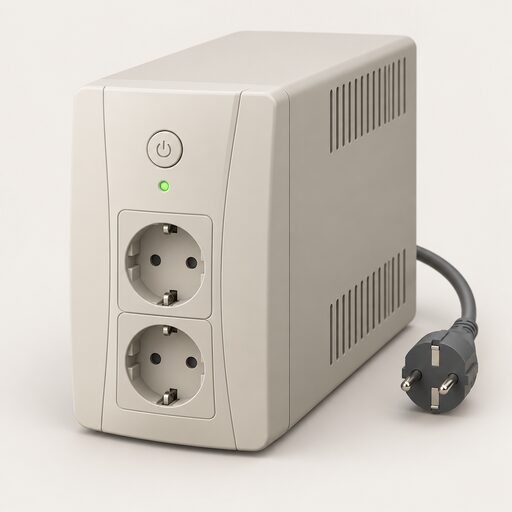 Backup Power Costs ComparedCompares purchase, installation and running costs across the main backup options, and what each delivers in runtime and coverage.