

In this guide
A fuel-powered whole-house generator costs between £35 and £115 a day to run, and that range is set by three things: the fuel, the load it carries and the hours it runs. Fuel choice changes the purchase price far more sharply than it changes the running cost. Petrol generators start at around £200, diesel at £1,000 and beyond £10,000, while portable units begin at around £160 and reach £2,000 or more1.
The daily figure is not a fuel price multiplied by a tank size. It is the cost of producing the electricity a household actually draws, hour after hour, and it moves with the load. A small petrol inverter generator running a light load is quoted at about 51p an hour, which is a different order of cost from a whole-house machine carrying heating, pumps and appliances1.
What a generator buys a household is independence from the grid at the moment the grid fails, and what it does not buy is independence from fuel supply. Petrol, diesel and LPG all have to be bought, stored and replaced, and the running cost continues for as long as the outage does. Battery storage removes the fuel bill but adds capital cost: battery storage tends to cost around £5,000 to £8,0002.
What drives the daily cost: fuel type, load and run hours
The daily cost of running a generator is the product of three variables, and only one of them is the fuel itself. The first is the load: a generator producing 2 kW for an hour uses less fuel than the same machine producing 6 kW, and the relationship is not linear because engines have an optimum load band. The second is run hours, which during a long outage is simply how long the household needs power. The third is the fuel price per litre, which varies by fuel and by how it is bought.
The wider electricity market sets the context for what a generator is competing against. The cost of generating electricity is set by the marginal cost, the most expensive source used to meet demand, which in the UK is often gas-powered plants4. Gas has been the dominant fuel used for electricity generation since 2008, and it supplies around a quarter of Great Britain's generation but up to 60% depending on the day5. That dependence is why wholesale prices move the way they do: the cost of generating electricity using gas averaged £77/MWh in 2024, and £88/MWh in the latest cap assessment period of that year, 14% higher than the previous period7.
For a household, the practical consequence is that a generator's running cost is anchored to fossil fuel prices that the household does not control. A generator does not insulate a home from fuel price risk; it converts grid price risk into pump price risk. The independence it provides is operational, not financial.
Load factor also determines whether a generator is being run efficiently. A machine sized far above its load runs at low output, burns fuel disproportionately and wears faster. A machine sized below its load either trips or runs at full output continuously, which shortens service intervals. The daily cost range of £35 to £115 reflects both ends of that spectrum1.
Petrol, diesel, LPG and HVO: how the fuel choice changes running costs
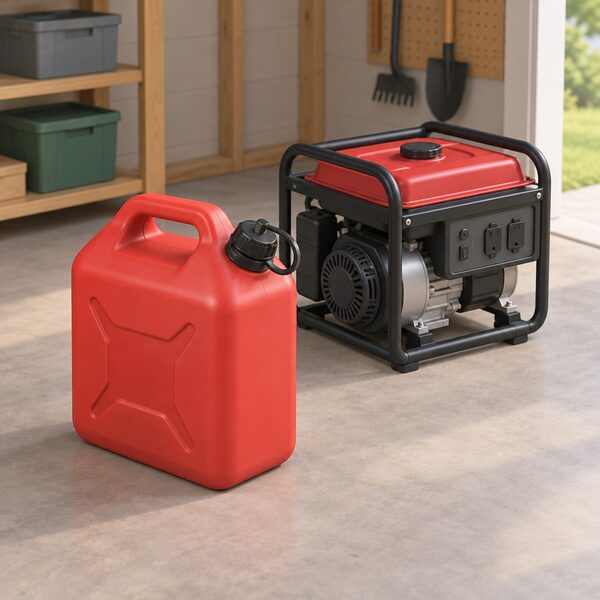
Each fuel carries a different combination of purchase price, storage burden and running cost. Petrol is the cheapest to buy into and the least suited to long storage, because it degrades. Diesel costs more upfront but suits long, heavy runs. LPG sits between them on convenience and is described by an independent provider of comparative home heating costs as one of the most expensive fuels available8.
| Fuel | Purchase price signal | Running cost position | Storage consideration |
|---|---|---|---|
| Petrol | from around £2001 | about 51p an hour on a small inverter unit1 | degrades in storage |
| Diesel | from £1,000, up to £10,000 and beyond1 | suited to long, heavy runs | longer storage life than petrol |
| LPG | not stated in the sources here | one of the most expensive fuels available8 | bulk tank or cylinders |
| HVO | works in existing oil systems with no upfront cost when blended9 | renewable, derived from certified waste materials8 | drop-in for compatible diesel engines |
LPG's cost position is worth stating plainly, because it is often assumed to be a cheap off-grid fuel. Annual costs for running an off-grid LPG system can be four times as much as a sustainable source10. In England, Scotland and Wales the standing charge for LPG is £67 a year11.
HVO is the fuel that changes the emissions profile without changing the engine. It is a renewable fuel derived from certified waste materials, and it has been trialled in generator fleets8. For oil-heated households, switching to a blended renewable liquid fuel of HVO and kerosene removes any upfront cost, because the fuel works in the existing oil heating system9. That is a meaningful distinction for a household already storing liquid fuel: the storage, the tank and the pipework stay as they are.
"The fuel used in the trial is Hydrotreated Vegetable Oil (HVO), a renewable fuel derived from certified waste materials."
Purchase price: £500 to £10,000, averaging around £3,000
The capital cost of a generator spans an order of magnitude, and the spread is wider than most households expect. Portable generators start at around £160 but can go up to £2,000 or more1. Petrol generators begin at around £200, diesel at £1,000, and diesel prices can soar to £10,000 and beyond1. For households that need a generator only occasionally, hire is an option: a 1.6kVA portable generator costs around £76 for a day, or £110 for a week1.
The purchase price is only part of the capital picture. A generator that connects to a home's fixed wiring needs a transfer switch and an electrician, and the connection itself may need notifying to the network operator. Those costs sit outside the generator's price and are covered in connecting a generator to a house and notifying the network operator.
There is also a regulatory cost that applies to generators connected under the Feed-in Tariffs scheme, which is a different context from backup but shows how per-unit charges accumulate. For FIT year 17, a large FIT licensee pays £15 per generator for an ongoing generator, and £10 per new generator; a small FIT licensee pays £30 per ongoing generator and £25 per new generator6. These are administrative charges on licensed generators, not costs a household backup generator would normally attract, but they illustrate that grid-connected generation carries ongoing obligations.
For a household comparing options, the honest framing is that a generator's purchase price is the smaller number. A machine bought for £3,000 and run for a week of outages a year will spend more on fuel and servicing over its life than it cost to buy. That is the trade-off the next section sets out.
Upfront cost versus ongoing fuel cost: the trade-off
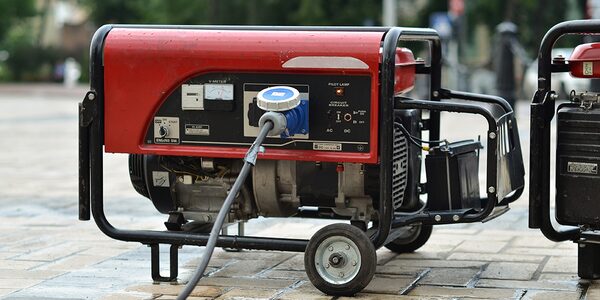
The trade-off between capital and running cost is the central decision in backup power, and the sources give enough to frame it without recommending an outcome. A fuel generator has a low-to-moderate upfront cost and a running cost that recurs every time it is used. A battery system has a high upfront cost and a running cost close to zero once installed, because it is charged from the grid or from solar.
The scale of the capital difference is visible in adjacent technologies. Battery storage tends to cost around £5,000 to £8,0002. A heat pump or biomass system would cost circa £18,000, and for a number of rural homes the upfront cost can be up to £18,00012. Air-to-water heat pumps have a median upfront cost of around £10,500 in the UK13. These are not generator prices, but they show the capital band that low-running-cost technologies occupy.
Running costs for heat pumps illustrate the same principle from the other direction. Running a heat pump would become on average £400 a year cheaper than burning gas after levy rebalancing14. Environmental levy reform would reduce annual running costs of heat pumps by £211 to £488 relative to gas boilers15. The pattern is consistent: capital-heavy, fuel-light technologies have lower running costs, and the gap widens as fossil fuel prices rise.
For a generator, the ongoing cost is not only fuel. Servicing, oil, filters and the replacement of a machine at the end of its life all recur. The £35 to £115 a day range is the fuel and running element; it does not include the capital cost of the machine or its installation1.
Solar generators as an alternative with no fuel bill
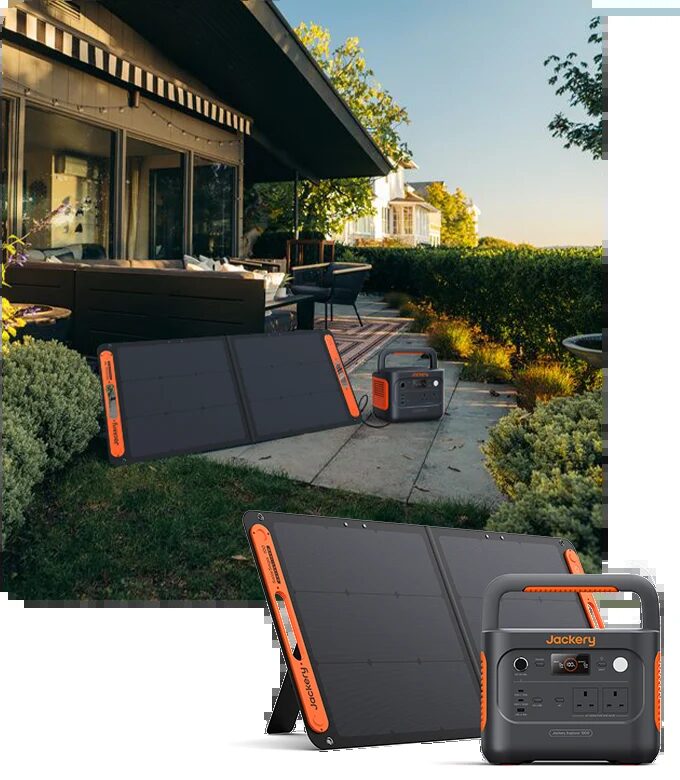
A solar generator, meaning a battery power station charged from solar panels, has no fuel bill at all. Its running cost is effectively zero once the capital is spent, and its capacity is fixed by the battery rather than by a tank. That is the structural difference: a fuel generator can run indefinitely as long as fuel is supplied, while a solar generator runs until the battery is empty and then waits for sun or grid.
The economics of the solar side are well documented. Installing solar reduces bills for households by around £500 a year for a typical UK home, based on the current energy price cap3. Battery storage tends to cost around £5,000 to £8,0002. A solar inverter replacement, if an existing unit is incompatible with a generator or battery, costs about £500 to £1,00016.
The comparison is not simply fuel bill versus no fuel bill. A solar generator's output is limited by its inverter and battery, so it suits essential loads rather than whole-house backup. A fuel generator's output is limited by its engine and fuel supply, so it suits long outages and heavy loads. The two answer different questions, and the choice between them is set out in solar generator vs fuel generator.
For a household whose priority is independence from fuel supply chains, the solar generator removes the dependence on petrol stations, fuel deliveries and fuel storage. What it does not remove is dependence on the manufacturer for replacement parts and, in many cases, on an app for monitoring and control. That is a different kind of dependence, and it is worth naming.
Sizing the generator to the load you actually need to run
Sizing begins with the load, not the house. The question is which circuits must stay live during an outage, and what their combined demand is at the moment of starting. Motors, pumps and compressors draw a starting current several times their running current, and that surge usually decides the generator's rating.
The distinction between whole-house and essential-load backup is the first decision. Whole-house backup requires a generator large enough to carry everything simultaneously, including heating, hot water and cooking. Essential-load backup requires only enough for the circuits chosen, which is a smaller and cheaper machine. The trade-offs are set out in essential loads and backup circuits and what size generator do I need.
There is a grid-connection dimension to sizing as well. NIE Networks applies a High Cost Cap of £200 per kW for generation applications, which is a connection charging threshold rather than a generator price17. For households in Northern Ireland, that figure matters when a generator or other generation is connected to the network.
Sizing also determines fuel consumption. A generator run at a low fraction of its rating burns more fuel per kWh delivered than one run near its optimum. That is why the daily cost range is so wide: the same nominal machine can sit at either end of it depending on what it is asked to carry1.
Hybrid setups: pairing a generator with solar and battery storage

A hybrid setup uses a battery to carry the base load and a generator to recharge the battery or to cover peaks. The logic is that the battery handles short outages silently and without fuel, while the generator handles long outages and heavy loads. The generator then runs at its efficient output rather than idling at low load, which reduces fuel consumption per kWh.
The technical enabler is an inverter-charger that can accept both a generator input and a battery, and can manage the transition between them. Some inverters support parallel operation with generators, and manufacturers publish guidance on it16. The constraint is compatibility: the generator's output must fall within the inverter's input limits, and the inverter must be able to control the generator's start and stop if the setup is to be automatic.
The capital cost of the battery side is the main barrier. Battery storage tends to cost around £5,000 to £8,0002. Adding that to a generator's purchase price and installation puts a hybrid system well above the cost of a generator alone, and the payback comes from reduced fuel use and reduced generator hours over the system's life.
For a household already considering solar, the hybrid route has a further advantage: the same battery that backs up the home during an outage also stores solar generation during normal operation, which reduces bills by around £500 a year for a typical home3. The battery is then working every day rather than waiting for an outage, which changes its economics.
The dependence that remains in a hybrid setup is on the inverter-charger's manufacturer for firmware, app support and replacement parts, and on the generator's manufacturer for servicing. Neither is a fuel supply chain, but both are supply chains. The household's independence is greater than with a generator alone and less than with a system it can maintain entirely itself.
Sources17 cited
- How to buy the best generator, Which?, 2026-01-20
- Solar panels, Energy Saving Trust, 2026-08-27
- UK Solar Roadmap, DESNZ, 2025-06
- Energy UK explains April 2025 price cap rise, Energy UK, 2025-02-20
- Why are energy bills so high, Energy UK, 2026-05-27
- Feed-in Tariffs determinations, year 16, GOV.UK, 2026-02-26
- Rising gas costs drive up GB electricity prices, Ember, 2024-11-22
- Future liquid fuels, UKIFDA, 2026-01-27
- Andy Burnham urged not to forget previous commitments to oil heated households, OFTEC, 2026-07-07
- Nibe Ivin Waite Farm case study, HPA UK, 2026-02-17
- Our data, Energy Saving Trust, 2026-09-01
- BioLPG, Liquid Gas UK, 2026-09-20
- EINAS 2025 heat and buildings, DESNZ, 2021
- Fixing the levy system could save billions, Nesta, 2025-04-23
- Assessing the government plans to obligate boiler manufacturers, Nesta, 2022-04-20
- A complete guide to solar PV, CSE, 2025-11
- Connection charging announcement FAQs, NIE Networks, 2026-09-20
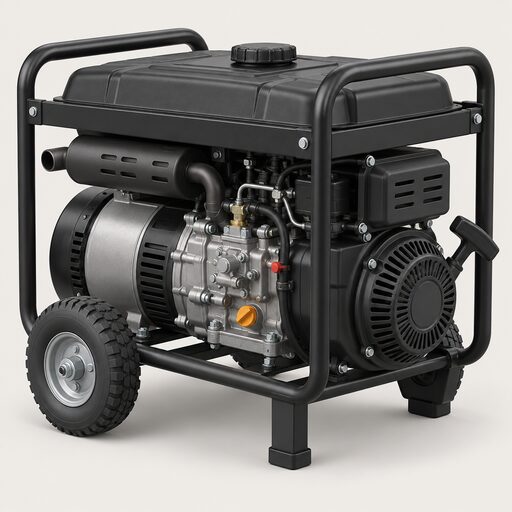 Portable Generators for HomesWhat can a portable generator actually run in a power cut, and for how long?
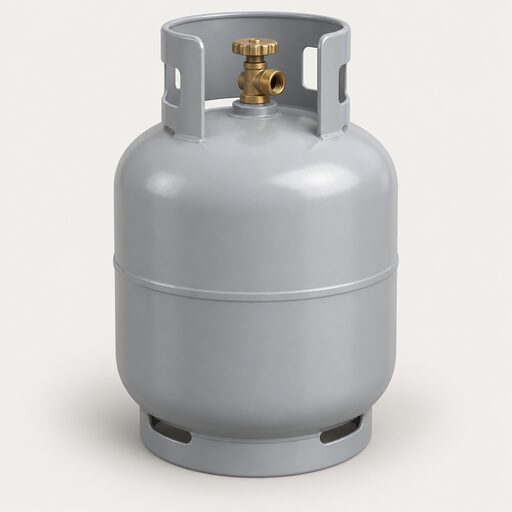 Storing Generator Fuel at HomeHow much petrol can you legally keep at home, and where should you put it?
 Heat Pump Running CostsWhat does a heat pump cost to run each year, and is it cheaper than a gas boiler?
 Backup Power Costs ComparedCompares purchase, installation and running costs across the main backup options, and what each delivers in runtime and coverage.
 Heating Schedules and SetbackIs it cheaper to leave the heating on low all day, or set it to come on only when you need it?
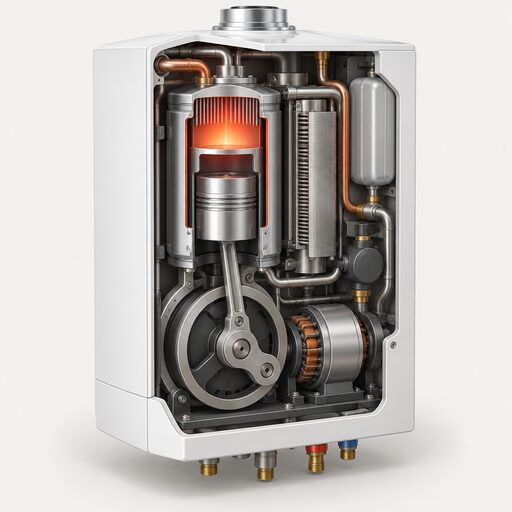 Micro-CHP TypesWhich type of micro-CHP actually gets fitted in UK homes, and how much electricity does one make while it heats your house?