In this guide
Most portable power stations sold in the UK now run on lithium iron phosphate cells, written LiFePO4 or LFP. One maker's guidance puts it plainly: "Most newer portable power stations use LiFePO₄ (lithium iron phosphate) batteries."1 The main alternative is lithium NMC, still found in some models such as the Goal Zero Yeti 1500X, and Jackery describes its range as using "lithium batteries (LiFePO4 / NMC)" across different products.2 Lead-acid, once common in cheap units, has largely dropped out of this category.
The choice of chemistry shapes three things a household notices: how many years of charging the battery is built for, how heavy the unit is to carry, and how comfortable a household can be keeping it indoors. Lithium-ion in general is now "the most common cell chemistry for stationary battery storage systems"3, and LFP is the version makers present as the long-life, stable option. The trade-off is that LFP cells have a lower nominal voltage, typically 3.2V per cell4, and are "slightly heavier and less compact" than the lithium chemistries used in cars.5
Cycle life, cold-weather charging limits and the rate at which capacity fades are model-specific: each maker sets them in its own specification and warranty for each product. What the chemistry tells a buyer is the general direction: LFP is sold as the longer-lived, more stable choice, NMC as the lighter one. The rest of this page sets out the figures that are published, what drives them, the standards that apply and what a battery in a box does and does not do for a household's independence from the grid.
LFP has become the standard, with NMC as the lighter alternative
Lithium-ion is the dominant family across all battery storage, "due to their high energy density, efficiency, and cycle life" in one maker's summary.8 Within that family, an LFP battery "consists primarily of lithium, iron, and phosphate"9, which is where the name comes from. NMC is a different lithium-ion recipe. Both are lithium-ion; the difference lies in what the positive electrode is made of, and that changes weight, voltage and stability.
Across the portable market, the move to LFP is visible in almost every current range. Jackery's Explorer 240 v2 is "Engineered with durable LiFePO4 battery"10, and its Explorer 300D is listed with a 288Wh capacity and an LiFePO4 battery.11 EcoFlow describes the DELTA 2 as a "1024 Wh LFP battery : stable chemistry with a long lifespan"12 and the DELTA Pro 3 as "LFP (Long-life LiFePO₄)".13 Anker SOLIX calls its portable units "the safest LiFePO4 lithium-ion battery"14, a maker's own claim. The Explorer 500 v2 is presented by Jackery as "the most compact and lightweight LiFePO4 power station in its class"15, again the maker's description.
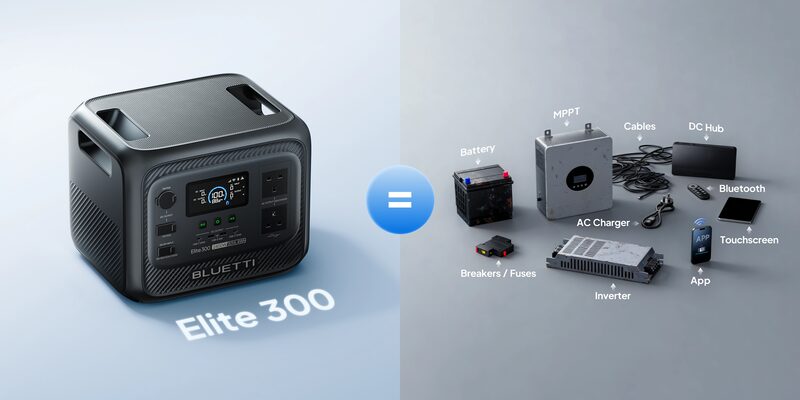
LFP has also moved into the smallest units. The EcoFlow DELTA 2 Max uses "long-lasting LFP battery chemistry"16, and the RIVER 3 weighs 3.5 kg and is "built with durable LFP batteries".17 BLUETTI states that it "was one of the first to adopt the LiFePo4 battery type in portable power stations."18 Which? also reports that an Anker portable power station "is powered by lithium iron phosphate (LiFePO4) batteries".19
The short answer, then, is that a household buying a new portable power station in the UK is most likely to get LFP. NMC remains available in some models, and the choice between them is a matter of weight and size against the longer-life and stability claims makers attach to LFP. For how these units work more broadly, see portable power stations.
Chemistry and capacity by model
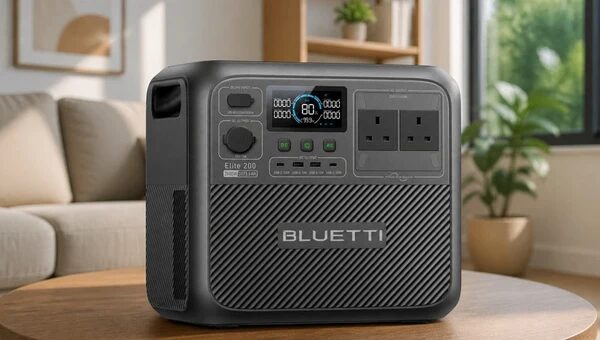
Where makers publish a figure, it is set out below. Each entry is the maker's own statement for its own product; no independent test figures for these models are given here.
| Model | Chemistry | Published figure | Source |
|---|---|---|---|
| Jackery Explorer 240 v2 | LiFePO4 | "durable LiFePO4 battery" | 10 |
| Jackery Explorer 300D | LiFePO4 | 288Wh capacity | 11 |
| Jackery Explorer 500 v2 | LiFePO4 | described as most compact in class (maker claim) | 15 |
| EcoFlow RIVER 3 | LFP | 3.5 kg | 17 |
| EcoFlow DELTA 2 | LFP | 1024 Wh | 12 |
| EcoFlow DELTA 2 Max | LFP | "long-lasting LFP" | 16 |
| EcoFlow DELTA Pro 3 | LFP | "Long-life LiFePO₄" | 13 |
| Anker SOLIX range | LiFePO4 | maker describes as safest LiFePO4 | 14 |
| Goal Zero Yeti 1500X | Li-ion NMC | MPPT charge controller built in | 1 |
Lead-acid: the older option
Lead-acid batteries still appear in some storage products. A maker of home storage lists "lithium-ion and lead-acid" as the most common batteries in household photovoltaic storage20, but lead-acid batteries "are heavy, bulky, and have a lower depth of discharge (DoD)"21, which means less of the stored energy can be used before the battery is at risk. Deep cycle lead-acid variants "allow for greater depth of discharge"9, narrowing the gap. In the vehicle world, the Energy Saving Trust lists lead-acid among the battery types that are now "less common".22 For a unit meant to be carried, the weight penalty is decisive, which is why lead-acid has fallen away in portable designs. The same comparison for standby equipment is covered in lithium-ion vs lead-acid UPS.
How portable capacity compares with a home battery
A portable power station holds far less than a fixed home battery. Jackery's guidance suggests 8 to 10 kWh usable for a household of two to three people, and 10 to 13 kWh usable for three to four people23, while another of its guides uses a daily battery throughput of 5 kWh as a standard UK household example.24 Against that, the EcoFlow DELTA 2 holds 1024 Wh12 and the Explorer 300D 288Wh.11 The word that matters in home battery figures is "usable": the RdSAP conventions used for home energy assessments require evidence of the manufacturer, model and "usable capacity (kWh)" for PV batteries.25 For matching a unit to loads, see what size portable power station you need and home battery vs portable power station.
What drives cycle life, weight and safety
A portable power station has three main parts: "a battery, inverter, and a charge controller".26 The battery sets how long it lasts and how much it weighs; the inverter converts the battery's DC into AC for household plugs; the charge controller manages what flows in from solar panels or other sources. Several factors decide how the battery behaves over time.
Energy density and weight
Lithium-ion batteries in general are "expensive, yet more effective, portable, and have a higher energy density. However, they might set fire if not fitted correctly."27 Energy density is why a lithium unit is carryable at all. Within lithium, LFP gives up some density: its "lower nominal voltage (typically 3.2V per cell)"4 means more cells for the same stored energy, and the result is a pack that is "slightly heavier and less compact", though "this is usually not a problem in a domestic situation."5 For a unit that lives in a cupboard for power cuts, that extra weight matters little. For one carried to a campsite weekly, it matters more, and that is where NMC keeps a place.
Depth of discharge and how the battery is used
Newer stations use lithium batteries "which are lightweight, more efficient, and safe to discharge to a lower voltage without damaging the battery."26 This is one reason lithium replaced lead-acid, whose lower depth of discharge21 limits how much stored energy can be drawn. How deeply and how often a battery is cycled is one of the main drivers of its working life, which is why makers state cycle ratings against defined conditions in their own specifications.
Capacity and the battery management system
"The battery's capacity determines how much power the unit can store and deliver"28, and higher capacity models offer more runtime. The battery is managed electronically: most units have an LCD display that "shows battery status, input and output wattage, and other vital information"28, which is the household's window onto charge level and draw. The electronics that protect the cells against over-charging, over-discharging and temperature extremes are part of each maker's design; their limits, including any restriction on charging in cold conditions, are set in the product's own documentation.
Stability and indoor use
Chemistry also drives the safety case. BLUETTI's UK guidance describes lithium iron phosphate as a chemistry that "lasts longer and is safer for indoor use" than older alternatives.29 That is a maker's statement, but it matches the way LFP is presented across the market. The broader point, from Which? and from BLUETTI alike, is that any lithium battery carries a fire risk if it is damaged or badly handled.27 For the fire risk in detail, see lithium battery safety and recalls and lithium battery fire risk in hot weather.
The rules: standards, fire protection and disposal
No single rule governs the chemistry in a portable power station. Instead, a set of international standards, a UK fire-protection specification and proposed legislation each cover part of the ground.
IEC 63056 and the 500 Wh line
IEC 63056:2020 is an international safety standard for "Secondary cells and batteries containing alkaline or other non-acid electrolytes - Safety requirements for secondary lithium cells and batteries for use in electrical energy storage systems". It was published on 27 March 2020, applies up to a maximum nominal DC voltage of 1 500 V, covers uses such as telecommunications and uninterruptible power supplies, and includes a June 2021 corrigendum. Its stability date is 2026.6 It also carries an important exclusion:
"This document does not apply to portable systems 500 Wh or below"
Many smaller power stations fall at or below that line, including the 288Wh Explorer 300D.11 Larger units such as the 1024 Wh DELTA 2 sit above it.12 Being outside IEC 63056 does not mean a product is unsafe, only that this standard is not the one that applies.
IEC 62619 and maker references
Makers of home and portable storage often cite related standards. EcoFlow describes the LiFePO4 chemistry in its STREAM Ultra X home battery as "the same standard referenced by the IEC 62619 safety specification".30 That is a maker's statement about its own product and indicates the standards makers point to, rather than an independent certification finding.
PAS 63100:2024 for batteries in dwellings
In the UK, BSI's PAS 63100:2024 is a specification on protection against fire for battery energy storage systems for use in dwellings, and it includes "physical requirements for battery units".31 It is written for installed home systems. Portable units that are carried around rather than installed sit awkwardly with rules written for fixed kit, a gap the industry has begun to name.
Disposal: proposed seller duties
The Lithium-ion Battery Safety Bill [HL] proposes that disposal regulations must require sellers to display a prominent warning about the dangers of improper disposal and to provide information on cell chemistry and safe disposal as part of the sale. In the Bill's own words: "Regulations under subsection (1) must include a requirement for sellers of such batteries to" display such warnings.33 It is a Bill, not yet an obligation in force. For how to handle a damaged cell, see how to dispose of a swollen power bank and power bank recalls.
The wider framework on wiring and installed equipment is covered in backup power safety and standards.
Much the same across England, Scotland, Wales and Northern Ireland
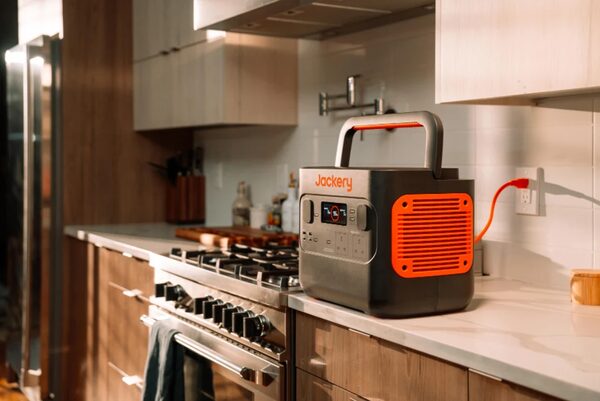
The chemistry inside a portable power station does not change at the border. The main safety standards discussed above are international IEC documents6, and a unit sold in Belfast is the same product as one sold in Birmingham. Where the four nations differ is in the services around a power cut, and in how their governments frame storage.
In Scotland, the Scottish Government has described battery storage as playing "an important role in supporting the flexibility of the energy system", helping to avoid peaks and troughs in supply, particularly with renewable generation, although that assessment concerned non-domestic storage.35 Solar Energy Scotland argues that "More homegrown energy means greater energy independence."36 For how cuts are handled locally, see power cuts in Scotland.
In Wales, fire and rescue services publish lithium battery guidance aimed at households34, and the practical rules on charging and storing a power station follow that same safety advice. See power cuts in Wales.
Northern Ireland has its own network operator and its own register for vulnerable customers, covered in power cuts in Northern Ireland and the Customer Care Register. The battery rules themselves are the same as in Great Britain.
At grid scale, the picture is UK-wide. The UK's total installed battery capacity was reported in April 2026 to be "around six gigawatts".37 The system operator notes that, compared with pumped storage, "the electricity they can deliver is much more limited"38, a reminder that batteries at every scale, from a grid site to a 288Wh portable unit, store rather than supply energy over long periods.
| Nation | What differs for portable battery owners |
|---|---|
| England | Same product standards; local network operator and Priority Services Register |
| Scotland | Government frames storage as supporting system flexibility35; own network operators |
| Wales | Fire service lithium battery guidance for households34 |
| Northern Ireland | Separate network operator and Customer Care Register; same product standards |
What a battery in a box does for energy independence
A portable power station is "essentially a big battery that stores energy from the grid (wall plug, car alternator, etc.)".39 It stores energy but does not generate it. That single fact sets the limits on how much independence it can deliver.
What it gives a household
During a power cut, a portable power station can be "a battery-powered alternative to a gas generator that can be used inside (or outside) during a blackout".29 EcoFlow states that a PPS "is safe to use indoors or outdoors as there are no emissions of any kind, including carbon monoxide gas."39 That is the maker's claim, but it points to a real contrast with fuel generators, covered in portable power station vs generator and generator safety. EcoFlow's winter guidance describes a battery able to boil a kettle, run a heater, cook with a hot plate or microwave, and keep a fridge or freezer running "for several days"29, a maker's description whose truth depends entirely on capacity and load.
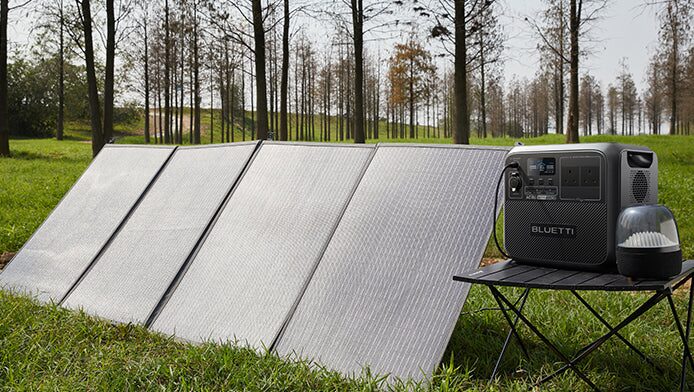
Charging options are what turn stored energy into some measure of independence. Units can be recharged from solar panels, a wall socket or a car39, and "PPS units also have solar charging capability, meaning you don't need to plug it into an outlet to recharge."26 With panels attached, a PPS becomes what makers call a solar generator. See charging a portable power station from solar panels.
What dependence remains
Several dependencies remain, and the chemistry affects only some of them:
- The grid or the sun. Without solar panels, every kilowatt-hour comes from the grid or a car. In winter, solar recharge is limited.
- Capacity. A 1024 Wh unit12 is a fraction of the 8 to 10 kWh usable that one maker suggests for a two to three person home.23
- The maker. Warranty, spare parts, firmware and any app all depend on the company staying in business. A long-life LFP battery outlasts its value if the unit cannot be serviced.
- Imports. The cells and units are manufactured by overseas brands, so supply depends on international trade.
- Cost. Portable power stations "are on the pricey side, often costing as much as an inverter generator."39 UK prices are covered in portable power station cost.
Where chemistry fits the bigger picture
At household scale, a fixed battery paired with solar lets a home "store free, renewable electricity to power your heat pump", making it less reliant on grid electricity.40 Industry bodies have argued for years that domestic storage, including "lithium ion batteries, and including electrically charged heat batteries", deserves tax support.41 A portable unit is a smaller step on the same path: it cannot run a home, but it can keep essentials going through a cut, and an LFP battery built for many cycles makes it a longer-lasting part of a household's resilience than older chemistries would. The wider picture is set out in backup power and energy independence and the backup power guide.
Brands and ranges on the UK market
The UK portable market is led by a handful of brands, each of which states its chemistry. EcoFlow says most of its portable power stations use LFP, including the RIVER 2, DELTA 2, DELTA Pro and Power Kits.7 Jackery uses both LFP and NMC across its products, with the v2 Explorers on LFP.2 Anker SOLIX and BLUETTI present LFP throughout their portable ranges.14 Goal Zero's Yeti 1500X is one of the NMC models still sold.1 Brand pages cover each in more depth: EcoFlow, Jackery, Anker SOLIX, BLUETTI, Zendure and Fogstar. Direct comparisons are in EcoFlow vs BLUETTI and Jackery vs Anker SOLIX.
Sources41 cited
- Portable power station 2000W, EcoFlow, 2025-10-24
- Jackery buying guide, Jackery, 2026-09-20
- Glossary, RCT Power, 2026-09-19
- Things you should know about LFP batteries, EcoFlow, 2025-06-16
- Residential FAQ, AlphaESS, 2026-09-17
- IEC 63056:2020, International Electrotechnical Commission, 2020-03-27
- Upgrade EcoFlow battery capacity, EcoFlow, 2025-06-16
- What is ESS, Duracell Energy, 2024-11-22
- How do solar batteries work, So Energy, 2024-06
- Solar Generator 240 v2, Jackery, 2026-09-19
- 0.5kWh product bundles, Jackery, 2026-09-20
- Portable power station 1000W, EcoFlow, 2025-10-30
- Power cuts in Edinburgh, EcoFlow, 2025-11-26
- Solar generators, Anker SOLIX, 2026-09-19
- IFA 2025: Explorer 500 v2, Jackery, 2026-04-29
- EcoFlow DELTA 2 vs DELTA 3, EcoFlow, 2025-06-25
- EcoFlow RIVER 2 vs RIVER 3, EcoFlow, 2025-06-23
- Home backup, BLUETTI, 2026-09-19
- How to buy the best generator, Which?, 2026-01-20
- Essential battery tips for home PV energy storage, Solis, 2024-10-23
- Types of solar batteries, SolaX Power, 2026-01-29
- Electric vehicle battery basics, Energy Saving Trust, 2025-09-16
- Solar power for your home, Jackery, 2026-06-11
- Micro inverter guide, Jackery, 2026-06-16
- RdSAP conventions v12, BRE Group, 2025-05-15
- Portable power station vs power bank, EcoFlow, 2025-06-16
- Adding batteries to an existing solar system, BLUETTI, 2023-10-15
- Portable power station: power at your fingertips, AlphaESS, 2023-08-25
- Solar battery cost, BLUETTI, 2026-08-03
- Prepare for a winter power outage, EcoFlow, 2025-06-16
- 3000W inverter, EcoFlow, 2026-05-29
- [Lithium-ion Battery Safety Bill [HL]](https://bills-api.parliament.uk/api/v1/Publications/56005/Documents/4984/Download), UK Parliament, 2024-07-29
- PAS 63100:2024, BSI, 2024-03-20
- Plug-in battery, Electricity Storage Association, 2026-08-27
- Lithium ion batteries, North Wales Fire and Rescue Service, 2026
- Extending permitted development rights: sustainability appraisal, Scottish Government, 2019-06
- Solar Energy Scotland manifesto, Solar Energy UK, 2026-09-17
- How does storage help us balance the grid, NESO, 2026-09-17
- Inverter generators vs portable power stations, EcoFlow, 2025-06-16
- REA and industry call for domestic energy storage VAT cut, REA, 2020-12-22
- Homes with batteries to cash in from free power offer, Solar Energy UK, 2026-04-14
 Portable Power StationsWhat can a portable power station actually keep going in a power cut, and for how long?
 Portable Power Station SizeHow big a portable power station does a home actually need, and how long will it keep things running in a power cut?
 Portable Power Station CostHow much does a portable power station cost in the UK, and what does the money actually buy?
 Battery ChemistriesWhich home battery lasts longest, and is it the safest?
 What Size Battery?How much electricity does your home use in a day, and how much of that falls in the hours when power is cheap or your solar panels are generating?
 Portable Generators for HomesWhat can a portable generator actually run in a power cut, and for how long?