
In this guide
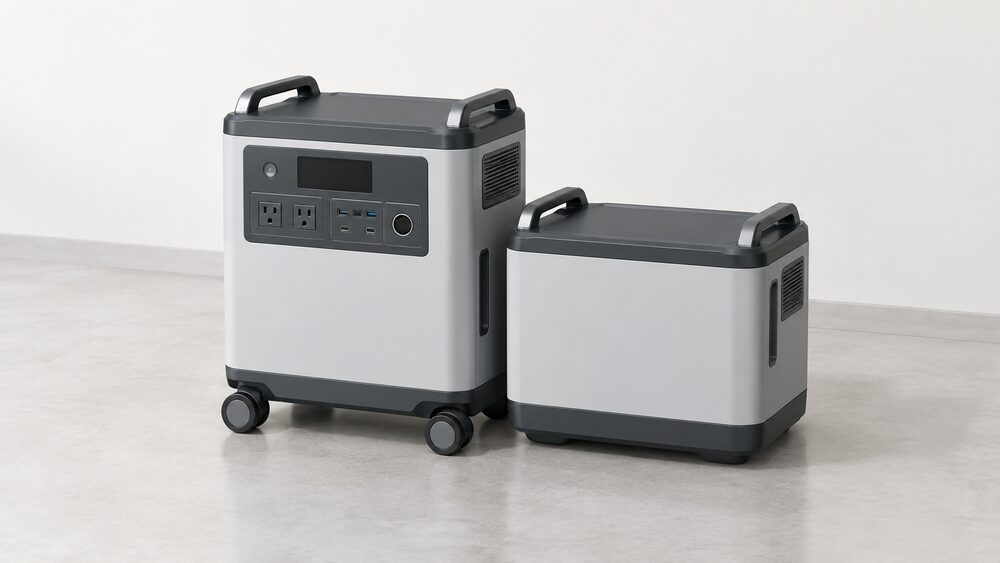
The Anker SOLIX F3800 Plus is a wheeled, plug-and-play home backup battery that starts at 3.84kWh of storage and 6kW of AC output, and expands to 53.8kWh and 12kW when expansion batteries are added. The maker presents it as a whole-home unit that needs no electrician for the base configuration, and as capable of days-to-week-long backup at full expansion1.
It is the flagship of the SOLIX range, and it is a North American product. The published specifications are 120V and 240V outputs, NEMA TT-30P and L14-30 ports, and a 60Hz generator input, and the product pages sit on the Anker SOLIX US site2. No UK price, UK plug type or UK availability is published on those pages, so a UK householder is looking at a unit that would need confirming for voltage and supply before any order.
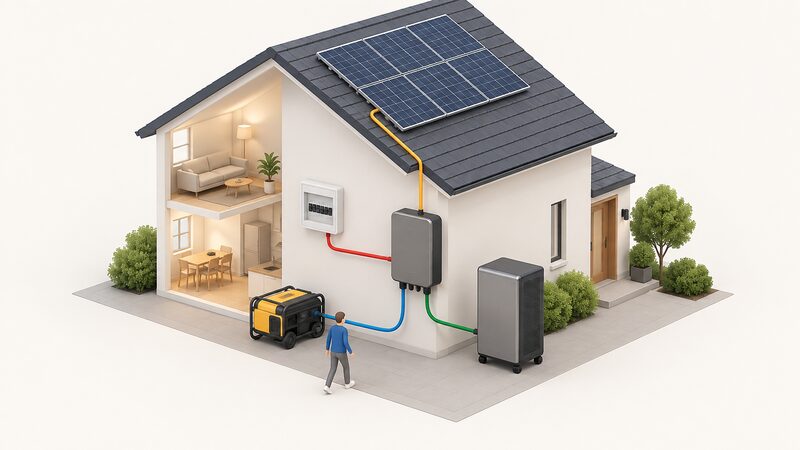
What it does for independence is real but bounded. It moves a chosen set of circuits off the grid for the duration of its stored energy, and it can be refilled from solar panels or a generator rather than only from a wall socket. What remains is a dependence on Anker's hardware, on the Anker app for remote monitoring and control, and, for the automatic features, on the Home Power Panel and a mains supply to charge from in the first place.
What the F3800 Plus is: 3.84kWh and 6kW in a wheeled unit
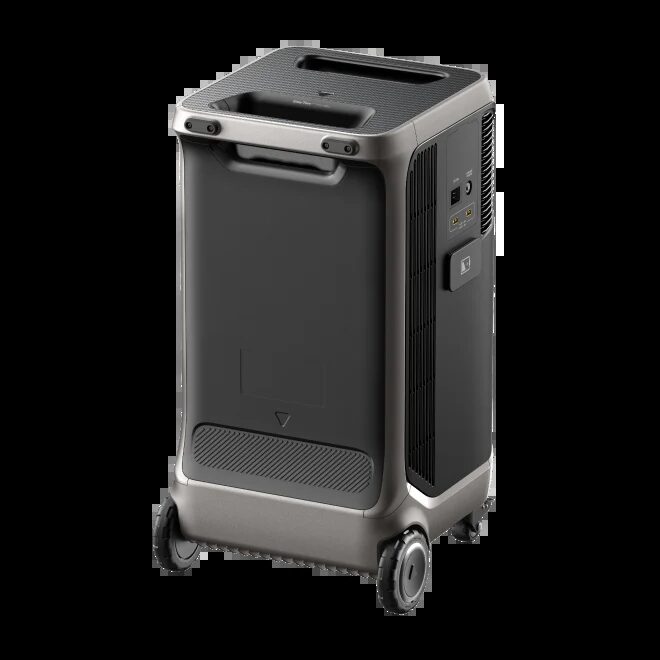
The base unit holds 3,840Wh and delivers 6,000W of AC output, described by the maker as dual-voltage at 120V and 240V, enough to run appliances from fridges to central air conditioning3. It is sold as plug-and-play with no electrician needed for the base configuration, and the maker's own framing is that it expands to 53.8kWh and 12kW for days-to-week-long backup1.
The earlier F3800 is the same platform without the generator bypass: the comparison table lists generator bypass as "Yes" for the F3800 Plus and "No" for the F38006. That single difference is the main reason to prefer the Plus if a fuel generator is part of the plan. The F3800 itself is listed at 3,840Wh and 6,000W, with capacity expandable to 26,880Wh using up to six expansion batteries of 3,840Wh each5.
Weight is the practical constraint. The maker lists the F3800 Plus net weight at 136.7 lb and the F3800 at 132.3 lb4. Wheels make it movable on a flat floor; neither figure suggests one person should carry it up a flight of stairs. For scale, the same maker's F3000 is listed at 41.5kg and the F2000 at 30.5kg, so the F3800 Plus sits in a different class of object entirely8.
Capacity and output: 3.84kWh starting, expandable to 26.9kWh or 53.8kWh
The expansion story has two published ceilings, and the difference is worth stating plainly. One set of maker pages gives the maximum as 26.9kWh, reached with up to six expansion batteries of 3.84kWh each4. Another gives 53.8kWh and 12kW1. The F3800's own page sits at the lower figure, listing a maximum capacity with expansion batteries of 26,880Wh5.
Both figures come from the maker. A householder reading the specification should treat 26.9kWh as the figure tied to a single unit with six expansion batteries, and 53.8kWh as the figure the maker quotes for the wider system, which implies more than one base unit. The F3800 page supports that reading: it lists scalability as up to two F3800 units7.
| Configuration | Capacity | Output |
|---|---|---|
| F3800 Plus alone | 3,840Wh4 | 6,000W3 |
| F3800 Plus with one expansion battery | 7,680Wh5 | 6,000W3 |
| F3800 Plus with six expansion batteries | 26.9kWh4 | 12,000W4 |
| Maker's stated system maximum | 53.8kWh1 | 12kW1 |
Output scales with the battery count rather than the base unit alone: the maker states 6,000W AC output per unit, expandable up to 12,000W1. The Home Power Panel input is listed at 6,000W, and the maker notes that figure applies when working with an expansion battery6.
Recharging: 1,800W from the wall, 3,200W of solar, or a 6,000W generator bypass
Three routes refill the unit, and they differ sharply in speed and in what they depend on.
From a wall outlet, the maximum AC input power is 1,800W6. That is the slowest of the three and the one that ties the unit to a working mains supply, which is the wrong dependency during a long outage unless the grid is still up somewhere on the property.
From solar, the maker states a maximum of 3,200W through dual 11 to 165V MPPT controllers, with full recharge in under two hours in optimal sunlight3. The same figure appears as 100% recharging in 1.5 hours with eight 400W solar panel connections1. Each of the two solar input ports accepts 11 to 165V at 17A maximum, 1,600W maximum per port4.
From a generator, the maker states compatibility with 240V pure sine gas generators and a 6,000W bypass for extended outages3. Two conditions attach. An Anker SOLIX Generator Adapter is required, and the maker states generator charging supports a single F3800 Plus unit only6. The bypass figure is also split: 3,300W for a single unit, 6,000W when working with one or more expansion batteries1. A 240V generator on the L14-30R port gives a bypass limit of up to 6,000W, while the TT-30R port gives up to 3,000W4.
Ports and what each one runs
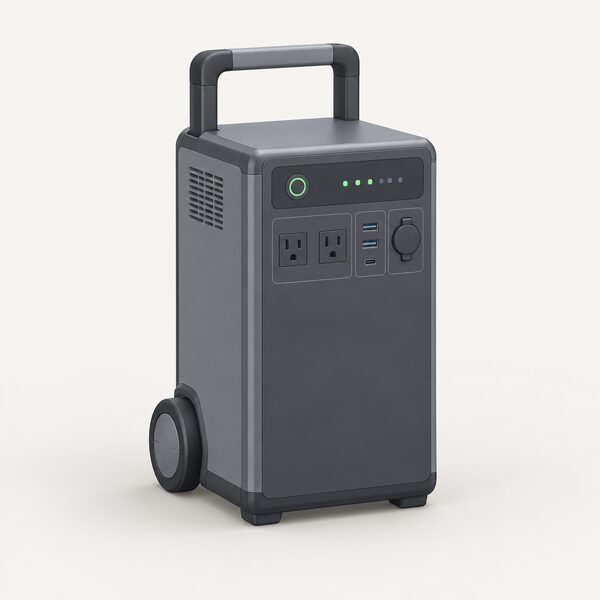
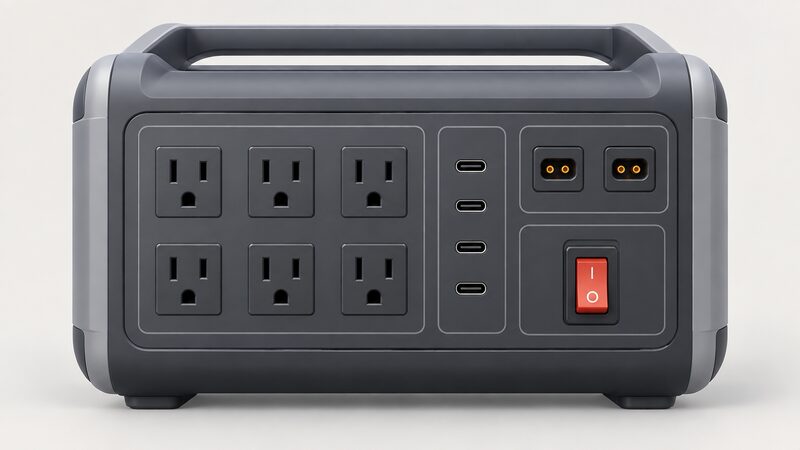
The port list is the practical map of what the unit can do. There are two solar input ports and one 60V/120A DC input4. The USB-C ports deliver 5V at 3A, 9V at 3A, 15V at 3A, 20V at 3A and 20V at 5A, at 100W maximum per port4. The HPP and Generator Adapter port is rated 6,000W maximum AC input and 6,000W maximum AC output at 120V/240V4.
The UPS behaviour is the detail most likely to catch a householder out. In UPS mode, the maker states that only the three 120V ports labelled "UPS" are operational and the 240V ports do not function5. Separately, when the F3800 is recharging with AC power, the maker states that only its 120V UPS outlet can be used to charge other devices7. So the fast wall recharge and the full port set are not available at the same time.
For EV and RV charging, the maker states direct charging through the NEMA TT-30P or L14-30 ports4. The F3800's EV port is rated 3,000W, and the maker states the unit can charge an EV at 2,990W5. EV mode is activated by double-pressing the 240V power switch, and the maker instructs that the charging rate be set to less than 25A5.
Battery chemistry and lifespan: LFP rated for 3,000+ cycles
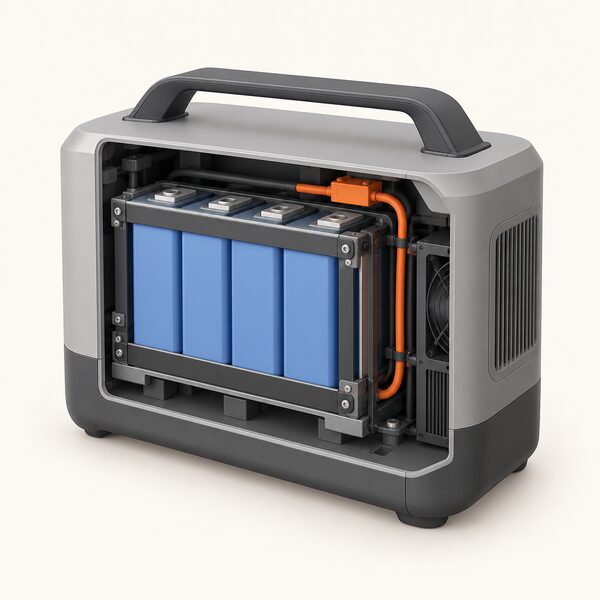
The F3800 Plus uses LFP chemistry, listed at 3,000+ cycles4. The maker states a 10+ year lifespan using EV-grade LFP batteries, alongside a 5-year warranty1. The F3800's own page gives the cycle figure with its condition attached: 3,000 cycles at at least 80% battery capacity5.
That condition is the one that matters. A cycle count without a capacity floor is not comparable across products, and the maker's own range shows how the numbers move: the C2000 Gen 2 is listed at up to 4,000 cycles at 80% capacity, or every day for 10 years, and the F3000 at 4,000-cycle LFP batteries10. The F3800 Plus sits at 3,000+ cycles, which is the lower end of the maker's own published range.
LFP is the chemistry the maker uses across the SOLIX line, and it is presented as the reason for the cycle figures: the maker states that long-lasting LFP batteries retain substantial capacity after thousands of cycles11. The 10+ year lifespan claim is a maker projection tied to that chemistry, not an independently tested figure, and it assumes the unit is not cycled harder than the rating assumes.
What this means for independence is that the storage itself is not the weak point. A battery rated for 3,000 cycles at 80% capacity will outlast most of the outages it is bought for. The dependencies that remain are the ones around it: the app, the panel, and the maker's continued support of both.
Storm Guard and app control: what the Home Power Panel adds
Storm Guard is the automatic feature, and it depends entirely on the Home Power Panel. The maker states that when the F3800 Plus and Home Power Panel are notified of extreme weather, they start charging automatically, so the unit is full before the weather arrives6. Without the panel, Storm Guard does not operate: the maker lists the Home Power Panel as required4.
Remote monitoring and control run through the Anker app over Wi-Fi or Bluetooth, letting a householder monitor and manage power settings4. That is the clearest dependence the product creates. Local operation at the unit continues without a connection, but scheduling, monitoring and any remote diagnostics depend on a home network, Anker's servers and the app.
The Home Power Panel input is listed at 6,000W, and the maker notes that figure applies when working with an expansion battery6. The panel is also the component that makes the rooftop solar limitation matter, which is covered below.
Where the F3800 Plus falls short
Three limits are worth stating as firmly as the benefits.
The first is rooftop solar during an outage. The maker's answer is direct: no, when outages occur, the unit must be connected directly to solar panels in the 11 to 165V range to charge4. A household with a rooftop array wired through the Home Power Panel does not get to refill the battery from that array while the grid is down. The array has to be disconnected and connected to the unit directly, which is not an automatic process.
The second is the voltage ceiling. The maker warns that exceeding 165V may cause damage to the solar input ports1. A string array sized for a rooftop inverter will commonly run above that window, so the panels that can charge this unit are not necessarily the panels already on the roof.
The third is the market. The specifications are North American: 120V and 240V outputs, NEMA ports, a 60Hz generator input, and a 60V/120A DC input4. The product pages sit on the Anker SOLIX US site7. No UK price, UK plug type or UK availability is published on those pages, and the UK site's own accessory page does not carry the F3800 Plus12. A UK householder is therefore looking at a unit whose fit for a British installation is unconfirmed by the maker's own published material.
Warranty, returns and buying from Anker SOLIX
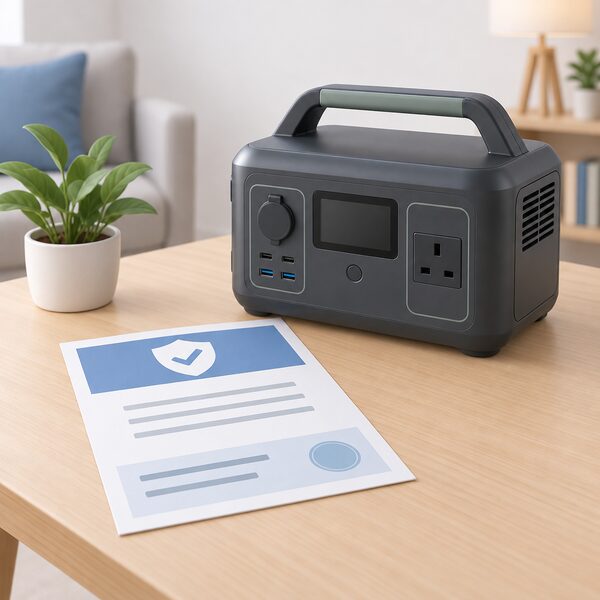
New units carry a 5-year warranty, and the maker pairs it with the 10+ year lifespan claim for the LFP battery1. Refurbished units are different: the refurbished F3800 is listed with a 6-month warranty7. That is a substantial difference in cover for a unit of this size and cost, and it is stated on the maker's own specification table.
Returns run to a 30-day money-back guarantee, listed across the range including the F3800, the F3800 Plus bundles and the refurbished models5. The guarantee appears consistently, which makes it the most reliable term in the published material.
On price, the maker publishes no figure for the F3800 Plus on the pages reviewed here, and no UK price at all. Prices for this class of unit are quoted by the seller at the point of sale, and a UK buyer would be importing or buying through a route the maker's own pages do not describe. The UK accessory page covers accessories rather than the F3800 Plus itself12.
The buying position for a UK household is therefore unresolved on the maker's own material. The unit is presented as plug-and-play with no electrician needed for the base configuration1, but that claim is made in a North American electrical context. Anyone considering it for a British home should confirm voltage, plug type, availability and warranty support in the UK with the seller before ordering, because none of those is settled by the published specifications.
For the wider picture of what backup power does and does not deliver for a household, see backup power and energy independence, and for how this class of unit compares with the alternatives, portable power station vs generator and home battery vs portable power station.
Sources12 cited
- Anker SOLIX F3800 Plus with expansion batteries and smart home power kit, Anker SOLIX, 2026-09-19
- Anker SOLIX F3800 Plus with 400W portable solar panel, Anker SOLIX, 2026-09-19
- Anker SOLIX F3800 Plus with 400W bifacial solar panel, Anker SOLIX, 2026-09-19
- Anker SOLIX F3800 Plus with expansion battery and 400W solar panel, Anker SOLIX, 2026-09-19
- Anker SOLIX F3800 UK product page, Anker SOLIX, 2026-09-19
- Anker SOLIX F3800 Plus with two expansion batteries and smart home power panel, Anker SOLIX, 2026-09-19
- Anker SOLIX F3800 refurbished, Anker SOLIX, 2026-09-19
- Anker SOLIX F3000 with PS400 bifacial portable solar panel, Anker SOLIX, 2026-09-19
- Anker SOLIX F3000, Anker SOLIX, 2026-09-19
- Anker SOLIX C2000 Gen 2 with expansion battery, Anker SOLIX, 2026-09-19
- Anker SOLIX battery backup for refrigerator, Anker SOLIX, 2026-09-19
- Anker SOLIX UK power station accessory purchase, Anker SOLIX, 2026-09-19
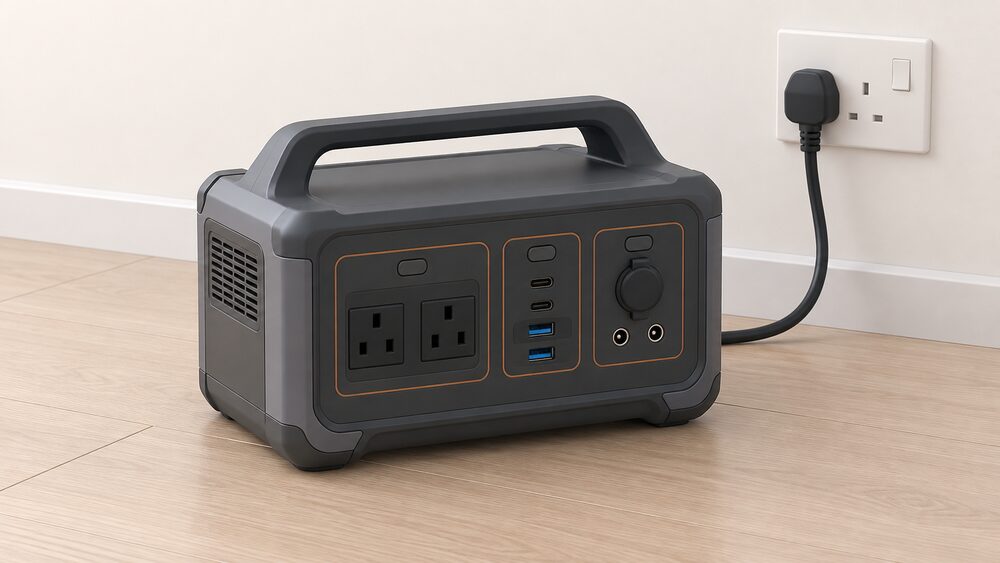 Anker SOLIX portable power stations and home backup batteriesAnker SOLIX covers two very different kinds of backup: portable power stations you can carry, and whole-home batteries wired into the house.
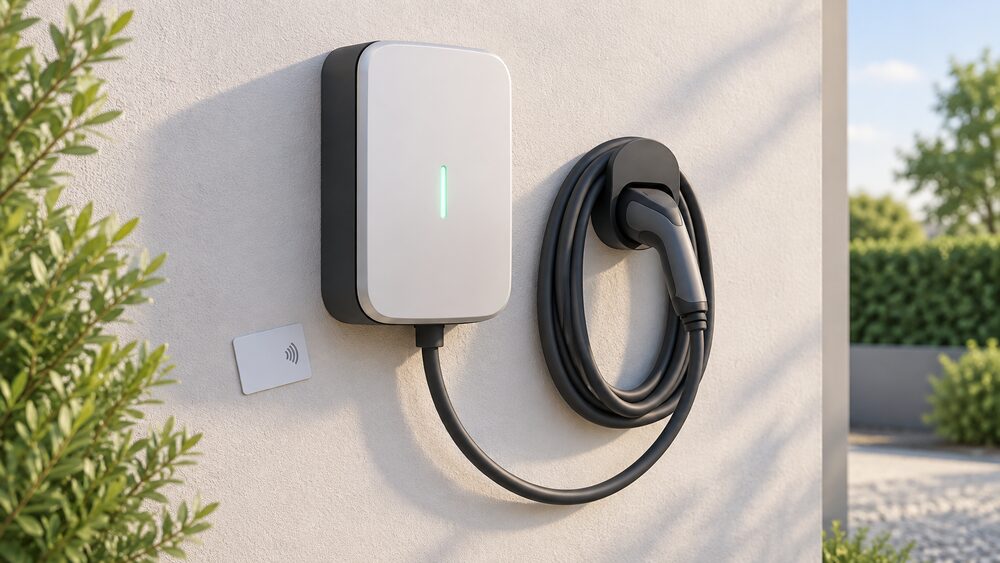 Anker SOLIX EV chargersAnker's SOLIX V1 is a home wallbox that can charge your car using solar power, battery storage or the grid.
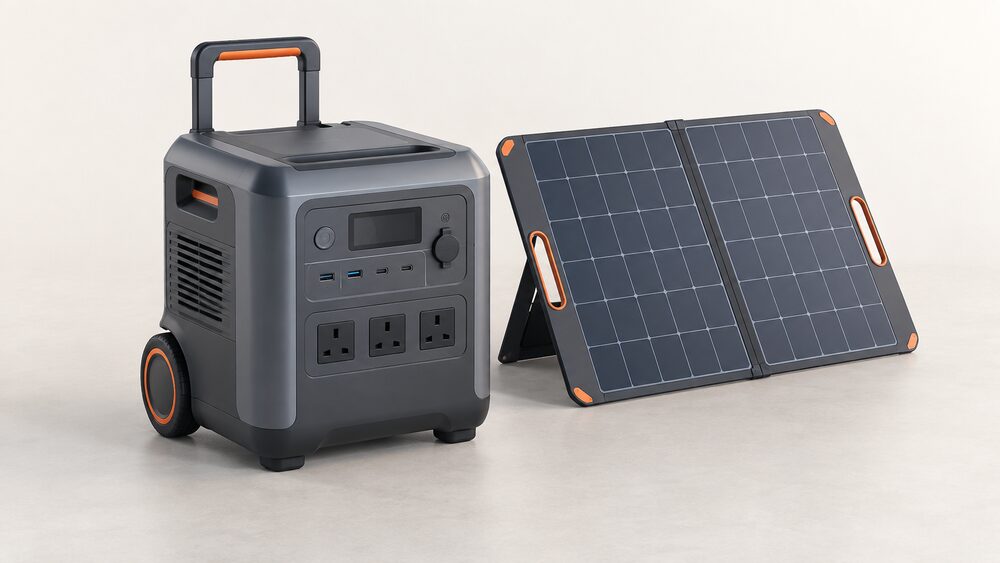 Anker SOLIX F3000Can the Anker SOLIX F3000 run a British home?