
In this comparison
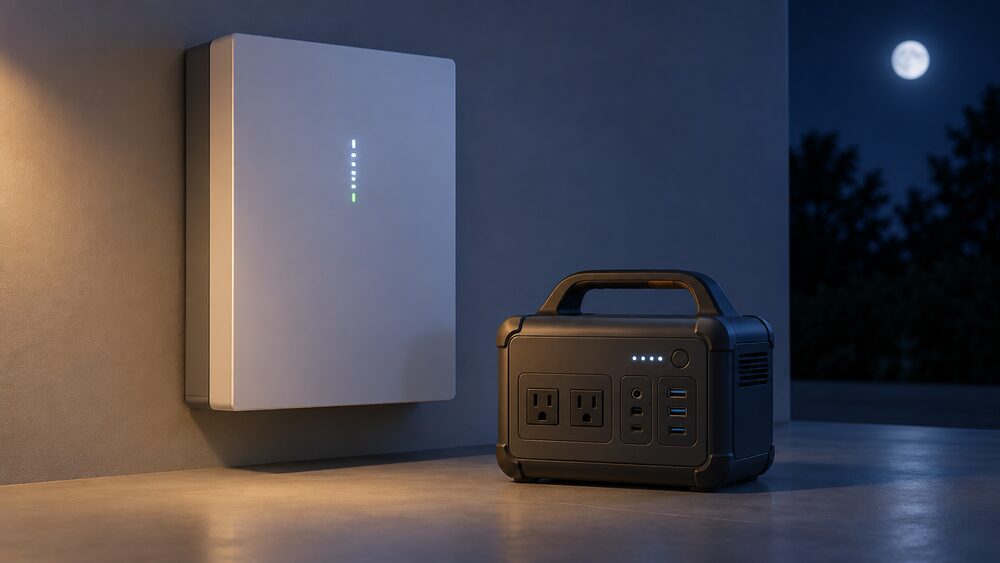
A home battery and a portable power station are both batteries, and that is roughly where the similarity ends. A fixed home battery is a permanently installed store, typically 5 kWh and upwards, wired into the property and usually paired with solar panels or a smart time of use tariff. A portable power station is a battery pack with outlets and an inverter, built to be carried and to run small devices. For a power cut, the fixed battery is the only one of the two that can run household circuits, and only where it has been specified with backup capability.
The distinction matters because most home batteries do not provide power in a cut by default. A battery storage system "does not normally provide power in a power cut unless additional equipment and configuration is included"1. The more expensive systems can provide electricity during a power cut, and that capability is a specification choice rather than a standard feature2. A portable power station sidesteps the wiring question entirely: it is a self-contained supply, but its output is limited to what its outlets and inverter can carry.
Cost separates them too. Home battery storage ranges from £1,500 to £10,000 depending on type and size, with a 5 kWh system around £4,6003. Portable generators, the nearest fuel-burning comparison, start at around £160 and run to £2,000 or more4. A portable power station sits in the same order of magnitude as a small generator, while a home battery sits in the same order as a solar installation.
Two different tools for the same blackout
The two products answer different questions. A home battery answers "how do I store cheap or self-generated electricity and use it later", and backup is an optional extra. A portable power station answers "how do I keep small devices running when there is no socket", and household supply is not on the table at all.
The installation difference is the clearest dividing line. Plug-in battery products "may be purchased, connected and relocated by consumers without direct professional involvement", unlike traditional battery systems installed by competent professionals8. That places plug-in storage and portable units in a consumer-product category, while a fixed home battery is a fixed electrical installation with the notification and commissioning that implies.
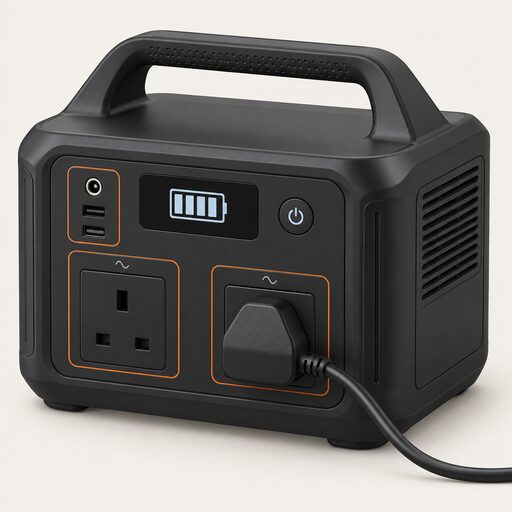
Portable power stations are described by their makers as "essentially a portable battery pack equipped with various outlets and charging options", with an inverter that converts the DC power stored in the battery into AC power9. That is the whole architecture. There is no grid connection, no metering arrangement and no interaction with the distribution network.
A fixed home battery, by contrast, is usually used in combination with solar panels or a smart time of use tariff, or both3. Its economics rest on shifting energy across time: charging when electricity is cheap or when the panels are generating, and discharging when it is expensive. Backup is a separate function bolted onto that core purpose.
What a fixed home battery does during a cut
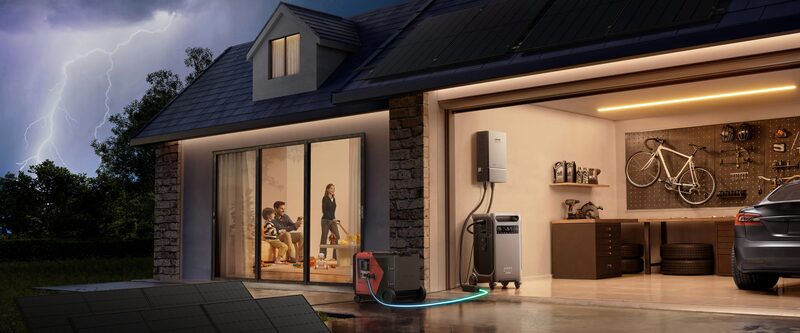
The honest answer is: often nothing, unless it was bought with backup in mind. A battery storage system does not normally provide power in a power cut unless additional equipment and configuration is included1. The more expensive battery systems can also provide electricity during a power cut2. The dividing line is equipment, not brand.
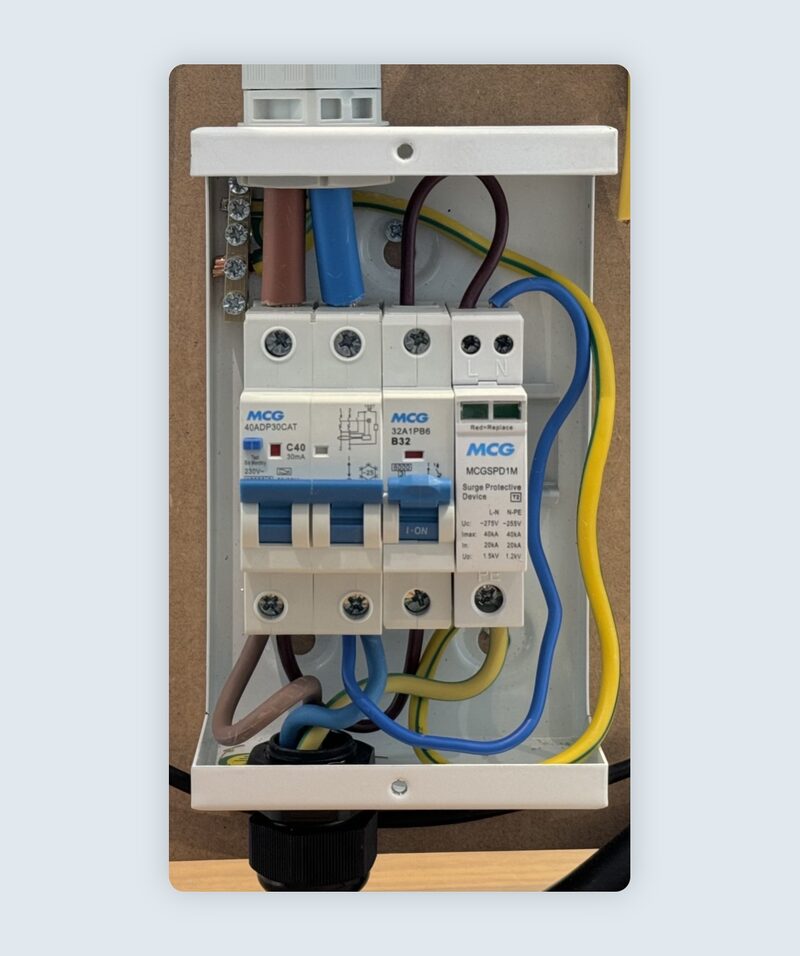
Where backup is fitted, the mechanism is an automatic transfer switch. Tigo states that when its ATS detects a loss of grid power, it "quickly and safely switches to solar/battery/generator power only", and that the unit enables essential load backup or whole home backup in the event of a power grid loss10. Essential load backup means selected circuits, typically lights, broadband and a few sockets. Whole home backup means everything, and requires an inverter and battery sized for the whole house.
The reason for the extra equipment is safety and physics. A battery inverter tied to the grid must disconnect when the grid goes, so that it does not energise lines that engineers may be working on. Islanding, the ability to run independently of the grid, is a designed mode rather than a default state. Without it, the battery simply sits idle until the grid returns.
There is a second, quieter benefit that applies whether or not backup is fitted. A home battery lets a household store cheap electricity when prices are low and use it later, even during peak times11. With a battery and no solar panels, charging stops when the battery is full and it discharges when the next cheap tariff period ends, automatically3. That time-shifting is the everyday function; the cut is the exception.
For households with medical equipment, the stakes are higher. Under the SSEN home battery pack scheme, subject to approval from the manufacturers of specialist in-home medical equipment, the battery may keep these devices operating for longer during a power cut12. That is a network operator scheme rather than a retail product, and it points to the same conclusion: backup capability is a specified feature.
What a portable power station can and cannot run
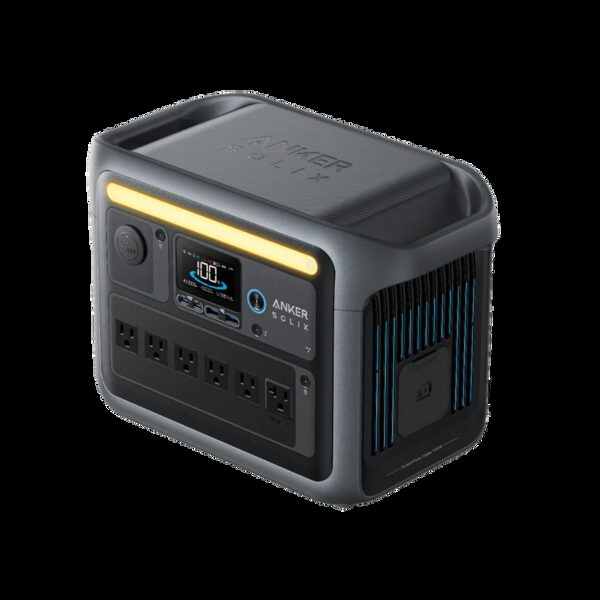
A portable power station can charge a wide range of devices, from smartphones and laptops to electric coolers and medical equipment9. It offers AC outlets, USB ports and DC outlets, and the units are highly portable9. For a short outage, that covers phones, a router, a laptop, a radio and a few lights.
What it cannot do is run a home. The electricity that batteries can deliver is much more limited than pumped storage, which is the grid-scale comparison13. At household scale the same logic applies in miniature: a power station's battery capacity determines how much power the unit can store and deliver, and the inverter determines how fast it can come out9. A kettle, an oven, an immersion heater or a heat pump will exhaust a portable unit in minutes or trip its inverter outright.
The temptation during a winter cut is to reach for portable electric heating. That is expensive. Portable electric heaters cost more to use than fixed heating, and the advice is to get a broken heating system fixed rather than lean on them14. The same caution applies to portable electric heaters generally, which can be expensive to use15.
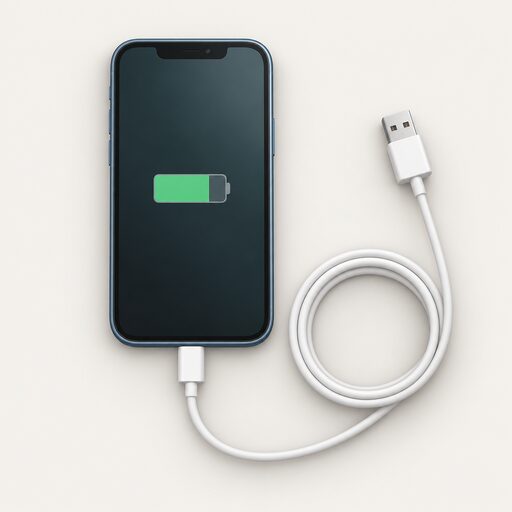
There is a useful middle ground for small devices. Portable power banks can hold enough power to charge up a mobile several times, and are well worth having to hand16. For a household whose main concern is phones and a torch, that may be sufficient, and it costs a fraction of either a home battery or a power station.
Battery chemistry and cycle life: LiFePO4 and 3,000 cycles
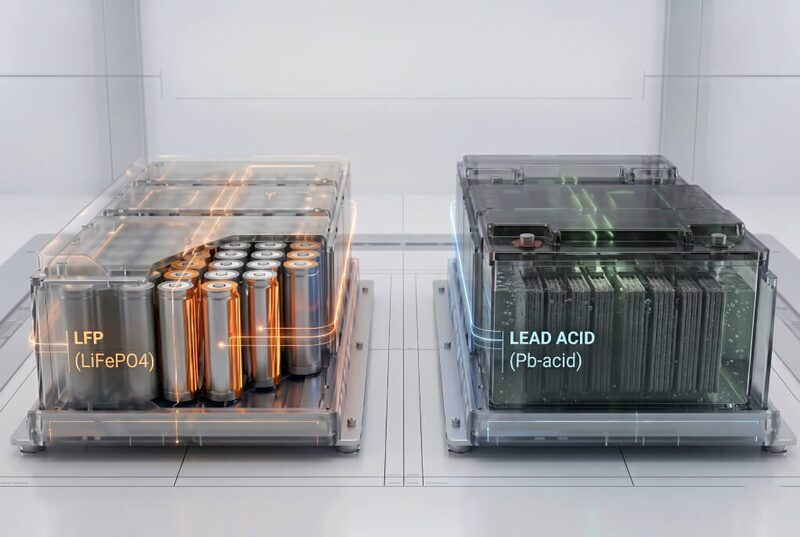
Chemistry determines how long either product lasts, and the two categories have converged on the same answer. Anker SOLIX states that LiFePO4 batteries power up for 3,000 cycles6. Lithium-ion home batteries, especially LiFePO4, are quoted at often 10 to 15 years or 5,000 to 10,000 cycles, compared with lead-acid at typically 3 to 7 years and fewer cycles17.
Those two figures are not directly comparable, and the difference is worth understanding. The 3,000 cycle figure is a maker's claim for a specific product line. The 5,000 to 10,000 cycle range is broader guidance covering lithium-ion home batteries as a category, and it is a range rather than a specification. Where a maker publishes a cycle count for a named product, that is the figure that applies to that product.
Lead-acid remains in the picture. Common battery types in portable power stations include lithium-ion and lead-acid9. Lead-acid is cheaper upfront and shorter lived, which is why it persists in budget units and in applications where weight does not matter.
Cycle life is not the same as calendar life. A battery that cycles once a day for 3,000 cycles lasts over eight years; one that cycles twice a day lasts half that. Domestic battery storage has a shorter lifetime of around 10 to 15 years, when compared to solar panels5. Panels typically outlast the battery they are paired with, which is a maintenance consideration for anyone planning a system.
Warranty, returns and support: what each option comes with
Warranty terms differ sharply between the two categories, and the difference reflects how each is sold. A portable power station is a consumer product with a retail returns window. A home battery is a fixed installation whose warranty runs through the installer.
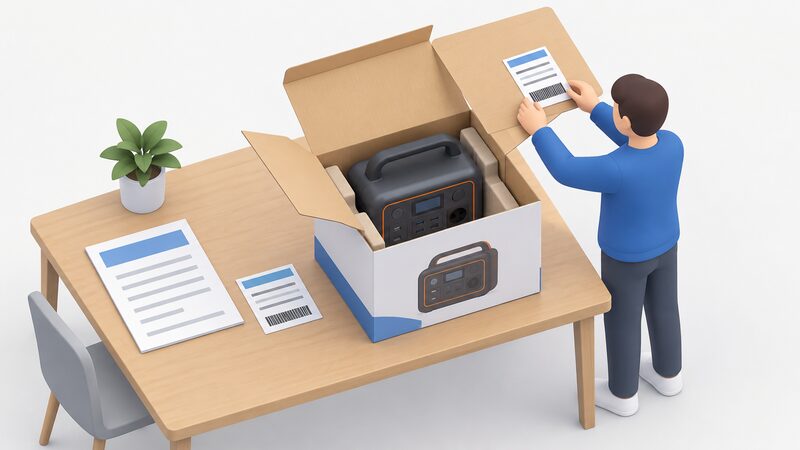
Anker SOLIX states that buyers can return or exchange up to 30 days later and enjoy up to 5-year warranties6. The same page lists free local shipping and lifetime support6. Those are retail terms: a defined cooling-off period, a defined warranty term, and a support channel that does not depend on a third party.
Fox ESS states a 12 year warranty on its EQ and CQ battery range, excluding the EQ48007. The EP battery range is IP65 rated7. A 12 year term is longer than the 10 to 15 year working life quoted for domestic battery storage generally5, which means the warranty is likely to cover most of the product's service life rather than a fraction of it.
The practical question for a home battery is who administers the claim. Warranty work on a fixed installation normally runs through the company that supplied and commissioned it, because that company holds the record of the installation and the notification to the network operator. Fox ESS maintains a UK presence and publishes contact routes for its inverter and battery products7.
For portable units, the lithium fire risk is a household safety matter rather than a warranty one. The average UK household has many rechargeable items that contain lithium ion batteries such as laptops, mobile phones, e-scooters, e-cigarettes and mobility vehicles18. A power station is another such item, and the same charging and storage precautions apply.
Cost and UK availability
Home battery storage ranges from £1,500 to £10,000 depending on type and size, with a 5 kWh battery system around £4,6003. Battery storage tends to cost around £5,000 to £8,000 when bought alongside a domestic solar panel system19. The Energy Saving Trust estimate puts battery storage at up to £10,000 depending on size, with a typical 5 kWh system around £4,6005.
Those figures describe the hardware and installation, not the backup function. Adding islanding capability and a backed-up sub-board is additional equipment and configuration1, and the cost of that work is installer-quoted rather than published. Where no published price exists for a specific configuration, the figure a household will see is a quote.
Portable generators, the fuel-burning alternative for the same job, start at around £160 but can go up to £2,000 or more4. A portable power station sits in a comparable band, without the fuel, exhaust and carbon monoxide considerations that a generator brings.
| Option | Published cost | Source |
|---|---|---|
| Home battery storage | £1,500 to £10,000, 5 kWh around £4,600 | 3 |
| Battery storage with solar | around £5,000 to £8,000 | 19 |
| Battery storage, official estimate | up to £10,000, typical 5 kWh around £4,600 | 5 |
| Portable generator | around £160 to £2,000 or more | 4 |
Availability is a live issue for portable units. Jackery lists the Explorer 500 as sold out, with a notify-when-available option, free and fast delivery, and a customer rating of 4.9 from 237 reviews20. A sold-out listing with a strong rating is a common pattern in this market: demand outruns stock on popular models.
Domestic electricity carries 5% VAT21. That rate applies to the electricity a home battery stores and shifts, and it is the baseline against which time-shifting savings are measured.
Home battery, power station, or both: which fits which household
The choice follows the load, not the budget. A household that wants lights, broadband and a fridge to keep running through a cut needs a fixed battery with backup capability and a wired sub-board. A household that wants phones charged, a radio working and a laptop usable needs a portable power station, and possibly nothing more than a power bank.
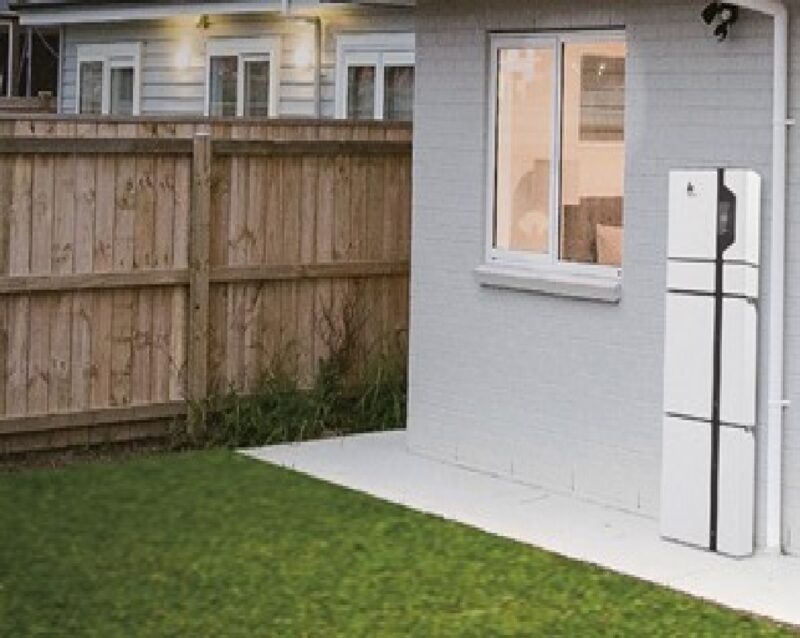
Installation location shapes what is possible. A battery can be installed in garages, on external walls or utility rooms, depending on which one you choose3. Planning permission is not required for domestic battery storage within a residential building22. That removes one common obstacle, though external siting and listed buildings raise separate questions.
Where a home battery is funded through a government scheme, the rules are narrower. Domestic batteries can only be installed under the Warm Homes schemes where it complements existing or new solar PV23. A battery on its own does not qualify under those schemes, which ties grant-funded storage to a solar installation.
For households weighing the two against each other, the honest framing is that they are complements rather than substitutes. A home battery with backup runs the house; a portable power station runs the devices. Many households that install a fixed battery keep a small power station or power bank as a second layer, because the fixed battery's backed-up circuits may not include the room where the router sits.
The dependence that remains is worth stating plainly. A home battery depends on the grid for charging unless solar is fitted, on a supplier for the tariff that makes time-shifting worthwhile, and on an installer and manufacturer for warranty service over a term that may run to 12 years7. A portable power station depends on a manufacturer for cells, on a retailer for returns, and on mains charging or a separate solar panel to refill. Neither removes the household from the electricity system; both change what a cut means in practice.
Sources23 cited
- Solar power facts, Energy Saving Trust, 2026
- Battery storage, Centre for Sustainable Energy, 2025
- Battery storage advice, Energy Saving Trust, 2026
- How to buy the best generator, Which?, 2026
- Battery storage and lifetime, UK Parliament POST, 2026
- Anker SOLIX UK, Anker SOLIX, 2026
- Fox ESS KH/KA series hybrid inverter, Fox ESS, 2026
- Plug-in battery energy storage, Environmental Services Association, 2026
- Portable power station guide, AlphaESS, 2023
- Tigo Automatic Transfer Switch, Tigo Energy, 2026
- Should I switch to a time of use tariff, Energy Saving Trust, 2026
- SSEN home battery packs, Scottish and Southern Electricity Networks, 2026
- How does storage help us balance the grid, NESO, 2026
- Make sure your home is energy efficient, Citizens Advice, 2026
- Getting your broken boiler repaired or replaced, Citizens Advice, 2026
- What to do in a power cut, Which?, 2026
- How many batteries does a home need, SAJ Electric, 2026
- Lithium-ion batteries at home, North Wales Fire and Rescue Service, 2026
- Solar panels advice, Energy Saving Trust, 2026
- Jackery Explorer 500, Jackery, 2026
- Kia EV6 charging guide, Zapmap, 2026
- Permitted development rights review, Scottish Government, 2019
- Warm Homes scheme guidance addendum, UK Government, 2026
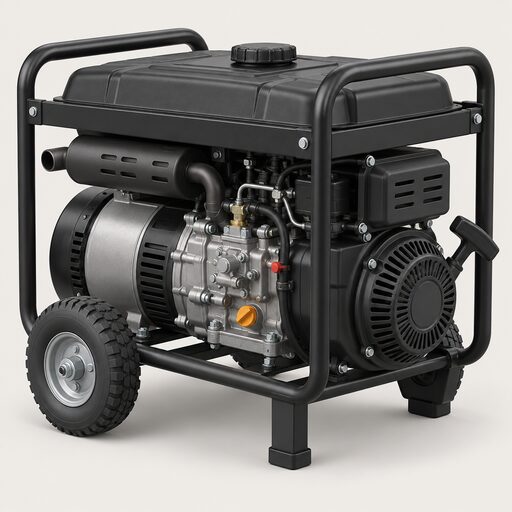 Portable Generators for HomesWhat can a portable generator actually run in a power cut, and for how long?
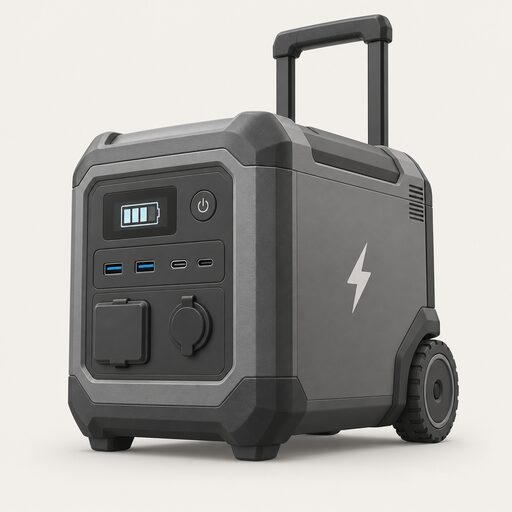 Portable Power StationsWhat can a portable power station actually keep going in a power cut, and for how long?
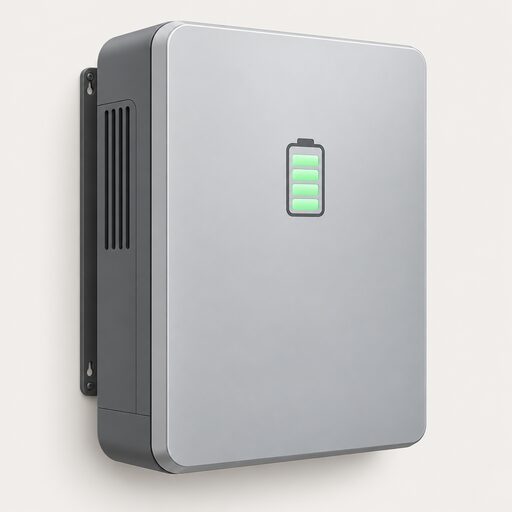 The Full Home Batteries GuideA home battery stores cheap or solar power for later, but will it really cut your bills enough to be worth it?
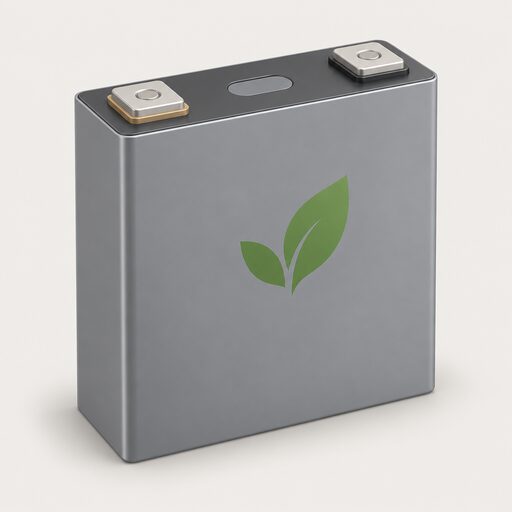 Power Station BatteriesWhat kind of battery is inside a portable power station, and does it matter?
 Portable Power Station SizeHow big a portable power station does a home actually need, and how long will it keep things running in a power cut?
 Backup Power for HeatingWhy gas boilers, heat pumps and storage heaters stop in a power cut, what a portable power station can and cannot carry, how to size one, and what home battery systems do when the mains fails.