In this guide
Tigo Energy sells a modular home battery system in Europe under the GO Battery name, built around lithium iron phosphate (LFP) cells and designed to work with the company's own hybrid inverters. The European launch material describes configurations from 7.3kWh for compact installations up to 47.9kWh for larger households, with up to six battery modules per inverter1. The system carries CE and UKCA certifications and complies with European grid standards including VDE-AR-E2510 and CEI 0-21, which is what makes it sellable in the UK as well as the EU2.
The battery is the storage half of what Tigo calls the GO Optimised ESS, a solar-plus-storage package that also includes the GO Inverter, the EI Link, and optional add-ons such as the GO EV Charger and GO Junction for heat pump integration2. Tigo opened installer preorders ahead of shipping, which began in June 20262.
For a household, the appeal is modularity: capacity can be added later without extensive rework or replacing existing infrastructure, and the system can charge from the grid during off-peak periods or discharge during peak-price windows2. The dependence that remains is on Tigo's own inverter range, on the Energy Intelligence monitoring platform, and on a grid connection for the tariff features to earn anything.
What the Tigo TSB battery modules are
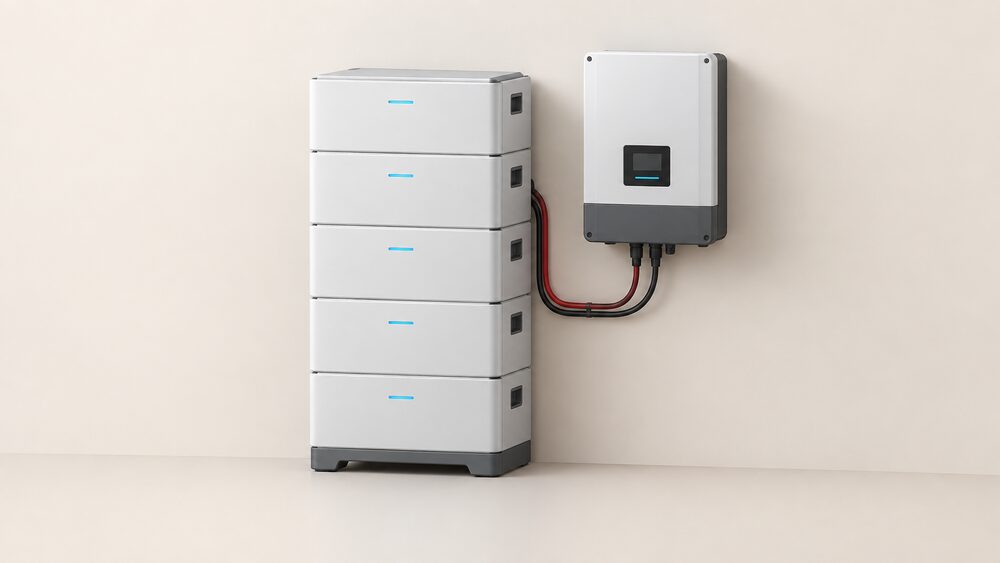
The TSB module is the building block of Tigo's residential storage. Each is an LFP battery module, and the system is assembled by stacking them: Tigo describes the architecture as modular in 5kWh increments, so a household adds capacity a module at a time rather than buying one fixed-size unit5. The European GO Battery page states the chemistry plainly as "Safe & Proven Chemistry: Lithium Iron Phosphate (LFP)"1.
LFP is the chemistry most home storage makers now use, and the reason is cycle life and thermal stability rather than energy density. Tigo's own product pages repeat the LFP description across the EI and GO ranges, and the EI Battery page adds that the unit includes a battery management system6. That BMS is what balances the cells, monitors temperature and enforces the charge and discharge limits, and it is the component that decides whether a stack of modules behaves as one battery or as several.
The modules are not sold as a standalone product that a household wires into an existing system. They are part of a package: the GO Battery connects to the Tigo EI Inverter and EI Link to form the GO Optimised ESS8. Tigo's US guidance is explicit that the battery must be paired with a Tigo EI Inverter, and the European material describes backward compatibility with all Tigo inverters sold in the European market, including products from the EI Residential Solar Solution2.
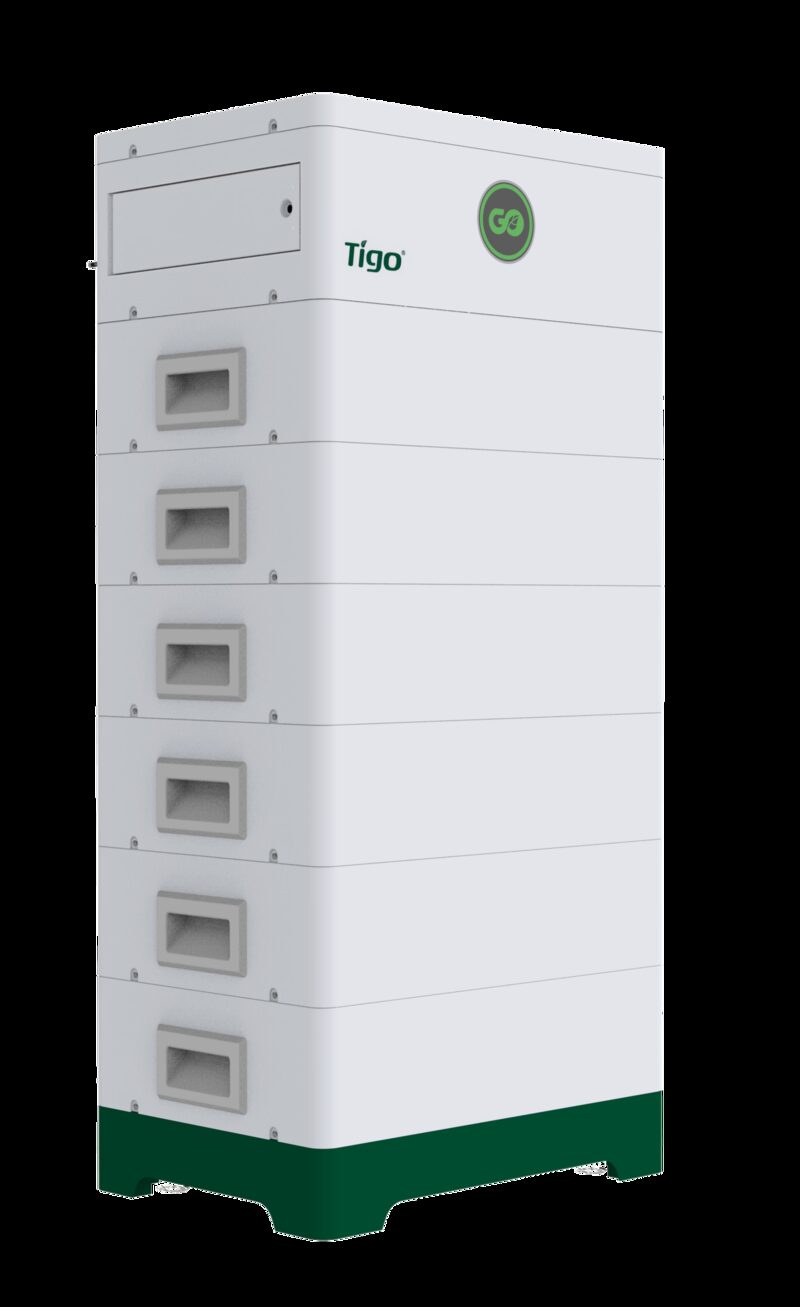
The range: TSB modules within the GO Optimised ESS
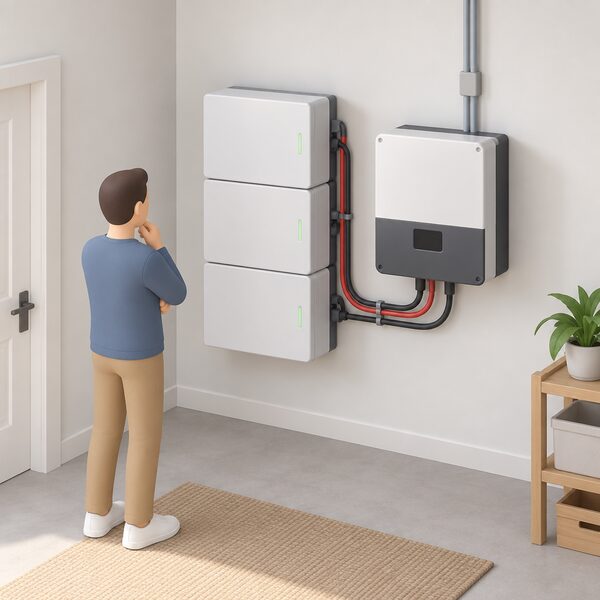
The GO Optimised ESS is the system the modules belong to. Tigo describes it as "a flexible solar-plus-storage solution for home installations", and the European version brings together the GO Battery, the EI Inverter and the EI Link8. The GO Battery page states it enables up to 47.9kWh of storage for backup, load control and savings maximisation, and that it works with the GO EV Charger and GO Junction for additional load control1.
The module ceiling is the constraint worth understanding. Up to six battery modules can be used with each Tigo inverter3. At the top of the range that gives 47.9kWh; at the bottom, 7.3kWh2. A household that wants more than 47.9kWh is looking at a second inverter, not more modules on the first.
| Component | Role | Key figure |
|---|---|---|
| GO Battery (EU) | LFP storage modules | 7.3kWh to 47.9kWh per system2 |
| GO Inverter | Storage-ready hybrid inverter | AC or DC coupled, 50V starting voltage3 |
| EI Inverter (EU) | Hybrid inverter for EI and GO batteries | Connects to Tigo EI and GO Battery9 |
| EI Link | System communications and control | Part of the GO Optimised ESS8 |
| GO ATS | Backup changeover | Essential load or whole home backup10 |
| GO EV Charger | EV charging within the system | Dynamic load balancing11 |
The GO Inverter is described as suitable for new or retrofit solar installations and can be AC or DC coupled, which matters because it determines whether the battery sits on the DC side of the solar array or on the AC side of the house3. The difference between those two arrangements is set out in AC-coupled and DC-coupled battery systems.
Who makes them: Tigo Energy and its product portfolio
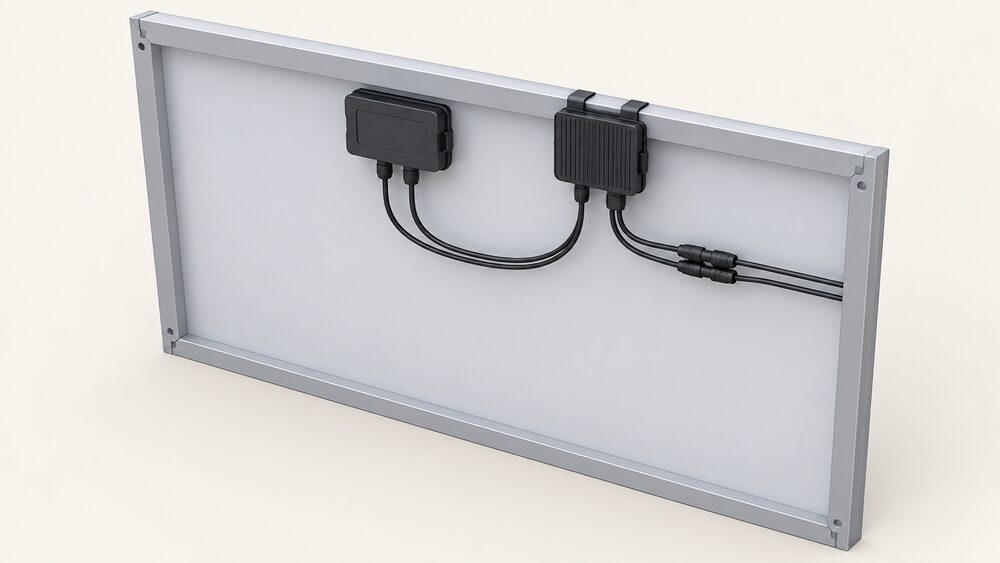
Tigo Energy describes itself as "the worldwide leader in Flex MLPE (Module Level Power Electronics)" and says it designs solar power conversion and storage products12. The company's origins are in module-level power electronics, the small units that sit behind individual solar panels, and that heritage shapes how the storage range is positioned: the TS4 platform is described as increasing solar production, decreasing operating costs and enhancing safety13.
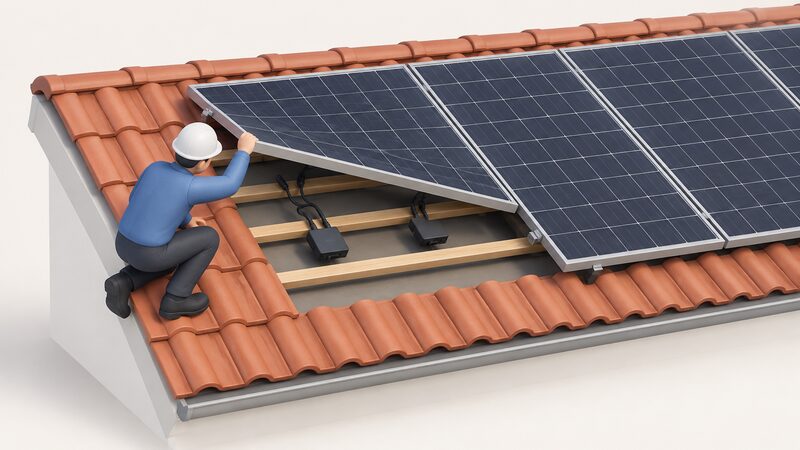
The TS4 optimisers are the part of the portfolio most UK installers already know. The TS4-X-O and TS4-X-F are compatible with thousands of different inverter models from more than 50 inverter brands, and the TS4-X-F suits modules up to 800W, 25A (Isc) and 20A (Imp)14. The TS4-A-2F covers two modules per unit and uses PLC communication16. These are the products that made Tigo a name in the UK market before it sold a battery here.
The storage side is newer. Tigo's Energy Intelligence Basic platform supports Tigo MLPE, inverters and batteries, plus numerous third-party inverter and battery brands, which is a wider compatibility claim than the GO Battery's own pairing rules17. The EI Residential Solution is described as only available in Europe, and the EI Battery is a modular, scalable energy storage system for that solution6.
UK and European availability: the GO Battery rollout
The GO Battery reached Europe in 2026. Tigo announced availability of the GO Battery as the latest addition to the GO optimised product line in Europe on 7 April 2026, joining the GO EV Charger and GO Junction for heat pump integration2. At that point installer preorders were open, with product shipping commencing in June 20262. Tigo showcased live system demonstrations at Intersolar Europe in Munich in June 20262.
The UK sits inside that European rollout. The Dynamic Rate Management feature, announced in December 2025, was made available in Germany, the United Kingdom and the Netherlands, which places the UK among the first markets for the software side of the system4. The EI Residential Solution itself is described as only available in Europe, so the UK is within its territory rather than outside it12.
Availability is not the same as ubiquity. Tigo's European launch describes the GO Battery as offering flexible sizing and backward compatibility with all Tigo inverters sold in the European market, which means an existing Tigo solar installation can take the battery without replacing the inverter1. For a household with a non-Tigo inverter, the position is different: the battery pairs with Tigo inverters, and the wider third-party compatibility claim belongs to the Energy Intelligence Basic monitoring platform rather than to the battery itself3.
Dynamic rate management and what it means for running costs
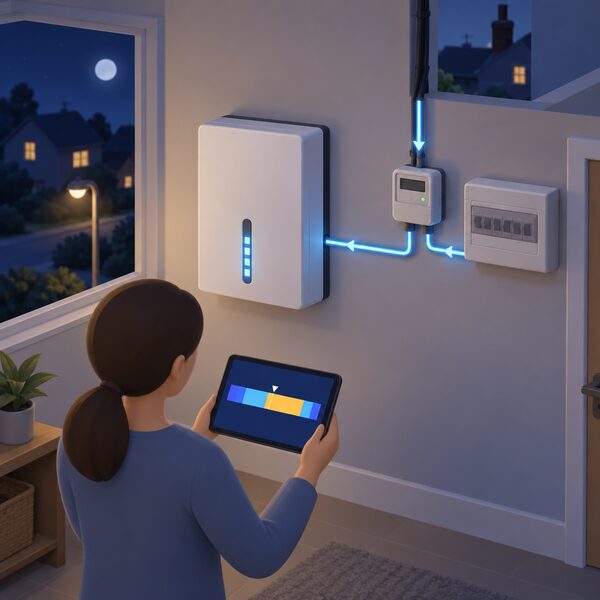
Dynamic Rate Management is Tigo's tariff-aware control layer, announced for the EI Residential solar-plus-storage solution in the EU on 9 December 2025 and available in Germany, the United Kingdom and the Netherlands4. It automatically acquires and interprets wholesale dynamic energy prices, often updated on a day-ahead basis, and uses machine learning to analyse day-ahead market data and generate a personalised 24-hour energy plan, highlighting peak and off-peak hours in the app4.
The household controls are the practical part. Users may customise how the system behaves, such as charging the battery from the grid during off-peak periods or discharging during peak-price windows4. That is the mechanism by which a battery earns money on a time-of-use tariff: buy cheap, store, use or export at the expensive hours.
The Energy Saving Trust's guidance on time-of-use tariffs notes that times and rates typically change from day to day, which is exactly the problem the automation is built to solve18. A household on a static Economy 7 tariff can set a timer; a household on a dynamic tariff cannot, because the cheap window moves. Tigo's answer is to let the software read the day-ahead prices and plan around them.
What this does for independence is partial and worth stating plainly. The battery reduces the amount of grid electricity bought at peak prices, and it can keep essential loads running when the grid fails, but the tariff optimisation only works while the grid is up and the prices are being published. The system is trading with the grid, not withdrawing from it. The wider picture of stacking a battery with a smart tariff is covered in batteries and smart tariffs.
Certification and market approvals
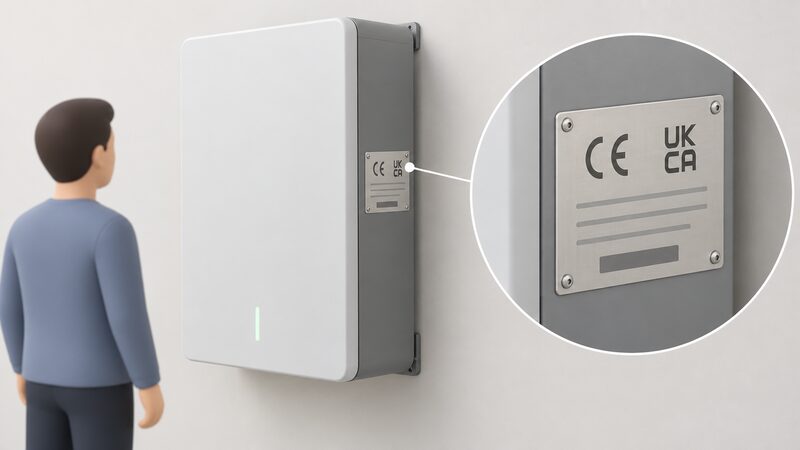
The GO Battery carries CE and UKCA certifications and compliance for European grid standards, including VDE-AR-E2510 and CEI 0-212. Those are the marks that allow the product to be placed on the UK and EU markets and to be connected to the grid under the relevant national rules.
The wider Tigo portfolio carries its own certifications. The TS4-A-2F is IEC and UL certified16. The TS4-X-O uses UL Standards-certified PVRSS components, the rapid shutdown certification that matters in North American installations14. These are product-level marks rather than system-level approvals, and they apply to the optimiser range rather than to the battery.
For a UK household, the certification that matters most is the one that lets the network operator accept the connection. The GO Battery's European grid standard compliance is the manufacturer's side of that; the household's side is the G98 or G99 application, which is a separate process with the distribution network operator.
Third-party certification schemes exist for adjacent products and show what independent testing adds. The BSI Kitemark for EV chargers requires that a product pass all the tests required by the BSI certification programme, and manufacturers must pass regular site audits19. The digital security variant ensures compliance with regulations such as the UK Smart Charge Regulation and ETSI EN 303 64520. No equivalent independent scheme is described for the GO Battery in the material available here, so the certification position rests on the maker's own CE and UKCA statements.
What owning a Tigo battery means for household energy independence
The GO Battery provides energy resilience in the event of a grid outage and optimises energy consumption for the home, according to Tigo's own product page1. The EI Battery makes the same claim, and the EI Basic platform offers battery management modes covering Time of Use, Self-consumption and Backup6.
Backup is where the system's limits show. The GO ATS enables essential load backup or whole home backup in the event of a power grid loss, and it senses grid loss and safely switches from grid plus solar or battery to solar or battery only10. The EI ATS does the same job for the EI range21. Whether a household gets essential loads or the whole house depends on which changeover arrangement is fitted, and that is a decision made at installation, not a property of the battery.
The independence the system delivers is real but bounded. A home battery captures surplus solar energy for later use, including overnight EV charging, whereas without it unused solar electricity is wasted or exported to the grid, often at a relatively low rate22. Combining solar with a home battery lets a household store renewable electricity to power a heat pump, making it less reliant on grid electricity23. Those are the gains.
The dependencies are equally clear. The battery needs a Tigo inverter, so the household is tied to one manufacturer's ecosystem for expansion3. Remote monitoring and tariff optimisation run through the Tigo EI app and the Energy Intelligence platform, which means a cloud service and a broadband connection1. Backup works only if an ATS is fitted10. And the system still trades with the grid for its tariff savings, so it reduces exposure to peak prices rather than removing the connection. The broader trade-offs are set out in home batteries and household energy independence.
Sources25 cited
- Tigo GO Battery (EU), Tigo Energy, 2026-09-17
- Tigo Energy launches new GO Optimized Energy Storage System in European residential market, Tigo Energy, 2026-04-07
- Tigo GO Inverter, Tigo Energy, 2026-09-17
- Tigo Energy adds Dynamic Rate Management for EI Residential solar-plus-storage solution in EU, Tigo Energy, 2025-12-09
- Add a battery to an existing solar system, Tigo Energy, 2026-09-02
- Tigo EI Battery (EU), Tigo Energy, 2026-09-17
- Tigo EI Battery, Tigo Energy, 2026-09-17
- Tigo GO Battery (EU) installation webinar excerpt, Tigo Energy, 2026-09-17
- Tigo EI Inverter (EU), Tigo Energy, 2026-09-17
- Tigo GO Automatic Transfer Switch, Tigo Energy, 2026-09-17
- Tigo GO EV Charger (EU), Tigo Energy, 2026-09-17
- Tigo EI Residential Solution (EU), Tigo Energy, 2026-09-17
- TS4-A-O Duo optimization add-on for 2 modules, Tigo Energy, 2026-09-17
- Tigo TS4-X-O, Tigo Energy, 2026-09-17
- Tigo TS4-X-F, Tigo Energy, 2026-09-17
- Tigo TS4-A-2F, Tigo Energy, 2026-09-17
- Tigo EI Basic, Tigo Energy, 2026-09-17
- Time of use tariffs: all you need to know, Energy Saving Trust, 2026-05-20
- What makes BSI Kitemark certified EV chargers a smarter choice, BSI, 2026-09-17
- Powering trust in electric vehicle charging with BSI Kitemark certification, BSI, 2026-09-17
- Tigo Automatic Transfer Switch, Tigo Energy, 2026-09-17
- Can solar panels charge electric cars?, The CPA, 2026-04-15
- How to ensure a heat pump runs efficiently, Energy Saving Trust, 2026-05-19
- E-bikes safety advice, Electrical Safety First, 2026-09-17
- Lithium-ion batteries, North Wales Fire and Rescue Service, 2026
 Tigo solar optimisersTigo optimisers sit behind individual solar panels and can boost what each one produces, report how it is performing, and shut the panels down safely in a fire.