In this guide
Myenergi is a British manufacturer of home energy equipment, built around one connected ecosystem: the zappi electric vehicle charger, the eddi solar diverter, the libbi home battery, the harvi wireless energy monitor and the myenergi app that controls them1. The company designs and manufactures at a UK facility in Lincolnshire and states that it has shipped over 500,000 British-made home technology products worldwide2.
The zappi is the product most households meet first. It is a solar-compatible EV charger sold in 7kW tethered or untethered form, with 22kW variants for three-phase supplies, and it carries a 3 year warranty against faults in material and workmanship3. Myenergi chargers are sold from £949 with installation, and the zappi GLO is listed from £999 standard, discounted to £8495.
What the range offers a household is control over when energy is used rather than where it comes from. The patented technology monitors generation and consumption and works to maximise self-generated energy and minimise grid draw, which is the whole point of pairing a charger with solar7. What it does not do is remove the grid, the electricity supplier, the broadband connection or the manufacturer's app from the picture, and those dependencies are set out below.
What myenergi makes: zappi, eddi and one connected ecosystem
The myenergi ecosystem is a set of devices that share one control layer. It includes the zappi EV charger, libbi home energy storage, the eddi solar power diverter, the harvi wireless energy monitor and the myenergi app1. The company describes the same line for wholesale stockists as zappi and GLO EV chargers, the libbi battery system and the eddi solar power diverter, all controlled through one app13.
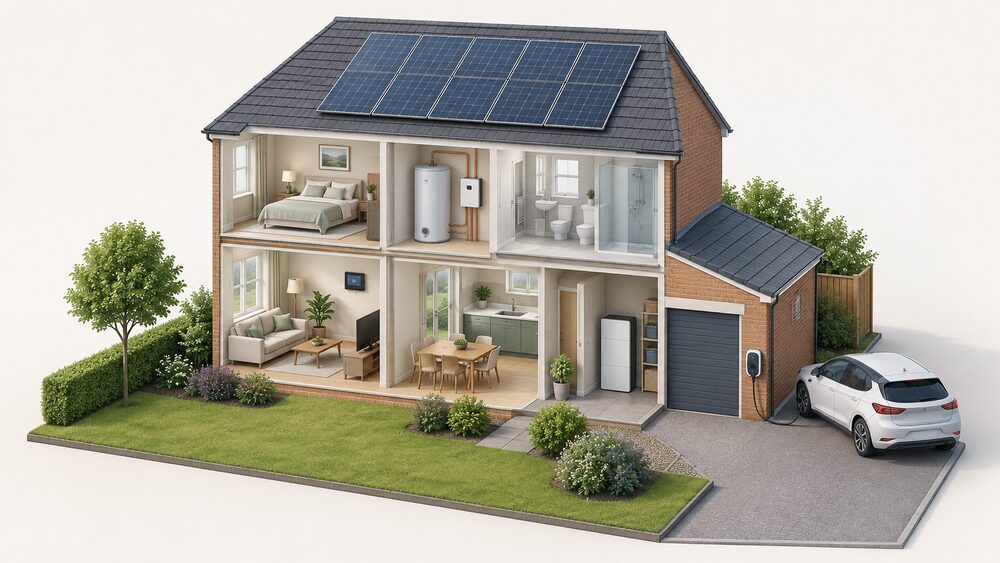
The logic of the set is that each device absorbs surplus generation that would otherwise be exported. The eddi diverts surplus solar to hot water, the libbi stores it in a battery, and the zappi puts it into a car. Myenergi's own guidance frames the three working together as making solar one of the most cost-effective solutions available14. The harvi is the sensing element: a wireless energy monitor that gives the system visibility of generation and consumption, and it carries the same 3 year warranty, with registration after installation needed to take full advantage of the support15.
The zappi is compatible with all domestic microgeneration technologies, including solar and wind, so it is not tied to one generation type16. An independent product listing describes the same integration in similar terms, as the ability to work with a home's ecosystem of solar, wind and battery storage10.
For a household, the ecosystem approach is the main argument for buying more than one myenergi product: the devices coordinate rather than compete for the same surplus. The counter-argument is that it concentrates the home's energy management in one manufacturer's hardware and one app, so the household's independence from that company's continued support matters as much as the independence from the grid that the hardware delivers.
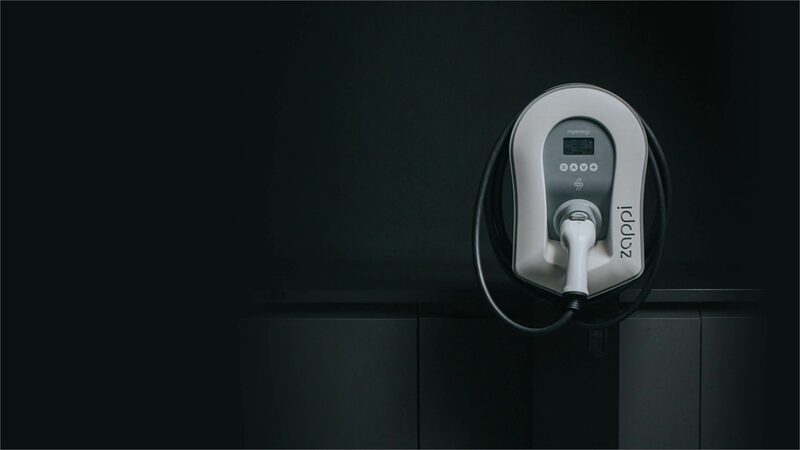
Zappi: tethered or untethered, 7kW or 22kW
The zappi is sold in two physical forms and two power classes. Myenergi describes it as a 7kW unit in tethered or untethered variants9, and an independent product listing gives the maximum charging speed as 7.4kW or 22kW10. The 22kW figure appears in myenergi's own grant guidance as a workplace charge point example, alongside the 7kW zappi as the home charger example17. The distinction matters: 22kW charging generally needs a three-phase supply, which most UK homes do not have, so the 7kW unit is the domestic norm.
Tethered means the cable is attached to the unit; untethered means the household uses its own cable. That is a convenience choice rather than a performance one.
| Variant | Rating | Notes |
|---|---|---|
| zappi tethered | 7kW | Cable fixed to the unit9 |
| zappi untethered | 7kW | Household supplies the cable9 |
| zappi three-phase | 22kW | Workplace and three-phase example17 |
| zappi GLO | Not stated | Designed and manufactured in Britain18 |
The zappi is also integrated into the Hive Home app, so a household already using Hive can control the charger and see detailed insight into energy use through that app rather than only through myenergi's own19. Myenergi has also been listed as compatible with the Octopus energy partner route20.
On the regulatory side, myenergi was the first manufacturer to introduce PEN fault testing ahead of every other manufacturer, a safety measure relevant to how the charger is earthed21. Retrofit anti-tamper protection kits for the zappi are free of charge but must be ordered through a myenergi trade account22.
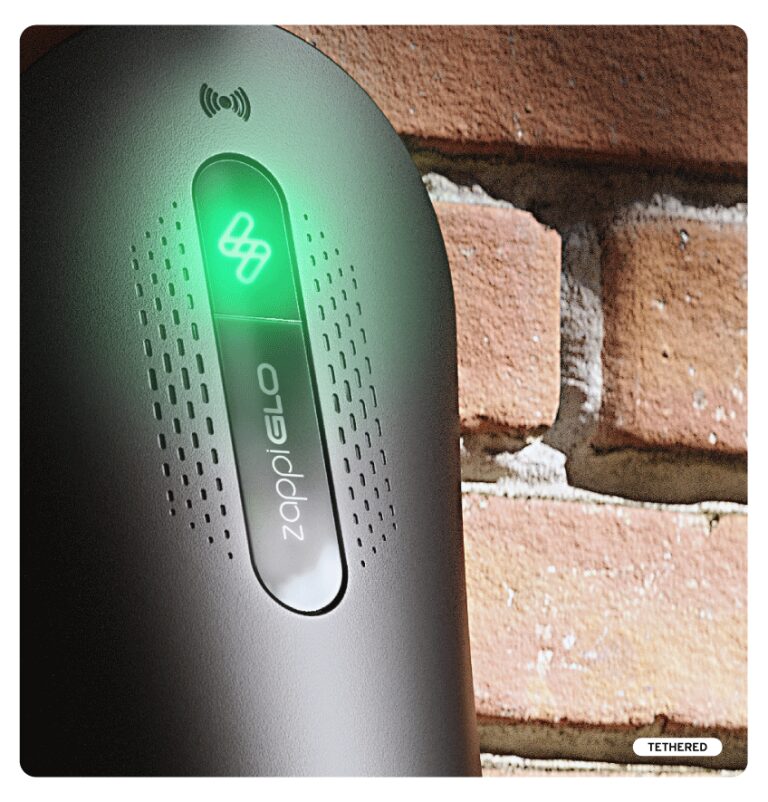
Made in Britain: the Lincolnshire manufacturing story

Myenergi states that it designs and manufactures its products at a UK based state of the art manufacturing facility in Lincolnshire12. The company describes itself as a British smart home energy technology manufacturer19, and says its EV chargers are designed and manufactured right here in Britain23. The zappi GLO is described as proudly designed and manufactured in Britain, backed by expert support and a national Product Champion installer programme18.
The zappi itself is described as conceived, evolved and manufactured in-house in the UK3, and myenergi's guidance on smart charge point regulations repeats that the products are manufactured right here in the UK22. The company's own account of its origins places it starting out in the Humber Freeport, which it calls the epicentre of green technology in the UK24.
One Irish product page for the zappi states that the charger was conceived, evolved and manufactured in-house right here in Ireland25. That conflicts with the UK manufacturing claims on the main product pages and with the Lincolnshire facility, and the two figures stand unreconciled. The weight of the maker's own UK pages, including the GLO and the regulatory guidance, supports UK manufacture.
For a household, UK manufacture shortens the supply chain for spares and service and keeps the company's engineering and support functions in the same country as most of its customers. It does not by itself guarantee parts availability for the life of the product, and it does not change the fact that the device depends on firmware and an app that the manufacturer controls.
How the patented eco-smart technology works
Myenergi's central technical claim is that its patented technology monitors energy generation and usage, working to maximise the use of self-generated energy and minimise grid consumption7. The same wording appears on the company's main site26. The eco smart layer goes further: it makes intelligent decisions based on self-generated power and the energy tariff the household is signed up to, optimising for drawing energy from the grid at the lowest possible rate per kWh15.
That is the mechanism behind the solar charging claim. The zappi has the ability to charge with 100% green energy20, and the app allows control and optimisation of all the smart energy devices in the home27. Through it, users can track how much energy they are using and saving by self-consuming their own generation via zappi and eddi27.
The practical effect is that the charger decides when to draw, based on what the roof is producing and what the tariff is doing. That is a genuine gain in independence from imported gas-fired generation at peak times, because it shifts consumption to self-generated or cheap-rate electricity.
The dependence it creates is equally real. Remote control, energy monitoring and the tariff-tracking behaviour all run through the myenergi app, which needs a home broadband connection and the manufacturer's servers. Local charging continues without them, but the features that justify the price do not. A household that wants the scheduling and monitoring to keep working is relying on myenergi continuing to support the app and the firmware, which is the same exposure every connected energy product carries.
Warranty: three years, extendable to five

Myenergi products are protected for three years from the date of purchase against faults in material and workmanship4. The zappi comes with a 3 year warranty, and myenergi chargers are sold with 3+ years warranty20. Registration matters: myenergi asks that the individual product be registered once it has been installed to take full advantage of the 3 year warranty support6.
The extended warranty can be purchased for zappi and eddi products at any time up to one month before the standard warranty expires, and it extends the standard 3 year warranty period to 5 years8. The product warranty document sets out the same option, describing a further 24 months by purchasing an extended warranty28. The zappi extended warranty page confirms the option to extend the standard 3-year warranty to a total of 5 years29.
The remedy is at the maker's discretion. The warranty states that Myenergi will, at its sole discretion and free of material and labour charges, repair or replace the defective Product, and that replacement products may be refurbished or contain refurbished materials and are covered only for the remaining term of the Warranty Period28. The covered products are Zappi, Zappi Pedestal, Eddi, Harvi, Hub and Libbi purchased on or after 24 November 202330.
Faults must be reported to the support team first, by calling +44 (0)333 300 1303 or emailing support@myenergi.com, with proof of purchase30. Replacement units are processed and dispatched within approximately 48 hours of being reported, and a return instructions email follows within 24 hours, though the dispatch timing is not guaranteed4. Installer warranty invoices are processed within 21 days of receipt4.
Cost and buying: from £949 installed
There is no single published installed price for a zappi, because the figure depends on the property and the installer. The figures that exist are indicative. Myenergi chargers are listed from £949 with installation, with 3+ years warranty5. The zappi GLO is listed from £999 standard, discounted to £8496. An independent product page gives the Myenergi Zappi at £779 plus installation10.
Independent guidance on home charge points generally puts the typical cost of installing a home charge point at around £800 to £1,20031. The gap between that range and the myenergi figures reflects what is included: the myenergi prices bundle the unit and the installation, while the general range is an installation cost.
VAT treatment is not stated in these figures, so they should be read as quoted rather than as confirmed VAT-inclusive prices. Prices are installer-quoted in practice, and the figures above are the published ones.
Buying routes are direct or through installers. Myenergi offers a booking route for a zappi home EV charger installation in a few simple steps7, and it has a dedicated in-house team of specialist installers serving customers throughout the UK, complemented by an extensive network of trusted myenergi authorised subcontractors23. For developers, the company offers a bespoke call off plan to meet timescales and requirements, and an end to end supply and install service for smaller or larger developers12.
In the Republic of Ireland, myenergi Ireland is SEAI registered, meaning zappi chargers purchased can be claimed under the SEAI grant scheme, and the zappi is approved for that grant27. The zappi is also approved and compatible with the Home Electric+ Night Boost tariff from Electric Ireland27. The designers, engineers, sales and support specialists for that market are based in Ireland27, and returns are sent to an address in Ballycastle, County Antrim27.
Scale and growth: 500,000 units and £160 million

Myenergi's own figures give a sense of scale. The company states that it has shipped over 500,000 British-made home technology products worldwide23, and elsewhere that over 500,000 products have shipped worldwide13. A 2023 press release put cumulative revenues at more than £160 million to date, alongside surpassing its 500,000 unit sales milestone11.
The growth rate in that release was striking: zappi sales delivered growth of 96% last year, compared to 40% growth in pure electric car registrations11. UK zappi sales rose from around 29,000 units in 2021 to more than 55,000 units in 2022, almost doubling year on year11.
An earlier figure on the libbi page gives over 350,000 myenergi products installed across 10 countries32. That is lower than the 500,000 shipped figure and appears to be an older count, so the two should not be read as a contradiction but as different points in time.
The company was founded in October 2016 by Lee Sutton and Jordan Brompton, starting from the idea of charging an EV from home solar PV, with the first three products, eddi, zappi V1 and harvi, launched in 201733. It took a £1.2 million investment from Sir Terry Leahy, former chief executive of Tesco, and Bill Currie of the William Currie Group33. Myenergi opened its Irish headquarters in Ballycastle and a Benelux headquarters in Maastricht in 2020, the year it shipped its 50,000th device33.
Scale matters to a buyer for one reason: a manufacturer with a large installed base and a long trading history is more likely to be around to honour a warranty and supply spares than a small one. It is not a guarantee, and it is not a substitute for reading the warranty terms.
Support, returns and contact routes
Myenergi runs UK technical and customer support12. Sales enquiries go to sales@myenergi.com3, and faults are reported to the support team first by calling +44 (0)333 300 1303 or emailing support@myenergi.com, with proof of purchase30. The company's own support article states that wait times currently range from 5 to 50 minutes and can be longer during peak periods4.
Northern Ireland and Ireland have separate numbers: 028 2044 0606 for Northern Ireland and +353 1 200 3003 for Ireland4. Returns and installer queries for Ireland go to ireland.admin@myenergi.com4. The extended warranty page directs customers needing help entering a serial number to myenergi Ireland technical support29.
The returns policy is 14 days from the date the item was received, for a full refund, provided the item is in pristine condition and comes complete with the original undamaged packaging4. Myenergi issues a Return Merchandise Authorisation number, which must be clearly marked on the packaging of the product to be returned, and refunds shipping charges up to, and not exceeding, the cost of second-class shipping4. The returns address given is 41 Dunamallaght Road, Ballycastle, Co. Antrim, BT54 6PF4.
A distributor listing the Zappi 2H07UW untethered unit advertises fast UK delivery34. That is a stock and delivery claim from a reseller, not a manufacturer statement.
What owning myenergi kit means for energy independence
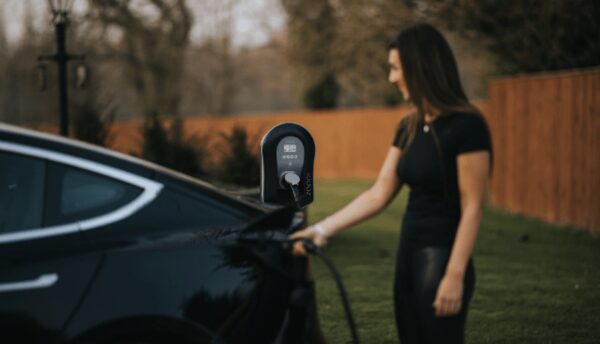
The independence myenergi equipment delivers is temporal rather than structural. The zappi, eddi, libbi and harvi work together to shift consumption into the hours when the roof is generating or the tariff is cheapest, which reduces the volume of electricity bought at peak rates and the volume exported for little or nothing1. For a household with solar, that is a measurable change in how much of its own generation it uses.
What remains is a set of dependencies. The home stays connected to the grid and to an electricity supplier, because none of these devices generates power. The zappi charges a car from whatever supply is available, and the libbi stores energy rather than creating it. The system's intelligence runs through the myenergi app, which allows access and control of devices from anywhere in the world, so remote control and monitoring rest on connectivity and the manufacturer's service20. The warranty depends on registration and, for the extended term, on buying cover before the standard term expires8. Spares, firmware and support all come from one company.
The honest position is that myenergi kit makes a household a better user of the energy it already has, and a more flexible one in relation to time-of-use tariffs. It does not make the home self-sufficient, and it adds a manufacturer and an internet connection to the list of things the household relies on. Households weighing that trade-off against other routes to independence can compare the wider field in home EV charger manufacturers and the warranty conventions across the sector in manufacturer warranties.
Sources34 cited
- One solar ecosystem, myenergi, 2026
- zappi GLO, myenergi, 2026
- zappi, myenergi, 2026
- Customer support, myenergi, 2026
- Smart charger, OVO Energy, 2026
- EV chargers, So Energy, 2026
- How to charge the Kia e-Niro, myenergi, 2026
- Extended warranty, myenergi, 2026
- myenergi partners with Santander, myenergi, 2026
- Home electric vehicle chargers, Carwow, 2026
- Product sales surpass 500,000, myenergi, 2023
- Home builders, myenergi, 2026
- Business, myenergi, 2026
- Where do EV chargers get their power, myenergi, 2026
- harvi energy harvesting sensor, myenergi, 2026
- zappi, myenergi, 2026
- OZEV electric car grant, myenergi, 2022
- zappi GLO, myenergi, 2026
- zappi integrated into the Hive Home app, myenergi, 2025
- Octopus, myenergi, 2026
- Car charger Northern Ireland, myenergi, 2026
- Anti-tamper protection and smart charge point regulations, myenergi, 2026
- zappi home EV charger, myenergi, 2026
- Electric car charger home installation UK, myenergi, 2026
- zappi EV charger, myenergi, 2026
- myenergi, myenergi, 2026
- zappi car charger, myenergi, 2026
- myenergi product warranty v4.1, myenergi, 2026
- zappi extended warranty, myenergi, 2026
- myenergi product warranty v2.0, myenergi, 2023
- Electric vehicles: debunking myths, Energy Saving Trust, 2025
- libbi battery storage, myenergi, 2026
- zappi birthday, myenergi, 2023
- Myenergi Zappi 2H07UW, Medlocks, 2026
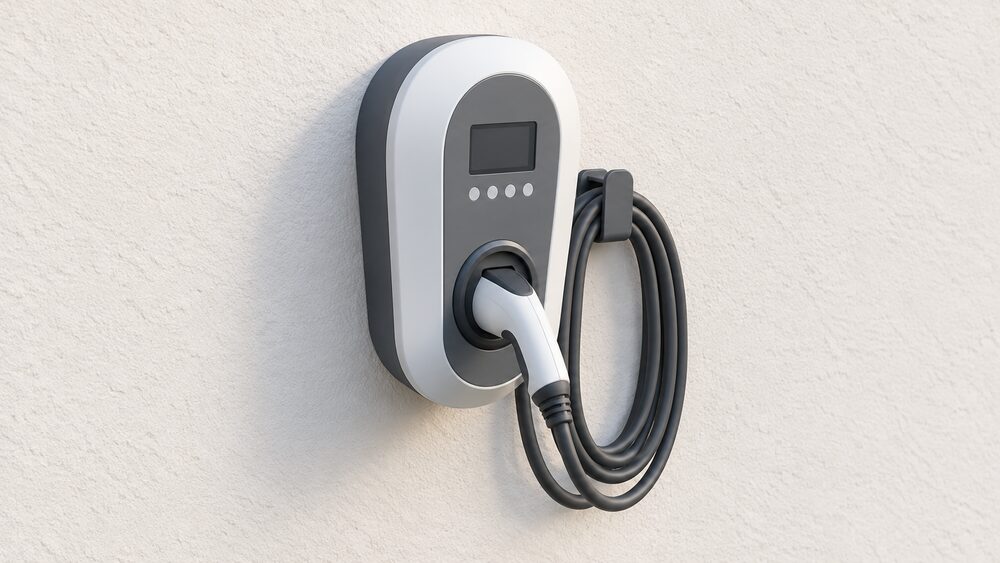 myenergi home EV chargersMaker of zappi, the UK's best-known solar-aware home charger; covers the full range, warranty and company status.
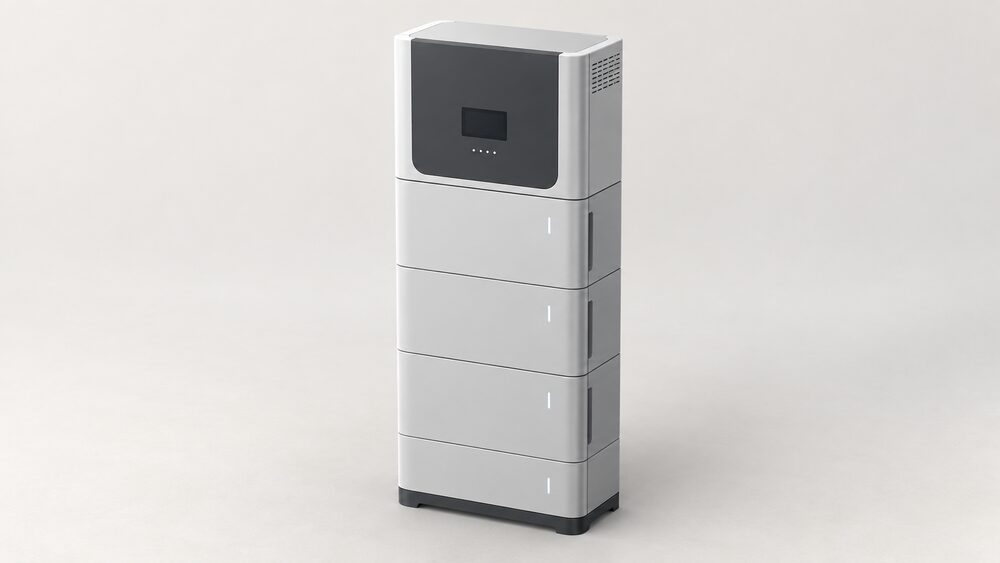 myenergi libbiHow much does a myenergi libbi cost, and how many units do you need to run a typical home?
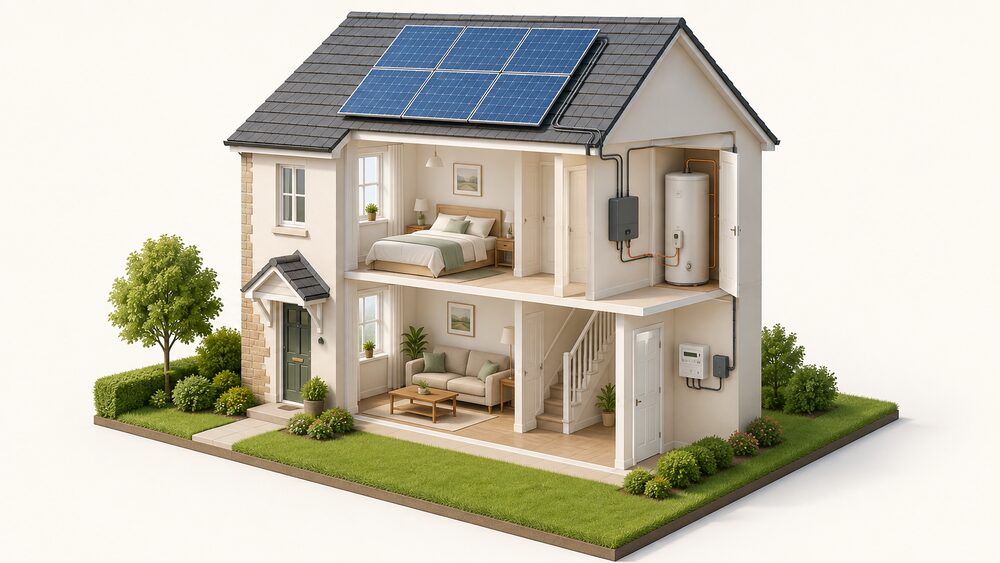 myenergi eddiThe myenergi eddi diverts surplus solar into an immersion heater instead of the grid, with up to 95% self-consumption claimed, a three-year warranty and UK manufacture in Lincolnshire.
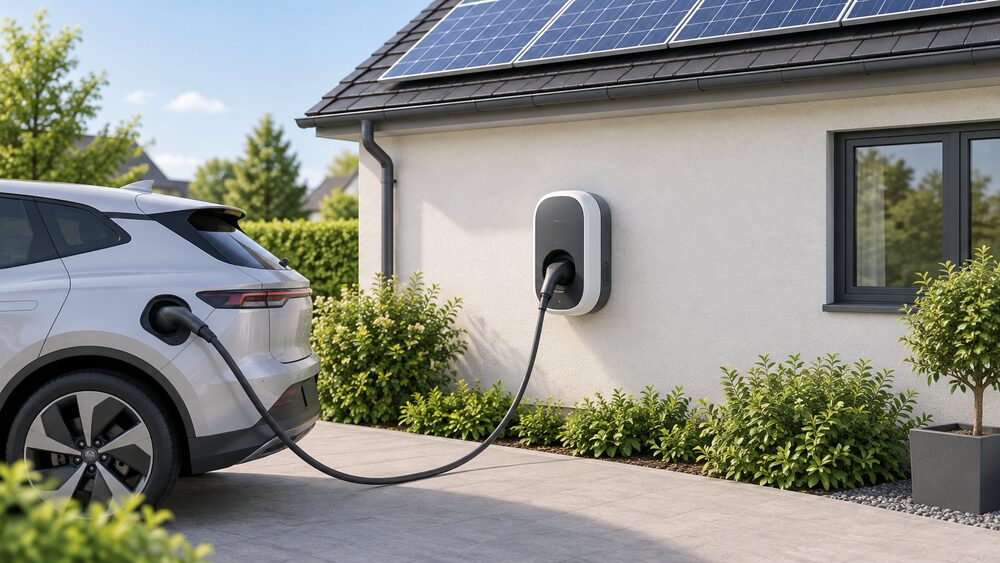 Zappi solar-aware EV chargerThe myenergi zappi is a UK-made solar-aware home EV charger sold in 7kW single-phase and 22kW three-phase forms, with ECO and ECO+ modes that divert surplus solar or wind generation into the car.