
In this guide
Hive is a UK consumer smart-home brand built around one app. The range covers heating, plugs, sensors, lighting and connectivity, all controlled through that single app, and Hive customers can expand the system with security, lighting, sensors, plugs and connectivity as they go1. At the centre sits the Hive Hub, which is required to use other Hive smart products in the home1.
The heating side is the part most households meet first. A Hive smart thermostat system is made up of three parts: a hub, a receiver, and the smart thermostat2. The thermostat connects the boiler to a smartphone or tablet using the home's WiFi connection, and Hive states that 2 million people already use its thermostats3. Hive+ is the paid tier on top, priced at £3.99 a month or £39.90 a year, and Hive states that over 120,000 people use it4.
The brand has also withdrawn from parts of its own range. Hive states that the only products being discontinued are its smart security and leak detection devices, plus some older models of the Hive Hub5. Support for the Hive View Camera and Hive HomeShield ended on 01/08/2025, and the Nano 1 Hub was deactivated on 01/08/20235. Anyone buying into Hive today is buying into a narrower product set than the brand once sold.
What the Hive range covers: one app for heating, plugs, sensors and security
The Hive proposition is consolidation. Rather than a set of separate apps for heating, lighting and plugs, Hive puts security, lighting, sensors, plugs and connectivity under one app, and the app is compatible with other smart devices including Amazon Alexa, Google Assistant and Philips Hue1. Control runs from a smartphone, tablet or smart speaker6.
The heating core is a three-part system: a hub, a receiver wired to the heating system, and the thermostat itself2. Installation follows the same order: set up the hub, which connects to the router and allows control of heating and other Hive devices, wire the receiver to the heating system, then finish setup in the Hive app7. Hive states that just one smart thermostat is needed per home, since it can control heating throughout the house8.
Compatibility with the heating system is broader than with some rivals but not universal. Hive smart thermostats work with wet underfloor heating systems, and they work with electric boilers where the boiler works with a standard room thermostat or programmer9. They do not work with storage heaters or individual plug-in electric room heaters2.
Voice and platform support is wide. Hive thermostats work with Alexa, Google Assistant, Apple HomeKit, Siri Shortcuts and IFTTT, and the Hive Hub carries the same list3. Hive also states that its smart thermostats can link to other smart devices such as a motion sensor to turn heating and lights off, using a feature called Hive Actions11.
The hub: which Hive hub you have and what happened to the older ones
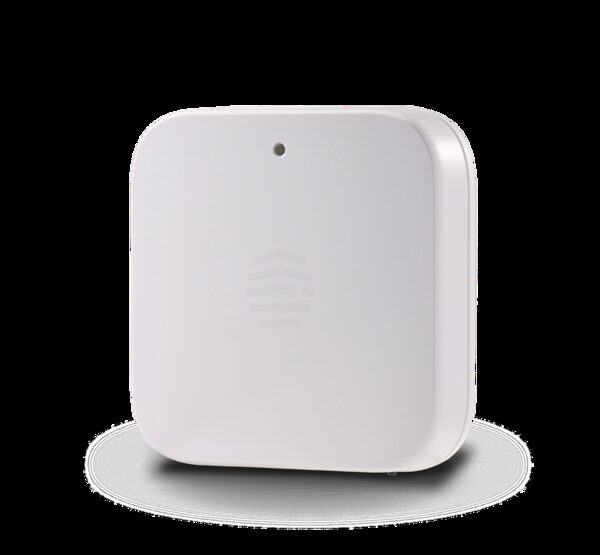
The Hive Hub is not optional. It is required to use other Hive smart products in the home, and only Hive devices can be paired with it1. That single restriction defines the ecosystem: a Hive Hub will not act as a general-purpose controller for other manufacturers' sensors or plugs, even though the Hive app will talk to some third-party platforms.
Hive has retired hub generations. The Nano 1 Hub was deactivated on 01/08/2023 and stopped connecting to Hive servers after that date5. Hive offered Nano 1 owners 50% off an upgrade to the Nano 2 hub through a voucher code sent by email5. Once the upgrade completes, the hub stops flashing green and shows a solid green light to indicate it is online5.
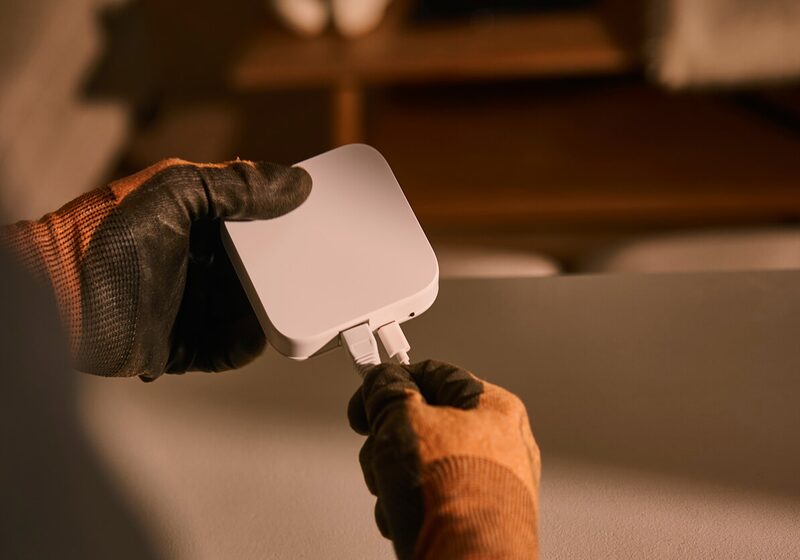
The Nano 2 hub is also the more portable of the two. Hive's guidance for moving home is that a Nano 2 Hub can simply be plugged in and used once internet service is available at the new address12. Households taking a hub to a new property should also take sensors, plugs, light bulbs and any other accessories, since those are paired to it12.
It is worth separating the Hive Hub from the communications hub that sits on a smart meter. The smart meter communications hub allows the electricity and gas meters and the in-home display to connect to each other and to the smart meter home area network, and it is a separate piece of equipment from anything Hive sells13. A Hive Hub needs a home broadband connection; a smart meter does not. More on that distinction sits in do smart meters need WiFi to work?.
Thermostats, plugs and sensors: what each device does in the home
The Hive Thermostat is the heating controller. It connects the boiler to a phone or tablet over the home WiFi, and it works with Alexa, Google Assistant, Apple HomeKit and Siri Shortcuts11. Hive sells two thermostat models, the Hive Thermostat and the Hive Thermostat Mini, both carrying the same voice and platform list3. A single thermostat can control heating across the home8.
Zoning is where the range extends. A Hive Thermostat can control up to six zones of heating where an existing multizone heating system is already in place, and Hive describes multizone control through a centralised remote, individual room panels, or the Hive app3. Hive Radiator Valves take that further: they control every radiator individually through the app, and Hive recommends them where the aim is to control heating in individual rooms remotely9. The valves communicate over Zigbee14.
Smart plugs sit alongside the heating products. Most smart plugs connect to home WiFi or a smart home hub, receive commands from an app or voice assistant, and then open or close an internal switch that controls whether electricity flows to the plugged-in device15. That makes them a switching and scheduling tool rather than a measuring one, and the energy-saving case for them rests on what is plugged in and when it runs.
| Device | What it does | Protocol or platform |
|---|---|---|
| Hive Hub | Required for other Hive products; pairs only with Hive devices10 | Indoor use only10 |
| Hive Thermostat | Controls boiler over home WiFi; up to 6 zones with an existing multizone system3 | Alexa, Google Assistant, Apple HomeKit, Siri Shortcuts3 |
| Hive Thermostat Mini | Second thermostat model, same platform list3 | Alexa, Google Assistant, Apple HomeKit, Siri Shortcuts3 |
| Hive Radiator Valve | Individual room control through the app14 | Zigbee14 |
| Hive Plug | Switches and schedules a plugged-in appliance15 | WiFi or smart home hub15 |
Works With Hive: linking batteries and other brands, including Fox ESS
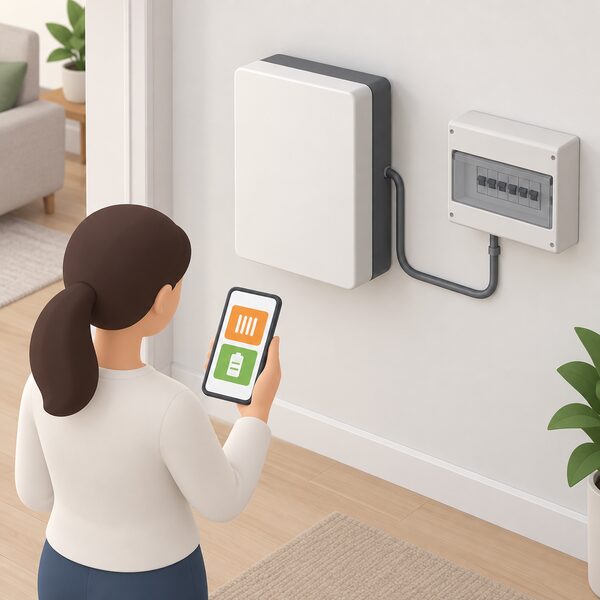
Works With Hive is the programme through which partner devices connect to the Hive app. Hive describes it as the set of devices made by partners that currently work with the Hive ecosystem16. The most consequential entry for a household thinking about energy is battery storage: Fox ESS announced on 20 March 2025 that its home battery systems are compatible with the Hive App through the Works With Hive programme5.
That matters because it changes what the Hive app is for. A household with a Fox ESS battery and a Hive thermostat can see heating and stored energy in one place, rather than running two apps. The Hive app is also compatible with Amazon Alexa, Google Assistant and Philips Hue1.
The limits are worth stating plainly. Works With Hive is a compatibility list, not an open protocol. The Hive Hub itself pairs only with Hive devices10, so third-party integration runs through the app and the partner's own cloud service rather than through the hub. Where a partner withdraws a service or changes its API, the integration is outside the household's control. The general pattern of app and cloud dependence in energy devices is covered in app subscriptions and cloud dependence, and the protocol questions in Zigbee, Matter, Thread and KNX.
Hive+: what the £3.99 a month subscription adds, and what stays free
Hive+ is the paid membership. Hive prices it at £3.99 a month, or £39.90 a year4. A separate Hive price list gives £19.95 a year, so the published annual figures disagree and both are shown here2. The features listed are Schedules, Quick Actions, Heating History, Away Mode, Saver Mode, Budget Tracker, Schedule Assist, Remote diagnostics, Extended warranty, Technical support, Hive discounts, British Gas discounts and Free delivery4.
Two of those features carry conditions. Saver Mode and Schedule Assist are not currently compatible with multiple heating zones or with Hive Radiator Valves4. British Gas discounts are subject to fair use and standard British Gas terms, are for UK customers only, are available to new Hive+ customers only, and cannot be used on pre-existing orders or with any other offer4.
Warranty is the other substantive benefit. Hive states that joining Hive+ gives ongoing warranty on all Hive devices, and describes it as extended Hive warranty over all smart Hive devices for as long as the membership continues10. Hive covers its own devices for warranty and installation issues but states that it does not cover any warranty or installation issues for third party devices16. Registration itself runs through a Hive account, created in the app or through the register link on hivehome.com12.
Member pricing runs across the shop. The Hive Thermostat is listed at £101.15 for Hive+ members, the Hive Plug at £33.15 for members against £39 otherwise, the Hive Window and Door Sensor at £24.65 for members, and the E27/B22 Smart Light Bulb at £16.15 for members against £19 otherwise3. Hive also offers a whole year of Hive+ free when pro-install is selected, auto-renewing after 12 months and cancellable at any time4.
Hive+ savings claim: up to £18 a month, and the compatibility limits behind it
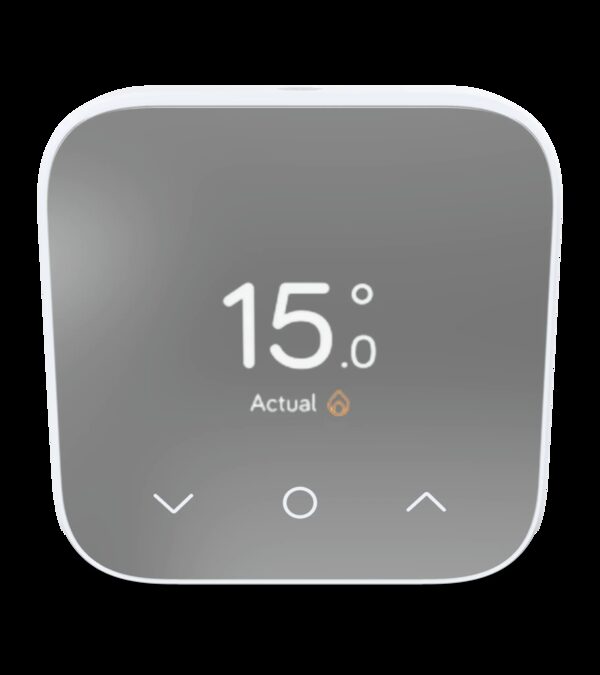
Hive states that Hive+ features can save up to an extra £18 a month, and repeats the figure as cutting cold weather bills by up to an extra £18 a month4. The basis for the claim is narrower than the headline. Hive states that the top 30% of monthly savings were £17.99 or more across every customer and all months from October 2020 to November 20234.
That is a statement about the best-performing months, not a typical or guaranteed saving. Hive states that the top 30% of monthly savings were £17.99 or more across every customer and all months since October 2020 to November 20234, so a household outside that group saved less in the months measured. The claim also sits behind the compatibility limit: Saver Mode and Schedule Assist are not currently compatible with multiple heating zones or with Hive Radiator Valves4, so a household running zoned heating or radiator valves is not in a position to use the features the claim rests on.
Independent guidance on smart thermostats is more measured. Which? notes that Hive's smart thermostats and radiator valves will still be supported into 2026, which is a statement about support rather than about savings18. Smart Energy GB's position on smart plugs is that they are a switching and scheduling tool, and its wider energy-saving guidance does not attach a monthly figure to any single device15.
The honest reading is that Hive+ is a bundle of convenience features, warranty extension and discounts, with a savings claim attached that applies to a minority of months and excludes some of the configurations Hive itself sells. Whether the £3.99 a month is recovered depends on the household's heating pattern and on which Hive devices are installed.
Where Hive support has ended: cameras, leak sensors and the Hub 360
Hive has withdrawn from several product lines, and the dates matter to anyone holding that hardware. Hive states that the only products being discontinued are its smart security and leak detection devices, plus some older models of the Hive Hub5. Independent guidance records that Hive will discontinue its security cameras and HomeShield devices18.
The support periods have run out. The Hive View Camera's three-year support period ended on 01/08/2025, and the camera no longer functions after that date5. Hive HomeShield's three-year support period also ended on 01/08/2025, and Hive states that the system will no longer function after that date5. Hive states that it will no longer provide replacements for faulty devices after 01/08/20255. Support for the Hive Leak Sensor ended on 01/09/2023, after which the device no longer functions5.
The Hub 360 is a partial case. The sound detection add-on service stopped operating on 31/12/2022, but Hive states that the Hub 360 retains its connectivity to all Hive devices as normal5. So the hub continues to work as a hub while the feature it was partly sold on has gone.
This is the pattern that matters most for anyone weighing a smart-home purchase. A device that depends on a manufacturer's servers has a service life set by the manufacturer, not by the hardware. The wider question of what happens when an energy app or cloud service is withdrawn is covered in app subscriptions and cloud dependence.
What owning Hive means for household energy independence
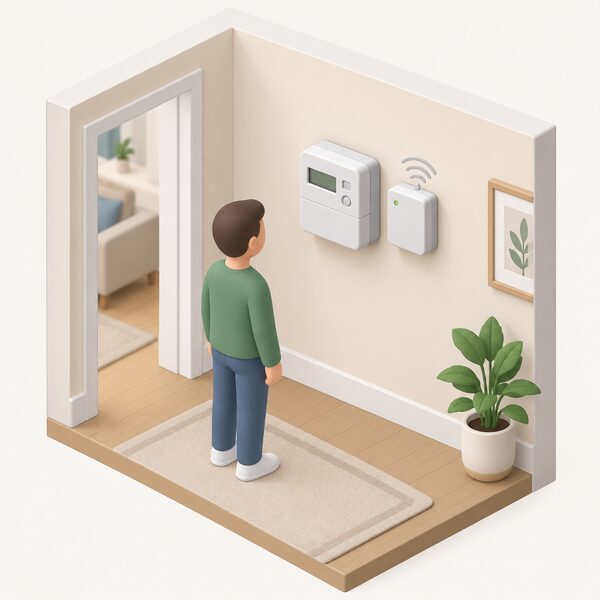
Hive is a control layer, not a supply arrangement. It changes when heating runs and when appliances draw power, and it can bring a home battery into the same app through Works With Hive16. It does not change where the energy comes from. A Hive-controlled gas boiler still runs on gas from the grid and a gas supplier, and a Hive-controlled home still draws electricity from the same supplier as before.
What Hive does offer is visibility and timing. Smart meter data puts households in control of their energy usage, allowing them to take energy-saving steps and reduce CO2 emissions, and official guidance for self-build homes recommends smart systems that control lighting, heating and cooling based on occupancy and time of day20. Hive sits in that category. The scheduling, Away Mode and Budget Tracker features are tools for shifting and trimming demand rather than for generating or storing energy4.
The dependence that remains is layered. The Hive Hub needs home broadband and Hive's servers; the app needs a phone or tablet; the longest warranty depends on continuing Hive+ membership10. Where a household has a battery, the Works With Hive integration runs through the partner's cloud as well as Hive's. A smart meter, by contrast, does not need home broadband to send readings, and any household that pays for energy, whether owning or renting, should be able to book an installation where it is expected to work in the property22. Participation in household flexibility schemes usually needs a smart meter and a smart tariff, with suppliers able to arrange free installation24.
For a household weighing independence, the position is that Hive is a convenience and control product with a real but bounded role. It can reduce waste and shift load, and it can display a battery alongside heating. It cannot take a home off the gas grid, off a supplier, or off the manufacturer's cloud. The wider picture of what monitoring can and cannot do for independence is set out in smart meters, monitoring and energy independence, and the pillar guide is at Smart Meters and Home Energy Management.
Sources24 cited
- Tado vs Hive: which smart thermostat is best, Energy Helpline, 2026-09-20
- How does a smart thermostat connect to a boiler, Hive, 2025-12-17
- Hive Thermostat, Hive, 2026-09-17
- Hive+, Hive, 2026-09-17
- Product news, Hive, 2026-09-17
- What is multizone heating, Hive, 2025-12-15
- How to use a smart thermostat, Hive, 2025-12-17
- A simple guide to smart thermostats, Hive, 2025-11-20
- Hive smart heating, Hive, 2026-09-17
- Hive Hub, Hive, 2026-09-17
- How to save money with smart home devices, Hive, 2025-11-20
- Moving home with Hive, Hive, 2025-12-17
- Does a smart meter need WiFi, Smart DCC, 2026
- Hive Radiator Valve, Hive, 2026-09-17
- What are smart plugs and do energy saving plugs work, Smart Energy GB, 2026-08-19
- Works with Hive, Hive, 2026-09-17
- Hive shop, Hive, 2026-09-17
- How to buy the best smart thermostat, Which?, 2026-09
- Ultimate energy saving tips guide, Smart Energy GB, 2026-04-24
- Smart meters and decarbonisation, Smart DCC, 2026
- Self-build homes: sustainability, Planning Portal, 2026
- Smart meters: your rights and expectations, GOV.UK, 2025-08-08
- Do I already have one, Smart Energy GB, 2026
- For homes, Flex Assure, 2026-09-19
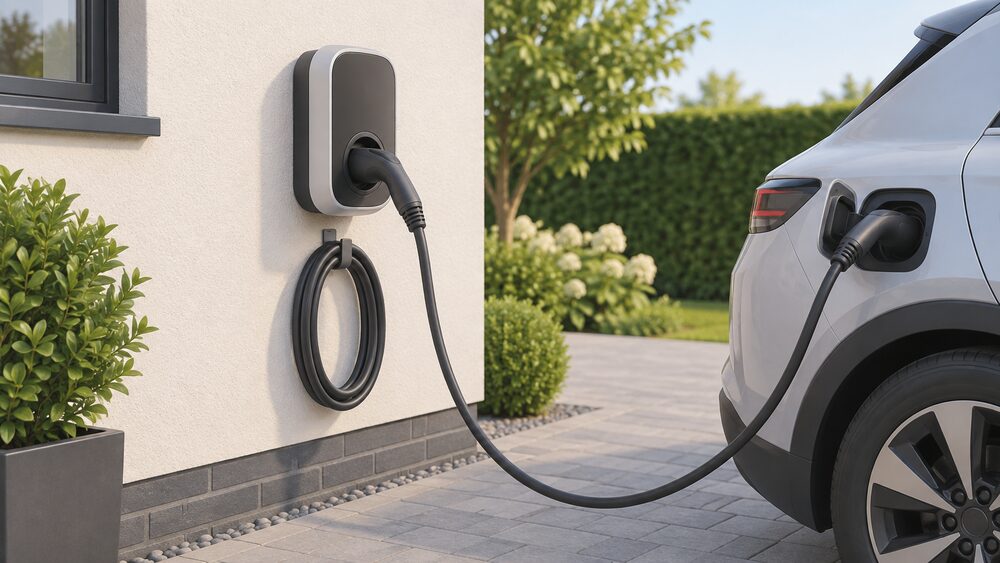 Hive EV ChargerCan you still buy the Hive EV charger, and is it still supported if you already own one?
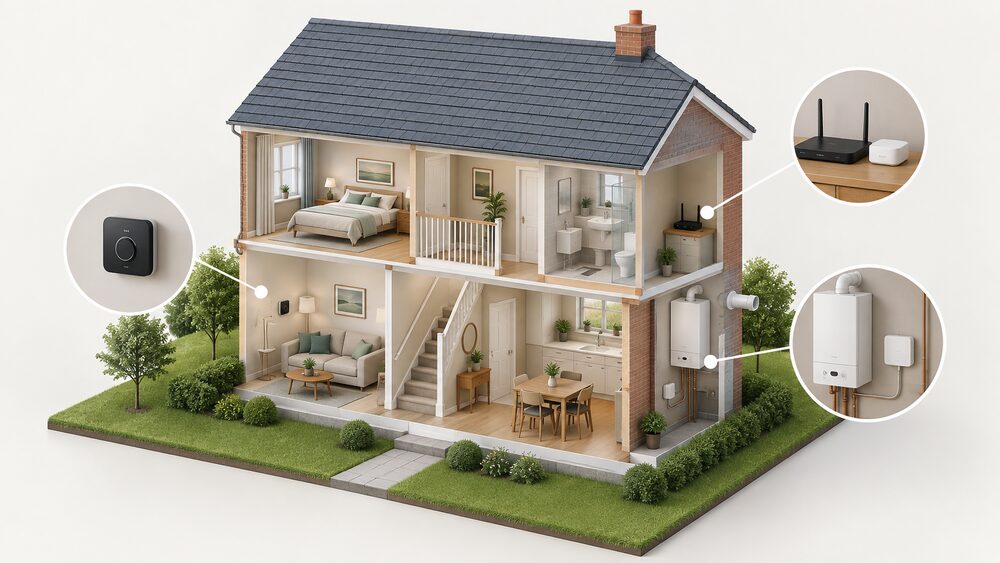 Hive ThermostatThe Hive Thermostat in the UK: what it controls, which boilers it suits, what is in the box, Hive+ membership, installation, warranty and returns.
 Hive Thermostats and Heating ControlsHive is a smart thermostat brand owned by Centrica and sold through British Gas.