
In this comparison
Nest and Hive are the two smart thermostat names most UK householders recognise, and the choice between them turns on three things: what the hardware controls, what the app and subscription add, and whether either will talk to the boiler already on the wall. Both connect to wifi so heating and hot water can be run from a phone, tablet or desktop1. Hive states its thermostat works with Alexa, Google Assistant, Apple HomeKit and Siri Shortcuts3, and independent guidance lists both Google Nest and Hive as connecting to Amazon Alexa, Siri and Google Home4.
The commercial difference is the subscription. Hive+ costs £3.99 a month, or £39.90 a year, and bundles Saver Mode, Budget Tracker, Schedule Assist, heating history, remote diagnostics, an extended warranty, British Gas discounts and free delivery3. Hive states members can cut cold weather bills by up to an extra £18 a month, and that the top 30% of monthly savings were £17.99 or more across every customer and all months since October 20203. Google Nest has no equivalent subscription in the material here; its cost is the hardware and installation.
The practical difference is compatibility. Hive publishes a list of boilers its Active Heating will not work with, and it includes several Worcester Bosch models3. Hive also recommends professional installation of its smart thermostats5. Neither brand is a route to energy independence on its own: both depend on a cloud service, an app and the maker's continued support, and Hive has already ended support for two products3.
Nest vs Hive at a glance: price, control and what each does well
The two systems are sold on different propositions. Hive sells a modular smart home: independent guidance notes that Hive customers can expand with security, lighting, sensors, plugs and connectivity, all controlled through one app7. Google Nest sells a thermostat that learns. Independent guidance describes smart heating thermostats generally as interpreting inputs such as preferred room temperature, learning from what the household does, reacting to other data such as weather forecasts, and in some cases predicting behaviour from how heating is set, adjusted and how the home is occupied8.
On price, the material here gives Hive figures and no current Nest figure. The Hive Thermostat is listed at £101.15 for Hive+ members3. Hive+ itself is £3.99 a month or £39.90 a year3, though a separate maker price-list entry gives £19.95 and the two have not been reconciled, so the annual cost is quoted in two places at two different figures3. Nest prices appear only in older maker guidance, at £179 and £199, and those two figures also disagree3. Where no published price exists, smart thermostat prices are installer-quoted.
What each does well differs by household. Hive's strength in this material is breadth: a smart home range, voice control across four assistants, and a subscription that adds warranty and diagnostics3. Nest's strength is the learning behaviour described for smart thermostats generally8. Neither claim is a measured saving for a specific home.
| Hive | Google Nest | |
|---|---|---|
| Subscription | Hive+ at £3.99 a month or £39.90 a year3 | None in the material here |
| Voice control | Alexa, Google Assistant, Apple HomeKit, Siri Shortcuts3 | Alexa, Siri, Google Home4 |
| Zones | Up to 6 with an existing multizone system3 | Not stated in the material here |
| Installation | Professional installation recommended5 | Not stated in the material here |
| Smart home range | Security, lighting, sensors, plugs, connectivity7 | Not stated in the material here |
What a smart thermostat actually does for your heating
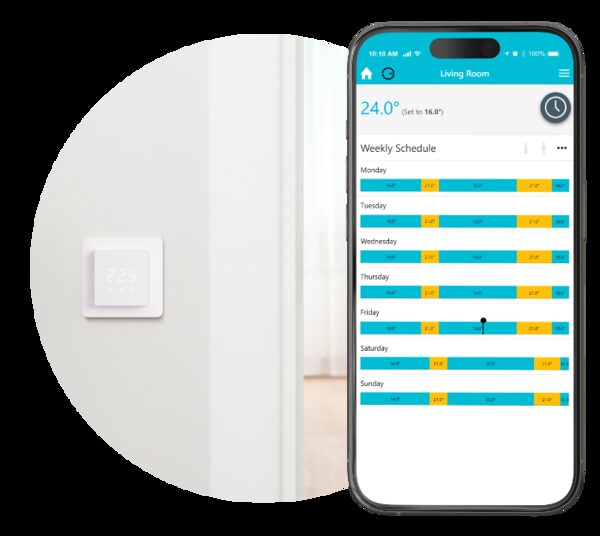
A smart thermostat replaces the room thermostat and programmer with a device that connects to wifi, so heating and hot water can be controlled through a phone, tablet or desktop1. That is the whole of the core function. Everything else is scheduling, sensing and software.
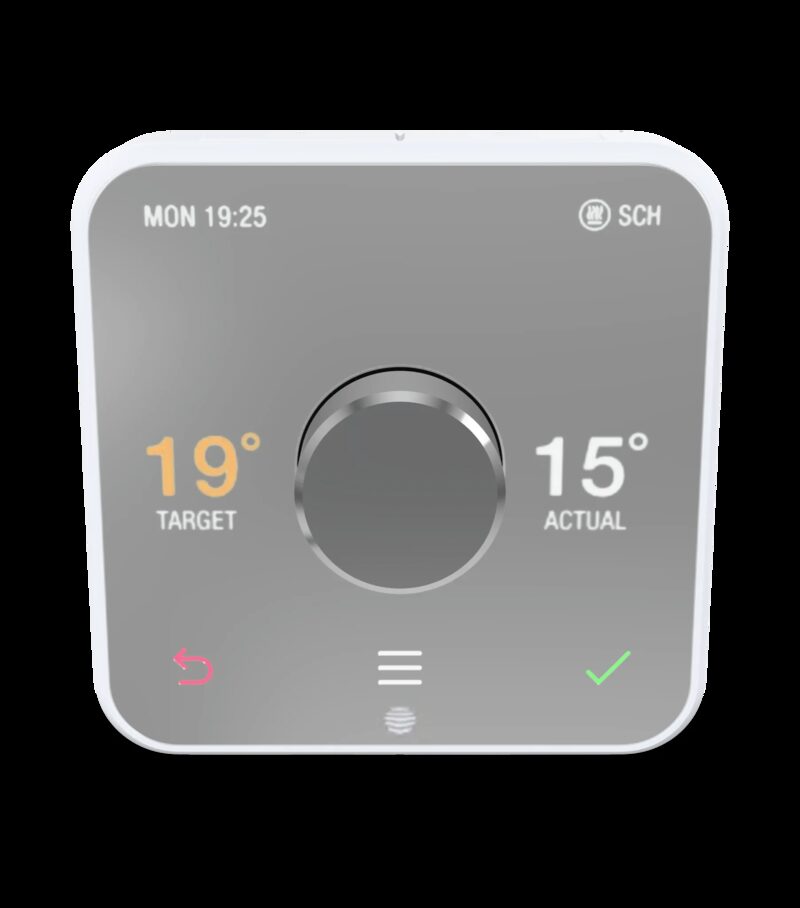
The sensing layer is where the two brands diverge in the material. Hive states its smart thermostat can be linked to other smart devices such as a motion sensor, so heating and lights turn off when the home is empty3. Hive also states its thermostats have a geolocation function that sends an alert if you leave home with the heating on3. Independent guidance describes the general category as interpreting preferred room temperature, learning from behaviour, reacting to weather forecasts, and in some cases predicting occupancy8.
The savings case is weaker than the marketing. The fuel bill savings attributed to smart control in the BEAMA estimates are based on a study by the Behavioural Insights Team, not on metered trials of either brand9. Independent guidance is explicit about the limits: smart thermostats can be expensive and carry an installation cost, and having one means only heating is tracked, so electricity and gas usage are not1. A separate independent case study found an optimised household's daily electricity bill reduced by 25 to 30% against a non-optimised household on a dual rate tariff on a winter day, which is a flexibility result rather than a thermostat result11.
For a household, the honest expectation is better control and better visibility of heating, with savings that depend on the schedule, the tariff and the building. The thermostat does not change the boiler's efficiency, the fabric of the home or the price of gas.
Hive vs Nest: which costs less
There is no like-for-like price comparison in the material, and the honest answer is that the running cost depends on whether Hive+ is taken. Hive+ is £3.99 a month, or £39.90 a year3. Over a year that is a recurring cost Nest does not carry in the material here. Against it, Hive states members can cut cold weather bills by up to an extra £18 a month, and that the top 30% of monthly savings were £17.99 or more across every customer and all months since October 20203. Those are the maker's figures for its own subscription.
The wider savings evidence is about heating controls generally, not these two products. BEAMA's estimates of fuel bill savings from heating control upgrades rest on a Behavioural Insights Team study9. The Welsh Government's Warm Homes Nest scheme, which is a different Nest entirely, modelled average bill savings of £300 per year in 2021 to 2022, £422 per year in 2022 to 2023 and £595 per year in 2023 to 2024, and estimated around £570 per household per year for the standard service in 2024 to 202512. Those figures cover packages of insulation, boilers and heating measures, not a thermostat swap, and they are modelled rather than metered.
For a household comparing the two, the arithmetic is: hardware and installation once, plus £39.90 a year if Hive+ is taken, against whatever saving the household actually captures. Independent analysis of the energy market found around 30 fixed and tracker deals that could save money compared with a variable deal, and average costs around 15% cheaper than the current price cap on the cheapest fixed deals16. Tariff choice moves the bill more than the thermostat brand does.
Voice and app control: Alexa, Siri, Google Home and wifi
Both brands sit inside a voice assistant ecosystem, and the difference is breadth rather than capability. Hive states its thermostat works with Alexa, Google Assistant, Apple HomeKit and Siri Shortcuts3, and its app is compatible with Amazon Alexa, Google Assistant and Philips Hue7. Independent guidance lists Google Nest and Hive together as smart thermostats that connect to Amazon Alexa, Siri and Google Home4. Hive's own guidance describes linking the thermostat to a virtual assistant such as Alexa3.
What voice control does not do is change the wiring or the boiler. It is an input method for the same schedule and setpoint. The dependence it creates is worth naming: the assistant, the app and the cloud account all sit between the household and the boiler, and each is a third party.
Hive's wider range extends the same app across security, lighting, sensors, plugs and connectivity7. That is convenient and it deepens the lock-in: more devices on one account means more to lose if support ends.
Hive+ subscription: £3.99 a month for extra features and warranty
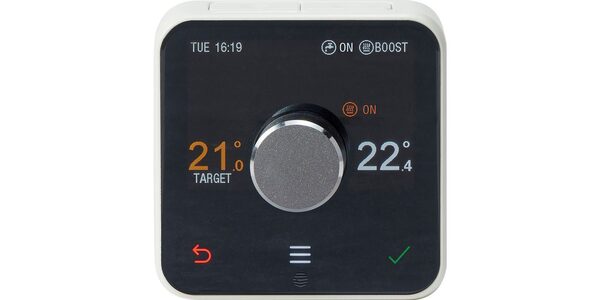
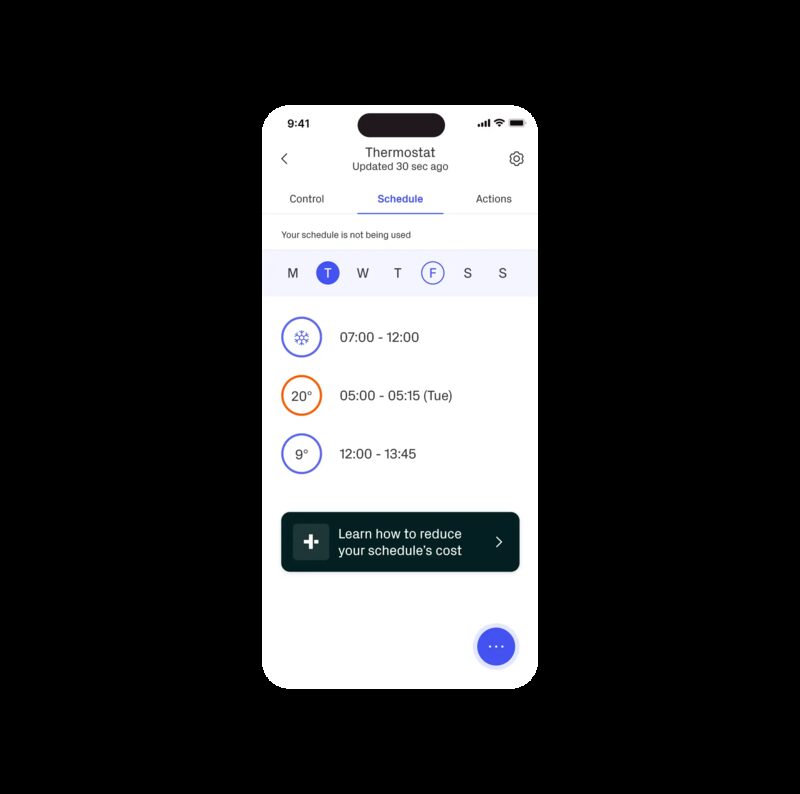
Hive+ is the clearest structural difference between the two brands. It costs £3.99 a month, or £39.90 a year, and Hive states it includes schedules, quick actions, heating history, away mode, Saver Mode, Budget Tracker, Schedule Assist, remote diagnostics, an extended warranty, technical support, Hive discounts, British Gas discounts and free delivery3. Hive states over 120,000 people are members3.
Two of those features carry conditions. Saver Mode and Schedule Assist are not currently compatible with multiple heating zones or Hive Radiator Valves3. The British Gas discounts are subject to fair use and standard British Gas terms, are for UK customers only, are available to new Hive+ customers only, and cannot be used on pre-existing orders or with any other offer3.
There is a free route. Hive states that selecting pro-install gives a whole year of Hive+ free, auto-renewing after 12 months and cancellable at any time3. Hive's Get Ready for Winter promotion runs from 14 September 2026 to 5 October 2026, offering free or discounted Hive+ membership and 15% member discounts on qualifying thermostats and accessories3. A separate Hive+ competition closes at 23:59 on 30 September 20263.
On value, the maker's own figures are the only ones available. Hive states members can cut cold weather bills by up to an extra £18 a month, and that the top 30% of monthly savings were £17.99 or more across every customer and all months since October 20203. The extended warranty is the part that does not depend on behaviour, and it is the part a household can value directly against the annual cost.
Where Nest or Hive falls short: larger homes and multiple zones
Zoning is the clearest limit. Hive states the thermostat can control up to six zones of heating if there is an existing multizone heating system, by adding more thermostats3. That is a real capability, but it depends on the home already being zoned, and the two Hive+ features most associated with saving, Saver Mode and Schedule Assist, do not work across multiple zones or with Hive Radiator Valves3.
The wider evidence on home type matters here. The Welsh Government's Warm Homes Nest scheme found that almost half, 49%, of recipients lived in homes with two bedrooms or fewer, and only 8% lived in properties with four or more bedrooms12. That is a scheme for smaller homes, and it reflects where the easy measures are. Scottish house condition statistics show families and older households are more likely to live in houses, at 74% and 71% respectively, while other households split 56% houses and 44% flats18. Larger and older houses are where zoning and per-room control earn their place, and where a single thermostat plus a subscription reaches its limit.
For multi-zone work, the site's guides to heating zoning and smart TRVs set out the options beyond a single thermostat. A household in a large or awkwardly shaped home should expect to need more than one control point, whichever brand is chosen.
Boiler compatibility: working with your existing system
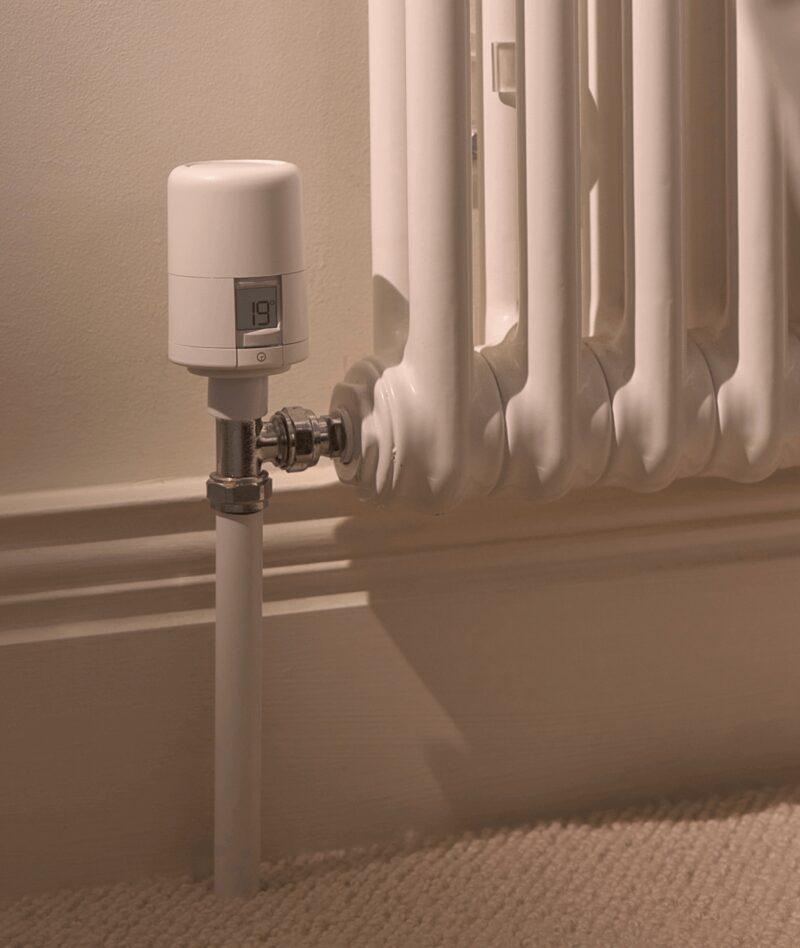
Compatibility is decided by the boiler, not the brand. Hive states its Active Heating is compatible with most boilers but lists specific incompatible models, including Worcester Bosch ICC2 ZWBR 11-37A, Worcester Bosch CRD 537i and CRD 542i, several Worcester Bosch Greenstar HE Plus variants, and a set of Greenstar 30, 35 and 40 HE Plus combi and regular models3. Newer Greenstar models are not on that list. Hive recommends professional installation of its smart thermostats5.
The wider regulatory direction matters for anyone planning beyond a like-for-like swap. The Future Homes Standard consultation states that gas boilers, including hybrid and hydrogen-ready boilers, will not meet the proposed standards19. For heat pump grants, Ofgem guidance states that heat pumps capable of being installed alongside a fossil fuel boiler may be eligible for the Boiler Upgrade Scheme, but they must be installed independently of a fossil fuel boiler, and installations comprising both a heat pump and a fossil fuel boiler are ineligible20. Where a new heat pump is installed alongside an existing gas boiler under the Warm Homes Social Housing Fund, the boiler must have an energy-related products rating of A or above and the retrofit coordinator must be satisfied it is in good working order21.
For a household, the sequence is: identify the boiler make and model, check the maker's compatibility list, and have an installer confirm the wiring and whether the boiler supports modulating control. The site's guide to smart thermostat boiler compatibility covers the general case, and OpenTherm explains the modulating protocol question.
What owning a Hive or Nest means for energy independence

A smart thermostat gives a household local control it did not have: heating and hot water run from a phone, tablet or desktop over wifi, with schedules, history and, on Hive, sensor links that switch heating and lights off when the home is empty1. That is genuine control over when heat is used, and it is the part that survives a change of supplier or tariff.
The dependence is the other half of the picture. The app, the cloud account, the subscription and the maker's support all sit between the household and the boiler. Hive ended support for the Hive View Camera and the Hive HomeShield system on 1 August 2025, after a three-year support period, and both stopped functioning after that date3. A thermostat bought today is a supported product with a service life, and the subscription is a recurring cost that buys features and warranty rather than hardware.
The wider energy system context is that household flexibility is a live area of work, with an independent case study finding an optimised household's daily electricity bill reduced by 25 to 30% against a non-optimised household on a dual rate tariff on a winter day11. Independent analysis of network costs found electrification has the lowest network costs in 10 out of 12 archetypes, with hydrogen lowest for the remaining two, and where hydrogen is lowest it is on average 5% lower when hydrogen storage costs are not included22. Those are questions about fabric, heat source and tariff, not about the thermostat: none of it is decided by which brand of control is on the wall.
For a household, the independence question is narrower: does the control keep working if the maker changes its mind? The site's guide to heating controls and energy independence and its companion on smart heating control security and data set out what to weigh. The Hive Thermostat and Google Nest pages cover each brand in more detail, and smart thermostat subscriptions covers the recurring cost model.
Sources22 cited
- Ultimate energy saving tips guide, Smart Energy GB, 2026-04-24
- Do I already have a smart meter, Smart Energy GB, 2026-03-16
- Hive Thermostat, Hive, 2026-09-17
- Best boilers guide, Confused.com, 2025-11-03
- How to buy the best smart thermostat, Which?, 2026-09
- How to buy the best smart thermostat: Hive, Which?, 2026-09-17
- tado vs Hive: which smart thermostat is best, Energy Helpline, 2026-09-20
- Smart homes and lower carbon footprint, Energy Saving Trust, 2026-01-21
- Estimated fuel bill savings from heating control upgrades, BEAMA, 2022-11-15
- Estimated savings on fuel bills from heating control upgrades, BEAMA, 2023
- Understanding the opportunity of flexibility for households, Energy Systems Catapult, 2025-04-30
- Warm Homes Nest scheme annual report 2024 to 2025, Welsh Government, 2024-10-01
- Tackling fuel poverty: priority actions, Welsh Government, 2023-04
- Outcome summary: tackling fuel poverty 2020 to 2035, Welsh Government, 2021-03-02
- Support for householders impacted by the closure of the Energy Company Obligation scheme, Welsh Government, 2026-03-13
- Revealed: the energy suppliers that top our rankings for 2026, Which?, 2026-01-19
- Warm and peace: one in five Brits secretly change the thermostat behind their partner's back, Uswitch, 2026-02-10
- Scottish house condition survey 2024: key findings, Scottish Government, 2024
- The future homes and buildings standards 2023 consultation, MHCLG, 2026-09-17
- Boiler Upgrade Scheme guidance, Ofgem, 2023-09-25
- Warm Homes Social Housing Fund wave 3 scheme guidance addendum, MHCLG, 2026-06
- Heat GB: calculating the network costs for low carbon heating, Citizens Advice, 2023-10-06
 Heating Control ManufacturersWhich heating controls are worth buying, and who actually makes them?
 Smart Thermostats ExplainedWhat does a smart thermostat actually do, and is it worth it?
 Smart Heating Security and DataHow safe is your smart thermostat from hackers, and who sees the data it collects about your heating?
 Controls, Thermostats and TRVsWhich heating controls actually cut your bills, and what does each one do?
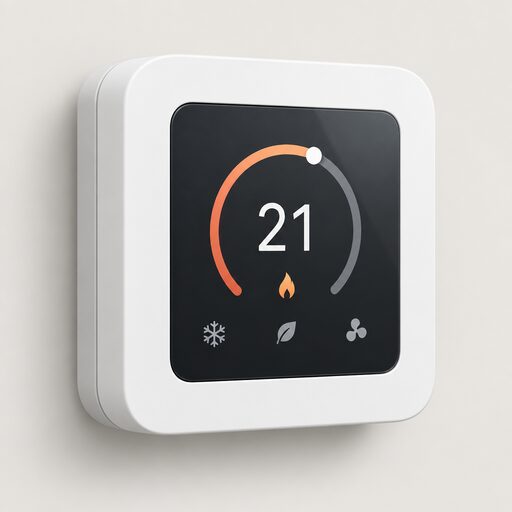 Heating Controls CostA smart thermostat usually costs between about a hundred and two hundred and fifty pounds, but fitting can push that higher.
 Smart Thermostat SubscriptionsDo you have to pay a monthly fee to use your smart thermostat, and what do you actually get for it?