
In this guide
A Google Nest thermostat is a wall-mounted heating control made by Google, sold in the UK in two main forms: the Smart Thermostat E at £199 and the Learning Thermostat (Gen 3) at £2191. Both replace an existing wall thermostat and switch the boiler, and both are described by Google as working with most central heating systems3. The Nest Thermostat is stated to work with 85% of systems, which is the figure to hold on to: it is a large majority, not a universal one4.
The two models differ in more than price. The Learning Thermostat is listed as able to control hot water and as requiring professional installation; the Smart Thermostat E is listed as having no hot water control and as easy to install yourself3. That single difference decides which model suits a household with a hot water cylinder, and it is the most common reason a buyer picks the wrong one.
There is a second thing to know before buying. Google has been withdrawing support for older Nest thermostats in Europe, and recommended that affected owners seek third-party devices compatible with Google Home5. The current models remain on sale, but the episode is a reminder that a cloud-connected thermostat depends on a manufacturer's continued interest in the platform.
What a Nest thermostat is and who makes it
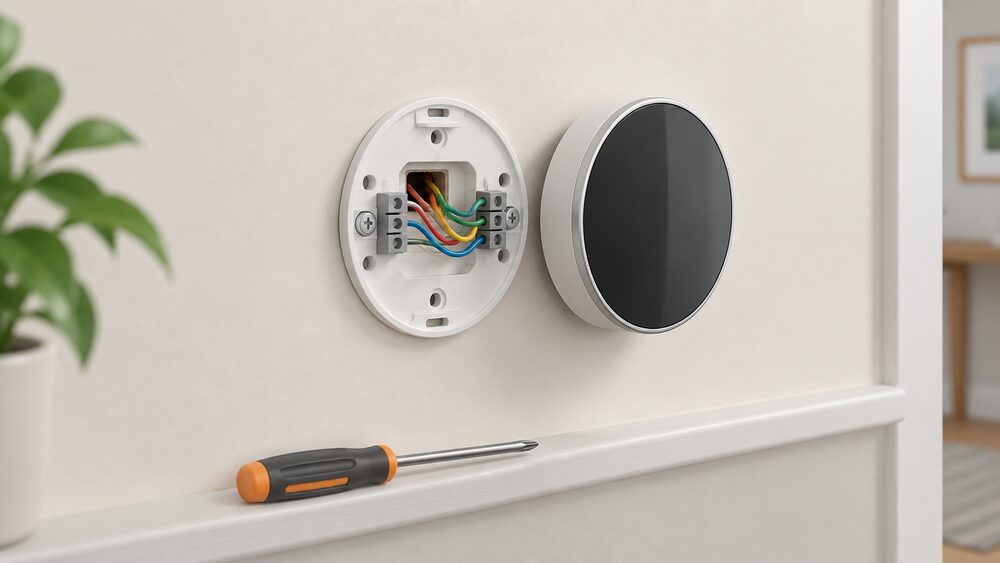
Nest began as a standalone thermostat company and was purchased by Google at the start of 2014 for about £2bn1. The brand now sits inside Google's hardware business, and the thermostats are sold through Google's own store alongside the rest of the Nest range. In practical terms, a Nest thermostat is a replacement for the existing wall-mounted thermostat: it measures temperature where it is mounted and switches the heating on that basis8.
That description matters because it sets the limit of what the device is. A Nest is not a boiler control in the modulating sense on every system, and it is not a zoning system. Google's own comparison material states that it has one thermostat for only one zone5. A house with two heating zones, or a house where the hallway where the thermostat sits is warmer than the bedrooms, gets one control point and no more.
The Nest range also includes the Nest Temperature Sensor, which changes how the thermostat behaves rather than adding a zone. Google states that the thermostat will set the temperature for the specific room where the sensor is placed4. That is a way of steering a single thermostat by a different room, not a way of running two rooms at two temperatures at once.
For the wider picture of what these devices do and how they compare with programmers and TRVs, the smart thermostats page sets out the categories, and the heating controls pillar covers the full UK picture.
The range: Smart Thermostat E at £199 and Learning Thermostat (Gen 3) at £219

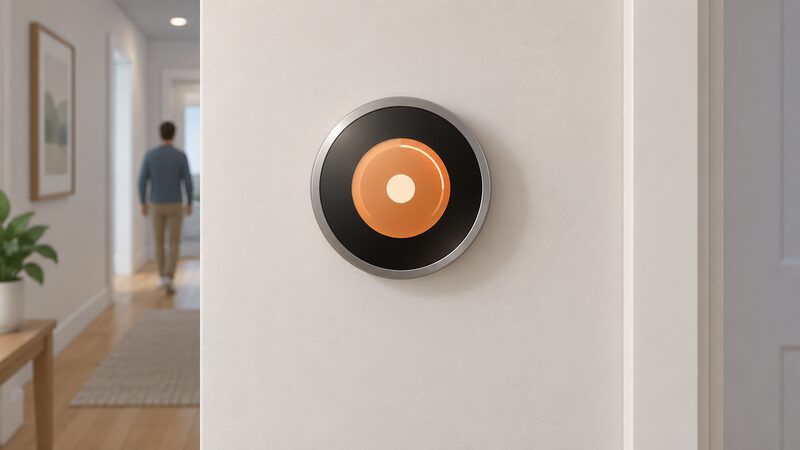
The UK range is short. Independent guidance lists the Google Nest Smart Thermostat E at £199 and the Google Nest Learning Thermostat (Gen 3) at £2192. A separate guide gives the same starting figures, describing the Learning Thermostat as starting from £219 and the Thermostat E as starting from £1991. For context, most smart thermostats cost between £100 and £200, with add-ons such as installation pushing the total higher1.
| Model | Price | Hot water control | Installation | Mounting |
|---|---|---|---|---|
| Smart Thermostat E | £1992 | No2 | Easy to install yourself3 | Built-in stand, place anywhere3 |
| Learning Thermostat (Gen 3) | £2192 | Yes2 | Professional installation recommended2 | Wall, or Nest Stand sold separately3 |
The E has a frosted display and is battery powered with a built-in temperature sensor3. The Learning Thermostat has a motion sensor that can detect when the home is empty and does not need heating, and a Farsight feature that shows the time, temperature or weather1. Both are described in independent listings as modulating and learning thermostats with frost protection, GPS tracking, motion sensing, schedule modes and a child lock2.
Prices are the published retail figures for the device. Installation is quoted separately by whoever fits it, and no installed price for a Nest is published, so a household should expect an installer quote rather than a list price for the fitted job.
Features: self-learning schedules, Eco mode and Savings Finder
The Learning Thermostat's headline feature is Auto-Schedule. Google's guidance states that it observes manual adjustments over several days and builds a schedule automatically using pattern recognition5. The Nest Thermostat, by contrast, uses guided schedule setup, Quick Schedule and Savings Finder, plus Eco4. The Learning Thermostat's feature list also includes energy-savings smarts, Smart Schedule, Adaptive Eco, Seasonal Savings, natural heating and cooling, and smart ventilation4.
Seasonal Savings is the feature with the most documented detail, because it appears in Ofgem's approved innovation measures for the Energy Company Obligation. The measure is listed as covering Nest Thermostats with the Seasonal Savings algorithm, naming the Nest Learning Thermostat and Thermostat E9. The scheme rules state that the algorithm will never change the heat setting by more than 1°C, and that it will automatically not be deployed to customers or thermostats where the demand temperature set by the customer is 18°C or below9. That is a deliberate protection for households that already run cool.
The energy case for a smart thermostat is modest and should be read as such. An independent press release states that the Nest Learning Thermostat can save approximately 4.5 to 5% of total annual household gas consumption7. That is a modelled figure for one device, not a guarantee, and it depends on the schedule the household would otherwise have run. The wider question of whether these controls pay for themselves is covered on do heating controls save money.
Boiler and heating system compatibility: works with 85% of systems
Google states that the Nest Thermostat works with 85% of systems4. The comparison page describes the Thermostat E as working with most central heating systems and the Learning Thermostat as working with most central heating systems and controlling the hot water3. The 85% figure is the more precise of the two and the one to plan around.
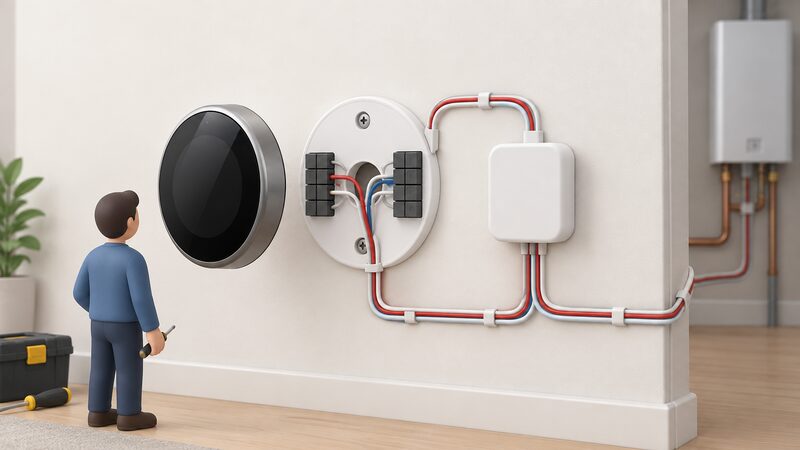
The exceptions are set out by Google itself. Some systems, including heating-only, cooling-only, zone-controlled and heat pump systems, require a Nest Power Connector or a C wire4. The Power Connector is described as a simple and affordable alternative to the C wire for connecting either thermostat to a power source4. In other words, the thermostat needs a continuous power supply on some installations, and the existing wiring decides whether that is already available.
This is where a household's own system matters more than the brand. A conventional UK gas system with a wired room thermostat and a separate programmer is the straightforward case. A system with zone valves, or a heat pump, or heating only with no cooling circuit, falls into the group Google flags. The smart thermostat boiler compatibility page covers how to check a specific setup, and fitting a smart thermostat with no common wire deals with the C wire question directly.
The Learning Thermostat connects to the boiler to control the heating system3. Compatibility is therefore about the wiring between the thermostat position and the boiler, not about the boiler's make. A household changing from a wired thermostat to a Nest should expect the installer to check what is behind the old unit before quoting.
Where a Nest falls short: no hot water control on the E and one thermostat per zone

Two limits are structural rather than fixable. The first is hot water. Independent guidance lists the Smart Thermostat E as having no hot water control, while the Learning Thermostat is listed as able to control hot water2. A household with a hot water cylinder that wants the thermostat to schedule hot water as well as heating needs the Learning Thermostat, or a separate cylinder control.
The second is zoning. Google's own material states that it has one thermostat for only one zone5. A Nest measures the temperature where it is sat and has no clue about the temperature in any of the other rooms8. The Nest Temperature Sensor changes which room the thermostat responds to, but it does not create a second zone: Google states the thermostat will set the temperature for the specific room where the sensor is placed4. The Nest Thermostat is listed as not compatible with the Nest Temperature Sensor4.
There is a third limit that applies to smart thermostats generally rather than to Nest alone. Independent guidance notes that these devices only allow a household to track heating, so electricity and gas usage cannot be watched through them11. A smart meter display or an energy app covers that ground instead. The heating zoning page explains what a genuine multi-zone system involves, and smart TRVs covers the radiator-by-radiator alternative for households that want room-level control without a second thermostat.
Installation: self-fit in under an hour or professional
Google Nest recommends professional installation of the Nest Learning Thermostat, while self-installation of the Smart Thermostat E should be achievable for most households2. Google's own comparison page is blunter: the Thermostat E is easy to install yourself, and the Learning Thermostat should be installed by a professional3. Independent guidance repeats the split, describing the Learning Thermostat as requiring professional installation and the Thermostat E as installable by the householder1.
On time, independent guidance states that smart thermostats such as a Google Nest can be installed in less than an hour6. That figure covers the fitting itself, not the checking of the existing wiring, and it assumes the system is one of the straightforward majority. Where a Power Connector or C wire is needed, the job is longer.
Mounting differs between the two. The Learning Thermostat can be installed on the wall or used with a Nest Stand sold separately; the Thermostat E has a built-in stand and can be placed anywhere3. A Nest Thermostat Trim Kit exists to cover wall imperfections left by an old thermostat, using an included steel plate to install the new one over an electrical box4.
For households weighing a self-fit against paying for one, the DIY thermostat warranty page covers what a self-installation can mean for boiler cover, and installing and replacing heating controls sets out the general process.
App and voice control through Google Home, Alexa and more
Google states that a Nest thermostat can be set up with a schedule and the home temperature adjusted through the Google Home app4. Independent guidance lists Google Nest and Hive smart thermostats as connecting to Amazon Alexa, Siri and Google Home13. Voice control therefore runs through those assistants rather than through the thermostat itself, and the thermostat's own scheduling can be handled either at the device or in the app.
The app also carries the energy tracking. Google states that Nest thermostats track how much energy they use every day and show how less can be used, and that they actively detect hard-to-spot issues and remind the household when it is time for new filters4. Device recycling is offered4.
This is the clearest dependence the product creates. Scheduling from outside the home, energy monitoring and remote diagnostics all run through a Google account, a home broadband connection and Google's servers. Local control at the thermostat continues without any of that, but the features that justify the price for many buyers do not. The heating controls and energy independence page sets out the general pattern, and smart heating control security and data covers what the app connection means for data.

What owning a Nest means for household energy independence
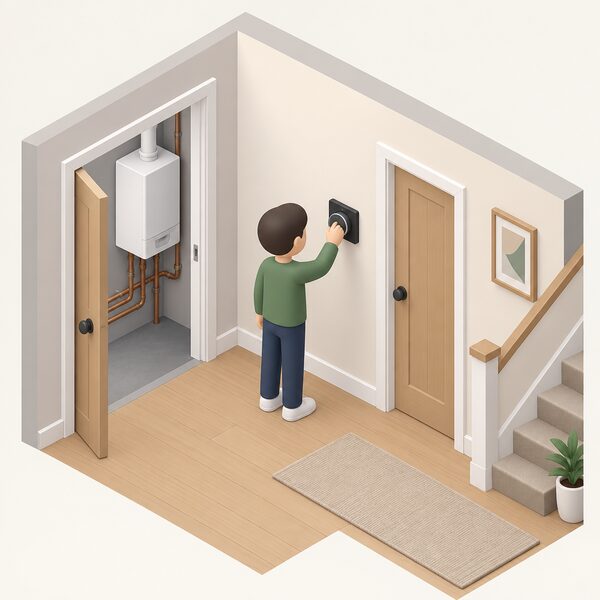
A Nest thermostat changes how a household operates its heating, not where the heat comes from. The boiler still burns gas from the grid, the gas still comes from a supplier, and the thermostat itself needs mains power and, for its remote features, a broadband connection and a Google account. The independence it offers is control independence: a schedule that adapts to the household rather than a fixed programmer, and a temperature that can be adjusted from a phone.
The dependence side is worth stating plainly. Remote control, energy tracking and diagnostics sit with Google, and the company's withdrawal of support for older models in Europe shows what that means over time. Affected devices would no longer be controllable remotely via smartphone or Google Assistant, and Google recommended seeking third-party devices compatible with Google Home, such as the tado° Smart Thermostat X Starter Kit, for affected owners5. Google also points owners to the display or the base of the device, or the Nest or Home app, to identify which thermostat they have12.
The saving case is real but modest: approximately 4.5 to 5% of total annual household gas consumption for the Nest Learning Thermostat, on an independent modelled figure7. That is a reduction in use, not a change in fuel. Households looking at the wider picture of local control and cloud dependence will find it on heating controls and energy independence, and the Nest vs Hive and tado° vs Nest comparisons set the two brands side by side.
One naming caution: the Welsh Government's Nest scheme, which provides free, impartial energy advice and, for eligible households, a package of free home energy efficiency improvements such as a new boiler, central heating or insulation, is unrelated to the Google product14. More than 144,000 households had received free impartial home energy efficiency advice through the Nest energy efficiency helpline as of March 202017. A Care and Repair survey found the scheme did not cover replacement windows or replace old, inefficient boilers18.
Sources18 cited
- What are smart thermostats?, Uswitch, 2026-02-05
- How to buy the best smart thermostat, Which?, 2026-09-17
- Compare thermostats, Google Store, 2026-09-20
- Nest thermostats, Google Store, 2026-09-20
- tado° vs Google Nest, tado°, 2026-07-28
- How long does it take to fit a boiler?, Uswitch, 2026-09-16
- Covid-style government response needed to prevent gas shortages, Nesta, 2022-08-24
- Smart thermostat dead?, Genius Hub, 2025-11-18
- ECO4 Innovation Approved Innovation Measures v1.17, Ofgem, 2026-01
- ECO4 Innovation Approved Innovation Measures v1.5, Ofgem, 2023-10
- What is a smart thermostat?, Smart Energy GB, 2026-03-16
- Google withdrawing support for older Nest thermostats, Which?, 2025-05-13
- Best boilers, Confused.com, 2025-11-03
- Get free home energy efficiency improvements: Nest, Welsh Government, 2026-09-17
- Nest home energy support scheme customer charter, Welsh Government, 2024-04-01
- Nest: a scheme to make your home warmer and more energy efficient, Isle of Anglesey County Council, 2026-09-17
- Outcome summary: tackling fuel poverty 2020 to 2035, Welsh Government, 2020
- Summary of responses: building regulations, Welsh Government, 2015-10-16