
In this answer
Short answer
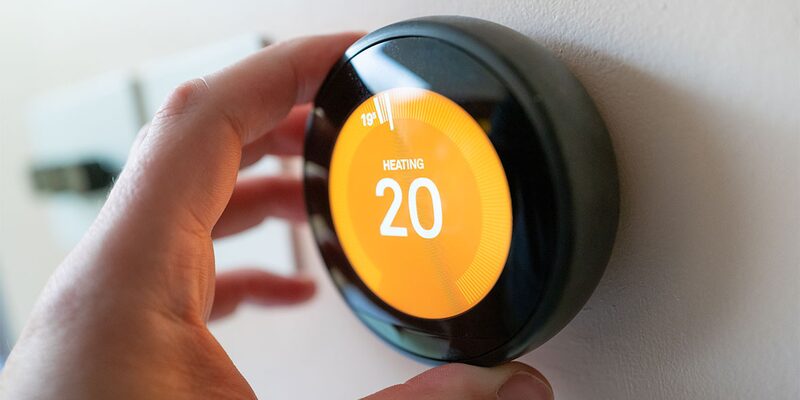
Google has stopped launching new Nest thermostats in Europe, and older models have already lost their smart features, but the two current UK models are still on sale. The Nest Learning Thermostat (Gen 3) and the Nest Thermostat E "continue to be sold while supplies last and still receive security updates"1. Google's own position is that it is "no longer selling new thermostat models in the UK"2, which is a statement about new product development rather than an immediate withdrawal of the hardware on shelves.
The practical split is between generations. First and second generation Nest thermostats had "all smart features switched off on 25 October 2025"1, and affected devices "will no longer be controllable remotely via smartphone or Google Assistant"3. The Gen 3 Learning Thermostat and the Thermostat E sold in the UK are "unaffected and will continue to receive security updates"3. For a household, that means the current models remain usable and supported, while the older ones are now local-only controls with no app.
Prices sit at the premium end of the smart thermostat market. Independent testing from September 2026 lists the Nest Thermostat E at £199 and the Nest Learning Thermostat (Gen 3) at £2194, with a separate guide from November 2025 putting a Google Nest at "around £200"5. The two models differ most on hot water: the Learning Thermostat "works with most central heating systems and controls the hot water"6, while the Thermostat E has no hot water control4.
Is the Nest thermostat discontinued in the UK?
The word "discontinued" needs separating into three different things: new products, existing stock, and software support. On new products, Google announced in April 2025 that it "will no longer launch new Nest thermostats in Europe"1. That is a halt to new hardware for the European market, not a recall of what is already installed. On stock, the Gen 3 Learning Thermostat and the Thermostat E "continue to be sold while supplies last"1, so availability depends on remaining inventory rather than a published end date. On software, the current UK models are "unaffected and will continue to receive security updates"3.
The older generation is a different story. Google switched off all smart features on first and second generation Nest thermostats on 25 October 20251, and independent reporting confirms that affected devices "will no longer be controllable remotely via smartphone or Google Assistant"3. A first generation unit from 2011, a second generation from 2012, or the 2014 EU version of the second generation now works as a local thermostat only. The app, the remote schedule and the voice control are gone.
Google's own advice to owners of those older units was to look at third-party devices compatible with Google Home, and tado° states that its Smart Thermostat X was recommended by Google for that purpose in Europe1. That is a maker's account of its own product, but it confirms the direction of travel: the platform continues, the Nest hardware generation does not.
For a UK household, the answer is therefore conditional. The Nest name is not withdrawn from the UK market, but the range is frozen and shrinking. Anyone buying now is buying into a product line that Google has said it will not extend in Europe, with support commitments that currently cover security updates for the Gen 3 and Thermostat E3.
Which models are still sold, and what each one does
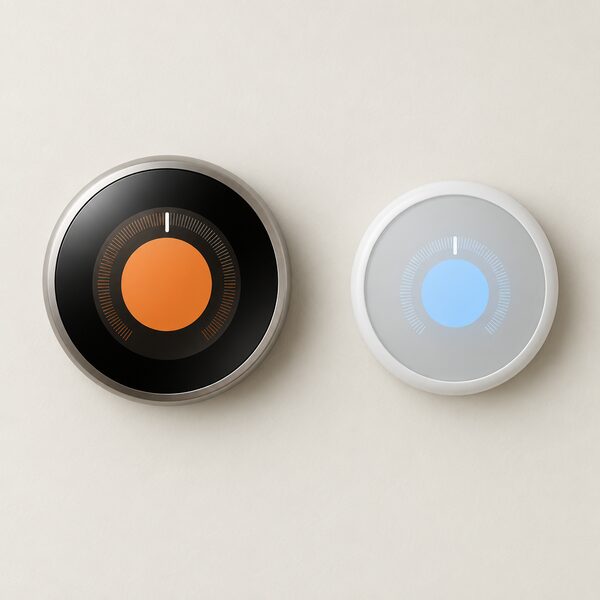
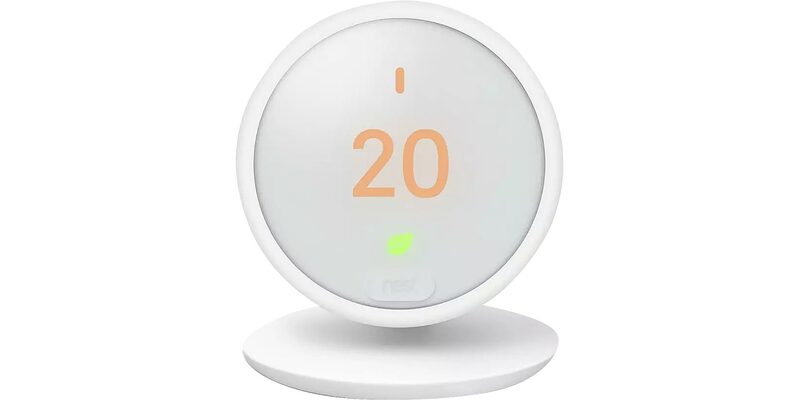
Two models remain in the UK channel. The Nest Learning Thermostat (Gen 3) was most recently tested by Which? in October 20254, and the Nest Thermostat E remains listed alongside it. Both are described as continuing to be sold while supplies last, with security updates1.
The functional gap between them is wider than the price gap. The Learning Thermostat is a "modulating and learning thermostat" that "can control hot water", and it carries frost protection, GPS tracking, a motion sensor, program modes and a child lock7. The Thermostat E is also a modulating and learning thermostat with frost protection, GPS tracking, a motion sensor, program modes and a child lock, but with "no hot water control"7. Google describes the Thermostat E as "battery powered, with a built-in temperature sensor"6.
| Feature | Learning Thermostat (Gen 3) | Thermostat E |
|---|---|---|
| Price | £2194 | £1994 |
| Hot water control | Yes7 | No7 |
| Frost protection | Yes7 | Yes7 |
| Learning and modulation | Yes7 | Yes7 |
| GPS tracking and motion sensor | Yes7 | Yes7 |
| Installation | Professional recommended4 | Easy to install yourself6 |
| Most recently tested | October 20254 | Not stated |
Google's own comparison page adds that the Thermostat E is "not compatible with the Nest Temperature Sensor"6, so room-level temperature sensing is not available on the cheaper model. The Learning Thermostat range also carries energy features described as "energy-savings smarts", including Smart Schedule, Adaptive Eco, Seasonal Savings, natural heating and cooling, and smart ventilation6. Those features are listed for the fourth generation Learning Thermostat, which is not the model sold in the UK.
For a household with a combi boiler and no cylinder, the Thermostat E covers heating control and frost protection. For a household with a hot water cylinder that wants the thermostat to schedule hot water as well as heating, only the Learning Thermostat does that job. That distinction matters more than the £20 price difference, and it is the single most common reason a buyer picks the wrong Nest model.
Installation: self-fit or professional
Google's own guidance splits the two models cleanly. The Nest Thermostat E is "easy to install yourself", while the Nest Learning Thermostat "should be installed by a professional"6. Independent testing agrees on the Learning Thermostat, recording "professional installation recommended" for the Gen 34.
That split reflects what each unit does. The Thermostat E is battery powered with a built-in temperature sensor6, which reduces the wiring it needs. The Learning Thermostat controls hot water as well as heating7, which means it has to integrate with the cylinder and the boiler's switching, a job that involves mains wiring and, on many systems, a wiring centre.
The wider market shows the same pattern. Hive "recommends that you find a local tradesperson to install your smart thermostat, as it can be a bit of a task"8, while Netatmo offers either a "certified Netatmo professional" installation or a "quick and simple" self setup9. Where a hybrid heating system has been installed under a trial programme, the full installation including a smart heating thermostat took "1-2 days"10, and a separate trial recorded "on average one-to-two days"11. Those figures cover whole-system work rather than a thermostat swap, but they show the order of magnitude for a professional visit.
VAT treatment of installed energy saving materials has changed over time. HMRC records that installation of energy saving materials in residential accommodation was reduced rated in Great Britain between 1 October 2019 and 31 March 2022, and in Northern Ireland from 1 October 2019 to 30 April 202312. That is a historical record of the reduced rate period, not a statement of the current rate, and it applies to the installation of qualifying materials rather than to a thermostat bought on its own.
App control and voice compatibility

Nest thermostats are programmed and adjusted through Google's own app: "programme your Nest thermostat and adjust the temperature of your home with the Google Home app"6. The app is the primary interface for schedules, setpoints and the learning features, and it is the part of the product that depends on Google's servers rather than on the household.
Voice control is broader across the market than it is within any one brand. Independent guidance lists Google Nest and Hive among smart thermostats that "connect to Amazon Alexa, Siri and Google Home"5. Netatmo states that its Smart Thermostat works with Alexa, Google Home and Apple HomeKit13, and the Eve Thermostat is listed as compatible with Apple Home, Google Home, Amazon Alexa, Home Assistant and Samsung SmartThings14. Honeywell's DT3R works with Alexa or Google Home but not Apple HomeKit15.
The pattern across makers is that Alexa and Google Home are near-universal, while Apple HomeKit support is narrower. Netatmo's own guidance notes that most smart thermostats work with Amazon Echo and Google Home, "while a more limited number are compatible with Apple HomeKit"13. A household already committed to one assistant should check that specific pairing before buying, because the assistant, not the thermostat, determines which voice commands are available.
The dependence to note is structural. A Nest thermostat's schedules, remote adjustment and voice control all run through Google's app and account. If the app or the account changes, the hardware does not stop heating the home, but the remote and voice layers do. That is exactly what happened to the first and second generation units on 25 October 20251.
What losing in-app support means for energy independence
A thermostat is a control layer, not an energy source. Keeping the Nest hardware in the home does not reduce dependence on the gas grid, the electricity grid or a supplier; it changes who can adjust the heating and from where. The independence question is therefore about the control layer: whether the household can set its own schedules without a manufacturer's server, and whether the hardware keeps working if that server relationship ends.
The first and second generation Nest units show the failure mode. After 25 October 2025 their smart features were switched off1 and they became local controls, no longer adjustable remotely by smartphone or Google Assistant3. The heating still works; the app-based layer does not. For a household that relied on remote adjustment or on the learning schedule, that is a real loss of function, and it happened to hardware that was still installed and working.
The current UK models are in a different position, with security updates continuing for the Gen 3 and Thermostat E3. But the direction is set: no new Nest thermostats will launch in Europe1, and Google pointed affected owners towards third-party devices compatible with Google Home1. A household weighing a Nest purchase now is weighing a product line that Google has said it will not extend in this market.
"Affected Nest devices will no longer be controllable remotely via smartphone or Google Assistant."
The wider controls market offers alternatives with different platform arrangements. Eve lists compatibility across Apple Home, Google Home, Amazon Alexa, Home Assistant and Samsung SmartThings14, which spreads the control layer across several ecosystems rather than one. Netatmo describes its thermostat as a connected device that allows remote adjustment and programming from a smartphone or tablet9. For households that want the control layer to survive a single company's decisions, the number of platforms a device supports is the figure that matters.
The Nest name in Wales is a different scheme

The Welsh Government runs a home energy scheme called Nest, and it has nothing to do with Google Nest hardware. Nest provides "all households in Wales with free, impartial advice to help you reduce your energy bills"16, and in some cases free home energy efficiency improvements such as a new boiler, central heating and insulation17. It can confirm whether a household is eligible for a package of improvements18.
Contact runs through the Energy Saving Trust. The scheme's customer service address is "Nest Team, Energy Saving Trust, 33 Cathedral Road, Cardiff, CF11 9HA"19, and the free advice line is 0808 808 2244, open Monday to Friday from 9am to 6pm excluding bank holidays20. A separate Welsh scheme, Nest, also provides free, impartial energy advice to help lower bills and improve health and wellbeing21.
The confusion is understandable because both use the same four letters, but the two are unrelated in ownership, purpose and contact route. A household searching for Google Nest support in the UK will not reach the Welsh scheme, and a household searching for the Welsh scheme will not reach Google.
Support arrangements differ across the four nations. In Northern Ireland, NI Energy Advice offers "independent and impartial energy advice to domestic householders" plus referrals to grants and other help22, and the one-stop shop service is designed to "gatekeep different energy efficiency programmes, including NISEP, to guarantee impartiality and quality"23. The Energy Saving Trust notes that there is "currently no funding towards installing renewable technology at home if you live in Northern Ireland"24. In Scotland, grant and loan support is administered separately24. For a household in Wales, the Nest scheme is the route to advice; elsewhere the route differs.
Where the Nest range sits against other UK controls
Nest is one of several smart thermostat families sold in the UK, and the market has widened as Google has narrowed its European plans. Independent testing lists the Habi Wireless Smart Thermostat at £624, well below the Nest Thermostat E at £1994. Heatmiser's neoStat V2 Black Thermostat is listed at £109.14 plus VAT25. Drayton's Wiser range shows a three channel smart thermostat kit marked "sold out"26, which illustrates how stock status moves across the market rather than being unique to Nest.
The wider controls landscape includes products that are not thermostats at all. Ofgem's ECO4 innovation measures list includes Switchee smart thermostats, covering the Gen2 Smart Learning Thermostat and Switchee Econa27, which are aimed at social housing rather than owner-occupiers. That matters for households in rented or social housing, where the control fitted may be chosen by the landlord rather than the resident.
For a household comparing options, the useful questions are the same regardless of brand: does the unit control hot water as well as heating, which assistants and platforms does it support, does it need a professional installer, and what happens to the app if the maker changes its plans. Nest answers the first two clearly for its two current models, and the third is documented in Google's own guidance6. The fourth is the open question, and the first and second generation shutdown is the evidence for how it can end1.
Sources27 cited
- tado° vs Google Nest, tado°, 2026
- tado° vs Hive: which smart thermostat is best, tado°, 2026
- Google withdrawing support for older Nest thermostats, Which?, 13 May 2025
- How to buy the best smart thermostat, Which?, 17 September 2026
- Best boilers guide, Confused.com, 3 November 2025
- Compare Nest thermostats, Google Store, 2026
- How to buy the best smart thermostat, Which?, 17 September 2026
- tado° vs Hive: which smart thermostat is best, Energy Helpline, 2026
- Pellet boiler comfort guide, Netatmo, 2026
- Hybrid heating, Cadent Gas, 2026
- Batteries could revolutionise UK home heating, UK Power Networks, 4 September 2024
- VAT energy saving materials and grant funded heating supplies, HM Revenue and Customs, 2026
- Smart thermostat comfort guide, Netatmo, 2026
- Eve Thermostat, Eve, 2026
- Honeywell Home Wireless Thermostat DT3R, Lightwave, 2026
- Heating your home, Carmarthenshire County Council, 4 April 2026
- Grants and funding for energy bills, StepChange, 2026
- Get free home energy efficiency improvements, Welsh Government, 17 September 2026
- Nest home energy support scheme customer service and complaints policy, Welsh Government, 1 April 2024
- Green Homes Wales, Development Bank of Wales, 2026
- Energy price cap explained, Welsh Government, 4 March 2026
- Insulation, nidirect, 2 September 2026
- Decarbonisation in Northern Ireland: the potential of a one-stop shop, Energy Saving Trust, 1 October 2025
- Grants and loans, Energy Saving Trust, 19 February 2026
- neoStat V2 Black 16A Thermostat, Nu-Heat, 24 February 2026
- Newest products, Drayton Controls, 20 September 2026
- ECO4 Innovation Approved Innovation Measures, Ofgem, October 2023
 Heating Control ManufacturersWhich heating controls are worth buying, and who actually makes them?
 Smart Thermostats ExplainedWhat does a smart thermostat actually do, and is it worth it?
 Hydrogen Home Heating TrialsHydrogen home heating is still being tested, not sold.
 Smart Heating Security and DataHow safe is your smart thermostat from hackers, and who sees the data it collects about your heating?
 PSTI Device Security RulesBefore you buy a smart device, can you tell whether it will still get security updates in a few years?
 Solid-State BatteriesAre solid-state batteries on sale yet, and should you wait for one?