In this guide
UK Energy Tariffs: The Full Guide to Fixed, Tracker, Time-of-Use and Export Rates
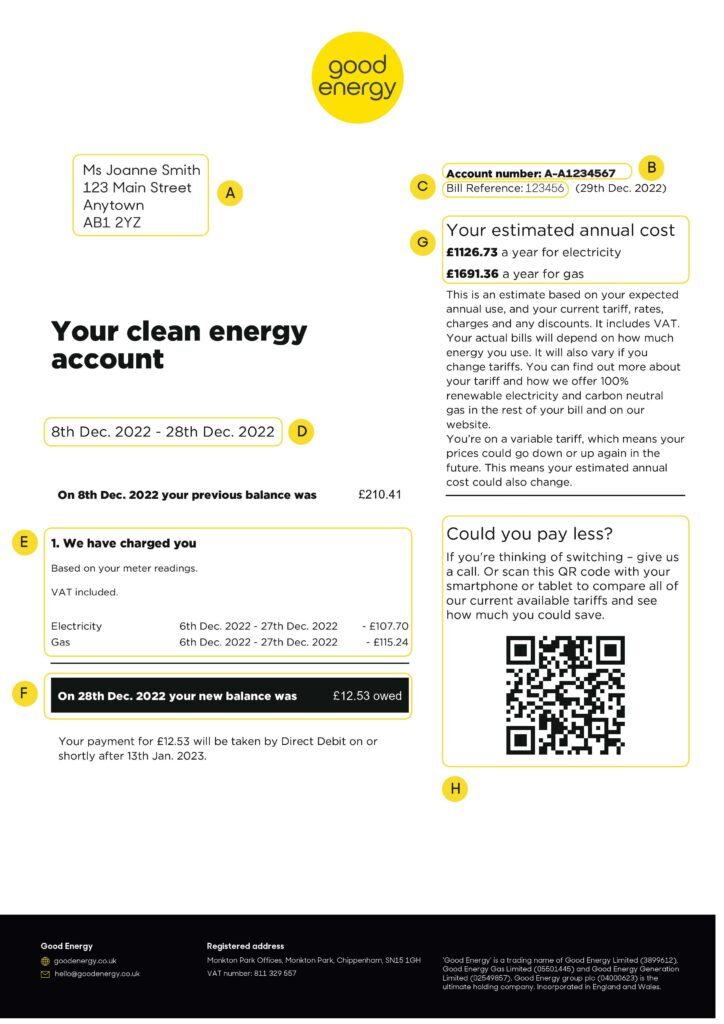
An energy tariff is the pricing agreement between a household and its supplier. It has a unit rate, which is how much you pay for each unit of gas or electricity you use, and a daily standing charge. Ofgem describes three main types of tariff: fixed rate, standard variable tariff (SVT) and multi-rate tariff. The Energy Saving Trust simplifies this to two main types, fixed rate and variable. This guide treats export tariffs, which pay a household for electricity it sends to the grid, as a fourth family.1
In Great Britain, the rates on a standard variable tariff are limited by Ofgem's energy price cap, which is set every 3 months. From 1 July to 30 September 2026, the capped electricity unit rate for a Direct Debit customer averages 26.11 pence per kWh across England, Scotland and Wales, including VAT. The cap limits rates, not bills, and it does not cover fixed tariffs.4
Around 20 million households in Great Britain are on the variable tariffs the cap governs. Northern Ireland sits outside the cap entirely. Which tariff a home can use, and how much price exposure it carries, depends on the contract type, the meter, the region and the payment method, and on whether the home generates or stores its own electricity.6
What an energy tariff is, and the four main types
Every tariff combines a price per kilowatt hour with a fixed daily charge. VAT on domestic energy is listed by Ofgem at 5%. The differences between tariffs lie in how long those prices are guaranteed, whether they vary by time of day, and whether the contract carries a penalty for leaving.12
| Tariff family | How the price behaves | Covered by the GB price cap |
|---|---|---|
| Fixed rate | Unit rate and standing charge set for the contract term, usually 12 months | No5 |
| Standard variable (default) | Rate can go up or down with the energy market | Yes5 |
| Multi-rate and time-of-use | Price alters depending on the time energy is used13 | Economy 7 style meters have their own cap levels, but the Welsh Government states the cap does not apply to time of use tariffs14 |
| Export | Pays a rate for each unit sent to the grid | No: suppliers set their own rates11 |
Within these families sit the specialist products covered elsewhere in this section: tracker tariffs and half-hourly dynamic tariffs, heat pump tariffs, and EV tariffs. Zapmap divides EV tariffs into two-rate tariffs (time of use) and type of use tariffs.15
Official data suggests households know their own tariff less well than they believe. In an Ofgem survey for Q2 2021, 88% of gas and electricity customers said they knew what tariff type they were on. Ofgem research published in July 2025 found considerably more respondents claiming to be on a fixed tariff (38%) than the official data suggests (11%). Confidence ran high among that group all the same: of those who said they were on a fixed electricity tariff, 55% were "very confident" and 38% "somewhat" confident.16
Tariff details are usually on the latest bill or statement, or in the supplier's app or online account. Uswitch lists the signs of a standard tariff: never having switched supplier, not having switched for a year or more, a fixed deal that has ended, or a tariff name that includes words like "Simpler", "Flex", "Basic", "Standard" or "Variable". In England, the Local Energy Advice Programme offers help checking whether a household is on the cheapest tariff.3
The number of tariffs on sale changes quickly. A 2014 measure limited energy companies to offering four tariffs to consumers. Uswitch counted 20 fixed energy tariffs available at 2pm on Friday 20 March 2026, and a count of 24 was reported for 17 March 2026. Time of use tariffs are harder to survey: Which? notes they are not typically found on price comparison websites and have to be checked on providers' own sites.20
Green tariffs sit across all these types rather than forming one of their own. The Centre for Sustainable Energy notes that over a third of Britain's electricity is generated by wind, solar or hydro. The page on comparing energy tariffs covers labels and annual cost projections.23
The price cap limits rates, not bills
The energy price cap is administered by Ofgem, Great Britain's energy regulator. It sets the maximum amount that suppliers can charge for each unit of gas and electricity, and a maximum daily standing charge, with separate caps for gas and electricity. It came into force at the beginning of 2019 and was introduced across all payment types in January 2019.24
"It does not limit the cost of your total bill. The more energy you use, the higher your bill will be."
This matters to any household counting on the cap for protection. The published "typical bill" figures are illustrations. The House of Commons Library states that typical consumption is assumed to be 2,500 kWh for electricity and 9,500 kWh for gas. A home that uses more pays more, at capped rates.27
What the cap covers
- Standard variable tariffs, where the unit rate can go up or down depending on the energy market.5
- Standard variable and prepayment tariffs, in Uswitch's description. The Welsh Government states that the cap applies to default tariffs however the bill is paid.28
- Customers who have not signed up for a fixed-term contract with their supplier, in each energy supply region of Great Britain.26
What it does not cover
- Fixed tariffs, business energy contracts, heat networks and heating oil.5
- Fixed, green or time of use tariffs, as the Welsh Government describes the cap's scope.14
- Any household in Northern Ireland.7
Ofgem sets the cap level every 3 months, and the Commons Library describes it as revised each quarter. The history shows how far a capped tariff can move. Rapid increases in wholesale prices from mid-2021 led to a 54% increase in the cap in April 2022, and the Q4 (October to December) 2022 cap was £3,371. More recently, the cap rose by 2% from October 2025, and the Welsh Government reported Ofgem's confirmation that the cap for 1 April to June 2026 would fall by 7%. A minister told the Commons on 16 March 2026 that the cap "is reducing on 1 April".5
For household energy security, the cap is a ceiling on supplier margins and pass-through costs. It does not shield a household from the market. A home on a capped tariff remains fully exposed to wholesale gas and electricity prices, with the exposure repriced four times a year. The page on tariff rules and consumer protections sets out what suppliers are required to offer, and Ofgem has stated that it "will be closely monitoring supplier compliance and will continue to take firm action against suppliers who fall short of their requirements".31
Cap levels in figures: unit rates, standing charges and the typical bill
The headline cap is quoted as an annual bill for a typical dual-fuel home. For 1 October to 31 December 2025, Ofgem's cost breakdown gave these totals by payment method:
| Payment method | Previous quarter | 1 October to 31 December 2025 |
|---|---|---|
| Direct Debit | £1,720 | £1,755 |
| Standard Credit | £1,855 | £1,890 |
| Prepayment | £1,672 | £1,707 |
Each rose by £35, or 2%. Standard Credit customers paid £135 more than Direct Debit customers (£1,890 against £1,755) for the same typical consumption.31
For 1 January to 31 March 2026, the Welsh Government put the typical Direct Debit dual-fuel bill in Great Britain at around £1,758. That figure rests on assumed typical consumption of 2,500 kWh of electricity and 9,500 kWh of gas a year, so a household using more or less will pay more or less. The underlying rates for that quarter are the firmer guide: electricity at 27.69 pence per kWh with a 54.75p daily standing charge, and gas at 5.93 pence per kWh. Both are Direct Debit averages across England, Scotland and Wales and include VAT at 5%.14
| Period | Electricity unit rate | Electricity standing charge |
|---|---|---|
| 1 October to 31 December 2025 | Not given here | 53.68 pence per day33 |
| 1 January to 31 March 2026 | 27.69 pence per kWh32 | 54.75 pence per day14 |
| 1 July to 30 September 2026 | 26.11 pence per kWh4 | Varies by region, see below |
The electricity unit rate therefore fell between the first quarter of 2026 (27.69p per kWh) and the third (26.11p per kWh). The standing charge moved the other way between late 2025 and early 2026, from 53.68p to 54.75p per day. Ofgem attributed the October 2025 rise to increases in parts of the costs of transporting energy in Great Britain, and to costs towards government schemes and essential support.33
Ofgem also publishes benchmark maximum charges by region. The figures below are annual electricity amounts for 1 July to 30 September 2026, from the first electricity table in Ofgem's cap levels document:34
| Region | Single-rate, nil consumption | Single-rate, 2,500 kWh | Multi-rate, nil consumption | Multi-rate, 3,400 kWh |
|---|---|---|---|---|
| Northern | £223.48 | £824.03 | £220.70 | £986.44 |
| Midlands | £207.57 | £810.72 | £206.15 | £977.09 |
| South East | £189.27 | £824.22 | £190.23 | £996.63 |
| Southern | £172.77 | £801.74 | £172.65 | £973.28 |
| Southern Western | £201.24 | £829.48 | £202.58 | £1,000.86 |
The nil consumption column is in effect the annual standing charge. A Northern household pays £223.48 a year before using any electricity, against £172.77 in Southern, a difference of £50.71. At 2,500 kWh the gap narrows to £22.29 (£824.03 against £801.74), because regions with higher standing charges tend to have lower unit rates. A second table in the same document gives London £181.21 at nil consumption and £843.39 at 2,500 kWh single-rate.34
For a home with solar panels or a battery, the structure of the charge matters as much as its level. Self-generation cuts the units bought. It does nothing to the standing charge, which is the price of remaining connected to the grid.
Fixed tariffs: a year or more of price protection

A fixed-rate tariff protects you from changes in energy prices during the fixed term. What is fixed is the amount per unit of energy (kWh) and the standing charge, not the bill.25
Sources describe the usual term slightly differently:
- Citizens Advice, for both England and Wales: fixed tariffs usually last for a year.8
- Uswitch: usually 12 months, but can be as long as three years.36
- Energy Helpline: usually one to two years, with 12, 24 or even 36 month terms available.37
- Confused.com: usually somewhere between 12 and 24 months.13
- Energy Saving Trust: usually 12 months, though some suppliers offer two or three-year fixed rate tariffs.7
Ofgem's own research on tariff choice tested 12 month and 24 month fixed terms alongside a standard variable tariff.17
"Your supplier can’t increase the price you pay, unless the government has raised VAT."
The protection is priced into the contract through exit fees. Ofgem states that a customer may have to pay the previous supplier an "exit fee" after leaving a fixed rate tariff early. Uswitch notes that most fixed tariffs include exit fees for each fuel. Reported amounts vary:38
| Source | Exit fee reported |
|---|---|
| Which? (May 2026) | Typically £100 or more, often £100 per fuel9 |
| Uswitch (September 2026) | As much as £200 per fuel39 |
| Sample OVO bill explained by Uswitch | £50 per fuel, £100 total40 |
Uswitch describes switching as a 12 to 18 month habit and a fixed deal as at least 12 months of protection from higher prices. When the term ends, the supplier automatically moves the account onto its standard variable tariff and should send a reminder that the contract is about to end. Some suppliers may offer the chance to take a new fixed deal instead.43
For energy security, a fixed tariff swaps market exposure for contract exposure. Wholesale prices cannot reach the household for the length of the term, but the household cannot leave without cost either. Related pages cover fixed-rate tariffs in detail, exit fees and contract terms, what happens when a fixed deal ends and taking a fixed tariff to a new home.
Standard variable tariffs: the default you're rolled onto
The standard variable tariff is, in the Energy Saving Trust's definition, the default tariff for an energy supplier, where the price per unit of energy can change over time. The Energy Ombudsman describes it as a tariff where the rate fluctuates depending on the price of energy.44
Households arrive on it by default rather than by choice:
- When a fixed tariff ends, customers are usually rolled onto their supplier's SVT.36
- New movers start on the SVT of the property's current supplier.36
- A customer who does not specify a tariff, or whose tariff comes to an end, is automatically put on a default variable tariff.37
In Great Britain, SVT prices are tied to the cap. Which? notes that the default variable rate is determined by the energy price cap and changes every three months. The Centre for Sustainable Energy confirms that anyone on a standard variable tariff is protected by the cap. For 1 January to 31 March 2026, that meant 27.69 pence per kWh for electricity and 5.93 pence per kWh for gas on Direct Debit, averaged across England, Scotland and Wales with VAT at 5%.9
Energy on a fixed or standard variable tariff costs the same each day, at any time of day. That is simple, but it also means a household with a battery, an electric vehicle or a hot water cylinder has nothing to gain from shifting its use. A flat-rate tariff suits a home with little flexibility, and gives no reward to a home that has some.10
The SVT carries no exit fee in the accounts above, since those fees attach to fixed contracts. Its cost is uncertainty. When a supplier raises prices, Citizens Advice says it should tell customers a reasonable amount of time before the increase takes place. The pages on notice before a price rise, the tariff in a new home and fixed versus variable tariffs give the detail.8
Economy 7 and time-of-use rates: cheap hours at a price
Time-of-use tariffs alter the price of energy depending on the time it is used. The oldest form is Economy 7. It has two set price rates, an on-peak rate and an off-peak rate, and the cheaper off-peak rate applies for 7 hours out of every 24, usually at night. Economy 10 works the same way with 10 cheaper hours, mostly overnight.13
The cost of the cheap hours is a dearer day. The Energy Saving Trust describes Economy 7 as one cheaper period of electricity during the night, and more expensive electricity during the day. Uswitch notes that Economy 7 meters require specialist installation and record use across two rates, including a 17-hour day (peak) period.46
How much night use is needed before the trade pays off is disputed:
| Source | Night-time share needed |
|---|---|
| Which? (April 2026) | At least 30% of electricity22 |
| Uswitch (September 2026) | More than 35%47 |
| Energy Helpline | More than 40%48 |
The three figures are rules of thumb, and the real threshold depends on the gap between the day and night rates of the specific tariff. In Northern Ireland, the Energy Saving Trust's November 2025 data gives an average Economy 7 on-peak rate of 35 pence per kWh, against 30.8 pence per kWh for the standard rate.49
Newer time-of-use tariffs depend on a smart meter and the household's own equipment. The Energy Saving Trust's model of an efficient future home pairs a smart time-of-use tariff with an export tariff. An Ofgem consumer survey from 2021 found that households on TOU tariffs were among those most likely to intend efficiency upgrades.50
This is where tariffs bear most directly on independence. A home with storage can buy electricity in cheap hours and avoid buying it in dear ones, which reduces its exposure to peak prices without cutting its consumption. The home still depends on the supplier keeping the tariff on sale, on the meter, and on the grid. Further detail is on the pages for time-of-use tariffs, Economy 7, Economy 10 and restricted meters, the RTS switch-off, shifting use to cheap periods, batteries on time-of-use tariffs and flexibility payments.
Dual fuel: one supplier, one bill, sometimes a discount
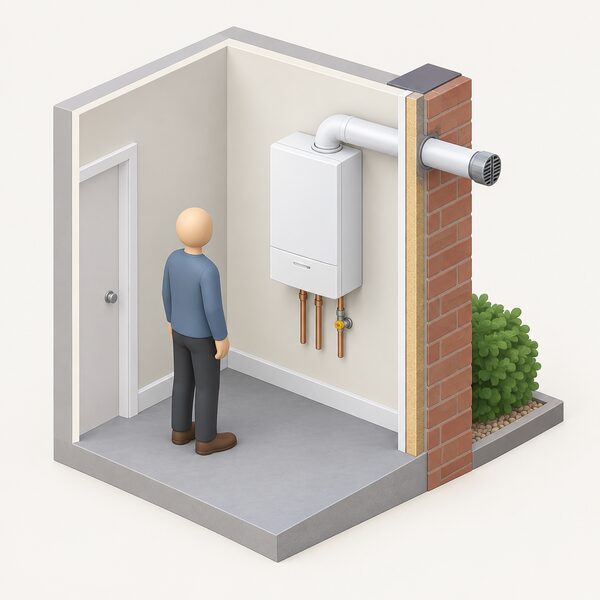
A dual fuel tariff means you get your gas and electricity from the same supplier. Confused.com observes that pretty much all energy suppliers offer dual fuel tariffs. Uswitch notes that many suppliers offer the same tariff for both fuels, so there is one point of contact. The Energy Saving Trust summarises the practical benefit as less admin, because you only deal with one energy company.25
Whether it saves money is less settled:
- Home Energy Scotland: some suppliers offer a reduced rate for dual fuel customers.25
- Confused.com's gas-only guide: most suppliers offer a discount that makes dual fuel cheaper than separate gas-only and electricity-only tariffs.52
- Confused.com's dual fuel guide: there is no guarantee that a dual energy deal is cheaper than separate tariffs, though suppliers tend to pass on some savings.51
- Uswitch: a discount can make dual fuel cheaper, but in some cases separate suppliers could be cheaper.36
Dual fuel is a billing arrangement, not a separate price structure. The gas and electricity elements are each fixed or variable, and in Great Britain each default rate has its own cap. Exit fees on fixed dual fuel deals are generally charged per fuel, so leaving a dual fuel contract early can cost double. Separate supply remains possible, and several suppliers offer green gas tariffs without requiring electricity or dual fuel.52
From an independence point of view, dual fuel concentrates a household's dependence in one company, and it presumes a gas connection. A home that electrifies its heating stops being a dual fuel customer, and its electricity tariff then does all the work. The pages on dual fuel tariffs and dual fuel versus separate tariffs develop this.
Export rates: the Smart Export Guarantee and what a battery does to it
The Smart Export Guarantee (SEG) is an export tariff available in Great Britain that pays people for the electricity they export to the grid. Ofgem describes it as enabling small-scale generators to receive payments from electricity suppliers for electricity exported back to the National Grid, providing certain criteria are met. It launched on 1 January 2020, following the closure of the Feed-in Tariff scheme. It is governed by the Smart Export Guarantee Order 2019 and Conditions 57 and 58 of the Standard Conditions of the Electricity Supply Licence.44
Eligible technologies are:56
- solar photovoltaic (solar PV)
- wind
- micro combined heat and power (micro-CHP)
- hydro
- anaerobic digestion (AD)
There is no regulated export price. Suppliers can set their own SEG tariff rates, provided they offer more than £0 per unit of metered exported power. The Energy Saving Trust notes that SEG tariffs offer a fixed rate for every unit sold back to the grid. The word "metered" carries a condition:11
"In order to qualify for the Smart Export Guarantee (SEG), generators must have a smart meter to monitor exports."
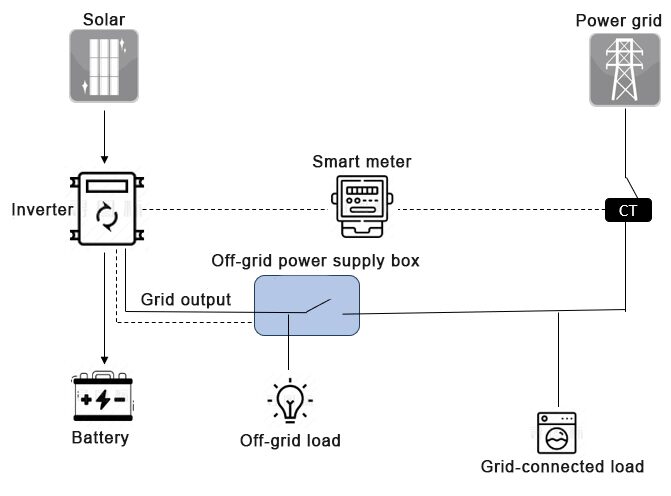
A battery changes the export picture in two ways. It lets a household keep its solar generation for its own use rather than export it, so export volume and SEG income fall while import costs fall too. On some tariffs it also lets a household choose when to export. Whether stored electricity qualifies for payment is covered on the pages about exporting from a home battery and SEG payments for battery storage. Local authority guidance describes SEG simply as the payment received for surplus solar electricity.58
Export income is the only tariff line that pays the household instead of charging it. Its limits follow from the rules above: the rate is set by the supplier, a smart meter is required, and the scheme covers Great Britain only. See the pages on the Smart Export Guarantee, SEG rates, eligibility, applications and payments, the minimum SEG rate and Feed-in Tariff export payments.
Supplier ranges and withdrawn tariffs
Tariffs are products, and suppliers withdraw them. Two tariffs built for solar and battery homes show this.
A tariff built around a battery's charge and discharge pattern can disappear for new customers while the battery has many years of life left. Hardware sized for one tariff may then have to operate on a different one. This is one kind of dependence on a supplier that a household cannot remove. The page on closed and withdrawn tariffs tracks these, and import tariffs for solar and battery homes covers what remains on sale.
This section has individual pages on supplier ranges, described and not ranked: Octopus Energy, British Gas, EDF, E.ON Next, OVO Energy, ScottishPower, SSE, SSE Airtricity, So Energy, Utility Warehouse, Good Energy, Ecotricity, 100Green, the Tesla Energy Plan and Pod Point Plug & Power.
What's inside your unit rate: wholesale, network and policy costs
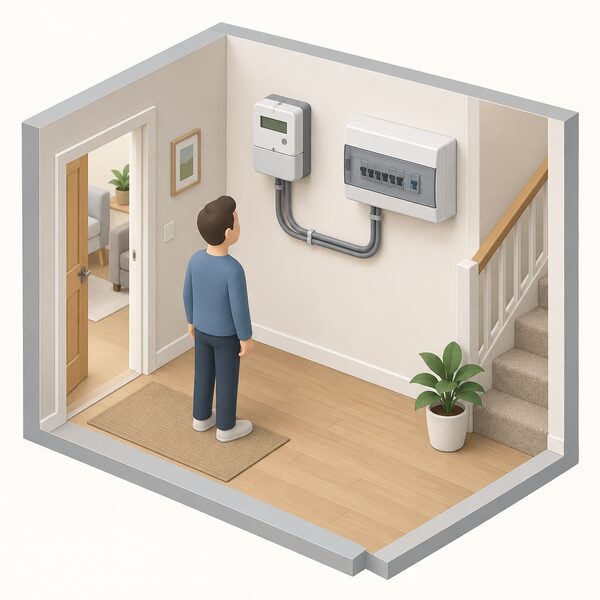
Ofgem lists the costs that make up a bill:1
- Wholesale costs, the cost a supplier pays to buy energy.
- Network costs.
- Operating, debt and industry costs.
- EBIT, the supplier's earnings allowance.
- Policy costs.
- VAT (5%).
Bills are also calculated according to the type of energy used, the type of meter installed and how the bill is paid. The price cap calculation adds two further items: headroom, and a levelisation allowance, which exists to make sure prepayment and Direct Debit customers pay the same standing charge. Ofgem's list for the coming period specifies "VAT (5%) on gas 1 October 2026 to 31 March 2027".60
The shares matter for anyone trying to reduce their exposure. The Commons Library reports that network costs are the next most important component of the cap after wholesale costs, making up almost 30% of the total. A household's own generation cannot reduce network costs to zero, because part of them is recovered through the standing charge.26
Policy costs are set by government decision, so they can move independently of the market. The government cut them in April 2026 by ending a levy-funded energy efficiency scheme and shifting funding for the largest renewable generation support scheme to general taxation. That change coincided with the 7% fall in the cap for April to June 2026.26
The result, as of the third quarter of 2026, is a Great Britain average capped electricity unit rate of 26.11 pence per kWh. Only the wholesale component responds to when electricity is used. That is why time-of-use and tracker tariffs can undercut a flat rate in some hours, and why they cannot remove the fixed layers beneath it.61
Regional variation and payment method: why your cap differs from your neighbour's
Ofgem does not charge a single flat rate for the whole UK. It sets different caps for different parts of the country. A separate cap is set for each of 14 regions and applies throughout the region, with no breakdown below regional level. Ofgem lists the factors that vary the cap as where you live, payment method (Direct Debit, standard credit or prepayment meter), fuel type and meter type. The End Fuel Poverty Coalition notes that some regions, such as Merseyside and North Wales, pay substantially more than others, such as London.61
Ofgem's regional levels for 1 October to 31 December 2025, for the "Other Payment Method" category, show the pattern in electricity:62
| Region | Single-rate, nil consumption | Single-rate, 3,100 kWh | Multi-register, nil consumption | Multi-register, 4,200 kWh |
|---|---|---|---|---|
| Northern | £208.10 | £958.83 | £205.69 | £1,181.85 |
| North West | £177.83 | £978.21 | £175.77 | £1,206.69 |
| South East | £165.45 | £960.22 | £166.99 | £1,194.07 |
| Southern | £155.12 | £936.78 | £155.67 | £1,169.11 |
| Southern Western | £187.83 | £979.78 | £190.02 | £1,213.43 |
Gas varies less. For the same period and payment category, the annual gas cap at nil consumption and at 12,000 kWh was £118.70 and £837.33 in Northern, £116.81 and £823.11 in South East, £116.39 and £842.75 in Southern, and £117.04 and £827.95 in Eastern.62
Payment method changes the figure within a region. In Eastern, the Standard Credit electricity cap for the same quarter was £196.61 at nil consumption and £1,023.11 at 3,100 kWh single-rate.62
Comparisons across years need care, because Ofgem's benchmark consumption has changed. The April to June 2024 tables used 3,100 kWh, giving single-rate electricity caps of £919.15 in Eastern and £921.87 in Midlands. The 2026 tables use 2,500 kWh.63
The four nations
England, Scotland and Wales share the cap framework, with regional differences inside it. The page on tariffs in Scotland covers the Scottish regions. Northern Ireland is different in kind. The Ofgem cap does not apply there, and official guidance on the former Energy Price Guarantee states that energy prices were not capped in Northern Ireland, where suppliers have the flexibility to set their tariffs independently to reflect their costs of operating. The Smart Export Guarantee is likewise a Great Britain scheme. See energy tariffs in Northern Ireland and price cap coverage in Northern Ireland.7
Fixed, variable or time-of-use: which fits which home
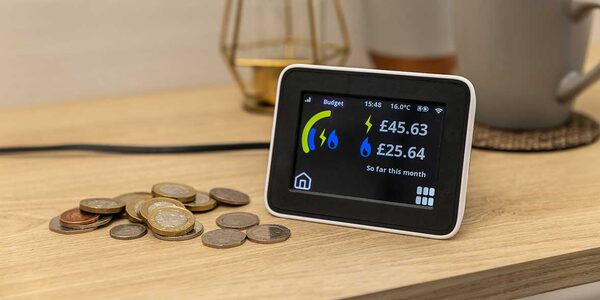
No tariff type is cheapest for every home. The table below shows how the features described on this page map to household circumstances, without ranking them.
| Household characteristic | Tariff feature that bears on it |
|---|---|
| Little ability to shift use, values certainty | Fixed: rates protected for the term, exit fees typically £100 or more for leaving early9 |
| Wants freedom to leave at any time | Standard variable: capped in Great Britain, repriced every three months9 |
| Storage heaters or heavy night use | Economy 7: pays off only above a night-use share that sources put between 30% and 40%22 |
| EV, heat pump or battery with a smart meter | Time-of-use: price depends on when energy is used, and such tariffs are not typically on comparison sites22 |
| Solar PV or other eligible generation | Export tariff under SEG: smart meter required, rate set by the supplier57 |
| Lives in Northern Ireland | No cap: supplier tariffs apply7 |
Meter type limits the choice before price does, as which tariffs your meter allows explains, and prepayment customers have their own tariff page. Around 20 million households on standard variable tariffs paying by Direct Debit are affected by each cap change.39
Each tariff type leaves a household dependent on something, as the earlier sections set out. A fixed tariff ties it to a contract, and a variable tariff ties it to the quarterly cap. A time-of-use tariff depends on the supplier keeping it on sale and on the home's own equipment working. An export tariff depends on a rate the supplier is free to change. Generation, storage and flexible demand reduce how much a household buys and let it choose when to buy. They do not remove the standing charge, the grid connection or the supplier relationship. The page on tariffs and household energy independence takes this further. Decision-focused comparisons are at should I fix my energy tariff, fixed versus tracker and EV tariff versus fixed tariff.
Sources64 cited
- Understand your electricity and gas bills, Ofgem, 2026
- How to understand your energy bill, Energy Saving Trust, 2024-11-08
- How to check your energy tariff and switch, British Gas Energy Trust, 2026-07-30
- Current gas and electricity prices, Centre for Sustainable Energy, 2026-08-27
- Energy price cap, Ofgem, 2026-09-17
- Ofgem price cap, End Fuel Poverty Coalition, 2026-08-26
- Switching your energy supplier, Energy Saving Trust, 2026-06-26
- Your gas or electricity supplier has put up its prices, Citizens Advice, 2026-09-17
- How to switch energy supplier, Which?, 2026-05-15
- Energy flexibility, Smart Energy GB, 2026-08-17
- Commons Library briefing CBP-9585, House of Commons Library, 2026-05-13
- How your electricity or gas bill is calculated, Ofgem, 2026
- Types of energy tariff, Confused.com, 2025-11-03
- Energy price cap explained, Welsh Government, 2026-03-04
- EV energy tariffs, Zapmap, 2024-09-16
- Consumer Perceptions of the Energy Market Q2 2021, Ofgem, 2021
- Understanding consumers' energy tariff choices: research report 2024, Ofgem, 2025-07
- Standard rate tariffs, Uswitch, 2026-08-26
- Energy saving grants and funding, Tameside Council, 2026-09-17
- Infographic on energy bills and the four tariff limit, Carbon Brief, 2014
- Gas price shock: households worried about energy bills, Uswitch, 2026-03-20
- Time-of-use tariffs explained, Which?, 2026-04-23
- Green electricity tariffs, Centre for Sustainable Energy, 2026-07
- Grants and schemes, Smart Energy GB, 2026-05-28
- Getting the best deal on energy, Home Energy Scotland, 2026-09-20
- Commons Library briefing CBP-10958, House of Commons Library, 2026-09-20
- Commons Library briefing CBP-9714, House of Commons Library, 2026-08-28
- Ofgem guide, Uswitch, 2026-08-26
- Energy Consumer Satisfaction Survey, July to August 2025, Ofgem, 2025-12
- Heating Oil Support debate, Hansard, UK Parliament, 2026-03-16
- Summary of changes to the energy price cap, 1 October to 31 December 2025, Ofgem, 2025-08-27
- Changes to the energy price cap between 1 January and 31 March 2026, Ofgem, 2025-11-21
- Changes to the energy price cap between 1 October and 31 December 2025, Ofgem, 2025-08-27
- Energy price cap levels, 1 July to 30 September 2026, Ofgem, 2026
- Your gas or electricity supplier has put up its prices (Wales), Citizens Advice, 2026-09-17
- Energy tariffs explained, Uswitch, 2026-02-17
- Fixed and variable tariffs: what's the difference, Energy Helpline, 2026-09-20
- Switch your home energy supplier, Ofgem, 2026
- Compare gas and electricity, Uswitch, 2026-09-17
- How do I read my OVO Energy bill, Uswitch, 2025-09-10
- Fixed energy deals, Uswitch, 2026-09-07
- Understanding energy bills, StepChange, 2026-09-20
- When is the best time to switch my energy deal, Uswitch, 2026-08-26
- Energy jargon buster, Energy Saving Trust, 2026-03-20
- How to understand your electricity and gas bills, Energy Ombudsman, 2025-04-24
- Tariffs for renewable technology, Energy Saving Trust, 2026-08-12
- Economy 7 guide, Uswitch, 2026-09-08
- What is Economy 7, Energy Helpline, 2026-09-20
- Our data, Energy Saving Trust, 2026-09-01
- The energy efficient house of the future, Energy Saving Trust, 2026-07-15
- How to compare dual fuel tariffs, Confused.com, 2025-11-03
- Gas-only energy tariffs, Confused.com, 2026
- Smart Export Guarantee: generators, Ofgem, 2026-09-17
- Feed-in Tariffs: scheme closure, Ofgem, 2026-09-17
- Smart Export Guarantee: electricity suppliers, Ofgem, 2026
- Smart Export Guarantee, Ofgem, 2026-09-17
- POSTnote 771, Parliamentary Office of Science and Technology, 2026-06-25
- Solar panels, Oxfordshire County Council, 2026-09-17
- Octopus tariffs for solar and battery, Spirit Energy, 2026-03
- How your electricity or gas bill is calculated, Ofgem, 2026
- Regional UK energy prices, Confused.com, 2026-06-04
- Energy price cap levels, 1 October to 31 December 2025, Ofgem, 2025
- Default tariff cap level, 1 April 2024 to 30 June 2024, Ofgem, 2024
- Energy Price Guarantee up until 30 June 2023, UK Government, 2026-09-17